
TL;DR

Get business pricing on tech for your team
- Business-only prices and quantity discounts
- Tax-exempt purchasing
- Multiple users, one account, clear invoices
A technology report says Anthropic is watermarking ordinary text produced by Claude using markers that readers cannot see. The report links the move to possible European Union transparency requirements, but Anthropic’s implementation, detection process and rollout scope have not been confirmed in the material available.
Anthropic is reportedly watermarking ordinary text generated by Claude using indicators that are not visible to readers, a development that could affect how customers use and share AI-assisted writing. The reported measure may help identify machine-generated material, but Anthropic has not provided implementation details in the information available, leaving the scope and reliability of the system unclear.
The report describes a watermark applied to ordinary written output, rather than an obvious label displayed beside Claude’s response. That distinction matters because an invisible marker could remain unnoticed by a person copying, editing or publishing the text, while potentially allowing Anthropic or another detection system to identify its origin later.
No technical documentation accompanied the headline-only report. It is not clear whether the reported watermark relies on word-selection patterns, hidden characters, metadata or another method. The available information also does not establish whether it applies to Claude’s consumer interface, Anthropic’s application programming interface, selected models, particular regions or every generated response.
The headline cites a warning that Claude may begin “hemorrhaging customers” because of the measure. That is an attributed prediction, not evidence of an observed customer exodus. No subscriber figures, cancellation data, enterprise feedback or migration statistics were provided to show that customers are already leaving Anthropic.
Is Claude watermarking ordinary text?
A technology report says Anthropic is embedding markers readers cannot see. The claim raises consequential questions about AI disclosure, customer privacy and European regulation—but the method, rollout and performance remain unconfirmed in the available material.
Invisible markers in ordinary Claude-generated writing
Detection method, affected products and regional scope
Customer losses or equivalent ChatGPT and Gemini rollouts
“Invisible watermark” is a claim—not yet a technical description
The report concerns ordinary written output rather than a notice displayed beside Claude’s response. A reader could therefore copy, edit or publish marked text without realizing an indicator may remain.
Statistical patterns
A model might favor certain word or token choices to create a detectable signal. No evidence confirms this is Anthropic’s method.
Hidden characters
Non-visible Unicode or formatting characters could theoretically accompany text. The report does not establish their use.
Metadata or another layer
Provenance data could exist outside the visible prose or use an undisclosed technique. Implementation remains unknown.
Important distinction: listing plausible watermarking methods does not identify Anthropic’s system. Without documentation or independent testing, any specific mechanism is speculation.
What the material supports—and what it does not
The strongest reading separates the reported core claim from interpretations, predictions and unanswered questions.
| Question | Available status | What can responsibly be said |
|---|---|---|
| Is invisible watermarking reported? | ✓ Yes | It is the central claim described in the report. |
| Is the mechanism documented? | ✗ No | No technical documentation accompanied the available material. |
| Does it cover every Claude output? | ~ Unknown | Interface, API, model, region and test scope are not established. |
| Can routine editing remove it? | ~ Unknown | Durability depends on the undisclosed implementation. |
| Are customers already leaving? | ✗ Not shown | No subscriber, cancellation or migration figures were supplied. |
| Will ChatGPT and Gemini follow? | ~ Unconfirmed | Regulatory pressure is plausible; equivalent rollouts are not confirmed. |
A marker only has value if the detection chain holds
Text watermarking must survive common transformations, remain accurately detectable and avoid misclassifying human writing—all without degrading output quality.
Generate
Claude produces ordinary prose containing an alleged invisible signal.
Transform
A user copies, edits, translates, shortens or paraphrases the text.
Detect
An authorized or third-party system searches for the remaining pattern.
Interpret
A publisher, school, employer or platform decides what the signal means.
“I think that Claude is about to start hemorrhaging customers.”
Unidentified commentator quoted in the report’s headline · prediction, not observed trend
The controversy is real; the operational details are not yet visible
Potential benefits include provenance and disclosure. Potential costs include privacy concerns, false identification and uncertainty for businesses using AI-assisted drafts.
Evidence strength
Relative assessment based only on the supplied material—not a measurement of the technology itself.
Four disclosures customers need
Which products and models are affected?
Consumer Claude, API output, selected models, regions or every response?
Who can detect the marker?
Anthropic alone, approved partners, customers or any capable third party?
How accurate and durable is it?
False-positive rates and survival after editing, translation or paraphrasing matter.
Is it required by a specific EU rule?
The supplied report links the issue to European transparency pressure but gives no confirmed legal trigger.
The regulatory-to-customer chain
Bottom line
The reported watermark deserves scrutiny, but the available evidence cannot show how it works, where it operates or whether customers are leaving. Watch for a formal Anthropic explanation, technical testing, EU guidance and attributable usage data before treating the headline’s prediction as an observed outcome.
August 2026
Invisible Markers Could Reshape AI Writing
As an affiliate, we earn on qualifying purchases.
Invisible Markers Could Reshape AI Writing
A dependable marker could help publishers, educators, employers and online platforms distinguish some AI-generated material from human writing. It could also support provenance and disclosure policies as institutions decide when AI assistance must be declared. Its value would depend on whether detection remains accurate after copying, editing, translation or paraphrasing.
For customers, the same system may create concerns about privacy, confidential work and false identification. Businesses using Claude for internal drafts, software documentation or customer communications may want to know who can detect the marker and whether it exposes the use of a particular provider. Writers may also worry that human-edited work could continue to be classified as AI-generated.
The commercial effect is far from established. Users who object to hidden markers could move to competing services, but ChatGPT and Gemini may face similar policy pressure if European requirements apply across providers. A shared regulatory standard could reduce the ability of any company to compete by offering completely unmarked output.
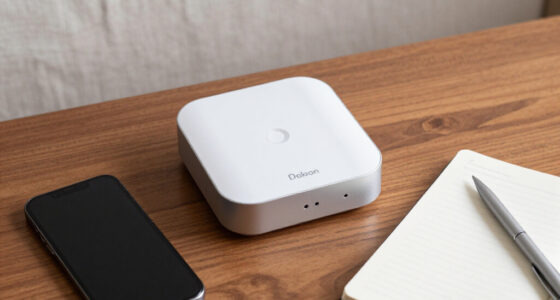
Invisible watermarking software for AI-generated text
As an affiliate, we earn on qualifying purchases.
As an affiliate, we earn on qualifying purchases.
European Rules Add Disclosure Pressure
The report connects Anthropic’s reported action to European Union rules governing AI transparency. Its headline suggests those rules could also push OpenAI’s ChatGPT and Google’s Gemini toward comparable measures. That possible industry effect is an interpretation of the regulatory direction, not confirmation that either competitor has adopted the same method.
Watermarking generated text presents different problems from labeling an image or video. A visible notice can be removed when text is copied, while an invisible statistical pattern may weaken when a passage is revised. Any workable system must balance detectability against writing quality and limit the risk that human-authored text is flagged incorrectly.
The report does not establish whether Anthropic introduced the measure voluntarily, began testing it ahead of a deadline or acted in direct response to a specific legal obligation. It also provides no timeline showing when the watermark was introduced or whether older Claude outputs contain it.
“I think that Claude is about to start hemorrhaging customers.”
— An unidentified commentator quoted in the report’s headline
As an affiliate, we earn on qualifying purchases.
Several central points remain unresolved: what the watermark contains, which Claude products use it and who can read it. It is also unknown whether customers can disable the feature, whether Anthropic discloses it during use or whether the marker survives routine editing.
No evidence supplied with the report establishes the system’s accuracy, durability or false-positive rate. Without testing data or technical documentation, readers cannot determine whether the marker offers reliable attribution or only a probabilistic signal. There is also no confirmed evidence that ChatGPT or Gemini will adopt an equivalent system.
AI-generated text verification tools
As an affiliate, we earn on qualifying purchases.
As an affiliate, we earn on qualifying purchases.
Anthropic Details and EU Guidance Awaited
The next points to watch are a formal explanation from Anthropic, technical documentation describing detection and clearer guidance on any European obligations. Customers will need information about affected products, regional coverage, data handling and whether marked text can be traced specifically to Claude.
Independent testing could show whether the reported watermark survives edits and whether detectors mistakenly classify human writing. Evidence of customer departures would require usage figures, cancellation data or attributable company disclosures; the prediction quoted in the headline does not establish such an outcome.
Key Questions
Is Anthropic visibly labeling every Claude response?
No visible label is described. The report concerns an invisible watermark in ordinary text, but it does not confirm whether the system covers every Claude response or only selected products and tests.
How does the reported Claude watermark work?
The method has not been disclosed in the available material. It could involve statistical language patterns, hidden data or another mechanism, but naming any specific approach as Anthropic’s system would be speculation.
Are Claude customers already leaving?
No customer-loss data were provided. The claim that Claude is about to lose customers is a quoted prediction, not a confirmed trend supported by subscriber or cancellation figures.
Will ChatGPT and Gemini also watermark text?
That has not been confirmed. The report says European rules could push competing providers toward similar measures, but it supplies no announcement from OpenAI or Google establishing an equivalent rollout.
Can editing remove an AI text watermark?
That remains unknown for Anthropic’s reported system. The answer depends on the undisclosed method and on how extensively the text is changed. Independent testing and technical documentation would be needed to judge its durability.
Source: Anthropic
Source: Anthropic
Fall Picks
fall essentials
As an affiliate, we earn on qualifying purchases.