
TL;DR

Get business pricing on tech for your team
- Business-only prices and quantity discounts
- Tax-exempt purchasing
- Multiple users, one account, clear invoices
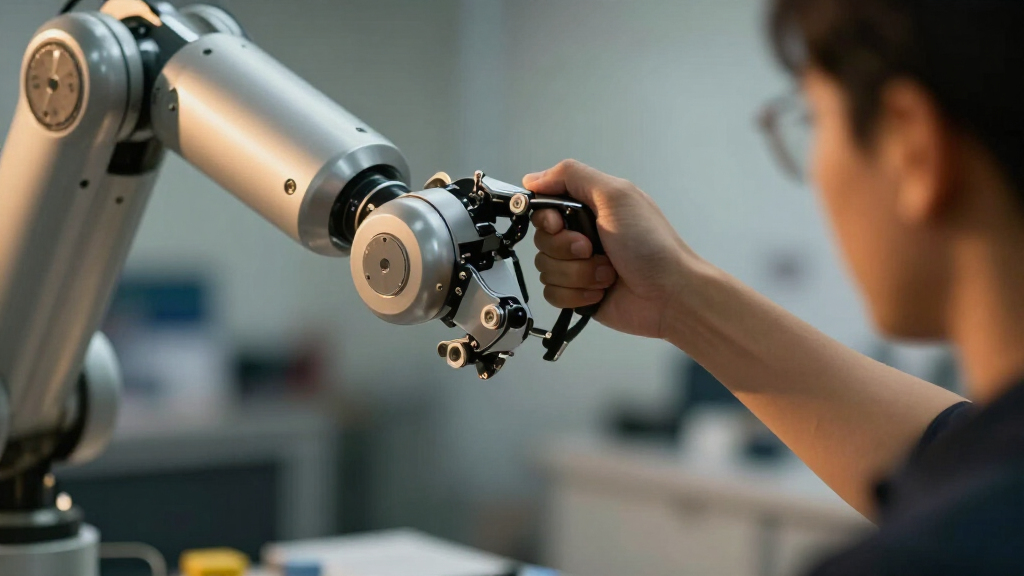
SenseTime says its spinoff ACE ROBOTICS has entered the commercial market and can switch grips when an initial attempt fails. Product specifications, customers, performance data and the exact meaning of “commercial” have not been disclosed.
SenseTime spinoff ACE ROBOTICS has entered the commercial market, according to a SenseTime report that also says a robot can switch its grip during a failed attempt. The development links commercialization with a claimed recovery capability that could make robotic manipulation more reliable outside controlled demonstrations.
SenseTime characterized the robot as able to change its grip after a failure, indicating that it does not simply repeat the same unsuccessful movement. The report does not identify the robot model, the object being handled or the conditions under which the behavior was observed.
The wording suggests that the system can detect an unsuccessful grasp and select another action while the task is underway. SenseTime did not provide success rates, comparison tests or technical documentation showing how the recovery process works or how consistently it performs.
ACE ROBOTICS was identified as a SenseTime spinoff that has now “gone commercial.” The report did not say whether that means paid pilot projects, general sales availability or production deployments, and it named no customers, markets, prices or shipment volumes.
Adaptive Recovery Meets Commercial Deployment
Robots operating around varied objects can encounter slippage, poor alignment and incomplete grasps. A system that recognizes a failure and changes its approach could reduce the need for human intervention, but that benefit depends on repeatable performance across real working conditions.
The commercial claim also moves attention from a technical demonstration to customer use and operating reliability. Buyers will need evidence on uptime, safety, integration and recovery rates before the reported behavior can be judged against existing robotic manipulation systems.
Products Worth Considering

Bose QuietComfort Ultra Earbuds (2nd Gen), Deep Plum

Jackery Solar Generator 1000 V2 with 200W Solar Panel

Apple iPad Air (2025) 13‑inch Wi‑Fi 256 GB – Space Gray (M3 chip)
As an affiliate, we earn on qualifying purchases.
SenseTime Spinoff Targets Real-World Use
SenseTime is the organization cited in connection with ACE ROBOTICS, while ACE is described as a spinoff rather than a SenseTime product line. The report gives no further information about ownership, funding or management.
The grip-switching description places the company’s announcement within the broader push toward robots that respond to task failures instead of relying only on fixed motion sequences. No evidence was provided to establish how ACE ROBOTICS compares with other adaptive manipulation systems.
“switches grip mid-fail”
— SenseTime, in the report headline
Customers, Product and Proof Missing
It is not yet clear which ACE ROBOTICS system performed the reported grip change, whether the behavior was autonomous or remotely assisted, or what qualified as a failed attempt. The report also lacks testing methodology and independent verification.
The scale of the commercial rollout remains unknown. SenseTime did not disclose customer contracts, deployment sites, pricing or manufacturing capacity. As of July 23, 2026, the available information also does not establish whether commercialization refers to pilots, orders, deliveries or recurring revenue.
Commercial Evidence Is the Next Test
The next verifiable milestone would be the release of product specifications and customer deployment details. Data showing how often the robot detects failures, selects a new grip and completes the task would help establish whether the behavior works reliably beyond a demonstration.
Customer announcements, delivery figures or independent evaluations could also clarify the meaning and scale of ACE ROBOTICS’ commercial launch. Until then, the reported grip recovery remains a company-attributed capability with limited public evidence.
Key Questions
What did ACE ROBOTICS announce?
SenseTime reported that ACE ROBOTICS has gone commercial and highlighted a robot that can switch grips during a failed attempt. The report did not provide a full product announcement or launch schedule.
Does “gone commercial” mean the robot is on sale?
That is not yet confirmed. The phrase could refer to paid pilots, customer orders or broader availability, but sales channels, pricing and delivery status were not disclosed.
Has the grip-switching capability been independently tested?
No independent test results were included in the report. There were also no published figures for failure detection, recovery success or task completion.
Is ACE ROBOTICS part of SenseTime?
ACE ROBOTICS is described as a SenseTime spinoff. The available report does not explain its current ownership structure or operating relationship with SenseTime.
What evidence should readers watch for next?
The clearest evidence would include named customer deployments, technical specifications and repeatable performance measurements. Independent testing could show whether mid-task grip recovery works across objects and operating conditions.
Source: SenseTime
Source: SenseTime