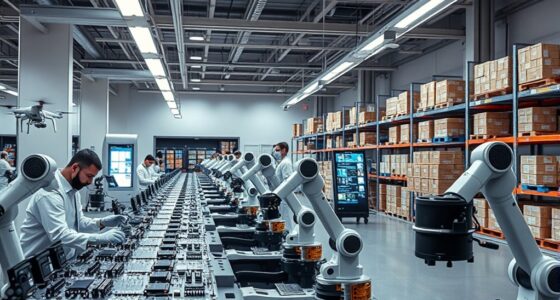

AI is transforming hiring by automating routine tasks like resume screening, interview scheduling, and candidate outreach, making recruitment faster and more efficient. While automation can handle many administrative functions, it’s unlikely to fully replace HR recruiters soon. Human judgment, soft skills, and cultural fit remain essential, so your role will evolve more towards strategic engagement. To understand how AI and human recruiters can work together effectively, explore further insights below.

Get business pricing on tech for your team
- Business-only prices and quantity discounts
- Tax-exempt purchasing
- Multiple users, one account, clear invoices
Key Takeaways
- AI automates routine tasks but enhances, rather than replaces, human recruiters’ strategic and relationship-focused roles.
- Human judgment remains essential for assessing soft skills, cultural fit, and nuanced decision-making.
- AI tools can reduce bias and improve hiring efficiency, supporting recruiters in making data-driven choices.
- Recruiters need to upskill in AI literacy and data analysis to stay relevant in an AI-augmented hiring process.
- Overall, AI is likely to serve as a tool that complements human recruiters, not a complete replacement.
AI-powered resume screening software
As an affiliate, we earn on qualifying purchases.
As an affiliate, we earn on qualifying purchases.
The Growing Role of AI in Recruitment Processes

AI is transforming recruitment by streamlining and enhancing every stage of the hiring process. You’ll notice more organizations adopting AI tools to automate tasks like resume screening, candidate outreach, and interview scheduling. These systems analyze vast amounts of data, identifying qualified candidates faster than traditional methods. AI-powered chatbots personalize communication and handle routine queries, freeing up recruiters’ time for more strategic activities. As a result, hiring timelines shrink, and candidate experiences improve. Recruitment is shifting towards skills-based assessments, supported by AI, which broadens talent pools and reduces bias. In 2025, nearly half of organizations use AI for HR tasks, and almost all hiring leaders incorporate it into their processes. This rapid adoption signals a fundamental transformation in how companies find and select talent.
As an affiliate, we earn on qualifying purchases.
How AI Is Transforming Candidate Screening and Selection
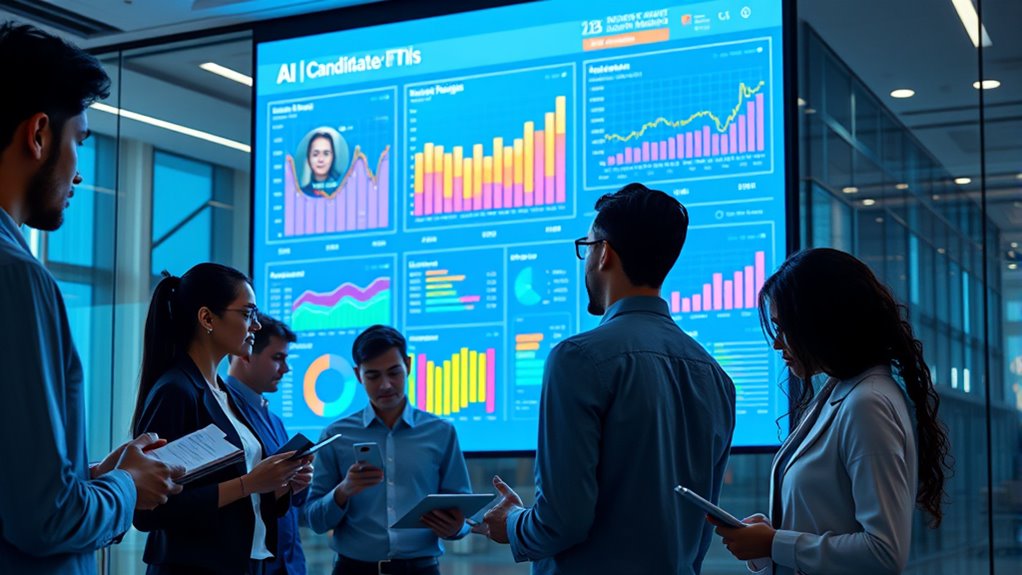
Candidate screening and selection have been revolutionized by advanced automation that analyzes resumes, cover letters, and online profiles to identify the best-fit candidates quickly and accurately. AI tools now go beyond simple keyword matching, understanding context, synonyms, and skill clusters to evaluate qualifications more effectively. Automated systems can proactively reach out to candidates, schedule interviews, and manage communications through chatbots, reducing manual effort and improving candidate experience. AI-driven scheduling tools act as self-driving coordinators, minimizing conflicts and rescheduling delays. This technology accelerates hiring timelines and ensures a more objective, data-driven approach. As a result, you can focus on engaging with top talent, making smarter hiring decisions, and streamlining your recruitment process with greater efficiency.
candidate interview scheduling chatbot
As an affiliate, we earn on qualifying purchases.
As an affiliate, we earn on qualifying purchases.
Skills-Based Hiring: A Shift Driven by Artificial Intelligence
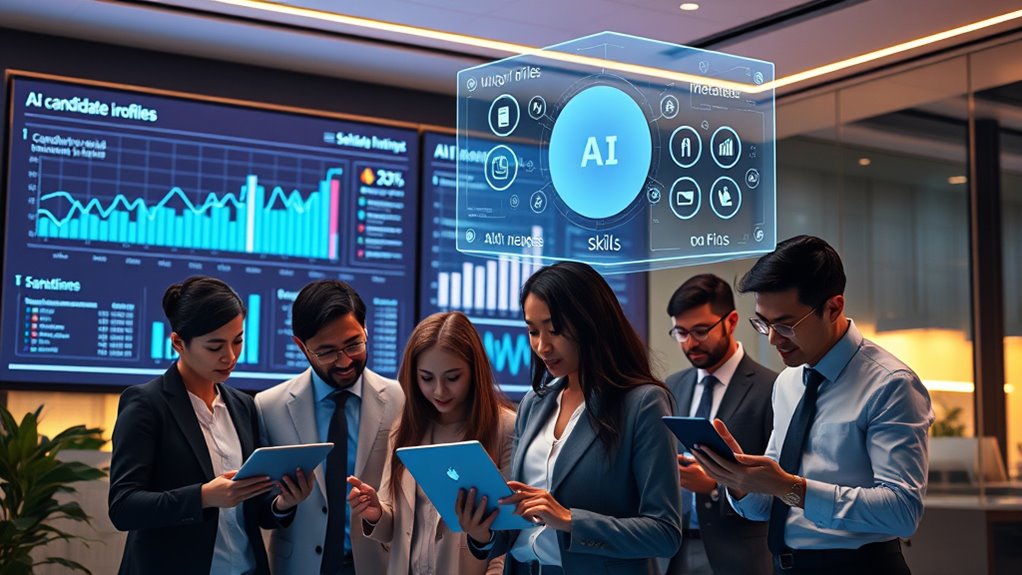
As organizations seek more efficient and equitable hiring practices, the focus has shifted toward skills-based hiring, a transformation largely driven by artificial intelligence. AI helps you move beyond traditional credentials, emphasizing actual capabilities. Here’s how it works:
AI-driven skills-based hiring enhances fairness and efficiency by focusing on actual capabilities over traditional credentials.
- It uses skills taxonomies and assessments to objectively match candidates to roles.
- It broadens talent pools by valuing demonstrated skills over degrees or titles.
- It reduces bias, supporting diversity and inclusion in hiring decisions.
- It enables quick identification of candidates suited for emerging or hybrid roles overlooked by conventional filters.
- Validated through extensive research, 16PF provides additional insights into candidates’ core personality traits, further refining hiring accuracy.
This shift improves hiring speed, enhances job fit, lowers costs, and fosters internal mobility. AI’s ability to assess real skills makes hiring more accurate, fair, and aligned with evolving business needs.
skills-based hiring assessment tools
As an affiliate, we earn on qualifying purchases.
As an affiliate, we earn on qualifying purchases.
Perceptions of AI’s Impact on Recruiters and HR Teams

Many recruiters and HR teams feel anxious about AI disrupting their roles, worrying about job security and changing workflows. Yet, they also see AI’s benefits in speeding up processes, improving candidate matches, and reducing manual tasks. Understanding these perceptions helps you navigate the balance between concern and opportunity in AI-driven hiring. As AI systems become more trustworthy and capable of handling complex tasks, the potential for AI to complement rather than replace human recruiters increases, fostering a collaborative AI safety environment that emphasizes responsible deployment.
Recruiter Anxiety Levels
Concerns about AI’s impact on recruiting are widespread among HR professionals, with many feeling anxious about job security and changing roles. You might worry that automation could replace your tasks or make your skills obsolete. To navigate these fears, consider these points:
- Many recruiters believe AI will threaten entry-level and administrative roles first.
- A significant portion fears losing control over candidate selection and assessment.
- Some worry that AI will devalue human judgment in hiring decisions.
- Despite concerns, others see AI as a tool to enhance their work, not replace it.
- Understanding the role of contrast ratio in projectors can symbolize the importance of nuanced decision-making in HR technology adoption.
Your anxiety stems from uncertainty about how AI will reshape your responsibilities. Recognizing that AI can augment your capabilities may help ease these fears and open opportunities for growth in your role.
Perceived AI Benefits
Have you considered how AI can actually benefit recruiters and HR teams? AI streamlines many recruitment tasks, saving you time and reducing manual effort. Automated resume screening quickly identifies qualified candidates, allowing you to focus on engaging top talent. AI-driven tools personalize candidate communication and handle routine queries, creating a smoother experience for applicants. These systems also enhance decision-making by providing objective insights into candidate skills and fit, leading to smarter hires. Additionally, AI helps uncover diverse talent pools by removing unconscious biases. By automating repetitive tasks, AI enables you to prioritize strategic activities like relationship-building and employer branding. Moreover, understanding the Power of Imagination can inspire innovative ways to integrate AI into your HR strategies. Overall, these benefits empower HR teams to work more efficiently, make better hiring decisions, and improve candidate experiences—benefits that can elevate your recruitment process considerably.
Automation Benefits: Faster Hiring and Improved Candidate Experience

AI speeds up your hiring process by automating tasks like resume screening and interview scheduling, saving you valuable time. It also keeps candidates engaged through personalized communication and timely updates, creating a smoother experience. When you leverage automation, you can fill positions faster while enhancing candidate satisfaction. Additionally, implementing automated insights helps HR teams identify top candidates more efficiently, further streamlining recruitment efforts.
Accelerated Hiring Timelines
Automation tools in hiring streamline the recruitment process by substantially reducing the time it takes to identify and engage qualified candidates. You’ll notice faster screening, scheduling, and communication, allowing you to move quickly through each stage. Specifically:
- Resume screening becomes more efficient as AI analyzes skills and experience beyond keywords.
- Candidate outreach is automated, making initial contact swift and consistent.
- Interview scheduling is handled automatically, minimizing delays and conflicts.
- Real-time updates and communication keep candidates engaged, preventing drop-offs.
This acceleration means you can fill roles faster, reducing time-to-hire and improving the candidate experience. With AI handling routine tasks, you focus more on strategic decision-making, ensuring you don’t miss top talent while streamlining the entire hiring process.
Enhanced Candidate Engagement
Enhanced candidate engagement driven by automation transforms the hiring process by making interactions faster, more personalized, and more consistent. You’ll notice candidates receive immediate responses through chatbots, answering questions and providing updates without delays. Automated messaging tailors communication based on individual profiles, making each candidate feel valued and understood. Scheduling interviews becomes seamless with AI-powered tools that coordinate calendars and send timely reminders, eliminating back-and-forth emails. This real-time engagement reduces drop-offs and keeps candidates informed throughout the process. By proactively addressing candidate needs and streamlining interactions, automation creates a smoother, more positive experience. Additionally, leveraging high-pressure application methods from the best airless paint sprayers analogy can inspire HR teams to adopt more efficient and effective recruitment practices. As a result, you’ll not only attract top talent more efficiently but also enhance your employer brand’s reputation for responsiveness and care.
Potential Risks and Limitations of AI in HR

While AI offers significant benefits for HR, it also introduces notable risks and limitations that organizations must consider. A key concern is the potential for bias and unfairness, which can be exacerbated if training data reflects existing societal prejudices.
- Bias and unfairness: AI systems can perpetuate existing biases, leading to unfair candidate evaluations.
- Lack of transparency: Many algorithms operate as “black boxes,” making it difficult to understand how decisions are made.
- Overreliance on automation: Excessive dependence on AI may overlook nuanced human qualities like empathy and cultural fit.
- Data privacy concerns: Handling sensitive candidate information raises risks of breaches and misuse.
These limitations highlight the need for organizations to balance AI’s efficiency with ethical standards, human oversight, and transparency to avoid unintended consequences.
Workforce Disruption and the Need for Upskilling

As AI continues to reshape the workplace, it’s clear that workers must adapt quickly to stay relevant. You’ll need to develop new skills and stay current with emerging technologies to remain competitive. Automation is changing job roles, emphasizing skills like data analysis, digital literacy, and problem-solving. Upgrading your skill set isn’t optional anymore; it’s essential for job security and career growth. Many roles will involve collaborating with AI tools or managing new processes, so understanding how these systems work will give you an advantage. Employers increasingly value continuous learning, offering training programs and reskilling initiatives. Embracing these opportunities helps you stay ahead of disruption, ensuring you remain valuable and adaptable in an evolving job market. Staying proactive is your best strategy for steering workforce changes driven by AI. Additionally, gaining knowledge about beginners guides can provide foundational skills that facilitate adaptation to technological changes.
Changes in Job Security for HR Professionals

As AI transforms recruitment processes, your role as an HR professional shifts from manual tasks toward overseeing automation and data analysis. You may find your job security impacted as AI takes on more responsibilities, but it also opens opportunities to focus on strategic and people-centered work. Embracing these changes is vital to staying relevant in an evolving HR landscape. Developing skills in well-being techniques such as mindfulness and emotional support can help HR professionals adapt to the new demands of the field.
AI’s Impact on Jobs
AI is transforming the landscape of HR jobs, directly impacting job security for HR professionals. You might find your role shifting as automation handles repetitive tasks. Here’s what to expect:
- Routine tasks like screening resumes or scheduling interviews will be automated, reducing manual workload.
- AI-driven insights will inform decision-making, making some traditional HR functions less reliant on human input.
- HR specialists will need to adapt by focusing on strategic, relationship-building activities AI can’t perform.
- The demand for skills in AI management, data analysis, and tech integration will grow, reshaping job requirements.
- As automation advances, organizations will increasingly rely on data privacy measures to protect employee information.
While some roles may diminish, opportunities will emerge for those who develop new competencies. Staying adaptable is key to maintaining your job security amid AI advancements.
Evolving HR Roles
Automation is reshaping HR roles by taking over routine tasks like resume screening and interview scheduling. This shift allows you to focus more on strategic activities such as talent development and employee engagement. As a result, job security for HR professionals is evolving—many roles are transforming rather than disappearing. Here’s a quick look at how roles are changing:
| Traditional HR Tasks | New Focus Areas |
|---|---|
| Resume screening | Talent strategy and culture fit |
| Interview scheduling | Employee experience optimization |
| Manual onboarding | Data-driven decision-making |
| Candidate communication | Building employer brand |
| Compliance paperwork | Strategic workforce planning |
You’ll need to adapt by developing skills in AI literacy, analytics, and strategic thinking to remain essential in this new HR landscape.
The Future of AI-Enabled Recruitment Technologies

The future of AI-enabled recruitment technologies promises to reshape how organizations identify and engage talent. You’ll see smarter tools that streamline every step of hiring. Here’s what’s coming:
- AI will deepen candidate insights by analyzing behavioral data and predicting cultural fit.
- Automated interview systems will assess soft skills through video analysis, reducing bias.
- Real-time analytics will enable quicker decision-making, shortening hiring cycles.
- Personalized candidate experiences will become standard, improving engagement and employer branding.
These innovations will make hiring more efficient, objective, and tailored. You’ll be able to focus more on strategic tasks while AI handles repetitive processes. As these technologies evolve, they’ll complement your expertise, helping you find better matches faster and with greater confidence.
Preparing for a Hybrid Human-AI Hiring Landscape

As recruitment technologies become more sophisticated, organizations are increasingly blending human judgment with AI-driven tools to create a hybrid hiring approach. You’ll need to adapt by understanding how to leverage AI’s strengths—such as resume screening, skills assessments, and candidate outreach—while maintaining human oversight for cultural fit and nuanced decision-making. Training your team to work alongside AI tools ensures they interpret data effectively and focus on candidate engagement. Embracing this balance helps improve hiring speed, quality, and diversity. You should also stay updated on AI capabilities and limitations, continuously refining processes to maximize efficiency without sacrificing empathy. Preparing for this hybrid landscape means fostering collaboration between people and machines, ensuring technology enhances, rather than replaces, human insight in hiring.
Frequently Asked Questions
How Can HR Teams Effectively Collaborate With AI Tools?
You can collaborate effectively with AI tools by understanding their capabilities and integrating them into your workflows. Use AI to automate repetitive tasks like resume screening and scheduling, freeing you up for strategic activities. Stay involved in designing AI-assisted processes to guarantee fairness and accuracy. Regularly review AI outputs, provide feedback, and adapt your approach to maximize benefits, creating a seamless partnership that enhances hiring efficiency and candidate experience.
What Ethical Concerns Arise With Ai-Driven Recruitment?
You face ethical concerns that are huge—like AI deciding someone’s fate without human compassion. Biases embedded in algorithms could unfairly exclude qualified candidates, perpetuating discrimination. Privacy risks also loom if sensitive data is mishandled or misused. Transparency becomes critical; candidates deserve to know how decisions are made. Without strict guidelines, AI could erode trust, creating a hiring process that’s impersonal, unfair, and ethically questionable.
Will AI Reduce the Diversity of Hires?
AI can actually enhance the diversity of your hires when used correctly. By focusing on skills and removing unconscious biases, AI helps you evaluate candidates more objectively. You’ll access a wider talent pool, especially for non-traditional backgrounds, and make fairer decisions. Just guarantee your AI tools are properly designed to avoid bias reinforcement. When implemented thoughtfully, AI supports your goal of building a more diverse, inclusive workforce.
How Will AI Impact HR Job Roles Long-Term?
AI will transform your HR job roles long-term by automating routine tasks like resume screening, candidate outreach, and scheduling, allowing you to focus on strategic, human-centered activities. You’ll need to adapt by developing skills in AI tools, data analysis, and skills-based hiring practices. While automation may reduce some tasks, your role will evolve into managing AI systems, enhancing candidate experience, and making more informed decisions, ultimately making your work more impactful and efficient.
What Skills Do HR Professionals Need in an Ai-Enhanced Hiring Environment?
You need to develop strong digital literacy, data analysis, and AI tool management skills to thrive in an AI-enhanced hiring environment. Focus on understanding how AI systems evaluate candidates, interpret data insights, and incorporate ethical considerations. Building expertise in skills-based hiring, diversity strategies, and candidate experience will set you apart. Embracing continuous learning and adapting to new technologies guarantees you stay relevant and effective in modern recruitment practices.
Conclusion
While some worry AI will replace HR recruiters, it’s more about transformation than elimination. Embracing AI enables you to focus on strategic, human-centric aspects of hiring, like nurturing talent and building culture. Automation speeds up processes and improves candidate experience, but your judgment and interpersonal skills remain irreplaceable. By adapting and upskilling, you can thrive alongside AI, shaping a future where technology supports your role rather than diminishes it.
Halloween Picks
halloween
As an affiliate, we earn on qualifying purchases.