Women face both risks and opportunities from technological change. They tend to work in sectors with high automation potential, like admin, sales, and services, which puts jobs at risk. But they’re also moving into high-skill roles in healthcare, education, and tech, creating new opportunities. Age, skills, and job type influence vulnerability, and regional differences matter worldwide. To understand how these shifts shape women’s futures, explore the detailed factors behind automation’s gendered impacts.
Key Takeaways
- Women are disproportionately employed in high-risk, automation-prone roles like administrative and service jobs.
- Older women with limited skills face greater displacement risks due to automation.
- Women are increasingly moving into high-skill sectors like healthcare and education, balancing some automation impacts.
- Women in high-income countries experience higher immediate automation threats than those in lower-income regions.
- Addressing gendered automation impacts requires targeted reskilling, inclusive policies, and gender-specific workforce data.
Top picks for "women automation technological"
Open Amazon search results for this keyword.
As an affiliate, we earn on qualifying purchases.
The Occupational Landscape and Gender Segregation

The occupational landscape is shaped markedly by gender segregation, which directs women into specific sectors and roles. You’ll notice women are often concentrated in administrative, sales, and service jobs—fields with higher automation risks. While these roles can offer better pay and benefits, they also expose women to faster technological changes. Women are overrepresented in both high-risk and low-risk jobs, but the high-risk ones tend to be more accessible and better paid. For every seven men in jobs with a 90%+ chance of automation, there are ten women. This segregation means women are more likely to work in sectors where automation is advancing rapidly, increasing their vulnerability to job displacement. Recognizing this pattern helps explain why gendered occupational paths influence automation exposure. Additionally, understanding automation-related risks is crucial for developing equitable workforce policies that address these disparities.
Differential Vulnerabilities Across Age, Skills, and Employment Types
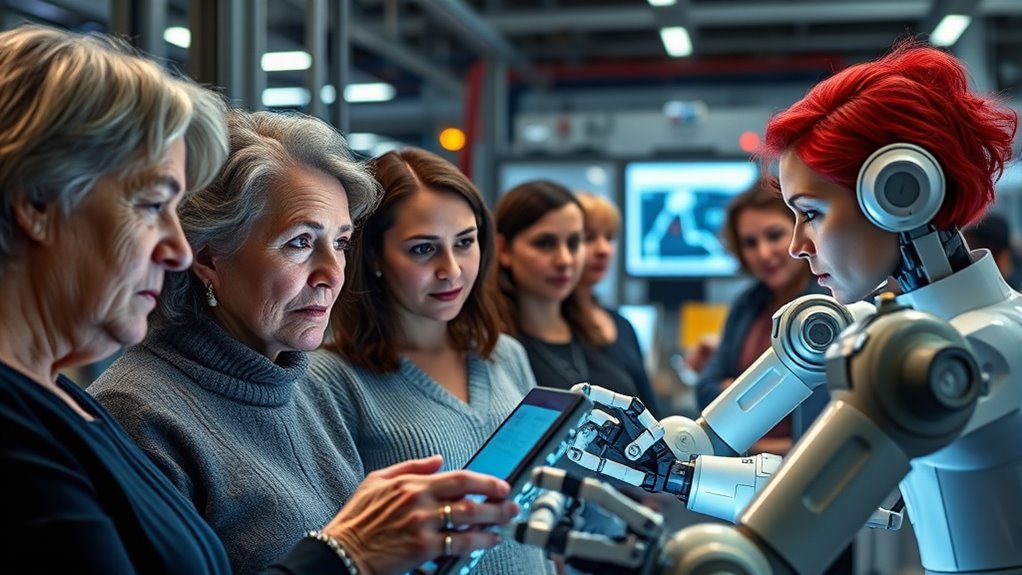
Older women, especially those over 55, face greater automation risks because they often lack the postsecondary education, skills, or literacy needed to adapt to technological changes. Without access to upskilling opportunities, they’re more vulnerable to job displacement as automation replaces routine tasks. Women working part-time, in small firms, or outside unions face higher risks because these jobs tend to be less secure and less adaptable to change. Those with disabilities or limited training opportunities are even more exposed. Tasks women perform within their roles—particularly repetitive or manual ones—also increase their vulnerability. While some women shift into high-skill, social, or cognitive roles, many remain in lower-paid sectors like caregiving or education, which are less susceptible to automation but offer fewer benefits. Additionally, the role of home-based and remote work in providing flexible opportunities can influence how women adapt to technological shifts.
Gender Shifts in Response to Automation and Emerging Opportunities

As automation reshapes the labor market, women are increasingly shifting into high-skill, high-wage roles that leverage their social and cognitive strengths. This progression helps offset automation risks in lower-skilled jobs. Women are entering fields like healthcare, education, and social services, which require emotional intelligence and problem-solving abilities. These shifts foster greater gender integration in emerging sectors, though disparities remain. The table below illustrates how women are moving into new opportunities:
| Sector | Women’s Growth Trend |
|---|---|
| Healthcare | Increased employment and training opportunities |
| Education | Greater representation in leadership roles |
| Tech and Data Analytics | Growing presence, yet underrepresented |
This evolution offers hope for closing gender gaps but underscores the need for targeted policies to support women’s advancement in high-growth sectors.
Global Variations and Regional Disparities in Automation Risks
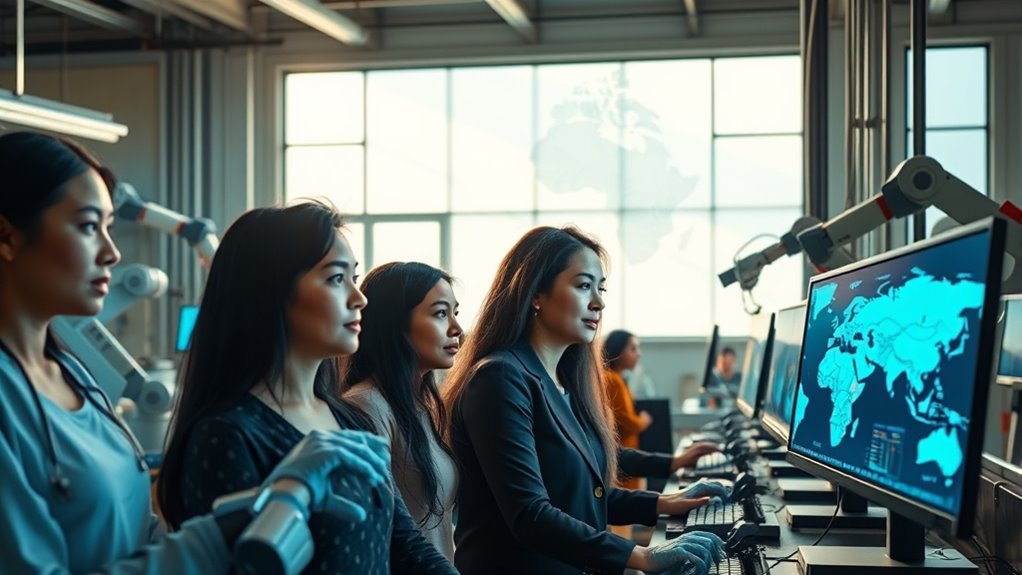
Automation risks differ markedly across regions, with women in high-income countries facing much higher exposure than those in lower-income nations. You’ll find that women in wealthier nations encounter greater immediate threats from automation, especially with advances like generative AI affecting about 34% of their jobs, compared to just 11% in low-income countries. Despite lower overall automation exposure, resource limitations in poorer regions hinder effective workforce transitions. On average, women have a 40% chance of automation risk, slightly higher than men’s, with the gap widening at the highest risk levels. In the most vulnerable jobs—those over 70% likely to be automated—women are 1.2 times more affected than men. These regional disparities highlight how economic development shapes automation’s gendered impacts worldwide. Additionally, the effectiveness of protective measures such as upskilling programs varies greatly depending on regional infrastructure and investment levels.
Addressing Gender Gaps: Policy Challenges and Research Needs

Despite regional differences in automation exposure, addressing the gender gaps it creates presents significant policy challenges. You need targeted policies that support women’s reskilling, lifelong learning, and transitions into high-growth sectors. Current research often overlooks gender-specific task differences within occupations, making it harder to develop effective interventions. You should prioritize collecting extensive, cross-national data to track how automation intersects with gender and other inequalities over time. Policies must also promote equal access to digital skills, tech education, and leadership opportunities to bridge representation gaps in AI and high-tech fields. Addressing these issues requires a nuanced understanding of gendered labor market dynamics, ensuring women can benefit from technological advances instead of being left behind. Incorporating insights from vetted Halloween product reviews can offer innovative perspectives on engaging diverse groups in technology adoption. Only then can you effectively reduce gender disparities driven by automation.
Frequently Asked Questions
How Do Within-Occupation Task Differences Influence Gender-Specific Automation Risks?
You should know that within-occupation task differences considerably impact gender-specific automation risks. If you perform more repetitive or routine tasks, you’re at a higher risk of automation, especially women who often do such tasks. Conversely, women engaged in social, cognitive, or non-routine tasks face lower automation threats. Recognizing these task differences helps identify vulnerable groups and underscores the need for targeted upskilling to mitigate automation’s gendered impacts.
What Role Does Workplace Upskilling Play in Reducing Women’s Automation Vulnerability?
Imagine your skills as a shield against automation’s advance. Workplace upskilling plays a pivotal role in reducing your vulnerability by equipping you with high-demand, adaptable abilities. Data shows women who pursue ongoing training are more likely to transition into high-skill, high-wage roles, balancing the automation threat. Investing in lifelong learning helps you stay ahead, ensuring you’re not left behind as technology reshapes the labor market.
How Does Automation Impact Women’s Representation in High-Tech and AI Sectors?
Automation impacts women’s representation in high-tech and AI sectors by underrepresenting them, with only about 30% of AI workers being women. This limits their influence and access to high-growth, well-paying roles. As automation advances, women face barriers to entering these fields, which could deepen gender disparities in power and earnings. Encouraging targeted policies and inclusive education is essential to improve women’s participation and reduce these gaps in high-tech industries.
Are There Effective Policies Proven to Close Gender Gaps Caused by Automation?
You can close gender gaps caused by automation by implementing targeted policies. For instance, reskilling programs specifically for women in high-risk sectors have proven effective. Supporting lifelong learning, increasing access to high-paying tech roles, and promoting gender diversity in STEM fields help reduce disparities. Additionally, policies that foster workplace flexibility and equal pay contribute to narrowing gaps, ensuring women aren’t left behind in the evolving labor market.
How Do Cultural Norms Affect Women’s Opportunities to Transition Into New Jobs?
Cultural norms shape your opportunities by influencing societal expectations and biases. If your culture discourages women from pursuing STEM or high-tech careers, you may face limited access to reskilling and high-growth jobs. These norms can also impact your confidence and support systems, making it harder to shift into new roles. Challenging stereotypes, promoting inclusive policies, and providing targeted education can help you overcome these barriers and access emerging opportunities.
Conclusion
Just like a river carving new paths around obstacles, automation reshapes your job landscape, revealing both risks and opportunities. If you’re aware of these shifts, you can navigate change more confidently. Remember, women in tech have shown resilience, turning challenges into breakthroughs. By staying informed and advocating for inclusive policies, you can help guarantee this technological tide lifts everyone equally, transforming potential chaos into a new chapter of growth and equality.