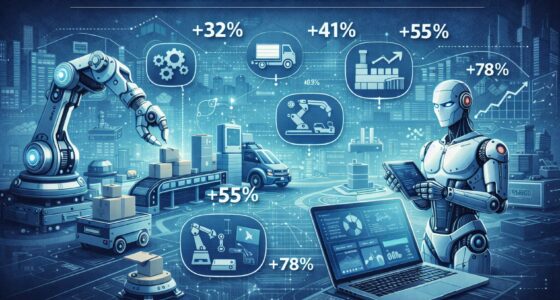

Historically, automation during the Industrial Revolution displaced many workers but also sparked innovation and new industries. Although jobs were lost initially, people adapted through retraining and shifting to emerging sectors, leading to long-term economic growth. These patterns offer valuable lessons for today’s rapid automation shifts. By understanding how past societies managed change, you can see strategies that help workers stay resilient and find new opportunities—continue exploring how these lessons can prepare you for the future.
Key Takeaways
- The Industrial Revolution’s mechanization displaced artisans but ultimately created new manufacturing and engineering jobs.
- Workforce resilience depended on retraining, geographic mobility, and adapting to emerging industries.
- Social unrest and protests during past automation shifts highlight the need for proactive policy and social safety nets.
- Investing in education and skill development proved essential for workers to transition into new roles.
- Historical patterns show that automation can drive long-term economic growth despite short-term disruptions.
professional retraining courses online
As an affiliate, we earn on qualifying purchases.
As an affiliate, we earn on qualifying purchases.
The Dawn of Mechanical Innovation: The Industrial Revolution’s Impact on Employment

The Industrial Revolution marked a turning point by introducing mechanization that transformed traditional jobs. You’d notice that artisans and farm workers, who once relied on manual skills, faced significant changes as machines took over their tasks. Factories sprang up, boosting productivity but displacing many low-skilled workers. This shift caused social unrest, with fears of widespread job loss and wage cuts spreading quickly. Despite initial hardships, new industries and roles emerged, eventually reshaping the job landscape. Over time, the economy adapted, and employment patterns shifted toward more specialized and technological jobs. This historical pattern shows that while automation disrupts employment in the short term, it often leads to long-term growth and new opportunities, setting the stage for future technological advancements.

Attract, Retain, and Develop: Shaping a Skilled Workforce for the Future
As an affiliate, we earn on qualifying purchases.
As an affiliate, we earn on qualifying purchases.
Parallels Between Past and Present: Automation’s Role in Reshaping Workforces

You can see how history shows automation often displaces workers initially but leads to new job opportunities over time. As in the past, today’s workforce must adapt through retraining and skill development to stay resilient. Learning from previous patterns can help policymakers design strategies that balance productivity gains with social stability. Incorporating music therapy techniques can also aid in managing workplace stress and enhancing employee well-being during periods of transition.
Historical Displacement Patterns
Historical patterns reveal that automation often causes significant displacement initially but eventually leads to the emergence of new job categories. During the Industrial Revolution, mechanization displaced artisans and manual laborers but created industries like manufacturing and engineering. Today, automation replaces routine tasks in sectors like manufacturing, transport, and retail, causing short-term job losses. However, history shows that these disruptions often result in new roles requiring different skills. The development of home automation technology has demonstrated how technological advances can both displace and create employment opportunities in modern times.
- Early automation sparks social anxiety, protests, and worker unrest.
- Displaced workers tend to shift into emerging industries over time.
- Investment in education and retraining helps workforce resilience and long-term employment stability.
Workforce Adaptation Strategies
As automation continues to reshape industries, adapting the workforce remains essential for maintaining economic stability and social cohesion. You should focus on rapid retraining programs that equip workers with skills in non-automatable tasks, such as critical thinking, creativity, and social skills. Emphasizing lifelong learning, vocational training, and accessible education helps workers transition into emerging roles. Collaborating with industry and government ensures training aligns with evolving job demands. Encouraging regional development initiatives can foster local job creation and support displaced workers. Embracing flexible work arrangements and promoting entrepreneurship also contribute to resilience. Just as past societies adapted through skill development and innovation, today’s workforce needs proactive strategies that prioritize upskilling and continuous learning to navigate automation’s ongoing impact effectively.
Policy Lessons for Today
History shows that automation often sparks social anxiety and job displacement, but it also demonstrates that economies tend to adapt over time by creating new job categories and opportunities. To navigate today’s automation-driven changes, you should focus on proactive policies that support worker transition and resilience.
- Invest in education and skills training, especially for roles less vulnerable to automation, like complex problem-solving and creative tasks.
- Implement rapid reemployment programs to help displaced workers find new jobs quickly, reducing unemployment spikes.
- Promote inclusive growth by supporting sectors and communities most affected by automation, ensuring no group is left behind.

2017 US Department of Labor Employment Workshop Participant Guide: Transition from Military to Civilian Workforce
As an affiliate, we earn on qualifying purchases.
As an affiliate, we earn on qualifying purchases.
Displacement and Resilience: How Workers Adapted During Historical Technological Shifts
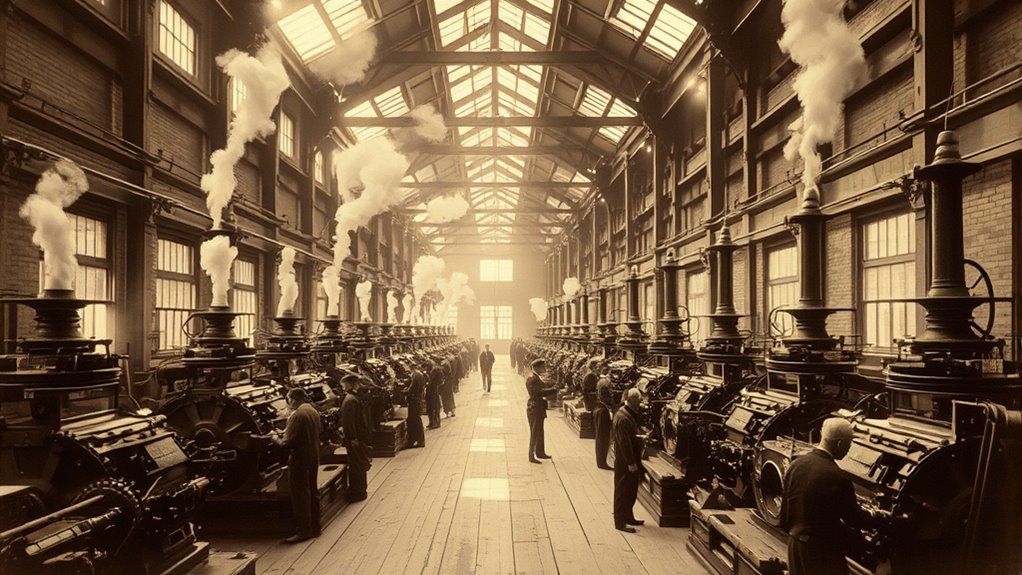
When new technologies disrupt established industries, workers often face immediate displacement and economic uncertainty. Yet, history shows resilience. During the Industrial Revolution, many artisans and manual workers lost jobs. However, they adapted by shifting to emerging industries like steel, transportation, and services. Re-skilling programs and community support helped displaced workers find new roles. Some workers moved geographically or took on less skilled jobs temporarily. Over time, new job categories arose, replacing old ones. The key was flexibility and learning new skills.
automation impact on jobs educational resources
As an affiliate, we earn on qualifying purchases.
As an affiliate, we earn on qualifying purchases.
The Economic Ripple Effect: Productivity Gains Versus Job Security
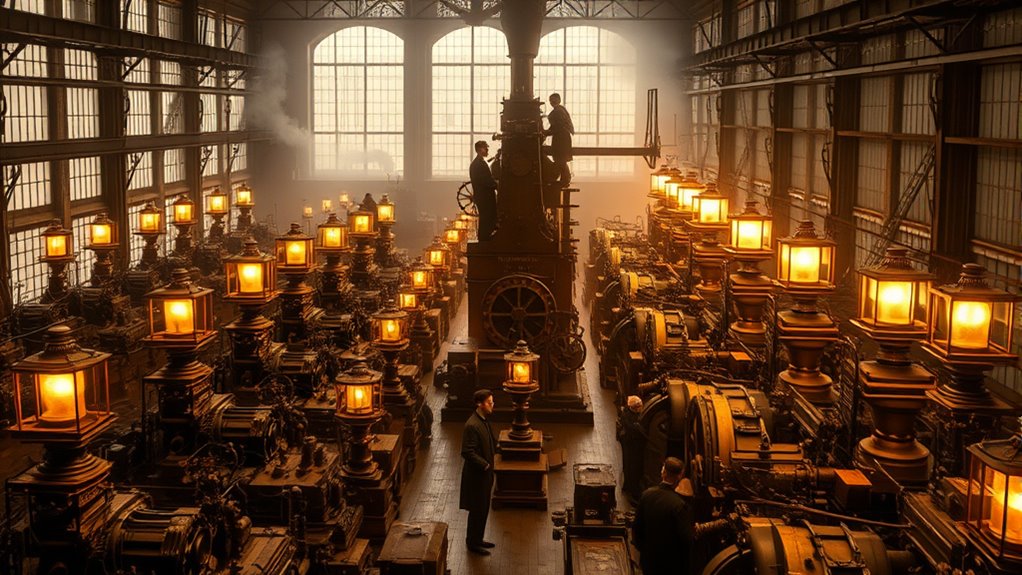
Automation drives significant productivity gains that boost economic growth, but these benefits often come with a trade-off: job security. As machines and AI increase efficiency, companies see higher output and profits, fueling overall economic expansion. However, this often leads to displacement, especially for low-skilled workers, creating short-term unemployment and wage pressures. You may notice that regions with high automation deployment experience job losses and wage stagnation. Yet, history shows that, over time, new roles emerge, shifting employment rather than eliminating it altogether. Additionally, the importance of inspirational guidance and support from leaders and communities helps individuals adapt to these changes and find new opportunities.
Education and Skills: Building a Workforce Ready for Change

To stay ahead of automation, you need to develop skills that machines can’t easily replicate, like creative thinking and complex problem-solving. Investing in continuous learning helps you adapt as job requirements evolve rapidly. Focusing on non-automatable skills will be key to building a resilient workforce for the future. Embracing existential self-reflection can also foster adaptability and personal growth in an ever-changing job landscape.
Reskilling for Automation
As technology rapidly advances, preparing the workforce through effective reskilling becomes essential for maintaining employment stability and economic growth. You need to focus on developing skills that complement automation, such as critical thinking, creativity, and complex problem-solving. Investing in education programs that emphasize these areas helps workers adapt to changing job demands. You can also benefit from targeted training initiatives that upgrade existing skills, making you more resilient to automation threats. Engaging in ethical hacking practices can enhance your understanding of cybersecurity, which is increasingly vital in automated environments. – Emphasize continuous learning and adaptability to stay ahead of technological shifts – Focus on acquiring skills in non-automatable tasks like emotional intelligence and strategic thinking – Collaborate with employers and policymakers to access reskilling resources and opportunities
Emphasizing Non-automatable Skills
Developing skills that robots can’t easily replicate is key to preparing the workforce for ongoing technological change. Focus on cultivating creativity, critical thinking, emotional intelligence, and complex problem-solving. These skills are inherently human and difficult for machines to mimic, making you more adaptable and less vulnerable to automation. Emphasize lifelong learning and continuous skill development, especially in areas like communication, leadership, and innovation. By investing in education that promotes non-automatable abilities, you’ll stay ahead of the shifting job landscape. This approach not only safeguards your employment but also positions you to thrive in new roles that demand uniquely human talents. Building a versatile skill set ensures you remain relevant, resilient, and capable of steering through the evolving economy. Additionally, understanding sound design principles can foster creativity and technical proficiency that are difficult for automation to replace.
Policy Responses: Lessons Learned in Managing Societal Transitions

Historical experiences with automation show that managing societal shifts requires proactive policy measures. You need strategies to ease transitions and prevent social unrest. Learning from the Industrial Revolution, focus on investments in retraining displaced workers, creating new job opportunities, and supporting communities affected by automation.
Historical automation shifts demand proactive policies to retrain workers and support affected communities.
Consider these key lessons:
- Implement rapid retraining and reemployment programs to reduce medium-term unemployment.
- Invest in education systems that emphasize skills less vulnerable to automation, such as critical thinking and creativity.
- Develop social safety nets like universal basic income or wage subsidies to cushion economic shocks and foster inclusive growth.
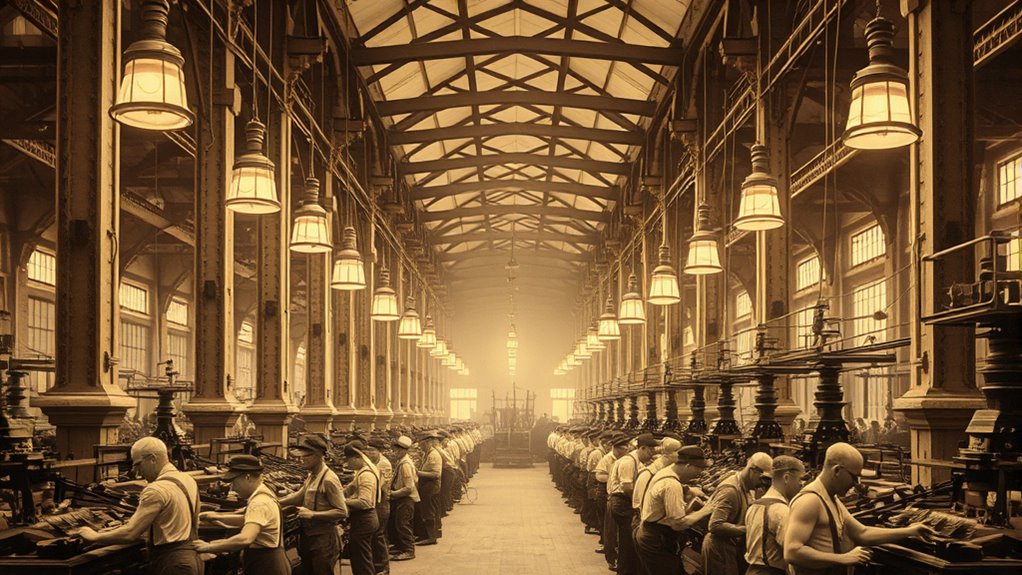
Exploring the future of work amid increasing automation requires deliberate strategies to promote inclusive growth. You should focus on investing in education and continuous skill development, especially for roles vulnerable to automation. Encourage policies that support rapid reemployment and retraining programs to help displaced workers transition smoothly into new industries. Emphasize the importance of fostering industries that rely on non-automatable skills, like creative, social, and complex cognitive tasks. Promoting regional economic diversification can also mitigate localized job losses. Additionally, supporting social safety nets and wage protections guarantees workers aren’t left behind during this transition. Understanding financial terms and jargon can help workers make informed decisions about their financial stability during these changes. By balancing technological advancement with proactive social policies, you can help build a resilient workforce capable of thriving amid automation’s evolving landscape.
Frequently Asked Questions
How Did Societies Historically Cope With Mass Job Displacement During Technological Shifts?
You should recognize that societies historically coped with mass job displacement by implementing policies that encouraged retraining and education. They also fostered social safety nets and promoted new industries to create alternative employment opportunities. Communities adapted through collective efforts, and over time, new job categories emerged. Your role is to support continuous learning and advocate for policies that help workers shift seamlessly during technological shifts, ensuring economic resilience and social stability.
What Long-Term Effects Did Industrial Automation Have on Income Inequality?
You might think automation only widens income gaps, but history shows it can also create opportunities for upward mobility. Long-term, automation often increases income inequality initially, as high-skilled workers benefit more. However, over time, new industries and jobs emerge, helping to narrow gaps. Your challenge is to support policies that promote education and retraining, ensuring everyone can share in the economic gains of automation.
How Quickly Did New Job Categories Emerge After Previous Waves of Automation?
New job categories often emerged within a few years after previous waves of automation. You’ll find that as mechanization displaced certain roles, new industries and roles quickly appeared, sometimes in less than a decade. This pattern allowed the labor market to adapt over time, creating opportunities for workers to shift. Staying flexible, retraining, and acquiring new skills help you capitalize on these emerging job categories and guarantee long-term employment stability.
Are There Specific Industries or Sectors More Resistant to Automation’s Impact?
Ever wonder which industries stand firm against automation? You’ll find that sectors requiring high levels of human judgment, creativity, and emotional intelligence—like healthcare, education, and arts—are more resistant. Jobs in these fields involve complex social interactions and nuanced decision-making that machines struggle to replicate. By focusing on skills that machines can’t easily mimic, you can better protect your career from automation’s impact. Isn’t investing in these areas a smart move?
What Role Did Government Policies Play in Managing Industrial Revolution Employment Transitions?
You see, government policies during the Industrial Revolution played a pivotal role in easing employment shifts. They implemented worker retraining programs, established safety nets, and promoted social reforms to reduce unrest. These policies helped workers adapt to new industries and technologies, preventing widespread hardship. Today, similar strategies are essential to manage automation’s impact, ensuring workers can transition smoothly and that economic growth benefits everyone, not just a few.
Conclusion
Just like the steam engine once transformed entire industries, today’s automation is reshaping your world. Remember how workers adapted during the Industrial Revolution, turning challenges into new opportunities? It’s a reminder that resilience and innovation can turn upheaval into growth. By learning from history, you can help shape a future where technology lifts everyone up—making sure that, together, you ride the waves of change rather than be overwhelmed by them.