

While an AI certification isn’t strictly required to advance your career, earning one can boost your skills, credibility, and job prospects. It helps demonstrate your expertise and keeps you updated on the latest tools and ethical standards. However, practical experience, networking, and ongoing learning are equally important. If you’re curious about choosing the right certification or exploring alternatives, explore further to discover how you can best grow in AI.

Get business pricing on tech for your team
- Business-only prices and quantity discounts
- Tax-exempt purchasing
- Multiple users, one account, clear invoices
Key Takeaways
- AI certifications validate skills and can boost career prospects, but they do not guarantee job placement.
- Choose certifications aligned with your career goals, whether technical, leadership, or industry-specific.
- Practical experience, projects, and networking are equally important for career advancement.
- Certifications are most beneficial when combined with continuous learning and industry engagement.
- Alternatives like online courses, open-source projects, and community participation can also effectively develop AI skills.
AI certification courses for beginners
As an affiliate, we earn on qualifying purchases.
As an affiliate, we earn on qualifying purchases.
Understanding the Different Types of AI Certifications

Are you wondering how to navigate the variety of AI certification options available? With so many choices, it can be overwhelming to find the right fit. First, consider foundational programs if you’re new to AI; these cover basics for non-technical professionals and beginners. If you’re aiming for technical expertise, look into engineering tracks that focus on building and deploying AI models, like Microsoft’s Azure AI Engineer or DataCamp certifications. For leadership roles, strategic courses designed for managers and executives, such as MIT Sloan’s AI programs, are ideal. There are also specialized certifications targeting specific industries, like AI in UX or ethics, and academic graduate certificates offering rigorous, credit-eligible study from top universities. Matching your career goals with the right type of certification is essential for maximizing your investment. Additionally, understanding the potential pitfalls in adopting new payment technologies can help professionals in merchant services leverage AI certifications to improve security and compliance.
Microsoft Azure AI Engineer certification
As an affiliate, we earn on qualifying purchases.
As an affiliate, we earn on qualifying purchases.
The Benefits of Earning an AI Credential for Career Growth
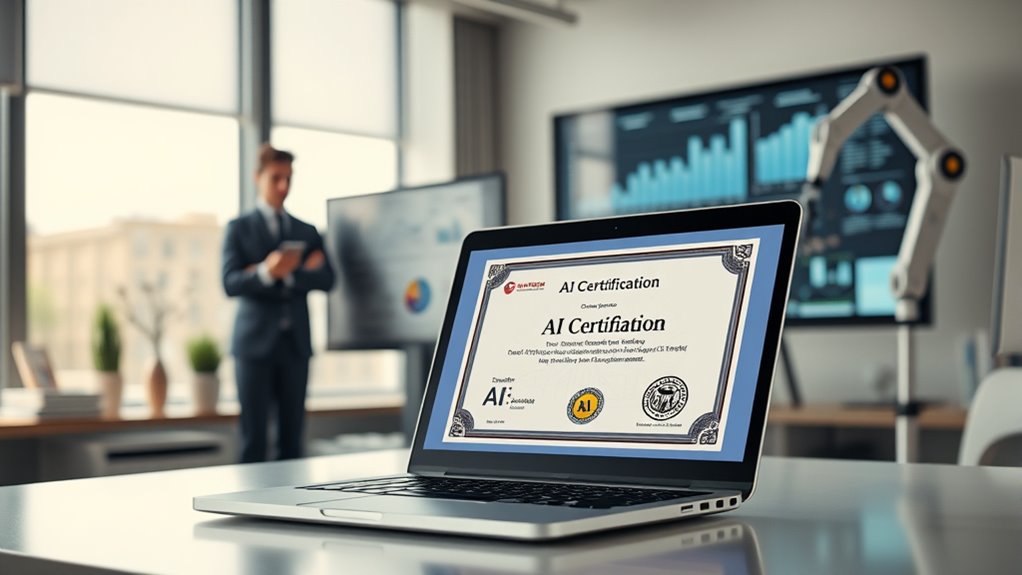
Earning an AI credential can considerably boost your career prospects by demonstrating your expertise in a rapidly evolving field. It signals to employers that you have validated skills, making you more competitive for new roles or promotions. Certifications also help you stay current with the latest tools, methodologies, and ethical considerations, which are vital in AI’s fast-changing landscape. Additionally, a recognized credential can open doors to higher-paying positions and specialized projects. It can also serve as a bridge if you’re shifting into AI from another industry, showcasing your commitment and capability. Moreover, understanding AI-driven personalization and other emerging trends can give you a competitive edge in the job market. Ultimately, earning an AI credential enhances your credibility, broadens your professional network, and positions you for leadership opportunities in AI-driven organizations.
As an affiliate, we earn on qualifying purchases.
How to Choose the Right Certification to Match Your Goals

Choosing the right AI certification starts with clearly defining your career goals and understanding how different programs align with them. Are you aiming for technical mastery, leadership, or industry-specific expertise? Once you know your focus, compare programs based on content, duration, and recognition. Use this table to evaluate options:
| Goal | Recommended Certification |
|---|---|
| Technical skills | Microsoft Azure AI Engineer, Coursera IBM Cert |
| Leadership & strategy | MIT Sloan AI Program, Oxford Saïd AI Course |
| Industry specialization | UX, ethics, or product management certs |
| Academic advancement | Stanford or Indiana University graduate cert |
Matching your goals to program strengths guarantees you invest in the most relevant credential for your growth.
As an affiliate, we earn on qualifying purchases.
Does an AI Certificate Guarantee Job Opportunities?

While earning an AI certificate can open doors, it doesn’t guarantee immediate job opportunities. Certifications show you’ve gained relevant skills, but employers also value hands-on experience, problem-solving abilities, and industry knowledge. Many hiring managers see certificates as a supplement, not a substitute, for real-world work. Even top-tier programs don’t automatically lead to job offers—they signal your commitment and baseline competence. Networking, portfolio projects, and industry connections often play a bigger role in landing positions. Additionally, the job market is competitive; having a certificate alone may not stand out enough. It’s essential to combine your certification with practical experience, tailored applications, and ongoing learning to improve your chances of securing the AI role you want. Furthermore, understanding ethical hacking principles can enhance your cybersecurity awareness, which is increasingly valued across AI applications.
Alternatives to Certification for Building AI Expertise

Gaining AI expertise doesn’t have to rely solely on formal certifications. You can develop skills through hands-on experience by working on real projects, whether at your job or personal initiatives. Online tutorials, open-source contributions, and coding challenges help you learn practical skills while building a portfolio that showcases your abilities. Participating in AI communities, forums, and hackathons exposes you to diverse ideas and feedback. Additionally, reading research papers, blogs, and industry reports keeps you updated on the latest developments. Enrolling in free or low-cost courses from platforms like Coursera or edX can deepen your understanding without the need for formal credentials. Moreover, exploring Kia Tuning techniques can enhance your technical problem-solving skills in a practical context. Ultimately, consistent practice, active project involvement, and community engagement are effective ways to build AI expertise outside traditional certification paths.
Frequently Asked Questions
How Much Do AI Certification Programs Typically Cost?
AI certification programs typically cost between free to several thousand dollars, depending on the provider and program depth. Free courses often offer foundational knowledge, while paid certificates from universities or top tech companies can range from $500 to $3,000 or more. Some programs charge a one-time fee, while others have subscription models or financial aid options. Consider your goals and budget when choosing the right certification for your career growth.
Are Online AI Certificates as Valuable as In-Person Degrees?
Online AI certificates can be just as valuable as in-person degrees, especially if they come from reputable institutions like Stanford or MIT. They demonstrate your skills and dedication, making you stand out to employers. Focus on programs with practical content, industry recognition, and hands-on projects. While degrees may carry more weight in some traditional settings, a well-chosen online certificate can effectively showcase your expertise and boost your career prospects.
How Long Does It Usually Take to Complete an AI Certification?
Most AI certification programs take anywhere from a few days to several months, depending on the depth and format. If you’re opting for a quick, foundational course, it might take just a week or two. More detailed, professional certifications can last a few months, especially if you study part-time or include hands-on projects. Choose a program that fits your schedule and career goals to maximize your learning and progress efficiently.
Do Employers Prefer Certificates From Specific Institutions or Companies?
Think of employer preferences like a VIP pass—certificates from top-tier institutions or big-name companies often carry more weight. You’ll impress employers if your credentials come from recognized programs like Stanford, MIT, IBM, or Microsoft. These names signal credibility and proven expertise. While lesser-known certificates can add value, aligning your certifications with reputable institutions helps you stand out and boosts your chances of career advancement.
Can Certifications Help in Transitioning to AI From Unrelated Fields?
Yes, certifications can help you shift into AI from unrelated fields. They demonstrate your commitment, build relevant skills, and show employers you’re serious about the shift. Focus on programs that match your goals, like foundational courses for beginners or technical certifications for hands-on roles. Completing these credentials boosts your credibility, fills knowledge gaps, and makes you more competitive in landing AI roles, even if your background isn’t initially technical.
Conclusion
So, while earning an AI certification might feel like your golden ticket to success, don’t forget—it’s just one piece of the puzzle. You might still find yourself stuck in a maze, chasing after the next credential, only to realize that true expertise comes from hands-on experience and curiosity. Ironically, chasing certificates can sometimes distract from actually building the skills that make you stand out in the AI crowd. Keep learning, not just ticking boxes.
Halloween Picks
halloween
As an affiliate, we earn on qualifying purchases.