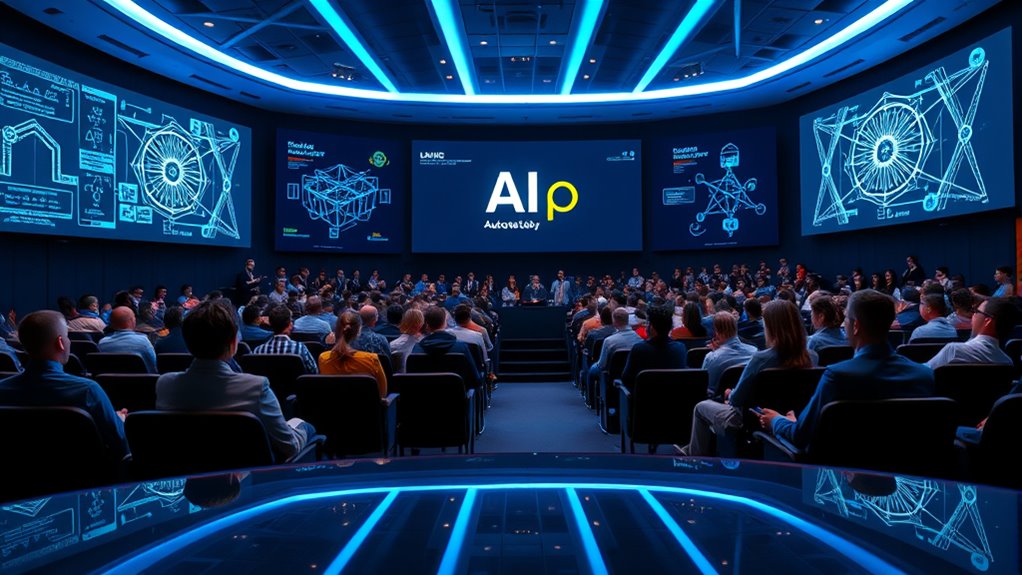

Major tech giants are leading the way in AI education with extensive initiatives that target learners of all ages. They’re investing in innovative tools like personalized platforms, gamified challenges, and immersive VR experiences to make AI concepts accessible and engaging. These companies also focus on supporting teachers, integrating AI into school curricula, and promoting ethical understanding. If you keep exploring, you’ll discover how these efforts aim to shape a skilled, inclusive, and responsible AI-ready workforce.
Listen free for 30 days with Audible
Thousands of audiobooks and originals — cancel anytime.
As an affiliate, we earn on qualifying purchases.
Key Takeaways
- Major tech companies like Google, Microsoft, and Amazon are investing heavily in AI education, supporting millions of learners and educators nationwide.
- They develop personalized, gamified, and immersive learning tools such as VR, AR, and adaptive platforms to enhance AI literacy.
- Corporate initiatives include partnerships with unions and educational institutions to expand AI training in K-12, community colleges, and underserved communities.
- These companies provide ready-to-use curricula, teacher training, and ethical AI modules to ensure responsible AI integration in classrooms.
- Industry-specific AI programs and policy collaborations aim to prepare students for the evolving AI-driven workforce.
As an affiliate, we earn on qualifying purchases.
Major Tech Companies’ AI Education Commitments and Goals

Major tech companies are making significant commitments to AI education, aiming to equip millions of learners and educators with essential skills. Amazon plans to support AI training for 4 million U.S. learners by 2028 and provide curricula to 10,000 educators. Google commits $1 billion to AI education and job training programs, offering free access to its Gemini for Education platform. California partners with Google, Adobe, IBM, and Microsoft to expand AI access to over 2 million students in K-12 and higher education. Companies like Microsoft, OpenAI, and Anthropic fund large-scale AI training for teachers through unions such as the American Federation of Teachers. Intel scales AI education nationwide through K-12 and community college initiatives, impacting thousands of students and educators.
As an affiliate, we earn on qualifying purchases.
Innovative Approaches in Corporate AI Training Programs

To stand out in the evolving landscape of AI education, companies are adopting innovative approaches that go beyond traditional training methods. You might encounter personalized learning platforms that adapt content to your skill level, making training more effective. Gamification is increasingly used to boost engagement, turning complex concepts into interactive challenges. Immersive technologies like VR and AR enable hands-on experiences, helping you grasp real-world applications. Some programs incorporate AI-driven assessment tools that provide immediate feedback, allowing you to track your progress and address gaps quickly. These approaches guarantee that you not only learn technical skills but also develop critical thinking, ethical awareness, and industry-specific expertise, preparing you for the rapidly changing AI workforce. Additionally, integrating predictive modeling helps tailor training pathways by analyzing individual performance data, ensuring a more personalized learning experience.
As an affiliate, we earn on qualifying purchases.
Expanding AI Literacy in Schools and Community Colleges

You can see how tech giants are actively expanding AI literacy through K-12 programs and community college initiatives. These efforts aim to prepare students and future workers with essential skills for a rapidly evolving job market. By focusing on workforce readiness, they’re building a pipeline of talent equipped to meet industry needs. Incorporating AI-focused education into curricula helps ensure students develop the necessary competencies for the future.
K-12 AI Programs
How are K-12 schools and community colleges expanding AI literacy to prepare students for a future shaped by artificial intelligence? They’re integrating AI-focused curricula and hands-on projects to build technical skills early. Schools partner with tech giants to provide access to AI tools, ensuring students learn about AI ethics, safety, and real-world applications. Programs like Intel’s AI for Youth offer hundreds of hours of content across grades 3-12, emphasizing both technical understanding and responsible AI use. Educators receive specialized training to incorporate AI concepts into their instruction, fostering critical thinking and problem-solving. Additionally, initiatives aim to make AI education inclusive, reaching underserved communities and promoting diversity. These efforts help students develop the foundational skills needed to thrive in an AI-driven economy. Incorporating sound healing science into educational programs can also enhance student well-being and focus, supporting a holistic approach to learning.
Community College Initiatives
Are community colleges stepping up to expand AI literacy and prepare students for emerging industries? Yes, they’re becoming key players in workforce development by integrating AI into their curricula. These initiatives focus on practical skills aligned with industry needs, ensuring students are job-ready. Partnerships with tech giants provide funding, resources, and updated content, making AI education accessible and relevant. You’ll find programs tailored to sectors like manufacturing, cybersecurity, and agriculture, emphasizing applied AI skills. Community colleges also promote ethical AI use and critical thinking, broadening student understanding beyond technical knowledge. Incorporating on-device AI capabilities from recent advancements helps students stay current with industry trends. These efforts help bridge the gap between education and employment, supporting local economies and diversifying the tech workforce.
Workforce Readiness Strategies
Expanding AI literacy in schools and community colleges is a crucial strategy for preparing students for the evolving workforce. You can take advantage of initiatives from tech giants that aim to integrate AI skills into early education and workforce development. Programs like Intel’s AI for Youth and partnerships with California help embed AI knowledge into K-12 and community college curricula, focusing on industry-specific applications such as manufacturing and cybersecurity. These efforts balance technical skills with cross-industry competencies like ethics and accessibility. You’ll find that industry collaborations provide real-world training, internships, and certifications aligned with current job market demands. By engaging with these programs, you’ll be better equipped to meet future workforce needs, making AI literacy a cornerstone of career readiness across sectors.
As an affiliate, we earn on qualifying purchases.
Strategies for Supporting Teachers and Educators in AI
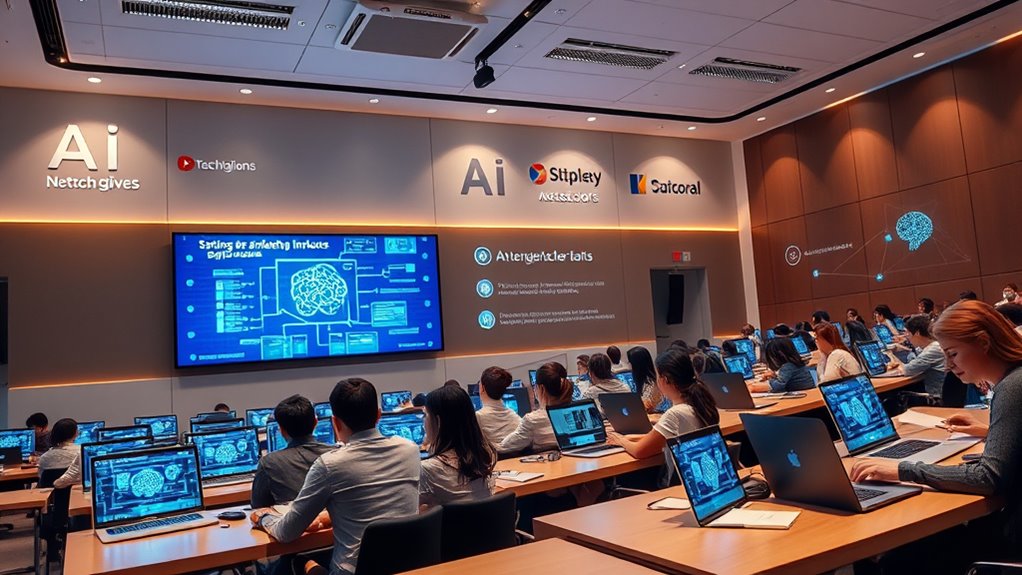
Supporting teachers in AI starts with targeted training initiatives that build their confidence and skills. Integrating AI into curricula requires clear strategies and resources to help educators adapt their lessons effectively. Addressing ethical AI use is essential to make certain teachers can guide students responsibly and thoughtfully. Additionally, providing ongoing professional development ensures educators stay current with advancements in AI technology, enabling them to incorporate new tools confidently into their teaching practices.
Teacher Training Initiatives
How can educators effectively incorporate AI into their teaching practices? By receiving targeted training, you build confidence in using AI tools and understanding ethical considerations. Tech companies are investing heavily to support you through workshops, online courses, and professional development programs. These initiatives focus on practical skills, responsible AI use, and integrating AI seamlessly into lessons. You’ll learn how to leverage AI for personalized learning, assessment, and classroom management. Additionally, partnerships with unions and educational organizations help scale these programs, ensuring broad access. This support aims to keep you relevant, engaged, and prepared to navigate AI’s evolving role in education. Supporting teachers in ethical AI use and understanding the importance of emotional support can enhance your effectiveness and adaptivity in the classroom.
Curriculum Integration Strategies
Integrating AI into classroom curricula requires deliberate strategies that empower teachers to effectively incorporate new tools and concepts. You’ll find that many corporate-supported initiatives provide ready-to-use lesson plans, adaptable to various subjects and skill levels. These programs focus on embedding AI literacy into existing STEM or language arts frameworks, ensuring seamless integration. You’re encouraged to use AI-powered platforms, like curriculum generators and real-time assessment tools, to personalize learning and track progress. Teachers also receive professional development that emphasizes practical application, critical thinking, and ethical considerations. Collaboration with industry partners helps develop cross-disciplinary modules that connect AI concepts with real-world problems. Incorporating educator training programs designed specifically for AI integration can further enhance teachers’ confidence and effectiveness in the classroom. Ultimately, these strategies aim to make AI an accessible, engaging part of daily instruction, preparing students for an evolving technological landscape.
Ethical AI Support
Are teachers truly prepared to navigate the ethical challenges of AI in the classroom? Supporting educators in ethical AI use is vital for responsible learning. Tech companies provide targeted resources to help teachers address bias, privacy, and fairness. They develop training modules that foster critical thinking about AI’s societal impact and promote responsible integration. These initiatives include real-time assessment tools to guide ethical decision-making and curriculum content emphasizing AI accountability. Partnerships with unions ensure large-scale dissemination of these practices, while specialized workshops build confidence in handling ethical dilemmas. By equipping teachers with these strategies, you’re better prepared to foster an environment that values transparency, inclusivity, and ethical responsibility.
- Addressing bias and fairness in AI tools
- Privacy protection and data ethics
- Critical thinking about AI’s societal impact
- Ongoing professional development on ethical issues
Cutting-Edge EdTech Platforms and AI Learning Tools

Cutting-edge EdTech platforms are transforming AI learning by offering personalized, adaptive experiences that cater to individual student needs. You can access intelligent tutoring systems like Microsoft Reading Coach and Squirrel AI, which analyze your progress and tailor lessons accordingly. Gamified environments and VR/AR technologies make complex AI concepts engaging and easier to grasp, providing immersive hands-on practice. Startups such as Udacity deliver AI-driven courses in data science and machine learning, customizing content based on your skill level. These platforms also incorporate real-time assessments and AI-powered teaching aids, enhancing classroom instruction and independent study. Additionally, security features embedded within these systems ensure that sensitive student data remains protected as learners explore advanced AI topics. By leveraging these advanced tools, you gain a more interactive, efficient, and personalized learning journey, preparing you for the rapidly evolving AI landscape.
Policy and Public-Private Partnerships Enhancing AI Education

How are policy initiatives and public-private partnerships shaping the future of AI education? They create a collaborative framework that expands access, develops standards, and guarantees responsible AI use. These efforts align industry resources with educational needs, making AI training more inclusive and scalable. Governments set policies that encourage equitable AI literacy, while tech companies contribute funding, curricula, and expertise. Partnerships between public institutions and industry leaders foster innovation and infrastructure growth, ensuring all students benefit from AI advancements. They also promote ethical standards and critical thinking skills, integrating them into curricula. All Waterparks are examples of industry collaboration enhancing recreational experiences, similar to how partnerships in AI education foster innovation and inclusivity.
Focus on Ethical AI Use and Critical Thinking Skills

As AI becomes increasingly integrated into daily life and workplaces, emphasizing ethical use and critical thinking is essential to guarantee responsible development and application. You’re encouraged to contemplate the broader implications of AI, questioning biases, privacy concerns, and societal impacts. Tech companies are embedding ethics modules into their curricula, helping you recognize potential risks and make informed decisions. Critical thinking skills enable you to analyze AI outputs, challenge assumptions, and evaluate the fairness of algorithms. This focus ensures you don’t just learn technical skills but also develop a moral compass for AI use. By fostering responsible attitudes and analytical abilities, these initiatives prepare you to navigate complex ethical dilemmas and contribute thoughtfully to AI’s positive growth.
Promoting Inclusion and Access in AI Educational Initiatives

Promoting inclusion and access in AI educational initiatives is essential to ensuring that all communities can benefit from technological advancements. You play a crucial role in making AI learning equitable by supporting programs that reach underserved populations and diverse backgrounds. Tech giants are expanding opportunities through targeted outreach, partnerships, and accessible resources. These efforts help bridge gaps in opportunity and skills, fostering a more inclusive AI workforce. To deepen this impact, consider:
Supporting inclusive AI education ensures all communities benefit from technological progress.
- Developing tailored curricula for marginalized communities
- Collaborating with local organizations to increase outreach
- Implementing multilingual and accessible learning platforms
- Creating scholarships and incentives for underrepresented students
- Incorporating equity and diversity principles into program design to promote broader participation.
The Future of Corporate AI Academies and Workforce Development

The landscape of corporate AI academies is evolving rapidly, driven by tech companies’ ongoing investments to prepare the workforce for an AI-driven economy. You can expect more all-encompassing, accessible, and industry-aligned programs tailored to diverse skill levels. Future initiatives will likely emphasize lifelong learning, integrating AI into existing educational structures and workforce training. Companies will expand partnerships with community colleges, K-12 schools, and industry sectors to ensure skills match evolving job demands. You’ll see increased use of personalized AI learning platforms, immersive technologies, and real-world projects that foster innovation. Ethical AI use and critical thinking will remain central themes, equipping workers to navigate AI’s societal impacts. Overall, corporate AI academies will become crucial engines for workforce resilience, adaptability, and economic growth.
Frequently Asked Questions
How Do Corporate AI Programs Measure Student and Teacher Success?
You measure success in corporate AI programs through assessments, project completions, and skill demonstrations. You’ll find progress tracked via real-time tools, quizzes, and practical tasks that gauge understanding and application. Teacher success is often evaluated by classroom integration, student engagement, and how well they incorporate AI concepts. Additionally, program analytics help identify areas for improvement, ensuring both students and teachers develop relevant, industry-aligned AI skills.
What Challenges Do Companies Face in Scaling AI Education Initiatives?
Scaling AI education is like trying to plant a vast forest in shifting soil. You face obstacles such as resource disparities, varying access to technology, and differing educational standards that hinder uniform growth. Cultural resistance and lack of teacher training also act as storms, threatening progress. Managing these challenges requires adaptable strategies, strong partnerships, and sustained investment to make sure that AI literacy blooms across diverse communities.
How Is AI Literacy Tailored for Different Age Groups and Skill Levels?
You can see that AI literacy is tailored for different age groups and skill levels by offering age-appropriate content, from basic ethics and foundational skills for younger students to advanced technical training for older learners. Companies use engaging methods like gamification, interactive platforms, and real-world projects, ensuring each learner gets relevant, accessible instruction that matches their understanding and goals. This approach helps everyone develop essential AI skills effectively.
What Role Do Government Policies Play in Corporate AI Education Efforts?
Ever wonder how government policies support your AI learning journey? They play a pivotal role by funding, setting standards, and fostering public-private partnerships. These policies help expand access to AI education, especially in underserved communities, and guarantee ethical use. They also guide collaborations between tech companies and educational institutions, making sure your AI training aligns with industry needs and prepares you for future job markets.
How Are Ethical Considerations Integrated Into AI Curricula Across Programs?
You see that ethical considerations are integrated into AI curricula through a focus on safe, responsible AI use, and critical thinking skills. Companies like Google and Intel emphasize ethics and accessibility alongside technical training, ensuring learners understand AI’s societal impact. Programs also include discussions on AI bias, privacy, and sustainability, helping you develop a responsible approach. This integration prepares you to navigate AI challenges ethically in your future career and everyday life.
Conclusion
As you navigate the evolving landscape of AI education, remember it’s a symphony of innovation and responsibility. These corporate academies are shaping a future where technology and ethics dance hand in hand, illuminating pathways for diverse learners. By championing inclusive access and fostering critical thinking, you become part of a transformative movement—like architects building bridges to a smarter, fairer tomorrow. Embrace this journey, for in your hands lies the power to craft a luminous AI-powered world.
Flea & tick season Picks
flea and tick prevention
As an affiliate, we earn on qualifying purchases.