
TL;DR

Get business pricing on tech for your team
- Business-only prices and quantity discounts
- Tax-exempt purchasing
- Multiple users, one account, clear invoices
Grab and OpenAI have announced a partnership to bring practical AI tools — including a ChatGPT-powered assistant inside the Grab app, ChatGPT Enterprise for Grab employees, and accessibility features for visually impaired users — to Southeast Asia. OpenAI said Grab is among the first companies in the region to deploy these tools at scale, with initial features rolling out in selected markets.
Southeast Asian superapp operator Grab and OpenAI have announced a partnership to bring AI tools to the company’s app users, drivers, merchants and employees across the region. According to OpenAI, Grab will build AI-powered customer features powered by OpenAI’s models, deploy ChatGPT Enterprise internally, and pilot accessibility tools — making it one of the first companies in Southeast Asia to put these technologies into everyday consumer use at scale.
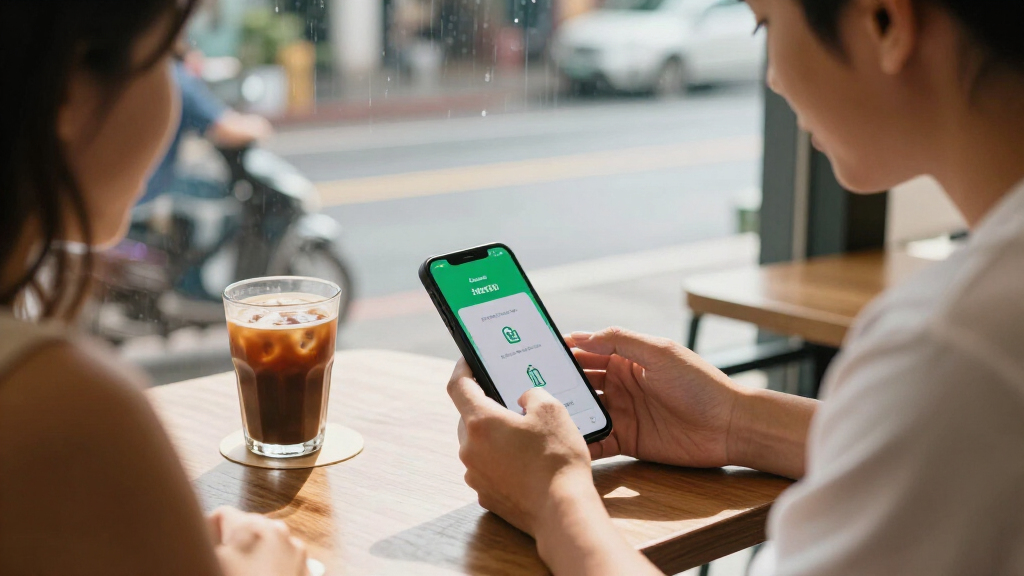
Under the partnership, Grab plans to introduce an AI assistant inside the Grab app that will let users ask questions and complete tasks through chat — for example, ordering food, booking rides, or getting local recommendations — by combining OpenAI’s models with Grab’s own services and data. OpenAI said early tests will start in selected markets, with features expanded based on user feedback.
Beyond the consumer-facing assistant, OpenAI said the partnership covers internal deployment of ChatGPT Enterprise for Grab employees, aiming to speed up everyday work such as summarising documents, drafting communications and building internal tools. Grab is also working with OpenAI on voice and accessibility features, including a trial that uses AI vision and voice technology to help visually impaired users navigate Grab’s services.
OpenAI described Grab’s position in the region as the reason the partnership can reach a large audience quickly: Grab’s app spans ride-hailing, food delivery, payments and financial services across several Southeast Asian countries, giving the AI features a direct path to millions of daily users. According to OpenAI, Grab is among the first companies in Southeast Asia to access and build with these technologies at this scale.
Grab And OpenAI Bring Practical AI Skills To Southeast Asia
Grab and OpenAI have announced a partnership to bring practical AI tools — a ChatGPT-powered assistant inside the Grab app, ChatGPT Enterprise for employees, and accessibility features for visually impaired users — to a region of more than 600 million people.
What the Partnership Covers
OpenAI and Grab will deploy AI models across Grab’s superapp, its driver and merchant operations, and its internal workforce tools — spanning consumers, employees, and accessibility users.
ChatGPT-Powered Assistant
An AI assistant inside the Grab app lets users ask questions and complete tasks through chat — ordering food, booking rides, or getting local recommendations — combining OpenAI’s models with Grab’s services and data.
ChatGPT Enterprise Deployment
Grab employees get ChatGPT Enterprise to speed up everyday work: summarising documents, drafting communications, and building internal tools across the company’s operations.
AI Vision & Voice Trial
A pilot uses AI vision and voice technology to help visually impaired users navigate Grab’s services — lowering barriers for users poorly served by text-first app design.
From Announcement to Everyday Use
OpenAI said early tests start in selected markets, with features expanded based on user feedback. The accessibility pilot is expected to produce evaluable results before a wider launch.
Announcement
Partnership declared by OpenAI; Grab among first in the region to access these tools at scale.
Selected Markets
Early AI features roll out to chosen Grab markets first; specific countries unconfirmed.
Feedback Loop
Features expand based on user feedback; accessibility pilot results evaluated before wider launch.
Regional Scale
Wider availability across Grab’s markets — an early test of conversational AI as a standard app layer.
What Is Confirmed vs. Unresolved
Several details remain unclear. The announcement specified no full launch timeline, and key capabilities remain stated goals rather than verified results.
| Question | Status | Details |
|---|---|---|
| Full launch timeline | ✗ Unknown | Only “selected markets first, wider availability to follow” — no regional launch date announced. |
| First countries | ~ Unconfirmed | Grab operates in Singapore, Indonesia, Vietnam, Thailand, Malaysia and the Philippines, but first markets are not specified. |
| Local-language support | ~ Stated goal | Localisation is a stated aim, but supported languages and model performance in them are undetailed. |
| Complex multi-step tasks | ~ Unproven | Chained food orders, disputed payments and similar reliability remain to be seen. |
| Accessibility pilot results | ✗ No benchmarks | No published measurements; usefulness for visually impaired users is a goal, not a verified result. |
| Internal productivity gains | ✓ In progress | ChatGPT Enterprise deployment continues; observers await measurable gains in productivity and response times. |
Why the Superapp Is the Battleground
Grab competes with rivals such as Indonesia’s GoTo, while Sea’s Shopee races to add AI features. For OpenAI, partnering with major consumer platforms distributes its models beyond ChatGPT itself — into a region where superapps are the main gateway to the internet.
Sensible Bet, Unproven Results
A low-risk, high-upside move for both companies: Grab gets frontier AI without building it; OpenAI gets distribution inside an app millions open daily. But until usage and retention data arrive, the announcement is a promise, not a result.
Practical Value Beyond Marketing
The accessibility pilot has genuine practical worth — AI vision and voice could lower barriers for users poorly served by text-first design. Local-language AI inside a familiar commercial context could reach users that English-centric tools never did.
Superapp Assistants Have Underdelivered
Chat-based ordering is often slower and less reliable than tapping a few buttons, and users may simply ignore the feature. Local-language performance is another open question that marketing copy tends to gloss over.
“What would change my assessment is evidence: published usage numbers, support for major Southeast Asian languages, and measured outcomes from the accessibility pilot. If those arrive and hold up, this becomes more than a distribution deal — a real shift in how everyday apps in the region are built.”
Analyst View · Source: OpenAI announcementWhat the Partnership Means for Southeast Asian Users
The partnership matters because it moves conversational AI from a standalone chat product into an app that many Southeast Asians already use for daily tasks such as ordering food and booking rides. If the Grab assistant works as intended, users in the region could interact with AI in local languages and within local commercial context, rather than through separate, English-centric tools.
For Grab, the deal is a bet that AI can improve customer service efficiency and unlock new features faster than building equivalent capability alone. For OpenAI, it represents a push into a fast-growing digital market where superapps — rather than individual web services — are the main gateway to the internet for many consumers. The accessibility pilot also signals a practical use case: AI vision and voice could lower barriers for users who have been poorly served by text-first app design.
Grab’s Superapp and the Regional AI Race
Grab operates across Southeast Asia, offering ride-hailing, food and grocery delivery, and digital payments through a single app, and it has spent years adding services to become the region’s dominant superapp. The company competes with rivals such as Indonesia’s GoTo, and regional players including Sea’s Shopee have been racing to add AI features to their own platforms.
For OpenAI, the deal is part of a broader pattern of partnering with major consumer platforms to distribute its models beyond ChatGPT itself. The Grab partnership extends that strategy into Southeast Asia, a region of more than 600 million people where smartphone-first internet use is the norm and local-language support has historically been uneven. According to OpenAI, the collaboration combines its models with Grab’s data about local services, merchants and transport.
Open Questions About Rollout and Capabilities
Several details remain unclear. OpenAI’s announcement did not specify a full launch timeline for the consumer AI assistant, saying only that early features would roll out in selected markets first, with wider availability to follow. It is not yet confirmed which countries will receive the features first or when users elsewhere can expect them.
The precise scope of the assistant’s capabilities is also unconfirmed — it remains to be seen how reliably it can handle complex, multi-step tasks such as chained food orders or disputed payments, and how well it performs in Southeast Asian languages beyond English. Grab has not published benchmarks or measured outcomes from the accessibility pilot, so claims about its usefulness for visually impaired users are, for now, stated goals rather than verified results.
Rollout Timeline and Pilot Results to Watch
The immediate next step is the phased rollout of early AI features in selected Grab markets, followed by expansions depending on user feedback, according to OpenAI. The accessibility pilot for visually impaired users is expected to produce initial results that Grab and OpenAI can evaluate before a wider launch.
Inside Grab, the ChatGPT Enterprise deployment will continue, and observers will be watching whether Grab reports measurable gains in employee productivity or customer-service response times. Rivals in the region are likely to respond with their own AI features, making Southeast Asia’s superapp market an early test of whether conversational AI becomes a standard layer of everyday consumer apps.
Where I land
I think this partnership is a sensible, low-risk-high-upside move for both companies. Grab gets access to frontier AI capability without building it from scratch, and OpenAI gets distribution inside an app that many Southeast Asians open daily. The accessibility pilot in particular has genuine practical value beyond marketing.
The strongest counterargument is that superapp assistants have underdelivered before — chat-based ordering is often slower and less reliable than tapping a few buttons, and users may simply ignore the feature. Until Grab shows retention and usage data, the announcement is a promise, not a result. Local-language performance is another open question that marketing copy tends to gloss over.
What would change my assessment is evidence: published usage numbers, support for major Southeast Asian languages, and measured outcomes from the accessibility pilot. If those arrive and hold up, this becomes more than a distribution deal — it would mark a real shift in how everyday apps in the region are built.
Source: OpenAI
Key Questions
What exactly did Grab and OpenAI announce?
A partnership to deploy OpenAI’s AI models across Grab’s business: a ChatGPT-powered assistant inside the Grab app, internal use of ChatGPT Enterprise by Grab employees, and pilot accessibility features such as AI vision and voice tools for visually impaired users.
When will the AI features be available to Grab users?
OpenAI said early features will roll out first in selected markets, with expansion to follow based on feedback. No full regional launch date has been announced.
Which countries are included?
Grab operates across several Southeast Asian markets, including Singapore, Indonesia, Vietnam, Thailand, Malaysia and the Philippines, but the specific first markets for the AI features have not been confirmed.
Will the assistant work in local languages?
Localisation is a stated goal of the partnership, but OpenAI and Grab have not detailed which languages will be supported at launch or how well the models perform in them.
How does this affect Grab drivers and merchants?
According to OpenAI, the partnership aims to improve tools for merchants and customer support, but specific driver- and merchant-facing AI features have not been fully detailed yet.
Source: OpenAI
Fall Picks
fall essentials
As an affiliate, we earn on qualifying purchases.