
AI is transforming virtual worlds by creating immersive, personalized experiences for both work and play. It enables highly customizable avatars, real-time environment adjustments, and adaptive challenges that deepen engagement. With advancements in AR, VR, and generative AI, you’ll find these digital spaces becoming more seamless, social, and intuitive. As the metaverse grows globally, understanding how AI powers these experiences can help you stay ahead in this rapidly evolving digital landscape. Keep exploring to discover more.
Key Takeaways
- AI enables personalized avatars and environments, enhancing user engagement and emotional connection in virtual worlds.
- Generative AI creates dynamic, tailored experiences and challenges that adapt to individual preferences and actions.
- AI-powered virtual spaces facilitate seamless remote work, collaboration, and social interactions across global audiences.
- Natural language processing and computer vision allow realistic, intuitive interactions within immersive metaverse environments.
- AI-driven analytics and automation optimize virtual experiences, increasing immersion, efficiency, and user satisfaction.

HTC Vive Focus Vision — Mixed Reality and PC VR Headset + Controllers — Consumer Edition
All-In-One VR Solution: The VIVE Focus Vision offers standalone and PC VR experiences. Harness the power of virtual…
As an affiliate, we earn on qualifying purchases.
As an affiliate, we earn on qualifying purchases.
The Growing Market and Future Outlook of the Metaverse
The metaverse market is experiencing rapid growth and is poised for significant expansion in the coming years. You can expect it to reach around $150 billion by 2025, with projections suggesting even greater growth beyond 2030. As more people and companies embrace virtual worlds, about half of social media interactions could happen there by 2030, fueled by AI advancements. Generative AI’s role is also expanding, with a forecasted growth of nearly $883 million from 2025 to 2029. The overall infrastructure, including cloud computing, is booming, with the market expected to hit over $2.2 trillion by 2032. All signs point to a future where the metaverse becomes an integral part of daily life, work, and entertainment for billions worldwide. Additionally, understanding individual personalities and traits can enhance virtual interactions and collaboration within these digital spaces, making personality insights increasingly relevant in shaping virtual experiences.

Personalized Book for Kids with Avatar and Name | For Birthdays | Fun Adventure | A One-of-a-Kind Birthday Gift
🎂 A custom baby book with name – Every child becomes the main character in this original story….
As an affiliate, we earn on qualifying purchases.
As an affiliate, we earn on qualifying purchases.
Cutting-Edge Technologies Driving Virtual World Innovation
Advancements in AI, AR, and VR are revolutionizing how virtual worlds are built and experienced. You now have access to immersive environments powered by real-time rendering, deep learning, and spatial computing. These technologies enable seamless interactions, dynamic content, and personalized experiences. Major companies like Meta, NVIDIA, and Baidu are integrating AI to enhance user engagement and infrastructure. Hybrid AR/VR systems create more natural, intuitive interfaces, while AI-driven avatars and environments adapt instantly to user input. Here’s a snapshot of key innovations: the integration of natural user interfaces.

TOZO VIZO V1 AR Glasses with Ultra-Bright Display, Built-in Stereo Speakers, Adjustable Myopia Correction (0–500°), 118" Virtual Mega Screen, 2D/3D Mode Switching Compatible for iPhone/Mac/PC
ULTRA-BRIGHT DISPLAY FOR ANY LIGHTING: 1800-Nit Ultra-Bright Display(Brightness at eye level is 800 nits), Enjoy clear, vivid visuals…
As an affiliate, we earn on qualifying purchases.
As an affiliate, we earn on qualifying purchases.
Creating Personalized Experiences With Generative AI
You can leverage generative AI to craft highly personalized experiences, from customizing avatars to shaping immersive environments. These techniques allow you to adapt content in real-time, ensuring each user feels uniquely engaged. With adaptive quest generation, your virtual worlds become dynamic spaces that respond to individual preferences and behaviors. Additionally, integrating cultural narratives into AI-driven content can enrich user engagement by reflecting diverse backgrounds and stories.
Dynamic Avatar Customization
Generative AI is transforming avatar customization by enabling you to create highly personalized digital representations that reflect your unique identities and preferences. You can craft avatars that mirror your style, mood, or aspirations with ease, making your virtual presence truly yours. This technology allows real-time modifications, so your avatar evolves as you do. Imagine expressing your personality through detailed features, clothing, and accessories, all generated instantly from simple prompts. The result? An emotional connection to your digital self and a richer, more authentic experience in the metaverse. Additionally, avatar customization leverages advanced AI techniques to ensure each digital persona is distinct and meaningful.
Environment Personalization Techniques
Building on the power of dynamic avatar customization, environment personalization techniques leverage generative AI to craft immersive and tailored virtual spaces. You can influence your surroundings in real-time, making each experience uniquely yours. AI analyzes your preferences, behaviors, and interactions to modify environments dynamically. This process fosters accessible sustainability, ensuring virtual worlds remain engaging and inclusive for all users. This ensures spaces feel alive and responsive, heightening immersion.
Adaptive Quest Generation
Adaptive quest generation harnesses the power of generative AI to craft personalized, dynamic experiences tailored to each user. You’ll find that quests and challenges evolve in real-time based on your actions, preferences, and skill level. Instead of static tasks, AI creates unique storylines, puzzles, and objectives that keep you engaged and immersed. For example, if you prefer exploration over combat, the AI adjusts quests to focus on discovery and interaction. It also generates fresh content on the fly, making each visit different and unpredictable. This personalization enhances user engagement and satisfaction, ensuring that every player or worker experiences a tailored journey. Additionally, versatile designs allow for a range of experiences suited to individual tastes and styles. As a result, adaptive quest generation transforms virtual worlds into living, breathing environments that respond intelligently to your behavior and choices.

AI in Social Studies Education: Tools for Thoughtful Practice With Generative Artificial Intelligence (Research and Practice in Social Studies Series)
As an affiliate, we earn on qualifying purchases.
As an affiliate, we earn on qualifying purchases.
Transforming Work, Entertainment, and Social Interaction
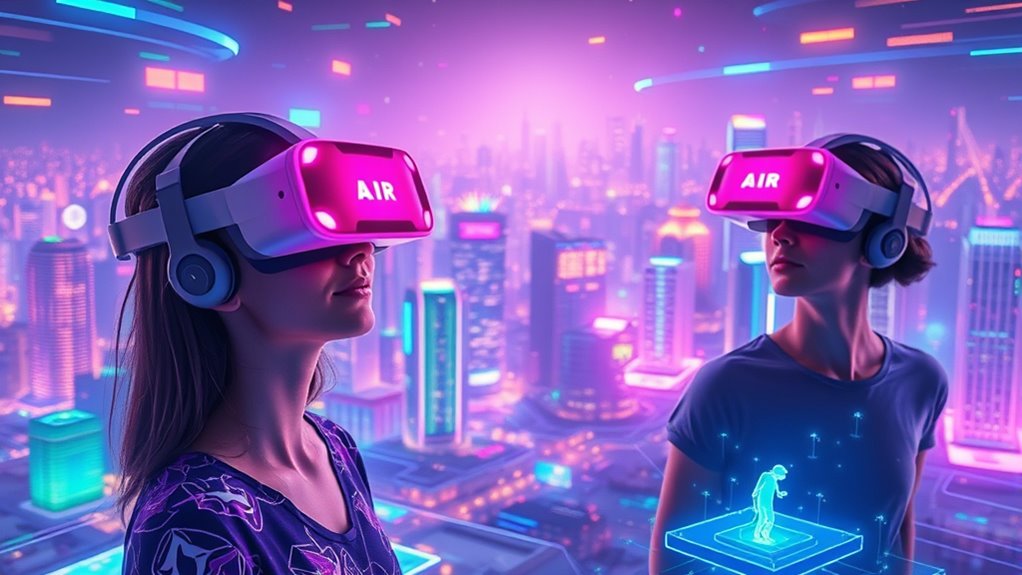
The metaverse is revolutionizing how we work, play, and connect by creating immersive virtual environments that go beyond traditional digital interactions. You can now collaborate seamlessly, attend live events, or socialize with friends worldwide—all from your virtual space. AI enhances these experiences by personalizing interactions and automating complex tasks. Additionally, understanding the importance of emotional support can help users navigate the social and personal challenges that may arise in these virtual environments. AI-driven virtual worlds can facilitate emotional expression and provide avenues for support when integrated with emotional support resources.
The metaverse transforms connection, collaboration, and entertainment through immersive virtual spaces enhanced by AI personalization and automation.
This shift release new opportunities for productivity, leisure, and community building.
Hardware Ecosystems and Global Adoption Trends
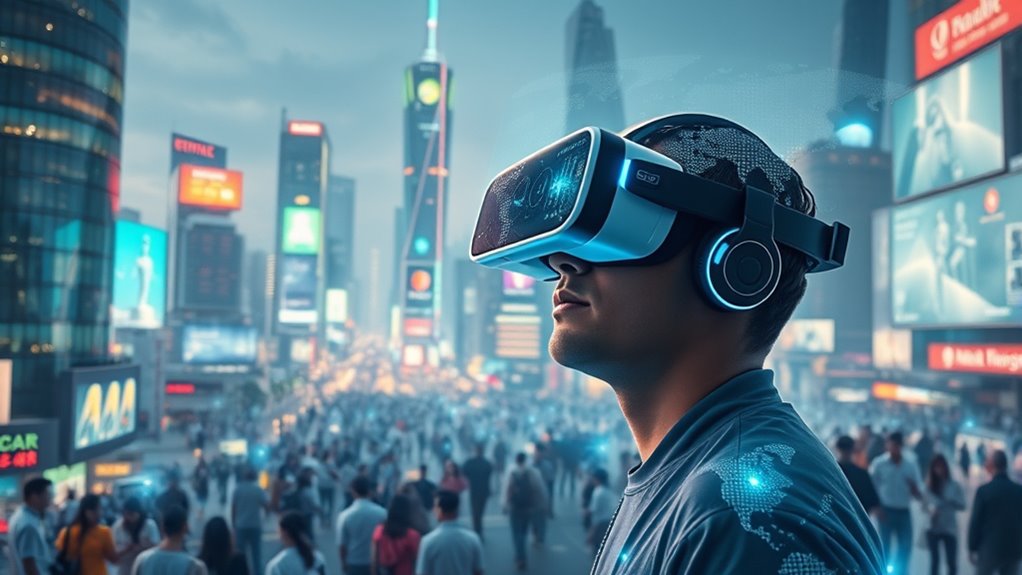
You’ll notice that Meta leads the XR hardware market with over 75% share, shaping global adoption trends. As the industry grows toward an $86 billion market by 2030, regional differences become clearer, with Asia-Pacific expanding fastest. These evolving hardware ecosystems are vital for delivering the immersive, AI-powered experiences that drive worldwide adoption. Additionally, innovations in natural farming techniques are enhancing the sustainability and scalability of these digital environments.
Hardware Dominance and Market Share
Meta leads the XR hardware market, capturing approximately 75% of global shipments in 2025. This dominance shapes device ecosystems and influences user adoption worldwide. As a result, other players struggle to gain significant market share. To understand this landscape, consider:
- Ecosystem Integration: Meta’s investments in hardware and software create a seamless experience, encouraging user loyalty and platform consistency.
- Global Adoption Trends: Asia-Pacific shows rapid growth, with a 35.1% CAGR, driven by affordable devices and expanding infrastructure.
- Market Concentration: The high market share held by Meta limits competition, but it also drives innovation, as competitors aim to challenge its dominance and diversify hardware ecosystems.
Additionally, the focus on space and organization within device ecosystems can influence user engagement and retention.
Regional Adoption and Growth
Have you noticed how regional differences shape the growth of metaverse hardware ecosystems? In Asia-Pacific, the market is booming, with a 35.1% CAGR through 2030, driven by strong consumer adoption and local tech giants. This region leads in immersive hardware deployment, supported by rapid infrastructure expansion and government initiatives. North America, while still dominant in market share, faces slower growth due to privacy concerns and high costs. Europe is gradually adopting VR and AR, emphasizing regulation and accessibility. Meanwhile, Latin America shows increasing openness, especially toward AI-enabled experiences, but faces economic barriers. Overall, evolving hardware ecosystems are creating more seamless, immersive experiences worldwide. As adoption accelerates, regional tech strategies and infrastructure investments will shape the future landscape of the metaverse. The increasing importance of specialized hardware components is also playing a crucial role in this growth.
Addressing Challenges and Societal Impacts
As the metaverse and AI technologies advance, addressing their challenges and societal impacts becomes essential to guarantee responsible growth. You need to contemplate issues like privacy, accessibility, and regulation to prevent misuse and inequality.
- Privacy concerns arise from data collection and surveillance, risking user rights and trust.
- Accessibility limitations could exclude marginalized groups, widening digital divides.
- Regulation of currencies and NFTs in metaverse economies raises questions about fairness and taxation.
You must also navigate cultural acceptance, ensuring diverse populations feel included. Long-term societal integration depends on balancing innovation with ethical safeguards, so you can foster a metaverse that benefits everyone without compromising safety or equity.
Frequently Asked Questions
How Secure Are Personal Data and Privacy in Ai-Driven Metaverse Platforms?
Your personal data and privacy in AI-driven metaverse platforms face significant risks. While companies implement security measures, the vast amount of data collected for personalized experiences can be vulnerable to breaches or misuse. You should stay informed about privacy policies, use strong security settings, and be cautious with sharing sensitive info. As AI advances, ongoing regulations and security improvements are vital to protect your digital identity in these virtual spaces.
What Regulations Are Emerging for Cryptocurrencies and NFTS in Virtual Economies?
You should watch for emerging regulations that aim to regulate cryptocurrencies and NFTs in virtual economies. Governments are starting to implement rules around taxation, anti-money laundering, and consumer protection. You might see new licensing requirements, transparency standards, and restrictions on digital asset trading. These regulations intend to prevent fraud, ensure financial security, and integrate virtual assets into traditional financial systems, making your virtual transactions safer and more accountable.
How Accessible Are Metaverse Experiences for Users With Disabilities?
You might find that metaverse experiences are becoming more accessible for users with disabilities, thanks to AI-driven innovations. Developers are integrating features like voice commands, customizable interfaces, and adaptive technologies to support diverse needs. However, accessibility varies across platforms, and some still face challenges with hardware limitations or lack of inclusive design. Staying informed and providing feedback helps push for more equitable virtual environments that everyone can enjoy.
What Roles Will Ai-Generated Avatars and NPCS Play in Social Interactions?
AI-generated avatars and NPCs will become your friendly guides and engaging companions in the metaverse, transforming it into a bustling social city. They’ll adapt to your behavior, offering personalized conversations and assistance, making interactions feel natural as chatting with a trusted friend. These digital personalities will break down barriers, creating more inclusive spaces where everyone can connect, share, and collaborate seamlessly in a lively, dynamic virtual community.
How Will AI Influence Digital Ownership and Intellectual Property Rights?
AI will transform digital ownership and IP rights by enabling dynamic content creation, real-time licensing, and automated enforcement. You’ll see AI systems tracking and protecting your virtual assets, ensuring creators maintain control and monetize their work effectively. It’ll also help resolve disputes faster through smart contracts, giving you confidence in ownership and rights management. As AI advances, expect more streamlined, secure, and transparent ways to handle digital property in virtual spaces.
Conclusion
Picture stepping into a vibrant virtual world, where AI acts as your guide, shaping immersive experiences that feel as real as the world outside. Just like a skilled architect designs a stunning skyline, AI is building the future of work, play, and social connection within the metaverse. As this digital universe expands, it’s up to you to explore responsibly and embrace the endless possibilities, turning imagination into reality with every click and interaction.