
Robotics can markedly boost sustainability efforts by reducing pollution, conserving energy, and optimizing industrial processes. Advanced robots and AI systems help monitor the environment, improve waste management, and enable cleaner manufacturing. They also create new jobs and promote social equity through accessible technology. While challenges remain, ongoing innovations make robots more eco-friendly and efficient. Keep exploring how these advancements are shaping a greener future and the role you can play in supporting them.
Key Takeaways
- Robotics reduce environmental pollution through precise manufacturing, waste reduction, and real-time monitoring, supporting sustainability goals.
- Automated systems optimize energy use and integrate renewable energy sources, lowering carbon footprints.
- Eco-friendly materials and advanced power management in robots minimize environmental impact during production and operation.
- Robots enhance environmental monitoring and disaster response, enabling quicker mitigation of climate-related risks.
- Deployment of green robotics creates new employment opportunities and promotes social equity in sustainable development.
As an affiliate, we earn on qualifying purchases.
The Role of Robotics in Reducing Industrial Pollution

Have you ever wondered how robotics are helping cut down industrial pollution? By integrating robots into manufacturing, you can see immediate environmental benefits. For each 1% increase in robot use, wastewater emissions decrease by 0.242%, sulfur dioxide drops by 0.0875%, and particulate matter falls by 0.277%. Robots enable precise, efficient processes that cut resource waste and reduce harmful emissions. Regional differences matter; in China, eastern regions experience the greatest pollution reductions, highlighting the need for tailored strategies. Plus, robotics combined with sensors and AI monitor production in real-time, optimizing operations to limit environmental harm. This smart automation minimizes waste and pollution, making industries cleaner and more sustainable overall.
energy-efficient robotic systems
As an affiliate, we earn on qualifying purchases.
As an affiliate, we earn on qualifying purchases.
Innovations Driving Energy-Efficient Robotic Systems
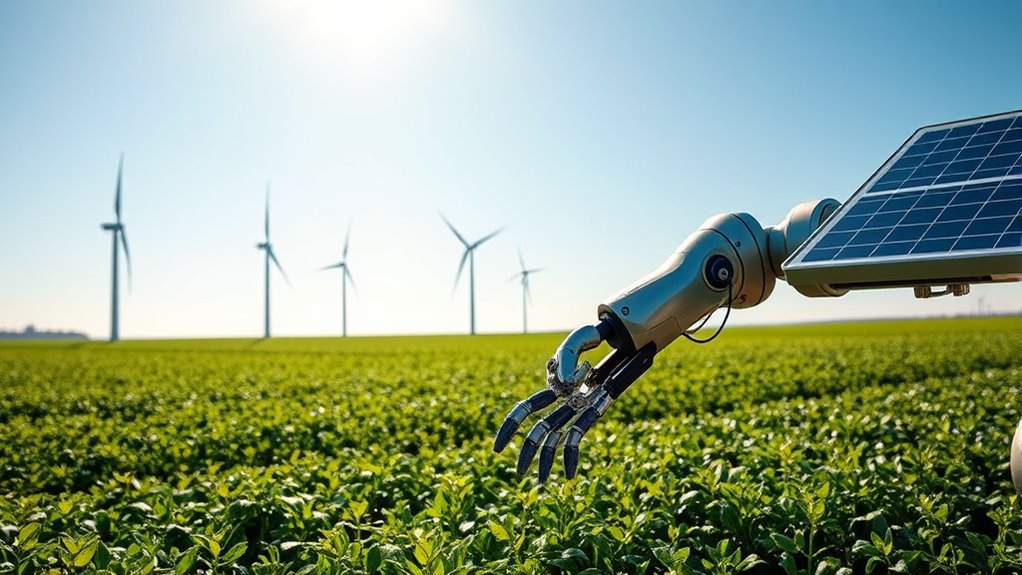
You can see how innovations like eco-friendly materials, advanced power management, and renewable energy integration are transforming robotic systems into more sustainable solutions. These breakthroughs help reduce energy consumption and environmental impact while maintaining performance. As you explore further, you’ll find that such technologies are essential for creating truly energy-efficient robots.
Eco-Friendly Materials Use
Innovations in eco-friendly materials are transforming robotic systems into more energy-efficient solutions by reducing their environmental footprint. You’ll find manufacturers increasingly using recyclable plastics, bioplastics, and sustainably sourced composites to build robots, cutting down on harmful waste. These materials not only lower the carbon footprint during production but also make robots easier to repair and upgrade, extending their lifespan. Lightweight, durable components reduce energy consumption during operation. Additionally, some companies are integrating bio-based lubricants and biodegradable cables to minimize pollution. By adopting these sustainable materials, you help decrease resource depletion and waste, supporting a circular economy. Incorporating sustainable design principles further enhances the environmental benefits of robotic systems. These innovations align robotic design with environmental goals, making sustainability a core aspect of future-ready robotic systems.
Advanced Power Management
Advancements in power management are transforming robotic systems into more energy-efficient solutions by optimizing how they consume and conserve energy during operation. You can now implement smart power regulation that dynamically adjusts energy use based on task demands, reducing waste. Innovations like low-power components and sleep modes enable robots to operate efficiently during idle periods. Battery technology improvements, such as quick charging and longer-lasting cells, minimize energy loss and downtime. Power distribution systems are becoming more precise, directing energy only where needed. Additionally, real-time energy monitoring allows you to identify inefficiencies and optimize performance actively. Energy optimization techniques are also being integrated into robotic systems to further enhance their sustainability. These innovations help reduce the overall energy footprint of robotic systems, supporting sustainability goals while maintaining high operational effectiveness.
Renewable Energy Integration
How can integrating renewable energy sources transform robotic systems into truly energy-efficient solutions? By powering robots with solar, wind, or other clean energy, you reduce reliance on fossil fuels and cut carbon emissions. This shift enables robots to operate sustainably, especially in remote or off-grid locations. Innovations like solar-powered drones and wind-assisted mobile robots demonstrate this potential. You can also incorporate energy storage systems to ensure continuous operation during low-generation periods. Consider these key points:
- Solar panels integrated into robot design for direct energy harvesting
- Wind turbines used to supplement stationary robotic systems
- Advanced batteries for efficient energy storage and management
- Modular designs facilitating easy upgrades for renewable energy components
Renewable energy integration can significantly enhance the sustainability and operational independence of robotic systems.
As an affiliate, we earn on qualifying purchases.
How Automation Enhances Sustainable Manufacturing Processes

Automation substantially boosts sustainable manufacturing by making processes more efficient and precise. You’ll reduce resource waste and energy consumption by streamlining operations and minimizing errors. Automated systems monitor production in real-time, allowing you to quickly detect and correct issues, preventing excess emissions or material waste. Robotics enable precise assembly and cutting, lowering scrap rates and ensuring best use of raw materials. With AI-driven analytics, you can adapt production schedules to demand fluctuations, avoiding overproduction. Additionally, automated quality control reduces defective products, decreasing waste and environmental impact. Modular robot designs make maintenance and upgrades straightforward, extending equipment lifespan. Furthermore, retail hours today can be optimized using automation to ensure better resource allocation and reduced operational costs. Overall, automation helps you operate leaner, greener, and more responsible, aligning manufacturing practices with sustainability goals while boosting productivity.
renewable energy integrated robots
As an affiliate, we earn on qualifying purchases.
As an affiliate, we earn on qualifying purchases.
Robotics in Environmental Monitoring and Disaster Response
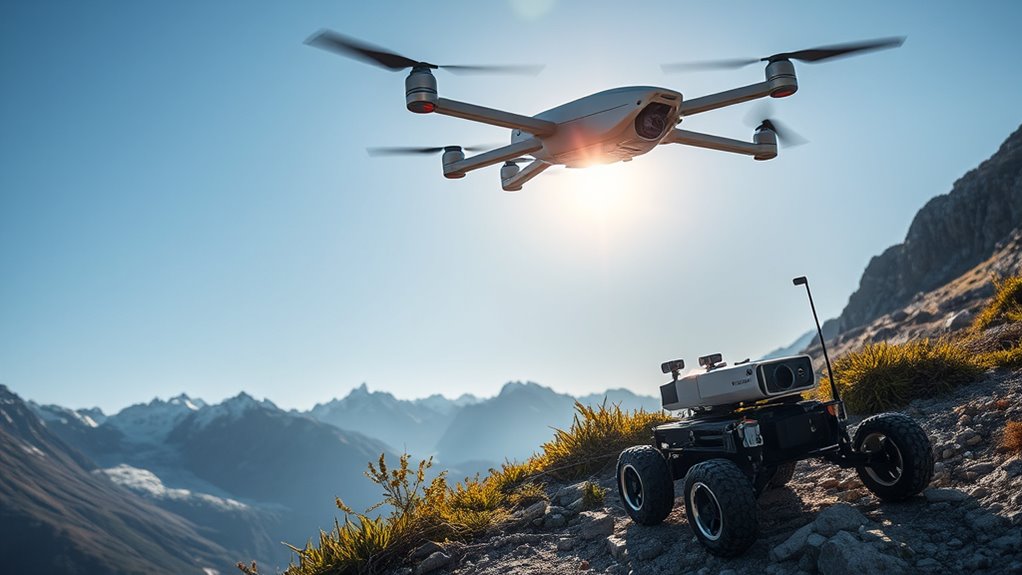
Robots play an essential role in environmental monitoring and disaster response by providing detailed data collection and swift action in challenging conditions. They help track climate changes, detect pollution, and assess damage after natural disasters, enabling quicker, more accurate responses. Drones survey hard-to-reach areas, while autonomous robots clean up pollutants or assist rescue efforts. Their ability to operate in dangerous environments reduces risk to human responders and speeds up recovery. Additionally, Kia Tuning techniques can optimize vehicle performance for rapid deployment in emergency situations, ensuring responders can reach affected areas swiftly.
The Economic and Social Benefits of Green Robotics
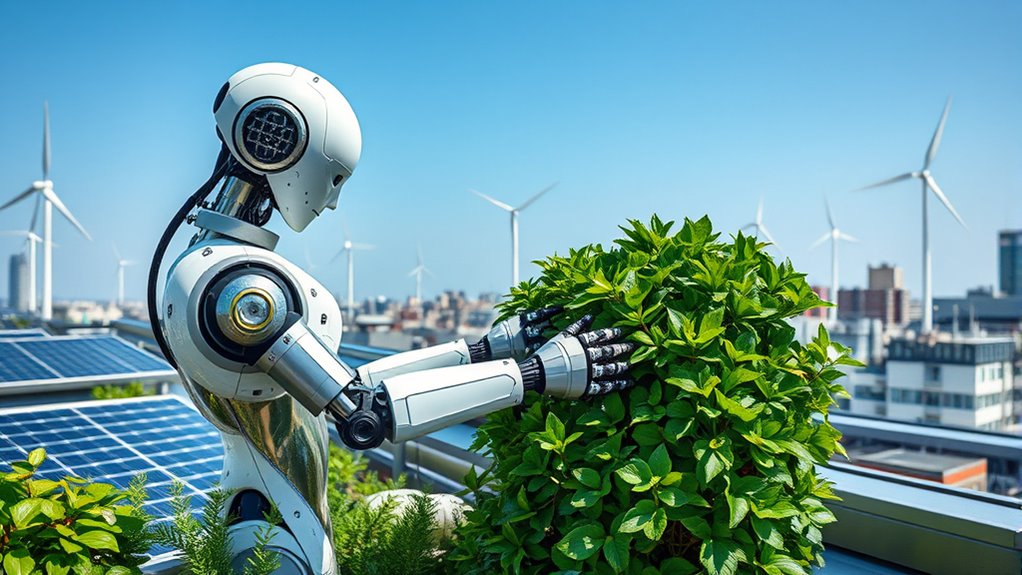
Green robotics creates new job opportunities, especially in engineering, maintenance, and research sectors, helping boost local economies. It also promotes social equity by making automation accessible to underserved communities through innovative leasing and training programs. As these technologies grow, they support overall economic expansion while ensuring that benefits reach a broader range of people. Additionally, the development of sustainable grooming practices and eco-friendly products reflects a growing consumer preference for environmentally responsible options.
Job Creation Opportunities
Have you considered how the rise of eco-friendly robotics is creating new job opportunities across industries? As green robotics expand, demand grows for specialists in design, maintenance, and programming. This shift opens pathways for workers to enter emerging fields focused on sustainable technologies.
- The need for engineers developing eco-conscious robots boosts employment in tech sectors.
- Training programs and certifications are emerging to upskill workers for new roles.
- Maintenance and repair of green robots require specialized technicians, increasing service jobs.
- Deployment in renewable energy projects and environmental monitoring creates positions in field operations.
- The integration of robotic automation into sustainability efforts enhances efficiency and opens additional employment avenues.
These opportunities support economic growth while promoting sustainability. Your involvement in this evolving landscape can help shape a greener, more resilient workforce.
Enhancing Social Equity
As the adoption of eco-friendly robotics accelerates, its impact extends beyond environmental benefits to promote social equity. You benefit from increased access to advanced technologies that create new job opportunities, especially in underserved communities. Robotics can bridge workforce gaps by enabling skill development and providing affordable solutions in healthcare, education, and agriculture. For example, community-based robotic initiatives help reduce disparities by bringing essential services to remote areas. Additionally, accessible robotics models like leasing or no-code platforms empower small businesses and individuals, fostering economic inclusion. These innovations guarantee that the advantages of automation reach a broader population, helping to close existing social gaps. Float mounting textile art techniques can also be adapted to improve the presentation and preservation of textile-based projects, enhancing community engagement and education. By promoting equitable access to technology, green robotics support a more inclusive transition toward sustainability.
Supporting Economic Growth
Robotics drive economic growth by creating new industries, jobs, and business opportunities centered around sustainable technologies. As you adopt green robotics, you open innovative markets and boost productivity while supporting environmental goals. These advancements lead to increased employment, especially in engineering, maintenance, and tech development sectors. They also foster entrepreneurship through startups focused on sustainable solutions. To highlight the benefits:
- Robotics generate over 161,000 engineer jobs in the US alone, growing steadily.
- Automation fills labor gaps without overexploiting workers.
- Accessible automation models promote inclusive economic participation.
- Education in robotics and STEM prepares future workers for sustainability-driven industries.
- Incorporating data-driven marketing strategies, such as analyzing competitor strategies and utilizing social media, can help promote and expand the adoption of green robotics.
Technological Trends Shaping Sustainable Robotic Applications
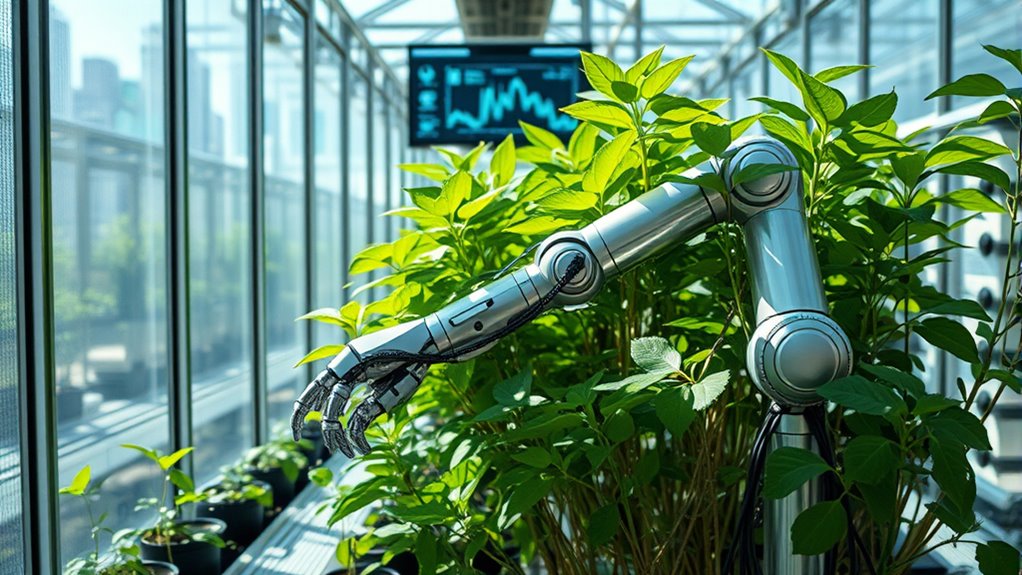
Advancements in artificial intelligence, digital twins, and sensor technology are transforming how robotic systems operate, making them more efficient and sustainable. You can now deploy robots that adapt in real-time, optimizing energy use and reducing waste. Digital twins create virtual models of physical robots, enabling you to simulate and improve operations before implementation. Sensors provide continuous data on environmental conditions, allowing robots to respond dynamically and minimize resource consumption. Modular designs give you the flexibility to upgrade components instead of replacing entire systems, extending lifespan and reducing waste. AI-powered automation enhances decision-making, boosting precision while conserving materials and energy. Additionally, understanding prophetic dreams can inspire innovative approaches to sustainability by fostering insight and foresight in technological development. These technological trends make sustainable robotic applications more accessible, efficient, and capable of supporting your organization’s environmental goals.
Challenges and Opportunities in Implementing Eco-Friendly Robotics
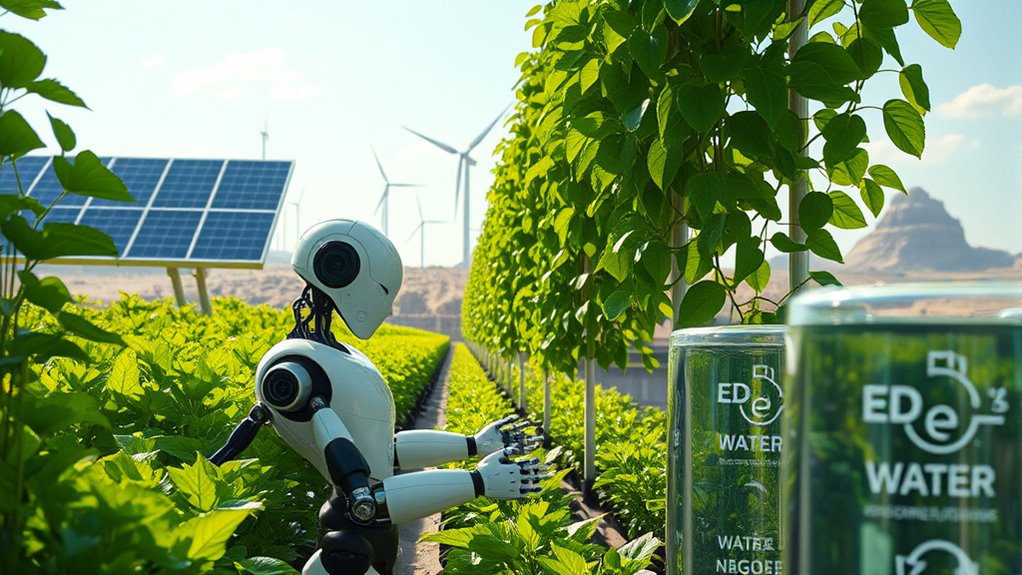
Implementing eco-friendly robotics presents both significant opportunities and notable challenges. You can reduce environmental impact through precise operations, energy efficiency, and sustainable materials. However, high development costs, technological complexity, and integration hurdles can slow adoption. Additionally, manufacturing eco-friendly robots requires new supply chains and standards that may increase initial waste or resource use.
Implementing eco-friendly robotics reduces impact but demands new supply chains and standards, risking increased initial waste and resource use.
You should consider:
- Balancing upfront investment with long-term environmental benefits
- Overcoming technological gaps in renewable-powered and recyclable components
- Ensuring compatibility with existing industrial systems
- Addressing regional disparities in infrastructure and regulations
Despite these challenges, advances in AI, modular designs, and renewable energy integration open pathways for scalable, sustainable robotic solutions. Embracing innovation and collaboration can turn obstacles into opportunities for a greener future.
Future Perspectives on Robotics as a Climate Action Tool
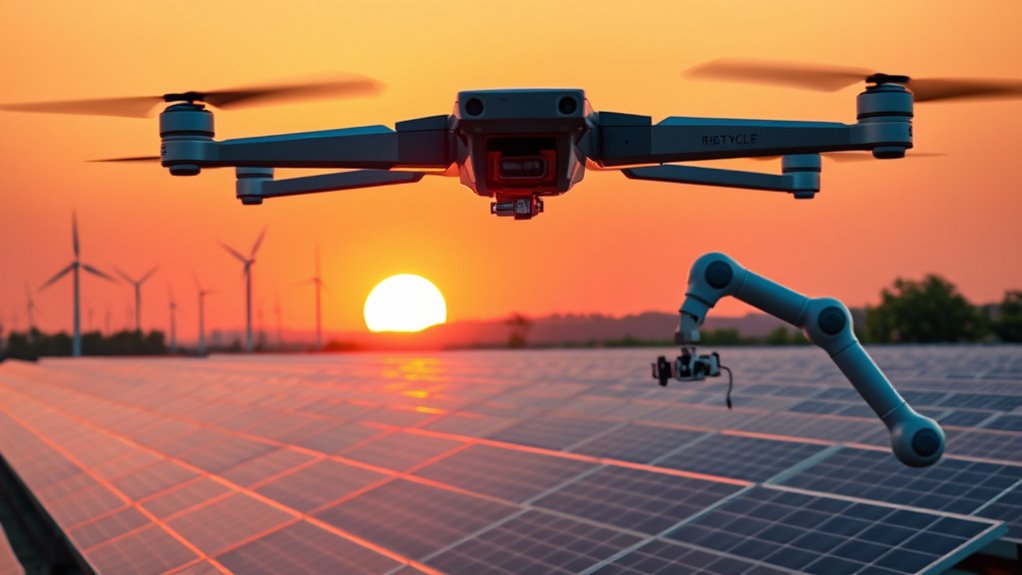
As technology continues to evolve, robotics are poised to become even more powerful tools in climate action. You’ll see smarter, more adaptable systems that integrate AI, sensors, and renewable energy sources, making environmental efforts more effective and scalable. Future robotics will enable real-time monitoring of ecosystems, improving early warning systems for disasters and climate changes. You’ll also witness increased use of modular, repairable designs that extend robot lifespans and reduce waste. Autonomous drones and robots will play larger roles in reforestation, pollution cleanup, and renewable energy maintenance. As these tools become more accessible and affordable, industries and communities can implement sustainable practices more widely. Ultimately, robotics will help accelerate humanity’s shift toward a resilient, low-carbon future.
Frequently Asked Questions
How Do Regional Differences Influence Robotic Environmental Impact Strategies?
Regional differences shape your robotic environmental impact strategies by highlighting unique pollution levels, resource availability, and industrial needs. In eastern China, for example, you’d focus on tailored deployment to maximize pollution reduction, while in other regions, emphasis might be on energy-efficient designs or renewable integrations. By understanding local environmental challenges and infrastructure, you can develop more effective, targeted robotic solutions that optimize sustainability efforts across diverse geographic areas.
What Materials Are Used to Make Eco-Friendly, Recyclable Robots?
You’ll find that eco-friendly robots mainly use recyclable materials like biodegradable plastics, recycled metals, and sustainable composites. In 2025, robotics manufacturers increasingly adopt these materials to lower environmental footprints. By choosing recyclable components, you help reduce waste and promote sustainability. Advanced battery tech and renewable energy sources further enhance eco-conscious design. These efforts guarantee robots are more sustainable, aligning manufacturing with global green initiatives and supporting a healthier planet.
How Do Robotics Contribute to Renewable Energy Infrastructure Maintenance?
You can see robotics play a vital role in renewable energy infrastructure maintenance by inspecting solar panels and wind turbines efficiently. They identify issues early, perform repairs, and clean surfaces, boosting energy output. Using drones and autonomous robots, you reduce downtime and manual labor, ensuring systems run smoothly. This proactive approach minimizes environmental impact, prolongs equipment lifespan, and supports a reliable, sustainable energy supply for the future.
What Policies Support the Adoption of Sustainable Robotic Technologies?
You can support policies that encourage sustainable robotic technologies by advocating for government incentives like tax credits and grants, which lower adoption costs. Push for strict environmental regulations that set eco-friendly standards for robotic manufacturing and operation. Promote public-private partnerships to fund research and development in green robotics. Encourage industry standards that prioritize energy efficiency and recyclability. These policies make it easier for you to implement and benefit from environmentally conscious robotic solutions.
How Can Small and Medium Enterprises Afford Eco-Friendly Robotics?
You can make eco-friendly robotics affordable for your small or medium enterprise by exploring leasing options, which reduce upfront costs. Look for modular and customizable robots that allow upgrades instead of replacements. Take advantage of government grants and incentives aimed at promoting sustainable technology adoption. Partner with robotics providers offering scalable solutions, and consider integrating AI and sensor tech to maximize efficiency and minimize waste, making green robotics more accessible and cost-effective.
Conclusion
While some might worry that robotics could increase energy use, the truth is they’re transforming sustainability efforts by reducing pollution, optimizing resource use, and enabling precise environmental monitoring. If you embrace these innovations, you’ll find that eco-friendly robotics not only support climate goals but also create new economic opportunities. By actively integrating smart automation, you can help build a more sustainable future—proving that technology and environmental responsibility can go hand in hand.