Executive Summary
Government policymakers and C-level executives worldwide are increasingly prioritizing sovereign data centers and compute infrastructure as strategic assets. Nations across Asia and Europe are launching major initiatives to ensure sensitive data and critical workloads reside on infrastructure under national or regional control. This white paper provides a comprehensive analysis of global trends and specific case studies in South Korea, Germany, and Portugal (Iberia), illustrating how digital sovereignty is reshaping data center strategies:
- Global Momentum: From Asia to Europe, governments are investing heavily in sovereign IT and AI hubs. For example, South Korea is funding a National AI Computing Center planned to host 50,000 GPUs by 2030datacenterdynamics.com, while cloud giants like AWS have pledged $5 billion for new AI data centers in Korea by 2031reuters.com. In Europe, initiatives like Germany’s sovereign cloud for governmentbertelsmann.combertelsmann.com and Portugal’s 1.2 GW “SINES” mega-campusdatacenterfrontier.comdatacenterfrontier.com reflect a broad push to localize digital infrastructure.
- Geographic & Visual Insights: Key regions are establishing physical strongholds for sovereign compute. In Seoul, government-backed complexes and local partnerships with firms like Samsung and Naver are expanding capacity. Munich has emerged as a European hub, with projects such as a €1 billion AI data center jointly planned by Nvidia and Deutsche Telekomdatacenterdynamics.com and the launch of Google’s first Sovereign Cloud Hub in Europecloud.google.com. Lisbon and the Iberian Peninsula are leveraging abundant renewable power and strategic cables, attracting over €12 billion in data center investments aimed at AI/HPC by 2030theportugalnews.com. High-resolution site imagery and maps in this report illustrate these locales and facility layouts.
- Regulatory Drivers: Data residency mandates, digital sovereignty laws, and power constraints strongly influence site selection, compliance requirements, investment risk, and operational control. Regulations like Europe’s GDPR (and upcoming AI Act) require local data storage and processing, spurring distributed “edge-to-core” buildouts to keep data within bordersgcore.com. Many countries (EU nations, China, India, etc.) now enforce localization of personal data, and some (France, Germany) demand that government or sensitive workloads run on “trusted” cloud infrastructure operated by domestic entitiesstlpartners.comstlpartners.com. These frameworks shape everything from partnership models (e.g. Microsoft Azure technology deployed by a German-operated companybertelsmann.com) to the technical design of facilities (for instance, ensuring only locally vetted personnel have access to systemsaboutamazon.eu). Energy policies also play a role: regions with power grid limitations or climate goals (e.g. Dublin, Amsterdam) have at times paused new data center permits, forcing operators to seek sites with adequate, sustainable power – as seen in Portugal’s coastal SINES campus, which secured 1.2 GW of grid capacity and uses 100% renewable energydatacenterfrontier.comdatacenterfrontier.com.
- Technical & Investment Details: The report details major sovereign data center projects, including capacities (megawatts of IT load or number of GPUs), operators and stakeholders, timelines, public/private investment roles, and integration with cloud services:
- In South Korea, the 2.5 trillion KRW National AI Computing Center (scheduled by 2028–2030) will host tens of thousands of GPUsdatacenterdynamics.com, operated by a Samsung SDS-led consortium with Naver, KT, and Kakaodatacenterdynamics.com. The government’s strict requirements (such as using domestic AI chips) initially deterred biddersdatacenterdynamics.com, highlighting how policy choices impact investment risk. Meanwhile, AWS and OpenAI are partnering with Korean firms (SK Group, Samsung) to build local cloud and AI infrastructure (e.g. 20 MW “Korean-style Stargate” data centers) to meet sovereign AI ambitionsreuters.comreuters.com.
- In Germany, a sovereign cloud for the public sector (operational in 2025) is delivered by Delos Cloud (SAP-founded) using Microsoft Azure tech under German controlbertelsmann.combertelsmann.com. Munich will host new AI data centers: one joint venture of Deutsche Telekom and Nvidia (~€1 billion) aimed at European industry and SAP’s cloud needsdatacenterdynamics.comdatacenterdynamics.com. These facilities integrate with both local providers (SAP’s “Sovereign Cloud/Delos” expanding to 4,000 GPUsdatacenterdynamics.com) and global cloud offerings (AWS announced an independently operated European Sovereign Cloud region launching in 2025aboutamazon.eu, headquartered in Germany).
- In Portugal (Iberia), the Start Campus SINES DC project is Europe’s largest planned data center park at 1.2 GW. It opened its first 26 MW building in 2024datacenterfrontier.com and will scale to six facilities by 2030datacenterfrontier.com. This private development (backed by Portuguese and international investors) underscores public sector support through enabling infrastructure – e.g. grid operator REN’s investment in transmission upgradesdatacenterfrontier.com and favorable conditions (cooling with seawater, renewable power) rather than direct subsidies. The campus is cloud-neutral but “AI/HPC ready,” courting both hyperscale cloud tenants and sovereign HPC projects. Similarly, in Lisbon’s metro area, a 180–300 MW data center campus by Edged Energy & Merlin Properties is under construction (first phase due 2027)datacenterdynamics.comdatacenterdynamics.com, citing Portugal’s superb subsea cable connectivity and investor-friendly climate as key drawsdatacenterdynamics.com.
- Strategic Questions & Emerging Directions: The paper addresses pressing questions shaping sovereign infrastructure strategy. How is regulation driving edge-to-core deployments? We find that compliance requirements are prompting more distributed architectures – for example, edge data centers are being used to locally process regulated data (health, finance) near its source, while core facilities provide centralized heavy compute, all to satisfy sovereignty rules without sacrificing performancegcore.com. Is sovereign AI compute now a national security imperative? Evidence suggests yes: many governments view control over AI data centers and chips as vital. Geopolitical tensions (e.g. U.S.–China tech decoupling) have underscored that reliance on foreign cloud or semiconductor providers can become a strategic vulnerabilitybain.com. Nations are investing in sovereign AI compute capacity (South Korea’s and France’s multi-billion programs, UAE–EU partnerships, etc.) to avoid being “left behind” or beholden to othersbain.comstlpartners.com. Current gaps include balancing sovereignty with resilience – small countries like South Korea face a data residency vs. disaster recovery dilemma (data must stay inside borders, yet truly geo-redundant backups would require distant sites)interconnected.bloginterconnected.blog. Meanwhile, emerging approaches are exploring regional alliances (e.g. joint EU AI supercomputing hubsfct.ptfct.pt) and innovative technologies (open-source models, sovereign crypto, etc.) to bolster digital autonomy without reinventing every wheel.
- Recommendations: Finally, the report provides tailored recommendations. Policymakers are advised to streamline regulations and incentives that encourage sovereign infrastructure growth while avoiding over-restrictive conditions that deter private investment (for instance, mandating local chips or operators only when domestic alternatives are viable). Governments should treat critical data centers as nationwide infrastructure, investing in power and fiber upgrades and incorporating them into resilience planning (e.g. multiple geographically-separated sites, stringent uptime standards). Public-private partnerships are key: successful cases (like Germany’s Delos Cloud or Korea’s AI Center bid) involve collaboration between government, local industry, and global tech firms, marrying security with innovation. For executives, it’s recommended to pursue compliance-by-design in enterprise architecture – leveraging sovereign cloud services or on-premises solutions for sensitive workloads – and to engage proactively with regulators to shape workable sovereignty standards. Across the board, aligning on sustainability (through green energy and efficient cooling) will be crucial, as power constraints could otherwise cap expansion in many regions. The Appendices provide detailed data tables of major projects and a compiled source list for further reference.
In sum, sovereign data center initiatives are redefining the digital infrastructure landscape, blending geopolitical considerations with technical and business strategy. This white paper equips leaders with a clear view of the current state, emerging trends, and best practices to navigate the sovereign cloud era.
Introduction
In today’s digital economy, data is sovereignty. As enterprises and governments alike digitize operations and embrace AI-driven services, control over the underlying compute infrastructure has become a matter of national strategy. Sovereign data centers refer to data storage and processing facilities that are physically and administratively subject to a particular nation’s jurisdiction and oversight. Unlike traditional global cloud centers that might reside anywhere, sovereign centers ensure that a country’s critical data (and the algorithms running on it) remain within defined borders and under local laws. This concept has gained urgency in recent years amid rising concerns about data privacy, supply chain security, and geopolitical stability.
Several factors are driving the sovereign data center trend:
- Data Privacy and Trust: High-profile data breaches and revelations about foreign surveillance have made governments wary of hosting sensitive information abroad. Citizens and regulators demand strict data residency – for example, personal health or financial records should not leave the country without consentblog.equinix.comblog.equinix.com. Trust in cloud services now hinges on clear guarantees about where data lives and who can access it.
- Legal and Regulatory Pressures: Following the EU’s landmark GDPR in 2018, over 100 countries have enacted data protection laws, many with localization clausesblog.equinix.comblog.equinix.com. Moreover, sector-specific rules (in finance, defense, etc.) often require using domestically accredited IT infrastructure. In parallel, laws like the U.S. CLOUD Act assert extraterritorial access rights to data held by U.S. providersgcore.com, which has raised sovereignty alarms abroad. These complex, sometimes conflicting regulations force organizations to adapt their infrastructure – giving impetus to locally operated clouds that can meet compliance in each jurisdictionblog.equinix.comblog.equinix.com.
- Geopolitical Dynamics: Technology has become a centerpiece of great-power competition. Nations are investing in “sovereign tech” to reduce dependence on foreign providers that might be cut off in a crisisbain.combain.com. The race for AI supremacy, in particular, has nations pouring funds into domestic supercomputers, AI research centers, and chip fabrication – often framed as essential to economic and national securitybain.comstlpartners.com. For example, export controls on semiconductors have shown countries that reliance on others for critical compute power (or cloud services) can quickly become a strategic vulnerabilitybain.com.
- Reliability and Control: Depending on global cloud giants for critical services (from government databases to telecom networks) creates concentration risk. Outages or policy changes by a foreign provider could disrupt domestic services. By developing sovereign data centers, governments gain operational control – they can mandate specific security measures, ensure multiple redundant sites within country, and prioritize national traffic in emergencies. The flip side, however, is that ensuring world-class reliability domestically can be challenging without the scale and expertise of the major cloud firms.
This report explores how these drivers are manifesting around the world, with a focus on three regions at the forefront: South Korea, Germany, and Portugal (Iberia). Each offers a distinct perspective – South Korea as a tech-savvy nation balancing global partnerships with local autonomy, Germany as Europe’s largest economy setting rigorous sovereignty standards, and Portugal as an emerging hub leveraging natural advantages to attract sovereign cloud investments. By examining these cases, we gain insight into best practices and pitfalls in implementing sovereign infrastructure.
The remainder of this white paper is structured as follows:
- Global Overview of Sovereign Data Center Trends: A survey of worldwide developments, highlighting how different nations and regions are approaching sovereign infrastructure and the common themes that emerge.
- Regional Deep Dives: Detailed analysis of initiatives in Seoul (South Korea), Munich (Germany), and Lisbon/Iberia (Portugal), including maps, site images, and project data.
- Regulatory Landscape and Policy Levers: Examination of key laws, regulations, and policy tools that influence sovereign data center deployment, such as data localization requirements, cloud certification schemes, and energy regulations.
- Strategic Questions and Answers: Discussion of the most pressing strategic issues (with Q&A format) – for example, how edge computing fits into sovereignty plans, whether sovereign AI is becoming a defense mandate, and how to address gaps like disaster recovery within borders.
- Recommendations for Policymakers and Executives: Actionable guidance on fostering sovereign compute capabilities effectively and responsibly.
- Appendices: Supplementary data tables summarizing major projects and a list of sources for further reading and verification of facts.
By combining high-level trend analysis with concrete case studies and data, this white paper aims to equip decision-makers with a nuanced understanding of sovereign data center strategies – enabling informed policy design and business planning in this rapidly evolving domain.
Global Overview of Sovereign Data Center Trends
Around the globe, the quest for digital sovereignty is reshaping how and where data centers are built:
- Europe’s Sovereignty Agenda: Europe has been a pioneer in articulating digital sovereignty. The EU’s policymakers have declared that Europeans should “retain control over their data” and not be beholden to non-EU cloud providersobserver.com. Projects like GAIA-X, launched in 2019, epitomize Europe’s approach: rather than a single new infrastructure, GAIA-X is a framework for interoperable and federated cloud services among European providers, aiming to offer an alternative to U.S. and Chinese hyperscalers. While GAIA-X has faced delays, it spurred a broader movement. France and Germany, in particular, have rolled out sovereign cloud initiatives. For example, France’s SecNumCloud certification and “Trusted Cloud” label impose stringent requirements (including EU ownership and data localization) for any cloud serving the public sectorstlpartners.comstlpartners.com. This has effectively forced big players to partner locally – Microsoft Bleu (with Orange & Capgemini in France) and Google’s S3NS (with Thales) were created so that U.S. technology can be delivered under French/EU controlstlpartners.comstlpartners.com. Germany followed a similar path: its federal IT agency worked with SAP, Arvato, and Microsoft to stand up a sovereign government cloud (Delos Cloud) entirely operated by German entitiesbertelsmann.combertelsmann.com. The European Union is also heavily investing in high-performance computing (HPC) as a matter of sovereignty – the EuroHPC Joint Undertaking has funded petascale and now pre-exascale supercomputers in various member states (e.g. LUMI in Finland, Leonardo in Italy). By Q4 2025, Europe is on the cusp of its first exascale supercomputer, JUPITER in Germany, which is seen not just as a scientific asset but as critical infrastructure to keep Europe in the AI race on its own terms. In short, Europe’s trend is a mix of regulatory assertiveness and capacity-building: regulate where data goes and how clouds operate, and simultaneously build European-owned capacity.
- United States and Allied Nations: The U.S. itself, with its dominant hyperscalers (AWS, Microsoft, Google), historically focused on a global cloud footprint rather than “sovereign” data centers for its own needs – though it maintains isolated Government Clouds (like AWS GovCloud regions) for sensitive federal data. However, the U.S. is indirectly part of this trend via its strategic tech alliances. For instance, at the Asia-Pacific Economic Cooperation (APEC) summit in 2025, U.S. companies pledged billions in AI infrastructure investments across allied countriesreuters.comreuters.com. This includes AWS’s announcement to invest $5 billion in AI data centers in South Korea by 2031reuters.com and similar expansions in Japan, Australia, and Singaporereuters.com. These moves can be seen as the U.S. bolstering the digital infrastructure of its partners to counterbalance influence from other powers (and to meet local data demands). Meanwhile, nations like Japan and Canada are updating their policies to ensure certain critical data stays domestic. Japan’s cloud market, for example, now emphasizes “local regions” operated by domestic telecom firms in partnership with global cloud vendors. In allied defense contexts (e.g. NATO, or U.S.-Japan/Korea), there’s growing talk of secure sovereign clouds for defense data to ensure interoperability without compromising each nation’s control. In summary, while the U.S. leads in cloud tech, even it is recognizing the need to facilitate sovereign clouds abroad – a softer power play that aligns with geopolitical goals.
- Asia-Pacific: Asia presents a diverse picture. China is a special case: it has long kept foreign tech at arm’s length, effectively mandating data localization for all personal and important data via its cybersecurity law (2017) and data security law (2021). All major data centers in China are operated by Chinese entities (Alibaba, Tencent, state telcos), and foreign cloud companies can only partner (e.g. Microsoft with 21Vianet) to serve the market, with no foreign ownership of data centers. In that sense, China achieved “digital sovereignty” early, though at the cost of a closed ecosystem. India has implemented data localization for certain sectors and, as of 2023, its Digital Personal Data Protection Act is pushing companies to keep Indian citizens’ data onshoregcore.com. India is also building up state-run clouds (the “MeghRaj” government cloud initiative) and an upcoming National Data Governance policy signals further requirements for local handling of data. However, India also values its thriving IT industry’s ability to serve global clients, so it seeks a balance – the likely approach is localized infrastructure zones for foreign cloud firms (many of whom have announced new Indian regions) and public-sector-only sovereign clouds for government use. Other Asian tigers like Singapore, Hong Kong, and South Korea are somewhat caught between being regional data hubs (serving as neutral ground for multinationals) and enforcing sovereignty. Singapore imposed a temporary moratorium on new data centers in 2019–2022 due to power and land constraints, but as of 2022 it introduced a sustainable DC policy and is allowing growth with efficiency standards. South Korea, detailed in the next section, stands out for its aggressive sovereign AI investments and unique challenges as a smaller territory. Southeast Asian nations (Malaysia, Indonesia, Vietnam, etc.) have all introduced data localization for certain personal or financial data, leading to a proliferation of local data center builds by both domestic conglomerates and international cloud providers. For instance, Indonesia requires financial data to be domestically stored, prompting multiple new Jakarta-area cloud regions in the past few years. Overall, Asia-Pacific is characterized by fast growth in data center demand, with governments asserting varying degrees of control – from heavy (China, Vietnam) to moderate (Singapore, Korea) to light-touch (Australia, which relies on market but with security classifications for some data).
- Middle East and Africa: Many countries in the Middle East are investing in large data centers as part of nation-building and diversification strategies. The Gulf states, in particular, see digital infrastructure as key to becoming regional hubs. The UAE and Saudi Arabia have attracted major cloud providers to build local regions, often in partnership with state entities (e.g. Azure’s UAE regions with Mubadala, Google Cloud in Saudi with Aramco). Their motive is partly convenience for businesses, but also to ensure data of domestic firms and citizens remains in-country as required by emerging laws. Saudi Arabia’s Vision 2030 includes goals for digital sovereignty, and it is rumored to be building big data centers not just for commercial cloud but also for future sovereign AI and smart city (NEOM) needs. In Africa, the trend is nascent but growing: countries like Nigeria and Kenya have introduced data protection acts that encourage local data storage. South Africa, a more mature IT market, already hosts local availability zones for AWS and Azure to serve the region (which helps South African companies keep data onshore if they choose). The African Union in 2022 proposed a common framework for data policy, recognizing that data sovereignty could become a barrier to continental digital trade if every nation has different rules. So there’s interest in harmonizing standards to allow cross-border cloud within Africa (somewhat akin to the EU model) – a concept of “digital pan-Africanism” that still respects sovereignty but leverages regional integration.
- Global Cloud Providers’ Response: It’s crucial to note that the major cloud providers (AWS, Microsoft, Google) are not standing idle. They have responded with initiatives to address sovereignty concerns while retaining customers. One approach is specialized sovereign cloud offerings: for example, AWS announcing its European Sovereign Cloud which will be separate from its global cloud, run by a new EU-based entity with EU citizen staff, independent governance, and data locked in-regionaboutamazon.euaboutamazon.eu. This is a direct answer to European regulators’ concerns — essentially a “cloud within a cloud” that meets sovereignty criteria. Microsoft earlier introduced its Cloud for Sovereignty concept, allowing government customers to run on Azure but with greater control (including transparency on where every piece of data is stored and the ability to lock out foreign admin access). Google Cloud launched “Assured Workloads” and is partnering (like in France, Germany as noted) to offer cloud services under local operators. These adaptations show that sovereignty is now a competitive dimension in the cloud market: customers are demanding it, so cloud companies innovate to provide it. We even see edge and hybrid cloud solutions (e.g. AWS Outposts, Azure Stack) being marketed as tools to satisfy data residency – they let you deploy mini-cloud nodes in-country or on-premise. In summary, global providers are going glocal: building more local regions, entering joint ventures (if needed for legal compliance), and giving customers granular control over data locality and encryption keys (for instance, offering customer-managed keys that even the provider cannot access). The outcome of these trends is likely a more fragmented but resilient global cloud fabric, where data largely stays within trusted zones, and cross-border flows occur only with clear governance.
In conclusion, sovereign data center trends worldwide reflect a balancing act: pursuing the benefits of cloud and AI innovation while asserting control over one’s slice of cyberspace. The next sections will delve into specific regional implementations of this balance, shedding light on practical aspects like site locations, regulatory impacts, and partnership models that are emerging as prototypes for sovereign infrastructure in the future.
Regional Deep Dives
South Korea (Seoul): Sovereign Cloud and AI Ambitions in a Hyper-Connected Nation
South Korea is a leading indicator of sovereign data center evolution, as it combines technological sophistication with acute awareness of security threats. With one of the world’s highest internet penetrations and a tech-savvy population, South Korea’s digital services are critical to daily life – which was starkly demonstrated in October 2022, when a fire at a Pangyo data center knocked out KakaoTalk (the dominant messaging app) along with banking and transit apps for tens of millions of Koreansinterconnected.bloginterconnected.blog. This incident became a catalyst for the government’s push toward greater resiliency and sovereignty in data infrastructure.
Major Initiatives and Sites: The South Korean government’s flagship project is the National Artificial Intelligence Computing Center (NAICC) – a mega-scale data center dedicated to AI R&D and cloud computing for domestic use. Initially announced in 2021 as part of Korea’s AI national strategy, the NAICC is planned to provide exascale-level AI computing power by 2030. After some delay due to procurement hurdles, it is now moving forward:
- Location: The NAICC will be built in Haenam, South Jeolla Province, at a site called the Solarseado Data Center Park. This location, at the country’s southwest tip, was chosen after evaluating alternatives like Gwangju and North Gyeongsangdatacenterdynamics.com. Haenam offered abundant land and renewable energy potential (it’s near offshore wind farm sites and solar resources – reflected in the name “Solar Sea”) and crucially, distance from the densely populated Seoul metro. Distributing major data centers away from Seoul is seen as beneficial for disaster risk diversification (Seoul is only ~50 km from the North Korean border, which some consider a strategic vulnerability)bloomberg.com.
- Capacity and Technology: The NAICC is structured to scale from 15,000 GPUs in 2028 up to 50,000 GPUs by 2030datacenterdynamics.com. To put that in perspective, 50k state-of-the-art GPUs (like Nvidia A100/H100 class) could deliver on the order of multiple exaflops of AI compute, placing Korea among global leaders in compute per capita. The center is likely to use advanced cooling (possibly liquid cooling) given the density, and it aims for energy efficiency and use of Korean-made AI chips as they become available. The initial phases will rely on conventional hardware (Nvidia GPUs), but one impetus for sovereignty is to incorporate domestic semiconductor technology – for example, Korean firms like FuriosaAI and Rebellions are developing AI accelerators; government contracts may ensure a portion of NAICC workload runs on these to reduce reliance on foreign chips in the long run.
- Operators and Stakeholders: A consortium led by Samsung SDS (the IT services arm of Samsung) was the sole qualified bidder to build and operate the NAICCdatacenterdynamics.com. This consortium also includes other Korean tech giants: Naver Cloud (Korea’s largest domestic cloud provider), KT (telecom & cloud services), and Kakao Enterprisedatacenterdynamics.com. The project is structured as a public-private partnership: the government funds a significant portion of the construction (2.5 trillion KRW or ~$1.7 billion) and will be the anchor tenant (for research and government workloads), while the consortium will finance part of it and run the center, selling excess capacity to private sector clients under government-approved terms. Notably, earlier bidding rounds failed because the government’s terms were too stringent – requiring majority state ownership and use of domestically produced AI chips from day onedatacenterdynamics.com. Private companies balked at the risk and potential inefficiency, leading the government to relax some requirements (e.g. allowing more flexible ownership structures and phased adoption of domestic chips)datacenterdynamics.com. This episode highlights the importance of balancing sovereignty goals with market realities; now, with Samsung SDS and partners on board, the NAICC is set to proceed, benefiting from their operational know-how and cloud platforms.
- Timeline: As of late 2025, the consortium’s bid was awaiting final sign-off, expected by December 2025datacenterdynamics.com. Site preparation in Haenam is reportedly already underway in anticipation. The goal is to have initial capacity online by 2026–27 (potentially a smaller pilot system) and scale up to the full 15k GPUs around 2028. Full 50k GPU deployment is aimed by 2030 in stages. This phased timeline aligns with Korea’s broader AI goals – it expects demand for AI compute to surge through the second half of the decade as Korean industry and government ramp up AI adoption.
Beyond NAICC, Seoul itself – specifically the Seoul Capital Area including Pangyo, Sangam, etc. – remains a key region for data centers, but with a shift in approach:
- The private sector (like Naver, Kakao, NHN) has built large data centers outside Seoul for redundancy. For example, Naver operates a big data center in Gwangju (Chojoong) and a newer one in Sejong, while Kakao is building a new center in Anseong after the Pangyo outage taught hard lessons.
- The government is consolidating its own ministries’ data centers into a Government Integrated Data Center system. Historically, multiple ministries had separate facilities (one major complex is the National Computing and Information Service center in Daejeon). Now there’s an effort to unify and modernize these under more secure, possibly cloud-like architecture. New government cloud zones might be added in future closer to Seoul for non-classified operations, but critical systems will have multi-site backup (one plan floated was to have paired government data centers in Daejeon and Jincheon, far apart enough for disaster tolerance).
- Seoul as an AI Hub: Interestingly, even as some infrastructure moves out, Seoul is positioning itself as an AI innovation hub. The city attracted OpenAI to open its first Asian office in Seoul in 2025rcrwireless.com, and as part of that collaboration, OpenAI is exploring building local data center infrastructure in Korearcrwireless.comrcrwireless.com. In October 2025, Korea’s presidential office announced that OpenAI, together with partners Samsung and SK Telecom, will set up two AI data centers (“Korean-style Stargate”) with 20 MW initial capacity near Seoulreuters.com. These would effectively serve Korean users with ChatGPT and other OpenAI services from local soil, ensuring compliance with any data residency needs and faster response times. It’s a striking example of a foreign AI provider adapting to a sovereignty model – OpenAI brings the AI models, but infrastructure is co-owned locally (and even chips are to be locally sourced: OpenAI agreed to buy memory chips from Samsung and SK Hynix for these centersreuters.com).
Regulatory and Power Considerations: South Korea has a comprehensive personal data protection law (PIPA) and sectoral rules that encourage local data handling, but it’s relatively open compared to some neighbors (Korean firms do use global clouds extensively). However, the Kakao incident sparked regulatory action. The government enacted guidelines in 2023–24 requiring that any critical online service must have disaster recovery backups – effectively mandating geo-redundancy. The twist: for Korean services, “geo-redundant” still means within Korea’s borders (for legal and latency reasons). This poses a challenge: Korea is geographically small (about 450 km top to bottom). As one analysis noted, a backup data center inside Korea may not be far enough to escape a truly large-scale disaster affecting the capital regioninterconnected.bloginterconnected.blog. Nonetheless, the new rules push companies to set up secondary sites (e.g. if primary is in Seoul area, backup should be in Busan or another far region). The NAICC in Jeolla could also serve as a backup hub for multiple services if designed as a cloud platform. Korea is thus navigating the data residency vs. resilience dilemma by at least spreading infrastructure domestically, since using overseas backups (say in Japan or Singapore) is legally and politically sensitiveinterconnected.bloginterconnected.blog.
On power: Korea’s data center growth has been bumping up against power availability in the Seoul metropolitan area. The government has hinted at incentives for data centers to locate in regions with surplus power (like South Jeolla, which hosts heavy industry but had capacity after some factory closures). The NAICC’s very location in Haenam ties into this – it’s near sites of now-decommissioned thermal plants and slated renewable projects, meaning power can be supplied without straining the main grid in Seoul. Additionally, Korea’s climate goals are pushing data centers to be more efficient (cooling innovations, perhaps using cooler air or seawater from coastal sites). We see this in Naver’s design of its second data center using immersion cooling and solar power. There’s also discussion in Korea about limiting new data center construction in core urban areas to manage heat emissions and energy load; future facilities likely will cluster in designated zones with proper infrastructure (like the aforementioned data center park in Haenam, or the planned Yangjae AI Cloud Hub outside Seoul).
Integration with Cloud and AI Ecosystem: South Korea’s sovereign data center push isn’t about isolating from global technology, but rather creating a local foundation that can interconnect with global systems on Korea’s terms. For instance:
- Korean telecoms (KT, SKT, LG U+) are integrating their 5G edge computing with local cloud data centers to enable low-latency services that also meet data residency. A hospital in Seoul, for example, can use SK Telecom’s edge cloud for patient data analytics knowing that data stays in-country.
- The NAICC, when built, is expected to link into international AI networks but via controlled gateways. Korea is part of global research networks (like CERN or international climate modeling); having a sovereign supercomputing center means it can contribute to those while keeping raw data local and sharing only results or as-needed datasets.
- The OpenAI partnership again is instructive: by hosting OpenAI’s systems locally, Korea ensures that Korean language data and user interactions are handled under Korean jurisdiction (addressing concerns that AI models like ChatGPT might otherwise export sensitive info to U.S. servers). It’s a template others might follow – we may see “sovereign instances” of global AI models hosted country-by-country.
In summary, South Korea’s approach in the Seoul region and beyond is characterized by public-private collaboration (leveraging local tech champions), targeted government investment in strategic capacity (especially for AI), and regulatory adjustments to improve resilience and sovereignty without cutting off international cooperation. The country aims to be an AI leader and knows that requires massive compute – sovereign data centers are the backbone of that ambition. By 2030, if plans hold, South Korea will have one of the most advanced sovereign AI infrastructures in the world, helping it secure a top spot in the digital economy while safeguarding its data and services from both physical and geopolitical risks.
Germany (Munich): Bavarian Hub in Europe’s Sovereign Cloud Landscape
Germany, as Europe’s largest economy, has taken a methodical and standards-driven approach to sovereign compute infrastructure. While Frankfurt is traditionally known as Germany’s (and Europe’s) primary data center hub (thanks to DE-CIX and financial industry presence), Munich and the state of Bavaria have lately become focal points for sovereign data initiatives, symbolizing Germany’s broader strategy of coupling industrial strength with digital sovereignty.
Munich’s Significance: Munich is home to many industrial and automotive headquarters (BMW, Siemens) as well as a growing tech scene. Importantly, it’s also a center for research (with the Leibniz Supercomputing Centre, LRZ, in nearby Garching) and for telecommunications (Deutsche Telekom has a significant presence). In November 2025, Google chose Munich to open its first Sovereign Cloud Hub for Europecloud.google.com, a facility dedicated to showcasing and developing sovereign cloud solutions. The choice underscores Munich’s role as a meeting point for cloud providers and German enterprise and government clients on sovereignty issues. Additionally, AWS’s new European Sovereign Cloud entity is led out of Germany (with its managing director based in Munich)aboutamazon.euaboutamazon.eu, further cementing the city’s relevance.
Major Projects:
- Industrial AI Data Center (Nvidia & Deutsche Telekom): In October 2025, news emerged of a partnership between Nvidia and Deutsche Telekom (DT) to build a new AI data center in Munichdatacenterdynamics.com. This ~€1 billion project will focus on serving European industry with advanced AI cloud capabilities. An unnamed enterprise software customer (reported to be SAP) is involved, indicating the center will likely support SAP’s cloud offerings (notably SAP’s own sovereign cloud service, “Delos”). While official details remain limited (and DT mentioned a related AI cloud project in North Rhine-Westphalia, which might or might not be separate)datacenterdynamics.com, the Munich facility is expected to come online by 2026 and provide a “European AI hub” that reduces reliance on U.S. cloud regions. The context here is SAP’s strategy: SAP, Europe’s largest software company, has committed to expanding its cloud infrastructure in Germany to 4,000 GPUs for AI workloadsdatacenterdynamics.com and has even partnered with OpenAI to offer services on this infrastructuredatacenterdynamics.com. Rather than build alone, SAP is likely leveraging DT’s data center expertise and Nvidia’s technology (Nvidia’s Blackwell-generation GPUs, for example) for this Munich center. This would give German enterprises a domestically operated platform for AI model training and deployment, fully complying with EU data laws. Munich’s selection likely rests on both talent (AI specialists at TU Munich, etc.) and strong regional support – the Bavarian state government has programs to attract high-tech investments, and this fits the mold.
- The German Sovereign Cloud for Government (Bundescloud/Delos): While not a single site, this initiative is crucial. Delos Cloud, founded by SAP and now a subsidiary under German ownership, has built out sovereign cloud nodes that are presumably located in multiple German data centers (exact sites not public, but one can speculate they might use existing secure facilities in Frankfurt, Berlin, and perhaps Munich region). Delos, in partnership with Microsoft and Arvato, achieved operational status in 2024bertelsmann.combertelsmann.com. By early 2025 it will offer Microsoft Azure and 365 services from this sovereign platformbertelsmann.com. One can think of it as a mini-Azure region, but walled off and run by Germans. Munich comes in as one of the announcement locales for this (the press release was issued from Munich among other places)bertelsmann.com, and Microsoft’s Germany office (with sovereignty experts) is in Munich. Thus, Munich likely hosts one of the cloud data center clusters for this platform. The capacities are smaller than hyperscale – maybe on the order of a few MW to start – but with potential to scale as public sector demand grows. It’s an example of federated sovereignty: multiple data centers across Germany collectively providing a sovereign cloud, so that federal and state agencies can use cloud computing without contravening data sovereignty and IT security requirements of the BSI (German Federal Office for Information Security)bertelsmann.com.
- Munich Supercomputing and HPC: Munich’s LRZ has long operated SuperMUC, a leading supercomputer for science. While not labeled “sovereign” in policy terms, supercomputers are indeed sovereignty assets (they’re funded by government and restricted by export controls similar to AI chips). LRZ is part of the EuroHPC network and could see upgrades that align with Europe’s sovereign computing goals. For instance, Germany’s coming exascale system (JUPITER) is in Julich, but Munich might host specialized quantum or AI accelerators as part of national projects. Bavaria also announced in 2023 an initiative to support AI compute infrastructure for its automotive companies (they need AI training for autonomous driving, etc., and prefer local compute for sensitive IP). We may see a Bavarian HPC center dedicated to automotive AI in Munich or Ingolstadt.
Regulatory/Policy Environment in Germany: Germany is arguably the strictest in Europe on data sovereignty concerns:
- The German government declared cloud sovereignty a core goal in the early 2020s, partly in reaction to the U.S. CLOUD Act. Germany has been wary of using U.S. clouds for government data unless extra safeguards are in place. This led to the earlier attempt at a Deutsche Telekom-run “Trusted German Cloud” (2015–2018) which didn’t succeed commercially, and now the newer approach with Delos/Microsoft which appears more promising.
- BSI Cloud Security Standards: Germany’s BSI developed rigorous criteria (C5: Cloud Computing Compliance Criteria Catalogue, and additional guidelines for classified data) that any cloud service provider must meet to serve government. For a sovereign cloud designation, the requirements include that all administration of the cloud is done by entities under German/EU jurisdiction, and no data is subject to foreign legal reachaboutamazon.euaboutamazon.eu. This essentially means no non-EU citizen admins and technical measures that prevent data from leaving. The AWS European Sovereign Cloud is a response to such demands – Amazon is creating a German-incorporated subsidiary to run it, with an independent board of EU citizens to ensure it can operate even if Amazon proper had a conflict (like a U.S. subpoena)aboutamazon.euaboutamazon.eu.
- Energy and Site Selection: Germany’s Energiewende (energy transition) affects data centers too. There are incentives for data centers to use green power and waste heat reuse. In 2023, Frankfurt’s regional authorities put constraints on new data centers due to power grid strain and land scarcity – thus other cities like Munich began to see more interest from developers. Munich, being the third-largest DC market in Germany by capacitydatacenterdynamics.com, still has room to grow compared to Frankfurt. Bavaria also has reliable power (including nuclear until 2022, now imports and renewables) but importantly, the Bavarian government is very supportive of high-tech investments, offering tax breaks or expedited permitting for projects in strategic industries. Reports suggest that for the Nvidia/DT AI center, Bavaria was ready to facilitate quickly (whereas other states had bureaucratic delays). This pro-business environment in Munich is part of why it’s becoming a sovereign cloud nexus.
- Compliance Culture: German industry is known for compliance and risk management. Companies, especially in sectors like finance and automotive, have been hesitant to put sensitive crown-jewel data in non-German clouds due to fears of U.S. access or simply reputational risk if something leaks via a foreign server. So there is market demand in Germany for local, sovereign hosting. Several German companies (e.g. Bosch, Daimler) a few years ago committed to keeping certain data on German soil or using specific providers. This demand underpins ventures like IONOS (a German cloud provider) and partnerships like T-Systems with Google Cloud for a “German Sovereign Cloud” offeringt-systems.comraconteur.net. That particular one, launched in 2022, ensures Google Cloud services are delivered from German data centers with operations by T-Systems, aiming at healthcare and public clients. Munich likely has one of Google’s twin German regions which could be used for this (Google has a cloud region in Frankfurt and one in Eemshaven, NL serving the EU; perhaps it will open a sovereign one in Munich with T-Systems).
Integration with European Initiatives: Germany doesn’t act alone; many of its projects tie into EU frameworks:
- The AI Gigafactory Initiative (a proposal under EU’s Chips Act and Digital programme) sees companies pitching for EU funds to build large data center capacity for AI. SAP and Deutsche Telekom’s pitch for a big data center (noted in the DCD article)datacenterdynamics.com was in this context. Munich as a site could potentially receive EU funding if it’s positioned as a European AI resource (benefitting multiple member states). If that happens, expect EU flags next to German ones at the facility entrance.
- Cross-border Cloud Federations: Through GAIA-X, some early prototypes have Bavarian involvement. For example, France’s and Germany’s collaboration means a German cloud node might mirror a French one for redundancy. While GAIA-X is abstract, actual bilateral projects are tangible – e.g., France’s OVHcloud and Germany’s PlusServer teamed up to offer a “GAIA-X compliant” cloud, possibly hosting nodes in each other’s countries. Munich’s Sovereign Cloud Hub (Google’s) is explicitly to discuss and demo such cross-border sovereignty solutionscloud.google.com – how to maintain sovereignty while interconnecting for resilience or scale.
Munich’s Data Center Ecosystem Visualized: If one were to map greater Munich, you’d mark:
- Landsberger Strasse area – a cluster of colocation data centers (e.g. Equinix MU1/2) which might host some sovereign cloud nodes for private sector.
- Universities and LRZ Garching – where HPC and quantum tech lives; possibly part of sovereign HPC cloud.
- T-Systems’ offices – as they run some of the government cloud infra.
- The new Nvidia-DT site, which could be on DT or partner premises (perhaps upgrading an existing Telekom data center or at Munich’s Euroindustriepark).
- Google Cloud Germany HQ – where the Sovereign Cloud Hub is, to liaise with customers (not a DC but a governance center).
- The impression is an integrated network rather than one single giant complex: Munich’s strength is in the collaborative ecosystem of industry, cloud, and research. This makes it apt for sovereignty efforts which require coordination between multiple stakeholders (government, multiple companies, regulators).
In summary, Munich’s role in Germany’s sovereign data center landscape is that of an innovation and governance hub. Germany ensures that sovereignty is baked into the rules of any digital infrastructure – be it via certified operations, legal structures, or technical controls. By leveraging Munich’s infrastructure and partnerships, Germany is building an environment where cloud computing can thrive under European rules and oversight. The results will influence EU-wide practices, making Munich a bellwether for how Europe balances openness with autonomy in the cloud era.
Portugal (Lisbon/Iberia): A New Sovereign Compute Gateway on Europe’s Edge
Portugal, and the Iberian Peninsula more broadly, has burst onto the data center scene in recent years, turning what was once a peripheral location into a strategic digital crossroads. With Lisbon as the capital and tech hub, Portugal is leveraging its geography (the Atlantic gateway to Europe), renewable energy resources, and political stability to attract major data center investments. While smaller than Korea or Germany, Portugal’s initiatives illustrate how even mid-sized countries can shape sovereign infrastructure trends by creating favorable conditions for both local and foreign players under a sovereignty framework.
Major Initiatives and Sites:
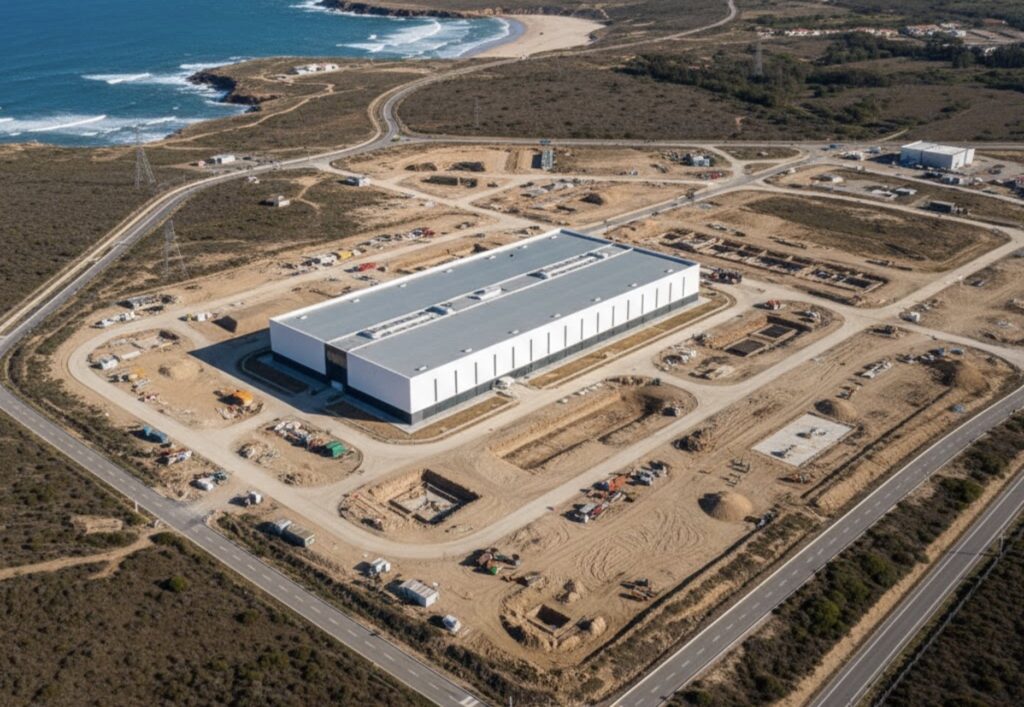
The crown jewel of Portugal’s data center strategy is the Start Campus “SINES DC” project, located in Sines, about 150 km south of Lisbon. Key details:
- Scale and Capacity: SINES DC aims for 1.2 gigawatts of IT load – an almost unprecedented scale in Europedatacenterfrontier.comdatacenterfrontier.com. The plan comprises six buildings (SIN01 through SIN06). SIN01, the first data center, was inaugurated in October 2024 with 26 MW capacity (initially 14 MW but quickly expanded due to customer demand)datacenterfrontier.com. Each of the next five buildings can support up to ~240 MW eachdatacenterfrontier.com. The full campus is expected to be operational by 2028–2030datacenterfrontier.com. If realized, this will make Portugal home to one of the largest data center campuses in the world, let alone Europe.
- Operators and Investment: Start Campus is a joint venture backed by Two major investors – on one side, GALP (Portugal’s energy company) and on the other, the North American private equity firm Davidson Kempner. It’s a private endeavor but one aligned with public goals. Notably, no single hyperscaler owns it; instead, it’s a colocation and build-to-suit model catering to any large customer with sovereign requirements. In fact, 80% of the €12 billion data center investment expected in Portugal in the next five years is tailored for AI/HPC infrastructuretheportugalnews.comtheportugalnews.com, indicating that global cloud and AI players are very interested. Indeed, Microsoft and Nvidia chose SINES DC to host some of the first deployments of Nvidia’s new Blackwell GPUs in Europe (through a partnership with a company called Nscale)startcampus.pt. This suggests SINES will have tenants that are effectively sovereign cloud zones for big providers – e.g., a dedicated Azure cluster or an EU-based AI compute cluster for a U.S. firm, but under Portuguese/EU jurisdiction and with local power supply.
- Geographic and Power Advantages: Sines was selected for concrete reasons:
- It is the landing point for multiple submarine cables. The new EllaLink cable from Brazil terminates in Sines, making it a key link between Europe and Latin America. Other transatlantic cables and planned cables to Africa/Asia also touch Portugaldatacenterdynamics.com. This gives data centers in Sines excellent global connectivity with low latency to the Americas and Africa, complementing traditional hubs in Northern Europe.
- Sines had a large coal power plant (decommissioned in 2021 as Portugal moved toward renewables), leaving behind a robust grid infrastructure. This provided an opportunity: Start Campus secured from the grid operator REN an additional power allocation that brings its total secured capacity to 1.2 GWdatacenterfrontier.comdatacenterfrontier.com – crucially, fully guaranteed power, a major selling point for big clients. REN is investing to extend transmission lines in the area to support this growthdatacenterfrontier.com.
- Renewable energy is abundant: Alentejo (the region) has vast solar farms, and offshore wind in the Atlantic is being explored. The campus commits to 100% renewable energy and a PUE of 1.10 via innovative cooling (they pump cold seawater from the ocean for cooling)datacenterfrontier.comdatacenterfrontier.com. Sustainability is not just a checkbox; it’s a core part of the offering to attract companies concerned about ESG.
- Sines is remote enough to not burden Lisbon’s urban grid, yet close enough (1.5 hour drive) for access. Also, being coastal, excess heat can be vented or used in desalination, etc. The site’s “once-embattled” statusdatacenterfrontier.com refers to initial local skepticism – large industrial projects often face environmental scrutiny – but Start Campus worked to meet new standards, hence the focus on seawater cooling and net-zero by 2030.
- Sovereignty Aspects: While Start Campus is privately run and open to foreign clients, it’s structured to meet European sovereignty needs. By hosting in Portugal under EU data protection and with Portuguese operational control, any data stored there is subject only to EU laws (GDPR etc.), not foreign jurisdictions. It is effectively part of the EU’s sovereign cloud capacity. Indeed, DE-CIX (the German internet exchange) established a presence at Sines DCstartcampus.pt, integrating it into Europe’s core network. This allows European cloud traffic to flow to Sines easily, and positions Sines as a backup location for Frankfurt/London data if needed.
In Lisbon (the metro area), sovereign data growth is also happening:
- Edged Energy & Merlin Properties Lisbon Campus: In 2024, ground was broken on a 180 MW data center campus in Vila Franca de Xira, just outside Lisbondatacenterdynamics.com. Backed by Merlin Properties (a Spanish real estate trust) and Edged Energy (a U.S.-based sustainable data center developer), this site will have five facilities, first ready by 2027datacenterdynamics.com. They are working with authorities to secure up to 300 MW if possibledatacenterdynamics.com. This project’s pitch aligns with sovereignty in that it emphasises location (10+ submarine cables near Lisbondatacenterdynamics.com) and renewable energy, and is likely to attract hyperscaler cloud availability zones that need an EU Southwestern region. Meta (Facebook) has already been a major client of Merlin’s Spanish centersdatacenterdynamics.com, so perhaps a company like Meta or Google could host a European sovereign cloud instance in Lisbon. The Portuguese government welcomes this as it diversifies the economy.
- EuroHPC and Supercomputing: Portugal is part of the EuroHPC initiative and hosts Deucalion, a supercomputer in Braga (northern Portugal). Deucalion, operational since 2022, provides petascale compute to Portuguese and EU researchers and is built with some European technology. Moreover, Portugal is involved in one of the EU’s first “AI Factories” – a network of AI centers linking MareNostrum5 (a forthcoming supercomputer in Barcelona) with nodes in Portugal, Turkey, and Romaniafct.ptfct.pt. The Portuguese node will have an interface structure and experimental platform on Portuguese soilfct.ptfct.pt. This means Lisbon (or another site) will have a center where SMEs and researchers access AI resources in a sovereign EU environment. It leverages MareNostrum5 while ensuring some local control and expertise. Lisbon’s tech hub (around Taguspark or Universidade de Lisboa) could be where this AI factory node is set up, complementing the commercial data centers with a public innovation center.
- Policy Environment: Portugal is fully aligned with EU rules like GDPR and the upcoming EU Cybersecurity Act for cloud (which will classify cloud services by level of sovereignty assurance). The Portuguese government has also created a “Digital Transition” plan that includes attracting data infrastructure. One key policy lever has been providing fast licensing for data centers and designating them as projects of national interest, speeding up environmental and building permits. Additionally, Portugal offers relatively low electricity prices for large industrial users (especially if they contract directly with renewable producers). There’s also talent – while smaller, Lisbon’s universities produce skilled IT graduates and the country has lured expatriate tech workers with quality of life, meaning data center operators can staff facilities. All this helps lower the investment risk profile: for instance, when the Sines project was announced, concerns were raised about political risk (Portugal had a change of government in 2022, and as of late 2025 is again facing electionstheportugalnews.com). However, the consistent support across administrations for digital infrastructure, and the resilience of the tech sector to political shiftstheportugalnews.com, have reassured investors. In other words, Portugal has signaled to global investors that “sovereign-friendly” data infrastructure is a national priority beyond partisan lines.
Integration with Iberia and Global Networks: The term “Lisbon/Iberia” suggests we consider Spain too. Indeed, the Iberian Peninsula is now seen as one region for cloud infrastructure – Microsoft, Google, and Amazon have all opened or planned multiple availability zones across Spain (Madrid, Aragón) and built large campuses (AWS has one in Aragón leveraging wind energy). Iberian neighbors coordinate on energy (the Iberian grid) and possibly could on data. One could envision an Iberian sovereign cloud partnership: e.g., a Spanish government cloud site backing up a Portuguese one and vice versa, given the legal compatibility under EU law. Already, Portugal and Spain partnered on the MareNostrum5 supercomputerfct.ptfct.pt and on joint proposals for EU digital funds. Lisbon and Madrid are both becoming alternative gateways to Europe – in 2021, a major outage in Marseille’s submarine cable hub (due to a cable cut) briefly affected connectivity; having Lisbon and Bilbao as other landing points increases resilience. This distributed network can be Europe’s strength: no single point of failure and data sovereignty shared across allies.
From a sovereignty lens, Portugal’s data centers allow EU data to stay in EU but perhaps at lower cost or with greener energy than traditional hubs. During the post-pandemic period, cloud growth in Portugal accelerated because companies started valuing latency less (content delivery networks mitigate user latency) and valuing diversification and sustainability more. If Frankfurt’s power is constrained, why not host in Sines and connect via high-speed links? This thinking benefits Portugal.
Crucially, Portugal also sees sovereign AI compute as a national ambition. In October 2023, the government announced funding to upgrade Deucalion with AI accelerators and to create programs for Portuguese language AI (to ensure Portuguese is well-served by AI tech – a cultural sovereignty aspect). There’s talk of making Portugal a preferred location for hosting European AI models, especially those needing lots of renewable electricity (AI training is power-intensive – Portugal’s mix with hydro, wind, solar can supply that with a low carbon footprint). In effect, clean energy is becoming part of sovereignty: if a country can’t power future compute needs sustainably, it will fall behind or become dependent on others’ energy.
To illustrate, consider a strategic question: If AI is the new oil, who controls the “AI rigs” and “refineries” (data centers)? Portugal is positioning itself to host some of Europe’s, ensuring it’s not just a consumer of AI developed elsewhere. For instance, with Mistral AI (a French AI startup) open-sourcing an AI model in 2023, one could deploy Mistral’s model on thousands of GPUs in Sines – thereby Europe uses European data centers to run European AI models, achieving a full stack of sovereignty (from hardware, partially, to software, to data jurisdiction).
In summary, the Lisbon/Iberia deep dive showcases how a smaller EU country can punch above its weight by becoming a preferred locale for sovereign-aligned data centers. Through large-scale projects like SINES DC and collaborative ventures, Portugal is both supporting Europe’s digital sovereignty and gaining a new economic engine. It underlines a broader point: sovereignty doesn’t mean each country must do everything alone – Portugal didn’t build all the tech, but by creating the right environment it attracted global tech on its own terms. That is a model others could emulate.
Regulatory Landscape and Policy Levers
Building and operating sovereign data centers is not just a technical endeavor; it is profoundly shaped by laws, regulations, and government policies. This section analyzes the key regulatory frameworks and policy tools influencing where sovereign infrastructure is located, how it’s run, and who invests in it. We focus on data residency mandates, digital sovereignty laws, and power constraints, among other factors, as these often determine the success or failure of sovereign data initiatives.
Data Residency and Localization Laws
Data residency laws require certain data to be stored and processed within a specific jurisdiction. These laws are a cornerstone of digital sovereignty, as they physically anchor data to a territory and its legal system. Examples and their impacts:
- European Union (EU): The EU’s GDPR (General Data Protection Regulation) does not outright force localization, but it sets strict conditions on transferring personal data outside the EU. In practice, since the invalidation of the EU–US Privacy Shield, many European companies prefer to keep data in Europe to avoid legal uncertainty. Additionally, upcoming EU regulations (such as the Data Governance Act and parts of the AI Act) encourage or mandate that sensitive data (health, certain public sector data) be stored in the EU or in countries with equivalent protections. This has led cloud providers to build multiple EU regions and offer EU-only storage options. It also fuels projects like GAIA-X, envisioning a federated cloud where data can seamlessly stay under EU governancestlpartners.comstlpartners.com.
- United States: The U.S. generally does not impose localization (it prefers free flow of data), but the CLOUD Act (2018) created a situation where U.S.-based cloud companies must comply with U.S. warrants even for data stored abroadgcore.com. This law caused concern in other countries, effectively acting as a negative incentive: some foreign governments said, “If we use a U.S. cloud, our data might still be accessible to U.S. authorities, so perhaps we need local clouds.” In response, and to not lose business, U.S. cloud providers have offered technical solutions like customer-managed encryption keys that they (the providers) cannot access, to mitigate this concern. Nonetheless, the CLOUD Act’s existence has been a driving argument in Europe and elsewhere for sovereign clouds that are operated by domestic companies (hence out of US legal reach). Conversely, some U.S. government data has residency requirements; for instance, certain defense data must reside on U.S. soil in ITAR-compliant facilities. This reciprocal approach reinforces the norm of “keep sensitive data at home”.
- Asia-Pacific: Many APAC nations have data residency rules. India’s new data protection law (2023) initially had broad localization, then relaxed it, but still requires copies of personal data to be available for government access in-countrygcore.com. Indonesia mandates local handling of financial and certain telecom data. Australia not by law, but by practice, government data is in-country and critical infrastructure law may require it. Each such rule directly influences investment: e.g., Google Cloud set up a Delhi region in India partly because Indian banks wouldn’t use a cloud region outside India for compliance reasons. Similarly, localization in Indonesia drove AWS and others to open Jakarta regions.
The effect of these residency laws on site location is straightforward: to serve a market under data localization rules, you must build (or partner to build) data centers in that market. This is why we see cloud regions proliferating in different countries. For sovereign initiatives, it emboldens local players – e.g., Russia (before its internet isolation escalated) had laws requiring Russian citizens’ data stay in Russia, which benefited Russian data center operators as even foreign companies had to hire local hosting.
One challenge though: Data residency can conflict with disaster recovery best practices. Ideally, backups are far away (another seismic zone, etc.), but laws might restrict data leaving the country, as highlighted earlier with South Korea’s dilemmainterconnected.bloginterconnected.blog. Some countries solve this by regional agreements – e.g., within the EU, data can reside in any member state and still satisfy residency for an EU law perspective (EU is considered one jurisdiction for GDPR). That’s why a French company can host in a German data center and still comply with French law, because of the EU’s common legal space and mutual trust. This regional pooling (also seen in, say, the GCC countries discussing if certain cross-border cloud arrangements could be allowed) is a way to get resilience without technically violating localization, by broadening the “home” jurisdiction to a group of allied states.
In summary, data residency laws heavily dictate “where” – ensuring data centers must exist domestically or regionally – and also influence the architecture (distributed vs centralized). They essentially force a distributed infrastructure approach for global companiesblog.se.comcio.com, where multiple local data centers replace one big international one, to comply with each locale’s requirements.
Digital Sovereignty and Security Regulations
Beyond basic residency, many jurisdictions are crafting comprehensive digital sovereignty laws or regulations that impose deeper requirements:
- Cloud Certification and “Trusted Cloud” schemes: As noted with France’s SecNumCloud and Germany’s BSI C5, governments define criteria for what constitutes a sovereign or trusted cloud. Common elements include:
- All administration (support, maintenance) done by personnel in-country (or at least in trusted countries). No routine admin access from overseas.
- The cloud service operator must be a legal entity headquartered in-country (or in EU) and not subject to extraterritorial laws of concernaboutamazon.euaboutamazon.eu. This often means if it’s a subsidiary of a foreign company, that subsidiary has to have independent governance. France achieved this by joint ventures (Bleu, S3NS) that are majority French-owned; AWS is doing it by creating a separate company with an independent boardaboutamazon.euaboutamazon.eu.
- Data encryption with keys managed by the customer or a local third party, so that even if servers are seized or accessed, the data isn’t in plain form.
- Location of data centers on national soil and often multiple locations for resilience (this becomes a quasi-regulatory expectation: e.g., Italy’s government cloud tender required 3 different geographic regions in Italy for any bidder).
- Security measures up to certain standards (ISO 27001, etc.) and often additional background checks for staff, supply chain vetting (no unvetted equipment).
- National Security Reviews and Bans: Several countries have laws allowing the government to review foreign involvement in critical infrastructure, including data centers. For example, Germany can veto if a data center facility is being sold to an “untrustworthy” foreign entity under its IT security law updates. The U.S. has CFIUS that could block data center acquisitions by certain investors. And many countries have effectively banned government use of certain foreign clouds due to security – e.g., after 2020, some Western countries discouraged using Chinese cloud services for sensitive data, and China of course bans most foreign clouds anyway for government. This encourages local or allied-nation solutions – a form of regulatory pressure shaping who operates sovereign data centers.
- Data Sovereignty in Specific Sectors: Vertical regulations also matter. The financial sector often leads in demanding on-shore data. Brazil, for instance, requires payment data to be in-country; Switzerland requires banking data to be stored either in Switzerland or in places bilaterally agreed (Swiss banks often use Swiss-based clouds). Health data is another area: many jurisdictions treat health info as highly sensitive and either require localization or heavy controls. So a sovereign health data center might be promoted (e.g., the UK built a NHS COVID data store using local cloud zones).
- Emerging AI Regulations: The EU AI Act will classify AI systems by risk. It may require that training data for high-risk AI be traceable and kept for audits – possibly within certain jurisdictions for accountability. Also, the act may indirectly advantage providers who can assure that an AI model (especially one processing personal data) is running in an environment fully compliant with EU law (which, for public trust, might mean EU soil). Countries might also treat advanced AI models as strategic assets subject to export control (like how the US/EU/Japan now restrict export of top AI chips to certain nations). If so, national compute clusters used to train such models could be seen akin to how one treats defense technology – meaning they’d likely be government-funded and within sovereign facilities.
- Privacy and Consumer Rights Laws: Laws like GDPR give individuals rights over their data, which in turn pressures data controllers to know exactly where data is and who has access. If a company uses a cloud, under GDPR they must ensure via contract that the cloud sub-processor does not transfer data to unsafe localesblog.equinix.comblog.equinix.com. This legal liability encourages companies to use certified sovereign clouds (so they can demonstrate compliance easily). California’s CCPA (now CPRA) similarly makes companies responsible for any misuse by service providers, thus indirectly pushing them to choose providers with strong compliance – often local ones for U.S. companies. All this fosters an environment where operational control and transparency are paramount – sovereign data centers often have to implement strict audit trails, allow customer audits, and sometimes even let government inspectors verify security (for critical infrastructure certification).
Operational Control Measures: Laws often require that certain personnel or entities have control. For example, the EU’s upcoming Cloud Cybersecurity Certification (EUCS) has a high tier (Level 3) that reportedly might require cloud providers to be majority EU-owned and operated to be certified at that level (this has been contentious, but it shows the thinking). Similarly, China’s laws require that critical information infrastructure (which would include large data centers) be owned by Chinese entities. So operational control is mandated either directly or via carrot (certifications). This is why we see elaborate governance structures being set up (AWS’s EU Cloud independent board, etc.) – to legally demonstrate local operational autonomyaboutamazon.euaboutamazon.eu.
Investment Risk and Incentives:
Sovereign data centers are capital-intensive. Regulatory clarity (or lack thereof) can either attract investors or scare them away:
- When conditions are too stringent (as initially in South Korea’s NAICC, with the domestic chip requirement and unclear ownership clauses), bidders walked awaydatacenterdynamics.com, causing delays. The lesson learned was to engage industry in setting rules that achieve sovereignty but are feasible. The Korean government eased restrictions (like allowing the consortium to own/operate and not insisting on unproven local chips up front)datacenterdynamics.com.
- Governments often sweeten deals to reduce investment risk: tax breaks (many countries offer reduced tax for data center energy or equipment import), grants or cheap loans, subsidized land, and as in Portugal’s case, ensuring power availability (the power allocation by REN was crucial; without guaranteed power, a 1.2 GW plan would be a non-starter).
- Some governments have gone further and directly invested or taken stakes: e.g., Bahrain’s sovereign wealth fund co-invested in building data centers to attract AWS. In Europe, some EU recovery funds post-COVID have gone into national digital infrastructure – Italy’s Piano Nazionale di Ripresa e Resilienza (PNRR) includes €900M for a national strategic cloud (awarded to a partnership of CDP, Leonardo, Sogei, TIM).
- Public-Private Partnership (PPP) models: We see variations. In Germany, the government essentially contracted Microsoft/SAP to provide a solution (rather than build itself). In South Korea, NAICC is a PPP with a government contract. These reduce risk for the private side by promising a baseline of government usage or funding. The flip side is the private side must meet higher requirements and usually cap profit margins.
- Operational Risk – Compliance and Liability: Operating a sovereign data center means operators assume significant compliance liability. If they violate data sovereignty (e.g. mishandle data transfer, or a foreign entity gets unauthorized access), there could be heavy penalties or loss of certification. This risk needs mitigation: many sovereign cloud agreements have clauses that the customer or government can continuously monitor and even intervene if policies are breached. Insurance markets are even looking at offering policies for cloud compliance failures.
- Power Constraints and Sustainability:
Power is the lifeblood of data centers. Regulatory aspects:
- Some locales now have energy usage policies for data centers. The Netherlands instituted a temporary moratorium (2019) on new giant data centers after a surge strained the grid and water resources; it was lifted after new stricter zoning rules in 2022. Amsterdam now only allows new DCs in certain zones and if they meet sustainability criteria. Dublin (Ireland) similarly paused new connections until an “energy availability” framework was set – now new DCs must have on-site generation or flexibility.
- These constraints force data center projects to coordinate closely with utilities and regulators. In sovereign terms, the government might prioritize sovereign data centers for power allocation as critical infrastructure, potentially deprioritizing non-critical ones. For example, if power is scarce, a government cloud DC might get supply before a crypto-mining farm.
- Sustainability regulations (like carbon pricing or renewable quotas) also play a role. The EU is considering measures to make large data centers report and improve energy efficiency and waste heat reuse. Sovereign projects often try to get ahead of this: SINES with 100% renewable commitmentdatacenterfrontier.com, or Munich’s projects presumably connecting to district heating to reuse heat (common in Nordics and being pushed in Germany).
- There’s also resilience: governments want data centers to keep running through grid outages (thus backup power is needed). But ironically, backup generators (diesel) face environmental restrictions (e.g., in California, air quality rules limit diesel runtime). Balancing resilience with green mandates might require investments in cleaner backup (like fuel cells or batteries). This adds cost and complexity to sovereign DCs, but some governments support it (via subsidies for battery systems, etc.). For instance, Singapore’s new guidelines require new DCs to be more efficient than a certain PUE and encourage energy storage integration.
In essence, power constraints are a new form of sovereignty constraint – without assured power, sovereign control is moot because the data center can’t operate. So countries and states are treating power for data centers as a strategic resource. Virginia (USA) is building new transmission lines mainly to support its booming data center industry (Loudoun County), which local government facilitated. Similarly, Portugal’s national commitment to invest in grid for Sinesdatacenterfrontier.com is a policy choice to enable sovereignty infrastructure.
Compliance and Operational Control
Regulations also dictate how sovereign data centers must be operated on a day-to-day basis:
- Continuous Audit and Monitoring: Many sovereign clouds need to provide audit logs to customers or regulators proving no unauthorized access. For government clouds, sometimes a government security officer is embedded in the operation team or at least has visibility. E.g., AWS’s sovereign cloud will have an independent Security Operations Center in Europeaboutamazon.eu that presumably can be overseen by Europeans.
- Personnel requirements: Some laws require that certain admin roles be filled by citizens (with security clearance for government clouds). This can be seen in defense clouds – e.g., the US DoD’s JWCC cloud contract will have “U.S. Persons Only” managing classified networks. Similarly, a French “Trusted Cloud” needs EU citizens staff. This affects hiring and training – sovereign DCs have to cultivate a workforce with proper clearances and nationality makeup.
- Encryption and Key Management: Regulations like GDPR encourage pseudonymization/encryption of personal data. Sovereign clouds thus often offer strong encryption with keys that the customer controls (or a government-controlled HSM). This ensures even if the infrastructure is breached, data is safe – a regulatory expectation in some critical sectors. Operationally, it means extra complexity (key ceremonies, etc.) that staff must handle meticulously.
- Separation of Concerns: To avoid data mixing, sovereign data centers might implement strict tenant isolation, and regulators may demand proof (through penetration tests, code audits of hypervisors, etc.). Multi-tenancy is a cloud boon but sovereignty sometimes pushes back to single-tenant setups for top-secret stuff. For example, a country’s intel agency might use a government cloud, but on dedicated physical servers within that cloud environment (“sovereign region within a sovereign cloud”). Policies are in place to allow that – e.g., Azure has availability zones one can dedicate.
- Legal Agreements and Redress: Another layer is the legal frameworks – SLAs, data processing agreements – that incorporate sovereignty. They may stipulate data will not be moved without permission, that the provider will challenge foreign government orders (Microsoft and others contractually agree to challenge any non-local government data request in court before complying). Such contractual commitments, encouraged by EU guidanceblog.equinix.comblog.equinix.com, give teeth to sovereignty by making providers financially liable if they violate these terms. In sovereign cloud deals, it’s not uncommon to see clauses imposing hefty fines if data is transferred out or if an unauthorized admin logs in from abroad.
- Standards and Interoperability: Some policy levers encourage openness – to avoid lock-in and ensure control, governments may require sovereign data centers use open standards or at least allow easy exit (data portability). For instance, Germany’s procurement might require that whatever is built, it adheres to Gaia-X principles (interoperability, reversibility). This influences the tech stack: Kubernetes, open APIs, etc., are favored to not be stuck with a proprietary system that the government can’t run itself if the vendor leaves.
Summary of Policy Levers and Their Impact
To crystallize, we present a summary table of key regulatory/policy levers and their influence on site location, compliance needs, investment, and operations:
| Policy Lever | Example Jurisdictions | Influence on Sovereign DCs |
|---|---|---|
| Data Residency Laws | EU (GDPR cross-border rules), India DPDP, Indonesia Regulation 82 | Must build local DCs in each jurisdiction; drives distributed cloud architecturegcore.com. Enhances local control but complicates backup strategyinterconnected.blog. |
| Sovereign Cloud Certifications | France (SecNumCloud), Germany (BSI C5 / EUCS proposed) | Requires local ownership/controlstlpartners.com, in-country staff, no foreign legal exposureaboutamazon.eu. Shapes corporate structures (JVs, independent subsidiaries) and ops model (e.g., dedicated EU SOC)aboutamazon.eu. |
| Sectoral Data Protection (Health, Finance) | US (HIPAA for health), Brazil (Banking Res.), SWIFT data rules | Pushes critical sectors to use domestic or certified providers. Often mandates specific security controls and audit rights, influencing DC design (e.g., separate enclaves for health data). |
| National Security Controls | US (ITAR, FedRAMP High for gov cloud), China (MLPS), UK (Official/Sec/Top Sec classifications) | Requires stringent vetting of personnel and tech. Often means only domestic companies can serve top-secret needs, leading to separate sovereign facilities (e.g., isolated government clouds). Adds compliance cost (continuous monitoring, government access for audits). |
| Energy and Environmental Regulations | Netherlands (temporary moratorium), Ireland (grid constraints policy), Singapore (Data Center Moratorium & Green DC standards) | Limits where new DCs can be built (must be in designated zones or meet PUE thresholds). Forces investment in energy efficiency (liquid cooling, heat reuse) and sometimes self-generation (solar, etc.). Also could slow deployments if power infra lags, meaning policy support for grid upgrades is crucial. |
| Tax and Investment Incentives | Sweden (lower tax on DC electricity), Finland (energy rebate), Italy (PNRR funding) | Lowers OpEx/CapEx, making local build more attractive. Government funding de-risks projects but might come with strings (e.g., priority use for gov or sustainability targets). |
| Data Portability and Anti-lock-in | EU (Free Flow of Non-Personal Data Regulation), GAIA-X standards | Encourages designs that allow switching providers or moving workloads easily. Sovereign DCs thus favor open standards to comply. Could reduce vendor dominance, fostering local cloud innovation (as switching is easier). |
| Foreign Investment Screening | EU FDI Screening, US CFIUS, India national security clauses | Could block foreign ownership of sovereign DC assets. Encourages JVs or domestic majority stakes. Might deter some funding sources, but protects against strategic vulnerabilities (e.g., a data center owned by an adversary state company). |
These regulatory tools, when well-calibrated, can significantly advance a country’s sovereignty goals by shaping the ecosystem in which data centers operate. However, they must be balanced to avoid unintended side effects like stifling innovation or making services too costly. The trends indicate governments are learning to be more nuanced – e.g., using tiered certifications rather than blanket bans, offering incentives along with mandates, and cooperating regionally to manage trade-offs between sovereignty and efficiency.
In conclusion, policy is as important as technology in sovereign data center strategy. Laws and regulations set the guardrails within which architecture and business decisions are made. Policymakers have a toolbox to ensure data centers serve national interests – the key is using those tools to foster a robust, secure, yet innovative sovereign infrastructure environment. The next section will delve into some strategic questions that arise in navigating these complexities, bridging the policy and technical perspectives.
Strategic Questions and Answers
In the rapidly evolving domain of sovereign data centers and compute infrastructure, leaders are grappling with several strategic questions. This section surfaces some of the most trending questions and provides evidence-based answers, reflecting current gaps and emerging directions in the field.
Q1: How are regulations driving the architecture from edge to core – is sovereign data demanding more edge computing or centralized computing?
A1: Regulations emphasizing data locality and low latency compliance are indeed pushing architectures to be more distributed, combining edge and core data centers. The mantra “store and process data as close as possible to its origin” is gaining ground because of laws like GDPR. For example, to comply with GDPR and similar privacy laws, companies are deploying edge data centers inside each region where data is collected, ensuring personal data doesn’t leave the regiondevice42.comblog.equinix.com. Edge computing nodes can handle initial processing and storage under local law, then only aggregate anonymized results to a core. A practical case is content delivery networks and telecom operators offering “sovereign edge” services – in the EU, some CDNs guarantee that EU user data (e.g. video viewing habits) are cached and processed on EU soil. This satisfies regulators and improves performance.
Moreover, certain sectors need immediate processing on-site for safety – think autonomous factories or hospitals – and regulations might forbid cloud round-trips if they involve leaving premises. In such cases, micro-data centers on-premises (extreme edge) handle the workload, ensuring sovereignty at the organizational level. Then, they sync with larger national data centers for heavy analytics under encrypted or compliant channels.
However, central core sovereign data centers remain essential for high-density compute (AI training, big data analysis) that edge nodes can’t handle. The emerging picture is a hierarchy: local edge nodes for data collection and quick analysis, feeding into national core facilities for deep processing – all under a unified sovereignty policy. One report by Equinix highlights that data sovereignty requirements “require the right infrastructure in all the right places” – meaning multiple tiers of distributed infrastructure working in concertblog.equinix.comblog.equinix.com.
For instance, consider a European smart city project with AI analytics on traffic camera feeds. Privacy rules say video data must stay within country. So edge servers in the city do immediate number plate blurring and analysis, then perhaps send traffic trend data to a national cloud for long-term planning analytics. The edge ensures raw personal data never leaves city jurisdiction, the core provides aggregate insights.
In summary, regulation is driving a shift from monolithic cloud to hybrid distributed clouds. We see more investment in regional data centers and edge appliances specifically to meet sovereignty needsgcore.com. Rather than contradicting centralization, it augments it: edge and core work together to fulfill both low-latency user needs and large-scale computing, all compliant with local laws. Strategically, companies should design systems with geo-flexibility – the ability to automatically route and process data in the appropriate jurisdiction. Those who do so will navigate the patchwork of global data laws much more easily than those with one-size global architectures.
Q2: Is sovereign AI compute becoming a national security imperative for countries?
A2: Yes. Nations are increasingly viewing control over AI computing infrastructure – the servers, chips, and data centers that power artificial intelligence – as a matter of national security. There are several reasons for this:
- Strategic Advantage: AI capabilities can translate to economic and military advantages. Leading countries (US, China) heavily invest in supercomputers and AI datacenters (like the US “Stargate” project aiming for 4.5 GW AI capacityrcrwireless.com) because they see them as critical infrastructure, akin to aerospace or nuclear tech. Other countries feel they cannot depend solely on foreign AI services; they need their own to ensure leadership or at least parity. South Korea’s strategists explicitly tie AI sovereignty to global competitiveness and security, pouring nearly $1B into domestic AI training facilitiestechcrunch.comtechcrunch.com.
- Supply Chain Security: The recent export controls on high-end chips (e.g., US banning export of certain Nvidia AI chips to China) illustrate that AI hardware can be weaponized as a geopolitical tool. Countries fear being cut off from technology. To mitigate this, they strive to develop or at least host their own AI compute resources. Europe, for example, despite being behind in AI cloud services, is funding projects to get more NVIDIA H100 and upcoming European-built accelerators into European data centers, partly so they’re not 100% reliant on US or Asian cloud providers for advanced computing.
- Data Security and Autonomy: AI models are trained on massive datasets, including sensitive national data (like intelligence, defense data, or simply large sets of citizen data for public services). Relying on foreign infrastructure for that training poses risks of espionage or data leakage. Many countries thus designate certain AI workloads to run only on sovereign infrastructure. NATO’s Allied Cloud explicitly considers that sensitive defense AI workloads should run on secure, sovereign servers. Annecdotally, a European defense official once analogized: Would you train your military AI on a foreign-owned computer? Probably not.
- AI as a “Conduit for power”: A Bain & Co. tech report notes that sovereign AI efforts are realigning global power, with governments stepping in to direct flows of capital and talent to AI and semiconductors as strategic sectorsbain.combain.com. This underscores that policymakers see AI infrastructure in the same lens as they saw oil in the 20th century: a resource to secure. That’s why we observe language like “AI sovereignty” in EU and national strategies – it’s about ensuring capacity to develop and deploy AI independent of external controlstlpartners.comstlpartners.com.
- National Security use-cases: From intelligence analysis to autonomous defense systems, these require high-end compute. Countries cannot outsource these to foreign clouds without compromising security. For example, the UK’s new MoD AI hub is built on-premises with sovereign cloud principles, separate from commercial providers, precisely because of national security.
Concrete evidence of this imperative:
- The United Kingdom in late 2023 announced funding for a national “Exascale” AI supercomputer explicitly citing national security and making UK an “AI superpower” – linking it to both economic and defense needs (the machine, Isambard-AI, will support both industry and the military’s AI trials).
- France has a €1.5 billion plan for AI, which includes a large part for hardware and data centers. President Macron frames it as ensuring France and Europe are not vassals in AI to US/Chinastlpartners.comstlpartners.com. France even enlisted UAE funding for some of its data center expansion – interestingly treating it almost like securing foreign investment for national projects, akin to how countries partner on defense procurementstlpartners.comstlpartners.com.
- China has made indigenous AI compute a cornerstone of its next Five-Year Plan, especially after seeing how chip import restrictions can throttle AI progress. It’s building huge data center clusters under its “Eastern Data, Western Compute” program (giant server farms in inland China) as strategic assets for both civilian and military AI development.
- United States: While the US has vast private sector AI compute, the Department of Defense via JAIC and other bodies is investing in specialized AI infrastructure (some through contracts with Microsoft/AWS, but in GovClouds). Also, US export controls themselves indicate the US sees denying adversaries AI compute as a security measure. By inversion, that means ensuring allies and itself have such compute is crucial – hence initiatives like providing Israel with access to high-end AI systems, or including cloud infrastructure in defense cooperation agreements.
In conclusion, sovereign AI compute is now frequently discussed in the same breath as critical infrastructure like power grids or satellites. Countries that lag in AI infrastructure risk strategic dependence. Therefore, national security planners increasingly categorize data centers (especially those for AI/HPC) as part of security infrastructure. Going forward, we can expect more government involvement in ensuring a baseline of sovereign AI compute (through funding, mandates, or even stockpiling chips). For executives, this means opportunities in public sector projects and need to navigate export regulations. For policymakers, it means working with industry to build capacity swiftly (as these technologies evolve fast – yesterday’s cutting edge is obsolete in a couple years). In summary, sovereign AI capacity is viewed as essential to maintain sovereignty in all other domains – economic, political, and military.
Q3: What gaps currently exist in sovereign data center capabilities, and what emerging solutions might address them?
A3: Despite progress, there are notable gaps and challenges in current sovereign data infrastructure efforts:
- Gap: Disaster Recovery & Resilience – As discussed, keeping all data in-country can make true geo-redundancy difficult (small countries may not have distant enough sites). Some nations have insufficient secondary sites; e.g., that South Korean government backup loss indicates a gap in robust DRreddit.comw.media. Emerging solution: Regional Alliances or cloud-of-clouds. For instance, the Nordic countries have mooted using each other’s data centers as backups (e.g., Finland backs up in Sweden, and vice versa) under agreements. The EU’s emphasis on a network of sovereign clouds that interoperate (via GAIA-X and projects like EUsecure-Cloud) is a path to give each country resilience without violating sovereignty – essentially “you hold my encrypted backup, I hold yours” arrangements.
- Gap: Domestic Technology Stack – Many “sovereign” clouds still rely on foreign technology at some layer (chips from US, software from US hyperscalers). There’s a dependency risk; for example, if US were to sanction certain software exports, could a European sovereign cloud built on that software keep operating? Emerging solution: Open Source and Homegrown Tech. Europe is investing in open source cloud technologies (like OpenStack, Gaia-X’s open federation services). Also, projects like France’s plan to invest in European chips (the EU Chips Act aligning with AI computing needs) aim to slowly reduce reliance. That said, complete self-sufficiency is unrealistic in short term, so mitigation is multi-vendor strategies and controlling key points like encryption keys. Another interesting development: Sovereign AI models (open-sourced LLMs like LLaMa, Mistral) mean countries can use AI without calling external APIs (like OpenAI’s). This aligns with sovereign data centers by running these open models on local hardware.
- Gap: Talent and Skills – Operating large-scale secure data centers needs highly skilled workforce (from IT engineers to compliance officers). Some governments and local providers struggle to attract talent versus big tech. Emerging solution: Public-Private training programs and perhaps automation. Countries are setting up academies (the EU has a “Digital Skills and Jobs Coalition”) to train cloud professionals in sovereign tech. Also, ironically, automation and AI could help run data centers with fewer people (e.g., AI ops for monitoring), easing the skills shortage. But near term, talent is a bottleneck. Nations like Saudi Arabia, UAE address it by importing expertise (managed services by foreign firms under oversight), but that can conflict with sovereignty if not careful.
- Gap: Economics of Scale – Sovereign clouds might be smaller scale than global ones, potentially making them more expensive or slower to update. For example, a government cloud might not have the ultra-efficiency or hundreds of services that AWS offers, limiting functionality or raising cost. Emerging solution: Hybrid and Federated Models – Many expect a mix: use sovereign cloud for sensitive portion (maybe 20% of workloads) and public cloud for the rest. This hybrid approach is already common in enterprises, and likely for governments too (e.g., host confidential data on gov cloud, use public cloud for public-facing websites). Over time, if federated sovereign clouds interconnect, they can achieve pseudo-scale by pooling across countries or sectors. Also, there’s talk of sovereign exchanges – marketplaces where capacity of various trusted providers can be traded to optimize usage and cost.
- Gap: Legal Harmonization and Cloud Certification – Each country developing its own approach can cause fragmentation; a provider might have to meet 10 slightly different “sovereign cloud” criteria across Europe, which is inefficient. Emerging solution: International Standards – The EU Cloud Certification (EUCS) is one attempt to unify what “sovereign” means at least at levels (so a provider knows if they hit EUCS Level 3, most EU governments will accept them). There are also discussions in international fora (OECD, etc.) to agree on principles of data sovereignty that could ease cross-border cloud use among friendly nations. If, say, Canada and EU trusted each other’s cloud rules, they could allow data flow between their sovereign clouds seamlessly. This is aspirational but would fill the gap between strict localization and the need for global collaboration.
- Gap: Energy and Environmental Impact – Data center power use is huge; some countries don’t have grid capacity or are still coal-heavy which clashes with climate goals. It’s a gap if a country can’t expand compute without blowing carbon targets or causing blackouts. Emerging solution: Green Sovereign Data Centers – heavy focus on renewables (as in Portugal’s case), using geographically favorable locations for big compute (e.g., Scandinavia for cooling, solar-rich areas for daytime compute). Another solution is compute efficiency – encouraging new algorithms and hardware that do more with less energy (the EU and others fund research in neuromorphic computing, optical interconnects, etc.). So tech advancements may alleviate the energy gap.
- Gap: Trust and Adoption by Private Sector – Some sovereign initiatives struggle to attract private companies if they’re perceived as only for government or not as feature-rich. If local industry doesn’t use them, they may be unsustainable long-term. Emerging solution: Joint innovation and clear value proposition – e.g., France’s Bleu and Germany’s Delos involve commercial partners (Orange, SAP) making sure the offering also appeals to enterprises (with Office 365, etc. but sovereign-compliant). Over time, if these clouds can demonstrate top-notch security and compliance records, they may become attractive beyond just mandated use. Also, governments could incentivize private usage by subsidies or by making sovereign cloud a preferred option in procurements (so their vendors also use it).
In essence, many gaps are recognized and actively being addressed through a mix of collaboration (alliances, standards) and innovation (open tech, new hardware, green energy). It’s a dynamic space – today’s gap can be tomorrow’s strength if handled right. One striking emerging direction is the concept of “data embassies” – countries like Estonia have backups of critical data in foreign friendly countries’ data centers (Estonia has a data embassy in Luxembourg). It’s a novel twist: achieving resilience by storing encrypted data abroad, but legally under your country’s control (via diplomatic agreements). This could solve both sovereignty and DR gaps in one stroke and is likely to expand as an idea.
Q4: How should policymakers balance the involvement of global cloud providers versus local providers in sovereign infrastructure?
A4: Policymakers need to strike a balance that leverages the strengths of global tech companies while ensuring local control and benefits. The general consensus emerging is a partnership model: require joint ventures or operational conditions, rather than excluding global providers outright. This way, you get advanced technology and investment, but shape it to national needs. For example:
- Germany and France did not kick out AWS/Azure; instead they asked them to partner with local firms (T-Systems, Thales, etc.) to offer sovereign versions of their servicest-systems.comstlpartners.com. This brings in expertise and investment but keeps data under local oversight.
- South Korea invited OpenAI and AWS in, but on terms that align with Korean goals – e.g., OpenAI working with Samsung for local data centersrcrwireless.comreuters.com, and AWS investing $5B but building in areas where Korea wants hubsreuters.comreuters.com. That’s a win-win: Korea gets world-class infrastructure and the companies get market access.
- In contrast, if a country tries 100% local-only approach, it might face slower development or higher costs (as seen in some past attempts like the now-defunct “Deutsche Telekom German-only cloud” that lacked features and eventually shut down).
So the formula could be: global technology + local operation + legal safeguards + capacity building for local players. Policymakers can use tools like procurement rules (e.g., require a percentage of cloud spend goes to certified local clouds, spurring competition), and at the same time encourage foreign direct investment in data centers by providing stable regulatory environment and incentives.
There is also room for specialization: Local providers might excel in bespoke solutions (e.g., a niche government workflow cloud), whereas global ones provide commodity scale. By interlinking them (with interoperability standards), a government could use a local cloud for high-security data and a connected big provider for less sensitive processing – maintaining sovereignty where needed and efficiency where possible.
One caution: governments should avoid over-reliance on any single provider, local or global. So multi-cloud strategies are promoted – this not only improves resilience but also keeps providers in check (they know you can switch if they don’t adhere to rules or raise prices).
We see multi-cloud as an emerging norm in defense and government clouds: e.g., the US DoD’s JWCC contract deliberately was multi-vendor (AWS, Microsoft, Google, Oracle all got pieces) to avoid lock-in and incorporate best offerings.
For policymakers, a key recommendation is to build local capacity gradually by learning from globals. Invite global firms to help build infrastructure, but simultaneously require knowledge transfer and training for local workforce and perhaps usage of some local tech. Over time, the reliance can shift more local as domestic industry matures. That’s essentially what UAE, Saudi, etc. are doing: partnering with e.g. Google/Microsoft to set up local clouds while funding their own nascent cloud companies to grow.
In conclusion, a hybrid ecosystem – global and local providers co-existing under a robust regulatory framework – appears to be the optimal path. It harnesses innovation and scale, ensures sovereignty and risk diversification, and fosters a healthy competitive environment. The exact balance will differ by country (depending on size of market and existing capabilities), but the trend is clear that cooperation yields better outcomes than isolation, as long as sovereignty goals are baked into those cooperative arrangements.
Q5: What are the emerging directions in sovereign compute – what should we anticipate in the next 5–10 years?
A5: Several forward-looking trends are shaping up:
- Federated Cloud Networks: We touched on it – the idea that sovereign clouds in different countries will interconnect forming a “network of trusted clouds.” This could be within blocs (like the EU or perhaps ASEAN) where mutual legal frameworks exist. It’s like an internet of clouds, where requests route only through jurisdictions with compatible laws. This will allow, say, a European company to failover from a data center in France to one in Spain seamlessly, with legal certainty. Initiatives like GAIA-X are building the standards for such federation (identity, data catalogs, compliance proofs)stlpartners.comstlpartners.com.
- Personal Sovereignty and Edge AI: Looking further out, one could see sovereignty even at the individual level – with devices (smartphones, cars) doing more AI processing on-device for privacy, and only sharing insights. Regulators are likely to encourage “privacy-preserving compute” like federated learning (where raw data stays on local servers/devices and only model updates travel). This means architecture where every user’s environment is a tiny sovereign zone. As edge computing and IoT proliferate, we may get regulations for data sovereignty in IoT (ensuring, for instance, your smart home data stays in your home or at least in your country).
- Quantum Computing Sovereignty: While quantum is still emerging, nations are already investing in local quantum computing facilities out of fear of falling behind. Quantum computers, when practical, will likely be state-funded and have controlled access. We might see sovereign quantum data centers, and regulations controlling where encrypted sensitive data can be sent until post-quantum encryption is standard. Countries will treat quantum similar to AI – a strategic resource requiring domestic capability (the EU is funding quantum accelerators in Germany and France, etc., to avoid sole reliance on US’s IBM or others).
- Environmental Regulations Intensifying: If climate commitments get stricter, data centers might be required to be carbon-neutral or to use certain cooling tech. We could see laws that by 2030, all large data centers must have at least, say, 50% energy from renewable sources and PUE below 1.3, etc. This could drive innovation in cooling (immersion, cryogenic maybe) and site selection (like placing sovereign HPC centers next to renewable energy parks). It might also revive ideas like underwater data centers (Microsoft tested one) which use sea cooling – coastal countries might adopt that for efficiency. Sovereignty and sustainability could merge as joint goals (e.g., EU might certify a cloud as sovereign only if it’s also green).
- AI-assisted Governance and Compliance: Managing complex sovereign cloud policies may become too intricate for manual processes. We can expect AI tools to help – e.g., intelligent audit systems that continuously check data flows for compliance, or AI that optimizes workload placement to meet each country’s rules in real-time. This could relieve some burden and make multi-jurisdiction operations smoother. On the flip side, policymakers might use AI to simulate cyber threats to these infrastructures and strengthen laws accordingly.
- National Data Vaults and Marketplaces: As part of sovereignty, countries will not only secure infrastructure but also their data assets. We see the concept of national data vaults (secure national repositories for key datasets like healthcare, genomic, etc.). These vaults would be hosted in sovereign data centers and accessible under strict protocols to domestic researchers and approved foreign collaborators. Additionally, sovereign data marketplaces could emerge, where citizens or businesses can allow controlled use of their data for AI in exchange for compensation, all within the sovereign cloud so it never goes out-of-country. This ties into the idea of citizens’ data rights – some countries may even legislate that citizens’ data is a national resource (like oil) that must be processed in-country unless exception.
- Geopolitical Fragmentation vs. Cooperative Sovereignty: A big question is whether the world further fragments into isolated national clouds (a la China’s model) or forms alliances. Likely, we’ll see blocks – maybe a Western allied cloud sphere, a Chinese-led sphere, and some non-aligned. The emergence of Sovereign Tech alliances (like US-EU Trade and Tech Council discussing cloud & AI frameworks) suggests friendly nations will try to align policies so they can share infrastructure when neededbain.com. However, divergence in values (e.g., approach to surveillance or privacy) can also cause partial fragmentation even among allies.
- Security Focus – Zero Trust and Beyond: Cyber threats to sovereign clouds (state-sponsored hacks, supply chain attacks) will push for even tougher security approaches. Concepts like Zero Trust Architecture (never trust, always verify every access) will be standard in sovereign DCs. We may even see integration of blockchain or distributed ledger tech for auditing data access immutably. Governments might mandate multiple layers of redundancy for security (like real-time replication of logs to an oversight body). If cyber warfare intensifies, sovereign data centers might harden physically too (EMP protection, etc., as part of critical infrastructure protection).
- Expansion of Sovereignty to Space: Interestingly, the concept of sovereignty might extend to satellite data centers or cloud computing at edge of space (there are experiments with putting servers on satellites or high-altitude balloons). If that becomes feasible, countries will want their sovereign slice of orbiting compute too. Laws for space-based data sovereignty (which jurisdiction applies up there?) might be needed. It’s speculative but within 10 years not impossible that low-earth orbit data center modules exist and nations negotiate over them as they do orbital slots.
Overall, the next decade will likely see a maturing and systematizing of sovereign data infrastructure. Right now, we’re in a dynamic phase of building and trialing; by 2030, we might have clearer norms – akin to how every country eventually had its own telecommunication networks but also global standards to interconnect them. Sovereign clouds could become just as routine: each nation with its cloud backbone, interlinked via agreements, powering both domestic digital needs and international cooperation in a balanced way.
For policymakers and executives today, keeping an eye on these emerging directions is crucial to future-proof strategies – investments must anticipate stricter rules and new tech (like post-quantum encryption), and policies made now should be flexible enough to adapt as the landscape changes with geopolitical tides and technological leaps.
Recommendations for Policymakers and Executives
Building on the insights above, this section outlines key recommendations for government policymakers and C-level executives to successfully navigate and capitalize on sovereign data center trends. These recommendations aim to foster robust, compliant, and forward-looking infrastructure strategies.
For Government Policymakers:
- Develop a Clear Sovereign Cloud Policy and Roadmap: Create a national (or regional) cloud and data infrastructure strategy document that defines what digital sovereignty means for your jurisdiction. Identify which data and workloads are critical and must remain on sovereign infrastructure, and set targets (e.g., by 2025, 75% of government data to be on a certified sovereign cloud). A transparent roadmap helps private sector and foreign partners align their plans with your sovereignty goals. For example, Germany’s federal IT consolidation plan and France’s cloud strategy gave clarity that spurred projects like Delos Cloudbertelsmann.combertelsmann.com.
- Leverage Public-Private Partnerships (PPP): Don’t build in isolation – partner with experienced cloud and data center providers (domestic or international) under models that ensure local control. Use contracts that mandate technology transfer and training for locals. The PPP for South Korea’s NAICC is a good model, bringing together government funding and private expertisedatacenterdynamics.comdatacenterdynamics.com. Structure deals such that government guarantees some usage (reducing investor risk) and in return insist on sovereignty conditions (data location, etc.). This attracts investment while achieving policy goals.
- Implement a Tiered Compliance Framework: Not all data has the same sensitivity. Create tiers (e.g., Public, Sensitive, Secret) with corresponding cloud requirements. Allow less sensitive data to use global cloud services (perhaps with encryption) to benefit from cost efficiencies, while strictly confining sensitive data to sovereign clouds. This balanced approach prevents over-protection (which can be costly) and under-protection where it matters. Many countries already do this implicitly; formalizing it helps optimize resources.
- Strengthen Legal and Certification Mechanisms: Introduce or adopt certifications for cloud providers that meet your sovereignty criteria (if none exist, work with standards bodies to create one). Also, pass laws or regulations to back them up – for instance, require that any cloud used by critical infrastructure companies must have such certification (this extends sovereignty beyond government data to key private sectors). Ensure these criteria are realistic to avoid shutting out all foreign providers but stringent enough to guarantee controlstlpartners.comstlpartners.com. Additionally, update procurement rules: mandate government agencies to assess data sovereignty risks when buying IT services and give preference to certified sovereign options.
- Invest in Domestic Capabilities and Innovation: Use government funding and incentives to spur local industry in cloud services, cybersecurity, and semiconductor design. Support R&D for privacy-enhancing technologies (like homomorphic encryption, federated learning) that can square data utilization with sovereignty. Initiatives like the EU’s processor projects (EPI for European CPUs) or funding open-source cloud tools should be mirrored locally if possible. The goal is not autarky but having at least some domestic alternatives to avoid total dependency.
- Enhance Regional and International Cooperation: Pursue agreements with like-minded countries to create joint sovereign infrastructure or reciprocal arrangements. This can provide backup options and share costs. For example, consider negotiating data exchange pacts that allow data mirroring in each other’s territories under strict conditions (like the Estonia-Luxembourg data embassy model). At the same time, advocate in international forums for interoperability standards and norms for sovereign clouds, to reduce conflicting requirements. This collaboration strengthens resilience against global disruptions and shows that sovereignty and openness can coexist.
- Prioritize Energy and Resilience in Planning: Coordinate with energy authorities to reserve and develop power capacity for future data center needs. Encourage renewable energy projects tied to data center developments (e.g., offer expedited grid connection for DCs that build on-site solar/wind). Incorporate data centers into critical infrastructure protection plans – ensure they are covered in national risk assessments (for natural disaster, cyberattacks). Possibly create incentives for data centers to locate in regions that balance load and have resiliency advantages (like cooler climates, stable geology). The Netherlands’ and Ireland’s experiences show early planning can prevent crises.
- Safeguard Supply Chains: On the policy side, consider measures to ensure access to key hardware (chips, servers) during global shortages or geopolitical tensions. This might involve maintaining strategic stockpiles of critical components (like how some countries stockpile oil or medical supplies). It could also mean diversifying suppliers (encourage procurement from multiple countries). In times of chip shortage, governments could give priority allocation to sovereign cloud projects if needed. Building some local assembly or manufacturing for data center equipment (even if not cutting-edge chips) can also hedge supply chain risks.
- Engage Stakeholders and Build Trust: Sovereign infrastructure will only succeed if users trust it. Run awareness campaigns or workshops with businesses and citizens underlining the benefits (data security, compliance assurance) of sovereign clouds. At the same time, be responsive to concerns (e.g., businesses might fear government cloud means government surveillance – provide legal safeguards and transparency to dispel that). Work with civil society on privacy oversight of government-run clouds to strengthen legitimacy. Essentially, treat digital sovereignty as a collective good that all stakeholders have a say in shaping.
- Measure and Iterate: Establish metrics to monitor progress – e.g., percentage of national data on sovereign clouds, latency improvements, incidents of non-compliance, etc. Review policies periodically in light of technological changes. For instance, if post-quantum encryption arrives, update requirements accordingly. Continuously learning and adjusting will ensure policies remain effective and not antiquated. Benchmarks against similar nations can also provide perspective (like how one country’s gov cloud cost or security compares to another’s – useful for policy tweaking).
For C-Level Executives (Enterprise and Cloud Providers):
- Adopt a “Sovereignty by Design” Approach: When architecting systems or selecting vendors, proactively account for data sovereignty requirements. Classify your data and workloads by sensitivity and map them to appropriate infrastructure (on-prem, sovereign cloud, global cloud). Ensure your cloud architecture is flexible: multi-cloud capable, region-aware (able to route processing to specific regions as needed). Build in strong encryption and access controls such that even if data moves, it stays protected (e.g., client-side encryption keys that only you control). By designing for sovereignty from the start, you reduce the cost and complexity of compliance – turning it into a competitive advantage rather than an afterthought.
- Use Compliance as a Differentiator: If you are a service provider or operate IT for clients, embrace the highest relevant sovereignty standards and get certified/audited for them. Then market that to customers who are increasingly concerned about compliance. For example, a SaaS company that can say “all EU customer data is processed in ISO27001 and SecNumCloud-certified data centers in Europestlpartners.com” will win deals with European clients over one that cannot. Many businesses will prefer vendors who demonstrably take data residency and security seriously, as it lowers their own regulatory riskblog.equinix.comblog.equinix.com. So treat compliance expenditure not just as a cost but an investment in trust.
- Engage with Policymakers and Shape Policies: Don’t remain passive – join industry groups, public consultations, and standards bodies shaping sovereignty regulations. As an executive, your practical insights can help ensure laws are effective but not destructive to innovation. For instance, if a proposed law would inadvertently ban common cloud practices, provide constructive feedback and alternatives. By engaging, you can also anticipate policy shifts and prepare your company ahead of time. Many large providers have “policy teams” for this; smaller enterprises can participate via industry associations (like cloud trade groups). Constructive dialogue can lead to win-win (e.g., the compromise in Germany that allowed Microsoft to supply tech through Delos Cloud rather than being shut out entirely was likely influenced by industry lobbying with a cooperative tone).
- Foster Partnerships Aligning with Sovereignty Goals: Executives of cloud companies, especially, should pursue partnerships in target markets that address sovereignty concerns. For example, if entering a strict market, team up with a reputable local datacenter operator or telco to offer a joint solution (as Azure did with 21Vianet in China, AWS with local telcos in India). This can expedite regulatory approval and market entry. Conversely, enterprises considering cloud adoption could partner with providers who offer dedicated sovereign solutions – e.g., using AWS GovCloud for U.S. govt projects, or OVHcloud for EU projects that require French/EU-owned infrastructure. Choose partners that not only meet current needs but have a roadmap for future compliance (like planning for EUCS certification).
- Invest in In-House Expertise on Compliance and Security: Ensure your organization has experts (or access to consultants) who deeply understand data protection laws, cross-border data flow mechanisms, and cloud security. They should be part of digital transformation decisions. For example, before migrating a workload to cloud, they should vet whether the target region and contract meet data residency requirements. For cloud providers, bolster your compliance engineering teams – build features like data residency controls, audit logs for customers, etc. High-quality compliance support can be a selling point when courting regulated industries. Also, upskill your cybersecurity team on new threats specific to cloud and sovereign contexts (like how to handle government data requests or how to implement geo-fencing of data).
- Plan for the Worst-Case (Geopolitical or Network Fractures): Executives should scenario-plan events like: What if a particular country forces all data to be localized overnight? What if an international data transfer mechanism (like Privacy Shield) is struck down (it happened)? What if a conflict disrupts undersea cables or makes a cloud region unavailable? Develop contingency plans – e.g., be ready to rapidly partition data by region if laws change (having data mapping and migration processes), or ensure you have alternate connectivity (maybe satellite backup for key data routes). This resilience planning is part of operational risk management. Companies that thought ahead when Privacy Shield was invalidated in 2020 had less scramble because they already minimized extraterritorial transfers.
- Embrace Sustainability and Efficiency Measures: Align your data center and cloud usage with environmental expectations – not just for compliance, but because it’s increasingly tied to permits and public perception. Aim for renewable energy use, and consider participating in energy grids’ demand-response programs (some operators pause non-critical workloads at peak grid times as a service to grid stability, which regulators appreciate). Efficient operations lower cost and carbon – a double benefit. Many governments favor granting licenses or contracts to operators who demonstrate strong sustainability metrics. For enterprises, using greener cloud options (providers who offset or have green power) can help meet your own ESG goals and might soon be required reporting (the EU is considering requiring large companies to disclose digital carbon footprint).
- Monitor Technology Trends and Adapt: Keep an eye on how emerging tech (AI, edge, quantum) intersects with sovereignty. For instance, if you heavily use AI SaaS, be aware of where those AI models run and if that could pose compliance issues; perhaps opt for AI services that offer EU-region processing for EU data. If quantum computing advances, be prepared to upgrade your encryption (post-quantum algorithms) especially if storing long-lived sensitive data. The tech landscape can change regulatory best practices (e.g., widespread homomorphic encryption could ease cross-border use because data remains encrypted in use). Stay agile and ready to adopt new solutions that enhance sovereignty (for example, some companies are already using confidential computing – hardware that isolates data even in cloud – to satisfy regulators for cloud use with sensitive data).
- Promote a Corporate Culture of Data Stewardship: Beyond technical measures, imbue in your organization a mindset that values responsible data management. Make employees at all levels aware of data handling policies: which data can be stored where, how to classify data, how to respond to foreign subpoenas (this can happen if you have offices abroad – you should have a plan to legally resist if it conflicts with local law). A culture that treats data as an asset and a responsibility will naturally align with sovereignty goals. This might include regular training, clear data governance frameworks, and leadership messages that prioritize compliance not as red tape but as trust-building with customers and citizens.
- Seize New Market Opportunities: Finally, treat the rise of sovereign infrastructure not just as a constraint but an opportunity. New markets are opening – government and regulated sectors that previously avoided cloud are now looking for sovereign cloud providers. If you can meet the bar, you can tap these valuable clients. Also, new services can be built on sovereign frameworks – e.g., offering “regulated industry cloud” as a product. Enterprises that move early to modernize on sovereign-ready infrastructure may outpace competitors in winning public contracts or consumer trust in privacy-conscious markets. For cloud providers, offering modular sovereignty features (like letting customers choose data location, or deploying on customer-managed hardware) could be a unique selling proposition as data laws tighten. In short, be proactive and innovative: those who adapt fastest to the sovereignty era can become leaders in it.
By implementing these recommendations, policymakers can ensure their countries have secure, autonomous digital foundations without isolating themselves from global progress, and executives can navigate the complex rules to both stay compliant and gain strategic advantage. The overarching theme is one of balance – balancing sovereignty with openness, security with innovation, and national interests with international cooperation.
The journey to effective sovereign data infrastructure is iterative and collaborative. By learning from early movers (as detailed in this paper’s case studies and analysis) and by staying agile in policy and strategy, nations and enterprises can robustly protect their digital assets and thrive in the evolving digital landscape.
Appendices
Appendix A: Major Sovereign Data Center Projects (Q4 2025)
The table below summarizes key data center initiatives with sovereign aspects in the regions discussed, highlighting capacity, operators, timeline, and other details:
| Project & Location | Capacity / Scale | Operator(s) | Timeline | Public/Private Role | Cloud Integration |
|---|---|---|---|---|---|
| National AI Computing Center (NAICC) – South Korea (Haenam, Jeolla)datacenterdynamics.comdatacenterdynamics.com | Target 50,000 GPUs (~Exascale compute) by 2030; Phase1: 15,000 GPUs by 2028datacenterdynamics.com (est. ~30–40 MW initially). | Samsung SDS-led consortium (incl. Naver Cloud, KT, Kakao)datacenterdynamics.com. | Contract award Dec 2025; construction 2026; initial operation ~2027–28datacenterdynamics.com; full by 2030. | Govt-funded (₩2.5T or $1.7B) with private build-operate; Only bidder consortium due to strict req. (eased to proceed)datacenterdynamics.com. | Domestic cloud providers involved (Naver, KT bring their cloud platforms); will serve government + private AI needs. OpenAI planning separate 20 MW in Korea with Samsung/SKreuters.com. |
| Deutsche Telekom & Nvidia AI Data Center – Germany (Munich/Bavaria)datacenterdynamics.comdatacenterdynamics.com | ~€1 B project; exact capacity undisclosed (likely several thousand GPUs; possibly ~10–20 MW IT load initially). | Deutsche Telekom (T-Systems) and Nvidia; customer anchor: SAPdatacenterdynamics.comdatacenterdynamics.com. | Announced Oct 2025datacenterdynamics.com; Launch expected 2026 (aligned with DT 2026 AI cloud launch)datacenterdynamics.com. | Private-led with regional govt support (Bavaria); aligns with EU AI infrastructure funding (pitched under EU “AI Gigafactory”)datacenterdynamics.com. | Aimed at Industrial AI cloud for Europe. Likely integrated with SAP’s Delos sovereign cloud (expanding to 4k GPUs)datacenterdynamics.com; possibly part of GAIA-X federation. |
| Delos Cloud (German Sovereign Cloud) – Germany (Multiple sites: e.g., Frankfurt, Berlin, possibly Munich)bertelsmann.combertelsmann.com | Initial ~some MW across sites (exact not public); offering Azure services with full data residencybertelsmann.com. | Delos Cloud (SAP subsidiary) operating; tech by Microsoft; Arvato Systems managing opsbertelsmann.com. | Contracts signed Sep 2024bertelsmann.com; Pilot in H1 2025 (foundational Azure services)bertelsmann.com; Full Office 365 by H2 2025bertelsmann.com. | Public-Private: German govt catalyst, SAP invested; Microsoft as tech supplier under strict BSI rulesbertelsmann.com. Government as primary client (federal, state agencies). | Microsoft Azure integration but delivered from German-run cloudbertelsmann.com. Provides Office 365, etc., in sovereign form. Will interconnect with other EU clouds as EU-wide gov cloud backbone. |
| Start Campus SINES DC – Portugal (Sines, Alentejo Coast)datacenterfrontier.comdatacenterfrontier.com | 1.2 GW IT load planneddatacenterfrontier.com; 6 buildings: SIN01 26 MW (operational)datacenterfrontier.com, SIN02–06 up to ~240 MW eachdatacenterfrontier.com. | Start Campus (JV of GALP Energia & Davidson Kempner); construction by Future Energy Ventures. | SIN01 live Q4 2024datacenterfrontier.com; SIN02 by 2026; full campus by 2028–30datacenterfrontier.com. | Private investment (~€3.5B); Recognized as Project of National Interest by Portugal (fast-track permits, grid upgrades by state utility)datacenterfrontier.comdatacenterfrontier.com. | Multi-tenant colocation for cloud/HPC. NVIDIA & Microsoft using site for AI GPU deploymentsstartcampus.pt. Part of EuroHPC network (DE-CIX node on-site)startcampus.pt. Sovereign EU jurisdiction for any clients using it. |
| Edged Energy/Merlin DC Campus – Portugal (Lisbon region, Vila Franca de Xira)datacenterdynamics.comdatacenterdynamics.com | 180 MW across 5 facilities initial; working to enable up to 300 MWdatacenterdynamics.comdatacenterdynamics.com. | Edged Energy (US) & Merlin Properties (ES) joint venture. | Broke ground Oct 2024datacenterdynamics.com; First phase due 2027datacenterdynamics.com; Full build by ~2030. | Private. Supported by Lisbon metropolitan authorities (providing land in industrial park, etc.). Leverages Portugal’s investor-friendly stancedatacenterdynamics.com. | Aimed at attracting hyperscalers (Meta was client in Merlin’s ES centers)datacenterdynamics.com. Will offer sovereign hosting in Iberia – likely integrated with global cloud networks (edge node for large providers) under local compliance. |
| OpenAI “Korean Stargate” JVs – South Korea (likely Seoul & another site)reuters.com | Two data centers, total ~20 MW initial capacityreuters.com (for AI compute specifically). | OpenAI with partners: Samsung and SK Telecomreuters.com. | Announced Oct 2025reuters.com; Timeline not detailed, but likely 2025–26 build given urgency. | Private JV, tacitly backed by government (announced by Presidential office)reuters.com. Aligns with Korea’s sovereign AI push. Possibly receiving regulatory fast-track. | Will host OpenAI services (ChatGPT etc.) for Korean users in-countryrcrwireless.com. Integration: part of OpenAI’s global “Stargate” network but localized; uses Korean memory chipsreuters.com. |
| Government Integrated Cloud (G-Cloud) – South Korea (multiple sites, e.g., Daejeon, new backup site TBD) | Consolidating ~20 govt data centers; aiming for ~cloud capacity equivalent to tens of thousands of cores. | Ministry of Interior and Safety’s NIRS (National Info Resources Service); contracting local IT firms (e.g., LG CNS). | Ongoing: initial integration by 2025, new backup center by 2026 (after Kakao fire, urgency high)w.media. | Fully public (government-owned DCs). Seeking PPP for cloud management software. Law amended to enforce disaster recovery after 2022 outage. | Private cloud for government only. Exploring linkage with commercial clouds for non-sensitive workloads. Likely will adopt a hybrid model (on-prem cloud + approved public cloud for overflow). |
Sources: Compiled from analysis above datacenterdynamics.comdatacenterdynamics.comdatacenterdynamics.comdatacenterdynamics.combertelsmann.combertelsmann.comdatacenterfrontier.comdatacenterfrontier.comdatacenterdynamics.comdatacenterdynamics.comreuters.com.
Appendix B: Source References
- Juan Pedro Tomás, RCR Wireless News – “OpenAI weighs data center in South Korea”, Sept 11, 2025. – OpenAI’s Seoul office launch aligns with Korea’s sovereign AI ambitionsrcrwireless.com; mention of potential local data center and partnerships with Samsung, SKrcrwireless.com.
- TechCrunch – “How South Korea plans to best OpenAI, Google…”, July 2023. – Cited by reference, highlighting Korea’s ₩530B investment in sovereign AI via local firms (LG, SKT, Naver, Upstage)techcrunch.com.
- Heejin Kim et al., Reuters – “Amazon subsidiary to invest $5 billion in South Korea…”, Oct 29, 2025reuters.comreuters.com. – Details AWS’s $5B by 2031 in SK for AI data centers (largest-ever foreign cloud invest in SK)reuters.com; note OpenAI’s plan for two 20 MW data centers with Samsung/SKreuters.com.
- Dan Swinhoe, DataCenterDynamics – “Samsung SDS set to win bid to build South Korea’s National AI Computing Center”, Oct 22, 2025datacenterdynamics.comdatacenterdynamics.com. – Key specs of NAICC: 15k GPUs by 2028, 50k by 2030datacenterdynamics.com; only Samsung SDS consortium bid after RFP requirements (domestic chips, etc.) were relaxeddatacenterdynamics.com.
- Jason Ma, DataCenterDynamics – “Nvidia and Deutsche Telekom to build data center in Munich”, Oct 28, 2025datacenterdynamics.comdatacenterdynamics.com. – Reports €1B DT/Nvidia project for AI cloud, with SAP as customer; hints at Europe’s AI “gigafactory” plandatacenterdynamics.com and SAP’s goal of 4k GPUs on sovereign clouddatacenterdynamics.com.
- Bertelsmann/Arvato Press Release – “First Sovereign Cloud Platform for German Administration on the Home Straight”, Sep 24, 2024bertelsmann.combertelsmann.com. – Announces Delos Cloud’s final contracts with Microsoft and Arvato; Azure services in 2025 under full German sovereignty compliance (BSI requirements)bertelsmann.com.
- Matt Vincent, DataCenterFrontier – “Fresh Start: SINES DC Eyes 1.2 GW as Europe’s Largest Campus”, Aug 15, 2024datacenterfrontier.comdatacenterfrontier.com. – Confirms Sines campus 1.2 GW secured grid powerdatacenterfrontier.com; first 26 MW facility online by Q4 2024, full campus by 2030datacenterfrontier.com; PUE 1.1, seawater coolingdatacenterfrontier.com.
- Dan Swinhoe, DataCenterDynamics – “Edged & Merlin break ground in Lisbon”, Oct 18, 2024datacenterdynamics.comdatacenterdynamics.com. – New Lisbon campus 180 MW (5x facilities), first live 2027datacenterdynamics.com; potential expansion to 300 MW with additional powerdatacenterdynamics.com; Portugal cited for cables, renewable grid, friendly climate for DCsdatacenterdynamics.comdatacenterdynamics.com.
- The Korea Herald – “Digital crisis HQ after Kakao data center fire”, Oct 2022interconnected.bloginterconnected.blog. – Describes President Yoon’s response to Kakao outage; highlights lack of geo-redundant backup within SK (Seoul-Jeju only ~450 km, not enough)interconnected.bloginterconnected.blog and the awkward data residency vs. disaster recovery dilemmainterconnected.bloginterconnected.blog.
- Anne Hoecker et al., Bain Tech Report 2025 – “Sovereign Tech, Fragmented World”, Sep 23, 2025bain.combain.com. – “Governments’ sovereign AI push” accelerating fragmentationbain.com; tech self-reliance now urgent as protection against others wielding tech as geopolitical cudgelbain.com.
- STL Partners – “Sovereign AI: country playbooks & data centre strategy”, 2025stlpartners.comstlpartners.com. – France investing up to €50B DC capacity (with UAE)stlpartners.comstlpartners.com; SecNumCloud “trusted cloud” criteria require data localization and have delayed hyperscalers, who responded via local partnerships (Bleu, S3NS)stlpartners.comstlpartners.com.
- Equinix Blog – “Data Sovereignty and AI: Why You Need Distributed Infrastructure”, May 14, 2025blog.equinix.comblog.equinix.com. – Emphasizes regulatory landscape forcing data locality/residency compliance; distributed infrastructure and “right locations” are needed for AI data managementblog.equinix.com. Companies can’t rely solely on global cloud – must know exact geographic location for each workloadblog.equinix.comblog.equinix.com.
- Gcore (Edge cloud provider) – “AI Regulations are Changing; Sovereign Cloud Helps Businesses Comply”, 2024gcore.comgcore.com. – Explains edge computing can route requests within jurisdiction so all processing follows local law (GDPR)gcore.com; edge as outsourced compliance solution dynamically keeping data in origin countrygcore.com.
- AtlasEdge – “Lisbon becoming strategic data center hub” (Study summary), 2025atlasedge.com. – Notes Lisbon’s consolidation as global connectivity point due to booming DC market (subsea cables, etc.).
- The Portugal News – “Global Tech Giants Eye Portugal’s €12B Data Gold Rush”, Apr 19, 2025theportugalnews.comtheportugalnews.com. – Forecasts €12B DC investment in 5 years, 80% for AI/HPCtheportugalnews.com; lists advantages (renewables, skilled workforce, low seismic risk)theportugalnews.com but warns political stability needed to reassure investorstheportugalnews.com.