The prospectus.
The filing is the moment the story has to become a document. As soon as this Friday, OpenAI is expected to file confidentially with the SEC for the largest technology IPO in history — and a confidential filing is still a filing. Within months it becomes a public S-1, and the S-1 is where a company stops telling its story and starts disclosing it, under penalty of securities law, to an underwriter and a regulator whose job is to find what the story left out.
Open a free Amazon Business account
Business pricing, bulk buying and tax-exempt orders.
Create a free accountAs an affiliate, we earn on qualifying purchases.
For most companies the S-1 is a formality of formatting — revenue, risk factors, use of proceeds. For OpenAI it is something harder. The company has the most unusual corporate history of any issuer of its scale: a nonprofit that became a capped-profit that became a public benefit corporation; a Foundation that still holds roughly a $130 billion stake and controls the board; a partner, Microsoft, holding ~27% with revenue rights tied to the verification of artificial general intelligence; and a recently concluded lawsuit from a co-founder who called the verdict a “calendar technicality.” All of that has to go in the document.
The disclosure burden is the cost of that history. Everything that made OpenAI’s restructuring possible — the conversion, the Foundation’s stake, the AGI clause, the Microsoft relationship, the litigation — becomes a risk factor that the prospectus must name, the SEC must review, and public investors must price. The narrative that worked in a funding round (“we restructured to compete”) becomes, in an S-1, a series of contingencies a buyer is entitled to weigh.
And the comparison is unavoidable, because the rival is on the same path. Anthropic — a public benefit corporation from inception, no nonprofit-conversion history, no AGI revenue clause, but with its own Long-Term Benefit Trust governance and an unresolved gross-versus-net revenue-recognition question — is preparing a parallel listing, reportedly raising at a $900 billion valuation that would put it ahead of OpenAI. Two companies, the same prospectus exercise, structurally different burdens. The S-1 is where those differences stop being narrative and start being priced.
The structural argument I want to make: the IPO is not just a financing event; it is a forced translation of each lab’s singular history into the standardized, adversarially-reviewed language of a securities disclosure — and that translation imposes a disclosure burden proportional to how far the company’s structure departs from a normal cap table, which means OpenAI’s nonprofit-conversion history is a heavier S-1 burden than Anthropic’s PBC-from-inception profile, even as Anthropic carries its own distinct disclosure problems. This is the governance dispatch that The runway set up: the runway priced the enterprise revenue; the prospectus is where the structure that sits on top of that revenue gets disclosed, reviewed, and discounted or rewarded.
The headline integrative finding: The honest both-sides read is that the disclosure burden cuts both ways and neither lab escapes it. OpenAI’s burden is the conversion — the Foundation, the AGI clause, the Musk litigation, the charitable-asset concessions Bonta secured — a thicket of mission-versus-shareholder tensions a public buyer has never had to price at this scale. Anthropic’s burden is subtler but real — the Long-Term Benefit Trust that will elect a majority of directors (a governance structure public markets historically discount, see Snap and Lyft) and the gross-versus-net question that, if the SEC forces harmonization, could materially lower its headline revenue. The deepest point is that the S-1 is the great equalizer of narrative: in a private round, structure is a story the founder tells; in a prospectus, structure is a risk factor the market prices — and both labs are about to discover what their structures are worth when a regulator, not a pitch deck, sets the terms of disclosure. Whether the unusual governance reads as a mission-protecting feature or a shareholder-rights bug is the question each S-1 must answer, and the market, not the company, decides.
This essay walks the S-1 as forced translation, OpenAI’s conversion burden, the AGI clause as a disclosure problem, the Musk verdict and the litigation thicket, Anthropic’s cleaner-but-not-clean profile, the gross-versus-net revenue question, and the structural reading of the prospectus as the place narrative meets audit.
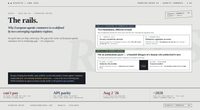
The prospectus.
Where the AI labs’ singular
governance history meets
the auditor.
S-1 filing · the largest tech IPO ever
a nonprofit controls the board
Microsoft’s revenue rights
gross-vs-net question could reorder it
law
requires
- Nonprofit-to-PBC conversion with no clean precedent
- Foundation holds ~$130B and controls the board
- The AGI clause — an unquantifiable contingency
- Musk verdict won on a technicality, not the merits
- Dense copyright + chatbot-harm litigation
- PBC from inception — no conversion, no AGI clause, no Musk
- Cleaner enterprise-revenue story (Claude Code)
- BUT the Long-Term Benefit Trust elects a majority of directors
- The Snap / Lyft governance discount on trust control
- The gross-vs-net revenue question (see FIG. 05)
Both labs spent years building mission-protecting structures whose purpose is to subordinate shareholder return to mission — and both must now argue, in the same document, that mission-protection and public-market discipline can coexist. That argument is the real offering. The shares are just the instrument.Thorsten Meyer · The Prospectus · AI Governance 04
By Thorsten Meyer — June 2026
This is the fourth dispatch in the AI Governance track — the corporate-structure forensics of the labs. The first three walked the Musk verdict (the calendar technicality), the structural mirror between the two labs’ governance, and the AGI clause. This one walks the moment all of that governance has to be written down for strangers: the prospectus, where the structures the prior pieces analyzed become disclosures the market reviews.
The structural argument I want to make: a company’s governance is private theory until the S-1 makes it public liability — and the AI labs have spent years constructing elaborate mission-protecting structures (foundations, benefit trusts, AGI clauses) whose entire purpose is to subordinate shareholder return to mission, which is precisely the thing a prospectus must disclose to shareholders as a risk to their return. The mission-protection mechanisms are, from a securities-disclosure standpoint, risk factors by construction: each one is a way the company has formally committed to not maximizing shareholder value under certain conditions, and the S-1 has to say so.
The headline integrative finding: The labs face a genuine bind that the prospectus crystallizes: the governance structures that made them fundable and trustworthy as mission-driven labs are the same structures that make them harder to price as public equities. A foundation that controls the board, a trust that elects the directors, a clause that redirects revenue upon AGI — each protects the mission and each complicates the equity. The S-1 cannot hide this; disclosure law requires naming it. So the prospectus becomes the document where each lab argues that its mission-protection is compatible with shareholder return — and the market decides whether to believe it. That argument is the real offering: not the shares, but the case that unusual governance and public-market discipline can coexist.
This essay walks the forced translation (Section I), OpenAI’s conversion burden (Section II), the AGI clause as disclosure (Section III), the litigation thicket (Section IV), Anthropic’s profile (Section V), the gross-versus-net question (Section VI), and the structural reading (Section VII).
I · The forced translation · what an S-1 does to a story
The mechanism crystallization. The S-1 is not a marketing document, though companies treat the summary as one. It is a legal instrument that converts a company’s history into reviewable, liability-bearing disclosure. Understanding what it does is the key to why it is harder for these two issuers than for almost anyone.
What the document is
A registration statement under penalty: the S-1 is filed with the SEC under the Securities Act; its statements carry liability — material omissions and misstatements are actionable. The underwriters conduct due diligence; the SEC reviews and issues comment letters; the company amends. It is an adversarial process: the regulator’s job is to surface what investors need to know, including what the company would rather not emphasize.
The confidential-filing wrinkle: a confidential filing (as OpenAI is reportedly making) lets the company begin SEC review privately — but it still requires a public S-1 roughly 21 days before the roadshow. Confidentiality delays the disclosure; it does not avoid it. The document becomes public before the offering prices.
Why it is a translation
From narrative to risk factor: in a private round, a company tells its story in a pitch — “we restructured to compete, our mission is protected, our governance is a feature.” In an S-1, that same material appears in the Risk Factors section, reframed as contingency: “our governance structure may limit the ability of shareholders to influence corporate matters”; “our nonprofit Foundation controls the board and may make decisions that prioritize its mission over shareholder returns.” The S-1 takes the founder’s story and rewrites it in the language of what could go wrong — because that is what disclosure law requires.
The standardization pressure: the S-1 forces a singular company into a standardized template (business, risk factors, MD&A, financial statements, governance). The more unusual the company, the more friction in that translation — and the more comment letters from a regulator unfamiliar with the structure. A normal cap table translates cleanly; a nonprofit-controlled PBC with an AGI clause does not.
The forced-translation observation
The S-1 is an adversarial legal instrument that translates a company’s history into standardized, liability-bearing risk disclosure reviewed by a regulator — and a confidential filing delays but does not avoid the public version. For most issuers this is a formatting exercise. For the AI labs it is a genuine translation problem, because their structures are unusual and the template is built for normal ones. The prospectus is where the founder’s story stops being a story and becomes a set of disclosures the market is entitled to price — which is a different and harder thing than telling the story well.
AI governance and compliance books
As an affiliate, we earn on qualifying purchases.
As an affiliate, we earn on qualifying purchases.
II · OpenAI’s conversion burden · the heaviest history
The departure crystallization. OpenAI’s S-1 burden is a function of how far its structure sits from a normal one — and no issuer of this scale has traveled a stranger path to the filing window.
The conversion itself
Nonprofit to capped-profit to PBC: OpenAI began in 2015 as a nonprofit, added a capped-profit subsidiary in 2019, and in October 2025 completed its conversion to a public benefit corporation — the structural change that made a traditional IPO possible. The original nonprofit, renamed the OpenAI Foundation, retained roughly a 25.8% / 26% equity stake (about $130 billion) and board control. The S-1 must explain a corporate-form history that has no clean precedent at this scale — and explain why charitable assets became, in part, investable equity.
The charitable-asset concessions: California AG Bonta declined to oppose the recapitalization only after securing concessions — that charitable assets be used for their intended purpose, that safety be prioritized, and that OpenAI remain in California. Delaware’s AG was also involved. Those concessions are governance commitments that constrain the for-profit, and the S-1 must disclose them as such — a company that has formally agreed to a state AG that it will prioritize safety and mission is disclosing a constraint on shareholder primacy.
The Foundation’s control as a risk factor
A nonprofit controls the board: the OpenAI Foundation holds its stake and controls the board of the for-profit PBC, with a warrant for additional equity if valuation rises tenfold within 15 years. From a disclosure standpoint, “a nonprofit foundation controls our board and may prioritize its charitable mission over your returns” is a textbook risk factor — and an unusual one, because the controlling entity is legally bound to a mission that is not shareholder return.
The critics’ framing the S-1 must address: critics argued the conversion turned billions in nonprofit tax advantages into private equity; supporters argued it was necessary to compete. The S-1 does not have to resolve that argument, but it has to disclose the facts that fuel it — the conversion, the stake, the tax history — and let the market weigh them.
The conversion observation
OpenAI’s S-1 burden is the conversion: a nonprofit-to-capped-profit-to-PBC history with no clean precedent, a Foundation holding ~$130 billion and controlling the board, and charitable-asset concessions to state AGs that constrain shareholder primacy — all of which must be disclosed as risk factors. This is the heaviest history any issuer of this scale has carried into a filing. The structure that let OpenAI raise private capital at an $852 billion valuation is the structure that now must be translated, line by line, into the contingencies a public buyer is entitled to price — and that translation is harder for OpenAI than for any comparable company, precisely because its path was the strangest.
securities disclosure document templates
As an affiliate, we earn on qualifying purchases.
As an affiliate, we earn on qualifying purchases.
III · The AGI clause · a definitional contingency in a securities document
The singular-disclosure crystallization. The most genuinely unusual thing OpenAI must disclose has no analog in any prior prospectus: a material commercial relationship whose terms change upon the achievement of an undefined technical milestone. The AGI clause is a disclosure problem unlike any other.
The clause
Microsoft’s rights run until AGI: Microsoft holds ~27% (about $135 billion) and retains IP access through 2032 and revenue-sharing rights until OpenAI achieves “verifiable AGI” — at which point those rights change. The April 2026 Microsoft amendment cleaned up the structure (multi-cloud allowed, non-exclusive IP license through 2032, revised revenue mechanics), but the AGI-linked contingency remains a defining feature. A material partner’s economic rights are gated on the declaration of artificial general intelligence.
Why it is a disclosure problem
You cannot quantify a contingency you cannot define: AGI has no agreed definition and no objective test. A securities disclosure is supposed to let investors assess the probability and magnitude of contingencies. How do you disclose, in an S-1, a revenue contingency that triggers on an event no one can define or date? The clause requires the prospectus to describe a material term whose triggering condition is inherently unquantifiable — a genuinely novel disclosure problem.
The verification panel: OpenAI’s structure reportedly includes independent AGI-verification mechanisms — an attempt to make “verifiable AGI” operational. But a verification panel is a governance body whose decision flips material economic rights, which is itself a risk factor: the S-1 must disclose that a panel’s determination of an undefined milestone could materially alter the company’s revenue-sharing obligations. That is a contingency wrapped in a governance body wrapped in a definitional vacuum.
Why the market struggles to price it
Unpriceable contingencies get discounted: markets price uncertainty by widening the discount. A contingency that cannot be quantified — because its trigger is undefined — is the kind of thing public investors penalize, because they cannot model it. The AGI clause, however visionary, reads in a prospectus as an unquantifiable material risk to the most important commercial relationship the company has.
The AGI-clause observation
The AGI clause is a disclosure problem with no precedent: a material partner’s economic rights are gated on the achievement of an undefined, untestable milestone, which a securities document is supposed to let investors assess but cannot, because the trigger cannot be quantified. The verification panel makes it operational but also makes it a governance contingency. This is the single most unusual thing in OpenAI’s prospectus — a revenue term that turns on the definition of AGI — and it is the kind of unquantifiable contingency public markets discount precisely because they cannot model it. The clause that expresses OpenAI’s mission is, in an S-1, a risk to its largest relationship.
corporate governance risk assessment tools
As an affiliate, we earn on qualifying purchases.
As an affiliate, we earn on qualifying purchases.
IV · The litigation thicket · the Musk verdict and the rest
The contingent-liability crystallization. Litigation is standard S-1 fare — every prospectus has a legal-proceedings section. OpenAI’s is unusually dense, and one item in it goes to the heart of the conversion the whole filing rests on.
The Musk verdict
Resolved, but on a technicality: the Musk lawsuit alleging OpenAI betrayed its nonprofit mission concluded with an advisory jury finding Musk waited too long to sue — a verdict the judge adopted, and which Musk called a “calendar technicality.” The case was resolved on timeliness, not on the merits of whether the conversion betrayed the mission — which means the underlying question (was the restructuring a breach?) was not adjudicated, only the deadline to raise it.
Why “resolved on a technicality” is a disclosure nuance: an S-1 can disclose the Musk case as resolved — but the basis matters. A dismissal on the merits closes the question; a dismissal on timeliness closes the case while leaving the merits open to others not bound by the deadline. The prospectus must disclose not just that OpenAI won, but how — and “won on a calendar technicality” is a materially different disclosure than “won on the merits,” because it signals the conversion’s legality was never tested.
The rest of the thicket
The copyright suits: OpenAI faces multiple suits from publishers, authors, and content creators (the licensing-asymmetry dispatch’s litigation track — Britannica/Merriam-Webster, the Danish DPCMO, the NYT case) alleging unauthorized training use. The S-1 must disclose these as contingent liabilities affecting both costs and the ability to train future models — a material risk for a company whose product depends on training data.
The chatbot-harm litigation and regulatory exposure: separate litigation over alleged chatbot harms, plus the evolving regulatory landscape (EU AI Act obligations on foundation-model providers, UK AI Safety Institute oversight). Each is a disclosure line; together they form a denser legal-proceedings section than a typical issuer carries.
The litigation observation
OpenAI’s litigation thicket is unusually dense, and the Musk verdict’s basis matters for disclosure: the case was resolved on timeliness, not the merits, which means the prospectus discloses a win that did not test whether the conversion the whole filing rests on was a breach. Add the copyright suits (a risk to training data itself) and the chatbot-harm and regulatory exposure, and the legal-proceedings section is heavier than a normal issuer’s. The litigation is disclosable and mostly manageable — but the Musk item is structurally awkward, because it sits on top of the conversion, and “won on a calendar technicality” is a disclosure that invites the question the verdict never answered.
As an affiliate, we earn on qualifying purchases.
V · Anthropic’s profile · cleaner, not clean
The comparison crystallization. The instinct is to read Anthropic as the clean comparison — a PBC from the start, no conversion, no AGI clause, no Musk. That is mostly right, and it is a real structural advantage. But “cleaner” is not “clean,” and Anthropic’s S-1 carries its own distinct burdens.
The structural advantage
PBC from inception: Anthropic was a public benefit corporation from the start — no nonprofit-to-for-profit conversion, no charitable-asset concessions, no Foundation controlling the board, no AGI revenue clause. The single biggest item in OpenAI’s prospectus — the conversion — simply does not exist in Anthropic’s. That is a genuine and material disclosure advantage: Anthropic’s structure translates into the S-1 template with far less friction.
The enterprise-revenue story: Anthropic crossed $30 billion in annualized revenue (reportedly surpassing OpenAI’s $25 billion), on enterprise strength and the Claude Code coding wedge, and is reportedly raising at a $900 billion valuation. Its business narrative — enterprise-led, coding-anchored — is the cleaner public-market story, and arguably the better one.
The Long-Term Benefit Trust burden
A trust that elects the directors: Anthropic’s distinct governance feature is the Long-Term Benefit Trust, which holds a special class of shares (Class T) with escalating board-election rights — over time, the LTBT will elect a majority of directors, giving an independent body of safety and technical experts control over strategic decisions. From a disclosure standpoint, “an independent trust, not shareholders, will elect a majority of our board” is a significant risk factor — arguably as significant for shareholder rights as OpenAI’s Foundation control.
The market’s historical discount: public investors have historically disliked trust- and founder-controlled governance — Snap’s non-voting IPO shares and Lyft’s dual-class structure both drew governance discounts. The LTBT is novel and mission-protective, but the S-1 must disclose that public shareholders will have limited ability to elect the board — and the market may price that as a discount, framing it as a shareholder-rights bug even as Anthropic frames it as a mission-protecting feature.
The cleaner-not-clean observation
Anthropic’s profile is genuinely cleaner — PBC from inception, no conversion, no AGI clause, no Musk, a cleaner enterprise-revenue story — but not clean: the Long-Term Benefit Trust that will elect a majority of directors is a shareholder-rights disclosure as significant as OpenAI’s Foundation control, and one public markets have historically discounted. The structural advantage is real and material. But both labs share the deeper problem: each has a mission-protecting control structure that subordinates shareholder governance to an independent body, and each S-1 must disclose that as a risk. Anthropic’s is simpler to explain; it is not absent.
VI · The gross-versus-net question · where Anthropic’s burden bites
The accounting crystallization. Anthropic’s most concrete S-1 risk is not governance but accounting — a revenue-recognition question that, if the SEC forces a change, could materially lower its headline numbers before the offering even prices. This is where the cleaner profile meets a hard edge.
The question
Gross versus net on cloud credits: Anthropic reportedly reports cloud-computing credits from Amazon and Google on a gross basis, which inflates headline ARR relative to OpenAI’s net treatment. The SEC may require harmonization — reporting the same economics on a net basis — before the IPO. If it does, Anthropic’s reported revenue figures would be materially lower, and the valuation would be set against the lower number.
Why this matters for the S-1
Revenue recognition is the SEC’s home turf: revenue-recognition methodology is exactly the kind of thing the SEC reviews hardest, because headline revenue drives valuation. A company whose ARR is partly a function of a gross-versus-net choice is carrying a disclosure risk that bites at the most sensitive number in the filing. The cleaner-governance company has the messier-revenue question — which is a reminder that “cleaner profile” is multidimensional, and Anthropic’s edge in structure does not extend to its accounting.
The headline-comparison stakes: Anthropic’s reported $30 billion ARR “surpassing” OpenAI’s $25 billion is a key competitive claim. If the SEC forces net treatment and the figure falls, the comparison that currently favors Anthropic could narrow or reverse — before either company prices. The gross-versus-net question is the single accounting item with the most power to reorder the two labs’ relative standing at the moment of filing.
The gross-versus-net observation
Anthropic’s most concrete S-1 risk is accounting, not governance: it reportedly reports cloud credits gross while OpenAI reports net, and if the SEC forces harmonization, Anthropic’s headline revenue falls and its valuation is set against the lower number. This is where the cleaner-governance profile meets a hard edge — the company with the simpler structure has the more sensitive revenue question. It is also a useful corrective to the easy story: “Anthropic is the clean comparison” is true on governance and untrue on revenue recognition, and the S-1 is where both get tested by the same regulator on the same terms.
What this is not
It is not a prediction that either IPO fails or succeeds. Both labs have extraordinary revenue growth and genuine demand. The disclosure burden shapes the discount, not the outcome — strong fundamentals can carry an unusual structure, and the market may reward the mission-protection as trust-building.
It is not a claim that mission-protection is bad governance. A foundation, a benefit trust, an AGI clause — each may be genuinely protective of a mission worth protecting. The point is narrower: each is a risk factor by construction in a shareholder-return document, and the S-1 must say so.
It is not a claim that one lab is the better investment. That depends on numbers not yet public — gross margin after compute, contract obligations, insider supply — which only the S-1 reveals. The disclosure burden is one input, not the verdict.
The synthesis observation
The IPO is a forced translation of each lab’s singular history into the adversarially-reviewed language of a securities disclosure, and the disclosure burden is proportional to how far the structure departs from a normal cap table — so OpenAI’s nonprofit-conversion history (the Foundation, the AGI clause, the Musk verdict) is the heavier S-1 burden, while Anthropic’s cleaner PBC-from-inception profile carries its own distinct burdens (the Long-Term Benefit Trust governance discount, the gross-versus-net revenue question). The prospectus is where the structures the prior governance dispatches analyzed stop being narrative and become disclosures the market reviews, prices, and discounts or rewards.
There is no single answer. Anyone offering one is selling something. What is unambiguous is that the S-1 is the great equalizer of narrative: in a private round, structure is a story the founder tells; in a prospectus, structure is a risk factor the market prices. Both labs spent years building elaborate mission-protecting structures whose purpose is to subordinate shareholder return to mission — and both are about to disclose those structures to shareholders as risks to their return, and argue, in the same document, that mission-protection and public-market discipline can coexist. That argument is the real offering. The shares are just the instrument.
That is the structural editorial question the prospectus sits on top of. It is the moment narrative meets audit. It is the disclosure burden of an unusual structure, proportional to its distance from a normal one. And it is the same exercise imposed on two labs whose burdens differ in kind — OpenAI’s conversion, Anthropic’s trust and its accounting — but not in nature: each must convince a market, not a pitch deck, that its mission-protection is worth the discount. And it is the layer where the governance the whole track has analyzed finally gets a price — set not by the founders who designed the structures, but by an SEC that reviews them and a public that has to buy them.
About the Author
Thorsten Meyer is a Munich-based futurist, post-labor economist, and recipient of OpenAI’s 10 Billion Token Award. He spent two decades managing €1B+ portfolios in enterprise ICT before deciding that writing about the transition was more useful than managing quarterly slides through it. He runs StrongMocha News Group, a network of more than 450 niche WordPress magazines built on the DojoClaw editorial engine. More at ThorstenMeyerAI.com.
Related Reading · the AI Governance track
This dispatch
- This piece · The prospectus · the S-1 disclosure-burden forensic — how the IPO forces each lab’s singular governance history into adversarially-reviewed securities disclosure, and why OpenAI’s conversion is the heavier burden against Anthropic’s cleaner-but-not-clean profile · transition-bronze dominant, structural-slate and empirical-clay balance
The track
- The calendar technicality · AI Governance 01 · the Musk verdict whose timeliness basis is now an S-1 disclosure nuance — won on the deadline, not the merits
- The structural mirror · AI Governance 02 · the two labs’ parallel governance structures that the prospectus now prices side by side
- The clause · AI Governance 03 · the AGI clause this piece reframes as an unquantifiable disclosure contingency
Adjacent tracks
- The runway · Enterprise Reorg 04 · the enterprise-revenue lock this prospectus discloses — the runway priced the revenue, the prospectus discloses the structure on top of it
- The license · Post-Wire 04 · the copyright-litigation track that becomes a contingent-liability disclosure in OpenAI’s S-1
- The stake · Post-Labor 01 · who owns the equity these IPOs distribute, and why broad ownership of it is the structural question underneath
Sources
The filing and the timeline
- CNBC · OpenAI to confidentially file for IPO as soon as Friday — the live peg: OpenAI expected to file confidentially with the SEC as soon as this Friday (WSJ first reported); Goldman Sachs and Morgan Stanley declined comment; Altman “under pressure from investors to show that the numbers work” against Anthropic; Anthropic in talks at a $900B valuation, $30B+ annualized revenue · cnbc.com
- Technerdo · OpenAI’s $1 Trillion IPO — the timeline (confidential filing Q2 2026, public S-1 amendments Q3, listing Q4 2026, ~$60B raise at up to $1T) · the October 2025 PBC conversion; Foundation retains ~25.8% and board control; Musk suit; Bonta approval with conditions; the tax-advantage-to-equity critique · the three risk-factor headers (governance, concentration, IP) · technerdo.com
- TECHi · OpenAI IPO: valuation, timeline, risks — “no public S-1 as of May 6, 2026; the real analysis starts when a filing appears on EDGAR” · the five things public investors cannot yet see (audited revenue, gross margin after compute, contract obligations, governance rights, insider supply) · $122B round at $852B; $2B revenue/month; enterprise >40% of revenue · techi.com
OpenAI’s conversion and structure
- TIME · A timeline of OpenAI’s for-profit shift — the restructure completed: PBC with a separate nonprofit Foundation holding a ~$130B stake (vs Microsoft’s ~$135B / 27%); Bonta’s statement on securing concessions (charitable assets used for intended purpose, safety prioritized, OpenAI stays in California); the SoftBank conditional-funding clause; the subpoenas to advocacy groups · time.com
- AInvest · OpenAI IPO timeline and strategic implications — the hybrid governance (Foundation ~26% + board control + tenfold-in-15-years warrant; Microsoft 27%, IP to 2032, revenue rights until verifiable AGI); the $25B societal commitment; the cash-burn and infrastructure figures · ainvest.com
- CMC Markets · OpenAI IPO: what investors need to know — the restructuring still to finalize; Musk seeking up to $134B; chatbot-harm litigation; >$1.4T infrastructure commitments; $14B 2026 losses, profitability not forecast until 2030; HSBC’s $207B funding-gap estimate; CFO Friar’s $20B+ annualized revenue (Jan 2026) · cmcmarkets.com
Anthropic’s profile and the comparison
- BearBull · Anthropic IPO 2026 — Anthropic a privately held PBC, no S-1 on file (as of late April 2026); the Long-Term Benefit Trust as the unique governance feature (controls a class of voting shares to prioritize mission); “public investors generally dislike trust-controlled governance — see Snap, see Lyft”; confidential filings still require a public S-1 ~21 days before the roadshow; SEC review heavy on the PBC and LTBT · bearbull.io
- Medium (Nalynelima) · Anthropic’s 2026 IPO path — the LTBT holds Class T shares with escalating board-election rights and will elect a majority of directors; single-class common for public buyers; no dual-class founder structure; “how Anthropic frames this model in its S-1 will materially shape its reception” · medium.com
- Vucense · OpenAI vs Anthropic IPO race — Anthropic $30B annualized (surpassing OpenAI’s $25B), Claude Code $2.5B ARR; the gross-versus-net question: “Anthropic currently reports cloud-computing credits from Amazon and Google on a gross basis, inflating headline ARR relative to OpenAI’s net treatment; if the SEC mandates harmonisation before the IPO, reported revenue will be materially lower” · vucense.com
- TECHi · Anthropic IPO — the governance question front and center: “what rights do public shareholders actually have under the PBC and Long-Term Benefit Trust structure? If the S-1 answers that well, Anthropic could deserve a premium” · the PBC/LTBT as both mission-protective and a pricing question · techi.com
The structure-as-disclosure backbone
- AI IPO Tracker 2026 — OpenAI’s nonprofit-to-PBC conversion “creating governance complexity around mission obligations and shareholder rights”; OpenAI ~$25B annualized at $852B private; Anthropic >$30B on 1,400% YoY growth, talks at $900B; Anthropic IPO “as early as October” · aifundingtracker.com
- Capital Research Center · Profits and nonprofits — the OpenAI Foundation-controls-PBC structure compared to Mozilla (foundation wholly owns the for-profit); Anthropic also a PBC; the nonprofit-to-LP-to-PBC evolution · capitalresearch.org
The governance track backbone
- The calendar technicality / The structural mirror / The clause · Thorsten Meyer · AI Governance 01-02-03 · the Musk verdict (now an S-1 disclosure nuance), the parallel structures (now priced side by side), the AGI clause (now an unquantifiable disclosure contingency) — the prospectus is where all three become reviewable disclosure
Key reference figures crystallized
- The filing: OpenAI confidential S-1 “as soon as Friday” (WSJ/CNBC); public S-1 required ~21 days before roadshow; listing target Q4 2026, raise ~$60B at up to $1T
- OpenAI’s conversion burden: nonprofit (2015) → capped-profit (2019) → PBC (Oct 2025); Foundation ~$130B / ~26% + board control + 10x-in-15yr warrant; Bonta concessions (charitable purpose, safety, stay in CA); the tax-advantage-to-equity critique
- The AGI clause: Microsoft ~27% / ~$135B, IP to 2032, revenue rights until “verifiable AGI”; the April 2026 amendment (multi-cloud, non-exclusive IP); an unquantifiable contingency on an undefined milestone + a verification panel
- The litigation thicket: Musk verdict won on timeliness (“calendar technicality”), not the merits — the conversion’s legality untested; copyright suits (a risk to training data); chatbot-harm + EU AI Act / UK AISI exposure
- Anthropic’s profile: PBC from inception, no conversion, no AGI clause, no Musk; >$30B ARR (vs OpenAI $25B), Claude Code $2.5B; $900B raise talks; the Long-Term Benefit Trust elects a majority of directors (the Snap/Lyft governance discount)
- The gross-versus-net question: Anthropic reports cloud credits gross vs OpenAI net; SEC harmonization would materially lower Anthropic’s headline ARR and could reorder the $30B-vs-$25B comparison before pricing
Flea & tick season Picks
flea and tick prevention
As an affiliate, we earn on qualifying purchases.