TL;DR

Get business pricing on tech for your team
- Business-only prices and quantity discounts
- Tax-exempt purchasing
- Multiple users, one account, clear invoices
A Quartz headline says TikTok’s CEO predicts AI will drive scientific breakthroughs within three years. The available material provides no article text, direct quotation, supporting evidence or details about which scientific fields he meant.
A Quartz headline reports that TikTok’s CEO predicts artificial intelligence will drive scientific breakthroughs within three years. The available account does not include the CEO’s exact words or explain what research, technologies or evidence underpin the forecast, so the prediction’s scope remains unclear.
The reported development is a forecast about AI’s potential role in science, rather than an announcement of a specific discovery, research program or product. The headline attributes the view to TikTok’s CEO but does not provide his name, the setting in which he made the prediction, or a direct quotation. Those details cannot be established from the material available here.
The phrase “scientific breakthroughs” is also undefined. It could refer to AI helping researchers analyze data, generate hypotheses, run simulations or design experiments, but the headline does not say which capabilities or fields the CEO had in mind. Those examples describe possible uses of AI in research; they are not confirmed as part of his statement.
No evidence, timeframe methodology or examples accompany the headline-only account. It does not identify a benchmark for judging progress, predict how many breakthroughs may occur, or distinguish between AI assisting scientists and AI producing independently validated findings. The report establishes that a prediction was attributed to the CEO, not that the forecast has been demonstrated.
Quartz forecast · Science & AI
Could AI Drive Scientific Breakthroughs in Three Years?
A Quartz headline attributes this prediction to TikTok’s CEO. The available account offers no direct quote, supporting evidence, named research fields, or definition of “breakthrough.”
How AI might change research
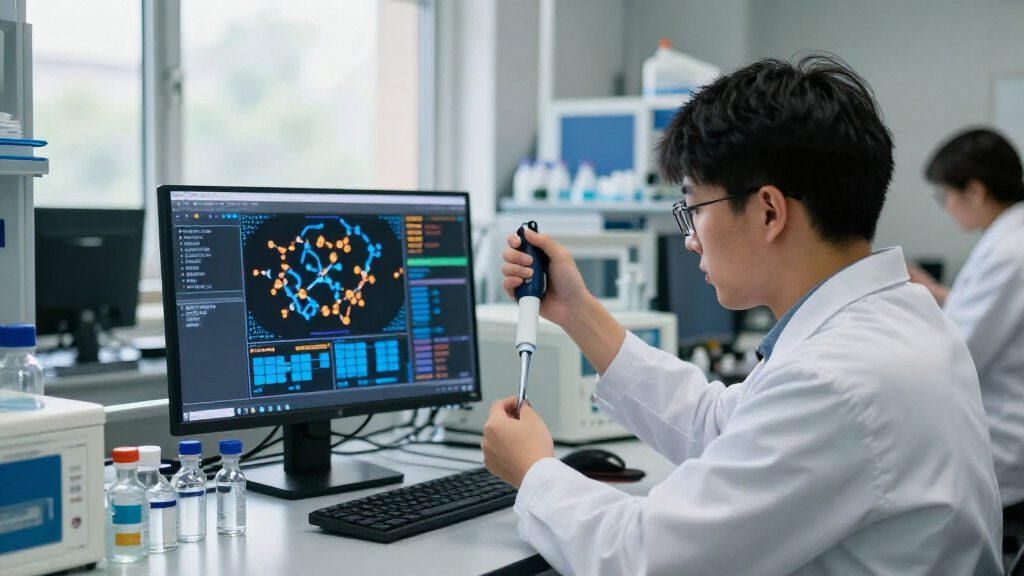
These are plausible ways AI could support scientific work—not details confirmed in the CEO’s reported statement.
Find patterns
Models could help researchers examine large datasets and surface relationships worth investigating.
Generate hypotheses
AI could suggest candidate explanations or questions for scientists to assess and refine.
Plan experiments
Simulation or experiment design tools could help prioritize which ideas to test in the lab.
Suggesting a pattern is not the same as confirming a finding. Researchers still need rigorous tests, independent validation, and reproducible results.
A forecast with open questions
The headline provides a broad expectation, but not enough detail to judge its scope or test its timeline.
| Topic | Available account | Still unknown |
|---|---|---|
| Attribution | ✓Quartz headline links the forecast to TikTok’s CEO. | ~Name, setting, date, and exact wording. |
| Meaning | ✓AI is expected to “drive” breakthroughs. | ~Whether that means assist, accelerate, or lead discovery. |
| Scope | ✗No scientific fields or projects are named. | ~Which disciplines and what counts as a breakthrough. |
| Evidence | ✗No results, benchmark, or timeline method is supplied. | ~Milestones and independently validated examples. |
From prediction to evidence
A useful assessment would follow the chain from a specific claim to findings that hold up under scrutiny.
Clarify the claim
Get the full remarks, the intended meaning, and the start of the three-year window.
Name the target
Identify research fields, projects, or measurable milestones the forecast refers to.
Trace AI’s role
Separate AI assistance from the experiments and judgments made by research teams.
Validate results
Check whether findings are independently tested and reproducible.
A forecast becomes assessable when its terms, timeframe, and evidence can be checked.
What would move confidence?
This is a qualitative reading of the material supplied, not a score of AI’s scientific potential.
Bars indicate how much detail the provided account contains for evaluating the forecast; they do not measure scientific progress or probability.
Promising possibility, untested timeline
AI may help researchers move faster
Tools that help analyze data, explore hypotheses, and plan tests could affect research across fields with complex evidence or long testing cycles.
Useful tools do not guarantee discoveries
The supplied account names no field, evidence, or validated result. A broad “breakthrough” claim is difficult to assess without measurable milestones and a clear definition.
What the headline does—and doesn’t—say
What did TikTok’s CEO predict?
The Quartz headline attributes a prediction that AI will drive scientific breakthroughs within three years. The exact wording is unavailable.
Which sciences did he mention?
The available account does not identify any scientific fields or research areas.
Is an AI-driven discovery reported?
No. The headline describes a forecast, not a named discovery or research result.
What supports the three-year timeline?
No supporting evidence, methodology, or benchmark is included in the material supplied.
How AI Could Change Research
If the forecast proves directionally right, AI could affect how quickly researchers explore questions, process large datasets and identify promising experiments. That would matter across fields where researchers face complex evidence or lengthy testing cycles. The headline, however, offers no specific examples or measured effects, so these are potential implications rather than reported outcomes.
The distinction between assisting discovery and confirming it matters. A model may suggest a pattern or candidate explanation, while researchers still need to test whether it holds up and can be reproduced. The headline does not address that validation process or claim that AI will replace scientific judgment. Readers therefore have a prediction about possible change, but no details with which to measure its likely scale.
As an affiliate, we earn on qualifying purchases.
A Forecast Without Supporting Detail
The report is identified by a headline linking the prediction to TikTok’s CEO and to Quartz. The supplied material contains no article body. It therefore offers no information about whether the remarks came from an interview, public appearance, company event or another setting, and no publication date is available to anchor the statement more precisely.
That limitation also prevents comparison with earlier remarks or current research milestones. The headline does not name a scientific field, research team, AI system or completed result. No specific breakthrough can be tied to the forecast on the basis of the available account.
As an affiliate, we earn on qualifying purchases.
What the Prediction Leaves Open
The CEO’s exact wording and reasoning are not available, and the three-year period has no stated starting date beyond the headline’s framing. It is unclear whether “drive” means AI will contribute to breakthroughs, speed work already under way, or play a more central role in discoveries.
The report as supplied does not specify which scientific fields or kinds of breakthroughs are meant, what evidence supports the timeline, or how success would be judged. It also does not identify any research results as confirmation. Without those details, the forecast cannot be assessed against a defined claim.
As an affiliate, we earn on qualifying purchases.
Details Needed to Test the Forecast
A fuller account of the remarks would clarify the CEO’s intended meaning, the basis for the three-year timeline and whether he pointed to particular research areas. Specific examples would help distinguish a broad expectation from a prediction tied to identifiable projects.
Over time, reported discoveries and research results could be assessed for the role AI played and whether findings were independently validated. The available material gives no milestone or follow-up date. For now, the next useful development is more detail about the statement and the evidence behind it.
AI-powered scientific research platforms
As an affiliate, we earn on qualifying purchases.
As an affiliate, we earn on qualifying purchases.
Where I land
I read this as a consequential but presently hard-to-evaluate forecast. AI could help researchers explore data and test ideas faster, but the headline alone does not show that it will produce breakthroughs on a three-year schedule. The missing definition of “breakthrough” makes the prediction especially difficult to assess.
The strongest counterargument is that scientific progress may not be easily forecast: even useful AI tools do not guarantee discoveries, and results still depend on experiments and independent validation. I would give the prediction more weight if the CEO’s full remarks identified research areas, measurable milestones and evidence linking AI use to validated results. Until then, I treat it as an attributed expectation rather than an established outcome.
Source: ByteDance Seed
Key Questions
What did TikTok’s CEO predict?
A Quartz headline attributes to him the prediction that AI will drive scientific breakthroughs within three years. The exact wording is not available.
Which scientific fields did he mention?
The available account does not identify any fields or research areas.
Is a specific AI-driven discovery reported?
No. The headline reports a forecast, not a named discovery or research result.
What evidence supports the three-year timeline?
No supporting evidence or method for judging the timeline is included in the available material.
Source: ByteDance Seed
Halloween Picks
halloween
As an affiliate, we earn on qualifying purchases.