

Date: October 12, 2025
Elon Musk’s xAI has announced its ambition to build world models—AI systems that understand and simulate physical environments in real time.
From Games to Reality
xAI is reportedly using video games as testbeds for world modeling—teaching agents to reason about causality, physics, and 3D space. These simulations serve as “mini-worlds” where models can learn the fundamentals of interaction and consequence.
The Nvidia Connection
Recent hires from Nvidia’s simulation and robotics divisions suggest xAI’s long-term plan extends beyond gaming. The same technology used to generate virtual environments could one day train robots, autonomous vehicles, or embodied assistants.
Challenges Ahead
World modeling remains one of AI’s hardest frontiers. Translating virtual physics into real-world understanding (the sim2real problem) is notoriously difficult.
Yet if xAI succeeds, it could unlock a new paradigm—AI systems that act, learn, and adapt with physical intuition rather than text prediction.
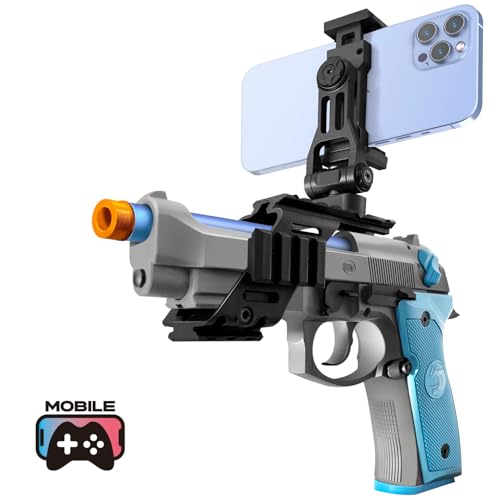
WonderFitter M9 Professional Shooting Simulator (Mobile Edition) – Realistic Recoil & Detachable Magazine Reload – Dry Fire Training System for iOS/Android – VR & Screen Casting Ready
Pro-Level Dry Fire at Your Fingertips 🎯 Transform your smartphone into a high-precision shooting range with the professional…
As an affiliate, we earn on qualifying purchases.
As an affiliate, we earn on qualifying purchases.

ELEGOO UNO R3 Smart Robot Car Kit V4 for Arduino Robotics for Kids Ages 8-12 12-16 STEM Science Kits Coding Gifts for 8 9 10 11 12 13 14 15 16 Year Old Boys Girls Teens Cool Engineering Building Toys
ELEGOO Smart Robot Car: An educational STEM kit beginners (kids) to get hands-on experience about programming, electronics assembling…
As an affiliate, we earn on qualifying purchases.
As an affiliate, we earn on qualifying purchases.

Procedural 3D Modeling Using Geometry Nodes in Blender: Discover the node-based workflow for physics-based and procedural modeling using Blender 4.5 LTS
As an affiliate, we earn on qualifying purchases.
As an affiliate, we earn on qualifying purchases.

youyeetoo Benewake TF-Luna Lidar Sensor Kit, with 1x USB-TTL Adapter 1x Dupont Line, 0.2-8m Measurement Range Distance, Support Raspberry Arduino STM32 MCU for Drone Industrial Sensing Robot Smart Home
TF-Luna Dvelopment kit comes with TTL to USB adapter and Adapter cable, It is more convenient to connect…
As an affiliate, we earn on qualifying purchases.
As an affiliate, we earn on qualifying purchases.