
Automation and technological advances are making it possible to produce abundant goods and services, paving the way for a post-scarcity society. As AI, robotics, and renewable energy lower costs and expand access, basic needs could become free or nearly free for all. This shift challenges traditional economic models and social structures, but overcoming institutional resistance is complex. If you’re curious about how this transformation might unfold and its potential impact on society, explore further to uncover more.
Key Takeaways
- Automation and AI drastically reduce production costs, enabling the provision of basic needs for free or at minimal cost.
- Technological advances in renewable energy and open-source tools support sustainable abundance and decentralized manufacturing.
- Widespread automation diminishes scarcity-driven economic models, shifting focus to collaboration, innovation, and personal growth.
- Institutional resistance and existing legal frameworks slow adoption of abundance-enabled technologies and equitable distribution.
- Achieving a post-scarcity society depends on overcoming social inequalities, cultural barriers, and restructuring economic and political systems.

AI-Powered Smart Home Guide 2026: A Step-by-Step Guide to Designing, Optimizing, and Mastering a Fully Automated Smart Ecosystem
As an affiliate, we earn on qualifying purchases.
As an affiliate, we earn on qualifying purchases.
Understanding the Foundations of a Post-Scarcity Society
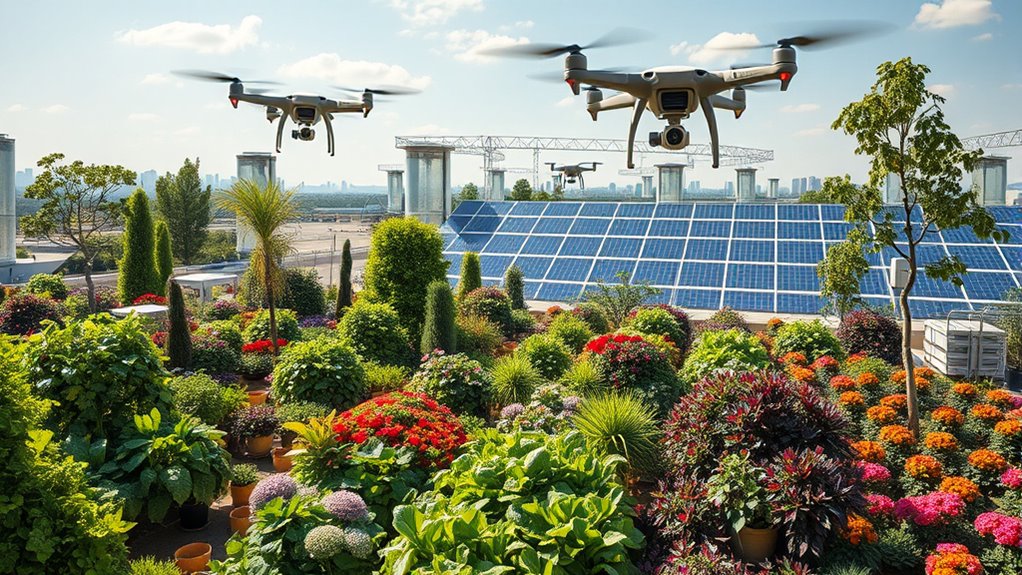
A post-scarcity society is built on the idea that all basic needs—such as food, healthcare, housing, utilities, education, and internet access—are guaranteed to everyone, free of charge. This means you can focus on personal growth, creativity, or leisure without worrying about material wants. Scarcity remains only for luxuries and non-essential goods, shifting society’s focus from competition to collaboration. This transformation relies heavily on technological advances, especially automation, which reduces the cost and effort of producing essential items. As these needs become universally accessible, traditional economic models based on scarcity and resource allocation may evolve or diminish. Instead, society emphasizes dignity and survival, allowing you to pursue meaningful activities beyond mere survival. Additionally, the integration of free access to essential services supported by automation could accelerate this transition toward abundance.

Fueled By 3D Printing And Coffee Ceramic Mug, Black/White
I Like Coffee My 3D Printer And Maybe 3 People.
As an affiliate, we earn on qualifying purchases.
As an affiliate, we earn on qualifying purchases.
The Role of Automation and Technological Innovation in Creating Abundance

Automation and technological innovation drastically lower production costs, making goods and services more accessible than ever. With advanced tools like AI and robotics, you can produce on demand with minimal resource expenditure. These tech enablers are key to transforming scarcity into abundance, reshaping how society creates and shares value. Additionally, innovations such as high refresh rates in devices enable a more seamless and immersive user experience, further supporting the shift toward abundance.
Automation Reduces Production Costs
How does technological innovation drive down production costs and pave the way for abundance? Automation streamlines manufacturing, reducing labor and material waste. Imagine:
- Robots assembling cars faster than humans, cutting labor costs.
- AI optimizing supply chains to minimize delays and excess inventory.
- 3D printers creating complex parts on-demand, eliminating factory overhead.
- Renewable energy powering factories, lowering energy expenses drastically.
These advancements make producing essentials cheaper and more accessible. As costs drop, goods like food, healthcare, and housing become more affordable or even free. You see, automation allows for near-zero marginal costs—once set up, producing additional units costs almost nothing. This shift unbolt the potential for society to focus less on scarcity and more on innovation, creativity, and shared prosperity.
Tech Enablers of Abundance
Technological innovation acts as the backbone of abundance by continuously expanding production capabilities and reducing costs. Automation, AI, and robotics streamline manufacturing processes, making goods and services more accessible and affordable. Breakthroughs in renewable energy and advanced materials create an energy and resource surplus, fueling further growth. Decentralized platforms like 3D printing and open-source software empower individuals to produce and share, breaking traditional supply chain limits. Data analytics and connectivity optimize resource use, minimizing waste. These tech enablers lower barriers to entry, fostering innovation and collaboration. Additionally, zodiac sign personality compatibility insights can influence how teams adapt to technological changes collaboratively. As a result, basic needs become easier to meet, shifting society towards an era where scarcity diminishes, and abundance becomes a practical reality. This technological foundation paves the way for new economic models rooted in shared prosperity.

Thames & Kosmos Green Engineering STEM Kit | Build & Experiment with an Energy-Efficient Model Home, Explore Clean Energy, Sustainable Living, Includes Solar Panel, LEDs, Sensors, Ideal for Classrooms
HANDS-ON LEARNING & DISCOVERY: Kids ages 8 & up can construct a model home with a variety of…
As an affiliate, we earn on qualifying purchases.
As an affiliate, we earn on qualifying purchases.
Rethinking Economic Models in a World of Limitless Goods and Services

As goods and services become effectively limitless, traditional economic models based on scarcity and resource allocation no longer hold their relevance. You need to envision a world where:
- Markets shift from balancing supply and demand to managing intellectual property and artificial scarcity.
- Prices lose meaning as abundant goods become free or nearly free, transforming currency’s role.
- Wealth and property redefine as survival needs are met universally, diminishing their traditional importance.
- Innovation centers on creativity and personalization rather than mass production or efficiency.
- The role of emerging technologies like hydrogen energy is pivotal in enabling sustainable abundance and reducing environmental constraints.
In this new landscape, economic thinking must evolve. You’ll focus less on allocation and more on managing new forms of value, status, and identity, as the old scarcity-driven frameworks give way to models emphasizing abundance and collaboration.

Make: Robotic Arms
As an affiliate, we earn on qualifying purchases.
As an affiliate, we earn on qualifying purchases.
Social and Political Shifts Driven by Post-Scarcity Dynamics
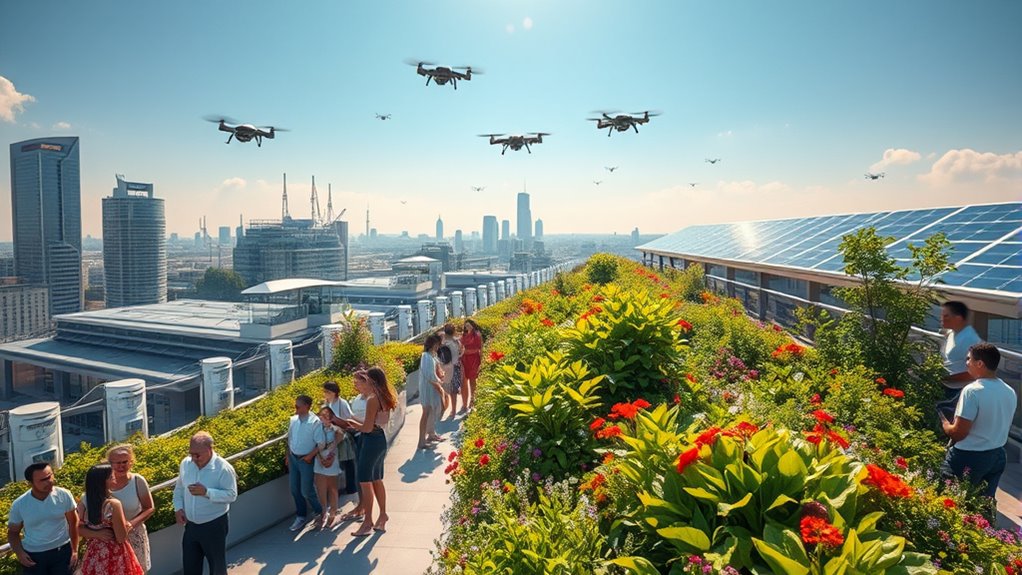
Post-scarcity dynamics are poised to reshape social and political structures by reducing the economic competition and inequality rooted in material scarcity. As basic needs become universally accessible and free, you’ll find less motivation for conflict driven by resource scarcity. Societies may experience decreased crime, tribalism, and bureaucracy, fostering more cooperation and shared purpose. However, political systems that tie power to employment or wealth could face challenges, prompting debates over how to fairly distribute benefits from automation. Universal basic income might become essential to ensure social stability. Access to abundant knowledge and creative tools will shift power dynamics, empowering individuals and fostering open collaboration. These changes could lead to more egalitarian, innovative societies, but they also require new institutions and policies to manage emerging social and political realities.
Challenges and Constraints on Achieving True Abundance
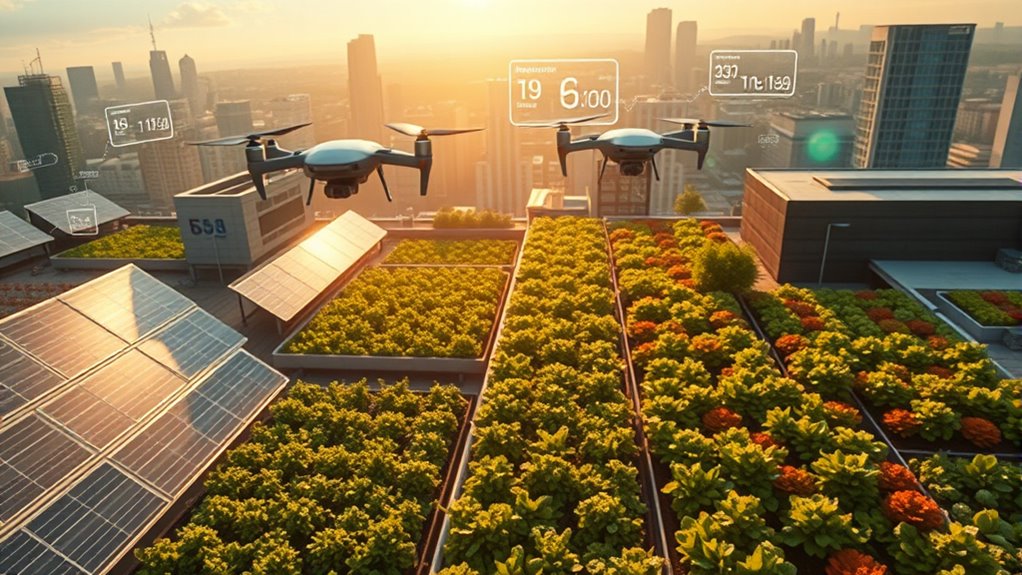
You’ll find that physical resource limits, like rare materials and energy demands, still restrict true abundance. Institutional resistance to change can slow or block the adoption of new systems and technologies. Meanwhile, persistent social inequalities may continue despite material abundance, shaping who benefits from progress. Additionally, creating a comfortable and sustainable environment requires thoughtful design, similar to how a well-decorated farmhouse bedroom balances aesthetics and function through interior design principles.
Physical Resource Limitations
Achieving true abundance faces significant physical resource limitations that challenge the ideal of limitless production. You might imagine a world where raw materials are endlessly available, but scarcity still exists in vital areas. For example:
- Rare earth elements essential for electronics are finite and environmentally costly to extract.
- Freshwater supplies are limited, affecting agriculture and manufacturing.
- Energy demands grow with increased production, risking shortages or environmental damage.
- Land and ecosystems can’t expand infinitely, constraining housing, agriculture, and biodiversity.
Moreover, finite raw materials impose fundamental constraints on how much can be produced, regardless of technological advancements. These limitations mean that, despite advances in automation, certain resources remain scarce. The physical universe sets boundaries on what can be produced, forcing us to confront real constraints that technology alone can’t eliminate.
Institutional Resistance to Change
Why do existing institutions often resist change even when technological advancements make abundance possible? They’re built around scarcity, with rules, laws, and power structures designed to preserve the status quo. These systems benefit from controlling resources, maintaining hierarchies, and sustaining economic incentives tied to limited goods. Switching to abundance threatens established interests—corporations, governments, and elites—who fear losing influence or profits. Legal frameworks, intellectual property laws, and regulatory hurdles slow innovation and adaptation. Cultural inertia and resistance from vested interests create significant obstacles. Even when abundance becomes technically feasible, these institutions often prioritize stability over transformation. Additionally, nutrients retention in food processing and the high water content in vegetable juices exemplify how technological benefits are often hindered by institutional reluctance to change. As a result, the move toward a post-scarcity society faces not just technological hurdles but deep-rooted institutional resistance that delays or obstructs change.
Persistent Social Inequalities
Despite the promise of abundance enabled by automation and advanced technologies, social inequalities continue to persist, often shaped by factors beyond material scarcity. You might see disparities rooted in:
- Access – Some communities lack reliable internet or healthcare, limiting benefit from abundance.
- Education – Unequal quality of education keeps marginalized groups from fully participating.
- Power – Political influence remains concentrated, affecting resource distribution and policy.
- Cultural Biases – Societal norms and biases can prevent equitable opportunities and representation.
These barriers mean that even with abundant goods and services, inequality persists. Wealth and social mobility remain tied to existing structures, making true abundance elusive for many. Overcoming these constraints requires addressing underlying social, political, and cultural issues, not just technological advances. Recognizing the importance of social inequalities helps in understanding that technological progress alone cannot resolve these deep-rooted issues.
Existing Examples and Emerging Models of Abundance Economies

Existing examples and emerging models of abundance economies demonstrate how technological innovation and decentralized production are reshaping the way you create, share, and access goods and services. Open-source platforms like Wikipedia and software communities show how collective effort can produce valuable resources freely available worldwide. Content industries adapt by shifting toward subscription models and licensing, embracing abundance rather than scarcity. NFTs and luxury brands create artificial scarcity within a sea of digital abundance, signaling status and exclusivity. Widespread 3D printing and renewable energy initiatives hint at a future where physical goods become more accessible and customizable. These models reflect a shift from traditional scarcity-driven markets to decentralized, collaborative, and innovative ecosystems where the flow of resources becomes more democratic and sustainable.
Envisioning the Future: Possibilities and Pitfalls of a Post-Scarcity World
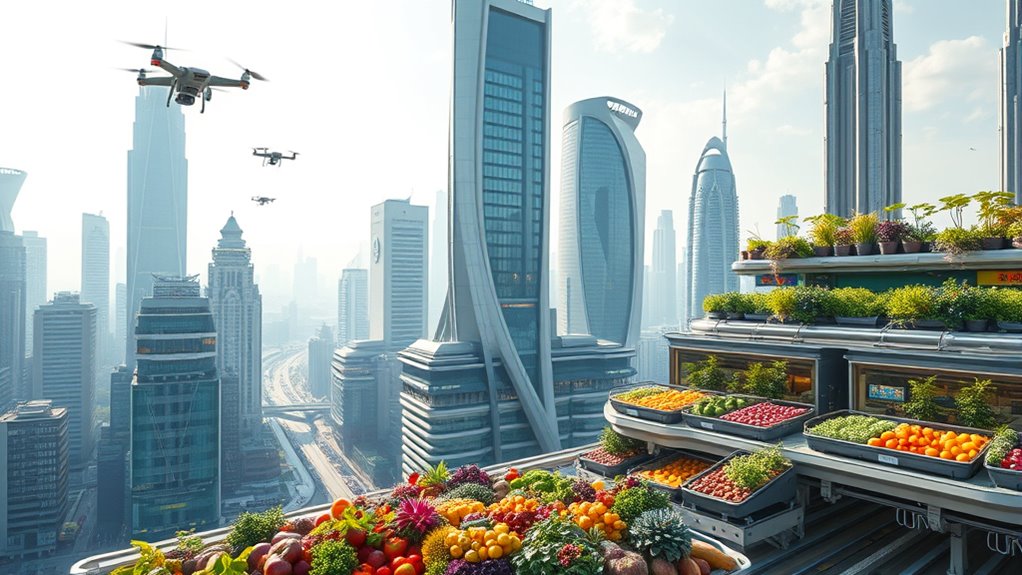
As technological innovations like 3D printing, renewable energy, and decentralized platforms continue to develop, the vision of a post-scarcity world becomes more tangible. You might imagine a future where:
- Food is grown locally with minimal waste, available instantly through automated systems.
- Healthcare is accessible to all via AI-driven diagnostics and personalized treatments.
- Education is free and tailored to individual needs, fostering lifelong learning.
- Housing is affordable, built on-demand with sustainable materials.
Additionally, the importance of preserving biodiversity remains crucial, even in highly automated societies, to maintain healthy ecosystems and the essential services they provide.
This future offers incredible possibilities: reducing inequality, fostering creativity, and shifting focus from survival to growth. But pitfalls exist too—potential technological dependence, new forms of inequality, and societal resistance to change. Balancing optimism with caution will shape the real outcome.
Frequently Asked Questions
How Might Post-Scarcity Society Impact Global Inequality and Wealth Distribution?
In a post-scarcity society, you could see global inequality shift as access to basic needs becomes universal and free. Wealth distribution might become more equitable, reducing poverty and social divides. However, disparities could persist or evolve around control of technology, knowledge, or artificial scarcity, meaning you’ll need new policies and social structures to guarantee benefits reach everyone. Overall, it could promote a fairer world, but challenges remain in implementation.
Will AI and Automation Threaten Employment Opportunities Even in Abundance Economies?
You might worry AI and automation will still threaten jobs even in abundance economies. Imagine a world where machines produce everything you need, yet some roles vanish like shadows at dawn. While automation reduces the need for human labor in basic tasks, new opportunities for creativity, innovation, and collaboration emerge. Your challenge becomes adapting skills and finding purpose in a landscape where value shifts from work to ideas and community.
Can Scarcity in Non-Material Goods Like Social Power or Political Influence Persist?
Yes, scarcity in non-material goods like social power or political influence can persist. Even in abundance economies, access to these resources often depends on societal structures, cultural norms, and institutional frameworks. You might find that power remains concentrated among certain groups or individuals, creating inequalities. While material needs become easier to meet, social and political hierarchies can still reinforce disparities, making these forms of scarcity a continuing challenge.
What Legal or Ethical Challenges Could Arise From Redefining Property Rights?
Imagine a world where property rights are completely reimagined—where ownership blurs into shared access, and traditional laws crumble under the weight of limitless abundance. You might face chaos as legal systems struggle to redefine what “ownership” truly means, risking massive inequalities and disputes. Ethically, you’ll grapple with balancing individual rights against collective well-being, ensuring that everyone benefits without exploitation. This radical shift could reshape society’s foundation, demanding new laws and moral frameworks.
How Realistic Is Achieving Post-Scarcity Conditions Across All Sectors Worldwide?
Achieving post-scarcity across all sectors worldwide is quite challenging. You’ll face physical resource limits, like rare materials and energy demands, which can slow progress. Social and economic inequalities may persist or even worsen if distribution systems aren’t fair. Legal frameworks and cultural attitudes might resist change, making complete abundance unlikely in every area. Still, ongoing technological advances could markedly reduce scarcity in many essential sectors, bringing us closer to post-scarcity conditions.
Conclusion
As you envision a post-scarcity society, remember that automation acts like a double-edged sword—offering boundless potential while posing new challenges. Embracing technological innovation can unleash abundance, but it requires rethinking economic and social structures. Just as a garden needs careful tending to flourish, so too does our pursuit of true abundance. By staying adaptable and thoughtful, you can help shape a future where scarcity gives way to limitless possibility.