
As societies move beyond traditional 9-5 jobs, they’ll focus on community involvement, shared resources, and personal passions. Work shifts from material production to creative pursuits, volunteering, and caregiving, supported by new economic models like resource sharing and local currencies. Wealth redistribution and fair policies help guarantee everyone benefits. If you want to see how these changes could shape everyday life and what opportunities might emerge, there’s more to explore ahead.
Prime for Young Adults — start your free trial
Fast free delivery, streaming and member deals for eligible 18–24 year olds.
As an affiliate, we earn on qualifying purchases.
Key Takeaways
- Societies may shift towards community-based resource sharing and local economies, reducing reliance on traditional employment.
- Leisure and personal development activities will integrate with community engagement and lifelong learning.
- Economic models could prioritize fairness through cooperative ownership, non-monetary exchanges, and wealth redistribution.
- Policies will support universal access to resources, social safety nets, and infrastructure fostering social cohesion.
- Human-centered values will emphasize meaningful participation, creativity, and shared purpose over material wealth or job status.
community resource sharing platform
As an affiliate, we earn on qualifying purchases.
As an affiliate, we earn on qualifying purchases.
The Shift Away From Traditional Employment
Have you noticed how the nature of work is changing? Over the decades, paid work hours in developed countries have steadily decreased, reflecting a shift from material production to knowledge and service economies. Technological advances, like labour-saving devices, have reduced the need for traditional jobs while expanding sectors that focus on skills, creativity, and human interaction. Automation and AI now replace routine tasks, making many roles obsolete. Instead of relying solely on employment, society is moving toward participation in voluntary activities, creative pursuits, and community engagement. This changeover means fewer people depend on jobs for income and identity, leading to a fundamental redefinition of work. As traditional employment fades, you’ll find yourself engaging more with personal growth, social contribution, and shared experiences. Additionally, incorporating practices like sound healing science can support well-being in this evolving landscape.
As an affiliate, we earn on qualifying purchases.
Redefining Work and Leisure in a Post-Work World
As society shifts into a post-work world, the way we define and experience work and leisure is fundamentally changing. You’ll find that traditional boundaries blur as leisure becomes more integrated with personal growth and community involvement. Instead of work dictating your schedule, you’ll pursue passions, creativity, and volunteering, shaping your identity beyond employment. The table below highlights new perspectives:
| Work in a Post-Work Society | Leisure in a Post-Work Society |
|---|---|
| Voluntary projects and skill development | Community gatherings and cultural events |
| Creative and intellectual pursuits | Personal growth and lifelong learning |
| Contribution through shared efforts | Relaxation, hobbies, and social bonding |
| Redefining purpose beyond income | Activities centered on well-being |
This shift emphasizes human fulfillment, connection, and shared purpose over traditional productivity.
As an affiliate, we earn on qualifying purchases.
New Economic Foundations and Resource Sharing Models
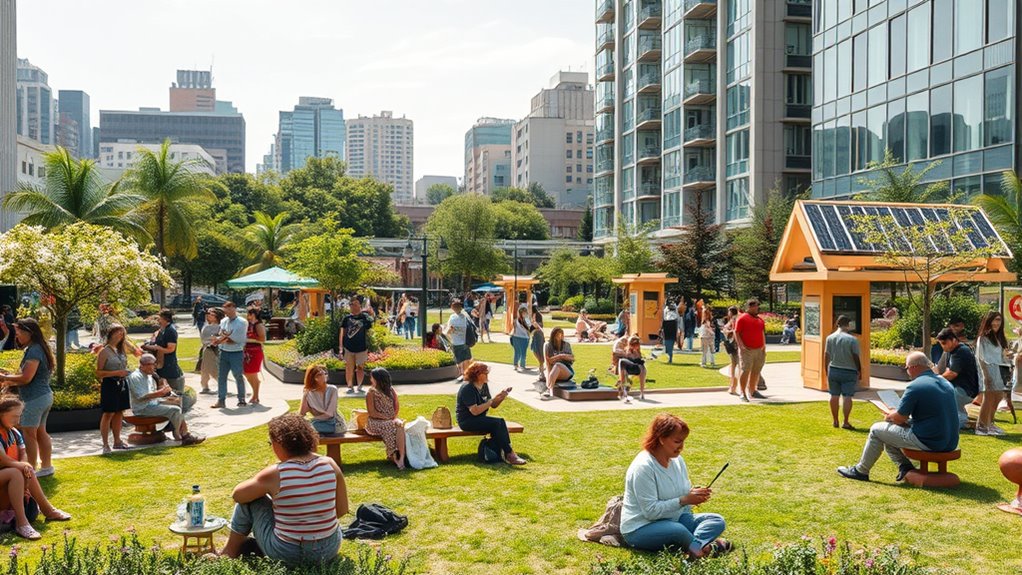
Traditional economic systems rely heavily on monetary markets and centralized wealth distribution, but in a post-work society, new models are emerging that prioritize shared resources and community-based exchanges. You’ll see the rise of local resource pools, non-monetary credit systems, and cooperative ownership structures that emphasize fairness and collective well-being. These models reduce reliance on traditional cash flows, focusing instead on reciprocity and social value. Incorporating high-quality projectors into communal spaces can enhance collective experiences and foster engagement.
Emerging post-work models emphasize shared resources, community exchanges, and fairness over traditional monetary systems.
- Community sharing platforms for tools, spaces, and skills
- Local currencies supporting regional trade
- Cooperative businesses owned and managed by members
- Redistribution mechanisms ensuring equitable wealth distribution
- Social safety nets linked to resource access rather than employment
These foundations aim to foster sustainability, resilience, and social cohesion beyond traditional markets.
As an affiliate, we earn on qualifying purchases.
Community Life and Social Bonds Without Jobs

As work becomes less central to daily life, you’ll likely see communities reorganize around shared interests and mutual support instead of occupational ties. People may engage more in local projects, volunteering, and social gatherings that foster genuine connections. These new forms of social engagement can strengthen bonds and create a sense of belonging beyond traditional job roles. Additionally, activities that promote social cohesion can become integral to community identity and resilience.
Reimagining Community Structures
With the decline of work as a central social activity, communities are poised to redefine how they organize and foster connections. You’ll see smaller, localized groups forming around shared interests, replacing impersonal urban environments. Social bonds will shift from occupational status to collective participation in activities like volunteering, arts, or community projects. Resource sharing becomes more common, emphasizing trust and reciprocity. You might participate in communal decision-making, strengthening ties through collaborative effort. New social norms will prioritize well-being, creativity, and mutual support over productivity. These changes foster a sense of belonging rooted in personal contribution rather than job titles. As a result, communities become more resilient, inclusive, and focused on human connection. Additionally, automation and robotics could support these community efforts by providing tools and infrastructure that facilitate shared resources and collaborative activities.
New Forms of Social Engagement
In a society where work no longer defines daily life, you find new ways to forge social bonds and engage with your community. Instead of workplace interactions, relationships form through shared interests, hobbies, and volunteer activities. Community centers, local projects, and participatory events become central to social life, fostering trust and cooperation. You may join neighborhood groups focused on sustainability, arts, or education, emphasizing collective contribution over individual achievement. Volunteering and mutual aid networks strengthen bonds and create a sense of purpose. Social status shifts from occupational titles to contributions made through creativity, caregiving, or community service. Additionally, the use of hydrocolloid material in skincare like acne patches exemplifies how innovative materials can promote healing and well-being, paralleling the new emphasis on collective health and support. These new forms of engagement promote inclusivity, shared responsibility, and a deeper connection to your environment and neighbors, enriching your sense of belonging and collective well-being.
Navigating Wealth Distribution and Capital Ownership

Exploring wealth distribution and capital ownership in a post-work society requires rethinking traditional economic structures. You’ll need new models that guarantee fairness as automation generates wealth beyond individual effort. Shared ownership becomes essential, giving everyone a stake in automated productive assets. You might see mechanisms like community trusts or public ownership of key resources. Redistribution policies could shift from income-based to capital-based, preventing wealth concentration. Non-monetary systems, like credit or resource sharing, may supplement cash economies. Guaranteeing equitable access to capital helps avoid inequality and social divides. The goal is to balance automated wealth with human participation, fostering a society where prosperity benefits all equally. Decluttering techniques can assist in managing resources and understanding personal consumption habits, ensuring sustainable use of shared assets.
Cultural Transformations and Shifting Identities
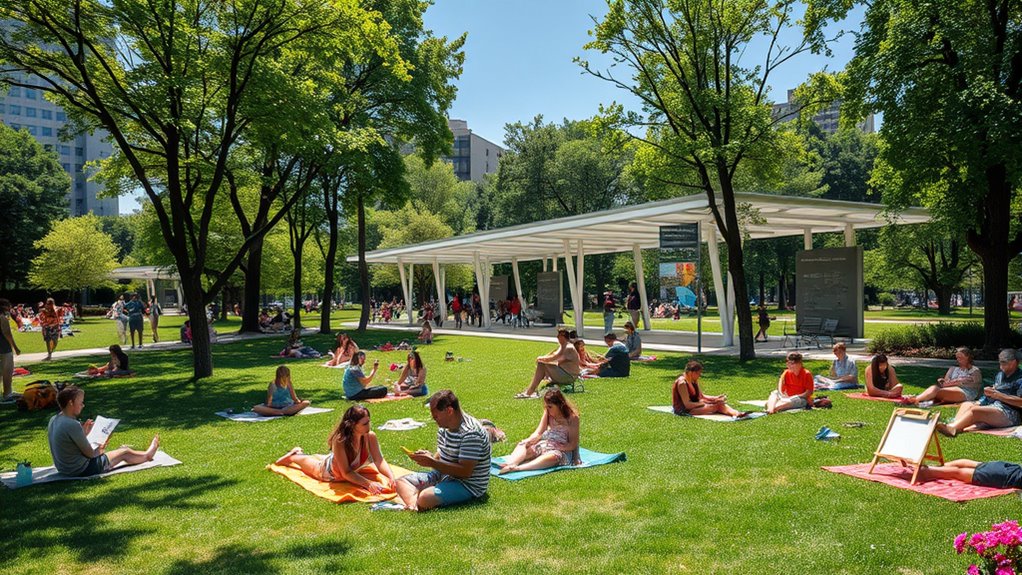
As societies reshape their economic foundations around automation and shared ownership, the way you see yourself and your roles must also evolve. Without traditional jobs, your identity will shift from occupational titles to your contributions through creativity, volunteering, or community involvement. Personal value will no longer hinge on productivity but on meaningful engagement and shared experiences. Cultural narratives will focus more on human connection, lifelong learning, and personal growth rather than work achievements. You may find pride in hobbies, caregiving, or collective efforts that enhance well-being. This transformation encourages redefining success beyond material wealth or career status, fostering a sense of purpose rooted in community, creativity, and contribution. Your sense of self will become more fluid, emphasizing human potential over conventional work roles. Additionally, understanding privacy policies and managing your data will become essential as society increasingly relies on digital platforms for social and communal activities.
Policy Frameworks Supporting Transition and Equity
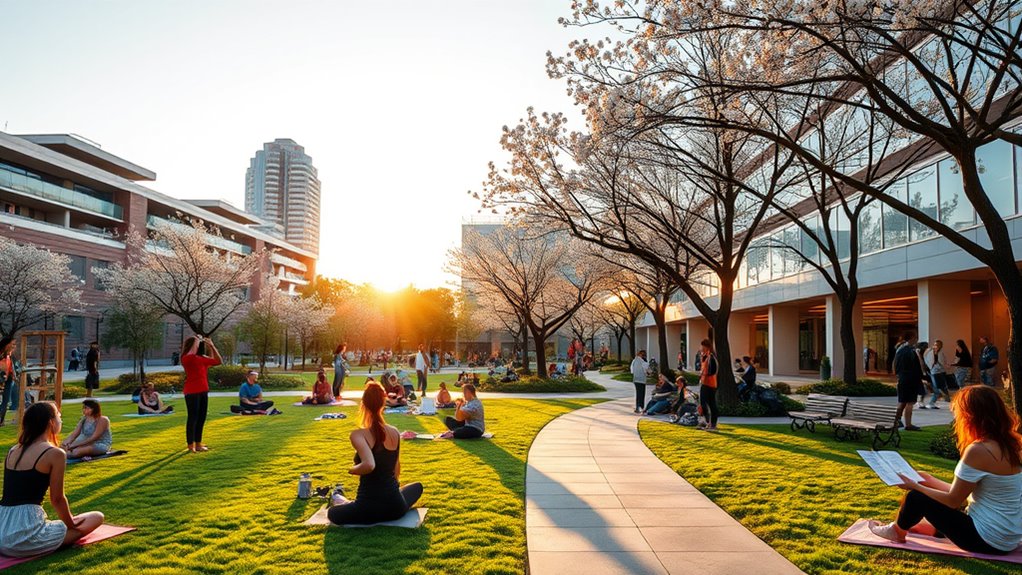
Effective policy frameworks are essential to guarantee a smooth progression toward a post-work society that promotes fairness and inclusivity. You need policies that manage wealth redistribution, ensure social safety nets, and support community-based economies. These frameworks should facilitate equitable resource sharing and reduce inequality caused by automation. Additionally, they must adapt to new economic models, such as non-monetary credit systems or community currencies. You’ll also want infrastructure investments that foster social cohesion and local initiatives. Implementing phased transitions helps prevent upheaval, while political consensus ensures shared commitment. Policies encouraging lifelong learning and re-skilling prepare citizens for evolving roles. Ultimately, a well-designed policy environment empowers everyone to thrive in a society where human contribution is valued beyond traditional employment.
Furthermore, understanding the importance of diverse economic models can help create more resilient and inclusive systems for future societal structures.
Challenges and Opportunities of a Post-Work Society
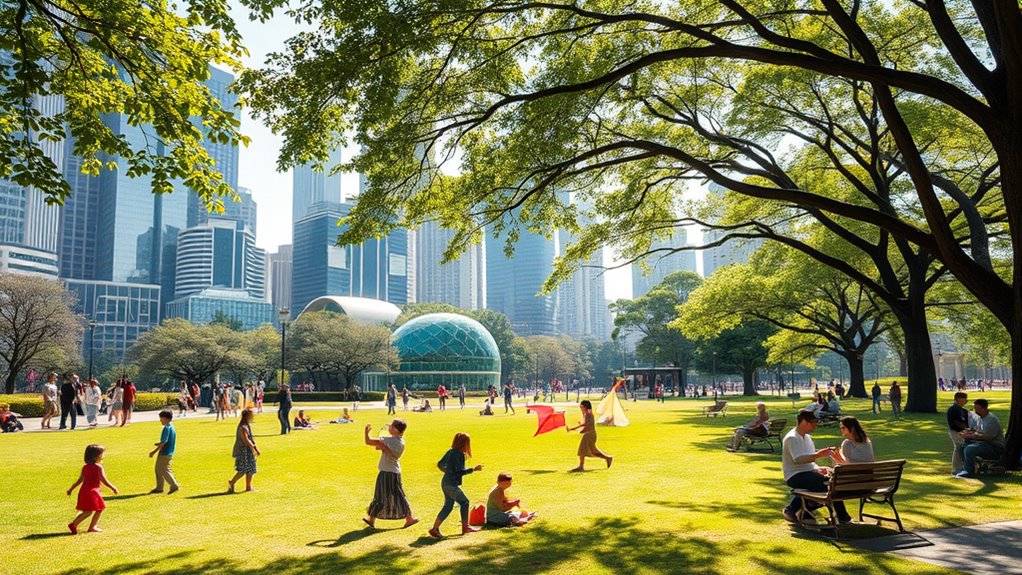
As you consider a post-work society, you’ll see that redistributing wealth effectively is key to ensuring fairness. You’ll also need to rethink social roles, shifting focus from jobs to contributions like volunteering and creativity. To make this shift, investing in infrastructure and crafting policies that support new economic models become essential. Additionally, understanding the importance of beginners guides can help society adapt by providing clear, accessible information for all.
Economic Redistribution Strategies
In a post-work society, traditional mechanisms of wealth redistribution face significant challenges but also open up new opportunities for creating a fairer economy. You’ll need innovative systems to fairly share resources generated by automation and capital ownership. Existing models, like universal basic income, might evolve into more nuanced approaches emphasizing communal sharing and participatory economics. You could see the rise of non-monetary credit systems or local resource exchanges. Redistribution efforts might focus on reducing inequalities rooted in capital ownership and access to opportunities. Key strategies include:
- Implementing community-based resource sharing programs
- Developing participatory budgeting processes
- Expanding access to universal basic services
- Creating non-monetary credit and barter systems
- Designing policies that promote equitable capital ownership
- Recognizing the importance of angel numbers as symbolic messages that can inspire innovative thinking about societal change
These approaches aim to balance automation benefits with social fairness, ensuring everyone benefits.
Social Role Redefinition
How will societies redefine social roles when traditional work no longer provides identity or status? You’ll see a shift from occupational titles to contributions through creativity, volunteering, and community involvement. Social recognition will depend more on personal effort and shared values than job titles. You might find yourself valued for your passions, skills, or community service rather than your employment status. This change opens opportunities to pursue meaningful activities that resonate with you, fostering diverse identities beyond career labels. However, challenges exist, like establishing new norms for social standing and ensuring everyone’s contributions are acknowledged. Ultimately, societies will need to cultivate a culture that celebrates human potential and collective well-being, transforming social roles into expressions of personal growth and community engagement instead of traditional employment.
Infrastructure and Policy Needs
Shifting to a post-work society presents significant infrastructure and policy challenges that require proactive solutions. You’ll need systems that support resource sharing, community engagement, and equitable wealth distribution. Policies must encourage innovation and guarantee social safety nets keep pace with automation. Infrastructure investments should focus on accessible public spaces, digital platforms, and local economies. You’ll also need regulatory frameworks to manage new economic models and non-monetary exchanges. Additionally, policies must address disparities in capital ownership and opportunity, preventing inequality from deepening. Switching smoothly depends on phased implementation and stakeholder consensus. Preparing for these changes involves redesigning education systems, social services, and community facilities to foster resilience and inclusion in a post-work world.
- Building digital platforms for resource sharing
- Reforming social safety nets and welfare systems
- Investing in local, community-based infrastructure
- Developing new economic regulations and credit systems
- Promoting inclusive policies to reduce inequality
Preparing Society for a Future of Abundant Free Time
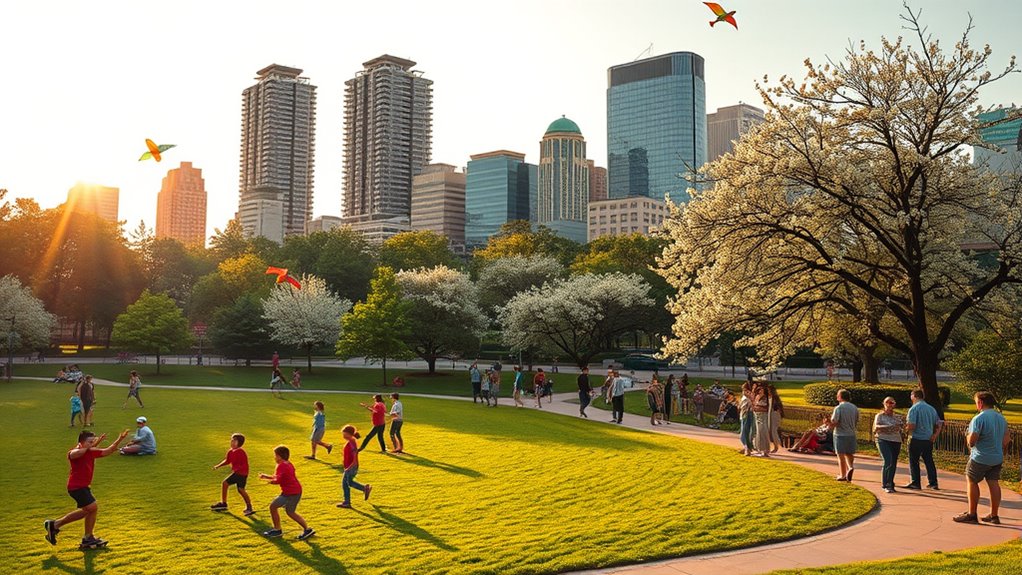
As society moves toward a future where abundant free time becomes the norm, preparing for this shift requires proactive changes in education, social norms, and policy frameworks. You need to focus on fostering skills like creativity, collaboration, and lifelong learning, so people can thrive outside traditional work. Shift societal values to prioritize personal growth, community involvement, and well-being over productivity. Policies must support wealth redistribution, social safety nets, and accessible shared resources, ensuring fairness and reducing inequality. Invest in infrastructure that encourages community sharing and voluntary participation. Encourage cultural narratives that redefine human worth beyond employment, emphasizing contribution through leisure, arts, and service. By aligning these efforts now, you help create a society ready to embrace a future of free time, fulfillment, and collective well-being.
Frequently Asked Questions
How Will Education Adapt to a Post-Work Society?
In a post-work society, you’ll see education shift focus from job preparation to personal growth, creativity, and lifelong learning. You’ll engage in more community-based projects, collaborative skills, and flexible learning formats. Traditional classrooms may give way to immersive experiences, online platforms, and skill-sharing networks. Education emphasizes adaptability, critical thinking, and emotional intelligence, helping you thrive in a world where your value is rooted in contribution, curiosity, and community involvement rather than employment.
What Role Will Technology Play in Ensuring Equitable Resource Distribution?
You might worry technology will only deepen inequality, but it can actually promote fairness if we use it wisely. Automated systems and AI can track and distribute resources based on need, ensuring everyone gets their fair share. By creating transparent algorithms and community oversight, technology becomes a tool to enhance equity, not hinder it. This way, we harness innovation to build a more just and inclusive society.
How Might Social Status Be Recognized Without Traditional Employment?
You might find social status shifting from traditional jobs to contributions like volunteering, creative projects, or community involvement. Recognition could come through public acknowledgment or shared community rewards rather than employment titles. Your participation in social or cultural activities, or your efforts to support others, may become the new markers of status. This change emphasizes personal impact and collective well-being, making social worth more about meaningful engagement than occupational achievement.
What Measures Can Prevent Wealth Inequality in Automated Economies?
Imagine a garden where every seed is shared equally, guaranteeing no patch overgrows the other. To prevent wealth inequality in automated economies, you need fair redistribution policies, like watering every plant equally. Implement community-based ownership models and non-monetary credit systems that allow resources to flow freely. By cultivating shared prosperity, you guarantee the garden’s beauty remains balanced, fostering fairness and inclusivity for all.
How Will Mental Health and Purpose Be Maintained Without Work?
You’ll find purpose through community involvement, creative pursuits, and lifelong learning, which replace traditional work roles. To maintain mental health, societies will prioritize social bonds, meaningful activities, and personal development. Access to mental health services and recognition for contributions beyond employment will be essential. By fostering shared purpose and fostering a sense of belonging, you’ll feel fulfilled and connected, even without traditional jobs, ensuring well-being and a strong sense of identity.
Conclusion
You might worry that without jobs, society would lose purpose, but free time opens new opportunities for creativity, community, and personal growth. Embracing this shift doesn’t mean abandoning productivity; it means redefining what fulfillment looks like. By building supportive policies and strong social bonds, you can thrive in a world where work is just one part of life. Together, we can create a meaningful, balanced future that values everyone’s well-being.
NFL season / tailgating Picks
team gear
As an affiliate, we earn on qualifying purchases.