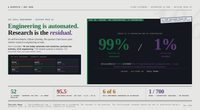
Junior developer hiring dropped 40% versus pre-2022 levels. Top 15 tech companies entry-level hiring fell 25% from 2023 to 2024 and continued through 2025-2026. 37% of employers say they’d rather “hire” AI than a new grad. Junior developer and QA roles declined 20-35% globally. The Anthropic Economic Index — analyzing millions of Claude conversations — finds AI usage is 57% augmentation and 43% automation across all uses. The METR study finds senior engineers in their own codebase outperform AI for deep work. Salesforce announced “no new engineers” in 2025. Goldman Sachs documents 20-30-year-olds in tech-exposed occupations facing ~3 percentage point unemployment increase since early 2025. The bifurcated reality: juniors hit hard, seniors thriving, the pipeline collapsing — with a 2-5 year mid-level pipeline crisis projected for 2027-2029. The macroeconomic attribution caveat: 2023-2024 interest rate hikes drove hiring freezes BEFORE AI tools matured · AI exacerbates but does not solely cause. Software engineering is the canonical empirical case the Atlas operates on.

Get business pricing on tech for your team
- Business-only prices and quantity discounts
- Tax-exempt purchasing
- Multiple users, one account, clear invoices
By Thorsten Meyer — May 2026
This is Atlas Essay 02 — the first Dimension 1 empirical-evidence sector forensic in the Post-Labor Transition Atlas. Essay 01 established the four-dimension architecture, the new six-register chromatic system, and the editorial framing that holds the four structural interpretations simultaneously. Essay 02 begins the empirical-evidence foundation with the most-documented sector: software engineering. Software engineering is the canonical case because the empirical evidence base is substantial (Anthropic Economic Index · METR study · Stanford AI Index 2026 · GitHub Copilot studies · Stack Overflow Developer Survey 2025 · Levels.fyi · multiple hiring-data analyses) and because the exposure-vs-displacement distinction is most rigorously testable here.
The structural argument I want to make: software engineering is the sector where the exposure-vs-displacement distinction is most rigorously testable empirically — and the evidence supports a structurally more nuanced reality than either AI-utopianism or AI-doomerism admits. The bifurcated pattern crystallized in the empirical data: (a) entry-level/junior displacement is real and substantial (~40% drop from pre-2022 levels); (b) senior engineers face augmentation not displacement (METR shows seniors-with-codebase-context outperform AI on deep work); (c) the task-automation-not-job-replacement thesis is empirically supported (Anthropic Economic Index 57/43 augmentation/automation split); (d) the pipeline problem is a structural emerging risk (2-5 year mid-level pipeline crisis projected for 2027-2029); (e) macroeconomic factors drive a significant portion of the hiring decline — AI exacerbates but does not solely cause the displacement.
The headline empirical finding: software engineering operationally confirms Interpretation 2 from Essay 01’s framework (“transition is arriving slowly with heterogeneous effects”) more strongly than any other interpretation. The evidence does not support Interpretation 1 (no displacement) — the 40% junior hiring drop is substantial and real. The evidence does not unambiguously support Interpretations 3 or 4 (fast transition) — the senior augmentation pattern + macroeconomic attribution caveats + Anthropic Economic Index 57/43 split argue against fast-transition framing. What the evidence supports is heterogeneous task-level displacement producing bifurcated cohort outcomes within a single sector — juniors face structural displacement at scale, seniors face augmentation, the mid-level pipeline faces emerging collapse.
This essay walks the empirical evidence base (the data sources and what they actually show), the bifurcated cohort reality (juniors hit hard · seniors thriving · pipeline collapsing), the attribution-rigor framework (AI-driven vs. macroeconomic vs. cohort-specific), the pipeline problem (2027-2029 mid-level gap forecast), and the integrative observations linking back to Essay 01’s four interpretations.
Software
engineering.
The canonical case.
~40% junior hiring drop · 57/43 Anthropic Economic Index split · METR senior-codebase advantage · 2027-2029 pipeline crisis emerging. The most-documented sector for AI-driven labor displacement — and the canonical empirical case the Atlas operates on.
This is Atlas Essay 02 — the first Dimension 1 sector forensic in the Post-Labor Transition Atlas. Software engineering is the canonical case because the empirical evidence base is substantial AND the exposure-vs-displacement distinction is most rigorously testable here. Junior cohort: 40% hiring drop · 25% top-15 tech entry-level decline · 20-35% global junior+QA decline · 37% employers prefer AI over new grads. Senior cohort: METR shows senior+codebase outperforms AI for deep work · 57/43 augmentation/automation Anthropic Economic Index · 5-10× productivity top 20%. Pipeline: 2-5 year mid-level crisis 2027-2029 forecast · the juniors not hired today are the mid-levels missing tomorrow. Attribution rigor required: macroeconomic + AI-driven + cohort-specific factors compounding. Interpretation 2 (transition arriving slowly with heterogeneous effects) empirically dominant.
Five findings. Multi-source convergence.
Software engineering has the most-documented empirical evidence base of any sector for AI-driven labor displacement. Multiple data sources — Anthropic Economic Index, METR, Stanford AI Index 2026, GitHub, Stack Overflow, Levels.fyi, hiring-data analyses — converge on consistent findings. The cohort-bifurcation pattern is what the cross-validation crystallizes.
Second Talent
SolidAITech
BLS
Stanford AI Index
Economic Index
2026
Cross-validated
BDTechJobs
Frontend Highlights
Stack Overflow
As an affiliate, we earn on qualifying purchases.
Three cohorts. Three trajectories.
Software-engineering displacement is not uniform — it is bifurcated by cohort, and the cohort-bifurcation IS the displacement story. Junior cohort faces structural displacement at scale · senior cohort faces augmentation not displacement · mid-level pipeline faces emerging structural crisis 2027-2029. This is the empirical signature Interpretation 2 from Essay 01 produces.
software engineering reference books
As an affiliate, we earn on qualifying purchases.
As an affiliate, we earn on qualifying purchases.
Three factors. Compounding.
The analytically rigorous framework the empirical literature operates on. The 40% junior hiring drop is structurally driven by three converging factors — naming each component rather than conflating them is the editorial discipline the Atlas operates on through all four phases.
As an affiliate, we earn on qualifying purchases.
Pipeline collapse. 2027-2029.
The structural emerging risk the empirical evidence surfaces. The cohort-bifurcated displacement is not a stable equilibrium — the junior cohort displacement today produces the mid-level shortage tomorrow. The 2-5 year mid-level pipeline gap is the structurally distinct second-order effect the discourse around AI-driven displacement underweights.
Software engineering is the canonical empirical case the Atlas operates on. Junior cohort displacement at scale (~40% hiring drop) is real and substantial. Senior cohort augmentation (METR + Anthropic Economic Index 57/43) is real and substantial. The mid-level pipeline crisis (2027-2029) is the structural emerging risk. The attribution-rigor framework — macroeconomic + AI-tool maturation + cohort-specific factors — is the analytical discipline the Atlas operates on through all four phases. Interpretation 2 from Essay 01 — transition arriving slowly with heterogeneous effects — is empirically dominant in software engineering. The cohort-bifurcation pattern is the structural-empirical hypothesis the Phase 1 synthesis essay will test across the other three sector forensics.
As an affiliate, we earn on qualifying purchases.
I · The empirical evidence base · what the data actually shows
The factual baseline before the structural argument. Software engineering has the most-documented empirical evidence base of any sector for AI-driven labor displacement. Multiple data sources converge on consistent findings.
The hiring-data evidence · entry-level cohort displacement is real
Per the Final Round AI software engineering job market analysis, the Second Talent AI Impact on the Job Market 2026 analysis, the Lycore AI Layoffs 2026 developer roles analysis, the SolidAITech junior coder survival guide, the CodeConductor Junior Developers in the Age of AI 2026 guide, and the BDTechJobs Software Engineer Survival Guide:
The entry-level hiring evidence is consistent across multiple sources:
- Junior developer hiring dropped approximately 40% versus pre-2022 levels · sustained through 2025-2026
- Top 15 tech companies entry-level hiring fell 25% from 2023 to 2024 · continued declining through 2025-2026 (Fortune April 2026)
- 20-35% global decline in junior developer and QA roles (Second Talent)
- 37% of employers say they’d rather “hire” AI than a new grad
- Companies that previously hired 15-20 juniors per cohort now hire 2-3 · specifically positioned to “manage Copilot’s output across a team of AI-augmented senior engineers” (SolidAITech)
- Salesforce / Marc Benioff announced no new engineering hires in 2025 — the most-publicized corporate signal
The Goldman Sachs cohort evidence corroborates the demographic pattern: 20-30-year-olds in tech-exposed occupations have faced approximately 3 percentage point unemployment increase since early 2025 — notably higher than for same-aged workers in other fields or for overall tech workers. This is the empirically-dominant signal of AI-driven labor displacement at the cohort level.
The Anthropic Economic Index evidence · task automation, not job replacement
Per the Anthropic Economic Index documented in the BDTechJobs Software Engineer Survival Guide:
The clearest piece of evidence on the augmentation-vs-automation question comes from the Anthropic Economic Index, which analyzed millions of real Claude conversations. Across all uses, AI is 57 percent augmentation and 43 percent automation.
The structural significance of the 57/43 split: the empirical evidence on actual AI usage patterns (not theoretical capability ratings) shows that majority of real-world AI deployment is augmentation — humans-with-AI-tools — rather than autonomous task automation. This is the empirically grounded confirmation that the exposure-vs-displacement distinction matters operationally. Software engineering tasks that are technically automatable do not automatically translate into job displacement — the operational reality is 57% augmentation. The 43% automation portion is substantial and concentrated in specific task types (boilerplate code generation · test scripting · documentation drafting · routine refactors) rather than uniformly distributed across the software-engineering workflow.
The METR study · senior engineers in their own codebase outperform AI for deep work
Per the METR study documented in BDTechJobs: senior engineers in their own codebase outperform AI for the deep work. The finding is counterintuitive — the conventional discourse assumes AI tools uniformly accelerate developer productivity — but the empirical evidence supports it.
The structural implication: the “AI replaces senior engineers” thesis is empirically weak. Senior engineers’ value is grounded in codebase context, domain knowledge, engineering judgment, and the accumulated taste-of-tradeoffs that AI tools cannot fully replicate. The METR study is the empirical evidence that the senior cohort faces augmentation rather than displacement — and the cohort outcome reflects this: senior engineering compensation is rising, senior engineering hiring is sustained, senior engineering roles are reshaping rather than disappearing.
The Stack Overflow Developer Survey 2025 · GitHub Copilot studies · Stanford AI Index 2026
Additional empirical sources cross-validate the hiring-data and Anthropic Economic Index findings:
- Stack Overflow Developer Survey 2025 · developer AI tool adoption rates · sentiment toward AI tools · productivity self-reports
- GitHub Copilot studies · empirical evidence on AI-assisted coding productivity · task completion time reductions · code-quality outcomes
- Stanford AI Index 2026 · labor section · sectoral exposure measures · adoption curves
- Levels.fyi · software engineering compensation data · the cohort-level wage dynamics
The cross-validation pattern is consistent: junior cohort displacement is real and substantial · senior cohort augmentation is real and substantial · the task-level automation is heterogeneous · the overall sector employment is bifurcated rather than uniformly displaced.
The “one-person software factory” framing
Per Frontend Highlights: the top 20% of engineers (AI-fluent seniors) become 5-10× more productive — operating as “one-person software factories.” Companies ship 2-3× more features with similar or slightly smaller teams. Entry-level roles shrink further (the 37% “hire AI not new grads” finding). No widespread senior layoffs — demand for AI-orchestrating architects rises.
This is the empirically dominant pattern in software engineering as of mid-2026. Productivity amplification + role transformation + selective displacement. The cohort-bifurcated reality.
II · The bifurcated cohort reality · juniors, seniors, pipeline
The structural pattern the empirical evidence supports. Software engineering displacement is not uniform — it is bifurcated by cohort, and the cohort-bifurcation IS the displacement story.
The junior cohort · structural displacement at scale
Junior developers face the most-documented displacement in software engineering. The empirical evidence is consistent across the hiring-data sources:
- ~40% drop in junior developer job postings versus pre-2022 levels
- 25% decline in top 15 tech companies entry-level hiring 2023 → 2024 (continuing)
- 20-35% global decline in junior + QA roles (Second Talent)
- 37% of employers prefer AI over new grads
- Companies that hired 15-20 juniors per cohort now hire 2-3 (SolidAITech)
The structural mechanism: AI tools handle the boilerplate code generation, the CRUD implementation, the routine test writing, the bug fixing for obvious issues, the technical documentation drafting, and the front-end UI component implementation that previously constituted the junior task set. The task set juniors learned the codebase, domain, and engineering practices through is structurally narrowed. The junior role’s task floor has been raised — what previously was “implement these CRUD features” is now “review Copilot’s output and refactor where it’s wrong.”
Heather Doshay, head of people at SignalFire, told The New York Times: “Nobody has patience or time for hand-holding in this new environment, where a lot of the work can be done by A.I. autonomously.” This crystallizes the structural mechanism: companies that previously invested in junior training (3-6 month onboarding programs · senior-mentor pairings · gradual responsibility increase) increasingly want developers who can contribute immediately. AI tools have raised the productivity baseline expected at hiring.
The senior cohort · augmentation, not displacement
Senior engineers face the opposite empirical reality: sustained hiring, rising compensation, role transformation rather than disappearance. The METR study finding (senior engineers in their own codebase outperform AI for deep work) is the empirical foundation. The Anthropic Economic Index 57% augmentation finding crystallizes the operational reality. The “one-person software factory” framing (top 20% AI-fluent seniors 5-10× productivity) crystallizes the cohort-level productivity amplification.
The structural mechanism: senior engineers’ value is grounded in codebase context, domain knowledge, engineering judgment, and accumulated taste — the structurally non-automatable dimensions. AI tools amplify rather than replace these capabilities. The “AI-orchestrating architect” role pattern that the empirical literature documents is the structurally distinct emerging role: senior engineers who direct AI-tool workflows, review AI-generated output, integrate AI-assisted code into production codebases, and maintain the engineering-judgment quality bar that AI tools cannot independently uphold.
The pipeline problem · 2-5 year mid-level crisis projected for 2027-2029
The structural emerging risk the empirical evidence surfaces is the pipeline problem. Per Lycore:
“The conventional developer career path depended on junior roles to provide the volume of implementation work through which developers learned the codebase, the domain, and the engineering practices of their team. A junior developer who spends two years implementing CRUD features, fixing bugs, and writing unit tests under senior guidance emerges as an intermediate developer with the contextual knowledge, codebase familiarity, and engineering judgment that makes them valuable at the next level. If AI tools handle the CRUD implementation and test writing that juniors previously did, the entry points to this learning process narrow significantly. The organisations that are reducing junior hiring most aggressively in 2026 are creating a 2-5 year pipeline problem: they will not have a supply of experienced intermediate developers emerging from junior roles in 2027-2029, because they did not hire the juniors who would have developed into those intermediate developers.”
The structural significance: the cohort-bifurcated displacement is not a stable equilibrium. The junior cohort displacement today produces the mid-level shortage tomorrow. The 2027-2029 mid-level pipeline gap is the structurally distinct second-order effect that the discourse around AI-driven displacement underweights. This is the empirical evidence that the post-labor transition’s cohort-bifurcation has emerging structural consequences.
III · The attribution-rigor framework · AI-driven vs. macroeconomic vs. cohort
The analytically rigorous framework the empirical literature operates on. The exposure-vs-displacement distinction from Essay 01 extends to attribution rigor: how much of the observed displacement is AI-driven vs. macroeconomic vs. cohort-specific?
The macroeconomic attribution caveat
Per Frontier Wisdom:
“It is a misconception to blame AI alone for the difficult job market facing new graduates in 2026. The primary drivers are macroeconomic. The steep interest rate hikes of 2023-2024 led to a capital crunch for tech companies and venture-backed startups. This resulted in widespread hiring freezes, layoffs, and extreme caution in hiring entry-level positions, which are seen as an investment in future capacity rather than immediate productivity. AI exacerbated this trend by giving companies a tool to do more with their existing senior staff, reducing the immediate pressure to hire juniors. However, the root cause is economic.”
The structural attribution decomposition: the 40% junior hiring drop is structurally driven by three converging factors:
- Macroeconomic · 2023-2024 interest rate hikes → capital crunch → hiring freezes → entry-level positions cut first (because seen as “investment in future capacity” rather than immediate productivity)
- AI-tool maturation · GitHub Copilot + Cursor + Claude Code + Cody made AI-assisted coding operationally credible 2023-2024 · gave companies a tool to do more with existing senior staff · reduced pressure to hire juniors
- Cohort-specific · entry-level positions are structurally most exposed to both macroeconomic and AI-tool factors simultaneously · the cohort effect compounds the other two
The attribution-rigor implication: the observed 40% junior hiring drop overstates the pure-AI displacement component. Some unknown fraction would have occurred without AI (the pure macroeconomic effect); some fraction would have occurred without the macroeconomic downturn (the pure AI effect); the intersection effect (AI tools enabling companies to absorb macroeconomic pressure without hiring) is structurally distinct from both. The Atlas operates on attribution rigor — naming each component rather than conflating them.
The geographic attribution dimension
The hiring data is heavily US-weighted. The Goldman Sachs cohort evidence is US-specific. The Salesforce announcement is US-corporate. The geographic distribution of software-engineering displacement varies structurally across jurisdictions — European software-engineering markets operate under different macroeconomic conditions, different labor-protection frameworks, different AI-tool adoption rates, and different junior-training norms.
Phase 2 of the Atlas (July-August 2026) will extend the policy-response analysis to jurisdictional dimensions. Software engineering is structurally distinctive within Phase 1 because the empirical evidence base is most comprehensive — but the cohort-bifurcation pattern documented here is most empirically supported in US data and partially supported in European/Asian data.
The selection-bias attribution dimension
The hiring data captures the supply side (job postings, hiring decisions, headcount changes). It does not directly measure the demand side (whether the underlying productive work has changed in volume) or the quality side (whether the AI-augmented seniors produce equivalent output to senior-plus-juniors teams).
The empirical literature is increasingly grappling with selection bias: companies hiring fewer juniors may be selecting more aggressively (the 2-3 juniors hired now are the top of the previous 15-20 cohort) · the productivity gains from AI tools may not be uniformly distributed (the top 20% 5-10× productivity finding suggests heavy concentration) · the long-term codebase quality effects of AI-augmented development are not yet empirically measurable at scale.
The attribution-rigor framework names these uncertainties explicitly. The Atlas does not claim more empirical confidence than the evidence supports.
IV · The integrative observations · linking back to Essay 01’s four interpretations
The structural-pattern findings the software-engineering forensic produces for the Atlas framework. Software engineering operationally confirms Interpretation 2 from Essay 01’s framework most strongly — “transition is arriving slowly with heterogeneous effects.”
Interpretation 1 · transition not arriving at scale · partially confirmed
The aggregate-employment evidence for software engineering shows overall sector employment is rising despite the junior-cohort decline. Stack Overflow Developer Survey 2025 + Stanford AI Index 2026 + Levels.fyi data + Bureau of Labor Statistics occupational projections support continued aggregate sector growth. Interpretation 1 (no displacement at aggregate level) is partially confirmed at the sector level — software engineering as a whole is not in aggregate displacement.
Interpretation 2 · transition arriving slowly with heterogeneous effects · empirically dominant
The bifurcated cohort reality (junior displacement at scale + senior augmentation + emerging pipeline crisis) is the empirically dominant pattern. This is the Interpretation 2 finding crystallized in software-engineering data. The 40% junior hiring drop + ~3pp 20-30-year-old tech-exposed unemployment increase + 57/43 augmentation/automation Anthropic Economic Index split + METR senior-codebase finding + “one-person software factory” pattern collectively support Interpretation 2 more strongly than the other three interpretations.
Interpretation 3 · transition arriving fast with structural alternatives unrecognized · weak in software engineering
The “fast transition” framing is structurally weak for software engineering specifically. The aggregate sector employment is not collapsing. Senior engineering compensation is rising. The macroeconomic attribution caveats argue against the pure-AI-fast-displacement framing. Interpretation 3 is the weakest empirical fit for software engineering.
Interpretation 4 · transition arriving fast with structural alternatives operationally available · partially relevant
The structural alternatives — broad-based capital ownership, platform cooperatives, UBI, automation tax — do not operate at scale in the software-engineering sector. The cohort-bifurcation pattern produces winners (AI-fluent seniors) and losers (junior cohort + emerging mid-level gap) without operational policy intervention. Interpretation 4 is structurally relevant to the Atlas framework but not empirically tested in software engineering as of mid-2026.
The synthesis observation for Essay 06
The software-engineering forensic produces a structural-pattern observation the Phase 1 synthesis essay (Essay 06) will integrate across the four sector forensics: the cohort-bifurcation pattern is the empirical signature of Interpretation 2. If the same pattern appears in the other three sectors (white-collar professional services · customer service + BPO · creative industries), it crystallizes as the cross-sector empirical finding the Atlas framework’s Phase 1 produces.
The cohort-bifurcation hypothesis · the framework’s empirical-evidence test: AI-driven labor displacement does not produce uniform sector displacement; it produces structural cohort displacement within sectors — entry-level/junior cohorts face displacement, senior/experienced cohorts face augmentation, mid-level/intermediate cohorts face emerging pipeline crises 2-5 years downstream. The Phase 1 synthesis essay will test whether this hypothesis is supported across the other three sector forensics.
V · The closing argument · what the software-engineering forensic crystallizes
The integrative observation Essay 02 produces for the Atlas framework. Software engineering is the canonical empirical case the Atlas operates on — and the cohort-bifurcation pattern is the structural empirical signature the framework’s Phase 1 will test across the other three sector forensics.
The empirical evidence base crystallized:
- ~40% junior developer hiring drop versus pre-2022 levels · sustained through 2025-2026
- 25% top-15 tech companies entry-level hiring decline 2023 → 2024 · continuing
- 37% of employers prefer AI over new grads
- 20-35% global decline in junior + QA roles
- ~3pp Goldman Sachs unemployment increase for 20-30-year-olds in tech-exposed occupations since early 2025
- 57% augmentation / 43% automation Anthropic Economic Index split across millions of Claude conversations
- METR study · senior engineers in their own codebase outperform AI for deep work
- 5-10× productivity for top 20% AI-fluent seniors · “one-person software factory” pattern
- 2-5 year mid-level pipeline crisis projected for 2027-2029
The bifurcated cohort reality finding:
- Junior cohort · structural displacement at scale · ~40% hiring drop · task floor raised by AI tools · senior-mentor pairings narrowed · companies that hired 15-20 juniors per cohort now hire 2-3
- Senior cohort · augmentation not displacement · METR evidence of senior+codebase advantage · sustained hiring · rising compensation · “AI-orchestrating architect” role pattern emerging
- Mid-level pipeline · emerging structural crisis · the juniors not hired today are the mid-level engineers not available in 2027-2029 · second-order effect the discourse underweights
The attribution-rigor framework:
- Macroeconomic · 2023-2024 interest rate hikes drove hiring freezes BEFORE AI tools matured
- AI-tool maturation · GitHub Copilot + Cursor + Claude Code + Cody enabled “do more with existing senior staff”
- Cohort-specific · entry-level positions are structurally most exposed to both pressures simultaneously
- The Atlas operates on attribution rigor — naming each component rather than conflating them
The Interpretation 2 confirmation:
- The bifurcated cohort reality crystallizes the “transition arriving slowly with heterogeneous effects” interpretation more strongly than the other three
- Aggregate sector employment is not collapsing (Interpretation 1 partially confirmed)
- Senior augmentation pattern argues against fast-transition framing (Interpretation 3 weak)
- Structural alternatives are not operationally tested in software engineering specifically (Interpretation 4 partially relevant)
For the Atlas framework specifically:
- Software engineering is the empirical-evidence baseline the Phase 1 sector forensics build from · most-documented data base · cross-validated across multiple sources
- The cohort-bifurcation pattern is the structural-empirical hypothesis the Phase 1 synthesis essay will test across white-collar professional services, customer service + BPO, and creative industries
- The attribution-rigor framework (macroeconomic vs. AI-driven vs. cohort-specific) is the analytical discipline the Atlas operates on through all four phases
- The pipeline problem (2-5 year mid-level crisis 2027-2029) is the structural emerging risk the Phase 4 synthesis essay will integrate as the forward-looking finding
That’s the read on software engineering as the canonical empirical case as of mid-May 2026 — five sector forensic essays into Phase 1 with three remaining (white-collar professional services · customer service + BPO · creative industries) before the Phase 1 synthesis crystallizes the cross-sector findings. The work is real across the software-engineering empirical evidence. Multiple data sources converge on consistent findings. The bifurcated cohort reality is empirically dominant. The attribution-rigor framework is analytically necessary. The pipeline problem is structurally emerging. Both can be true at once: software engineering as a sector is structurally healthy (rising aggregate employment, rising senior compensation, sustained role demand for AI-augmented architects) AND the junior cohort faces structural displacement at scale producing the 2027-2029 pipeline crisis.
The Atlas framework’s empirical foundation is what Essay 02 establishes. The remaining three sector forensics extend the empirical-evidence base. The Phase 1 synthesis essay tests the cohort-bifurcation hypothesis across all four sectors. The empirical-evidence dimension of the post-labor transition is what the Atlas crystallizes — and software engineering is the canonical case the framework operates from.
About the Author
Thorsten Meyer is a Munich-based futurist, post-labor economist, and recipient of OpenAI’s 10 Billion Token Award. He spent two decades managing €1B+ portfolios in enterprise ICT before deciding that writing about the transition was more useful than managing quarterly slides through it. More at ThorstenMeyerAI.com.
Related Reading · the Post-Labor Transition Atlas
- Atlas Essay 01 · The Atlas opening · what the framework is · the four-dimension architecture · the six chromatic registers · the four structural interpretations
- This piece · Atlas Essay 02 · Software engineering · the canonical case · empirical-clay register
- Forthcoming · Atlas Essay 03 · White-collar professional services · the Tier 1 displacement · labor-rose register
- Forthcoming · Atlas Essay 04 · Customer service + BPO · the operational-scale displacement · empirical-clay register
- Forthcoming · Atlas Essay 05 · Creative industries · the bifurcated reality · labor-rose register
- Forthcoming · Atlas Essay 06 · Phase 1 synthesis · what the four sectors crystallize · synthesis-deep register
Sources
The empirical-evidence base for software engineering
- Final Round AI · Software Engineering Job Market Outlook for 2026 · 40% junior hiring drop · Heather Doshay SignalFire NYT quote · precision-hiring shift
- Second Talent · AI Impact on the Job Market in 2026: What the Data Shows · 20-35% global junior + QA decline · Harvard Business Review March 2026 · Fortune April 2026 · top-15 tech entry-level -25% 2023→2024
- Lycore · AI Layoffs 2026: Which Developer Roles Are Vanishing First · pipeline problem 2-5 years · 2027-2029 mid-level gap forecast · structural mechanism
- SolidAITech · AI is Erasing Junior Coders — How to Survive the 2026 Tech Market · 15-20 juniors per cohort now 2-3 · Copilot-output-management framing
- CodeConductor · Junior Developers in the Age of AI: 2026 Guide · Marc Benioff Salesforce no-new-engineers · short-term-savings-backfire framing · hybrid future
- BDTechJobs · The Software Engineer’s Survival Guide to the AI Era 2026 · Anthropic Economic Index 57/43 augmentation/automation · METR study senior+codebase finding · Stanford AI Index 2026 · GitHub + Stack Overflow + Levels.fyi cross-validation
- Frontier Wisdom · The Real AI Impact on Software Engineer Jobs in 2026 · macroeconomic attribution analysis · 2023-2024 interest rate hikes + capital crunch · “temporary economic downturn layered on permanent technological shift”
- Frontend Highlights · Will AI Replace Programmers in 2026-2027? · one-person software factory framing · 5-10× productivity top 20% · 37% employers prefer AI over new grads · companies ship 2-3× more features
Cross-validation sources
- Anthropic Economic Index · millions of Claude conversations analyzed · 57% augmentation / 43% automation across all uses
- METR study · senior engineers in their own codebase outperform AI for deep work
- Stanford AI Index 2026 · labor section · sectoral exposure measures · adoption curves
- GitHub Copilot studies · AI-assisted coding productivity · task completion time reductions
- Stack Overflow Developer Survey 2025 · developer AI tool adoption · sentiment · productivity self-reports
- Levels.fyi · software engineering compensation cohort dynamics
- Goldman Sachs · 20-30-year-olds in tech-exposed occupations +3pp unemployment since early 2025
- Heather Doshay · SignalFire head of people · NYT quote on AI-autonomy hand-holding environment
Key reference figures
- ~40% · junior developer hiring drop versus pre-2022 levels
- 25% · top-15 tech companies entry-level hiring decline 2023 → 2024
- 37% · employers preferring AI over new grads
- 20-35% · global decline in junior + QA roles
- ~3pp · 20-30-year-old tech-exposed unemployment increase since early 2025
- 57% / 43% · augmentation / automation split (Anthropic Economic Index)
- 5-10× · productivity for top 20% AI-fluent seniors
- 15-20 → 2-3 · juniors per engineering cohort at companies adopting AI aggressively
- 2-3× · features shipped with similar or slightly smaller teams
- 2-5 years · mid-level pipeline crisis horizon
- 2027-2029 · mid-level gap forecast window
- 30-40% · current coding tasks projected to be automated by 2026
- Salesforce · Marc Benioff no-new-engineers 2025
- METR finding · senior + codebase > AI for deep work
- The bifurcated cohort reality · juniors hit hard · seniors thriving · pipeline collapsing
- Attribution decomposition · macroeconomic + AI-tool maturation + cohort-specific factors
- Interpretation 2 confirmed · transition arriving slowly with heterogeneous effects · empirically dominant in software engineering
Fall Picks
fall essentials
As an affiliate, we earn on qualifying purchases.