(Why automation challenges more than our pay‑cheques—and what we can do about it)
Introduction: When Progress Feels Personal
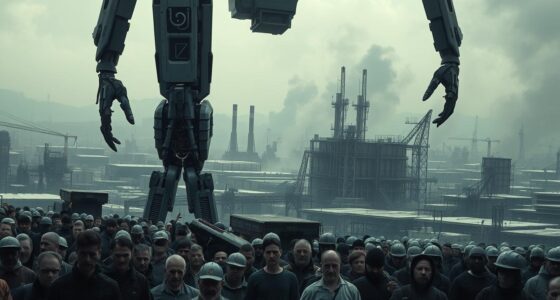
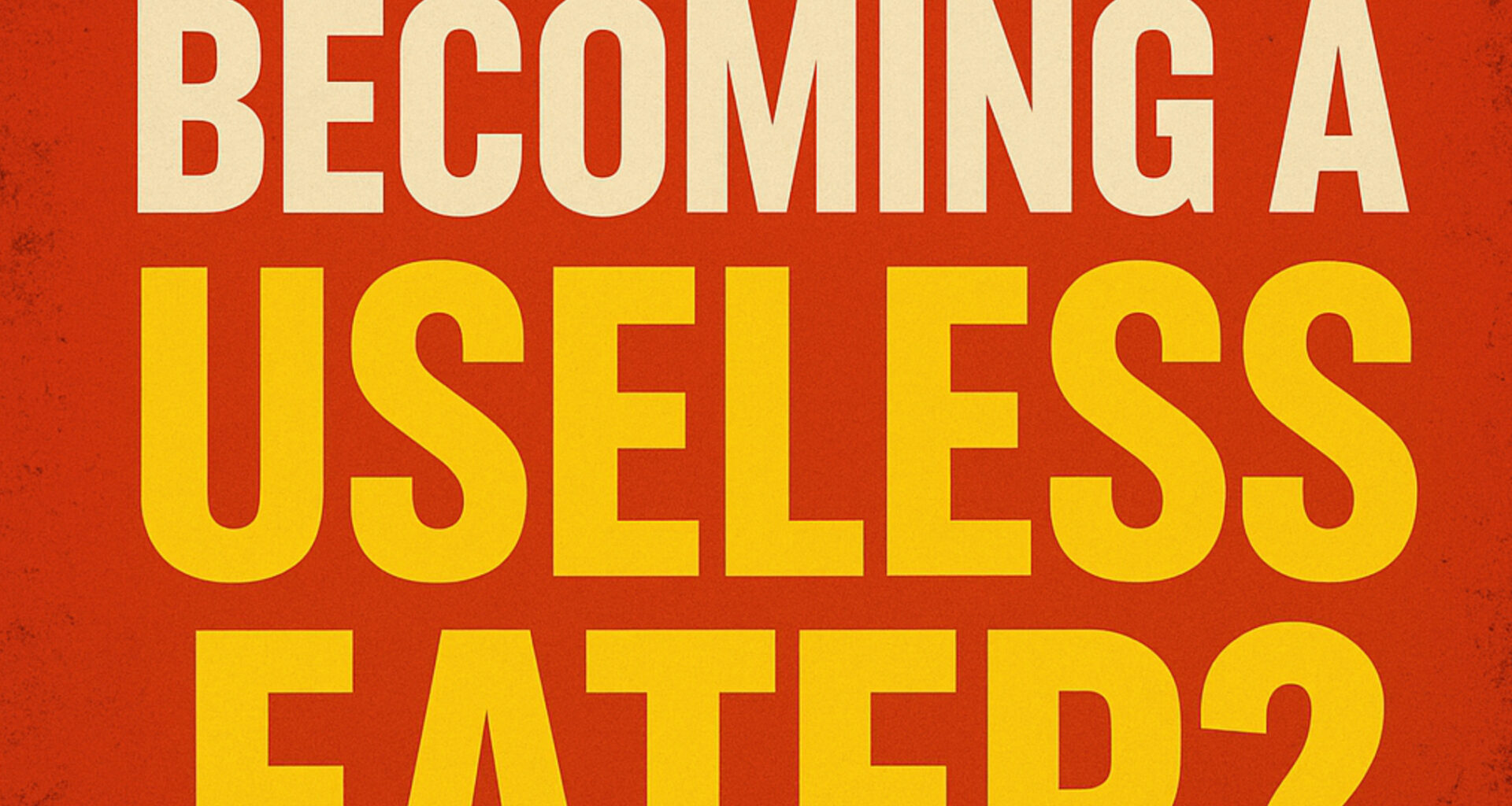
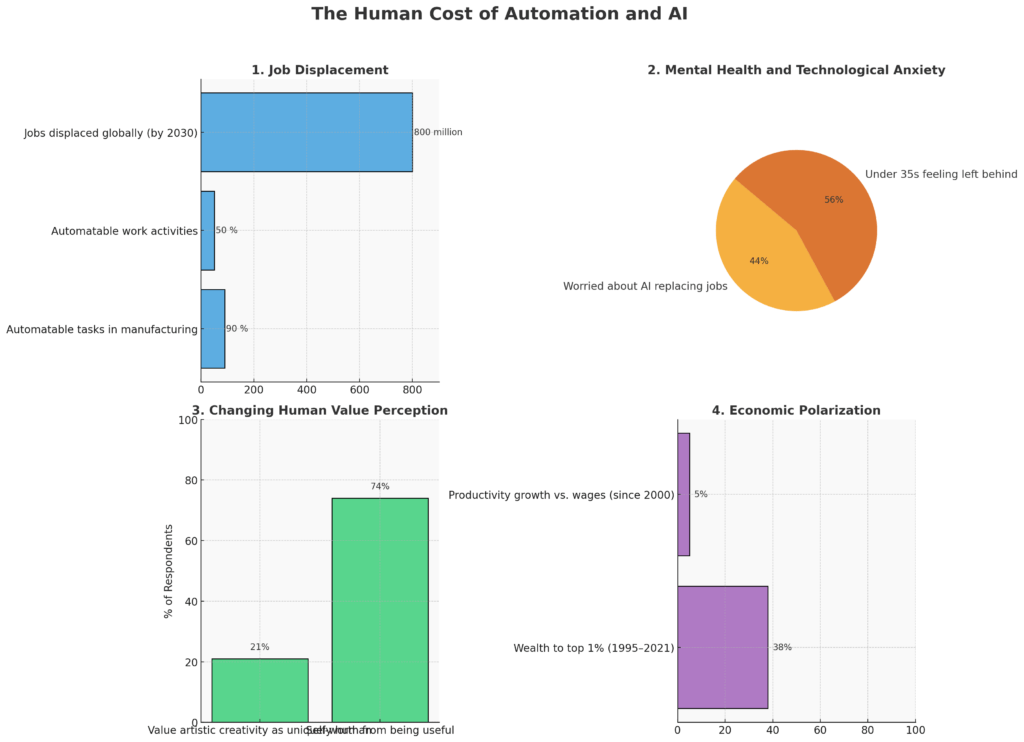
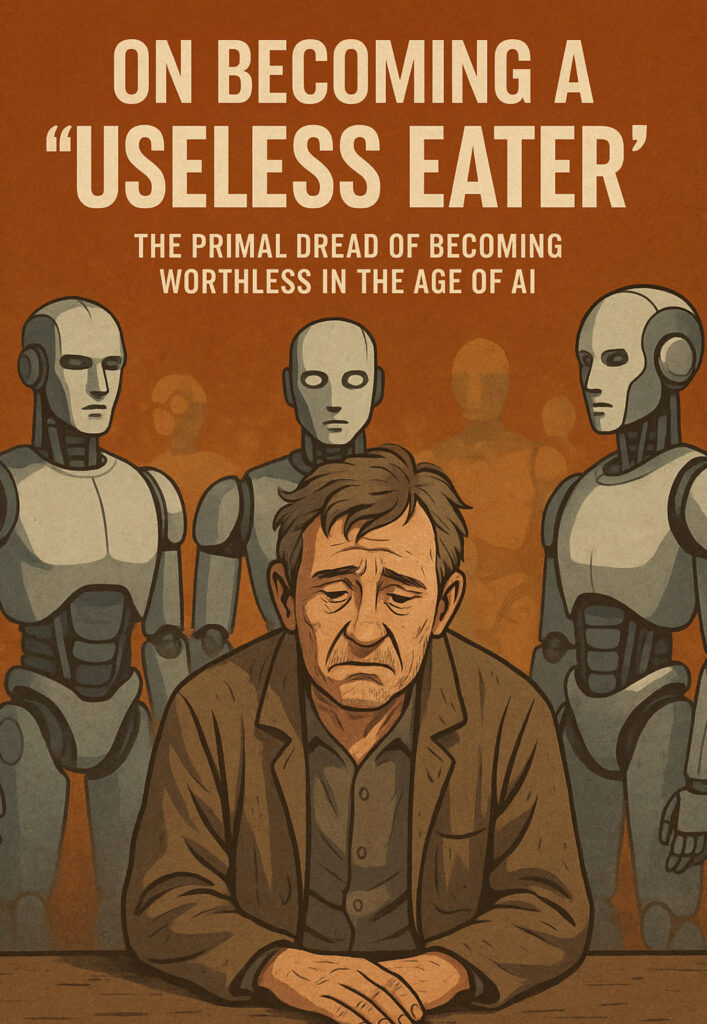
Talk about artificial intelligence long enough and the conversation invariably pivots from marvel to menace. The unease is rarely confined to lost wages or narrower career ladders; beneath those surface worries lies something older and harder to articulate: the terror of no longer mattering. The spectre of the “useless eater” captures that dread in a single, brutal phrase.
Top picks for "primal dread becom"
Open Amazon search results for this keyword.
As an affiliate, we earn on qualifying purchases.
A Dark Historical Echo
“Useless eater” (“unnützer Esser”) originated in Nazi Germany as a bureaucratic euphemism for people with disabilities, chronic illness or advanced age—lives the regime deemed Verbraucher ohne Wert (consumers without value). The term rationalised starvation policies and, ultimately, murder. Its rhetorical power lay in reducing a human being to a faulty cost‑benefit calculation.
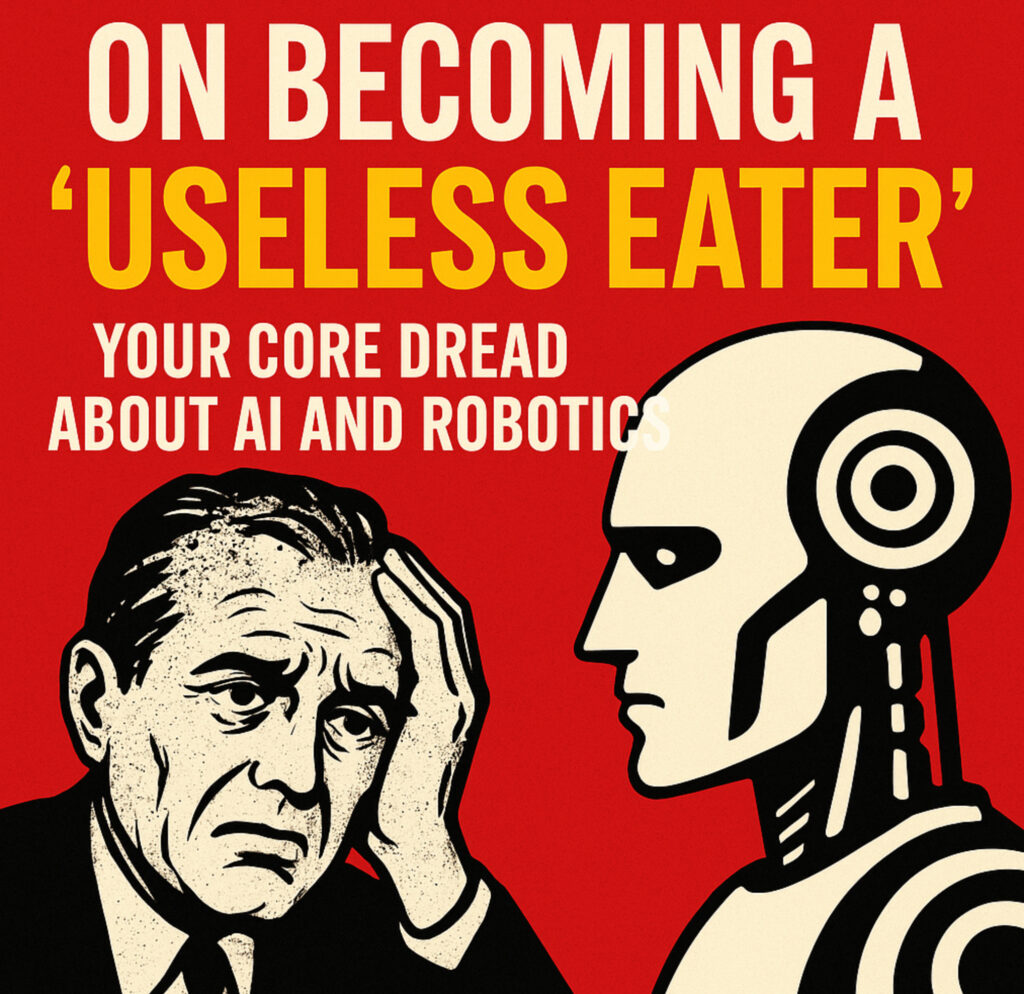
Today the phrase resurfaces in online conspiracy forums and anti‑technology screeds. Although the contexts differ, the underlying anxiety is identical: If I cannot contribute, do I still deserve inclusion?
Why Irrelevance Hurts Like Exile
Humans are cooperative primates wired for reciprocal value‑exchange. In small bands, a member who could not hunt, gather, heal or defend jeopardised group survival and risked abandonment. Evolution therefore etched a deep association between perceived usefulness and social safety.
- Belonging: Being needed anchors identity and self‑worth.
- Reciprocity: Contribution entitles one to shared resources.
- Status: Competence earns esteem, mating prospects and influence.
Strip those away and the nervous system registers an existential threat—no sabre‑tooth required.
Modern Manifestations of the Ancient Fear
Robotics outperforms me at manual precision.
Large language models draft code faster than I do.
Generative design reduces the need for junior architects.
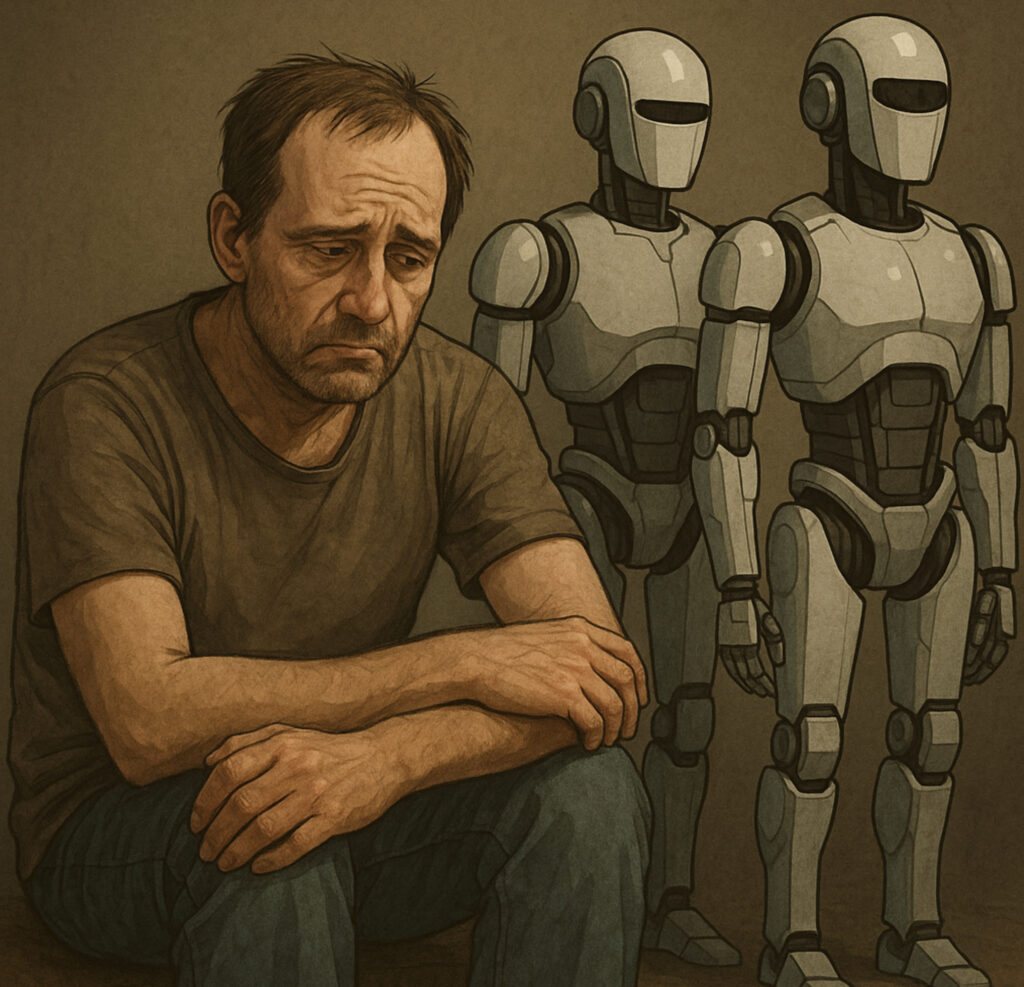
Even people whose pride revolves around parenting, art or community service can feel the tremor. The labour market is merely a stage on which a deeper drama plays out: the integrity of a social contract—I give, therefore I belong. When algorithms deliver goods and services better, faster and cheaper than humans, many worry that the contract’s quid side evaporates.
Automation’s “Ideal Worker” and the New Class Divide
Robots and software agents are tireless, uncomplaining and, crucially, owner‑controlled. Relative to human labour they require:
| Requirement | Human Workers | AI/Robots |
| Wages | Yes | No |
| Breaks | Yes | No |
| Workplace safety | Yes | Minimal |
| Collective bargaining | Sometimes | Never |
| Personal aspirations | Always | None |
If capital can substitute this “slave class” for a majority of tasks, the fear is not just unemployment; it is unexchangability. What social role survives when machines eclipse us in production and even creativity?
The Contract Under Strain
Sociologist Erik Olin Wright once defined a viable society as one where “people gain access to the means of making a living through some combination of employment, social transfers and self‑provisioning.” AI threatens all three:
- Employment: Displacement or de‑skilling.
- Transfers: Tax receipts shrink if profit and wage distributions polarise.
- Self‑Provisioning: Even hobbies (painting, composing) are now machine‑replicable, eroding the kudos of amateur artistry.
When all three pillars wobble, individuals experience what psychologist Bruce Alexander calls dislocation—the severing of belonging and purpose.
Responding, Not Capitulating
The dread is visceral, but paralysis is optional. Several overlapping strategies can preserve both material security and existential worth:
| Strategy | What It Does | Practical Levers |
| Redefine Value | Centre dignity on care, empathy, citizenship—traits harder to automate. | Elevate caregiving wages, civic awards, service learning. |
| Universal Basic Benefits | Decouple survival from market participation. | Pilots (Alaska dividend, Spain’s IMV) suggest fiscal paths. |
| Lifelong Learning Ecosystems | Normalise continuous reinvention. | Tax incentives for mid‑career reskilling; modular online credentials. |
| Human‑in‑the‑Loop Design | Keep people in critical decision chains. | Regulation (e.g., EU AI Act) requiring accountability and oversight. |
| Commons‑Based Production | Support open‑source, community fabrication, mutual aid. | Makerspaces, cooperative cloud resources, platform co‑ops. |
These policies do more than plug economic gaps—they send an existential signal: You still matter.
Reclaiming Meaning in an Automated Era
Purpose is not a natural resource that can be mined out of existence; it is manufactured by cultures. We decide, collectively, what “counts.” The magnitude of AI’s productive advantage lets us contemplate freeing vast human bandwidth for domains we have historically under‑funded: elder care, climate restoration, the arts, basic science, space exploration.
Achieving that future requires resisting the temptation to measure a person’s worth solely by kilowatts produced or lines of code shipped. It demands that we, as a polity, upgrade the moral firmware of our institutions faster than we upgrade the silicon in our data‑centres.
Conclusion: Keeping the Tribal Fires Lit
The fear of becoming a “useless eater” is ultimately a fear of exile—from pay cheque, from purpose, from community. AI and robotics intensify the stakes by stripping away the alibis we once used to prove our indispensability. That fear is real, rational and deeply rooted.
But like every adaptive emotion, it is also a compass. It points toward the work now required: crafting economies, technologies and narratives that affirm human worth beyond mere output. If we succeed, automation may liberate rather than diminish us. If we fail, we risk reviving the most dehumanising chapter of our history.
The choice is collective, urgent and still—blessedly—ours to make.