By Thorsten Meyer | November 7, 2026 | ThorstenMeyerAI.com

Get business pricing on tech for your team
- Business-only prices and quantity discounts
- Tax-exempt purchasing
- Multiple users, one account, clear invoices
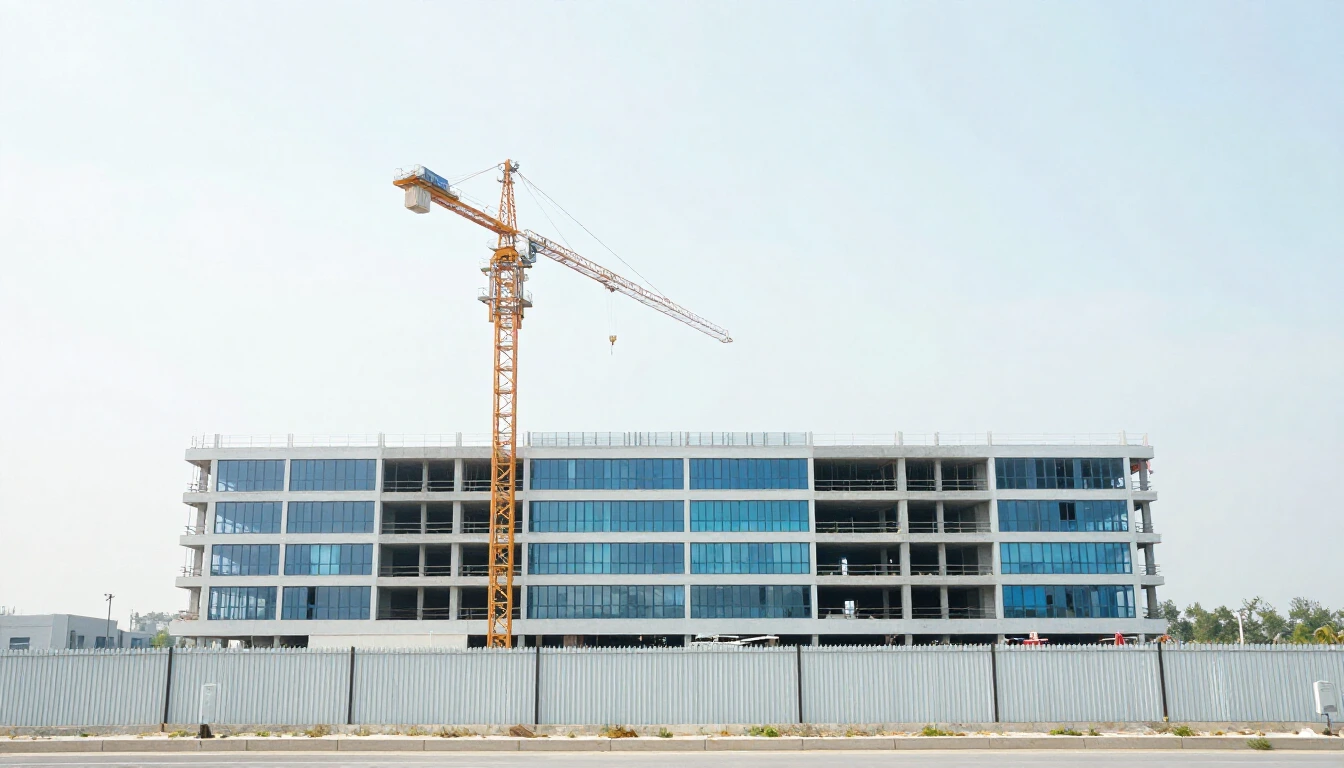
On Friday, November 6, 2026, a construction fence in the west of Amsterdam was cut open. Protesters walked onto the site of a data center being built for Microsoft, climbed a crane and hung banners. By the evening, riot police had cleared the site. The next day, police said 218 people had been arrested on suspicion of trespassing; all have been released.
A data center used to be a building you drove past without noticing. Now it is the target of a street protest, part of coordinated actions across Europe. Here is what happened, what is confirmed and what is only claimed, why people are angry, what the other side says, and what it means for companies and users.
Key takeaways
- What happened. Protesters entered the construction site of a data center leased to Microsoft in Amsterdam-West. A Reuters witness saw around 100 people on the site; the organisers spoke of several hundred. Police first estimated 150 to 200 arrests for trespassing; the final count, a police spokesperson told the Dutch news agency ANP, was 218.
- Part of a European campaign. A coalition called Stop Dirty Data Centres wants a moratorium on large data centers. Reuters reported actions in 16 countries, the organisers told AP and AFP 15. The coalition’s website lists 85 events, many of them talks and walks, not site protests.
- The site. Developer Pure DC builds three 85-metre towers with 78 MW of data halls for more than €1 billion. It says cooling uses non-potable water from the port, not drinking water.
- The bigger fight is about the grid. The European Commission, citing the International Energy Agency, puts EU data center electricity use at 70 TWh in 2024, heading towards 115 TWh by 2030. Amsterdam admits no new large data centers since June 2025. In Ireland, data centers used 22% of metered electricity in 2024.
- Both sides have a point. Europe wants its own computing capacity, and Microsoft promised to grow its European data center capacity by 40%. Citizens worry about power bills, water and housing.
Products Worth Considering

Jackery Explorer 300 Portable Power Station, 292Wh

Bose Lifestyle Ultra Wireless Home Speaker

LG UltraGear 32GS60QC-B 32-inch Curved QHD Gaming Monitor (180Hz, 1ms, 1000R, AMD FreeSync, HDR10)
As an affiliate, we earn on qualifying purchases.
What happened in Amsterdam, step by step
The site is in Westpoort, the port area near Sloterdijk station. Based on the police statements reported by ANP, NOS and the local broadcaster AT5, the day went like this.
Before noon. A climate group, Fossil Free Netherlands, had planned a protest next to the site for 12:00, at a location agreed with police outside the fence. On the way, officers stopped demonstrators carrying an angle grinder and climbing gear. After repeated calls to hand them over, police say, this “led to resistance and with it confrontations”.
Around noon. The Dutch collective Geef Tegengas (“push back”) entered the site. Police say a fence was cut open. Some climbed a crane and the roof of the building, lit flares and hung banners against AI and against Microsoft; some banners linked Microsoft to the war in Gaza, and AP reported that pro-Palestinian activists joined.
Afternoon. Police gave those on the site 10 minutes to leave, AT5 reported. Some left; riot police cleared the rest. One officer was slightly injured. Police first reported one arrest, then an estimate of 150 to 200 people arrested on suspicion of trespassing.
Saturday. A police spokesperson told ANP that all 218 people arrested had been released, one after a night in a cell. The site owner has filed a complaint for trespassing, vandalism and burglary, and police say some carried items probably taken from the site. Those are allegations; no court has ruled on them. Business Insider reports the same group had already blocked the site in June 2026.
Confirmed, and claimed. Several independent sources confirm the entry, the crane, the clearance and the arrests. The crowd size is not settled: around 100 on the site according to a Reuters witness, several hundred according to the organisers, about 400 in total according to a campaigner quoted by Bloomberg. A claim that the site had earlier been hit with balloons of an acidic mixture appeared in one report only, with no police confirmation, so we leave it out.

What the companies say
Microsoft is the tenant, not the builder; the developer is the British company Pure DC. Microsoft’s statement to several outlets reads: “We understand that people feel strongly about the project, and we respect their right to express those views peacefully. However, we do not condone any actions that are unlawful or that put people’s safety at risk. The wellbeing of everyone at and around the site, including workers, staff and neighbors is our first concern.”
Pure DC told Reuters: “We respectfully ask those on site to leave safely and engage with us in dialogue about the development and any concerns they may have.”
The same day, Pure DC published its own figures for the project, called AMS01:
- three towers of 85 metres with 26 MW of data halls each, 78 MW in total, and its own substation;
- more than €1 billion of investment;
- a peak construction workforce of 1,100 in 2027, then more than 80 permanent jobs;
- about €4 million a year in taxes and revenues for the city;
- a design power usage effectiveness below 1.18, better than the Dutch target of 1.2;
- cooling with non-potable water from the port’s industrial supply, which “does not draw on drinking water”;
- a design to export waste heat, with the heat exchange still being planned with Vattenfall.
Why the anger
The coalition behind the protests lists its reasons: energy bills, grid connections that housing needs, water in hot summers, climate goals, few local jobs, surveillance and military use of AI, and the power of big tech. It calls for “an immediate moratorium on large data centres in Europe”. It told Reuters it is not against progress and does not want existing data centers closed, only a pause on large new ones until governments set clearer rules. Here is how the main arguments hold up against primary sources.
Electricity. The strongest argument. The European Commission, citing the International Energy Agency, says data centers use about 415 TWh worldwide, about 1.5% of all electricity, on course for 945 TWh by 2030, mainly because of AI. For the EU, the IEA estimates 70 TWh in 2024, heading towards 115 TWh by 2030. For scale: all 78 MW of the Amsterdam site at full load for a whole year would be about 0.68 TWh, our own upper-limit arithmetic without cooling.
The grid, and housing. In Amsterdam, grid space is the bottleneck. The grid operator Liander says the city has admitted no new large data centers since June 11, 2025, so it needs three fewer substations and saves about €125 million, space that can go to homes instead. The big grid expansions are expected around 2035. Activists claim the new site will use as much power as every household in Amsterdam and could hold up 30,000 new homes; we found no official figure for either claim.
Ireland shows where it can lead. Ireland’s statistics office says data centers used 22% of the country’s metered electricity in 2024, up from 5% in 2015, more than all urban homes together at 18%.
Water. Geef Tegengas says the data center is “gulping up our drinking water”. Pure DC says it uses non-potable water from the port. Only official figures can settle that; under EU rules, large data centers now report their energy and water use.
Jobs and heat. The numbers support part of the critics’ case: 1,100 construction workers at the peak, but about 80 permanent jobs for a €1 billion investment. Supporters point to taxes, local contractors and digital capacity in Europe. Waste heat could warm homes, but here it is still a design option.
Europe wants more data centers, and fewer problems
This is the tension at the heart of the story. The EU aims to triple its data center capacity within five to seven years, the European Commission writes. Microsoft announced in April 2025 that it would “increase our European datacenter capacity by 40% over the next two years” and “more than double” it between 2023 and 2027.
EU tech chief Henna Virkkunen told Reuters on Thursday: “AI, of course, is a super important technology and we need to have our own capacity.” But, she added, “it’s very important for citizens that they can trust that their energy bills are not skyrocketing and there’s not electricity blackouts because of data centres, or they are not destroying the environment with these projects.”
Brussels answers with transparency first. On September 21, 2026, the Commission proposed a common rating scheme so that energy and water use can be compared. Minimum performance standards are next: a public consultation is open until December 14, a proposal is planned for the second quarter of 2027.
In the United States the fight is louder. This week, voters rejected most local data center measures on their ballots, as we reported in Voters Said No to Data Centers, and technology stocks fell sharply on concern that a Democratic Congress means tougher rules, which we covered in The Nasdaq’s Worst Day in 19 Months. Europe argues less about ballots and more about permits and grid connections. Reuters also notes a criminal probe into a Google project in Finland over land clearances and tighter environmental rules in Italy and Portugal.
Infographic 01 · What happened, and what is only claimed
One day at a data center construction site
The police account as reported by Dutch media, checked against independent reporting. What we could not confirm stays out.
People arrested on suspicion of trespassing on November 6, 2026, all released by the next day, according to a police spokesperson quoted by ANP.
How many were there?
The sources do not agree; we give the range
- Before noonGroup stopped on the way with an angle grinder and climbing gearPolice: "resistance and with it confrontations"✓ Police account
- Around noonFence cut open; people on the site, on a crane and on the roofReuters witness: around 100 on the site; organisers: several hundred✓ Confirmed
- Afternoon10 minutes to leave, then riot police clear the siteOne officer slightly injured✓ Confirmed
- EveningPolice estimate: 150 to 200 arrests for suspected trespassing✓ Confirmed
- SaturdayFinal count 218, all releasedComplaint by the site owner for trespassing, vandalism and burglary: allegations, no ruling! Alleged
- Online claimSite attacked earlier with balloons of an acidic mixtureOne report only, no police confirmation✕ Left out
Sources: police statements via ANP, NOS and AT5 / NH Nieuws · Reuters · AP.
Powered by Thorsten Meyer AI
What it means for business
Site risk is a real cost. A permit is not the end of the story. Fully legal projects can still meet protests, delays and political pressure. Budget time for local opposition the way you budget for construction risk.
Grid access decides where AI runs. In crowded cities like Amsterdam, new large data centers no longer get power. Capacity moves to regions with free grid space, or it waits.
Reputation travels with the tenant. Pure DC builds the site, but the banners named Microsoft.
What operators can do. Publish energy and water figures early, deliver waste heat instead of only designing for it, explain local benefits in numbers, and talk to neighbours before the cranes arrive.
For companies that buy AI. Ask your providers where your workloads run, how that site is powered and cooled, and how grid limits may affect price and capacity. Power and grid costs end up in the price of compute.
What it means for citizens and users
What one AI request costs. Google is one of the few companies that has published a figure: in August 2025 it estimated that a median text prompt to its Gemini app uses 0.24 Wh of electricity and 0.26 millilitres of water, based on May 2025 data. That is Google’s own estimate, not independently checked, and it covers simple text prompts, not images, video or long agent tasks.
How to have a say, lawfully. Data centers go through permits and zoning plans, and municipal planning procedures are public and allow objections. At EU level, the Commission’s consultation on minimum performance standards is open until December 14.
Infographic 02 · The power question
The fight is about the grid
The strongest argument against new AI data centers is electricity. These are the official figures behind it.
Where EU data center electricity use is heading by 2030, from 70 TWh in 2024, according to the European Commission citing the IEA.
Data centers vs. homes in Ireland, 2024
Share of metered electricity
Sources: European Commission, citing the IEA · CSO Ireland · Liander · Pure DC.
Powered by Thorsten Meyer AI
Our view
Police treat the entry as trespassing; whether anyone is charged is open. The question behind the protest does not go away with the arrests. Europe wants its own AI capacity, and it wants affordable power, water in summer and room for housing. In crowded places, both cannot grow without limits. Amsterdam has decided: no new large data centers in the city. Other regions will have to decide too, and the clearer the facts on energy, water and jobs, the less room there is for hype and for fear.
What we know, and what we don’t
What we know. On November 6, 2026, protesters entered the site of a 78 MW data center leased to Microsoft in Amsterdam. Police arrested 218 people for suspected trespassing and released all of them. The protest was part of a European campaign for a moratorium on large data centers.
What we don’t know. How many people took part, what damage was done, whether anyone will be charged, and how many listed actions elsewhere took place.
What to watch. Whether anyone is charged, what the operators publish under the new EU reporting rules, the outcome of the EU consultation on minimum standards, and whether other cities follow Amsterdam’s stop.
I’m Thorsten Meyer. The full sources are below, and more reality checks are at thorstenmeyerai.com.
Sources
- NOS: ME ingezet bij ontruiming bezet bouwterrein datacenter Microsoft in Amsterdam, November 6, 2026 (police statements, Microsoft statement)
- ANP via nieuws.nl: Politie houdt 150 tot 200 demonstranten aan bij datacentrum, November 6, 2026
- NH Nieuws / AT5: Protest datacenter Microsoft, November 6, 2026, and Alle 218 aangehouden demonstranten weer vrij, November 7, 2026
- Reuters, as published by CNA: Protesters enter Microsoft data centre site in Amsterdam and Activists breach Microsoft data centre construction site as protests spread in Europe, November 6, 2026
- AP, as published by CNA: Protesters break into Microsoft data centre site in Amsterdam as Europe’s backlash spreads, November 7, 2026
- Al Jazeera with AFP and AP: Protesters break into Microsoft data centre site in Amsterdam, November 6, 2026
- Business Insider: Anti-AI protesters break into Microsoft data center site in Amsterdam, November 6, 2026
- Gizmodo: More Than 100 Protesters Storm a Microsoft Data Center Site in Amsterdam, November 6, 2026 (citing Bloomberg; Bloomberg itself paywalled)
- Tom’s Hardware: Protesters storm Microsoft AI data center construction site, November 6, 2026 (the “85” figure, traced to the coalition’s website)
- Stop Dirty Data Centres coalition website (StopDirtyDataCentres.eu), read November 7, 2026
- Pure DC: AMS01 project page, press release of December 19, 2025 and Building Amsterdam’s digital economy: inside AMS01, November 6, 2026
- Liander: Elektriciteitsnet hoeft minder verzwaard door strikt datacenterbeleid, 2025
- Computable: Amsterdam scherpt stop nieuwe datacenters aan, April 18, 2025 (the alderman’s letter to the city council)
- European Commission: Energy performance of data centres and In focus: Data centres, an energy-hungry challenge, November 17, 2025 (both citing the IEA report “Energy and AI”)
- Central Statistics Office Ireland: Data Centres Metered Electricity Consumption 2024
- Microsoft: Microsoft announces new European digital commitments, April 30, 2025
- Google Cloud: Measuring the environmental impact of AI inference, August 21, 2025
Researched and drafted with AI assistance, including Anthropic’s Claude. Not legal advice and not investment advice.