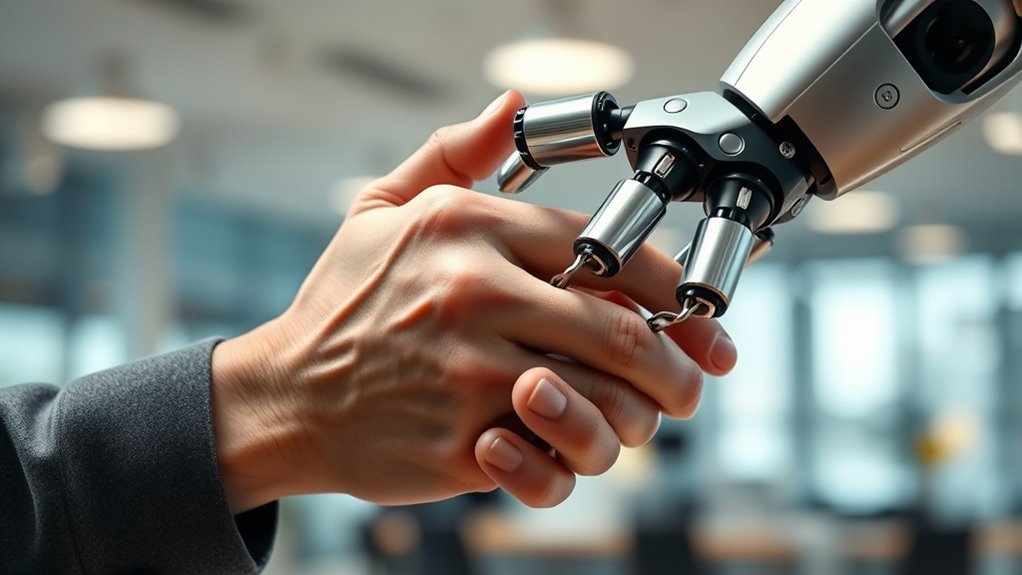

You can’t replicate genuine human emotions or come up with original ideas with AI alone. Empathy helps you connect deeply with customers, patients, or colleagues, fostering trust and understanding that technology can’t match. Creativity involves intuition and cultural context, which only humans possess. Relying solely on AI risks losing these essential skills and making decisions without moral judgment. If you want to explore more about how human qualities still matter, keep exploring this crucial topic.
Key Takeaways
- Empathy fosters genuine human connections, building trust and loyalty that AI cannot replicate.
- Creativity involves intuition, emotional nuance, and cultural insight, surpassing AI’s pattern-based outputs.
- Human judgment and soft skills are essential for ethical, complex, and ambiguous decision-making.
- Authentic personal attention and emotional awareness deepen relationships and improve service quality.
- A hybrid approach combining AI efficiency with human empathy and creativity ensures better outcomes.
The Limitations of AI in Understanding Human Emotions

While AI has made significant advances in data analysis and automation, it still struggles to truly understand human emotions. You might think that sophisticated algorithms can recognize feelings through facial expressions or tone, but AI lacks genuine emotional insight. It processes patterns without experiencing empathy, meaning it can’t grasp the context or nuance behind a person’s feelings. For example, a chatbot may detect frustration but won’t understand the frustration’s cause or depth. This limitation impacts roles requiring emotional intelligence, such as counseling or customer service. AI may simulate understanding, but it cannot replace the human capacity to connect, respond with genuine compassion, or adapt to complex emotional cues. Emotional awareness remains a distinctly human trait that AI simply can’t replicate authentically.
Why Creativity Remains a Human Stronghold

Have you ever wondered why creativity remains uniquely human despite AI’s rapid advancements? It’s because creativity involves more than pattern recognition or data processing; it requires original thinking, intuition, and emotional nuance that machines can’t replicate. While AI can generate art, music, or ideas based on existing data, it lacks the genuine inspiration and personal experience that spark true innovation. Human creativity combines imagination with cultural context, moral judgment, and a sense of purpose—elements AI cannot grasp. You bring unique perspectives, unpredictable insights, and emotional depth to your work, which fuels breakthroughs that machines simply can’t produce. Additionally, emotional nuance plays a crucial role in meaningful creative endeavors that AI cannot authentically emulate. As AI enhances productivity, your creative skills remain essential for solving complex problems and shaping meaningful, authentic experiences.
The Significance of Empathy in Customer and Patient Care

You play a crucial role in building genuine connections with your customers and patients, showing that you truly understand their needs. Steering emotional contexts helps you respond thoughtfully, fostering trust and comfort. Empathy turns routine interactions into meaningful experiences that improve care and loyalty. Additionally, demonstrating authenticity and trustworthiness enhances the overall relationship and encourages continued engagement.
Building Genuine Connections
Empathy remains a vital foundation for building genuine connections in customer and patient care, even as AI tools become more prevalent. You can’t replace the human touch—people seek understanding, warmth, and trust. When you show genuine concern, you build rapport that fosters loyalty and comfort. AI might handle data, but it can’t replicate compassion or intuition. By listening actively and responding sincerely, you create meaningful interactions that matter. Here’s a quick look at how empathy enhances connections:
| Action | Impact | Example |
|---|---|---|
| Active Listening | Builds trust | Reflecting patient concerns |
| Personal Attention | Creates loyalty | Remembering customer preferences |
| Genuine Responses | Fosters emotional bonds | Showing empathy during stress |
| Body Language | Conveys sincerity | Making eye contact |
| Follow-up | Reinforces connection | Checking on patient progress |
Providing personal attention helps to personalize care and deepen the connection with those you serve. Your authentic care makes technology meaningful.
Navigating Emotional Context
Understanding emotional context is indispensable for delivering truly compassionate customer and patient care. You need to recognize not just what someone says, but how they feel behind those words. When you tune into tone, body language, and facial expressions, you gain insights into their emotional state. This awareness allows you to respond with empathy, building trust and comfort. AI might analyze data or suggest responses, but it can’t fully grasp human emotions or adapt to nuanced feelings. Your ability to navigate emotional context ensures you address concerns, fears, or frustrations effectively. By understanding the unspoken, you create a safe space where people feel heard and valued. This emotional intelligence strengthens relationships, improves outcomes, and reinforces the crucial human element in care and service. Additionally, understanding climate control technologies can inform how environments are managed to support emotional well-being, such as maintaining comfortable temperatures that foster calm and focus.
Human Judgment Versus Algorithmic Decision-Making

As artificial intelligence increasingly aids decision-making, the importance of human judgment remains essential in complex and nuanced situations. You play a crucial role in interpreting data, weighing ethical considerations, and understanding context that algorithms can’t fully grasp. AI can process vast amounts of information rapidly, but it lacks the intuition, moral reasoning, and empathy you bring to decisions involving ambiguity or human impact. Your ability to adapt, question assumptions, and consider long-term consequences ensures better outcomes. While algorithms excel at pattern recognition, they fall short in situations requiring moral judgment, cultural awareness, or emotional intelligence. You provide critical oversight, ensuring decisions align with ethical standards and human values—an essential safeguard against purely mechanistic choices. Your judgment remains the cornerstone of responsible, effective decision-making. Developing empathy and kindness can help reinforce the human qualities that machines cannot replicate.
The Role of Social Skills in a Tech-Driven Workplace

In a workplace increasingly shaped by AI, your emotional intelligence gives you a vital advantage. Building genuine human connections can foster trust and collaboration that technology alone can’t replicate. These social skills are essential for creating a workplace where innovation and teamwork thrive. Moreover, developing mental clarity and health through practices like mindfulness or meditation can enhance your ability to empathize and communicate effectively with colleagues.
Emotional Intelligence’s Edge
Despite the rise of AI and automation, social skills like emotional intelligence remain essential in today’s tech-driven workplace. You need these skills to build trust, resolve conflicts, and motivate teams effectively. Emotional intelligence helps you read between the lines, understand colleagues’ feelings, and respond appropriately, creating a collaborative environment. As AI handles routine tasks, your ability to connect on a human level becomes a key differentiator. Leaders, customer service reps, and team members who excel in empathy and social awareness can navigate complex situations better than algorithms. This emotional edge enhances communication, fosters loyalty, and drives innovation. Recognizing the importance of environmental considerations can also help in creating more sustainable and respectful workplace practices. In a landscape where machines process data, your capacity for emotional insight keeps your work meaningful and your relationships strong.
Building Human Connections
Building human connections remains essential in a workplace increasingly driven by technology because social skills enable genuine collaboration and trust. When you actively listen, show empathy, and communicate clearly, you foster relationships that AI cannot replicate. These skills help you navigate complex team dynamics, resolve conflicts, and inspire others. In a hybrid environment, building rapport becomes even more critical for maintaining engagement and morale. Your ability to connect authentically encourages cooperation and innovation, fueling a positive work culture. As AI handles routine tasks, your interpersonal skills become the differentiator that drives success. Developing these skills ensures you remain valuable, adaptable, and capable of leading with emotional intelligence in an evolving, tech-enhanced workplace.
How Human Connection Enhances Collaboration and Innovation

Human connection remains essential for fostering collaboration and driving innovation, even as AI handles routine and analytical tasks. When you build genuine relationships, you create trust that encourages open communication and idea-sharing. This leads to more effective teamwork and creative problem-solving. To maximize this, focus on:
Building genuine relationships fosters trust, open communication, and innovative teamwork.
- Active listening — truly understanding others’ perspectives.
- Empathetic engagement — showing genuine care and understanding.
- Shared purpose — aligning goals to motivate collective effort.
These elements boost morale and spark fresh ideas. Human connection fuels an environment where diverse viewpoints flourish, and innovation thrives. While AI can process data, it’s your emotional intelligence and personal bonds that *disclose* breakthrough solutions and foster a culture of continuous improvement. Additionally, practicing mindfulness techniques such as active listening can further enhance your ability to connect authentically. Ultimately, human connection makes collaboration more meaningful and innovative.
Jobs That Rely Heavily on Human-Centric Skills

Jobs that require strong human-centric skills continue to thrive because they rely on qualities that AI cannot replicate, such as empathy, communication, and relationship-building. You excel in roles like healthcare providers, educators, counselors, and social workers, where understanding emotional nuances is essential. These jobs demand active listening, compassion, and trust—areas where AI falls short. Customer service and sales roles also depend heavily on human interaction, negotiation, and personalized problem-solving. Leadership positions, too, rely on emotional intelligence to motivate teams and manage conflicts effectively. In these roles, your ability to connect authentically and adapt to complex social dynamics remains irreplaceable. As AI advances, these skills become even more valuable, reinforcing your importance in the workforce. Additionally, emotional intelligence plays a critical role in navigating complex social environments that AI cannot easily interpret or respond to effectively.
The Risks of Over-Reliance on AI for Complex Tasks

Relying too much on AI for complex tasks can erode your own judgment and decision-making skills. Overdependence might lead to mistakes when human intuition and experience are needed most. Plus, excessive automation risks stifling creativity and innovative thinking in the workplace. Additionally, vulnerabilities in AI models, such as bias in AI outputs, can introduce unforeseen errors or unfairness into decision-making processes.
Loss of Human Judgment
As AI becomes more integrated into decision-making processes, there’s a growing risk that overdependence could diminish essential human judgment, especially in complex or ambiguous situations. When you rely too heavily on algorithms, you may overlook nuances that only a human can perceive. This can lead to poor decisions, missed opportunities, or unintended consequences. Consider these risks:
- Loss of critical thinking skills due to automation of judgment calls.
- Reduced ability to adapt when AI outputs are flawed or incomplete.
- Overconfidence in data-driven decisions, ignoring ethical or contextual factors.
Without human oversight, you risk making choices that lack empathy, moral consideration, or strategic insight. Balancing AI with human judgment remains essential to navigate complex challenges effectively.
Overdependence Risks Rise
While AI can handle complex tasks with impressive efficiency, overdependence on it can introduce significant risks. Relying too heavily on AI may reduce your ability to think critically and make nuanced decisions, especially in unpredictable situations. If you trust AI to manage all aspects of complex projects, you might miss subtle contextual cues only humans can perceive. Overdependence can also lead to skill erosion, leaving you less prepared if AI systems fail or produce errors. Additionally, excessive reliance on AI could diminish your capacity for creativity and emotional insight, essential in roles demanding empathy and innovative thinking. To mitigate these risks, you need to maintain a balance—embracing AI as a tool, not a substitute, and continually honing your human skills.
Creativity Suppression Concerns
Overdependence on AI for complex tasks can inadvertently suppress creativity by encouraging automation over innovation. When you rely heavily on AI, you might stop exploring new ideas or thinking outside the box. This can limit your problem-solving skills and reduce the human touch necessary for originality. To avoid this, consider:
- Relying on AI for routine analysis but maintaining your own creative input.
- Challenging AI-generated solutions with alternative perspectives.
- Prioritizing brainstorming and experimentation outside AI’s scope.
Overusing AI risks creating a mindset that values efficiency over originality. While AI can support your work, true innovation demands human imagination. Balancing AI assistance with your creative instincts is essential to keep your skills sharp and your work meaningful.
Developing Soft Skills in an AI-Augmented Environment

In an AI-augmented workplace, developing soft skills like empathy, communication, and emotional intelligence is more critical than ever. These skills help you build trust, navigate complex human interactions, and foster collaboration that AI can’t replicate. To strengthen these abilities, focus on active listening, genuine engagement, and understanding different perspectives. Practice emotional awareness to better respond to colleagues’ needs and concerns. Emphasize clear, empathetic communication to bridge gaps created by technological barriers. Continually seek feedback and reflect on your interpersonal strengths. As AI streamlines routine tasks, your ability to connect on a human level becomes a competitive advantage. Investing in soft skills ensures you remain adaptable, valued, and capable of leading in an environment where human qualities complement technological progress.
Embracing a Hybrid Approach: Merging Technology With Humanity

As organizations increasingly integrate AI into their workflows, adopting a hybrid approach that combines technological efficiency with human insight becomes indispensable. This strategy leverages AI’s strengths while highlighting uniquely human skills. To succeed, you should focus on:
- Enhancing decision-making by using AI for data analysis, but applying your judgment for complex issues.
- Fostering collaboration where AI handles routine tasks, freeing you to build relationships and innovate.
- Continuous learning by updating your skills in AI tools while sharpening emotional intelligence and creativity.
This blend not only boosts productivity but also preserves the human element crucial for empathy, problem-solving, and leadership. Embracing this hybrid model ensures you stay adaptable and relevant in an AI-augmented workplace.
Frequently Asked Questions
Can AI Genuinely Understand and Respond to Complex Human Emotions?
AI can’t genuinely understand or respond to complex human emotions. While it can analyze patterns and simulate empathy through programmed responses, it lacks true emotional awareness. You should recognize its limitations—AI can support emotional tasks but doesn’t feel or empathize like humans. Your role involves applying genuine empathy, intuition, and emotional intelligence, which AI can’t replicate. Keep focusing on these uniquely human skills to stand out in the workforce.
Why Is Creativity Still Considered Uniquely Human Despite Advanced AI Capabilities?
You might find it surprising, but creativity remains uniquely human because it’s rooted in intuition, emotion, and personal experience—qualities AI can’t truly replicate. While AI can generate ideas or mimic styles, it lacks the conscious inspiration and emotional depth that spark original thinking. Your ability to imagine, dream, and connect disparate concepts drives innovation, making creativity an inherently human trait that AI can support but never fully replace.
How Does Empathy Improve Outcomes in Healthcare and Customer Service Roles?
Empathy enhances healthcare and customer service by building trust and understanding with clients. When you show genuine concern, you make people feel valued and respected, which improves cooperation and satisfaction. This emotional connection leads to better diagnosis accuracy, personalized care, and loyal customers. Your ability to listen and respond compassionately can defuse conflicts, foster positive relationships, and ultimately drive better outcomes for health and business success alike.
When Should Human Judgment Override AI Recommendations in Decision-Making?
You should override AI recommendations when human judgment better accounts for context, ethics, or emotional nuances. Since 46% of leaders see skill gaps as major barriers to AI adoption, relying solely on AI can overlook critical factors. Your intuition and experience are essential in complex situations, especially where moral considerations or unique circumstances are involved, ensuring decisions align with human values and societal norms.
Which Social Skills Are Most Critical for Effective Collaboration in Ai-Augmented Workplaces?
You need strong communication, emotional intelligence, and teamwork skills to collaborate effectively in AI-augmented workplaces. Active listening helps you understand different perspectives, while empathy fosters trust and rapport among colleagues. Adaptability and resilience allow you to navigate rapid changes, and negotiation skills help resolve conflicts. By combining these social skills, you enhance innovation, strengthen relationships, and guarantee that human insights complement AI’s capabilities for ideal teamwork and productivity.
Conclusion
So, as you stand at this crossroads, remember that no matter how smart AI gets, it can’t replace the heartbeat of human kindness or the spark of creativity that lights up a room. Without you, the world would be a dull, gray place—like a painter without colors or a song without melody. Embrace your unique skills, because in the grand masterpiece of life, you’re the essential brushstroke AI can’t replicate.