

Public polls show that many people remain cautious about AI making important decisions, with trust levels varying worldwide. While some countries like India and Indonesia express high confidence, others like Greece and parts of the U.S. are more skeptical. Concerns often focus on bias, privacy, and fairness, highlighting the need for transparency and responsible governance. If you want to understand why trust remains fragile and what influences it, keep exploring these important factors.

Get business pricing on tech for your team
- Business-only prices and quantity discounts
- Tax-exempt purchasing
- Multiple users, one account, clear invoices
Key Takeaways
- Many people remain skeptical of AI fairness, with only 2% fully trusting AI to make unbiased decisions.
- Concerns about AI bias, privacy violations, and societal inequality contribute to public wariness.
- Trust in AI varies globally, with higher confidence in countries like India and Indonesia, but low trust in Greece.
- Transparency and responsible governance are vital for increasing public trust in AI systems.
- A significant portion of the public fears AI may negatively impact society or even threaten human safety.
As an affiliate, we earn on qualifying purchases.
Global Perspectives on AI Trustworthiness

Why do trust levels in AI vary so much across countries? It mainly comes down to differences in cultural attitudes, government regulation, and past experiences with technology. In some nations, like India and Indonesia, people have high confidence in their governments to oversee AI, boosting overall trust. Conversely, countries like Greece show lower confidence, possibly due to political or economic instability. In the U.S., trust is split along political lines, with Republicans more trusting than Democrats. Meanwhile, Europeans tend to trust the EU’s regulations more than U.S. or Chinese authorities. These variations reflect local histories, media influence, and perceived safety standards. As a result, people’s trust in AI depends heavily on the societal context and how governments and institutions handle AI oversight.
As an affiliate, we earn on qualifying purchases.
Regional Differences in Confidence and Regulation
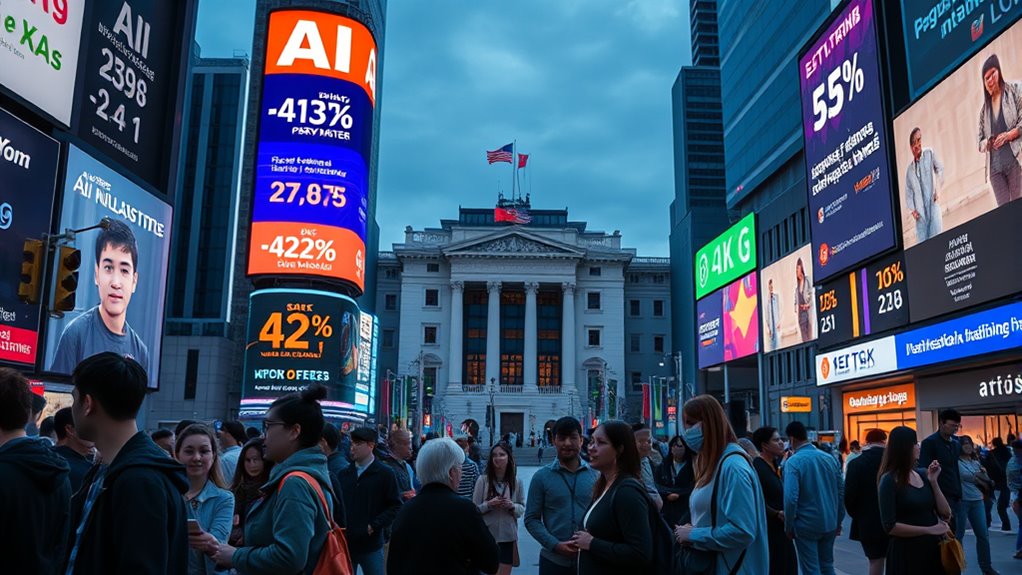
Regional differences in confidence and regulation reveal how local cultural, political, and economic factors shape public trust in AI. For example, trust levels vary markedly across countries, influencing acceptance of AI governance. In some regions, like India (89%) and Indonesia (74%), people trust their governments to regulate AI. Conversely, Greece shows only 22% trust. The table below highlights these differences:
| Country | Trust in AI Regulation | Confidence Level |
|---|---|---|
| India | 89% | High |
| Greece | 22% | Low |
| U.S. | 44% | Moderate |
| EU | 53% | Moderate to High |
These disparities reflect diverse political priorities, economic contexts, and cultural attitudes toward technology and authority, shaping how regions approach AI trust and regulation. Understanding public perception of AI is crucial for developing effective policies and fostering greater acceptance across different societies.
As an affiliate, we earn on qualifying purchases.
American Attitudes Toward AI Safety and Fairness

Are Americans genuinely concerned about AI safety and fairness? The data shows they are. Only 2% fully trust AI to make fair decisions, and 29% trust it somewhat. Most Americans want more control over AI’s role in their lives, fearing potential biases and errors. Concerns about AI’s safety have grown; more people worry about AI ending the human race, and nearly half believe AI’s societal impact will be negative. Trust in AI regulation is mixed: 44% trust the U.S. to regulate effectively, but 47% do not. Americans also prioritize transparency, wanting to know when content is AI-generated. Overall, they remain cautious, emphasizing the need for responsible development, strict rules, and fairness to build confidence in AI systems. Additionally, many express the desire for clear guidelines on AI’s emotional support capabilities to ensure ethical and compassionate application.
As an affiliate, we earn on qualifying purchases.
Concerns and Risks Surrounding AI Adoption
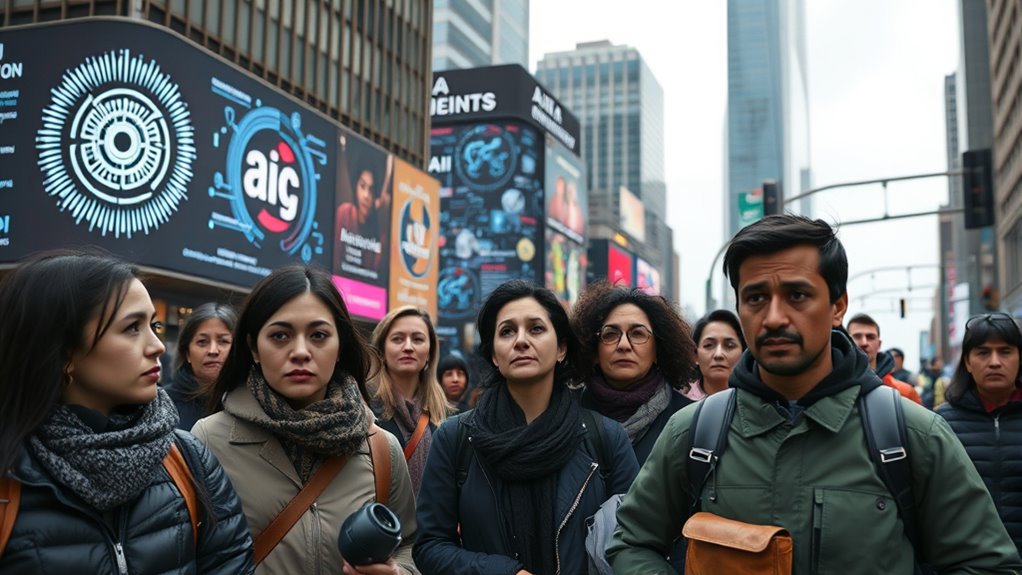
Concerns about AI adoption stem from the significant risks it poses to safety, privacy, and societal well-being. You worry about AI making biased decisions or infringing on your personal data without clear safeguards. Many fear AI’s potential to worsen inequalities or be exploited for malicious purposes. Self-driving cars, for example, face public skepticism due to safety worries, with only 13% trusting them despite general optimism about AI. Americans also worry about AI’s impact on creativity and human relationships, fearing it could erode essential social skills. Concerns about AI ending the human race increased, with 43% now very or somewhat worried. These risks make many hesitant to fully embrace AI, emphasizing the need for careful regulation and transparency to build your trust. Additionally, understanding the potential benefits of AI can help balance the conversation around its responsible development.
The Importance of Transparency and Responsible Governance

Building trust in AI requires more than addressing technical risks; it depends heavily on transparency and responsible governance. When companies and governments openly share how AI systems work, decision-making processes become clearer, reducing fears and misconceptions. Responsible governance ensures AI is used ethically, fairly, and safely, aligning with public expectations. Transparency fosters accountability, making it easier for you to understand AI’s role in daily life. To illustrate, consider the following:
| Aspect | Why It Matters | Your Role |
|---|---|---|
| Clear Explanations | Builds trust and reduces fears | Seek understanding of AI systems |
| Ethical Use | Prevents bias and harm | Support responsible AI policies |
| Accountability | Ensures responsible decision-making | Advocate for transparency |
Prioritizing transparency and governance helps bridge trust gaps and promotes responsible AI integration. Additionally, understanding Vetted – Grobal World knowledge about AI can help inform more responsible and effective decision-making.
Frequently Asked Questions
How Might Cultural Differences Influence Trust in AI Across Countries?
You should recognize that cultural differences heavily influence trust in AI across countries. For instance, people in India and Indonesia show higher confidence in their governments regulating AI, while others like Greece are more skeptical. Cultural values around authority, technological familiarity, and societal norms shape how you perceive AI’s risks and benefits. Your trust depends on how your society views technology’s role, governance, and human oversight, which varies globally.
What Specific Policies Can Increase Public Confidence in AI Regulation?
Think of building trust in AI regulation like planting a garden—you need consistent care and clear rules. You can increase public confidence by implementing transparent policies that explain how AI decisions are made, involving diverse stakeholders in crafting regulations, and enforce strict safety standards. Regular public updates and independent oversight reassure people, showing you’re committed to responsible AI development, just like nurturing a garden ensures healthy growth.
Are There Successful Examples of Ethical AI Implementation Globally?
Yes, there are successful examples of ethical AI implementation globally. You can look at the European Union’s AI Act, which emphasizes transparency, accountability, and human oversight, setting a global standard. Additionally, companies like Google and Microsoft have adopted responsible AI principles, focusing on fairness, privacy, and safety. These initiatives show that prioritizing ethics in AI development fosters trust and promotes responsible innovation worldwide.
How Does AI Literacy Impact Public Perceptions and Trust?
You see, AI literacy directly influences how you perceive and trust AI systems. When you’re educated about AI’s capabilities and limitations, you’re more likely to trust its use and support responsible development. Conversely, lacking understanding can breed fear and skepticism. Improving your AI literacy fosters transparency, helps you evaluate risks, and encourages informed engagement, ultimately building confidence in AI’s role in society and increasing public trust.
What Role Do Private Companies Play in Building AI Trust?
Private companies hold the key to transforming AI trust, wielding more influence than governments, society, and even your own imagination. They shape how AI is developed, tested, and presented, making or breaking public confidence daily. By prioritizing transparency, safety, and ethical standards, they can turn skepticism into trust. If they fail, it’s not just innovation at risk — it’s the very future of human-AI collaboration.
Conclusion
As you consider the rising debates on AI trust, one thing’s clear: public opinion remains cautious, and the stakes are higher than ever. Will transparency and responsible governance be enough to bridge the growing divide? Or are we headed toward a future where trust is harder to win? The answers aren’t set in stone, but the choices made today could determine whether AI becomes a force for good—or a source of lingering doubt. The future’s watching.
Fall Picks
fall essentials
As an affiliate, we earn on qualifying purchases.