Two of Anthropic’s largest enterprise customers have been steering their own engineers away from Claude, according to a report by The Information on 5 October.

Get business pricing on tech for your team
- Business-only prices and quantity discounts
- Tax-exempt purchasing
- Multiple users, one account, clear invoices
- Meta reportedly cut the number of employees using Claude Code from about 60,000 earlier this year to about 30,000, pushing staff towards its own tools, MetaCode (now past 30,000 internal users) and Muse Code (past 6,000).
- Microsoft had reportedly projected more than $1 billion a year in internal spending on Anthropic’s technology — including Claude Code, Claude models in Copilot and Claude Mythos — and has since cut that projection by more than a third, steering employees towards GitHub Copilot and OpenAI models.
The headlines read it as a verdict on Claude. It isn’t one, and the more useful reading is about something every company buying AI should care about: what it actually takes to move work from one model to another.
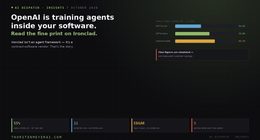
Meta and Microsoft pulled back from Claude. Here’s what switching actually costs.
The Information reports both companies steering their own employees away from Claude. Read as a verdict on Claude, it misleads. Read as a demonstration of switching — and who can afford it — it’s the most useful enterprise-AI signal this month.
Staff steered to GitHub Copilot and OpenAI models; stricter token budgets. One unconfirmed report: some team budgets ~$100k → ~$10k/month.
Microsoft reportedly still spends heavily on Claude for customer-facing Copilot — and that spending is reported to be growing.
Reported drivers: rising token costs and owned alternatives. Neither company is reported to have called Claude worse.
Meta builds coding tools; Microsoft owns Copilot and backs OpenAI. This is ordinary vertical integration.
Keep a second vendor live on real work.
A few hundred tasks with pass criteria.
Logic, prompts, tools in your layer.
Tokens are the cheap half.
Know what you’d rebuild.
On the evidence reported, Meta and Microsoft didn’t reject Claude. They brought spending in-house where they could and kept buying where they couldn’t — Microsoft remains a large Anthropic customer for the products it sells. The signal is the mechanism: the most sophisticated buyers treat models as interchangeable suppliers behind a layer they control.Meta could halve its Claude usage because it had built somewhere else to go. Build somewhere else to go.
What the report does and doesn’t say
Three distinctions matter before drawing any conclusions.
This is internal use, not customers. The reporting concerns Meta’s and Microsoft’s own employees. Microsoft reportedly continues to spend heavily on Anthropic models to power customer-facing Copilot features, and customer spending on Claude through Microsoft’s platforms is reported to be growing. Nothing here ends anyone’s access to Claude.
The stated drivers are cost and in-house tools, not quality. Neither company is reported to have said Claude performed worse. The reported reasons are rising token costs, tighter spending controls, and a push towards tools each company owns or is invested in.
Both buyers are also competitors. Meta builds its own models and coding tools. Microsoft owns GitHub Copilot and is OpenAI’s largest backer. When a customer also sells a rival product, moving its own employees to that product is ordinary vertical integration. It’s the same thing any company does when it builds an in-house alternative to a supplier.
So the honest reading is narrower and more interesting than “two giants dump Claude”: two companies that own credible substitutes chose to use them.
enterprise AI model switching tools
As an affiliate, we earn on qualifying purchases.
As an affiliate, we earn on qualifying purchases.
The lesson: the biggest buyers route
This publication has argued for a year that the safest enterprise AI posture is a router — a layer that lets you send work to more than one model, so no single vendor’s price, policy or availability controls your operations.
Meta and Microsoft just demonstrated it at the largest scale on record. Faced with rising internal costs, they didn’t negotiate harder with one supplier; they moved work to alternatives they already had. Microsoft reportedly paired that with stricter token budgets. One account says some monthly team budgets fell from around $100,000 to around $10,000, though that detail comes from a single report.
The same thing happened to subscription value from the other side this month. SemiAnalysis found that AI subscription limits change silently, sometimes per account, and that list-price cuts quietly reduce what a subscription is worth. Whether you’re buying seats or tokens, the terms move. The only defence is being able to move with them.
AI model evaluation and validation software
As an affiliate, we earn on qualifying purchases.
As an affiliate, we earn on qualifying purchases.
But you aren’t Meta
Here’s the part the headlines skip. Meta and Microsoft could cut Claude Code usage in half because each had a working substitute already deployed: MetaCode and Muse Code at Meta, Copilot and OpenAI models at Microsoft, built by thousands of engineers.
Most companies have nothing of the kind. For a typical enterprise, switching models means paying a set of costs that never appear on a price sheet:
Re-running your evaluations. Every workflow you validated on one model has to be re-validated on the next. If you never built an evaluation set, this is where you discover you can’t measure whether the switch worked.
Reworking prompts and harnesses. Prompts, tool definitions and agent harnesses are tuned to a model’s quirks. Moving them is real engineering work, not a configuration change.
Losing integration depth. Coding agents get their value from tight integration with an editor, a repository and a team’s conventions. A new tool starts that integration from zero.
A productivity dip while people relearn. Engineers build habits around one tool’s strengths and failure modes. Switching costs weeks of reduced output while those habits are rebuilt.
Losing cache economics. Agentic work is mostly re-reading cached context. Moving providers resets those caches and changes cache pricing, which can dominate the bill for agent workloads.
Quality risk, and the review it brings. If the new model is weaker on your tasks, the difference doesn’t show up as an error. It shows up as more review time, more rework and more mistakes that get through. That’s the hardest cost to see and often the largest.
Meta and Microsoft absorbed these costs because the savings at their scale justified it — for Microsoft, a cut of more than a third on a projected $1 billion-plus is upwards of $300 million a year —, and because they had built the substitutes anyway. For a company spending $20,000 a month, the switching cost may well exceed a year of savings.
As an affiliate, we earn on qualifying purchases.
The playbook: be able to switch, even if you don’t
The lesson isn’t “leave Claude” or “stay with Claude.” It’s to make switching cheap before you need it.
Keep at least two model families in production. Run a second vendor on real work, even a small share of it, so the integration, prompts and habits already exist.
Own your evaluation set. A few hundred representative tasks with clear pass criteria is the single most valuable asset in any model decision. It turns “should we switch?” from an argument into a measurement.
Abstract the model, not just the API. Keep business logic, prompts and tool definitions in your own layer, so changing models doesn’t mean rewriting the application.
Budget per task, measure per accepted result. Token spend is the visible cost. Review and rework are the real ones. Track both, or you’ll optimise the cheap half.
Be wary of harness lock-in. The deepest dependency isn’t the model; it’s proprietary agent features, workflows and context management that only work with one vendor. Use them where they earn their keep, but know what you’d have to rebuild.
AI model cache management software
As an affiliate, we earn on qualifying purchases.
As an affiliate, we earn on qualifying purchases.
The take
On the evidence reported, Meta and Microsoft didn’t reject Claude. They did what large companies with their own alternatives always eventually do: brought spending in-house where they could, and kept buying where they couldn’t — Microsoft is still a large Anthropic customer for the products it sells.
For everyone else, the useful signal is the mechanism. The two most sophisticated AI buyers in the world treat models as interchangeable suppliers behind an internal layer they control. That’s the posture to copy. Not because any particular vendor is about to fail you, but because prices, limits and policies move, and the companies that suffer least are the ones that can move too.
Meta could halve its Claude usage in a year because it had built somewhere else to go. Build somewhere else to go.
Sources: The Information (5 October 2026), as reported by Investing.com/Yahoo Finance, Seeking Alpha, PYMNTS, Stocktwits, Crypto Briefing and Cyberpress — Meta Claude Code users ~60,000 → ~30,000; MetaCode >30,000 and Muse Code >6,000 internal users; Microsoft’s >$1 billion internal projection cut by more than a third; Microsoft steering to GitHub Copilot and OpenAI models; continued and growing customer-facing spending on Anthropic models through Microsoft. The $100,000 → ~$10,000 monthly-budget figure appears in a single secondary report (Crypto Briefing) and is unconfirmed. SemiAnalysis subscription findings (5 October 2026) as covered in this publication. The switching-cost framework is the author’s analysis, not drawn from the reporting. Neither Meta, Microsoft nor Anthropic is quoted in the coverage reviewed. Not investment advice. Analysis and framing are the author’s.
Halloween Picks
halloween
As an affiliate, we earn on qualifying purchases.