By Thorsten Meyer | November 26, 2026 | ThorstenMeyerAI.com

Get business pricing on tech for your team
- Business-only prices and quantity discounts
- Tax-exempt purchasing
- Multiple users, one account, clear invoices
From December 9, the music service Tidal will remove songs made entirely by AI and refuse new ones. Most of us can’t hear the difference, so a machine has to decide which songs go. This article explains how that machine works, where it fails, and what that means for you as a listener or an artist.
This is the written companion to our deep-dive video. It follows the same question from start to finish: if our ears can’t tell, how does a machine tell? And what happens when the machine is wrong?
Key takeaways
- The ban: Tidal will remove songs made only by AI and refuse new deliveries of them. Songs where AI was just a helper stay.
- The flood: AI songs now make up a large share of new uploads, yet almost nobody listens to them. The money problem is fake plays.
- The detector: Platforms read tiny traces that a generator leaves in the sound. In the lab this works very well.
- The weak spot: Small edits and brand-new tools can fool the detector. Songs that mix human work and AI are the hardest case.
- The open question: All the error rates we have come from the companies themselves. No independent test exists yet.
Four checks at the counter
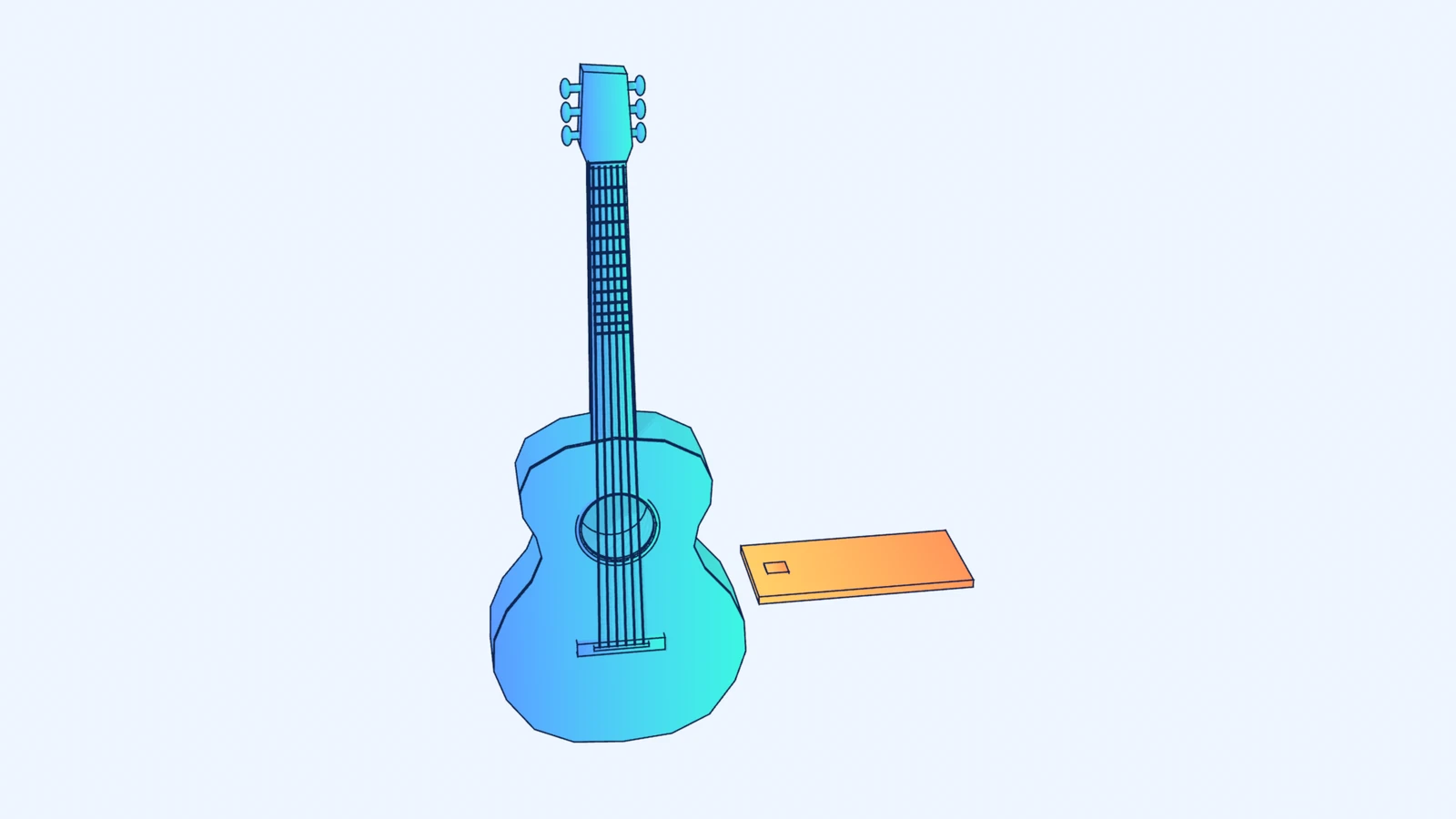
How platforms check a song, the way a shop checks a banknote. The orange dot is the song.
- 1 · The labelRead what is printed on it: the song’s creditsCatches: honest uploaders. Misses: anyone who leaves it blank.
- 2 · The fingerprintCompare it with real ones: known recordingsCatches: copies of known tracks. Misses: brand-new songs.
- 3 · The hidden tracesThe UV lamp: patterns a generator leaves in the soundCatches: fully AI-made songs from known tools. Misses: edited songs and new tools.Carries Tidal’s ban
- 4 · The behaviourWatch who keeps paying: uploads and playsCatches: fraud. Misses: AI as such.
Products Worth Considering

Apple Watch Series 12 GPS 42mm Smartwatch

Jackery HomePower 2000 Plus v2 Portable Power Station, 2048Wh

Bose QuietComfort Wireless Noise Cancelling Headphones, Sandstone
As an affiliate, we earn on qualifying purchases.
What this means for you
If you listen to music on Tidal, you should see fewer fake artists in search and in your recommendations. Elsewhere, you may get a switch instead. Deezer says it will let you filter fully AI-made music out of your searches.
If you make music with AI as a helper, the line is drawn so that your songs stay up. If you make music without AI, there is still a small risk. A detector can flag your song by mistake, and you would have to appeal.
If you pay for streaming, the ban is also about your money. Part of what you pay goes into one shared pot, and fake plays take slices of it.
If your business uses AI music in ads, games or shops, check how that music is labelled. Each platform now draws its own line, and Tidal says its line may move.
Can you even hear the difference?
Put on a song you have never heard. A voice, a guitar, a chorus that sticks. Could you tell if a person made it?
Most of us can’t. Deezer, a streaming service, had the research firm Ipsos run an online survey with 9,000 adults in eight markets. Each person heard three tracks: two made by AI, one made by people. 97% of them got at least one track wrong (Deezer).
Keep in mind who ran the test. Deezer runs its own AI detector and promotes it, so it has an interest in this result. Still, the point stands: our ears are not a reliable test.
Why do so many AI songs get uploaded?
Making a song has become very cheap. A 2024 research paper says you can now create “credible minute-long music deepfakes in a few seconds” (Afchar et al.). A deepfake here simply means a fake song that sounds real.
So the uploads pile up. Deezer checks every new delivery with its own detector. In June 2026, it received nearly 90,000 fully AI-made tracks a day, “more than 50% of total daily deliveries on peak days” (Deezer).
Here is the strange part: almost nobody listens to them. Tidal says 96% of its AI-tagged tracks received zero streams in the last three months, as reported by Music Business Worldwide.
Where is the money in songs nobody plays?
Streaming does not pay a fixed price per play. Spotify says “no major streaming service pays a fixed rate per stream” (Spotify for Artists). Payouts are based on each artist’s share of all streams in a month.
Think of one big pot. Part of what every subscriber pays goes in. Each month, the pot is split by each artist’s share of all plays. The picture has a limit: the pot pays rights holders, such as labels, who then pay the artists under their own contracts. But the share of plays decides the split.
That is why fake plays matter. A bot is a program that pretends to be a listener and presses play again and again. Every bot play takes a tiny slice of the pot away from real artists. Deezer says up to 85% of the streams on fully AI-made tracks were fraudulent in 2025 (Deezer).
What does that look like in a real case?
A man from North Carolina made hundreds of thousands of songs with AI. According to prosecutors, fake accounts then streamed them “billions of times” between 2017 and 2024.
He spread the plays thin, so that no single song stood out. In an email from 2018, quoted by prosecutors, he wrote that “we need a TON of content with small amounts of Streams.” Prosecutors say the scheme brought him more than $8 million in royalties.
He pleaded guilty in March 2026. On October 6, a federal judge in Manhattan sentenced him to 18 months in prison (Music Business Worldwide).
The case shows the pattern platforms now look for: a mountain of songs, each with a few plays, adding up to real money.
What exactly did Tidal decide?
Tidal is a music streaming service owned by the payments company Block. In June, it announced that it would tag fully AI-made music and stop paying royalties for it (Music Business Worldwide).
That did not stop the flood. Tidal says 43% of all tracks delivered to it in the past 90 days were detected as wholly AI-generated. So on November 24, Tidal announced the next step, as reported by Music Business Worldwide:
- From December 9, Tidal will reject and remove “any wholly AI-generated track that’s submitted to Tidal.”
- About 27 million tracks in its catalog carry its AI tag. That is 6.3% of all music on Tidal.
- Distributors may no longer deliver such tracks. A distributor is the middleman that delivers an artist’s songs to all the streaming services.
- Tidal “will reject deliveries if their metadata says they were generated solely using AI tools.”
Picture a shelf of 100 records. About 6 come off, and almost nobody notices, because almost nobody played them.

What does “fully AI-made” mean?
A fully AI-made song is one where the whole recording came out of a generator. Tidal names “tools like Suno, Lyria, and more.” It says 94% of the tracks with its AI badge are attributed to Suno.
A song where a person sings, plays or writes, and uses AI as a helper, stays. In Tidal’s words, tracks “assisted by AI tools, but not the sole outputs, will be allowed on the platform.”
Why draw the line there? Because “fully” is the part a machine can prove. Back in June, Tidal said it would extend its AI tag to “substantially” AI-made music only as its detection methods improve. So the line is not about taste. It follows what detection can do today.
How can a machine spot a song that sounds human?
Let’s borrow a picture from every shop counter. Imagine someone pays you with a fifty-euro note. How do you know it’s real?
You read what’s printed on it. You compare it with a real one. You hold it under a UV lamp. And you notice who keeps paying with big notes.
Streaming services check songs in the same four ways: the label, the fingerprint, the hidden traces and the behaviour. The animation at the top of this article shows all four in a row. Let’s take them one by one.
Check one: what does the song say about itself?
Every song file carries metadata. Metadata is the information attached to a song: title, artist, songwriters and credits.
The music industry now has a shared standard to note AI in the credits, developed through DDEX, an industry standards group. It can say that AI made the vocals, the instruments or the production. Spotify says it already sees “tens of thousands of AI credits submitted daily” (Spotify).
But Spotify also says “the absence of a credit doesn’t mean AI wasn’t used.” That is the limit. The label works for honest uploaders. A scammer simply leaves it blank, like a fake note that doesn’t say “fake”.
Check two: is it a copy of something real?
The tool here is an audio fingerprint. An audio fingerprint is a compact code made from the strongest points in the sound of a recording.
This is how a phone app names a song from a few seconds recorded in a noisy bar. The original Shazam paper describes finding “a short segment of music captured through a cellphone microphone” in a database “of over a million tracks” (Wang, 2003, p. 1). The paper built its fingerprints on “spectrogram peaks”, the loudest points in a picture of the sound (p. 2).
So fingerprints catch copies: a known track uploaded again under a new name. That protects you if you are an artist and someone re-uploads your song as their own. But a brand-new AI song has no original. There is nothing to match.
Check three: what traces does a generator leave?
This is the UV lamp, and it does most of the work.
A generator does not play instruments. It works with numbers. At the very end, a part called the decoder turns those numbers into a sound wave you can play. And the decoder leaves tiny patterns behind.
Deezer calls them “artifacts left behind by generative AI models.” It says they are “usually inaudible to humans” and rarely found in real recorded music (Deezer). A detector learns from many real and generated examples until it spots those patterns. Like a UV lamp, it shows marks your eye can’t see.
How well does it work? In the 2024 lab test, Deezer’s researchers reached “a convincing accuracy of 99.8%” (Afchar et al.). Picture 1,000 songs: 998 judged right, 2 judged wrong.

Is AI detection solved, then?
Not quite. The same researchers titled their paper “Detecting music deepfakes is easy but actually hard.”
They changed the fake songs a little: a small pitch shift, some added noise, or saving the file in another format. The paper says “several scores drop to almost zero.” The fakes were waved through as real (paper, section 3).
Then they trained the detector on one family of generators and tested it on another. The results were “almost always zero.” Think of a UV lamp that only knows last year’s notes. A new printer comes along, and the lamp sees nothing.
Here our picture has a limit. A banknote’s security marks are put there on purpose. AI traces are accidents, and a little editing can wash them out. Training on known tricks helps, the paper found. But the authors warn: “there will always be an unseen manipulation.”
Outside the lab, it gets harder too. A 2026 study tested detectors on real TV broadcasts. It found “substantial score overlap between AI-generated and human-made music” (López-Ayala et al.). In plain words: in real broadcasts, the detectors could no longer tell the two apart well.
Why should you care about decoders? Because these invisible traces are the evidence when a platform deletes someone’s song.
Check four: who keeps paying with big notes?
Platforms also watch how songs arrive and how people play them. Spotify names the spam tactics it looks for: “mass uploads, duplicates, SEO hacks, artificially short track abuse” (Spotify). SEO hacks are keyword tricks in titles that push a song up in search.
Remember the North Carolina case. Plays spread thin across a mountain of songs is a pattern in itself. Behaviour catches fraud even when the sound is perfect. But it finds fraud, not AI as such.
So, four checks. The label catches the honest. The fingerprint catches copies. The traces catch fully generated songs from known tools. And behaviour catches fraud.
Which check carries Tidal’s ban? The traces. Tidal named Ircam Amplify as its detection partner. Ircam Amplify is the commercial subsidiary of the French music research institute IRCAM.
What happens when the detector is wrong?
Take the worst case. You are a human artist, and the detector says your song is fake. This is called a false positive: a wrong alarm, a human song flagged as AI.
A Tidal spokesperson told Rolling Stone: “A small amount of false positives is inevitable.” Artists can appeal (Rolling Stone via Yahoo).
How small is small? Deezer says its tool may wrongly flag “fewer than 1 track out of every 10,000 genuine human-made tracks.” That is its own figure. Let’s make it concrete with a rough estimate of our own. On a busy day, Deezer gets up to about 90,000 human-made songs. At that rate, up to 9 human songs a day could be flagged by mistake.
That is small. But if you are one of those artists, it’s your song that disappears. Deezer’s own researchers warned about this. They compared it to students who “have much trouble proving their good faith” when a checker wrongly flags their essay.
Why are songs with some AI the hardest case?
Many artists now use AI for one part only: a backing track, a drum loop or a vocal effect. That is the grey zone.
A study from this summer tried to find one AI-made part inside an otherwise human song. Splitting the song into its instruments first did not help: the traces of the AI part were “not reliably recovered” (Rigaud et al.).
That is why the middle is where detection is weakest. And it is why Tidal’s line says “fully”.
There is also a clear win for artists. Tidal says it has already taken down more than 65,000 AI tracks over suspected impersonation of artist names.
How do other platforms handle AI music?
Each platform draws its own line:
- Bandcamp bans music “generated wholly or in substantial part by AI” since January 2026 (Bandcamp).
- Deezer tags fully AI-made music, keeps it out of recommendations and removes tracks used for fraud. It says a switch to exclude AI music from search will come “before the end of 2026” (Deezer).
- Spotify does not ban AI music. It says “all music is treated equally, regardless of the tools used to make it,” and goes after spam and impersonation (Spotify).
- Tidal removes fully AI-made songs from December 9.
Same flood, four different answers. I think the key point is this: Tidal isn’t banning a sound. It’s banning a source it can measure.
What do we know, and what don’t we know?
What is documented: Tidal’s ban and its figures come from its own statement, as reported by Music Business Worldwide. We could not open Tidal’s own pages, so we cite that report. Deezer’s figures come from its newsroom. The detection limits come from published research.
What we don’t know yet:
- How many human songs get flagged by mistake. All error rates come from the companies themselves. Ircam Amplify’s CEO puts its false positive rate below 0.02%, also a company claim. What would tell us: an independent test on real uploads.
- Whether the flood just changes shape. A new generator, or an edited song, can slip past a detector trained on older tools. What would tell us: Tidal’s share of AI deliveries after December 9.
- Whether others follow. The biggest services, like Spotify, still label AI music instead of banning it.
So how do you tell that a song was made by AI?
Not with your ears. You look for the traces a generator leaves in the sound, and for the behaviour around the song.
That works well for songs made entirely by known tools. It works much worse for everything in between. Tidal can ban fully AI-made songs because “fully” is the part a machine can prove.
Three things to remember:
- The flood is about money and clutter, not listeners. Almost nobody plays these songs.
- Detectors read traces you can’t hear. They are strong in the lab and weaker when songs are edited or the tools are new.
- The real fight is the middle: human songs with AI parts, and a fair appeal when the machine is wrong.
Further reading on ThorstenMeyerAI.com
- An AI Odyssey, a Digital Ozzy and a Plagiarism Row: What Fans Actually Reject About AI
- Meta and TikTok Join Google Against Indonesia’s AI Copyright Bill. What Is at Stake
Sources
- Music Business Worldwide, “Tidal bans fully AI-generated music from its platform,” Nov 24, 2026 (quotes Tidal’s statement on X; Tidal’s own pages refused our request, so we did not use them)
- Music Business Worldwide, “TIDAL to automatically tag AI-generated music… and block it from earning royalties,” June 2026
- Rolling Stone, “Tidal Is the First Streaming Service to Ban AI Music” (syndicated copy on Yahoo)
- Deezer Newsroom, “AI music tops 50% of daily uploads,” Jul 21, 2026
- Deezer Newsroom, “Deezer confirms 85% of AI streams are fraud, now demonetized,” Jan 29, 2026
- Deezer Newsroom, AI music toggle, Oct 13, 2026
- Deezer Newsroom, Deezer and Ipsos survey, Nov 12, 2025
- Spotify Newsroom, “Spotify strengthens AI protections,” Sep 25, 2025
- Spotify for Artists, Royalties guide
- Bandcamp, “Keeping Bandcamp Human,” Jan 13, 2026
- Music Business Worldwide, sentencing in the AI song and bot streaming case, Oct 7, 2026
- D. Afchar, G. Meseguer-Brocal, R. Hennequin, “Detecting music deepfakes is easy but actually hard,” arXiv:2405.04181, 2024
- F. Rigaud et al., “Detection of AI-generated stems within hybrid human-AI music,” arXiv:2607.26874, 2026
- D. López-Ayala et al., “Assessing AI-generated music detection in real-world broadcast monitoring,” arXiv:2608.07359, 2026
- A. L.-C. Wang, “An Industrial-Strength Audio Search Algorithm,” Shazam Entertainment, 2003
Disclosure: Researched and drafted with AI assistance, including Anthropic’s Claude. The narration in the video is an AI voice clone of Thorsten Meyer. Our own text and graphics contain no affiliate links; offer and product boxes added by the site may contain Amazon affiliate links. Our graphics and 3D pictures are our own and schematic; they show no real people and no logos. Boxes added by the site may show product photos or people. Not investment, legal or tax advice.