
TL;DR
AI engineering moves beyond prototypes. It’s about building, deploying, and maintaining AI systems that work reliably in the real world. Expect concrete examples, practical tips, and insights into what makes AI projects succeed—or fail.
When you think of AI, you might picture futuristic robots or chatbots. But the real magic happens when engineers take those models and turn them into something that actually works—day in, day out. That’s AI engineering in action. It’s about building systems that handle messy data, scale smoothly, and keep running without a hitch.
Imagine a manufacturing plant that uses AI to predict machine failures before they happen. That’s not just a clever idea; it’s a well-oiled AI system running behind the scenes. Today, AI engineering is the backbone of innovations like predictive maintenance, digital twins, and smart factories. This article pulls back the curtain on what it really takes—skills, processes, and the guts it all requires—to make AI work in the wild.
Key Takeaways
- Strong data pipelines are the backbone of dependable AI systems—invest time in cleaning, labeling, and feature engineering.
- Choosing the right model depends on the problem’s complexity and operational constraints. Validation and fine-tuning are ongoing tasks.
- Deployment isn’t just flipping a switch; it requires automation, monitoring, and quick rollback plans to keep AI reliable.
- Infrastructure matters. Scalable, automated workflows support AI performance at enterprise levels.
- Collaboration with stakeholders turns AI from a tech project into a business asset that solves real problems.

Data Science on AWS: Implementing End-to-End, Continuous AI and Machine Learning Pipelines
As an affiliate, we earn on qualifying purchases.
As an affiliate, we earn on qualifying purchases.
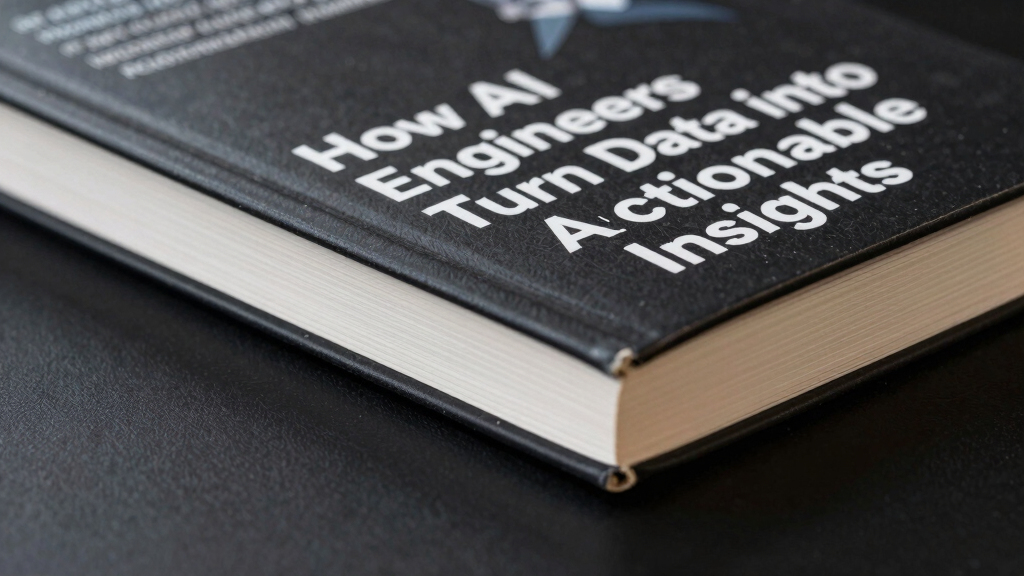
How AI Engineers Turn Data into Actionable Insights
Picture a team collecting sensor data from thousands of industrial machines. They clean it, label it, and craft features to make sense of the chaos. This isn’t just data prep; it’s laying the foundation for AI to make accurate predictions.
For example, a power grid operator feeds real-time data into an AI system that predicts outages. The secret? High-quality data pipelines that transform raw signals into usable inputs. Without this step, even the smartest model won’t be reliable.
Top AI engineers excel at managing these pipelines, using tools like Apache Airflow or Kafka to automate data flow. They also perform exploratory analysis to spot patterns and clean out noise, similar to how rugged action cameras are tested for reliability in tough environments. The goal? Steady, clean streams of data fueling your models.
Deeply managing data quality and pipeline robustness matters because flawed data can lead to false predictions, wasted resources, or even safety hazards. The tradeoff often lies in balancing the effort spent on data cleaning versus the accuracy gains. If you rush data prep, your model might perform poorly in production. Conversely, over-engineering data processes can delay deployment and inflate costs. Striking the right balance is key to building dependable AI systems that function reliably under real-world conditions.

Predictive Maintenance Profits: IoT Sensors That Prevent Costly Equipment Failures
As an affiliate, we earn on qualifying purchases.
As an affiliate, we earn on qualifying purchases.
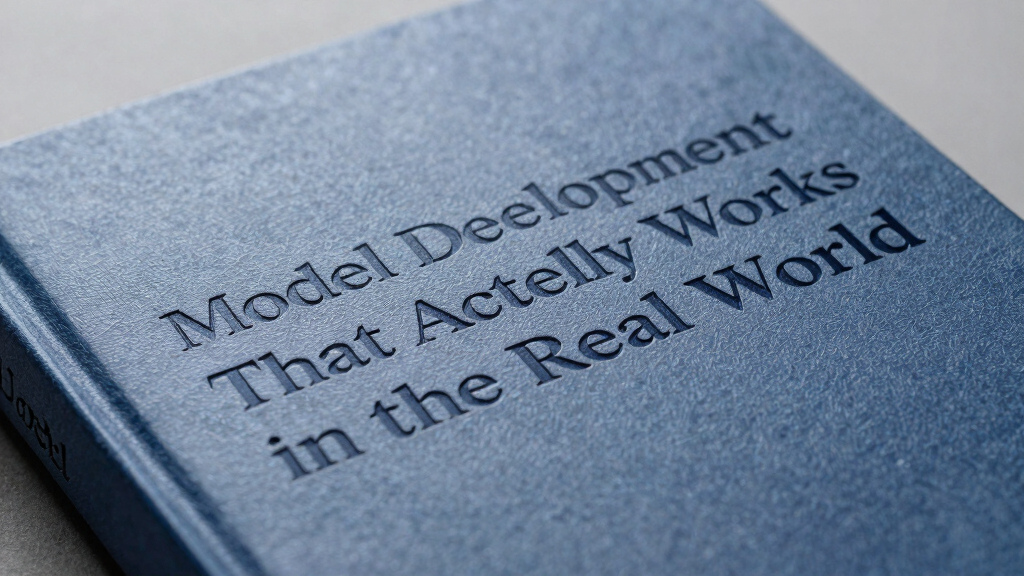
Model Development That Actually Works in the Real World
Once the data is ready, engineers design models—neural networks, random forests, or transformers—that fit the problem. They train, validate, and fine-tune these models, often juggling tradeoffs like accuracy versus speed.
Say you’re building an AI for predictive maintenance in a factory. A neural network might catch complex patterns, but a simpler decision tree could be faster and easier to troubleshoot. The choice depends on your goals.
In practice, engineers use cross-validation, holdout sets, and real-world testing to avoid overfitting. They also optimize hyperparameters, sometimes with tools like Ray Tune or Optuna, to squeeze the best performance out of each model.
Understanding these tradeoffs is vital because a highly accurate but slow model might be impractical in real-time scenarios, while a fast model with lower accuracy could lead to missed failures. For more on deploying reliable AI, see technology reviews. The key is to align the model’s complexity with operational needs, considering factors like latency, interpretability, and maintenance overhead. This balance directly impacts the reliability and usefulness of the AI in production environments, where unexpected behavior can have serious consequences.
Platform Engineering for Artificial Intelligence: Designing scalable infrastructure, data pipelines, and model lifecycle management for generative AI and agentic protocols (English Edition)
As an affiliate, we earn on qualifying purchases.
As an affiliate, we earn on qualifying purchases.
Deploying AI Systems That Don’t Fail in Production
Moving from a notebook to a live environment is where many AI projects stumble. Engineers set up CI/CD pipelines, turning models into APIs using frameworks like Flask or FastAPI. They automate retraining and versioning to keep models current.
For instance, a retail company deploys a recommendation engine that updates daily. If the system crashes or drifts, the business suffers. That’s why production deployment demands careful monitoring, automated alerts, and rollback plans.
Robust infrastructure—cloud platforms like AWS or GCP—supports scaling and resilience. Engineers also implement real-time dashboards to monitor accuracy, latency, and errors, catching problems before users notice.
Deeply, understanding deployment and monitoring is crucial because even a small glitch can cascade into significant revenue loss or customer dissatisfaction. Automated retraining ensures models stay relevant amid changing data patterns, but it introduces complexity—deciding how often to retrain, how to validate new models, and how to roll back if issues arise. Effective deployment strategies thus protect against failures and ensure consistent performance, which is essential for maintaining trust and operational continuity in real-world applications.
Platform Engineering for Artificial Intelligence: Designing scalable infrastructure, data pipelines, and model lifecycle management for generative AI and agentic protocols (English Edition)
As an affiliate, we earn on qualifying purchases.
As an affiliate, we earn on qualifying purchases.
Building the Infrastructure to Support AI at Scale
Behind every successful AI system lies a network of data pipelines, storage solutions, and compute resources. Engineers build automated workflows that ingest, process, and serve data seamlessly, much like how action cameras are designed for seamless performance in extreme conditions.
Imagine a smart city project where traffic sensors feed data into a centralized hub. The infrastructure must handle thousands of streams in real time, with minimal lag. Cloud services and container orchestration tools like Kubernetes make this possible.
Choosing the right hardware, optimizing data transfer, and setting up scalable databases—these are the nuts and bolts that keep AI systems performing under pressure.
Deeply, infrastructure choices impact system reliability, latency, and cost. For example, using on-premises servers might reduce latency but limit scalability, while cloud solutions offer flexibility but require careful cost management. Engineers must evaluate tradeoffs between control and convenience, ensuring the infrastructure can adapt to evolving data volumes and complexity. Properly designed infrastructure not only supports current AI workloads but also provides a resilient foundation for future growth, preventing bottlenecks and system failures at scale.

Why Collaboration and Business Goals Matter More Than Ever
AI engineers don’t work in isolation. They collaborate with data scientists, product managers, and stakeholders to align AI solutions with actual business needs. This ensures the system isn’t just accurate but also valuable.
Take the example of a predictive maintenance project: engineers need to understand the plant’s priorities, safety concerns, and budget constraints, similar to how action cameras for cockpit use are tailored to specific operational needs. They tailor the AI’s outputs to be actionable, not just technically impressive.
Effective communication, clear goals, and iterative feedback turn a shiny model into a tool that solves real problems—saving money, reducing downtime, and boosting efficiency.
Deeply, this collaboration influences project success because it ensures AI solutions are relevant, adopted, and truly impactful. Misalignment can lead to building technically sound models that don’t address actual needs, wasting resources and eroding trust. Prioritizing business context and stakeholder input reduces this risk, making AI initiatives more resilient and integrated into everyday operations.

The Biggest Challenges in Making AI Work in the Real World
Despite all the hype, many AI projects falter after initial success. Common issues include data drift, model decay, and integration hiccups. A model that works perfectly in testing can fail miserably in production.
For example, an AI-powered customer service chatbot might struggle once it faces slang or new topics. Without continuous retraining and feedback loops, performance drops.
Overcoming these challenges involves building resilient pipelines, automating retraining, and maintaining a culture of monitoring and improvement. It’s a marathon, not a sprint.
Deeply understanding these challenges reveals that AI systems are not set-and-forget solutions. They require ongoing maintenance, adaptation, and a proactive approach to detect and fix issues early. The tradeoff often involves investing in robust monitoring and flexible infrastructure versus the risk of costly failures or degraded user experience. Recognizing this helps teams allocate resources wisely and develop sustainable, high-performing AI systems that can withstand the complexities of real-world deployment.
Frequently Asked Questions
What skills do I need to become an AI engineer?
Focus on mastering programming languages like Python, especially tools like Pandas, NumPy, and SQL. Develop a solid understanding of machine learning algorithms, data handling, and system deployment techniques. Familiarity with cloud platforms (AWS, GCP), containerization (Docker, Kubernetes), and MLOps practices will set you apart.
How do I move from building models in notebooks to real-world deployment?
Start by learning CI/CD pipelines, containerizing your models, and creating APIs using frameworks like FastAPI or Flask. Automate retraining and version control to keep your models fresh and reliable. Practice deploying small projects to build confidence and understand infrastructure needs.
What are common reasons AI projects fail after deployment?
Major pitfalls include data drift, model decay, poor monitoring, and lack of automation. Without continuous feedback and updates, models become outdated or inaccurate. Building resilient pipelines and maintaining active monitoring helps keep AI systems performing well over time.
Conclusion
AI engineering isn’t just about building models. It’s about creating systems that survive the chaos of real-world data and business demands. If you want AI to make a real impact, focus on the entire lifecycle—data, models, deployment, and teamwork. That’s where the magic happens—and the failures are weeded out before they cost you.
In the end, the best AI systems are those that keep working, adapt, and keep delivering value—day after day. So, build smart, monitor hard, and always stay ready to improve. Your next breakthrough might just be a well-engineered system waiting to happen.