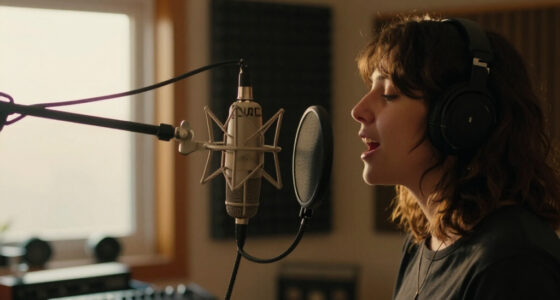
Finding the right studio monitor headphones comes down to one question: do you need accuracy for mixing, isolation for tracking, or both? After comparing ten of the most widely recommended options, the Audio-Technica ATH-M50X stands out as the best overall pick for most home studios — it balances a revealing sound, foldable build, and a price that still makes sense. If you mix in a quiet room and want a more honest stereo image, the open-back Audeze MM-520 is the premium choice, while the Sony MDR7506 remains the safest bet for vocal booths and tracking sessions thanks to its isolation and detail in the highs. The core tradeoff across this category is closed-back isolation versus open-back realism, and spending more generally buys you flatter tuning and better comfort rather than louder sound. Read on for the full breakdown of all ten picks, what separated the winners, and which pair fits your specific setup.

Get business pricing on tech for your team
- Business-only prices and quantity discounts
- Tax-exempt purchasing
- Multiple users, one account, clear invoices
Complete the kit


Key Takeaways
- The ATH-M50X took Best Overall not because it is the flattest headphone here, but because its slightly energized tuning, detachable cables, and folding build cover the widest range of home-studio tasks at a mid-range price.
- Audio-Technica dominates the budget end with four entries (M20x in two colors, M30x, M40x), and the comparison showed the jump from M40x to M50X is smaller than the jump from M20x to M40x — the M40x is the real value sweet spot in that lineup.
- Open-back versus closed-back turned out to be the single biggest dividing line: the Audeze MM-520 outclasses everything here for mixing accuracy, but it leaks too much sound to sit anywhere near a live microphone.
- Isolation separated the tracking picks from the mixing picks — the Sennheiser HD 280 Pro and Sony MDR7506 both block far more bleed than the rest, which is why they rank high despite less refined sound than the MM-520.
- The OneOdio Pro-10 proved that under roughly $50 you can get usable monitoring for learning and DJ work, but its boosted bass makes it a poor reference for mix decisions — a pattern repeated by every budget model except the ATH-M40x.


| studio monitor headphone | Driver Size | Design | Impedance | Frequency Response |
|---|---|---|---|---|
| Audio-Technica ATH-M20x Profes | 40 mm | Circumaural, closed-back | — | — |
| Sennheiser HD 280 Pro Headphon | — | Collapsible, folding | — | Extended |
| Audio-Technica ATH-M50X Profes | 45 mm | Circumaural, closed-back | 38 ohms | — |
| Audeze MM-520 Open-Back Profes | — | Open-back, over-ear | — | — |
| Sennheiser HD 480 PRO Professi | — | — | — | — |
| Sony MDR7506 Professional Larg | 40mm | Closed-ear, foldable | 63 ohms | 10Hz–20kHz |
| Audio-Technica ATH-M30x Profes | 40mm | Circumaural, collapsible | 47 ohms | 15Hz–22kHz |
| Audio-Technica ATH-M40x Profes | 40mm | Closed-back, over-ear | 35 ohms | 15Hz–24kHz |
| Audio-Technica ATH-M20x Profes | 40mm | — | 47 ohms | 15Hz–20kHz |
| OneOdio Pro-10 Wired Over Ear | 50mm | — | 32 ohms | — |
More Details on Our Top Picks
Audio-Technica ATH-M20x Professional Studio Monitor Headphones, White
The ATH-M20x is where I’d start if the goal is honest monitoring on a tight budget. It shares the same circumaural, closed-back philosophy as its bigger sibling, the ATH-M50X, but with smaller 40 mm drivers and a fixed cable — the two places where the savings show. The low-frequency tuning is enhanced rather than strictly flat, which flatters beat-making and casual tracking but means mixes shouldn’t be finalized on it alone. Compared with the Sennheiser HD 280 Pro, isolation is decent rather than class-leading, and the single-side cable exit at least keeps desk clutter down. Build quality feels professional for the price, though long-session comfort is less proven than on the pricier options here. For a first pair of studio headphones, the tradeoffs are easy to live with.
Pros:- Entry-level price with professional-grade build
- 40 mm drivers tuned for punchy, enhanced low end
- Circumaural closed-back cups isolate well in loud rooms
- Single-side cable exit reduces tangles at a desk
Cons:- Fixed, non-detachable cable limits repair and replacement options
- Bass-tilted tuning isn’t flat enough for final mix decisions
- Long-session comfort is less proven than pricier siblings
Best for: Bedroom producers and podcasters buying their first pair of closed-back monitors on a strict budget
Not ideal for: Engineers finalizing mixes — the enhanced low end flatters rather than reveals, so step up to the ATH-M50X or Audeze MM-520
- Driver Size:40 mm
- Design:Circumaural, closed-back
- Cable Exit:Single-side
- Connectivity:Wired
- Color:White
- Series:Audio-Technica M-Series
- Intended Use:Studio monitoring, loud environments
Our verdict“The sensible first monitor headphone: enough isolation and clarity to learn on, at a price that leaves budget for the rest of the setup.”
Sennheiser HD 280 Pro Headphones, Black
When the brief is recording rather than mixing, the HD 280 Pro is the pair I’d hand a vocalist. Its 32 dB of noise attenuation is the strongest isolation in this lineup, so click tracks stay in the headphones and out of the microphone — something the open-back Audeze MM-520 simply cannot do. The sound is honest and mid-focused rather than exciting, which is exactly what tracking demands, though some listeners find it dull next to the punchier ATH-M50X. Sennheiser’s collapsible frame and fully replaceable earpads, headband padding, and cord mean a pair can survive years of studio abuse, a durability argument the cheaper ATH-M20x can’t match. The tradeoffs: a coiled cable that adds weight, a clamping fit that runs tight at first, and no detachable cable on most units.
Pros:- Up to 32 dB of ambient noise attenuation keeps bleed out of mics
- Earpads, headband padding, and cord are all replaceable
- Collapsible frame packs easily into gig bags
- Lightweight enough for full-day session work
Cons:- Tight clamping force can pinch during the break-in period
- Coiled cable is heavy and not detachable on most units
- Mid-focused sound reads dull for casual listening
Best for: Vocalists, drummers, and location recordists who need maximum isolation while tracking
Not ideal for: Mixing engineers chasing a wide soundstage — the closed, mid-forward presentation is a tracking tool, not a mixing reference
- Type:Closed-ear, around-ear
- Noise Attenuation:Up to 32 dB
- Cord Length:3.3 to 9.8 ft (coiled)
- Design:Collapsible, folding
- Replaceable Parts:Earpads, headband padding, audio cord
- Frequency Response:Extended
- Color:Black
Our verdict“Buy it for the booth: unmatched isolation and replaceable-everything durability make this the workhorse tracking pick.”
Audio-Technica ATH-M50X Professional Studio Monitor Headphones, Black
The ATH-M50X earns my top slot because it does almost everything well enough to please almost everyone. Its 45 mm drivers deliver deep bass extension and clear, detailed highs — a livelier presentation than the flatter HD 280 Pro, yet controlled enough for mix decisions in a home studio. Where it pulls ahead of the cheaper ATH-M20x is practicality: three detachable cables, 90-degree swiveling earcups for one-ear monitoring, and a fold-flat frame for travel. The caveat is the sound itself — the slightly hyped low end flatters electronic and hip-hop work but can mask muddiness in the lower mids, so critical mixing may call for the more revealing Audeze MM-520 if the budget allows. It’s also bulky beside true portable headphones, and the pleather pads warm up over long sessions.
Pros:- 45 mm drivers deliver deep bass and crisp detail
- Three detachable cables plus 6.3 mm adapter included
- 90-degree swiveling earcups for one-ear monitoring
- Folds flat for travel
Cons:- Slightly hyped low end can hide mix muddiness
- Bulkier than true portable headphones
- Pleather pads heat up over long sessions
Best for: Home-studio producers and DJs who want one pair that handles tracking, mix checks, and travel
Not ideal for: Purists who want a strictly flat reference — the bass emphasis favors enjoyment over surgical neutrality
- Driver Size:45 mm
- Impedance:38 ohms
- Design:Circumaural, closed-back
- Cables:3 detachable (straight and coiled)
- Earcups:90-degree swiveling, foldable
- Adapter:6.3 mm screw-on included
- Color:Black
Our verdict“The most balanced do-everything monitor here, as long as you account for its flattering low end when mixing.”
Audeze MM-520 Open-Back Professional Headphones with Carrying Case
The Audeze MM-520 is the one I’d call the specialist of this group: 90 mm planar magnetic drivers in an open-back shell, tuned for engineers who need to hear what’s actually in a mix. Compared with the closed-back ATH-M50X, the difference is space — instruments sit in a wide, natural soundstage instead of inside your head, which makes panning and reverb decisions far easier. Detail retrieval sits a class above everything else here, and the memory foam earpads suit marathon sessions. The compromises are real, though. The open-back design leaks sound freely and blocks nothing, so it’s useless for tracking or noisy rooms — the HD 280 Pro covers that job. Planar drivers are also delicate and power-hungry, and the price puts it firmly out of casual-listener territory.
Pros:- 90 mm planar magnetic drivers resolve fine mix detail
- Open-back stage sounds wide and natural
- Memory foam earpads built for marathon sessions
- Ships with carrying case and soft bag
Cons:- Leaks sound and blocks nothing — unusable for tracking
- Delicate planar drivers demand careful handling
- Highest price in this lineup
Best for: Mixing and mastering engineers working in quiet, treated rooms who need planar-level accuracy
Not ideal for: Anyone recording with open microphones or working in shared spaces — spill makes open-back the wrong tool
- Driver:90 mm planar magnetic
- Design:Open-back, over-ear
- Model Number:100-MM-1032-01
- Connectivity:Wired, 3.5 mm with 6.3 mm adapter
- Earpads:Memory foam
- Included:Carrying case, soft carry bag
- Color:Black
- Warranty:30-day return guarantee
Our verdict“If your room is quiet and the budget stretches, this is the most revealing mixing headphone in the group.”
Sennheiser HD 480 PRO Professional Recording & Monitoring Headphones Bundle
The HD 480 PRO bundle is the pick I’d make for someone building a first serious workspace from scratch. The headphones deliver accurate, full-spectrum sound from neodymium drivers — a more neutral, less bass-forward read than the ATH-M50X — while touches like grooved pads for eyeglass wearers and braille L/R markers show unusual attention to long-session comfort. What separates this pick from every alternative in the roundup is the kit: a headphone stand, USB-C DAC adapter, and cleaning cloth turn one purchase into a ready-made desktop setup. Set against the HD 280 Pro, you trade some isolation for comfort and accessories. The downsides: pricing runs higher than buying headphones alone, the bundle is bulkier to store, and mobile users paying for a stand they’ll never use should look at the M50X instead.
Pros:- Accurate, full-spectrum sound from neodymium drivers
- Grooved pads stay comfortable over eyeglasses
- Bundle includes stand, USB-C DAC adapter, and cleaning cloth
- Detachable cable with dual L/R jacks simplifies replacement
Cons:- Bundle pricing runs higher than headphones-only alternatives
- Stand and extras are wasted on mobile users
- Bulkier to store than a foldable design
Best for: New studio owners and content creators setting up a desktop monitoring workspace in one purchase
Not ideal for: Mobile recordists — the stand-and-DAC bundle adds cost and bulk for accessories they’ll leave behind
- Type:Closed-back, over-ear
- Drivers:Neodymium
- Cable:Detachable, dual L/R jacks
- Included Accessories:Headphone stand, USB-C DAC adapter, cleaning cloth
- Comfort Features:Angled earcups, grooved pads for eyeglasses
- Accessibility:Braille L/R markers
- Origin:Engineered in Germany, assembled in Romania
Our verdict“A complete desktop monitoring station in a box, worth the premium only if you’ll actually use the extras.”
Sony MDR7506 Professional Large Diaphragm Headphones
The Sony MDR7506 has been a studio fixture for decades, and I’d still put it at the top of this roundup for one reason: its forward midrange and crisp top end reveal hiss, sibilance, and clipping that flatter-tuned rivals like the Audio-Technica ATH-M40x can gloss over. That makes it a ruthless tracking tool rather than a relaxed listen. The 63-ohm impedance is easy to drive from any interface, and the folding frame survives years of session abuse. The tradeoffs are real, though. The coiled cable is fixed, not detachable, so a broken cord means a repair instead of a swap — a place where the ATH-M40x wins outright. The treble emphasis also fatigues some ears over long mixes, and the stock ear pads are known to flake within a couple of years. If you want one pair that engineers everywhere trust, this is still the safest recommendation I can make.
Pros:- Revealing midrange and treble that expose recording flaws other headphones smooth over
- Rugged, foldable frame proven across decades of professional studio use
- Easy to drive from any interface, laptop, or recorder
- Effective closed-ear isolation for tracking live sources
Cons:- Non-detachable coiled cable — damage means a repair, not a cable swap
- Bright top end can fatigue ears during long sessions
- Stock ear pads tend to flake within a couple of years
Best for: Tracking engineers and vocalists who need honest midrange detail to catch flaws while recording
Not ideal for: Casual listeners and bass-heavy mixers — the bright treble fatigues over time and the fixed cable rules out easy repair
- Driver Size:40mm
- Frequency Response:10Hz–20kHz
- Impedance:63 ohms
- Sensitivity:106 dB/mW
- Connectivity:Wired
- Cord:9.8 ft coiled OFC, non-detachable
- Connector:Gold-plated 3.5mm with 1/4-inch adapter
- Design:Closed-ear, foldable
- Weight:8.1 oz
Our verdict“If you want one pair that professional studios have trusted for decades and can live with a fixed cable and bright top end, buy the MDR7506.”
Audio-Technica ATH-M30x Professional Studio Monitor Headphones, Black
The ATH-M30x is the middle child of Audio-Technica’s monitor line, and I think of it as the model for buyers who find the ATH-M20x too rough and the ATH-M40x too pricey. Its mid-range tuning is the standout: guitars, vocals, and snare come through with a clarity the bass-heavier ATH-M20x can’t match, which is what you want when tracking a vocalist against a dense mix. Against the ATH-M40x, you lose the swiveling earcups and the detachable cable — the cord here is fixed, so treat it carefully — and the isolation, while strong for the price, doesn’t quite reach the seal of the Sennheiser HD 280 Pro. I’d also warn buyers about comfort: the pads are thinner than the M40x’s, and ears can press against the driver housings after a couple of hours. For a home studio on a real budget, though, nothing else at this price gets midrange this right.
Pros:- Standout midrange detail for vocals, guitars, and snare
- Strong sound isolation for the price class
- Collapsible frame for easy storage and transport
- A clear step up in tuning refinement from the cheaper ATH-M20x
Cons:- Non-detachable cable is the biggest long-term durability risk
- Thinner pads get uncomfortable past the two-hour mark
- Isolation and features trail the pricier ATH-M40x and Sennheiser HD 280 Pro
Best for: Home recordists tracking vocals and guitars who need midrange clarity on a sub-$100 budget
Not ideal for: Anyone rough on gear — the fixed cable means one hard snag can end the headphones
- Driver Size:40mm
- Frequency Response:15Hz–22kHz
- Impedance:47 ohms
- Sensitivity:96 dB
- Design:Circumaural, collapsible
- Cable:3m, single-side exit, attached
- Weight:7.8 oz
Our verdict“The right call when the M20x sounds too rough and the M40x costs too much — as long as you treat the fixed cable gently.”
Audio-Technica ATH-M40x Professional Studio Monitor Headphones
Within Audio-Technica’s own lineup, I’d call the ATH-M40x the sweet spot for mixing. Its low end runs flatter than the cheaper ATH-M30x, so kick drums and basslines sit where they actually are in the mix instead of getting a flattery boost — the whole point of a monitor headphone. Compared with the Sony MDR7506, it’s less bright and less fatiguing over marathon sessions, though it gives up some of the Sony’s forensic top-end detail. The two detachable cables — one coiled, one straight — fix the Sony’s biggest weakness, since a yanked cord costs you a cable rather than a repair bill. Where it falls short: the restrained bass leaves hip-hop and electronic producers wanting more sub information, and the clamping force runs tight out of the box. Skip it if casual listening matters more than accuracy; the OneOdio Pro-10 is far more fun for that.
Pros:- Flat, honest low end suited to real mixing decisions
- Two detachable cables (coiled and straight) — a break costs a cable, not a repair
- 90-degree swiveling earcups for one-ear monitoring
- Strong isolation for loud tracking rooms
Cons:- Clamping force runs tight out of the box
- Restrained bass leaves hip-hop and EDM producers guessing
- Bulkier and heavier than the ATH-M30x it sits above
Best for: Home-studio mixers who want a flatter low end and replaceable cables without paying ATH-M50x money
Not ideal for: Bass-focused electronic producers — the restrained sub-bass undersells what’s happening down low
- Driver Size:40mm
- Frequency Response:15Hz–24kHz
- Impedance:35 ohms
- Sensitivity:98 dB
- Design:Closed-back, over-ear
- Earcups:90-degree swiveling
- Cables:Detachable; coiled and straight included
- Weight:8.5 oz
Our verdict“The most balanced mixer in Audio-Technica’s budget line — pick it over the Sony if you value replaceable cables and a calmer treble.”
Audio-Technica ATH-M20x Professional Studio Monitor Headphones, Black
Every lineup needs a cheap, honest starting point, and the ATH-M20x fills that role here. Its tuning leans into the low end more than the ATH-M30x above it, which flatters electronic and hip-hop tracking but can mask what’s really happening in the mids — one reason I’d steer serious mixers toward the M30x or ATH-M40x instead. For a first studio, though, the priorities are different: the 9.8-foot cable reaches across a small room, the circumaural cups keep click tracks from bleeding into open mics, and the frame shrugs off the abuse that kills cheaper pairs. Compared with the OneOdio Pro-10 at a similar price, the M20x sounds more controlled through the mids but feels more plasticky, and its cable is fixed while the OneOdio’s detaches. The narrow 15Hz–20kHz ceiling and zero accessories are the cost of admission. For learning to record without a big spend, this is where I’d start.
Pros:- Controlled, usable sound at the lowest price in the lineup
- Strong isolation keeps click tracks out of open mics
- Tough build that survives student-level abuse
- Backed by a 2-year warranty
Cons:- Bass emphasis masks midrange detail
- Narrow 15Hz–20kHz response and no accessories in the box
- Fixed 9.8-ft cable can’t be replaced if damaged
Best for: First-time studio builders and students who need durable, isolating tracking headphones for the least money
Not ideal for: Mixers making final decisions — the boosted low end can hide midrange problems
- Driver Size:40mm
- Frequency Response:15Hz–20kHz
- Impedance:47 ohms
- Sensitivity:96 dB
- Magnet:Rare earth (neodymium)
- Voice Coil:Copper-clad aluminum wire
- Cable:9.8 ft, single-side, attached
- Warranty:2 years
Our verdict“The pair I’d hand a beginner building a first recording setup — upgrade later, not now.”
OneOdio Pro-10 Wired Over Ear Headphones with 50mm Drivers
The OneOdio Pro-10 costs a fraction of everything else here, and I’d frame it as a utility pick rather than a reference tool. The 50mm drivers push big, loose bass that works for cueing tracks at a gig but smears the midrange detail a Sony MDR7506 or ATH-M40x would expose — so don’t mix a record on these and expect the results to translate. What you’re really buying is flexibility: both earcups swivel 90 degrees for one-ear cueing, the cable detaches, and a second jack lets a friend plug straight in to share audio, something no Audio-Technica in this roundup offers. It’s also friendly to phones and laptops without an amp. The tradeoffs go beyond sound, though: at 10.56 ounces it feels bulky on long wears, and the plasticky build won’t survive the kind of daily abuse an MDR7506 shrugs off. For bedroom DJs and casual producers, that’s a fair bargain.
Pros:- 50mm drivers deliver a big, exciting low end
- 90-degree swiveling earcups for one-ear DJ cueing
- Share port lets a second listener plug in directly
- Detachable cable and easy drive from phones and laptops
Cons:- Bass-forward tuning obscures midrange accuracy
- Bulky 10.56-ounce build tires on long wears
- Plasticky construction won’t take pro-studio abuse
Best for: Bedroom DJs and casual producers who want single-ear cueing and audio sharing without spending real money
Not ideal for: Anyone mixing a record — the boosted bass smears the midrange detail needed for decisions that translate
- Driver Size:50mm
- Impedance:32 ohms
- Connectivity:Wired; dual 3.5mm and 1/4-inch jacks
- Earcups:90-degree swiveling for single-side monitoring
- Compatibility:Smartphones, laptops, tablets, audio interfaces, DJ mixers, amplifiers
- Extras:Share port for daisy-chaining a second pair
- Weight:10.56 oz
- Warranty:2 years
Our verdict“A fun, flexible DJ and sharing headphone at a throwaway price — just don’t trust it for final mixes.”
How We Picked
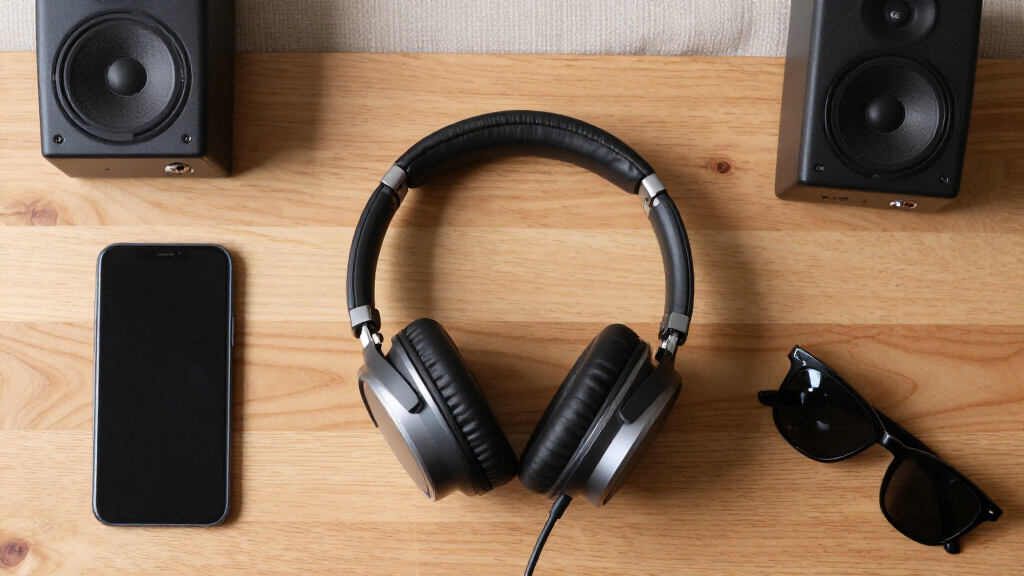
I evaluated each pair through the lens a studio buyer actually uses: tonal accuracy first, because a headphone that flatters your mix will betray you on other systems, then isolation and leakage, because a mixing headphone and a tracking headphone are two different tools. Comfort over long sessions, build quality, replaceable cables and ear pads, and how far the sound travels per dollar all factored into the ordering.
The ranking logic rewards versatility at the top: the ATH-M50X leads because it handles mixing, editing, and casual tracking credibly for under $200, while the more specialized picks — the MM-520 for mixing, the HD 280 Pro and MDR7506 for isolation — rank where their strengths justify their compromises. Budget models were judged against each other rather than against the flagships, so a $49 pair is scored on whether it teaches good habits, not on whether it matches a planar magnetic driver.
| studio monitor headphone | Design |
|---|---|
| Audio-Technica ATH-M20x Profes | Circumaural, closed-back |
| Sennheiser HD 280 Pro Headphon | Collapsible, folding |
| Audio-Technica ATH-M50X Profes | Circumaural, closed-back |
| Audeze MM-520 Open-Back Profes | Open-back, over-ear |
| Sennheiser HD 480 PRO Professi | — |
| Sony MDR7506 Professional Larg | Closed-ear, foldable |
| Audio-Technica ATH-M30x Profes | Circumaural, collapsible |
| Audio-Technica ATH-M40x Profes | Closed-back, over-ear |
| Audio-Technica ATH-M20x Profes | — |
| OneOdio Pro-10 Wired Over Ear | — |
Factors to Consider When Choosing Studio Monitor Headphones
The reviews above cover what each headphone does well. This section covers the decisions that apply no matter which model you end up choosing — the tradeoffs that separate a productive monitoring setup from an expensive mistake.
Closed-Back vs. Open-Back: Pick Based on Your Room and Your Mic
This is the first decision to make, and it is about physics, not preference. Closed-back headphones seal sound in and room noise out, which makes them the only safe choice when a microphone is live — headphone bleed into a vocal take is nearly impossible to remove later. Open-back designs like the Audeze MM-520 let air and sound pass through the ear cups, producing a wider, more speaker-like stereo image that makes panning, reverb depth, and mix balance easier to judge. The mistake most beginners make is buying one open-back pair and trying to use it for everything; if you record vocals or instruments at home, you need a closed pair regardless of what you mix on. Buyers with a treated, quiet room and no tracking duties can go open-back and never look back. Everyone else should budget for a closed pair first and treat open-back as a second, mixing-focused purchase.
Flat Response vs. Fun Sound: Why Bass Boost Is a Trap
Consumer headphones are tuned to impress in a thirty-second store demo — elevated bass, sparkly treble, scooped mids. Studio headphones are tuned to tell the truth, and that difference decides whether your mixes translate. A bass-heavy headphone hides low-end problems: your kick and bass will sound huge in the cans and then vanish on car speakers and phone speakers. This is the main reason the OneOdio Pro-10 and, to a lesser degree, the ATH-M50X sit behind flatter options like the ATH-M40x for critical mix decisions, even though both are enjoyable to listen through. When you compare frequency response claims, ignore raw range numbers like 5 Hz to 40 kHz — they say nothing about balance. What matters is whether the midrange, where vocals and most instruments live, is clear and unhyped. If a pair makes everything sound good immediately, be suspicious of it.
Comfort, Clamp, and Session Length
Mixing sessions routinely run three or four hours, and a headphone that feels fine for ten minutes can become unbearable by hour two. Clamping force is the main variable: high-isolation designs like the HD 280 Pro grip harder by design, which is the price of their bleed-blocking seal, while lighter-clamp models trade isolation for wearability. Ear cup size matters more than most buyers expect — shallow or small cups press on the outer ear and cause fatigue faster than deep over-ear cups that clear it entirely. Weight is a secondary factor but adds up with planar magnetic models, which are typically heavier than dynamic-driver pairs. Padded headbands and replaceable ear pads extend both comfort and lifespan, since pads are almost always the first component to degrade. If you wear glasses, prioritize softer pads and lower clamp, because frames pressed into your skull will shorten every session.
Cables, Parts, and Long-Term Ownership Costs
Studio headphones live a harder life than living-room headphones — they get yanked off stands, caught on chair arms, and packed into bags. The cable is the most common failure point, which is why detachable cables on models like the ATH-M50X and ATH-M40x meaningfully lower the cost of ownership: a $15 replacement cable beats a $150 replacement headphone. Fixed-cable designs like the MDR7506 and HD 280 Pro offset this with decades-proven durability and widely available service parts, so neither approach is automatically better — but you should know which one you are buying. Check whether replacement ear pads and headband padding are sold separately and reasonably priced before you commit. Coiled cables keep slack off the floor at a desk; straight cables are easier to manage if you move around. One more practical note: single-sided cable routing, which most of these models use, is genuinely easier to live with than Y-cables in daily studio use.
Impedance and Whether You Need an Amp
Every mainstream pick in this roundup is designed to run loud and clean from an audio interface or even a laptop, so amplification anxiety is mostly misplaced here. The impedance rating tells the story: models in the 32-to-80-ohm range, which covers nearly this entire list, are easy to drive and need no dedicated headphone amp. Planar magnetic headphones like the MM-520 are the exception worth noting — they are low impedance but also low sensitivity, so they reward a clean, powerful output stage and will sound flat and lifeless from a weak source. If your interface has a proper headphone output, you are covered for everything else on this list. Where buyers waste money is adding an amp to fix a volume problem that is actually a gain-staging problem in their software. Spend on the headphones first, and only add amplification if your chosen model genuinely demands it.
The Mistakes That Cost Buyers the Most
The most expensive mistake in this category is buying one pair for two incompatible jobs — an open-back for a room where you also track, or an isolation-focused closed-back and then wondering why your mixes sound congested. The second is treating the number on the box as a spec sheet arms race: bigger drivers and wider frequency ranges do not equal more accuracy, and the 40 mm driver in the MDR7506 has out-lasted countless 50 mm rivals in professional use. The third mistake is buying the cheapest model as a placeholder and planning to upgrade, then mixing on a hyped budget tuning for a year and learning bad habits — the gap between a $49 pair and the ATH-M40x is larger in accuracy than the gap between the M40x and models twice its price, so the mid-range step is the one worth stretching for. Finally, do not mix at loud volumes just because closed-backs isolate well; ear fatigue degrades your judgment faster than any tuning flaw. Pick the right tool for your primary job and your secondary job gets cheaper automatically.
Frequently Asked Questions
Is the Audio-Technica ATH-M50X actually flat enough for mixing, or is it overhyped?
The ATH-M50X is not perfectly flat — it has a mild bass lift and some upper-treble energy that makes it more exciting than a strictly neutral reference. That is exactly why it ranks as Best Overall rather than Best for Mixing: it is revealing enough to do credible mix work while staying versatile for tracking, editing, and everyday listening. If your primary job is final mix decisions in a quiet room, the flatter ATH-M40x or the open-back Audeze MM-520 will give you a more honest picture. The practical approach many home producers take is mixing on the M50X and checking the low end against the M40x or on speakers. Once you learn where its bass lift sits, the M50X is a dependable daily driver — the mistake is treating it as perfectly neutral out of the box.
What is the real difference between the ATH-M20x, M30x, M40x, and M50X?
These four models form a ladder, and the steps are not evenly spaced. The ATH-M20x is the entry point: usable tuning and solid build, but a fixed cable and less midrange detail. The M30x adds some refinement and folding hinges, yet the comparison showed it is the least compelling step — close enough to the M20x in sound that the premium is hard to justify. The ATH-M40x is the meaningful jump: flatter tuning than the M50X, detachable cables, and swiveling cups, making it the value pick of the entire lineup. The M50X then adds a larger soundstage, better extension at both ends, and sturdier hardware. If your budget stops below $100, skip the middle rungs and go straight to the M40x; if you can reach the M50X, its versatility earns the extra spend.
Should I buy open-back headphones like the Audeze MM-520 for my home studio?
Only if two conditions are true: you mix in a quiet room, and you do not record with a microphone in the same space while wearing them. Open-back headphones leak sound in both directions, so any bleed from the cups will be captured by a live mic, and any room noise will reach your ears. When those conditions are met, the MM-520 offers the most speaker-like, honest stereo image in this roundup — planar magnetic drivers and an open design make panning, depth, and reverb tails easier to judge than on any closed model here. If you share a space, record vocals, or need one pair to do everything, a closed-back like the MDR7506 or HD 280 Pro is the safer purchase. Many engineers end up owning one of each, using closed-backs for tracking and open-backs for mix checks.
Are cheap studio headphones like the OneOdio Pro-10 good enough to learn on?
For learning signal flow, practicing DJ sets, podcast editing, and general tracking duty, yes — the OneOdio Pro-10 delivers 50 mm drivers, both 3.5 mm and 6.35 mm connectivity, and shareable dual jacks at a price that is hard to argue with. What it will not do is teach you accurate mix balance, because its tuning leans into bass and treble in a way that flatters playback rather than revealing problems. If your goal is learning to mix, the ATH-M40x costs more but gives you a reference you can trust, and habits built on an honest tuning transfer to every other system. Think of the Pro-10 as a utility headphone and the M40x as a teaching tool. Buying the cheap pair first and upgrading later usually means paying for both, so stretch if mixing is the actual goal.
Which headphones should I choose for recording vocals in a home studio?
For vocal tracking, isolation outranks sound quality, and two picks in this roundup are built for exactly that job. The Sennheiser HD 280 Pro offers the strongest passive isolation here, which means the click track and backing mix stay in the singer’s ears and out of the microphone. The Sony MDR7506 isolates nearly as well and adds a detailed top end that helps singers hear their own sibilance and pitch, which is why it has been a studio fixture for decades. Both fold for storage and tolerate years of session abuse. Avoid the M50X for this specific task if your room is sensitive — its isolation is good but not class-leading — and rule out the open-back MM-520 entirely, since its leakage will print onto the take. Comfort matters too, since vocalists wear these for long stretches, so try clamp force before committing if you can.
Conclusion
The right pick depends on the job you do most. For the best overall studio monitor headphone, the Audio-Technica ATH-M50X remains the default recommendation — versatile, durable, and accurate enough for real mix work at a fair price. If value drives the decision, the ATH-M40x delivers the flattest tuning per dollar in this lineup and is the smarter buy for anyone whose priority is learning to mix correctly. Buyers ready to invest in a dedicated mixing reference should go straight to the Audeze MM-520 — its open-back, planar design outclasses every closed model here for critical listening. For tracking and vocal booths, choose the Sennheiser HD 280 Pro for maximum isolation or the Sony MDR7506 for its proven detail and session durability. Beginners and DJs on a strict budget can start with the OneOdio Pro-10, with the understanding that it is a utility tool rather than a mixing reference. Match the headphone to your primary task first — every compromise in this roundup gets easier to live with once that decision is made.
Halloween Picks

Haunted Hill Farm 2-Ft. Zombie Raccoon Halloween Animatronic

MGparty 14.5FT Halloween Inflatable Walk-in Pumpkin House with LED Lights

Haunted Hill Farm 4.6-Ft. Head-Spinning Beatrix Halloween Animatronic
As an affiliate, we earn on qualifying purchases.