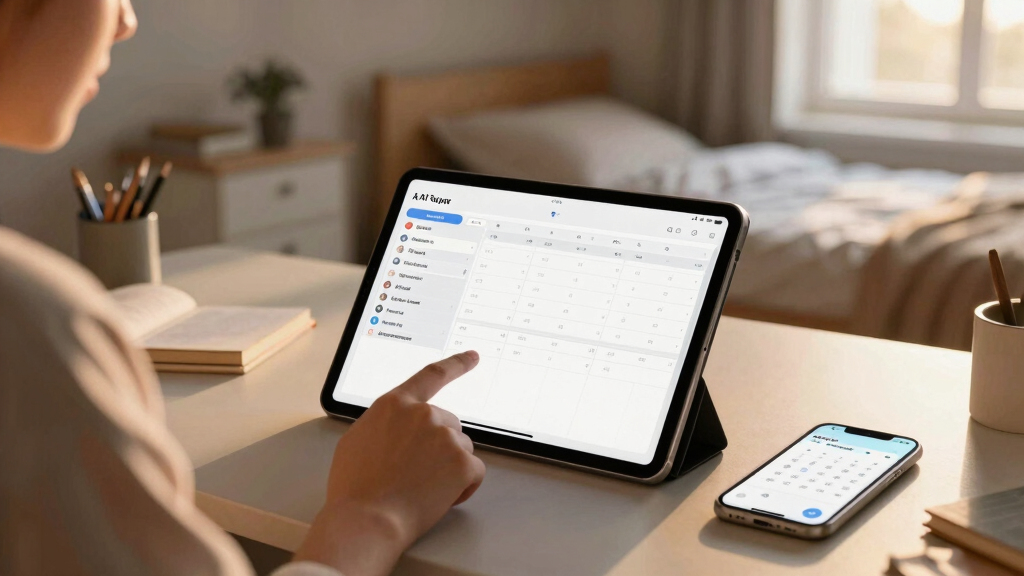

AI-Powered Student Success Planning Workbook is my best overall pick because it most directly connects AI-assisted thinking with student goal setting and study planning. Students who want a durable paper companion should choose the SUNEE 8.5 × 11-Inch Waterproof Planner, while the compact black 6.5 × 8.3-inch planner offers better value and portability. The central tradeoff is that most products in this lineup are traditional paper organizers rather than planners with built-in AI. Buyers must choose between AI guidance, detailed writing space, easy backpack storage, and age-appropriate structure. Continue reading for the full breakdown of which option fits each student type.

Get business pricing on tech for your team
- Business-only prices and quantity discounts
- Tax-exempt purchasing
- Multiple users, one account, clear invoices
Key Takeaways
- AI-Powered Student Success Planning Workbook ranks first because it is the only student-focused option whose core purpose explicitly combines AI and success planning.
- Twelve of the fourteen products are dated paper planners, so they work best as physical companions to a separate AI study assistant rather than as self-contained AI tools.
- The 8.5 × 11-inch and 9 × 11-inch planners provide more room for multi-subject workloads, while 6.5 × 8.3-inch models trade writing space for better portability.
- Elementary SUNEE planners supply more visual guidance, tabs, bookmarks, and storage features than the simpler middle- and high-school datebooks.
- The Power of AI for Educators may help teachers design AI-supported planning routines, but it ranks below student-facing options because it is neither a student planner nor a scheduling system.
| Student Planner 2026-2027, Academic Weekly & Monthly Planner Book, Black |  | Best Traditional Overall | Planner type: Academic weekly and monthly planner | Size: 6.5 x 8.3 inches | Date range: July 2026 to June 2027 | VIEW LATEST PRICE | See Our Full Breakdown |
| SUNEE Student Planner 2026-2027 with Waterproof Cover, Pink |  | Best Spill-Resistant Pick | Planner type: Middle- and high-school academic planner | Size: 6.5 x 8.3 inches | Academic year: 2026-2027 | VIEW LATEST PRICE | See Our Full Breakdown |
| Student Planner 2026-2027, 9 x 11-Inch Academic Weekly Calendar |  | Best for Maximum Writing Space | Planner type: Academic weekly calendar with monthly spreads | Size: 9 x 11 inches | Date range: July 2026 to June 2027 | VIEW LATEST PRICE | See Our Full Breakdown |
| Student Planner 2026-2027 Monthly & Weekly School Planner, Black |  | Best for Binder Organization | Planner type: Middle- and high-school monthly and weekly planner | Size: 8.2 x 10.7 inches | Stated date range: July 2026 to June 2027 | VIEW LATEST PRICE | See Our Full Breakdown |
| The Power of AI for Educators |  | Best AI Background Guide for Educators | Product format: Educational book | Primary audience: Educators | Primary topic: Artificial intelligence in teaching | VIEW LATEST PRICE | See Our Full Breakdown |
| AI-Powered Student Success Planning Workbook |  | Best AI Planning Resource | Format: Student success planning workbook | AI Content: Prompts for student advising and planning | Planning Tools: Individualized learning plans (ILPs) | VIEW LATEST PRICE | See Our Full Breakdown |
| Student Planner 2026-2027, SUNEE Middle or High School Datebook with Stickers and Bookmark, 6.5″ x 8.3″ |  | Best Portable Accessory Bundle | Size: 6.5″ x 8.3″ | Date Coverage: July 2026 through June 2027 | Layouts: Monthly and weekly pages | VIEW LATEST PRICE | See Our Full Breakdown |
| Student Planner 2026-2027, SUNEE Academic Weekly & Monthly Plan Book, Jul. 2026 – Jun. 2027, 6.5″×8.3″, Pink |  | Best Analog Goal-Setting Pick | Size: 6.5″ × 8.3″ | Academic Year: 2026-2027 | Date Coverage: July 2026 through June 2027 | VIEW LATEST PRICE | See Our Full Breakdown |
| Student Planner 2026-2027 Middle School & High School Matrix, 8.5″ x 11″ |  | Best Subject-Matrix Layout | Size: 8.5″ x 11″ | Page Count: 144 full-color pages | Date Coverage: July 2026 through June 2027 | VIEW LATEST PRICE | See Our Full Breakdown |
| SUNEE Elementary Student Planner 2026-2027, Academic Year Jul. 2026 – Jun. 2027, 8.5″×11″ School Planner with Tabs, Bookmark, and Pockets |  | Best for Elementary Students | Size: 8.5″ × 11″ | Academic Year: July 2026 through June 2027 | Duration: 12 months | VIEW LATEST PRICE | See Our Full Breakdown |
| SUNEE Elementary Student Planner 2026-2027, Solar System |  | Best for Elementary Students | Academic year: July 2026 to June 2027 | Size: 6.5 × 8.3 inches | Subject sections: 7 | VIEW LATEST PRICE | See Our Full Breakdown |
| SUNEE Middle or High School Planner 2026-2027, 8.5 × 11 Inches |  | Best for Detailed Schedules | Academic year: July 2026 to June 2027 | Size: 8.5 × 11 inches | Planning views: Monthly and weekly | VIEW LATEST PRICE | See Our Full Breakdown |
| SUNEE Student Planner 2026-2027, Sage Green |  | Best Compact Pick | Academic year: July 2026 to June 2027 | Size: 6.5 × 8.3 inches | Planning views: Monthly and weekly | VIEW LATEST PRICE | See Our Full Breakdown |
| Student Planner 2026-2027, Weekly & Monthly Academic Organizer |  | Best for Visual Motivation | Academic year: July 2026 to June 2027 | Size: 11 × 8.3 inches | Coverage: 12 months | VIEW LATEST PRICE | See Our Full Breakdown |
| AI-powered student planner | Size | Storage | Academic year |
|---|---|---|---|
| Student Planner 2026-2027 | 6.5 x 8.3 inches | Double-sided back pockets | — |
| SUNEE Student Planner 2026-202 | 6.5 x 8.3 inches | Back pockets | 2026-2027 |
| Student Planner 2026-2027 | 9 x 11 inches | — | — |
| Student Planner 2026-2027 Mont | 8.2 x 10.7 inches | — | — |
| The Power of AI for Educators | — | — | — |
| AI-Powered Student Success Pla | — | — | — |
| Student Planner 2026-2027 | 6.5" x 8.3" | Back pockets | — |
| Student Planner 2026-2027 | 6.5" × 8.3" | — | 2026-2027 |
| Student Planner 2026-2027 Midd | 8.5" x 11" | — | — |
| SUNEE Elementary Student Plann | 8.5" × 11" | Double-sided pockets | July 2026 through June 2027 |
| SUNEE Elementary Student Plann | 6.5 × 8.3 inches | Back pockets | July 2026 to June 2027 |
| SUNEE Middle or High School Pl | 8.5 × 11 inches | Double-sided back pockets | July 2026 to June 2027 |
| SUNEE Student Planner 2026-202 | 6.5 × 8.3 inches | Back pockets | July 2026 to June 2027 |
| Student Planner 2026-2027 | 11 × 8.3 inches | — | July 2026 to June 2027 |
More Details on Our Top Picks
Student Planner 2026-2027, Academic Weekly & Monthly Planner Book, Black
I rank Student Planner 2026-2027 in Black highest among these paper organizers because its compact format balances portability with useful academic structure. Subject sections, goal pages, notes, pockets, and monthly tabs make it more school-focused than a basic calendar. Compared with the 9 x 11-inch Academic Weekly Calendar, it fits more easily in a backpack, though the smaller pages leave less room for detailed assignments. The central limitation is category fit: there are no AI features or digital connections, so reminders, schedule changes, and workload planning remain manual. Its dated July-to-June format also gives it a fixed lifespan. I see it as the strongest conventional fallback for students who want an orderly paper system, not a genuine AI-powered planner.
Pros:- Compact size is easier to carry than the larger planners in this batch
- Subject sections and goal pages support school-specific planning
- Sturdy tabs, bookmark, and pockets improve everyday usability
- Weekly and monthly views connect assignments with longer deadlines
Cons:- Provides no AI assistance, digital synchronization, or automated reminders
- Compact pages may feel restrictive for students with dense schedules
- Dated pages become obsolete after June 2027
Best for: Middle- and high-school students who want a portable paper planner with subject organization, goals, notes, and storage pockets
Not ideal for: Students seeking AI scheduling, automated reminders, or generous space for lengthy daily task lists
- Planner type:Academic weekly and monthly planner
- Size:6.5 x 8.3 inches
- Date range:July 2026 to June 2027
- Planning layouts:Monthly and weekly pages
- Academic tools:Subject sections and goal-setting pages
- Storage:Double-sided back pockets
- Navigation:Colorful monthly tabs and bookmark
- Reference content:Holiday list and resource pages
Our verdict“I recommend this as the best balanced paper organizer here, provided AI assistance is not a requirement.”
SUNEE Student Planner 2026-2027 with Waterproof Cover, Pink
The defining advantage of the SUNEE Student Planner with Waterproof Cover is physical protection, not smarter scheduling. Its PVC cover makes more sense for crowded backpacks, cafeteria tables, and students prone to spills than the standard black 6.5 x 8.3-inch planner. Stickers and a bookmark add approachable visual cues, while weekly and monthly pages provide room for assignments, goals, and reminders. Compared with the larger 9 x 11-inch Academic Weekly Calendar, this SUNEE is easier to carry but offers less writing space. I place it below the traditional overall pick because its simpler design offers fewer stated academic resources. More broadly, it has no AI or digital integration; students must enter, prioritize, and update every task themselves. The dated format also limits use to one school year.
Pros:- Waterproof PVC cover offers better spill protection than standard paper covers
- Compact dimensions suit students carrying full backpacks
- Stickers and bookmark make recurring tasks easier to mark visually
- Weekly and monthly layouts support short- and long-range scheduling
Cons:- No AI tools, calendar syncing, or automatic task prioritization
- Smaller pages provide less writing room than the 9 x 11-inch alternatives
- Fixed 2026-2027 dating prevents reuse in later academic years
Best for: Middle- or high-school students who carry their planner daily and need a compact cover that can withstand routine spills
Not ideal for: Students who want AI-generated schedules, app synchronization, or expansive pages for several activities and detailed notes
- Planner type:Middle- and high-school academic planner
- Size:6.5 x 8.3 inches
- Academic year:2026-2027
- Cover material:Waterproof PVC
- Planning layouts:Monthly and weekly pages
- Included accessories:Planning stickers and bookmark
- Storage:Back pockets
- Digital integration:None stated
Our verdict“I would choose this for a spill-prone student who values portability more than writing space or digital intelligence.”
Student Planner 2026-2027, 9 x 11-Inch Academic Weekly Calendar
I would move the 9 x 11-inch Academic Weekly Calendar ahead of the compact models for students who routinely record several assignments, activities, and notes each day. Its broad weekly and monthly spreads reduce cramped handwriting, while twin-wire binding lets pages lie flat on a desk. Teacher and parent comment areas also give it a stronger school-home connection than the smaller black planner. That advantage comes with a clear cost: compared with the SUNEE Waterproof Planner, this model is bulkier and potentially heavier in an already loaded backpack. Stickers, holidays, mini calendars, and to-do lists improve manual organization, but none provide AI-based prioritization or adaptive scheduling. I regard it as a desk-friendly academic organizer for busy students, rather than a close match for buyers expecting an AI-powered planning system.
Pros:- Large pages accommodate detailed assignments and multiple daily commitments
- Twin-wire binding allows the planner to lie flat while writing
- Teacher and parent comment sections support shared academic oversight
- To-do lists, mini calendars, and stickers provide several visual planning aids
Cons:- Large format is less convenient to carry than 6.5 x 8.3-inch models
- Extra paper and page area may add noticeable backpack weight
- Offers no AI functions or digital calendar connection
Best for: Students with heavy assignment loads who plan mainly at a desk and need ample room for notes, goals, and school-home comments
Not ideal for: Students with small backpacks or anyone expecting automated scheduling, reminders, and AI-generated study plans
- Planner type:Academic weekly calendar with monthly spreads
- Size:9 x 11 inches
- Date range:July 2026 to June 2027
- Binding:Twin-wire
- Planning layouts:Weekly and monthly spreads
- School communication:Teacher and parent comment sections
- Planning aids:To-do lists, goals, and mini calendars
- Extras:Stickers and marked holidays
Our verdict“I recommend this for detail-heavy paper planning when writing room matters more than portability or automation.”
Student Planner 2026-2027 Monthly & Weekly School Planner, Black
The 3-hole-punched School Planner earns its place for students who keep schedules beside class materials in a binder. At 8.2 x 10.7 inches, it supplies more writing room than the compact black planner without reaching the full footprint of the 9 x 11-inch Academic Weekly Calendar. Thicker paper should also help students who use dark pens or highlighters, while resource pages, goals, holiday markers, and stickers support structured manual planning. Compared with the 9 x 11-inch model, it is slightly smaller and binder-ready, though both remain less portable than the 6.5 x 8.3-inch options. I would verify the dates before buying because the title cites August through June while the supplied details cite July through June. It also lacks AI assistance and digital syncing, limiting its relevance to this roundup’s main promise.
Pros:- Three-hole punching allows storage alongside class materials in a binder
- Larger page size provides more writing room than compact planners
- Thicker paper reduces bleed-through and smudging from common writing tools
- Goal pages, resource sections, and stickers support structured school planning
Cons:- Listing information conflicts over whether coverage begins in July or August 2026
- Large format is less portable than the compact planners
- No AI scheduling, automated reminders, or digital integration is stated
Best for: Binder-using middle- and high-school students who want broad pages, thicker paper, and school reference sections in one organizer
Not ideal for: Students who carry a small bag, need a clearly verified starting month, or want AI-powered task management
- Planner type:Middle- and high-school monthly and weekly planner
- Size:8.2 x 10.7 inches
- Stated date range:July 2026 to June 2027
- Title date range:August 2026 to June 2027
- Planning layouts:Monthly and weekly pages
- Page format:3-hole punched
- Binding:Spiral
- Included content:Stickers, goal pages, holiday markers, and resource pages
- Paper:Thicker paper designed to reduce bleed-through and smudging
Our verdict“I would pick this for a binder-centered paper workflow, but I would confirm the starting month before ordering.”
The Power of AI for Educators
The Power of AI for Educators is the only item in this batch centered on artificial intelligence, yet I rank it separately because it is a teaching guide, not a student planner. Its value lies in strategies for reducing educator workload, personalizing learning, and supporting student motivation. Compared with the Student Planner 2026-2027 in Black, it may explain how AI can influence education, but it supplies no dated pages, assignment tracker, or student-facing scheduling system. Compared with the AI-Powered Student Success Planning Workbook elsewhere in the lineup, its educator audience makes it less direct for learners seeking day-to-day planning help. Implementation may also demand technical confidence, and the product information does not identify specific AI platforms. I would treat this as supporting reading for teachers, not as a substitute for an AI planner.
Pros:- Directly addresses AI applications in education
- Connects AI adoption with teacher workload reduction
- Covers personalized learning and student motivation
- Offers implementation-oriented strategies for educators
Cons:- Not a planner and provides no student scheduling interface
- Product details do not identify the specific AI tools covered
- Some strategies may require technical knowledge beyond a beginner teacher’s comfort level
Best for: Teachers and education leaders seeking introductory strategies for using AI to reduce workload and personalize instruction
Not ideal for: Students shopping for a dated planner, automated study scheduler, assignment tracker, or ready-to-use AI planning app
- Product format:Educational book
- Primary audience:Educators
- Primary topic:Artificial intelligence in teaching
- Workload focus:Reducing teacher workload
- Learning focus:Personalized learning and student motivation
- Content approach:Strategies for integrating AI into teaching practices
- Planner features:None stated
Our verdict“I recommend this only as AI background reading for educators, not for students who need an actual planning tool.”
AI-Powered Student Success Planning Workbook
I rank the AI-Powered Student Success Planning Workbook highest in this batch because it is the only option that makes AI part of the planning process instead of offering paper scheduling alone. Its AI prompts, ILP tools, case-note frameworks, and advising scripts can help educators build more consistent support plans for students in CTE, alternative education, and opportunity-youth programs. Unlike the SUNEE Middle or High School Datebook, this is an adviser-facing resource rather than a daily assignment tracker. That focus gives it greater planning depth but a narrower audience. Students wanting calendars, reminders, or portable task management should choose another pick, while educators may need prior knowledge of ILPs and advising workflows. The absence of pricing, ratings, and detailed format information also makes the buying risk harder to judge.
Pros:- Only product in this batch with an explicit AI-assisted planning workflow
- Combines ILPs, case notes, advising scripts, and implementation guidance
- Designed for specialized CTE and alternative-education settings
- AI prompts can reduce the work required to structure advising conversations
Cons:- Functions as a staff workbook rather than a conventional student planner
- May be difficult for readers unfamiliar with ILPs or educational case management
- No pricing, ratings, page count, or format details are supplied
Best for: CTE advisers, alternative-education teams, and opportunity-youth program staff building AI-assisted student support plans
Not ideal for: Students seeking a personal assignment calendar, reminders, or an AI scheduling app they can use independently
- Format:Student success planning workbook
- AI Content:Prompts for student advising and planning
- Planning Tools:Individualized learning plans (ILPs)
- Documentation:Case-note frameworks
- Advising Support:Advising scripts
- Guidance:Implementation strategies
- Program Focus:CTE, alternative education, and opportunity-youth programs
- Primary User:Educators, advisers, and student-support staff
Our verdict“This is my leading pick for education professionals who want AI-guided advising tools, but it is not a personal planner for students.”
Student Planner 2026-2027, SUNEE Middle or High School Datebook with Stickers and Bookmark, 6.5″ x 8.3″
I place the SUNEE Middle or High School Datebook in the portable-accessory role because its 6.5-by-8.3-inch format balances writing room with backpack-friendly dimensions. Stickers, a bookmark, colorful tabs, and back pockets make paper planning easier to maintain across a busy school year. Compared with the SUNEE Academic Weekly & Monthly Plan Book in Pink, this version places more emphasis on planning accessories than goal-setting and study-resource pages. The dated weekly and monthly layouts provide a clear structure, yet they cannot generate schedules, prioritize assignments, or adapt plans through AI. That makes this a useful analog companion rather than a true AI-powered planner. It is also locked to July 2026 through June 2027, and students who dislike stickers or decorative navigation may get less value from the included extras.
Pros:- Compact size is easier to carry than full-letter planners
- Weekly and monthly pages support short- and long-range scheduling
- Stickers, bookmark, tabs, and pockets add practical navigation and storage
- Durable construction suits frequent school use
Cons:- Offers no AI functions, app support, or calendar synchronization
- Dated pages become obsolete after the 2026-2027 academic year
- Accessory-heavy design may not suit students who prefer a minimal layout
Best for: Middle and high school students who want a compact paper datebook with tabs, storage pockets, and planning accessories
Not ideal for: Students who need AI-generated schedules, phone synchronization, automated reminders, or a planner usable beyond June 2027
- Size:6.5″ x 8.3″
- Date Coverage:July 2026 through June 2027
- Layouts:Monthly and weekly pages
- Accessories:Planning stickers and bookmark
- Storage:Back pockets
- Navigation:Colorful tabs
- Target Students:Middle and high school
Our verdict“I recommend this as a portable paper companion for accessory-minded teens, not as a substitute for an AI scheduling tool.”
Student Planner 2026-2027, SUNEE Academic Weekly & Monthly Plan Book, Jul. 2026 – Jun. 2027, 6.5″×8.3″, Pink
I assign the SUNEE Academic Weekly & Monthly Plan Book the goal-setting role because it goes beyond appointment boxes with dedicated goals, notes, holidays, and study-resource pages. Those additions help students connect daily assignments with longer academic targets. It shares the compact 6.5-by-8.3-inch size and July-to-June coverage of the SUNEE Middle or High School Datebook, but it is better suited to students who value reflection and study guidance over stickers and a bookmark-led accessory package. The pink design and colorful tabs make sections easy to locate, while back pockets hold loose school papers. Still, every priority must be entered and reviewed manually; there is no AI scheduling, reminder system, or digital backup. Its fixed dates and middle-to-high-school focus also limit its usefulness after graduation or after June 2027.
Pros:- Goal and notes sections connect assignments with broader academic targets
- Study and test-skill resources add value beyond basic calendar pages
- Compact dimensions fit more easily in a school bag
- Tabs and back pockets improve navigation and paper storage
Cons:- No AI assistance, digital backup, or automated reminders
- Fixed 2026-2027 dates restrict its usable life
- Pink styling may not appeal to buyers wanting a neutral design
Best for: Goal-oriented middle and high school students who want compact weekly planning plus study references and space for reflection
Not ideal for: College students or technology-first learners who want automatic task prioritization, alerts, and cross-device access
- Size:6.5″ × 8.3″
- Academic Year:2026-2027
- Date Coverage:July 2026 through June 2027
- Duration:12 months
- Layouts:Weekly and monthly pages
- Planning Sections:Goals, notes, and holidays
- Reference Content:Resource pages covering study and test skills
- Features:Durable tabs and back pockets
- Color:Pink
Our verdict“This is my analog pick for students who want structured goal setting in a compact format and do not need digital intelligence.”
Student Planner 2026-2027 Middle School & High School Matrix, 8.5″ x 11″
I rank the Middle School & High School Matrix Planner as the strongest paper choice for students juggling several classes. Its vertical weekly layout and subject-based daily blocks separate assignments, routines, and goals, reducing the chance that work for one class gets buried beneath another. Compared with the SUNEE Academic Weekly & Monthly Plan Book, the 8.5-by-11-inch Matrix provides more writing space and a clearer class-by-class view, but it is much less convenient to carry. The 144 full-color pages suit students who benefit from visible structure, while minimal-planner fans may find the layout busy. It also offers no AI-based prioritization or rescheduling, so students must decide what to tackle next. Dated July 2026 through June 2027, this is a single-year organizational system rather than a reusable planning tool.
Pros:- Subject-based blocks make multi-class workloads easier to scan
- Large pages provide generous writing room for assignments and routines
- Monthly, weekly, and goal-planning elements cover several planning horizons
- Full-color pages can improve visual separation and readability
Cons:- Letter-size footprint is bulky compared with 6.5-by-8.3-inch planners
- Detailed matrix may feel crowded to students who prefer simple lists
- No AI tools, digital reminders, or reuse beyond the dated school year
Best for: Grades 6-12 students managing multiple subjects who need large, clearly separated spaces for assignments, routines, and goals
Not ideal for: Students with small backpacks, light course loads, or a preference for automated prioritization and minimal page design
- Size:8.5″ x 11″
- Page Count:144 full-color pages
- Date Coverage:July 2026 through June 2027
- Target Grades:Grades 6-12
- Weekly Format:Vertical layout
- Daily Organization:Subject-based blocks
- Planning Content:Monthly plans, assignments, goals, and routines
Our verdict“I favor this for students who need a spacious class-by-class paper dashboard and can accept the extra bulk.”
SUNEE Elementary Student Planner 2026-2027, Academic Year Jul. 2026 – Jun. 2027, 8.5″×11″ School Planner with Tabs, Bookmark, and Pockets
I choose the SUNEE Elementary Student Planner for younger learners because its large pages, seven subject sections, tabs, bookmark, and pockets create a highly visible paper routine. Compared with the Middle School & High School Matrix Planner, this model is aimed at elementary schedules and adds kid-friendly navigation rather than a dense secondary-school matrix. The 8.5-by-11-inch pages leave ample room for handwriting, parent notes, and reminders, which can help children who are still building planning habits. That same size is a burden in smaller backpacks, and seven subject spaces may exceed what early-grade students actually need. Despite appearing in an AI-focused roundup, it has no adaptive scheduling, reminders, or digital connection. Its dated July 2026-to-June 2027 format also means families must replace it after one academic year.
Pros:- Large pages provide generous room for developing handwriting
- Seven subject sections support detailed school-day planning
- Tabs and bookmark help younger students find the current section
- Double-sided pockets hold worksheets, notes, and permission slips
Cons:- Full-letter size may be awkward for younger children to carry
- No AI functions, app connection, or automated alerts
- Dated design must be replaced after the 2026-2027 school year
Best for: Elementary students who write large, carry several school subjects, and benefit from parent-visible weekly planning
Not ideal for: Young children with small backpacks or families seeking app synchronization, automated reminders, and AI-guided scheduling
- Size:8.5″ × 11″
- Academic Year:July 2026 through June 2027
- Duration:12 months
- Layouts:Monthly and weekly pages
- Subject Capacity:Seven subjects
- Navigation:Tabs and bookmark
- Storage:Double-sided pockets
- Additional Content:Holiday list, goal-setting sections, and resource pages
Our verdict“This is my pick for elementary families wanting a spacious, parent-friendly paper planner rather than an AI-enabled organizer.”
SUNEE Elementary Student Planner 2026-2027, Solar System
I rank the SUNEE Elementary Student Planner highest among these four for younger pupils because its seven-subject structure, colorful tabs, and bookmark make paper planning easier to learn. Its child-friendly organization is more age-specific than the SUNEE Sage Green planner, while the 6.5-by-8.3-inch format is less cumbersome than SUNEE’s 8.5-by-11-inch model. Back pockets and resource pages give children practical places for loose reminders and school references. The main limitation is central to this roundup: this is not AI-powered, so it cannot prioritize assignments, generate study plans, or send alerts. It also expires after June 2027 and may still feel bulky in a small elementary backpack. I see it as a guided paper-planning choice, not a substitute for an adaptive student app.
Pros:- Seven-subject layout helps younger students separate assignments
- Weekly and monthly views support both daily work and longer deadlines
- Colorful tabs and bookmark make sections easier to locate
- Back pockets, resource pages, and sturdy binding suit regular school use
Cons:- Provides no AI scheduling, task prioritization, or automated reminders
- Dated pages become unusable after the 2026-2027 academic year
- The format may occupy too much space in a small child’s backpack
Best for: Elementary pupils who need a colorful, subject-based paper system with clear weekly and monthly structure
Not ideal for: Students seeking AI-generated schedules, automatic reminders, or a planner that remains useful beyond June 2027
- Academic year:July 2026 to June 2027
- Size:6.5 × 8.3 inches
- Subject sections:7
- Planning views:Monthly and weekly
- Navigation:Colorful coated tabs and bookmark
- Storage:Back pockets
- Reference content:Holiday list and resource pages
- AI functionality:None stated
Our verdict“I recommend this for younger students learning paper-based organization, provided AI assistance is not part of the buying brief.”
SUNEE Middle or High School Planner 2026-2027, 8.5 × 11 Inches
The SUNEE 8.5-by-11-inch planner makes the most sense when a student needs room for dense homework lists, extracurricular commitments, and deadline notes. I place it ahead of the compact SUNEE Sage Green planner for writing capacity: its larger weekly and monthly pages reduce cramped entries, while the waterproof PVC cover offers better spill protection. Stickers and double-sided pockets also help separate visual reminders from loose papers. That extra space carries a portability penalty, however; this model takes up more backpack and desk room than either 6.5-by-8.3-inch SUNEE option. More broadly, its intelligence is entirely manual. It will not reschedule unfinished work or flag competing deadlines like a genuine AI planner. I would choose it for detailed handwriting, but not for automated workload management.
Pros:- Full-size pages provide ample room for multi-subject schedules
- Waterproof PVC cover protects pages from routine spills
- Double-sided pockets hold handouts and loose reminders
- Bookmark and planning stickers support quick, visual organization
Cons:- Full-size footprint is cumbersome in smaller bags and on crowded desks
- No AI prioritization, calendar syncing, or automated alerts
- Dated layout has value for only one academic year
Best for: Middle and high school students who write detailed daily task lists and carry a full-size backpack
Not ideal for: Minimalist students or app-focused learners who want automatic rescheduling and a compact planner
- Academic year:July 2026 to June 2027
- Size:8.5 × 11 inches
- Planning views:Monthly and weekly
- Cover:Waterproof PVC
- Storage:Double-sided back pockets
- Included accessories:Bookmark and planning stickers
- Navigation:Colorful tabs
- AI functionality:None stated
Our verdict“I would pick this for students who value generous writing room and physical durability more than compactness or automation.”
SUNEE Student Planner 2026-2027, Sage Green
I give the SUNEE Sage Green planner the compact role because its 6.5-by-8.3-inch body balances usable weekly pages with easier daily carrying. Compared with the larger SUNEE 8.5-by-11-inch planner, it sacrifices writing room but fits smaller backpacks and crowded lecture desks more comfortably. Goals, notes, holiday listings, and resource pages make it broader than a bare calendar, while tabs, pockets, and a bookmark reduce time spent hunting for the current section. The tradeoff is that students with several assignments per subject may find each entry area restrictive. It is also a fixed paper system with no adaptive AI tools, notifications, or calendar synchronization. I would rank it as the practical portable option for self-directed students who already know how to prioritize their work.
Pros:- Compact dimensions fit more easily in backpacks than full-size alternatives
- Monthly and weekly views cover broad planning and daily assignments
- Goal, note, holiday, and resource sections support varied school needs
- Tabs, pockets, and bookmark make the dated content easier to access
Cons:- Limited writing area can feel crowded with multiple daily assignments
- No AI assistance or connection to digital calendars
- Cannot be reused after the dated academic year ends
Best for: Middle or high school students who want a portable paper planner for concise assignments, goals, and notes
Not ideal for: Students with dense daily schedules or anyone expecting AI-generated priorities, reminders, and calendar syncing
- Academic year:July 2026 to June 2027
- Size:6.5 × 8.3 inches
- Planning views:Monthly and weekly
- Navigation:Colorful tabs and bookmark
- Storage:Back pockets
- Extra sections:Goals, notes, holidays, and resources
- Color:Sage green
- AI functionality:None stated
Our verdict“I favor this for self-directed students who want portable paper planning and can accept tighter writing space.”
Student Planner 2026-2027, Weekly & Monthly Academic Organizer
This 11-by-8.3-inch academic organizer earns its place through visual encouragement rather than smart automation. Stickers and motivational quotes can make routine planning more engaging, while the golden twin-wire binding lets pages lie flat for easier writing. Compared with the SUNEE Sage Green planner, it offers a wider work surface and a more decorative presentation; compared with the full-size SUNEE waterproof model, it lacks stated spill protection and storage pockets. I see the flat-writing layout as its strongest practical advantage for students who keep a planner open beside their schoolwork. Yet it occupies substantial bag space, lasts only through June 2027, and provides no AI-powered planning. Students must enter, rank, and revise every task themselves, so this is better viewed as a motivating paper organizer than an intelligent study assistant.
Pros:- Wide monthly and weekly pages allow clear handwritten scheduling
- Golden twin-wire binding lets the planner lie flat
- Stickers provide visible markers for deadlines and events
- Motivational quotes may encourage consistent planner use
Cons:- Large footprint can be awkward in compact backpacks
- No AI features, notification system, or digital calendar connection
- No waterproof cover or storage pockets stated in the product data
Best for: Visual planners who enjoy stickers and motivational prompts and want a wide page that stays flat while writing
Not ideal for: Students carrying small bags or seeking AI-generated study plans, automated reminders, and schedule changes
- Academic year:July 2026 to June 2027
- Size:11 × 8.3 inches
- Coverage:12 months
- Planning views:Monthly and weekly
- Binding:Golden twin-wire
- Included accessories:Stickers
- Additional content:Motivational quotes and holiday overview
- AI functionality:None stated
Our verdict“I would choose this for visually motivated paper planners who prefer a flat, roomy writing surface over portability and smart features.”
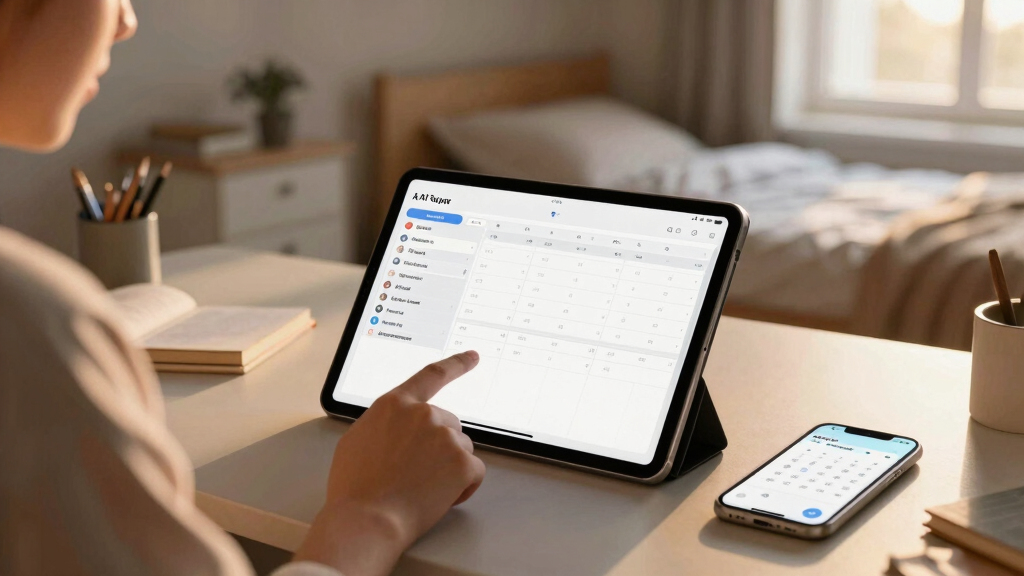
How We Picked
I gave the greatest weight to direct relevance to AI-supported student planning. Products earned higher positions when they could help a learner turn goals, deadlines, and workload information into concrete study actions. I then compared weekly and monthly usability, school-level fit, writing space, portability, durability, and organizational aids such as tabs, pockets, bookmarks, stickers, and punched pages. A feature moved a product upward only when it reduced planning friction or made assignments easier to review. This approach places the AI-centered workbook above conventional datebooks, even when a paper planner has a richer physical feature set.
Among the paper options, I ranked models by the students they serve rather than treating size and accessories as automatic upgrades. Large-format planners score well for complex schedules, while compact formats receive credit for being easier to carry every day. I also weighed value against useful structure; decorative extras mattered less than readable layouts, durable covers, and fast access to monthly or weekly pages. Teacher-facing material appears lower because its intended reader does not match the roundup’s main student audience.
| AI-powered student planner | Storage |
|---|---|
| Student Planner 2026-2027 | Double-sided back pockets |
| SUNEE Student Planner 2026-202 | Back pockets |
| Student Planner 2026-2027 | — |
| Student Planner 2026-2027 Mont | — |
| The Power of AI for Educators | — |
| AI-Powered Student Success Pla | — |
| Student Planner 2026-2027 | Back pockets |
| Student Planner 2026-2027 | — |
| Student Planner 2026-2027 Midd | — |
| SUNEE Elementary Student Plann | Double-sided pockets |
| SUNEE Elementary Student Plann | Back pockets |
| SUNEE Middle or High School Pl | Double-sided back pockets |
| SUNEE Student Planner 2026-202 | Back pockets |
| Student Planner 2026-2027 | — |
Factors to Consider When Choosing AI-powered Student Planners
I would begin by deciding whether the student needs actual AI guidance, a paper schedule, or a hybrid system. That choice matters more than cover color, stickers, or small differences in page size. The best purchase is the one that matches how the student captures assignments, plans study sessions, and reviews progress.
Separate AI Guidance From AI Branding
A planner with “AI” in its title does not automatically generate schedules, reschedule missed work, or connect with a school calendar. I would check whether the product contains prompts for working with AI, an embedded assistant, app access, or only general advice about artificial intelligence. A workbook can improve how a student asks an AI tool for help without providing any software itself. A paper datebook offers no automated planning, but it may still be the better daily interface for a student who remembers handwritten tasks. Buyers expecting reminders and automatic workload balancing need a digital service or separate AI platform. Clear expectations prevent paying for an AI label that does not match the intended workflow.
Match the Layout to the Student’s Workload
Weekly pages suit students who need to see homework across several subjects, while monthly spreads are better for exams, projects, and extracurricular commitments. I favor larger pages for dense schedules because cramped writing can turn a useful planner into an unreadable task list. A compact book works better when the student carries it between every class and records short assignment notes. Younger students may benefit from stronger visual divisions, while older students often need flexible space for deadlines and study blocks. A common mistake is choosing the smallest format for convenience even when six or seven classes exceed its writing capacity. The right layout should make the busiest school week easy to scan, not merely look tidy when empty.
Plan the Paper-and-AI Workflow Before Buying
A hybrid setup works only when each tool has a defined job. I would use AI for breaking projects into steps, estimating study time, and revising plans, then place the chosen actions in the paper planner. Copying every item between systems creates duplicate work and makes one version fall out of date. Students who rely on school portals can reserve the planner for daily priorities instead of rewriting the entire online calendar. A short weekly review also gives the student a chance to question unrealistic AI-generated schedules. The strongest system keeps one source for deadlines and one place for daily action.
Choose Age-Appropriate Planning Support
Elementary students often need visible cues, simple sections, and adult check-ins more than advanced scheduling methods. Middle-school students benefit from subject separation and clear weekly structure as they begin managing several teachers. High-school and college workloads call for more room to divide long assignments, record exams, and schedule independent study. I would avoid buying an open-ended planner for a learner who still needs prompts to identify the next action. At the other extreme, heavily guided pages can frustrate an older student who already has a personal system. The best age fit supplies enough scaffolding without adding busywork.
Pay More for Function, Not Accessories
A higher price makes sense when it buys a durable cover, binding that lies flat, useful pockets, or enough space to prevent abandonment. Stickers and decorative elements may encourage some students, but they do not compensate for weak page structure or poor durability. Waterproof covers have more practical value for planners carried beside drinks, sports gear, and lunch containers. Punched pages can also matter when a school expects students to keep the planner inside a binder. I would spend less on a simple model if the student mainly needs a portable deadline record. Premium features earn their cost when they support daily use across the full academic year.
Frequently Asked Questions
Do Any of These Student Planners Have Built-In AI?
The lineup does not clearly identify a planner with an embedded AI assistant, automatic scheduling engine, or live calendar integration. AI-Powered Student Success Planning Workbook is the closest match because its stated focus joins AI with student planning, but buyers should not assume that a printed workbook includes software access. Most other entries are conventional dated organizers. I would pair one of those books with a separate AI assistant if automatic task breakdown or schedule suggestions are wanted. Buyers seeking built-in automation should verify app access, subscription terms, and supported integrations before purchasing.
Is a Paper Planner Still Useful When a Student Uses AI?
Yes, because AI and paper solve different parts of the planning problem. AI can help turn an assignment into smaller tasks, while a paper planner provides a stable daily view without notifications. Handwriting can also make the student choose what deserves attention instead of accepting every generated suggestion. The drawback is that paper cannot automatically react when a deadline changes. I would use a paper planner as the daily commitment layer and keep changing deadlines in one digital calendar.
Which Planner Size Is Best for a Middle- or High-School Student?
A 6.5 × 8.3-inch planner makes sense for a student who carries it all day and records brief assignments. An 8.5 × 11-inch model is better for multiple classes, study blocks, and detailed project steps. The larger format becomes less appealing in a crowded backpack or on a small classroom desk. I would base the decision on the student’s heaviest week rather than an average one. If assignments regularly spill into margins, the larger page is worth the extra bulk.
Should Parents Choose a Dated Planner or an Undated AI Workbook?
A dated planner gives younger students clear calendar boundaries and makes teacher or parent check-ins easier. An undated workbook is more flexible for goal setting, reflection, and occasional AI-assisted planning sessions. The workbook may be abandoned if the student needs a visible place to record homework every day. A dated book can also waste pages when planning habits are inconsistent. I would choose the dated format for routine management and add the workbook when the student is ready to work on strategy and independent planning.
What Student Information Is Safe to Share With an AI Planning Tool?
I would limit input to assignment names, general deadlines, available study time, and broad learning goals. Students should avoid entering school login details, private records, full identifying information, or sensitive personal concerns. Parents and schools may also have rules governing which AI services students can use. Before connecting a calendar or uploading a syllabus, check the provider’s data retention and account controls. A paper planner is the safer choice when the workflow would otherwise require sharing confidential academic or personal data.
Conclusion
For the strongest match to the title, I recommend AI-Powered Student Success Planning Workbook as the best overall, especially for students who want AI prompts tied to goals and study strategy. The black 6.5 × 8.3-inch Student Planner is my best-value choice for straightforward daily scheduling, while the large SUNEE waterproof, punched model is the premium pick for demanding middle- or high-school workloads. Beginners are better served by the large SUNEE Elementary Planner with tabs, a bookmark, and pockets because its structure makes routines easier to learn. Students who prioritize portability should choose a compact SUNEE datebook, and educators designing classwide AI routines should choose The Power of AI for Educators as the specialist option. Most buyers will get the best result by pairing the right paper layout with a separate AI assistant rather than expecting one product to handle both jobs.
Halloween Picks
halloween
As an affiliate, we earn on qualifying purchases.



![Musk Swaps Grok Parameters For A 4-Model AI Router [2026] - Https://tech-insider.org/](https://thorstenmeyerai.com/wp-content/uploads/2026/10/musk-swaps-grok-parameters-for-a-4-model-ai-router-2026-https-tech-insider-org-featured-260x140.jpg)