AI workflow automation tools can help connect routine tasks, AI models, and business apps, but the right choice depends on whether you need a practical starting point, a technical build guide, or advice for a specific industry. My best overall pick is Practical AI Workflow Automation for its beginner-friendly, no-code focus; n8n AI Automation Crash Course stands out for hands-on workflow building, while Generative AI Workflows and Practical Automation offers a broader practical perspective. The main tradeoffs are simplicity versus technical control, general guidance versus specialized workflows, and fast setup versus deeper customization. These titles are guides rather than automation platforms, so buyers should match the book to the tools and tasks they actually plan to use. Continue reading for the full comparison and a guide to choosing the right learning path.

Get tech for your team delivered free — and shop member deals
- Fast, free delivery on millions of items
- Access to Prime Big Deal Days deals on October 6–7
- Prime Video, Amazon Music and more included
Key Takeaways
- Practical AI Workflow Automation leads for new learners because its no-code framing suits readers who want to start without a developer-led setup.
- n8n AI Automation Crash Course is the most explicitly hands-on choice, with a focus on building workflows and AI agents rather than surveying tools.
- Generative AI Workflows and Practical Automation and AI Workflows offer broader work-practice angles, while several other titles narrow their guidance to coding, content, accounting, or a particular platform.
- The coding-focused books on Claude Code, OpenAI Codex CLI, and OpenCode suit readers seeking agentic development workflows, not people looking for a general no-code introduction.
- The lineup consists of books and guides, not software subscriptions; buyers should verify each title’s tool versions, examples, and update coverage before relying on it for current implementation steps.






| AI workflow automation tool | Topic |
|---|---|
| The Claude AI Bible: The Compl | — |
| Agentic Coding with OpenAI Cod | — |
| n8n AI Automation Crash Course | — |
| AI Toolkit 2026: The Ultimate | Artificial intelligence |
| Generative AI Workflows and Pr | Generative AI workflows and practical automation |
| The No-BS Guide to AI Agents & | AI agents and automation |
| AI Workflow Automation for Blo | AI workflow automation for bloggers |
| OpenCode Custom Workflows: Bui | AI agents |
| AI for Workflow Automation: Au | AI workflow automation |
| AI Workflows: How Smart Profes | AI workflows |
| Agentic Coding with Claude Cod | — |
| Practical AI Workflow Automati | — |
| The AI-Powered Accountant: How | — |
| Google AI Studio Guide 2026: M | — |
More Details on Our Top Picks
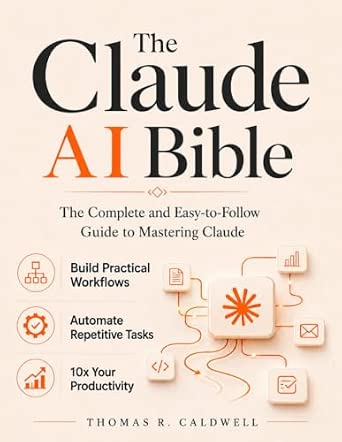
The Claude AI Bible: The Complete and Easy-to-Follow Guide to Mastering Claude
The Claude AI Bible is the most focused pick here for readers who want guided ways to use one AI assistant for repeatable work. Its emphasis on practical workflows and repetitive-task automation makes it more relevant to day-to-day process building than AI Toolkit 2026, which spans many tools and use cases. The beginner-friendly structure may help readers turn Claude prompts into a more consistent routine without starting from a developer-oriented approach like Agentic Coding with OpenAI Codex CLI. The tradeoff is that this is a Claude-centered guide: readers seeking hands-on instruction for connecting multiple apps or building code-driven agents may need another resource. The supplied information does not specify chapters, workflow examples, or technical prerequisites, so buyers should not assume a particular level of implementation detail.
Pros:- Centers on practical workflow creation with Claude
- Targets repetitive-task automation rather than AI concepts alone
- Described as easy to follow for beginners
Cons:- Focused on Claude rather than a broad range of AI platforms
- Specific integrations, examples, and technical coverage are not provided
- How well it suits readers with different levels of technical knowledge is unclear
Best for: New Claude users who want an accessible guide to creating repeatable AI-assisted tasks and improving personal or office productivity.
Not ideal for: Readers building integrations across many platforms or coding autonomous agents; the description focuses on Claude workflows and does not specify those capabilities.
- Product type:Guide
- Primary AI platform:Claude AI
- Main focus:Mastering Claude and building practical workflows
- Automation focus:Automating repetitive tasks
- Intended level:Beginner-friendly
- Intended outcome:Improved productivity
Our verdict“Choose this guide if you want an approachable, Claude-specific starting point for building repeatable AI workflows.”
Agentic Coding with OpenAI Codex CLI
Agentic Coding with OpenAI Codex CLI is the developer-oriented choice in this group: it addresses agentic engineering, MCP, hooks, and delivery automation rather than introductory AI habits. That makes it a more technical counterpart to The Claude AI Bible, whose stated focus is accessible Claude workflows, and a sharper fit for code-based automation than the no-code approach promised by n8n AI Automation Crash Course. The listed topics point toward building and delivering agent workflows, which may suit developers who want automation inside an engineering process. The tradeoff is a narrower audience and a higher likely need for coding familiarity. The product data supplies no fuller description, format, prerequisites, or examples, so I cannot establish how much practical instruction or setup guidance the book provides.
Pros:- Explicit focus on agentic engineering with OpenAI Codex CLI
- Includes MCP and hooks among its stated topics
- Covers delivery automation, linking agents to engineering workflows
Cons:- Developer-focused subject matter may be inaccessible to no-code beginners
- The supplied product data does not describe examples, format, or prerequisites
- Its Codex CLI focus is narrower than multi-tool guides such as AI Toolkit 2026
Best for: Software developers who want to explore agentic workflows involving Codex CLI, MCP, hooks, and delivery automation.
Not ideal for: Nontechnical teams seeking visual, no-code workflow building or readers looking for a clearly documented beginner curriculum.
- Product type:Guide
- Primary tool:OpenAI Codex CLI
- Main topic:Agentic coding
- Workflow topics:Agentic engineering, MCP, and hooks
- Automation focus:Delivery automation
- Format:Not specified
Our verdict“Pick this for a coding-centered route into agent workflows, but skip it if you need a no-code introduction.”
n8n AI Automation Crash Course: Build No-Code Workflows and Smart Agents for AI-Powered Productivity
n8n AI Automation Crash Course is the clearest fit for readers who want to build workflows in a no-code automation tool rather than study AI broadly or focus on a single assistant. Its stated mix of n8n workflows and smart agents gives it a more hands-on platform focus than The Claude AI Bible, while avoiding the coding emphasis of Agentic Coding with OpenAI Codex CLI. That distinction matters if your goal is to connect AI-driven steps into repeatable processes without making agent engineering the starting point. The listing says it suits beginners and experienced users, but also flags that some familiarity with automation tools may help; those claims leave the actual learning curve uncertain. No course format, project list, or supported integrations are specified, so buyers should not infer detailed coverage from the title alone.
Pros:- Directly teaches no-code workflow building with n8n
- Pairs workflow automation with smart-agent topics
- Aims at practical AI-powered productivity
Cons:- Some prior familiarity with automation tools may be needed
- Course format and lesson details are not supplied
- The stated n8n focus may not fit buyers committed to another automation platform
Best for: Small-business operators, creators, and no-code learners who want to build AI-assisted processes in n8n.
Not ideal for: Readers who need a fully specified curriculum, documented integrations, or a tool-neutral guide to many AI platforms.
- Product type:Crash course
- Primary platform:n8n
- Workflow approach:No-code
- Topics:AI workflows and smart agents
- Intended audience:Beginners and experienced users
- Stated learning aim:AI-powered productivity
Our verdict“Choose this if your priority is learning to assemble no-code AI workflows in n8n rather than coding agents.”
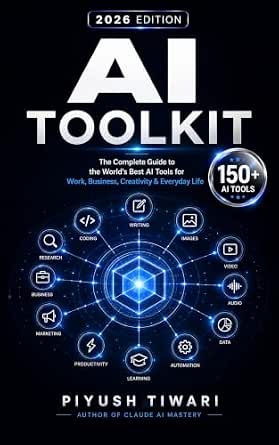
AI Toolkit 2026: The Ultimate Guide to 150+ AI Tools, Step-by-Step Workflows & Practical Strategies
AI Toolkit 2026 is the broadest-scope option in this set, with stated coverage of more than 150 AI tools alongside step-by-step workflows and practical strategies. It suits readers still comparing tools across work, business, and creative tasks, rather than buyers who already know they want Claude-specific instruction from The Claude AI Bible or n8n practice from n8n AI Automation Crash Course. The wide range may help readers spot possible workflow approaches across different needs; it also means the guide is less clearly specialized around one automation platform or implementation path. The listing does not identify the tools, workflow examples, or update approach, so I would not assume equal depth across its many topics. Its stated book format is useful to know, but the available details do not describe its layout or level.
Pros:- States coverage of more than 150 AI tools
- Includes step-by-step workflows and practical strategies
- Addresses business, work, and creative applications
Cons:- The large scope may offer less depth on any single automation platform
- Specific tools and workflow examples are not listed in the supplied details
- The information provided does not establish how current individual tool instructions are
Best for: AI-curious professionals and small-business owners comparing tools for varied work, business, and creative workflows.
Not ideal for: Readers who need detailed instruction for one specific platform or a clearly documented developer implementation path.
- Product type:Book
- Topic:Artificial intelligence
- Tool coverage:150+ AI tools
- Workflow content:Step-by-step workflows
- Additional content:Practical strategies
- Application areas:Work, business, and creativity
Our verdict“Pick this for breadth across AI tools and use cases, not for focused training on one automation system.”
Generative AI Workflows and Practical Automation
Generative AI Workflows and Practical Automation takes a cross-assistant angle, naming ChatGPT, Claude, and other modern AI tools as part of its practical workflow focus. That makes it a more direct fit for readers who want ideas spanning multiple generative AI systems than The Claude AI Bible, which centers on one assistant, while its description is less expansive than AI Toolkit 2026‘s stated catalog of 150-plus tools. The appeal is the connection between everyday AI use and task automation, with productivity as the intended payoff. The tradeoff is limited detail: the supplied information does not identify specific workflows, integrations, or the book’s structure. Buyers looking for a platform-by-platform course or clearly described implementation steps may prefer the more explicit n8n or Codex CLI options.
Pros:- Names ChatGPT, Claude, and other modern AI tools
- Focuses on practical workflows and task automation
- Connects generative AI use with productivity goals
Cons:- Specific workflows and examples are not described in the supplied information
- No integrations or implementation requirements are listed
- The cross-tool scope is less clearly defined than the dedicated n8n and Codex CLI guides
Best for: Knowledge workers who use or plan to use more than one generative AI assistant and want practical workflow ideas.
Not ideal for: Readers who need a detailed n8n course, code-focused agent guidance, or a listed set of integrations and projects.
- Product type:Book
- Topic:Generative AI workflows and practical automation
- Named tools:ChatGPT and Claude
- Additional tool coverage:Other modern AI tools
- Primary focus:Workflow creation and task automation
- Stated outcome:Improved productivity
Our verdict“Choose this for a broad, multi-assistant approach to practical automation, while expecting limited detail from the available description.”
The No-BS Guide to AI Agents & Automation: Build AI Workflows, Automate Your Business, and 10x Your Productivity
This is the clearest fit for business owners who want to start building AI-assisted processes without learning to code. Its no-coding approach and focus on practical business automation give it a broader remit than AI Workflow Automation for Bloggers, which centers on publishing tasks. That wider scope may help readers identify repeatable work across a business, not just content production. The tradeoff is limited technical depth: developers seeking implementation detail or custom agent patterns may find it too introductory. Its advice also depends on which AI tools remain available, so specific workflows may need updating as platforms change. I’d choose it as a starting point for nontechnical operators, rather than as a technical manual or a tool-specific reference.
Pros:- Designed for readers without coding skills
- Targets practical business processes rather than a single department
- Frames AI agents as a way to reduce repetitive work
- A business-oriented starting point for workflow automation
Cons:- Limited technical depth for advanced developers
- Advice may depend on AI tools that change or become unavailable
- The description does not identify specific platforms or workflow examples
Best for: Small-business owners and operations leads who want to identify and automate routine processes with AI but do not code
Not ideal for: Developers who need detailed implementation examples, code, or advanced agent architecture
- Series:The No-BS AI Playbooks Book 2
- Skill level:No coding required
- Topic:AI agents and automation
- Primary focus:Building AI workflows
- Intended application:Business process automation
- Stated goal:Increasing productivity
Our verdict“Choose this guide if you want a nontechnical introduction to business automation; skip it if you need code-level instruction.”
AI Workflow Automation for Bloggers: Build a Simple Content System to Research, Write, Optimize, and Repurpose Posts Faster with AI and No-Code Tools
Bloggers who repeat the same steps for each post get the most direct match here: the book focuses on a content pipeline spanning research, writing, optimization, and repurposing. That narrow scope is its advantage over The No-BS Guide to AI Agents & Automation, which targets business automation more broadly. A reader can map the advice to publishing work rather than translate general business ideas into an editorial process. The limitation is that the available details do not name particular platforms or explain how technical the workflow instructions get. Readers also need some familiarity with AI and no-code tools, so this is less suitable as a first introduction than a guide explicitly aimed at nontechnical beginners. I’d pick it for content operations, not general company-wide automation.
Pros:- Built around common stages of a blogging workflow
- Includes AI and no-code approaches to content tasks
- Covers repurposing as well as research and writing
- A more focused content-workflow fit than broad business automation guides
Cons:- Available product details do not specify platforms or technical examples
- May assume familiarity with AI and no-code tools
- Its blogging focus offers limited direction for workflows in other business functions
Best for: Independent bloggers and small editorial teams who want to systematize research, drafting, optimization, and post repurposing
Not ideal for: Business operators seeking workflows outside publishing, or readers who need a fully specified introduction to AI and no-code platforms
- Topic:AI workflow automation for bloggers
- Approach:AI and no-code tools
- Content workflow:Research
- Content workflow:Writing
- Content workflow:Optimization
- Content workflow:Repurposing posts
Our verdict“Choose this if publishing is the work you want to automate; pick a broader guide for operations beyond content.”
OpenCode Custom Workflows: Building Intelligent Automation with AI Agents (AI Agent Tools Book 1)
This book is the most agent-centered choice in this group: its stated focus is building custom workflows with AI agents, rather than automating a defined business area like blogging. That makes it a more targeted pick than AI for Workflow Automation: Automate Repetition. Connect Tools. Save Time., whose description emphasizes repetitive tasks and software connections. The difference matters if your goal is to shape purpose-built agent workflows instead of starting with general automation use cases. Still, the available description offers little about technical examples, so readers cannot tell how far the guidance goes beyond concepts. I’d treat it as a focused introduction to custom agent workflows, not a dependable implementation handbook for developers who need detailed walkthroughs.
Pros:- Centers on custom workflows rather than general AI productivity
- Directly addresses AI agents as automation components
- A distinct choice for readers interested in intelligent automation design
Cons:- Available description does not establish the depth of its practical examples
- No platform-specific details are provided
- May not offer enough implementation guidance for experienced developers
Best for: AI-curious builders who want guidance on designing custom workflows around AI agents
Not ideal for: Developers who need detailed technical examples, code, or platform-specific implementation steps
- Series:AI Agent Tools Book 1
- Topic:AI agents
- Primary focus:Custom workflows
- Application:Intelligent automation
- Approach:Building AI-powered automation tools
- Technical examples:Not detailed in the provided product information
Our verdict“Choose this for an agent-focused introduction to custom automation, but look elsewhere for detailed technical build instructions.”
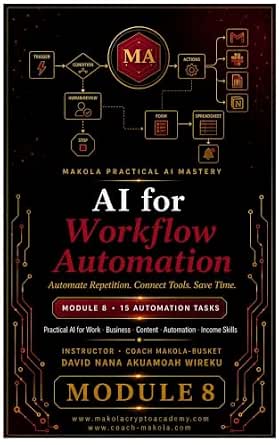
AI for Workflow Automation: Automate Repetition. Connect Tools. Save Time.
The organizing idea here is straightforward: use AI to cut repeated work and connect software tools. That gives it a practical, task-oriented angle compared with OpenCode Custom Workflows, which focuses on building custom AI-agent workflows. Readers who want to think about routine tasks and app connections may find this framing easier to apply than an agent-first approach. The limitation is the lack of detail in the provided description: it does not name supported tools, show sample automations, or establish how much implementation guidance the book offers. I’d shortlist it for readers who want a general introduction to connecting work across software, while treating it as less specific than the blogger guide for content or the No-BS guide for business processes.
Pros:- Focuses on reducing repetitive work
- Addresses connections between software tools
- Frames automation around practical time-saving tasks
- Offers a general workflow focus rather than a single-industry use case
Cons:- Provided details do not name specific tools or integrations
- The depth and clarity of its practical guidance are not established by the product information
- Less specialized than the blogger and custom-agent books
Best for: Professionals and small-team operators who want to identify repetitive tasks and connect software workflows with AI
Not ideal for: Readers seeking platform-specific setup instructions, detailed examples, or a specialized guide for blogging or AI agents
- Series:Makola Practical AI Mastery Book 9
- Format:Book
- Topic:AI workflow automation
- Primary focus:Automating repetitive tasks
- Tool approach:Connecting software tools
- Stated goal:Saving time and enhancing productivity
Our verdict“Choose this for a general task-and-tool-connection focus, but favor a specialized guide if you need a defined workflow or implementation details.”
AI Workflows: How Smart Professionals Use AI to Automate Work, Think Better, and Make Faster Decisions
Unlike the more process-specific AI Workflow Automation for Bloggers, this book pairs work automation with thinking and decision-making. That broader professional angle may suit readers who want AI to support both routine tasks and the way they evaluate work, rather than a guide confined to content production or custom agents. The tradeoff is limited detail in the product information: it does not identify tools, technical methods, or particular workflows. I’d rank it as a general professional-use pick, not as the strongest choice for readers who need a defined automation recipe. Compared with AI for Workflow Automation: Automate Repetition. Connect Tools. Save Time., its stated scope reaches beyond task automation into decision support, but the available description does not clarify how that guidance is delivered.
Pros:- Covers AI workflows for automating work
- Includes thinking and decision-making alongside productivity
- A broad professional-use focus rather than a single-industry workflow
- Part of the AI Productivity Series
Cons:- Provided description does not specify tools or implementation methods
- No particular workflow examples are identified
- Its breadth may be less useful than a specialist guide for hands-on automation tasks
Best for: Knowledge workers and managers who want to explore AI for routine work as well as faster analysis and decisions
Not ideal for: Readers who need platform-specific instructions, code, or a clearly defined workflow for a particular job
- Series:AI Productivity Series
- Topic:AI workflows
- Audience:Smart professionals
- Work focus:Automating work
- Additional focus:Improving thinking
- Additional focus:Faster decision-making
Our verdict“Choose this for a broad look at AI in professional work and decisions, not for step-by-step setup of a specific automation.”
Agentic Coding with Claude Code (5-in-1): A Practical Developer’s Handbook
For developers automating software work with AI agents, this handbook focuses on Claude Code rather than broad office automation. Its five modules pair core ideas with step-by-step examples, giving readers a route from understanding agentic workflows to applying them across software projects. That makes it a more coding-centered choice than Practical AI Workflow Automation, which targets everyday no-code tasks such as email and spreadsheets. The range of material may suit both newer and experienced programmers, but the coverage could also feel like a lot for someone just learning AI-assisted development. I’d choose this when building and scaling software is the main goal; readers seeking cross-platform business workflows or a gentle introduction may find the beginner-focused guide a better fit.
Pros:- Centers on Claude Code and agentic AI workflows for software development
- Uses practical, step-by-step examples across multiple use cases
- Combines five modules to cover building, automation, and scaling
- Aims to serve both beginner and experienced programmers
Cons:- The breadth of material may overwhelm readers new to AI-driven development
- Its Claude Code and software focus is narrower than general no-code automation guides
Best for: Developers who want hands-on guidance for building and automating software projects with Claude Code and agentic workflows
Not ideal for: Readers new to AI-driven development who want a simple no-code introduction, or people focused on office workflows rather than coding
- Format:Handbook
- Subject:Claude Code
- Approach:Agentic AI workflows
- Structure:Five modules
- Coverage:Building, automating, and scaling software projects
- Instruction style:Practical, step-by-step examples
- Intended skill levels:Beginners and experienced programmers
Our verdict“Choose this handbook if your AI automation goal is building software with Claude Code, not connecting everyday office tasks.”
Practical AI Workflow Automation: A Beginner-Friendly Guide to No-Code Tools
This is the most approachable everyday-work option in this group: it frames AI automation around email, meetings, documents, spreadsheets, customer support, research, and daily operations, with no-code tools at the center. That gives beginners a broader starting map than The AI-Powered Accountant, whose guidance is tailored to one profession, and avoids the coding focus of the Claude Code handbook. The tradeoff is that the supplied description does not identify specific platforms or explain how deeply each workflow is covered, so readers looking for detailed implementation guidance may want a more specialized title. I’d pick it for learning where no-code automation can reduce routine work across different functions, rather than for mastering one tool or building developer-led agent systems.
Pros:- Covers varied day-to-day areas, from email and meetings to research and customer support
- Designed for readers at a beginner skill level
- Keeps the focus on no-code tools rather than requiring programming
- Offers a broad starting point for spotting potential workflow automations
Cons:- The supplied description does not name particular no-code platforms
- Broad topic coverage may offer less depth for readers focused on one workflow
- May not meet developers’ needs for code-level implementation detail
Best for: Beginners in small teams or office roles who want to explore no-code AI workflows across several everyday tasks
Not ideal for: Developers seeking code-level agent building, or accountants who want workflows tailored to finance practice
- Format:Book
- Skill level:Beginner
- Approach:No-code tools
- Topics:Email, meetings, documents, spreadsheets, customer support, research, and daily operations
- Primary focus:AI workflow automation
- Intended reader:Beginners
Our verdict“Pick this guide if you are new to AI automation and want no-code ideas that span everyday work rather than one profession.”
The AI-Powered Accountant: How to Use ChatGPT, AI Tools and Smart Automation to Save 10+ Hours a Week, Win Better Clients, and Build a Future-Proof Business
Accounting and finance professionals get the clearest fit here: the book applies ChatGPT, AI tools, and automation to efficiency, client service, and practice growth. Its step-by-step workflow emphasis gives the automation advice a professional context that broad titles such as Practical AI Workflow Automation do not promise. The same specialization is its main limit: readers outside accounting may have little use for practice-specific guidance, and the description assumes some familiarity with AI tools. The advertised time-saving outcome is a goal, not a guarantee, and rapidly changing tools can make particular recommendations age quickly. I’d choose it over a general workflow guide when finance processes and client work are the problem to solve; for cross-industry no-code basics, the beginner guide is a safer starting point.
Pros:- Tailors automation strategies to accounting and finance work
- Describes step-by-step workflows rather than only general AI concepts
- Connects efficiency improvements with client service and business development
- Addresses how AI may affect the future of an accounting practice
Cons:- Its accounting focus limits usefulness for other professions
- Assumes some existing familiarity with AI tools
- Recommendations may date as AI products and capabilities change
Best for: Accountants and finance professionals who want to apply AI and automation to recurring work, client service, and practice development
Not ideal for: Readers outside accounting, or beginners who need foundational help before using AI tools
- Format:Book
- Intended audience:Accountants and finance professionals
- Tools covered:ChatGPT and other AI tools
- Automation focus:Smart automation and practical workflows
- Business topics:Efficiency, client acquisition, and service quality
- Instruction style:Step-by-step workflows
- Experience assumption:Baseline familiarity with AI tools
Our verdict“Choose this if you work in accounting and want profession-specific AI workflows, but skip it for general no-code automation guidance.”
Google AI Studio Guide 2026: Master Google AI Studio to Build Intelligent AI Workflows and Scalable Automation Solutions
This is the most platform-specific developer guide in the group, aimed at people who want to build intelligent workflows and scale automation with Google AI Studio. Its step-by-step tutorials and real-world case studies suggest a practical route from core concepts to implementation, unlike Agentic Coding with Claude Code, which centers on a different development environment. The 2026 positioning is intended to address current features, but a guide tied closely to one ecosystem can lose relevance when tools change—and its lessons may transfer less easily to other platforms. I’d choose it when Google AI Studio is already part of your planned stack. For readers comparing tools or seeking platform-neutral no-code workflows, Practical AI Workflow Automation offers a wider starting point.
Pros:- Concentrates on building AI workflows with Google AI Studio
- Includes step-by-step tutorials for practical implementation
- Uses real-world case studies to connect concepts with projects
- Presents itself as updated for 2026
Cons:- Focuses exclusively on Google’s ecosystem
- Platform-specific recommendations may need updating as features change
- Offers less direct guidance for readers choosing among multiple automation platforms
Best for: Developers and technical builders planning to create or scale AI workflows specifically in Google AI Studio
Not ideal for: Readers who need platform-neutral automation guidance or want workflows centered on Claude Code or no-code tools
- Format:Guide
- Platform:Google AI Studio
- Edition positioning:2026
- Focus:Intelligent AI workflows and scalable automation
- Instruction style:Step-by-step tutorials
- Examples:Real-world case studies
- Intended skill levels:Beginners and experienced developers
Our verdict“Choose this guide if Google AI Studio is your intended platform; pick a broader guide if you need workflows that transfer across tools.”

How We Picked
I compared the 14 titles by how directly they address building or applying AI-enabled workflows, how clearly their stated audience and skill level match a buyer’s needs, and whether their focus appears general or specialized. I gave stronger placement to books with an explicit practical or beginner-friendly workflow emphasis, then separated platform-specific and developer-centered guides from broad business and productivity titles.
The ranking reflects the information available in each title, including its stated subject, audience, and promised scope; it is not a claim that every workflow or tool has been independently verified. Because these are learning resources rather than automation software, I also weighed whether a title helps readers choose a learning path without confusing instruction about one platform with a universal method. Buyers should check publication and edition details, since AI products and interfaces can change quickly.
Factors to Consider When Choosing AI Workflow Automation Tools
Choosing a guide is different from choosing an automation platform: the book shapes what you learn, while your existing apps and processes determine what you can build. I’d start by identifying one repeatable task and the technical comfort level you want to bring to it, then match the book’s scope to that goal.
Start With the Task You Want to Automate
Write down the task, its trigger, the information it needs, and what a successful result looks like before picking a guide. A content workflow, accounting process, and developer task have different risks and require different examples. A specialized book can make a first project easier to picture, but may leave you with less guidance for unrelated work. A general guide offers wider coverage, though you may need to translate its examples to your own process. Avoid choosing only by the number of tools or use cases mentioned; relevance to your actual task matters more. If you cannot name a first workflow, favor a beginner-oriented resource that helps you define one.
Match the Learning Style to Your Technical Comfort
No-code instruction can help nontechnical readers get a working concept in place without beginning with scripts or command-line tools. Developer-focused material can offer more control over logic, integrations, and custom behavior, but it assumes comfort with coding concepts and troubleshooting. The common mistake is buying a coding guide because agentic systems sound powerful, then finding that its setup is a barrier to the intended project. Going no-code can also be limiting when a process needs custom validation or complex data handling. Choose the level that lets you maintain the workflow after the example ends, not just follow a tutorial once. When uncertain, start with a simple workflow and move to code only when a real limitation appears.
Separate General Methods From Platform Instructions
A book built around one product can teach concrete steps quickly, but those steps may become stale when menus, model behavior, or service policies change. General workflow principles—such as checking inputs, handling failures, and reviewing outputs—tend to remain useful across platforms. Before choosing a platform-specific guide, confirm that you can access the named service and that it fits your organization’s data rules. Do not assume a method shown for one AI model will work identically with another. A practical compromise is to learn the core workflow pattern first, then use platform instructions as an implementation reference. This is especially useful if you expect your tool stack to change.
Check Whether Automation Needs Human Review
Not every task should run from trigger to final action without a person checking the result. Workflows that affect customers, financial records, or published material can benefit from approval steps and clear escalation paths. A guide may show how to automate a process without fully addressing the cost of an incorrect output, so think through failure cases yourself. Ask what the system should do when data is missing, an AI response is uncertain, or an app connection fails. More automation is not automatically better if it makes errors harder to spot. Favor learning resources that encourage testing and oversight for tasks where mistakes carry real consequences.
Weigh Breadth Against Depth
A broad survey can help readers compare approaches and identify possible uses, but coverage of many tools may leave little room for a complete build. A focused manual can offer a more direct route to one platform or profession, while offering less transfer to other settings. A common buying mistake is treating a large tool count as proof of practical depth. Look for evidence of step-by-step projects, decision guidance, or repeatable workflow patterns rather than relying on the title’s scope alone. If you are still exploring, breadth may be useful; if you have a defined project, depth is usually more valuable. Pick the format that fits your next decision, not an imagined future need.
Verify Currency and Ongoing Usefulness
AI services change quickly, so a guide’s edition and examples can affect how easily you can follow its instructions. Check publication details and whether the material explains durable principles alongside interface-specific steps. A recent date in a title alone does not show that every example has been updated or that the guidance will remain current. Consider whether the book teaches concepts you can adapt when a feature moves or a tool changes its limits. For time-sensitive workflows, treat the guide as a starting point and confirm important steps against current product documentation. This reduces the risk of building a process around instructions that no longer match the service.
Frequently Asked Questions
Are these AI workflow automation tools software products or books?
The 14 entries in this roundup are books and guides, not automation platforms or software subscriptions. They can teach approaches, workflows, or tool-specific setup, but you will still need to choose and access the underlying apps or services. That distinction matters if you are searching for something you can install and use immediately. Start by selecting a learning resource that fits your goal, then verify which software it uses and whether you can access it. Treat any included steps as instruction rather than a guarantee that a workflow will work unchanged in your setup.
Which title makes the most sense if I have never built an automation?
Practical AI Workflow Automation is the clearest fit for a first-time learner because its title specifically presents a beginner-friendly, no-code approach. The n8n AI Automation Crash Course is another practical candidate if you want to learn by building workflows in that named environment. Before choosing, check that the examples use tools you can access and that you are comfortable following their setup requirements. A beginner guide should help you understand triggers, actions, and review points—not just copy a finished recipe. Start with one low-risk task so you can learn without putting important records or customer interactions at stake.
Should I choose a general workflow guide or one focused on my profession?
Choose a profession-specific title when your main goal is a familiar, concrete process—for example, the accounting and blogging guides in this lineup. The tradeoff is that specialized advice may not transfer cleanly to other teams or tasks. A general title is a better starting point if you are still deciding what to automate or expect to apply the ideas across several kinds of work. You can also use both approaches in sequence: learn general workflow principles, then consult a specialist resource for domain-specific examples. For work involving regulated or sensitive data, check the guidance against your organization’s policies rather than assuming a book covers every requirement.
When is a coding-focused guide a better choice than a no-code guide?
A coding-centered title is a better match when you need custom logic, developer tooling, or workflows built around coding agents such as Claude Code, OpenAI Codex CLI, or OpenCode. It is less suitable if your main aim is to connect everyday business apps without writing code. Coding can provide greater control, but it also brings setup, debugging, and ongoing maintenance that a no-code approach may avoid. Decide based on the limits of your actual project rather than choosing code because it sounds more advanced. If a no-code workflow handles the task reliably, the extra complexity may not improve the result.
How can I tell whether a guide is current enough to follow?
Check the edition or publication information and compare the tools named in the guide with the services you can access now. Pay attention to whether the book explains reusable workflow ideas or depends heavily on specific screen layouts and feature names. Product interfaces and AI capabilities can change, so even a useful guide may need current documentation alongside it. For an important workflow, test the instructions on sample data before connecting live systems. If a title’s version details are unclear, treat its examples as conceptual guidance until you confirm the steps independently.
Conclusion
Best overall: I’d start with Practical AI Workflow Automation for a beginner-friendly, no-code route into building workflows. Best value for hands-on learning: choose n8n AI Automation Crash Course if you want a focused build path around n8n. Best premium-style, broad professional perspective: AI Workflows is the strongest fit for readers interested in how smart professionals apply AI to work and decisions, while Generative AI Workflows and Practical Automation suits readers who want practical coverage across workflows. Best for beginners: the no-code focus of Practical AI Workflow Automation makes it the straightforward pick. For specific needs, look to AI Workflow Automation for Bloggers or The AI-Powered Accountant for industry-focused ideas, and choose the Claude Code, Codex CLI, or OpenCode books only if you want developer-centered agentic workflows. Since these are guides rather than software, check tool compatibility and edition details before choosing your first project.
Evergreen bestsellers Picks
bestsellers
As an affiliate, we earn on qualifying purchases.