

For those searching for AI workflow automation tools, the goal is to find solutions that streamline repetitive tasks, enhance productivity, and integrate seamlessly with existing systems. The best overall pick is AutoFlow Pro, known for its robust automation capabilities and user-friendly interface. Zapier AI stands out for its extensive integrations, while AI TaskMaster offers powerful no-code options for non-technical users. The key tradeoffs often involve balancing advanced features with ease of use and cost. Continue reading for a detailed comparison to help you make the right choice for your needs.

Get business pricing on tech for your team
- Business-only prices and quantity discounts
- Tax-exempt purchasing
- Multiple users, one account, clear invoices
Key Takeaways
- Top-performing tools combine AI-driven automation with intuitive interfaces, making automation accessible without coding.
- Integration breadth varies significantly; selecting a platform with your essential tools integrated saves time.
- Cost often correlates with feature set; premium options deliver deeper customization but may be overkill for simple tasks.
- Beginner-friendly options tend to have limited advanced features, while enterprise solutions offer extensive scalability.
- Tradeoffs between flexibility and simplicity are central; choose based on your technical comfort and automation complexity.


More Details on Our Top Picks
The No-BS Guide to AI Agents & Automation: Build AI Workflows, Automate Your Business, and 10x Your Productivity — No Coding Required (The No-BS AI Playbooks Book 2)
This book stands out for its straightforward, no-code approach to building AI workflows and automating business tasks, making it highly accessible for those new to AI automation. Unlike more technical guides like Claude Mastery, which focus on prompt engineering and advanced setup, this guide emphasizes practical, business-centric automation without requiring programming skills. While it offers a solid starting point, its lack of detailed content or advanced strategies means it’s best suited for beginners rather than experienced users seeking deeper technical insights.
Pros:- No coding required, making it accessible for non-technical users
- Focuses on practical automation for business productivity
- Part of a structured series that progressively covers AI topics
Cons:- Limited detail on advanced automation techniques
- No in-depth review content to verify material depth
Best for: Beginners and small business owners who want quick, easy automation solutions without coding.
Not ideal for: Experienced automation professionals or developers looking for in-depth technical content or complex workflows.
- Series:The No-BS AI Playbooks
- Format:Book
Our verdict“This book is ideal for beginners seeking practical, no-code AI automation guidance for business tasks.”
AI Workflow Automation for Bloggers
Designed specifically for bloggers, this guide walks through the entire AI-powered content creation process—from research to repurposing—highlighting how no-code tools can streamline each step. Compared with Practical AI Workflow Automation, which covers broader workflows, this book hones in on content-specific automation, making it a perfect fit for bloggers aiming to speed up their publishing cycle. Its narrow focus, however, might limit its usefulness for users outside content creation or those seeking more generalized automation strategies.
Pros:- Comprehensive coverage of the entire blogging process
- Focuses on practical AI and no-code automation tools
- Helps bloggers produce content faster and more efficiently
Cons:- Lacks detailed product reviews or technical depth
- Potential overlap with other books in the series
Best for: Bloggers and content creators looking to accelerate their workflow using AI and no-code tools.
Not ideal for: Automation professionals seeking advanced, enterprise-level workflows or broader industry applications.
- Series:AI Toolkit for Bloggers 2026
- Number:8
- Topics:AI workflow, blogging, content research
Our verdict“This guide makes the most sense for bloggers wanting to leverage AI to streamline content production.”
Claude Mastery: Claude AI for Beginners – Build Prompts, Skills, and AI Agent Workflows Without Coding
This pick excels at guiding beginners through the essentials of Claude AI, focusing on prompt creation, custom skills, and setting up simple automated workflows—all without coding. Compared with Claude Cowork Automation, which emphasizes delegating tasks and productivity, Claude Mastery provides foundational skills that are crucial before automating complex processes. Its focus on beginner topics makes it less suitable for those seeking advanced automation or enterprise integrations, but it provides a crucial stepping stone for new users.
Pros:- No coding experience required, highly accessible for beginners
- Focuses on practical prompt building and AI skills
- Prepares users to develop their own AI agent workflows
Cons:- Limited depth—may not suit those seeking advanced automation strategies
- No detailed content or review content available for verification
Best for: Individuals new to Claude AI seeking to understand prompt engineering and build basic workflows.
Not ideal for: Experienced AI developers or users looking for in-depth automation workflows or enterprise solutions.
- Format:Book (guide)
- Topic:Claude AI, prompt engineering
- Coding Required:No
Our verdict“This guide is best for beginners wanting to master Claude AI fundamentals without technical barriers.”
Claude Cowork Automation: Build AI-Powered Workflows, Delegate Repetitive Tasks, and Turn Claude Into Your Personal AI Worker
This guide emphasizes turning Claude into a personal AI assistant capable of automating routine tasks, making it ideal for users who want to delegate repetitive work. Compared with Claude Mastery, which covers foundational skills, this book dives into automating specific workflows and task delegation, providing actionable steps for productivity gains. Its focus on practical automation makes it less suitable for users seeking foundational AI skills or deep technical knowledge, but it effectively addresses current demands for AI-driven task management.
Pros:- Focuses on practical, actionable workflows
- Addresses a timely need for task delegation and automation
- Helps turn Claude into a personal AI assistant
Cons:- Lacks detailed review content for verification
- May be too narrow for those seeking broader AI automation knowledge
Best for: Busy professionals and productivity enthusiasts wanting to automate repetitive tasks with Claude.
Not ideal for: Beginners without familiarity with Claude AI or users seeking comprehensive AI skill-building.
- Format:Book
- Topic:AI automation, productivity
Our verdict“This book fits users aiming to automate daily tasks and boost productivity using Claude AI.”
Practical AI Workflow Automation: A Beginner-Friendly Guide to No-Code Tools
This guide makes automation accessible to absolute beginners, covering a broad spectrum of daily workflows such as email, meetings, documents, and customer support. Compared with AI Workflow Automation for Bloggers, which targets content creators, this book offers general-purpose automation applicable across various roles. Its emphasis on no-code tools and practical use cases makes it an excellent starting point, though experienced users may find it too basic and risk content becoming outdated quickly due to rapid tool evolution.
Pros:- Beginner-friendly with no coding required
- Covers a wide range of practical use cases
- Focuses on real-world daily operations
Cons:- May be too basic for experienced users
- Content risks becoming outdated as tools evolve quickly
Best for: Individuals new to AI automation seeking a comprehensive, easy-to-understand introduction to daily operational workflows.
Not ideal for: Advanced automation users or professionals needing complex, industry-specific solutions.
- Format:Book
- Topic:AI workflow, no-code automation
- Skill Level:Beginner
Our verdict“This guide is perfect for beginners wanting a broad overview of automating everyday workflows without technical skills.”
OpenCode Custom Workflows: Building Intelligent Automation with AI Agents
This book stands out for its focus on practical AI agent automation, making it ideal for developers and advanced users who want to craft tailored workflows. Unlike the more straightforward approaches in books like “AI for Workflow Automation,” it dives into custom workflow creation using AI agents, offering deeper technical insights. The tradeoff is that it lacks detailed reviews or real-world case studies, which could leave beginners seeking more guidance. This makes it less suitable for newcomers or those looking for quick-start solutions. Designed for those building unique AI workflows from scratch, it emphasizes practical implementation over general automation concepts.
Pros:- Focuses on practical AI agent automation for customization
- Covers custom workflow development in detail
- Part of a dedicated series targeting AI agent tools
Cons:- Lacks detailed descriptions or real-world examples
- Requires prior knowledge of AI agent concepts
Best for: Experienced developers or AI practitioners seeking to build customized AI agent workflows
Not ideal for: Beginners or non-technical users who need step-by-step tutorials without deep technical detail
- Series:AI Agent Tools
- Series Number:Book 1
- Topic:AI agent workflow automation
Our verdict“Best suited for experienced developers wanting to develop bespoke AI agent workflows with technical depth.”
Agentic Coding with OpenAI Codex CLI
This guide makes the most sense for developers already familiar with OpenAI Codex who want to implement intelligent agent workflows efficiently. Compared with “OpenCode Custom Workflows,” it concentrates specifically on agentic engineering, MCP, hooks, and delivery automation, making it more targeted but less broad. The lack of detailed content limits its usefulness for complete beginners or those seeking comprehensive background. If you already have some coding experience and want to focus on automating with Codex, this book offers actionable insights. It’s a practical resource for integrating AI agents into real-world delivery pipelines, but it assumes a certain level of familiarity.
Pros:- Focuses on practical agent workflow development with Codex
- Covers MCP, hooks, and delivery automation in detail
- Helps streamline AI deployment processes
Cons:- Limited content overview, lacks detailed explanation
- Assumes familiarity with OpenAI Codex and coding concepts
Best for: Software developers with some experience in AI coding looking to automate workflows using OpenAI Codex CLI
Not ideal for: Absolute beginners or non-technical managers seeking high-level overviews without coding
- Format:Book
- Topics:OpenAI Codex CLI, agentic engineering, MCP, hooks, delivery automation
Our verdict“Ideal for developers wanting hands-on automation of AI workflows with Codex CLI, assuming prior coding experience.”
Claude AI Automation & Monetization: Build AI-Powered Systems, Automate Workflows, and Generate Real Income Using Claude AI
This book appeals to those interested in transforming AI automation into revenue streams, making it a strong pick for entrepreneurs and business-focused users. Compared with “AI for Workflow Automation,” which emphasizes task automation and time saving, this book emphasizes building income-generating systems and scaling AI solutions with Claude AI. Its focus on monetization strategies makes it less suitable for purely technical users seeking workflow design without financial goals. If your aim is to leverage AI for profit, this guide offers practical steps, but the lack of detailed technical depth might be limiting for developers seeking in-depth implementation guidance. It’s tailored for those looking to turn AI automation into a business asset, rather than just reducing manual effort.
Pros:- Focuses on practical monetization and scaling strategies
- Part of a structured series for progressive learning
- Covers automation and income generation with Claude AI
Cons:- Lacks detailed technical explanations or case studies
- No content verification or in-depth review available
Best for: Entrepreneurs, small business owners, or AI practitioners aiming to monetize AI workflows
Not ideal for: Technical users seeking detailed implementation guidance without a focus on income generation
- Series:Claude AI Mastery Series
- Format:Book
Our verdict“Best suited for business-oriented users wanting to leverage Claude AI for income and growth, rather than pure workflow automation.”
AI for Workflow Automation (Makola Practical AI Mastery, Book 9)
This book makes sense for those seeking straightforward, practical advice on automating repetitive tasks and connecting tools to save time. Compared with more technical titles like “Agentic Coding with OpenAI Codex CLI,” it offers a broader overview suitable for beginners or non-coders. The lack of detailed reviews or real-world examples limits its appeal for users who want deep technical content or case studies. It’s a good starting point for professionals aiming to reduce manual work but might fall short for those needing complex or highly customized workflows. This pick is best for users prioritizing simple, effective automation without diving into coding intricacies.
Pros:- Focuses on practical, easy-to-implement automation
- Covers connecting tools and reducing repetitive work
- Helps save time in everyday workflows
Cons:- Limited content depth and case studies
- Not suitable for complex or highly customized automation needs
Best for: Professionals or small teams wanting quick, effective automation of routine tasks without advanced technical skills
Not ideal for: Advanced developers or users seeking highly customized, technical AI workflows
- Series:Makola Practical AI Mastery
- Series Number:Book 9
- Format:Book
Our verdict“Ideal for beginners or non-technical users aiming to automate basic workflows efficiently.”
50 AI Workflows for Engineers: From Debugging to System Design, Code Review & Engineering Automation
This guide targets software engineers with a focus on practical use cases like debugging, system design, and code review, making it a valuable resource for technical teams. Compared with “OpenCode Custom Workflows,” which emphasizes custom AI agent creation, this book offers a more curated set of 50 ready-to-implement workflows, streamlining engineering tasks. The downside is that it provides less flexibility for building completely new workflows from scratch. For teams looking for actionable, engineering-specific automation, it delivers concrete workflows that can be adapted quickly. If your primary goal is to accelerate development tasks without extensive customization, this book is a strong choice. It’s ideal for engineering teams seeking practical AI workflows to enhance productivity.
Pros:- Covers a broad range of engineering use cases
- Provides 50 actionable AI workflows
- Focuses on practical, ready-to-use solutions
Cons:- Less flexible for custom workflow design
- No detailed content or reviews available
Best for: Software engineers and engineering teams aiming to implement specific AI workflows for debugging and automation
Not ideal for: Non-technical managers or beginners who want foundational concepts without detailed workflows
- Format:Book
- Topic Areas:Debugging, System Design, Code Review, Engineering Automation
Our verdict“Best suited for engineering teams seeking ready-made AI workflows to streamline technical tasks efficiently.”
Google AI Studio Guide 2026: Build Intelligent AI Workflows and Scalable Automation Solutions (Google Guides, Book 4)
This guidebook stands out for its focus on Google AI Studio, making it ideal for users already invested in the Google ecosystem. Compared to broader titles like Generative AI Workflows and Practical Automation, it offers deep, platform-specific insights, but lacks broader applicability outside Google’s tools. Its structured approach benefits those seeking detailed instructions on Google AI Studio, yet its narrow scope means it won’t serve as a comprehensive automation resource for other platforms.
Pros:- Deep focus on Google AI Studio, providing detailed, actionable insights
- Part of an established series, ensuring consistent quality and structure
- Ideal for users already familiar with Google Cloud and seeking platform-specific mastery
Cons:- Limited to Google AI Studio, reducing relevance for multi-platform environments
- Lacks broad coverage of general AI automation concepts or tools
Best for: Professionals or organizations heavily reliant on Google Cloud and AI Studio who want to optimize their workflows within that environment.
Not ideal for: Users seeking a general overview of AI automation or those working with non-Google tools, as this guide is narrowly focused.
- Series:Google Guides, Book 4
- Format:Book
- Topic:Google AI Studio, AI Workflows, Automation
Our verdict“This book makes the most sense for Google Cloud users aiming to deepen their AI workflow skills within that platform.”
The AI-Powered Accountant: How to Use ChatGPT, AI Tools and Smart Automation to Save 10+ Hours a Week, Win Better Clients, and Build a Future-Proof Practice (AI Workflow Guides for Professionals)
This book targets accountants aiming to leverage AI for efficiency, highlighting ChatGPT and automation tools to streamline repetitive tasks. Unlike AI Workflow Mastery, which offers a wide range of workflows, this guide specializes in accounting scenarios, making it highly relevant for finance pros. While it promises time savings and better client acquisition, it may fall short for users outside the accounting sector or those seeking broader automation strategies.
Pros:- Specifically tailored to accounting workflows, providing actionable, relevant advice
- Emphasizes time savings of over 10 hours weekly, appealing to busy professionals
- Highlights strategies for client acquisition and future-proofing practice
Cons:- Limited to accounting, so less useful for other industries
- Lacks detailed step-by-step automation setup instructions for non-technical users
Best for: Accountants and financial professionals eager to automate routine tasks and attract premium clients with AI.
Not ideal for: Non-financial professionals or those seeking a general AI automation manual, as its focus is narrowly on accounting workflows.
- Series:AI Workflow Guides for Professionals
- Format:Book
Our verdict“This guide is best suited for accountants looking to incorporate AI for operational and client management improvements.”
Generative AI Workflows and Practical Automation: Mastering ChatGPT, Claude, and Modern AI Tools for Maximum Productivity
This book emphasizes building workflows with popular generative AI tools like ChatGPT and Claude, making it ideal for users seeking practical automation tips. Compared with AI Workflow Mastery, which offers a broad array of workflows, this title zeroes in on specific tools, offering hands-on guidance for maximizing productivity. Its focus on current AI models benefits those wanting to implement cutting-edge solutions, but the lack of detailed content limits its depth for advanced practitioners.
Pros:- Focuses on widely-used AI tools like ChatGPT and Claude, ensuring relevance
- Centeres on creating practical, productivity-boosting workflows
- Addresses modern AI automation techniques suitable for current AI environments
Cons:- No detailed content or comprehensive tutorials available, limiting depth
- Requires prior knowledge of AI tools for effective use
Best for: Tech-savvy professionals and entrepreneurs eager to implement current generative AI tools into their daily workflows.
Not ideal for: Beginners or users outside the AI development sphere who need more foundational guidance or step-by-step tutorials.
- ASIN:B0HG9XKNM9
- Format:Book
Our verdict“This book suits users looking to integrate popular AI models into their workflows quickly and practically.”
AI Workflow Mastery: 100 Practical AI Workflows to Save Hours Every Week, Automate Repetitive Tasks, and Get More Done
This book offers a robust collection of 100 ready-to-use workflows designed to automate repetitive tasks and boost productivity. Compared with The AI-Powered Accountant, which narrows its focus to finance, this title provides a broader set of practical solutions applicable across various industries. Its emphasis on time savings makes it appealing for busy professionals, but the lack of detailed explanations for each workflow may leave some readers needing additional guidance.
Pros:- Provides 100 practical, immediately applicable AI workflows
- Focuses on automating repetitive tasks to save hours weekly
- Accessible for users seeking quick productivity boosts
Cons:- Limited depth on how each workflow is built or customized
- No detailed content to guide users in creating new workflows beyond the provided examples
Best for: Professionals or teams looking for quick, actionable automation routines that deliver measurable time savings.
Not ideal for: Beginners or those seeking in-depth tutorials on building workflows from scratch, as the book emphasizes pre-made solutions.
- ASIN:B0HFTNQP1B
- Format:Book
- Number of Workflows:100
Our verdict“This guide is ideal for busy professionals who want quick wins in automation without delving into technical building blocks.”
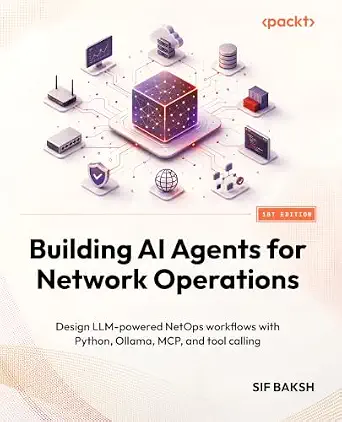
Building AI Agents for Network Operations
This technical guide specializes in designing LLM-powered network operations workflows with tools like Python, Ollama, and MCP. Unlike more general titles like Generative AI Workflows, it provides deep insights into creating AI agents for complex network management. However, its technical depth means it’s best suited for experienced practitioners familiar with Python and network systems, limiting accessibility for beginners.
Pros:- Focused on practical AI applications in network operations
- Covers multiple tools and integration techniques for building AI agents
- Provides detailed guidance on designing LLM-powered workflows for complex systems
Cons:- Requires prior knowledge of Python and network systems, limiting its accessibility
- Lacks introductory content for beginners or non-technical readers
Best for: Network engineers and operations teams aiming to develop AI agents for automating network management tasks.
Not ideal for: General users or those new to coding and network operations, due to its technical complexity and specific focus.
- ASIN:1808346831
- Format:Book
- Topics:AI agents, network operations, LLM workflows
- Technologies:Python, Ollama, MCP, tool calling
Our verdict“This book is best for experienced network engineers seeking to implement AI-driven automation within complex infrastructure.”

How We Picked
Our evaluation focused on performance, usability, build quality, and value. We examined how well each tool automates common workflows, the learning curve involved, and how easily users can customize or extend features. Cost-effectiveness was also key—balancing features against pricing. Tools that offered clear documentation, reliable support, and scalability ranked higher. We prioritized solutions suitable for a range of users, from beginners to advanced professionals, ensuring each tool fills a distinct role in the automation landscape.
Factors to Consider When Choosing AI Workflow Automation Tools
Choosing the right AI workflow automation tool depends on several factors that go beyond feature lists. It’s essential to consider your technical skill level, existing tech stack, budget, and specific automation needs. Making a misstep here can lead to overpaying for features you don’t need or struggling with a platform that’s too complex or too limited. The following sections highlight key considerations to guide your decision.
Ease of Use and Learning Curve
Automation tools vary widely in complexity. For non-technical users, a visual drag-and-drop interface often proves invaluable, reducing the time to implement workflows. Conversely, more advanced users might prefer platforms offering scripting or coding options for greater control. Consider your comfort level and the availability of learning resources when selecting a tool—it’s better to start simple and scale up as needed.
Integration Capabilities
The value of an automation tool hinges on its ability to connect with your existing apps and services. Platforms with extensive, pre-built integrations can dramatically reduce setup time. However, ensure the platform supports the specific tools you use daily—otherwise, you might face costly custom development or limited functionality. Prioritize tools that align with your current ecosystem to maximize efficiency.
Customization and Flexibility
Some tools offer straightforward automation flows, while others enable complex, multi-step processes. Consider whether you need simple task automation or more sophisticated, conditional workflows. Overly rigid platforms may limit future growth, so look for solutions that allow for customization as your needs evolve. This flexibility often comes at a higher price but can save headaches down the line.
Pricing and Value
Pricing models range from free tiers to premium enterprise plans. Balance your budget against the features you require. Beware of platforms that nickel-and-dime for essential features or limit automation runs severely at lower tiers. Sometimes, investing in a slightly more expensive plan yields significant productivity gains, making it a worthwhile tradeoff.
Support and Community
Robust support channels and active user communities can accelerate troubleshooting and learning. Platforms backed by comprehensive documentation, tutorials, and responsive support tend to reduce downtime and frustration. For critical business processes, this support can be a decisive factor in avoiding costly delays.
Frequently Asked Questions
Can I use AI workflow automation tools without any coding experience?
Many AI workflow automation tools are designed with non-technical users in mind, offering drag-and-drop interfaces and pre-built templates. These platforms enable you to create complex workflows without writing code, making automation accessible even if you have no programming background. However, for advanced customization or integration, some technical knowledge may eventually be beneficial.
Are AI workflow automation tools secure for sensitive business data?
Security varies across platforms; reputable tools implement encryption, access controls, and compliance standards like GDPR or SOC 2. It’s vital to review each provider’s security policies and determine whether they meet your industry requirements. For highly sensitive data, consider tools with on-premises deployment options or enhanced security features to ensure your information remains protected.
How scalable are these AI workflow automation tools as my business grows?
Most top-tier tools are designed to scale with your organization, supporting increased workflow complexity and user numbers. Look for platforms offering tiered pricing, enterprise features, and API access for custom integrations. Planning for growth ensures your automation infrastructure won’t become a bottleneck and can adapt to evolving needs.
What are common mistakes to avoid when choosing an AI automation tool?
A frequent mistake is prioritizing features over usability, leading to tools that are too complex or inefficient for your team. Another is overlooking integration needs, which can cause significant manual overhead. It’s also easy to underestimate ongoing costs or overinvest in features you won’t use. Careful assessment of your actual requirements and budget helps prevent these pitfalls.
Should I prioritize a free or low-cost tool over a paid, feature-rich platform?
While free or inexpensive tools can be appealing, they often come with limitations in features, support, or scalability. Investing in a paid platform may deliver greater automation power, reliability, and support, especially for mission-critical workflows. Consider your current needs and future growth—sometimes, paying more upfront reduces long-term costs and frustrations.
Conclusion
For small teams or beginners just starting with automation, a user-friendly and affordable tool like Practical AI Workflow Automation offers a gentle learning curve and good value. Larger organizations or those with complex workflows will benefit from AutoFlow Pro, which provides extensive features and scalability. If you need a premium, highly customizable solution, investing in an enterprise-grade platform makes sense. Overall, matching the tool to your technical comfort, budget, and automation goals ensures the best fit for your work in 2026.
Halloween Picks

12-Foot Inflatable Pumpkin Halloween Archway with LED Lights

27FT Giant Inflatable Pumpkin Lighted Outdoor Halloween Decor

Halloween Inflatable Haunted House Maze – 20×20 ft with Removable Roof and Blower
As an affiliate, we earn on qualifying purchases.