
TL;DR
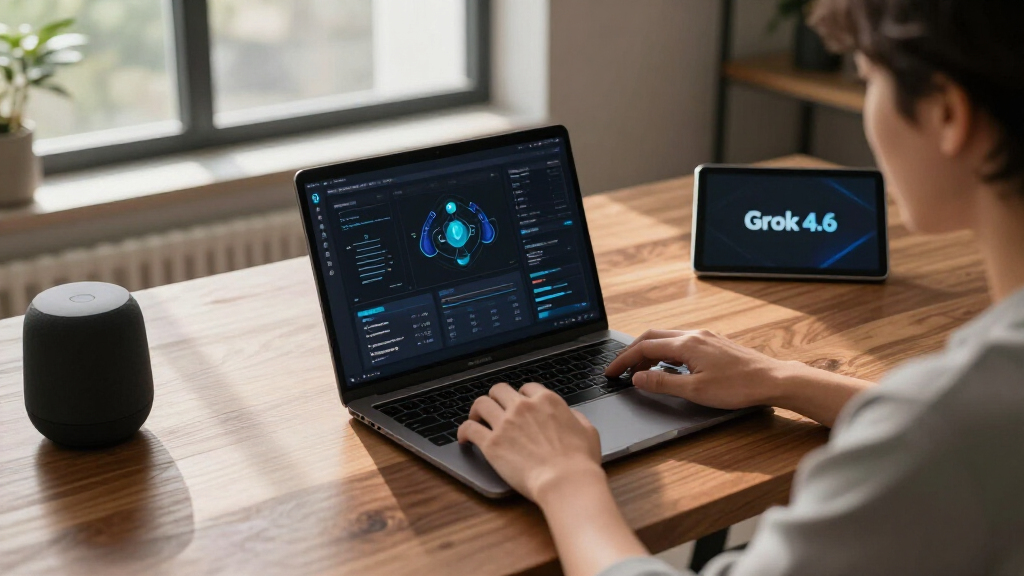
Grok 4.6 has surfaced as a new xAI model positioned at the AI frontier. No supporting specifications, benchmark data, pricing or release information were provided, leaving its capabilities and availability unconfirmed.
Grok 4.6 has surfaced as a new model from xAI, with promotional framing placing it near the front of the competitive AI market. The available information does not establish its release status, technical capabilities or availability, making the model’s name the main confirmed development while its claimed frontier position remains unsupported by disclosed evidence.
The model is identified as Grok 4.6, indicating a new entry in xAI’s Grok line. No accompanying information establishes whether it is a full public release, limited preview or planned update. There are also no confirmed details about which products, subscription tiers, developer interfaces or geographic markets can access it.
No model card, system documentation or pricing schedule was included. Technical points that commonly shape evaluations of a new model—including its context window, supported input formats, reasoning features, response speed and safety controls—remain unspecified. It is also unknown whether Grok 4.6 replaces an earlier model or sits beside other Grok versions.
The description that Grok 4.6 is advancing the AI frontier should be treated as promotional positioning, not an independently established result. No benchmark scores, testing methods or comparisons were supplied to support claims about performance against competing systems.
Grok 4.6 Storms the AI Frontier?
A new xAI model name has surfaced with frontier-level promotional framing. The headline is striking; the evidence needed to verify its release, capabilities, price, access and competitive standing has not arrived.
Grok 4.6 is identified as a new entry in xAI’s Grok model family.
No launch date, access instructions or supported product list was supplied.
No benchmark scores, methods, comparisons or independent tests were disclosed.
What the announcement does—and does not—establish
Version numbers can indicate a newly trained model, a tuned release or a service-level update. Without official documentation, the move to “4.6” cannot reveal the scale of the underlying change.
New Grok label
Established: Grok 4.6 is presented as part of xAI’s generative AI model family.
Access unknown
No evidence identifies a public release, limited preview, staged rollout or planned update.
Technical change unknown
Training changes, architecture, tool expansion and its relationship to earlier Grok versions remain unspecified.
Performance untested
Reasoning, coding, multimodal handling, speed and efficiency gains have not been demonstrated.
Pricing absent
No subscription tier, API schedule, rate limit, enterprise term or geographic availability was provided.
“Frontier” is a claim
Promotional framing is not equivalent to matched testing or independently replicated performance.
The evaluation checklist is mostly blank
A credible comparison requires transparent access terms, documented limitations and reproducible tests. None of these categories can be inferred from the model name alone.
| Evaluation item | Disclosure status | What is missing | Why it matters |
|---|---|---|---|
| Model name | ✓ Identified | Precise version relationship | Confirms identity, not improvement |
| Release availability | ✗ Unconfirmed | Date, products, regions, eligibility | Determines whether users can test it |
| Technical documentation | ✗ Not supplied | Model card or technical report | Explains capabilities and limitations |
| Context and inputs | ✗ Not supplied | Context window and supported formats | Defines practical workload fit |
| Benchmark evidence | ✗ Not supplied | Tests, raw scores and conditions | Needed for matched comparisons |
| Pricing and limits | ✗ Not supplied | Plans, API cost and rate limits | Determines real-world value |
| Safety and data policy | ~ Unknown | Controls, retention and enterprise policy | Essential for responsible deployment |
| Independent evaluation | ~ Pending access | Replicated third-party testing | Separates evidence from promotion |
The name is real. The ranking is not yet verifiable.
Reading rule: “Frontier” should remain promotional positioning until matched benchmarks, transparent test conditions and independent replication support it.
How a headline becomes a defensible conclusion
Documentation establishes what is being offered. Broad access enables testing. Replication determines whether the claimed competitive impact survives scrutiny.
Model surfaces
Grok 4.6 enters public discussion.
Docs publish
Capabilities, limits and terms become clear.
Testing opens
Evaluators can run consistent tasks.
Results repeat
Independent teams verify performance.
Rank responsibly
Evidence supports—or rejects—the claim.
What readers should ask next
The next meaningful development is not another superlative. It is official documentation followed by independently reproducible evaluation.
What is Grok 4.6?
A named version in xAI’s Grok family. Its architecture, training changes and relationship to prior versions have not been disclosed in the available material.
Has it been publicly released?
Not established. No confirmed launch date, access path, supported product or eligibility requirement was provided.
Is it the leading AI model?
Not demonstrated. Meaningful ranking requires matched tests across reasoning, coding, multimodal work, efficiency and other relevant tasks.
What would change the verdict?
A model card, transparent benchmark methods, pricing, access terms, safety details, known limitations and independent real-world testing.
Grok 4.6 may prove consequential—but today, its frontier position is a proposition awaiting evidence, not an established result.
Model Competition Needs Verifiable Evidence
A new Grok release could affect users, developers and businesses deciding among rapidly changing AI services. Improvements in reasoning, coding, multimodal work or cost could alter those choices, but the present information does not show whether Grok 4.6 delivers measurable gains in any of those areas.
The lack of supporting data also matters because model-version labels do not provide a consistent measure of progress across companies. Readers need reproducible tests, clear access terms and documented limitations before comparing Grok 4.6 with other systems. Vendor benchmark results, if later released, will need to be separated from independent evaluations.

Agentic Spec-Driven Development: A Practical Method for Using AI to Build Complete Specifications for Software, Products, and Knowledge Work
As an affiliate, we earn on qualifying purchases.
As an affiliate, we earn on qualifying purchases.
Grok’s Rapid Version Cycle
Grok is xAI’s family of generative AI models. The appearance of another numbered version reflects the fast release cycle across the industry, where developers regularly update systems to compete on reasoning, coding, media handling and efficiency. That wider competition explains the interest in Grok 4.6, but it does not establish how much the model has changed.
Version numbers can represent a new underlying model, a tuned release or a service-level update. Without documentation from xAI, it is not possible to determine whether the move to version 4.6 signals new training, architectural changes, expanded tools or smaller refinements. Comparisons with previous Grok versions would be premature until matched test results become available.
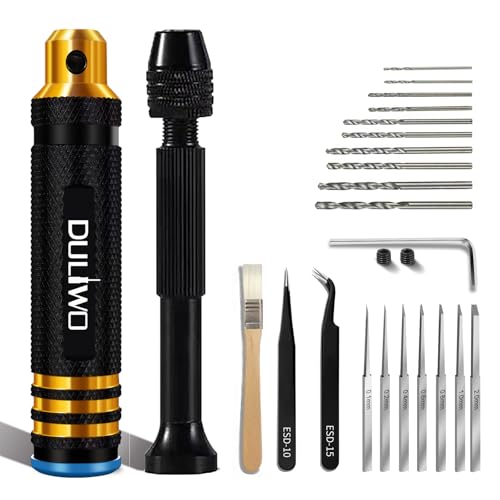
DULIWO Model Scriber Tool Kit, 7-Blade Chisel Set for Gunpla
- Complete Model Kit Tools: Includes scribe, drill, tweezers, and brush
- High-Quality Blades: Tungsten steel, wear-resistant, long-lasting sharpness
- Ergonomic Handle: Lightweight, non-slip aluminium alloy handle
As an affiliate, we earn on qualifying purchases.
As an affiliate, we earn on qualifying purchases.
Release Scope and Performance Unspecified
Several basic questions remain unanswered. It is not yet clear when Grok 4.6 became available, who can use it, whether access is staged or how much it costs. The information also does not identify its training cutoff, context capacity, supported languages or hardware requirements.
There is no disclosed evidence supporting a frontier-performance claim. Missing items include benchmark names, raw scores, testing conditions and independent replication. Safety behavior, rate limits, data-retention policies and enterprise controls are also unknown. Until xAI publishes those details, conclusions about the model’s ranking or reliability remain unverified.

DEEP Robotics Lite 3-Basic AI Quadruped Robot, AI Robotics Platform
- AI-Powered Quadruped Platform: Designed for developers and researchers
- Enhanced Mobility & Stability: Supports 40° slope climbing and 15cm obstacles
- Suitable for Indoor and Outdoor Use: Stable performance across various environments
As an affiliate, we earn on qualifying purchases.
As an affiliate, we earn on qualifying purchases.
Documentation and Testing Will Decide
The next meaningful step would be the publication of official release documentation describing availability, pricing, capabilities and limitations. A model card or technical report could clarify whether Grok 4.6 is a newly trained system or an update to an existing service.
After access broadens, independent evaluators can test the model under consistent conditions and compare it with earlier Grok versions and rival systems. Those results—not the launch framing alone—will show whether Grok 4.6 changes the competitive picture.

Building Robust AI Evals: Proven Strategies for Testing, Monitoring, and Improving LLM Performance (Engineered: Data, AI, and DevOps)
As an affiliate, we earn on qualifying purchases.
As an affiliate, we earn on qualifying purchases.
Key Questions
What is Grok 4.6?
Grok 4.6 is identified as a new version in xAI’s Grok model family. Its architecture, training changes and precise relationship to earlier versions have not been disclosed in the available information.
Has Grok 4.6 been released publicly?
The public-release status is not established. No confirmed launch date, access instructions, supported products or eligibility requirements were provided.
Is Grok 4.6 the leading AI model?
That has not been demonstrated. The frontier framing is a claim requiring evidence, and no benchmark data or independent results were supplied. Meaningful ranking would require matched tests across several tasks.
What information is needed to evaluate it?
Readers need technical documentation, transparent benchmark methods and pricing, along with details about access, safety controls and known limitations. Independent testing would provide a stronger basis for judging real-world performance.
When will more details become available?
No timetable has been confirmed. Further clarity depends on xAI publishing documentation, access terms and test results, followed by independent evaluation.
Source: xAI
Source: xAI