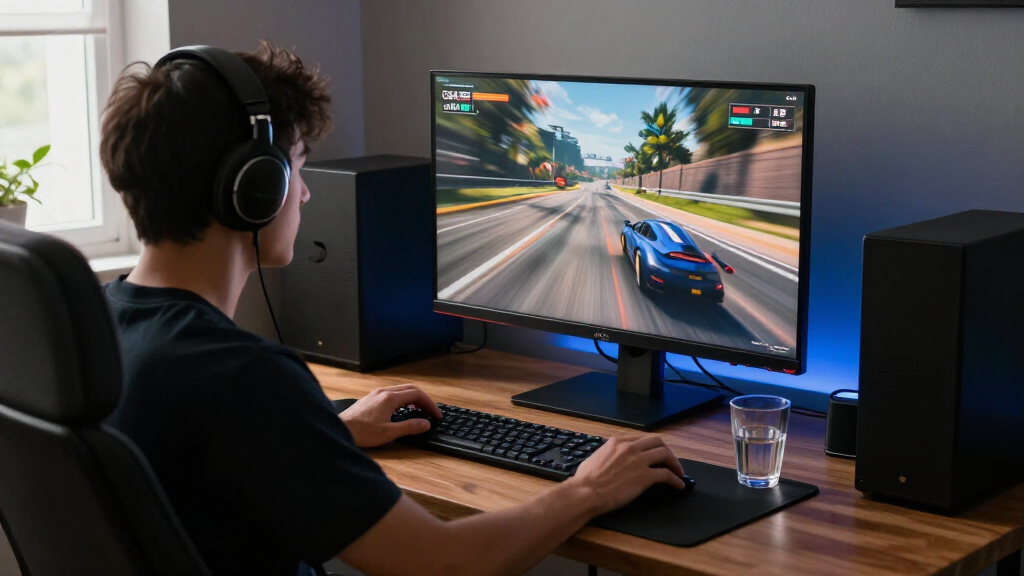
High refresh gaming monitors can make fast motion look smoother, but the right choice depends on more than the highest Hz number. The ASUS TUF Gaming VG259QM5A is my best overall pick for its compact Full HD format and 240Hz focus, while the CRUA 27-Inch 540Hz suits competitive players who prioritize extreme refresh rates. For a wider view, the SANSUI 34-Inch UWQHD 240Hz pairs an ultrawide resolution with a fast refresh rate. The main tradeoffs are speed versus image detail, and screen size versus the graphics power needed to drive it. Read on for how these ten options compare and which one fits your setup.

Get business pricing on tech for your team
- Business-only prices and quantity discounts
- Tax-exempt purchasing
- Multiple users, one account, clear invoices
Key Takeaways
- The ASUS TUF VG259QM5A is the most balanced pick: its 24.5-inch Full HD screen and 240Hz refresh rate make a focused fit for fast play without the demands of an ultrawide.
- 540Hz is a specialist advantage: the CRUA 27-Inch 540Hz targets competitive play, but its Full HD resolution makes it less suited to buyers who want fine detail or a large, immersive view.
- Ultrawide speed comes with a hardware tradeoff: the SANSUI 34-Inch UWQHD 240Hz combines broad workspace with high refresh, while the Kado two-monitor bundle offers more total screen area at 165Hz.
- Large Full HD panels trade sharpness for scale: the KTC 31.5-Inch and SANSUI 32-Inch models offer 240Hz-class play on roomy screens, but QHD is a better match for buyers who value detail at that size.
- The Dell and Samsung serve different priorities: Dell’s 24-inch Full HD 240Hz format keeps the setup compact, while Samsung’s 32-inch QHD 1000R display prioritizes resolution and pronounced curvature over the highest refresh rate in this group.
| ASUS TUF Gaming VG259QM5A 24.5-Inch Full HD 240Hz Gaming Monitor |  | Best for Competitive 24.5-Inch Gaming | Screen size: 24.5 inches | Resolution: 1920 × 1080 (Full HD) | Panel type: Fast IPS | VIEW LATEST PRICE | See Our Full Breakdown |
| SANSUI 34-Inch Curved UWQHD 240Hz Gaming Monitor |  | Best for High-Refresh Ultrawide Gaming | Screen size: 34 inches | Resolution: 3440 × 1440 (UWQHD) | Aspect ratio: 21:9 | VIEW LATEST PRICE | See Our Full Breakdown |
| Kado 2-Pack 34″ Curved 1500R 165Hz 1ms Ultrawide 3440×1440 Computer Monitor |  | Best for a Dual Ultrawide Setup | Package: Two monitors | Screen size: 34 inches each | Aspect ratio: 21:9 | VIEW LATEST PRICE | See Our Full Breakdown |
| KTC H32C5 31.5-Inch Curved FHD Gaming Monitor, 240Hz Native, Up to 280Hz |  | Best for a Large Screen at High Refresh | Screen size: 31.5 inches | Resolution: 1920 × 1080 (FHD) | Panel type: HVA | VIEW LATEST PRICE | See Our Full Breakdown |
| SANSUI 27-Inch Curved 240Hz FHD Gaming Monitor |  | Best for a Mid-Size Curved Full HD Setup | Screen size: 27 inches | Resolution: FHD 1080p | Refresh rate: Up to 240Hz | VIEW LATEST PRICE | See Our Full Breakdown |
| CRUA 27-Inch FHD 540Hz IPS Gaming Monitor |  | Best for Competitive Speed | Screen size: 27 inches | Resolution: 1920 × 1080 (Full HD) | Panel type: IPS | VIEW LATEST PRICE | See Our Full Breakdown |
| CRUA 45-Inch DQHD 185Hz Ultrawide Curved Gaming Monitor |  | Best for Immersive Ultrawide Play | Screen size: 45 inches | Resolution: 5120 × 1440 | Aspect ratio: 32:9 | VIEW LATEST PRICE | See Our Full Breakdown |
| SANSUI 32-Inch Curved 240Hz FHD Gaming Monitor |  | Best Large-Screen Full HD Pick | Screen size: 32 inches | Resolution: 1920 × 1080 (FHD) | Refresh rate: 240 Hz | VIEW LATEST PRICE | See Our Full Breakdown |
| Samsung Odyssey G55C 32-Inch QHD 1000R Curved Gaming Monitor |  | Best for High-Resolution Curved Gaming | Screen size: 32 inches | Resolution: QHD | Curvature: 1000R | VIEW LATEST PRICE | See Our Full Breakdown |
| Dell SE2426HG 24-Inch FHD 240Hz Gaming Monitor |  | Best Compact 240Hz Pick | Screen size: 23.8 inches | Resolution: 1920 × 1080 (Full HD) | Refresh rate: 240 Hz | VIEW LATEST PRICE | See Our Full Breakdown |
| high refresh gaming monitor | Screen size | Resolution | Refresh rate | Response time |
|---|---|---|---|---|
| ASUS TUF Gaming VG259QM5A 24.5 | 24.5 inches | 1920 × 1080 (Full HD) | 240Hz | 0.3ms GTG (minimum) |
| SANSUI 34-Inch Curved UWQHD 24 | 34 inches | 3440 × 1440 (UWQHD) | 240Hz | 1ms MPRT |
| Kado 2-Pack 34" Curved 1500R 1 | 34 inches each | 3440 × 1440 (WQHD) each | 165Hz | 1ms |
| KTC H32C5 31.5-Inch Curved FHD | 31.5 inches | 1920 × 1080 (FHD) | — | — |
| SANSUI 27-Inch Curved 240Hz FH | 27 inches | FHD 1080p | Up to 240Hz | 1ms MPRT |
| CRUA 27-Inch FHD 540Hz IPS Gam | 27 inches | 1920 × 1080 (Full HD) | 540 Hz | 1 ms |
| CRUA 45-Inch DQHD 185Hz Ultraw | 45 inches | 5120 × 1440 | 185 Hz | — |
| SANSUI 32-Inch Curved 240Hz FH | 32 inches | 1920 × 1080 (FHD) | 240 Hz | 1 ms MPRT |
| Samsung Odyssey G55C 32-Inch Q | 32 inches | QHD | 165 Hz | 1 ms MPRT (Extreme mode; may vary) |
| Dell SE2426HG 24-Inch FHD 240H | 23.8 inches | 1920 × 1080 (Full HD) | 240 Hz | 0.5 ms and 5 ms listed in product information |
More Details on Our Top Picks
ASUS TUF Gaming VG259QM5A 24.5-Inch Full HD 240Hz Gaming Monitor
The ASUS TUF VG259QM5A suits players who want a compact screen with a fast 240Hz refresh rate and motion-reduction tools. Its 24.5-inch Full HD format keeps the picture easy to scan in fast matches, while Fast IPS and 99% sRGB coverage give it a more color-focused profile than the VA-based KTC H32C5. FreeSync Premium, G-SYNC compatibility, and ELMB SYNC offer ways to manage tearing and blur, though the benefits depend on the game and settings. The tradeoff is resolution: unlike the SANSUI 34-inch UWQHD, this ASUS gives up workspace and fine detail for a smaller, simpler competitive setup. The three-year warranty is a practical advantage; the included software subscription has an expiration date and should not drive the choice.
Pros:- 240Hz refresh rate and 0.3ms minimum GTG response time
- FreeSync Premium and G-SYNC compatibility
- ELMB SYNC combines motion blur reduction with adaptive sync support
- Fast IPS panel with 99% sRGB coverage
Cons:- Full HD resolution offers less desktop detail than the UWQHD SANSUI 34-inch
- The Adobe Creative Cloud subscription offer expires August 31, 2028
Best for: Competitive players who prefer a compact 24.5-inch screen, Full HD gaming, and a high refresh rate.
Not ideal for: Players who want a sharp, spacious desktop for ultrawide gaming or detailed creative work.
- Screen size:24.5 inches
- Resolution:1920 × 1080 (Full HD)
- Panel type:Fast IPS
- Refresh rate:240Hz
- Response time:0.3ms GTG (minimum)
- Adaptive sync:FreeSync Premium; G-SYNC compatible
- Motion blur reduction:ASUS ELMB SYNC
- Color gamut:99% sRGB
- Warranty:3 years
Our verdict“Choose the ASUS for compact, fast Full HD play with broad sync support; choose the SANSUI 34-inch if you want more resolution and screen space.”
SANSUI 34-Inch Curved UWQHD 240Hz Gaming Monitor
The SANSUI 34-inch UWQHD combines an unusually fast 240Hz refresh rate with a broad 21:9 view, making it the screen-space pick for players who want both speed and a more expansive game image. Its 3440 × 1440 resolution gives more room for peripheral action and desktop windows than the ASUS TUF VG259QM5A, while the curved VA panel and HDR400 support add to its immersive focus. That added width also demands more from a gaming PC, particularly at high frame rates. Adaptive sync is another detail to check against your setup: the listing specifies FreeSync and VRR over HDMI 2.1. No built-in speakers means external audio or headphones are needed, and the 1ms MPRT figure is a motion metric rather than a guarantee of identical performance in every mode.
Pros:- 3440 × 1440 resolution across a 34-inch curved ultrawide screen
- 240Hz refresh rate pairs high speed with a wide field of view
- HDMI 2.1 and DisplayPort 1.4 connections
- HDR400 support and FreeSync
Cons:- Driving UWQHD at 240Hz can demand substantial graphics performance
- No built-in speakers
- VRR support is specified for HDMI 2.1 connections
Best for: PC and console players with hardware capable of driving UWQHD at high frame rates who want an immersive ultrawide screen.
Not ideal for: Buyers with limited desk space, modest graphics hardware, or a need for built-in speakers and flexible sync over every connection.
- Screen size:34 inches
- Resolution:3440 × 1440 (UWQHD)
- Aspect ratio:21:9
- Curvature:Curved
- Panel type:VA
- Refresh rate:240Hz
- Response time:1ms MPRT
- HDR:HDR400
- Ports:2 × HDMI 2.1, 2 × DisplayPort 1.4, headphone jack
Our verdict“Pick this SANSUI for high-refresh ultrawide gaming, while the ASUS TUF VG259QM5A is a better fit for a compact Full HD setup.”
Kado 2-Pack 34″ Curved 1500R 165Hz 1ms Ultrawide 3440×1440 Computer Monitor
The Kado two-monitor kit is a distinctive choice for players who also want two wide screens for streaming, multitasking, or a large gaming workspace. Each 34-inch display offers 3440 × 1440 resolution and 165Hz, which is fast enough for high-refresh play while delivering far more desktop area than the ASUS TUF VG259QM5A. The tradeoff is that 165Hz falls below the 240Hz SANSUI monitors in this roundup, so players focused on the fastest competitive response may prefer those single-screen options. Two large curved displays also need substantial desk space or suitable mounts. AMD FreeSync Premium helps reduce tearing, and built-in speakers simplify a basic setup, though they may not replace dedicated audio. Choose this for breadth and flexibility, not a minimal gaming station.
Pros:- Two 34-inch curved displays provide extensive workspace
- 3440 × 1440 resolution and 165Hz on each screen
- AMD FreeSync Premium support
- Built-in speakers and VESA mount compatibility
Cons:- 165Hz is slower than the 240Hz SANSUI ultrawide
- The two-monitor arrangement needs considerable desk space
- Built-in speakers may not suit buyers who want fuller gaming audio
Best for: Streamers, multitaskers, and gamers who need two ultrawide screens for gameplay alongside chat, tools, or other apps.
Not ideal for: Competitive players prioritizing the highest refresh rate, or anyone with a small desk and no monitor arms.
- Package:Two monitors
- Screen size:34 inches each
- Aspect ratio:21:9
- Resolution:3440 × 1440 (WQHD) each
- Curvature:1500R
- Refresh rate:165Hz
- Response time:1ms
- Adaptive sync:AMD FreeSync Premium
- Connectivity:2 HDMI ports and DisplayPort per monitor
Our verdict“Choose the Kado kit when two immersive screens matter more than reaching 240Hz, which the single-screen SANSUI 34-inch provides.”
KTC H32C5 31.5-Inch Curved FHD Gaming Monitor, 240Hz Native, Up to 280Hz
The KTC H32C5 gives players a large, curved 31.5-inch view while keeping the resolution at Full HD. It runs at 240Hz natively and supports up to 280Hz, giving it a speed-focused profile that the 165Hz Kado dual-monitor kit does not match. Its HVA panel’s stated 3500:1 contrast ratio and 1500R curve suit darker games and an enveloping single-screen setup. The main compromise is pixel density: Full HD spread across this size looks less crisp than the 3440 × 1440 SANSUI ultrawide. That may matter for desktop text as much as game detail. Adaptive-Sync and HDR10 add useful features, but tilt is the only listed stand adjustment, so plan on a VESA arm if you need height positioning.
Pros:- 240Hz native refresh rate with support up to 280Hz
- 1500R curve and a stated 3500:1 contrast ratio
- Adaptive-Sync support
- HDMI and DisplayPort connections with VESA mounting
Cons:- Full HD resolution is less sharp at 31.5 inches than the SANSUI 34-inch UWQHD
- Stand supports tilt but lacks listed height adjustment
Best for: Players who want a large, curved gaming screen with a high refresh rate and are comfortable with Full HD sharpness.
Not ideal for: Buyers who sit close to the screen, need crisp desktop text, or want height-adjustable ergonomics out of the box.
- Screen size:31.5 inches
- Resolution:1920 × 1080 (FHD)
- Panel type:HVA
- Native refresh rate:240Hz
- Maximum refresh rate:280Hz
- Curvature:1500R
- Contrast ratio:3500:1
- HDR:HDR10
- Ports:2 × HDMI 2.0, 1 × DisplayPort 1.4, headphone jack
Our verdict“Pick the KTC for a large, fast curved Full HD display; choose the higher-resolution SANSUI 34-inch if image detail matters more than pixel count per second.”
SANSUI 27-Inch Curved 240Hz FHD Gaming Monitor
The SANSUI 27-inch curved monitor splits the difference between the compact ASUS TUF VG259QM5A and the much larger KTC H32C5. Its up to 240Hz refresh rate and FreeSync make it a speed-oriented Full HD option, while the 1500R curve, anti-glare coating, and tilt-adjustable metal stand suit a straightforward desk setup. The stated 130% sRGB gamut and 95% DCI-P3 coverage suggest vivid color, but they do not change the limits of 1080p: compared with the 34-inch UWQHD SANSUI, this screen offers less detail and workspace. At 27 inches, Full HD may also look less crisp than on a smaller display. No built-in speakers means headphones or separate audio are part of the setup, and its one-year warranty is shorter than the ASUS’s three years.
Pros:- Up to 240Hz refresh rate with 1ms MPRT response time
- 1500R curve and FreeSync support
- Anti-glare screen and metal tilt stand
- Stated 130% sRGB and 95% DCI-P3 color coverage
Cons:- Full HD resolution is less crisp at 27 inches than higher-resolution alternatives
- No built-in speakers
- One-year warranty is shorter than the ASUS TUF VG259QM5A’s three years
Best for: Players who want a curved 27-inch screen with a high refresh rate and a simple tilt-adjustable desk setup.
Not ideal for: Buyers who prioritize sharp text at 27 inches, built-in audio, or the longer warranty listed for the ASUS TUF VG259QM5A.
- Screen size:27 inches
- Resolution:FHD 1080p
- Refresh rate:Up to 240Hz
- Curvature:1500R
- Response time:1ms MPRT
- Color gamut:130% sRGB; 95% DCI-P3
- Contrast ratio:4000:1
- Brightness:300 nits
- Warranty:1 year; lifetime technical support
Our verdict“Choose this SANSUI for a mid-size curved Full HD gaming setup; choose the ASUS for a smaller footprint and longer stated warranty.”
CRUA 27-Inch FHD 540Hz IPS Gaming Monitor
The 540Hz refresh rate makes this the speed specialist in the group, aimed at players who prioritize rapid motion in competitive games. Its Full HD resolution is easier to drive at very high frame rates than the Samsung Odyssey G55C’s QHD panel, but at 27 inches it gives up some sharpness. Compared with the Dell SE2426HG, which also offers 240Hz and an IPS panel, the CRUA raises the refresh-rate ceiling substantially while keeping a similar resolution and wide-viewing-angle panel type. FreeSync can help reduce tearing, and the height-adjustable, swiveling stand with portrait rotation offers more positioning options than the tilt-only SANSUI 32-Inch. The tradeoffs are the coarse pixel density for a 27-inch screen and a one-year warranty; buyers should also confirm their system can produce frame rates that make use of 540Hz.
Pros:- 540Hz refresh rate targets exceptionally smooth motion in supported games.
- IPS panel and FreeSync support wide viewing angles and help reduce tearing.
- Height, tilt, swivel, and portrait adjustments allow flexible positioning.
- Two HDMI 2.1 ports and DisplayPort 1.4 provide multiple connection options.
Cons:- Full HD resolution looks less detailed at 27 inches than the Samsung Odyssey G55C’s QHD image.
- The high refresh rate is most useful with a powerful PC and compatible game settings.
- One-year warranty is relatively short.
Best for: Competitive PC players who favor maximum motion smoothness in Full HD and have hardware capable of driving very high frame rates.
Not ideal for: Players who want crisp text and detailed scenery on a 27-inch display, or whose systems rarely reach high frame rates.
- Screen size:27 inches
- Resolution:1920 × 1080 (Full HD)
- Panel type:IPS
- Refresh rate:540 Hz
- Response time:1 ms
- Adaptive sync:AMD FreeSync
- Brightness:400 cd/m²
- Stand adjustments:120 mm height, 90° pivot, tilt (-5° to 15°), swivel (-15° to 15°)
Our verdict“Choose the CRUA if competitive speed matters more to you than high resolution and your PC can feed its 540Hz panel.”
CRUA 45-Inch DQHD 185Hz Ultrawide Curved Gaming Monitor
This CRUA is the group’s wide-screen immersion pick: its 32:9, 5120 × 1440 display gives games and multitasking a panoramic canvas, while the 1500R curve helps keep the broad screen within view. Its 185Hz refresh rate is below the 240Hz Dell SE2426HG and far below the 540Hz CRUA, so it suits expansive single-player games and mixed work-play setups better than refresh-rate chasing. The VA panel’s 3000:1 contrast ratio is higher than the IPS panels’ listed 1000:1, which can make dark scenes feel deeper. That scale demands substantial desk space, and the high pixel count also asks more of a gaming PC than Full HD. Built-in speakers offer a fallback for casual audio, but dedicated speakers or a headset are a better match for focused play.
Pros:- 5120 × 1440 resolution and 32:9 aspect ratio provide room for games and multiple windows.
- 1500R curve and VA panel support an enveloping view and higher listed contrast.
- 185Hz refresh rate and FreeSync support smooth gameplay.
- HDMI 2.1, DisplayPort 1.4, and built-in speakers are included.
Cons:- The 45-inch width requires a large desk and careful placement.
- Driving 5120 × 1440 in games takes more graphics power than Full HD options such as the Dell SE2426HG.
- At 185Hz, it is less suited to refresh-rate-focused play than the 240Hz Dell or 540Hz CRUA.
Best for: PC gamers who want a panoramic screen for expansive games, side-by-side windows, and a broad desktop workspace.
Not ideal for: Players with limited desk space, modest graphics hardware, or a preference for compact, high-refresh competitive displays.
- Screen size:45 inches
- Resolution:5120 × 1440
- Aspect ratio:32:9
- Refresh rate:185 Hz
- Panel type:VA LCD
- Curvature:1500R
- Contrast ratio:3000:1
- Adaptive sync:AMD FreeSync
Our verdict“Pick this CRUA if panoramic immersion and multitasking matter more than compact size or the highest refresh rate.”
SANSUI 32-Inch Curved 240Hz FHD Gaming Monitor
The SANSUI pairs a 32-inch curved screen with 240Hz, giving players a much larger view than the 23.8-inch Dell SE2426HG at the same stated refresh rate. Its 1500R curve and VA panel’s 3500:1 contrast ratio favor a more enveloping, dark-scene-friendly presentation, while FreeSync supports smoother play when frame rates vary. The main compromise is resolution: Full HD across 32 inches looks less sharp than the Samsung Odyssey G55C’s QHD image, especially for desktop text and fine detail. Its tilt-only stand also offers less positioning flexibility than the adjustable CRUA 27-Inch. HDR support is listed, but the 300-nit brightness is modest, so this is better viewed as a large, fast gaming screen than a standout HDR display. It has no built-in speakers.
Pros:- 240Hz refresh rate and 1ms MPRT response time support fast on-screen motion.
- 1500R curve and high listed VA contrast suit immersive play and darker scenes.
- FreeSync, HDR support, and a DisplayPort 1.4 input are included.
- 100 × 100 mm VESA compatibility offers an alternative to the tilt-only stand.
Cons:- Full HD resolution is less sharp on 32 inches than the Samsung Odyssey G55C’s QHD panel.
- Stand only tilts, with no listed height or swivel adjustment.
- No built-in speakers; listed brightness is 300 nits.
Best for: Players who want a large, curved screen for fast-paced Full HD gaming and mostly sit at a distance from the display.
Not ideal for: Buyers who want sharp desktop text at close range, adjustable stand height, or built-in audio.
- Screen size:32 inches
- Resolution:1920 × 1080 (FHD)
- Refresh rate:240 Hz
- Response time:1 ms MPRT
- Curvature:1500R
- Contrast ratio:3500:1
- Adaptive sync:FreeSync
- Built-in speakers:No
Our verdict“Choose this SANSUI for a large, curved 240Hz Full HD view, provided you are comfortable with its lower pixel density.”
Samsung Odyssey G55C 32-Inch QHD 1000R Curved Gaming Monitor
The Odyssey G55C offers a useful balance for players who want more detail than Full HD without leaving the curved-screen format. Its QHD resolution gives it a clarity advantage over both the 32-inch Full HD SANSUI and the 27-inch Full HD CRUA, while its 165Hz refresh rate remains suited to responsive gaming. The 1000R curve is tighter than the SANSUI’s 1500R, drawing the edges closer around the viewer; that can suit immersive play, though it is a strong shape for everyday desktop use. The tradeoff is speed: the 240Hz Dell SE2426HG and 540Hz CRUA offer higher refresh rates for competitive play. Samsung lists 1ms MPRT response time only in Extreme mode, and the result may vary with settings and content, so I would not treat that figure as a guarantee of performance in every scenario.
Pros:- QHD resolution provides more detail than the Full HD SANSUI 32-Inch.
- 165Hz refresh rate and AMD FreeSync support responsive, smoother gameplay.
- 1000R curve creates a close, immersive viewing shape.
- HDR10 and Eye Saver Mode are listed features.
Cons:- 165Hz is below the 240Hz Dell SE2426HG and the 540Hz CRUA.
- The listed 1ms MPRT response time requires Extreme mode and may vary by content and settings.
- The aggressive 1000R curve may not suit buyers who prefer a flatter screen.
Best for: Players who value QHD detail and a strongly curved 32-inch screen for immersive games and general gaming.
Not ideal for: Competitive players prioritizing 240Hz or higher, or buyers who prefer a flatter screen and consistent response behavior across settings.
- Screen size:32 inches
- Resolution:QHD
- Curvature:1000R
- Refresh rate:165 Hz
- Response time:1 ms MPRT (Extreme mode; may vary)
- HDR:HDR10
- Adaptive sync:AMD FreeSync
Our verdict“Pick the Odyssey G55C if QHD detail and an enveloping curve matter more than matching the fastest refresh rates in this lineup.”
Dell SE2426HG 24-Inch FHD 240Hz Gaming Monitor
The Dell is the compact high-refresh choice for a desk where a large panel would feel crowded. Its 23.8-inch IPS screen keeps Full HD reasonably suited to close viewing, and its 240Hz refresh rate matches the larger SANSUI 32-Inch while taking up less space. Compared with the CRUA 27-Inch, it gives up the extreme 540Hz ceiling and more adjustable stand, but retains an IPS panel and adds FreeSync Premium and HDMI VRR support. The listed 99% sRGB coverage and TÜV Rheinland 3-star eye comfort certification also make it a practical fit for long sessions beyond gaming. One product-information conflict deserves attention: response time is given as both 0.5ms and 5ms, so I would not base a purchase on the faster figure alone.
Pros:- Compact 23.8-inch size keeps Full HD suited to close viewing and smaller desks.
- 240Hz refresh rate, FreeSync Premium, and HDMI VRR support responsive play.
- IPS panel offers 178-degree viewing angles and 99% sRGB coverage.
- TÜV Rheinland 3-star eye comfort certification is listed.
Cons:- Full HD provides less detail than the Samsung Odyssey G55C’s QHD resolution.
- Product information lists conflicting response times of 0.5ms and 5ms.
- Its 240Hz refresh rate is well below the CRUA 27-Inch’s 540Hz.
Best for: Competitive and casual PC players who want a compact IPS monitor with 240Hz for a smaller desk or close seating.
Not ideal for: Buyers seeking QHD detail, a larger immersive display, or an unambiguous response-time specification.
- Screen size:23.8 inches
- Resolution:1920 × 1080 (Full HD)
- Refresh rate:240 Hz
- Panel type:IPS
- Response time:0.5 ms and 5 ms listed in product information
- Adaptive sync:AMD FreeSync Premium; HDMI VRR
- Color coverage:99% sRGB
- Ports:2 × HDMI, DisplayPort 1.4
Our verdict“Choose the Dell if you want a compact IPS screen with 240Hz and broad sync support for a smaller gaming setup.”
How We Picked
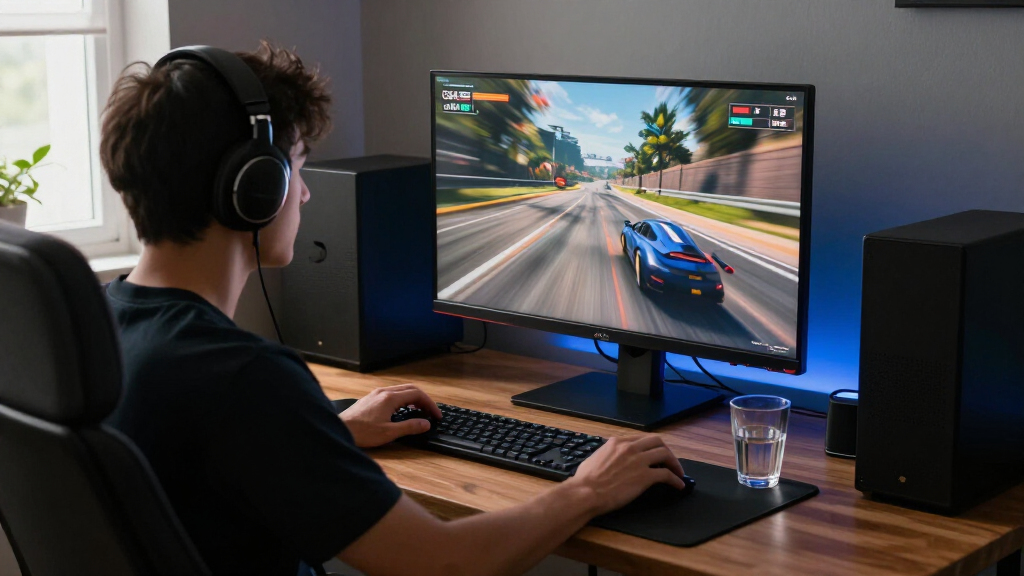
I ranked these monitors around what changes the buying decision for high-refresh gaming: native refresh rate, resolution at the stated screen size, panel format, and how demanding the display is likely to be for a gaming setup. A very high Hz figure only helps when a system can produce enough frames to use it, so I weighed compact Full HD options differently from large QHD and ultrawide models. I also considered whether each monitor’s size and shape make sense for its likely role, from competitive play to expansive single-player games.
The order favors a strong balance of speed, practical resolution, and focused use over a single headline specification. That puts the ASUS TUF VG259QM5A first as a compact 240Hz all-rounder; the CRUA 540Hz model ranks as a more specialized speed pick, while the ultrawides earn their place through screen area and immersion. Large Full HD screens rank lower for buyers who want crisp detail, and the Samsung QHD option remains appealing for resolution-first play despite its lower refresh rate. I treated listed specifications as the basis for comparison and did not assume unlisted features or firsthand performance.
| high refresh gaming monitor | Panel type | Adaptive sync |
|---|---|---|
| ASUS TUF Gaming VG259QM5A 24.5 | Fast IPS | FreeSync Premium; G-SYNC compatible |
| SANSUI 34-Inch Curved UWQHD 24 | VA | — |
| Kado 2-Pack 34" Curved 1500R 1 | — | AMD FreeSync Premium |
| KTC H32C5 31.5-Inch Curved FHD | HVA | — |
| SANSUI 27-Inch Curved 240Hz FH | — | — |
| CRUA 27-Inch FHD 540Hz IPS Gam | IPS | AMD FreeSync |
| CRUA 45-Inch DQHD 185Hz Ultraw | VA LCD | AMD FreeSync |
| SANSUI 32-Inch Curved 240Hz FH | — | FreeSync |
| Samsung Odyssey G55C 32-Inch Q | — | AMD FreeSync |
| Dell SE2426HG 24-Inch FHD 240H | IPS | AMD FreeSync Premium; HDMI VRR |
Factors to Consider When Choosing High Refresh Gaming Monitors
Before choosing a high-refresh display, match the monitor to the games you play, the frame rates your PC or console can deliver, and the distance from which you sit. These choices often matter more than chasing the largest refresh-rate figure.
Match Refresh Rate to Your Frame Rate
A monitor’s refresh rate sets how often it can update the image, while your system’s frame rate determines how much new game output is available to show. The benefit of moving from 240Hz to 540Hz depends on whether the games and hardware can sustain very high frame rates. Competitive players with a capable PC may value that extra headroom; many other buyers will get more practical benefit from a balanced 240Hz setup. Check demanding games rather than relying on a single lightweight benchmark. A high refresh label cannot compensate for a GPU that regularly falls short of the target. Keep headroom in mind if you plan to upgrade your graphics card later.
Choose Resolution for Screen Size and Viewing Distance
Full HD is a straightforward fit for compact 24- or 25-inch displays, especially when high frame rates are the priority. At 31.5 or 32 inches, the same resolution spreads pixels across more area, which can make text and game detail look less crisp at a close desk distance. QHD adds detail, but it also asks more from the graphics card, particularly in demanding games. A larger viewing distance can make a big screen more comfortable without changing its pixel density. Think about how often you play games with detailed scenery versus fast competitive titles. Buying a large screen and judging it only by refresh rate can leave you with a display that feels less sharp than expected.
Treat Ultrawide as a Format Choice, Not Just More Screen
Ultrawide displays widen the view and create room for side-by-side windows, but game support varies. Some titles fill the wider aspect ratio naturally, while others may show side bars or stretch the image. The extra pixels also increase the graphics workload compared with standard Full HD or QHD formats. Check the dimensions of your desk and leave room for a curved panel’s stand and viewing distance. A two-monitor bundle can offer a different kind of workspace, but it adds bezels and may need more setup space than one ultrawide. Choose the format for the games and tasks you actually use rather than assuming every title benefits from a wider image.
Consider Curve and Size in Your Seating Setup
Curvature can help a wide panel feel more consistent across your field of view, but it changes how the screen fits a desk and room. A pronounced 1000R curve, such as on the Samsung Odyssey G55C, wraps more closely around the viewer than a gentler 1500R design. That can feel immersive from a centered seat, while shared viewing or frequent off-center use may favor a flatter screen. Large monitors also need enough desk depth for comfortable viewing. Measure the usable desk area, including the stand, before ordering. If you sit close, a compact screen may be easier to scan during fast play than a very wide display.
Check Connections and Adaptive Sync Before Buying
Refresh rate claims depend on using a connection and device that support the intended resolution and speed. Check the monitor’s input specifications alongside your graphics card or console, including which port supports the highest refresh mode. Adaptive sync can help reduce visible tearing when frame rates vary, but compatibility can depend on both the display and the connected hardware. Do not assume every input offers identical capabilities. If you plan to connect more than one device, count the ports you need and check whether switching between them will be convenient. Confirming these details can prevent paying for a refresh rate your setup cannot access.
Spend on the Limitation You Notice Most
For a competitive player, a compact high-refresh screen may be a better use of a graphics budget than a large, high-resolution panel. For story-driven games, sharpness, contrast, and immersion may matter more than moving from 240Hz to an even higher figure. A premium ultrawide also makes more sense when the PC can drive its wider resolution smoothly. Beginners can keep the setup simple with a manageable screen size and a refresh rate their system can use consistently. Avoid paying extra for specifications that do not fit your games or desk. Pick the one compromise you are most willing to accept: lower resolution, lower refresh, less screen area, or a greater graphics workload.
Frequently Asked Questions
Is 540Hz worth choosing over 240Hz?
It can make sense if you play competitive games, have a system capable of very high frame rates, and prefer responsiveness over resolution. The CRUA 27-Inch 540Hz model pairs that refresh target with Full HD, which is easier to drive than a high-resolution ultrawide. If your frame rate rarely reaches the monitor’s upper range, much of the extra headroom may go unused. A 240Hz screen can be the more balanced choice for mixed gaming, where sharpness and broader game support matter too. Decide based on your sustained frame rates and the games you play, not the highest number alone.
Should I choose a large Full HD monitor or a smaller QHD one?
For close desk use, smaller QHD screens generally give you more detail per inch, while large Full HD panels give you a bigger image at the cost of sharpness. This tradeoff is especially relevant when comparing the 31.5- and 32-inch Full HD options with the Samsung 32-inch QHD model. A larger Full HD screen may still suit fast play if you sit farther back or value size over fine detail. QHD asks for more graphics power, so check whether your system can sustain the frame rates you want at that resolution. Your viewing distance and GPU capability should guide this choice together.
Will an ultrawide monitor work well with every game?
No: support varies by game, and some titles may use side bars or handle the wider aspect ratio in ways you dislike. An ultrawide can be compelling for supported games and multitasking, but it also puts more pixels on screen for your graphics card to render. The SANSUI UWQHD 240Hz and CRUA DQHD 185Hz models both offer broad views, with different refresh-rate targets. Check support for the specific games you play and confirm that your PC can drive the panel at the intended resolution. If compatibility and high frame rates matter more than immersion, a standard-format display is a simpler fit.
Does a higher refresh monitor help if my PC cannot reach its refresh rate?
A higher refresh ceiling can still provide room for future upgrades, but the screen cannot show frames your PC does not produce. If your games usually run far below the monitor’s refresh rate, improving frame-rate consistency or image quality may make a more noticeable difference. Check performance in the games you actually play at your chosen resolution and graphics settings. Adaptive sync may help with uneven frame delivery when supported by both the monitor and system. A refresh rate that matches your typical use can be a better fit than a specification that remains out of reach.
Is the Kado two-monitor bundle a better workspace choice than one ultrawide?
It depends on whether you value two separate screens or one continuous wide image. The Kado bundle includes two 34-inch curved 165Hz ultrawide monitors, which can give you distinct spaces for gaming, chat, and work. Two panels need more desk width and introduce bezels between displays, while a single ultrawide offers a continuous view that supported games can use. The Kado refresh rate is below the 240Hz SANSUI ultrawide’s stated rate, so it better suits buyers who want multiple large screens than those focused on the fastest ultrawide play. Measure your desk and check how you will connect both monitors before choosing the bundle.
Conclusion
For most buyers seeking a fast, practical screen, I recommend the ASUS TUF Gaming VG259QM5A as the best overall choice: its compact Full HD format makes its 240Hz focus a sensible balance. The Dell SE2426HG is a straightforward value-minded pick for a smaller setup, while the CRUA 27-Inch 540Hz is my premium speed choice for competitive players with hardware that can feed it high frame rates. Beginners can start with a compact 240Hz model such as the ASUS or Dell instead of taking on the cost and graphics demands of an ultrawide. For immersion and added workspace, compare the SANSUI UWQHD 240Hz with the CRUA DQHD 185Hz; choose the Samsung Odyssey G55C if QHD detail and a tight curve matter more than peak refresh. Match your choice to your frame rates, desk, and preferred games, and the right tradeoff becomes clear.
Fall Picks
fall essentials
As an affiliate, we earn on qualifying purchases.