This checklist is for people building a desk setup for AI development, automation work, and hands-on experimentation. It covers a workstation laptop, development board, dock, and several optional components that depend on what you plan to run.

Get business pricing on tech for your team
- Business-only prices and quantity discounts
- Tax-exempt purchasing
- Multiple users, one account, clear invoices
The sections are organized by role: a primary computer, ways to experiment with local hardware, desk connectivity, and portable storage. Some slots include a named pick; others are advice only because no product was specified.
Use the checklist to match each item to your actual workload. Check operating system, ports, physical space, and compatibility with your existing devices before buying, and add optional hardware only when it supports a project you expect to do.
AI workstation laptop
A workstation laptop can serve as the main machine for coding, managing automation projects, and connecting to desk accessories. The listed pick is the Dell Precision 7780, described as a 17.3-inch FHD mobile workstation with an Intel Core i9-13. Before choosing it, compare its size and port selection with your desk, travel habits, and other equipment.
A common buying mistake is treating a model name as a complete specification. Confirm the exact configuration, memory, storage, operating system, and available ports for the unit you are considering. Also check whether the software and peripherals you rely on support that configuration; the listed product name alone does not establish those details.
Think through screen size and placement as well. A 17.3-inch laptop takes up more desk space than a compact notebook, so measure where it will sit alongside a dock, external display, or development board. If you expect to carry it often, consider its dimensions and weight from the seller’s full listing. Match the machine to your workflow rather than assuming every AI task needs the same setup.
What to look for:
- Confirm the exact processor configuration represented by the listing.
- Check memory, storage, and operating system details.
- Verify the ports needed for your dock and peripherals.
- Measure desk space for a 17.3-inch laptop.
- Compare the seller’s listed dimensions and weight with your travel needs.
Dell Precision 7780 17.3-inch FHD Mobile Workstation, Intel Core i9-13950HX, 128

A professional mobile workstation built for engineering, design, software development, data analysis, and content creation. It includes an Intel Core i9-13950HX processor, NVIDIA RTX 3500 Ada graphics with 12GB VRAM, Windows 11 Pro with AI Copilot, and a Dell manufacturer warranty through March 2031.
Pros:
- High-performance processor for demanding applications
- 128GB RAM and 1TB NVMe SSD
- Professional NVIDIA graphics with 12GB VRAM
- ISV-certified for professional software
Cons:
- The 17.3-inch size may make it less portable than smaller laptops
Best for: A desk-centered setup that can accommodate a 17.3-inch laptop.
Not ideal for: A compact workspace or frequent travel if the size does not suit you.
Bottom line: Choose this workstation only after confirming the exact configuration and checking that its size and ports fit your setup.
USB AI accelerator
A USB AI accelerator is an optional way to add a specialized device to a computer, but no product is specified for this checklist slot. Start by identifying the software or project that would use it, then check whether that software supports the device and its required drivers. Compatibility comes first; a connector that fits does not by itself ensure that your tools can use the accelerator.
A common mistake is buying hardware based on a broad label such as “AI accelerator” without checking supported frameworks, operating systems, and model requirements. Look for official compatibility documentation and confirm whether the intended workload can run on the device. Check any host computer requirements as well, including available USB ports and whether the device can be used alongside your other connected equipment.
Decide where the accelerator will sit and how you will connect it. Leave room for neighboring ports and cables, and confirm any power or cooling requirements from the manufacturer’s documentation. If you do not have a specific compatible project in mind, keep this slot optional and use your existing computer first. That makes it easier to identify a real need before selecting a particular product.
What to look for:
- A documented match for your operating system and AI software.
- Supported frameworks and model requirements for your intended project.
- Host computer and USB connection requirements.
- Power, heat, and placement guidance from the manufacturer.
- A specific workload that benefits from the device.
Local AI server
A local AI server can be useful when a project calls for a separate machine, but this checklist does not name a product. First decide what you want the server to do and whether a separate computer is necessary for that work. Define the workload before comparing hardware so that processing, memory, storage, and networking needs come from your intended use rather than guesswork.
A common buying mistake is choosing a server without checking software support or how it will connect to the rest of the desk. Confirm operating system and framework requirements, the way you plan to access the machine, and the network connection available where it will live. Check the manufacturer’s documentation for physical dimensions, power, cooling, and maintenance needs; the phrase “local AI server” does not specify any of these.
Consider the whole setup, including noise and placement, access to power and network, and whether the server will need a display or can be managed from another computer. Verify that storage and expansion options fit the project you have in mind. If your current laptop can handle the work you want to begin, start there and revisit a separate server when a concrete workload or collaboration need calls for one.
What to look for:
- Requirements for the specific models and software you plan to run.
- Operating system and framework compatibility.
- Network access and management method.
- Dimensions, power, cooling, and maintenance guidance.
- Storage and expansion options suited to the intended workload.
AI development board
A development board gives a desk setup a place for hands-on embedded projects and experimentation. The listed pick is the NVIDIA Jetson Orin Nano Developer Kit. Before choosing it, review the official product documentation and confirm the software, accessories, and host setup your planned project requires.
A common buying mistake is assuming a development kit is ready for every project out of the box. Check what is included in the exact listing and what must be supplied separately, such as power, storage, cables, or peripherals. Confirm supported software versions and operating system requirements, and make sure your intended tools and models are compatible. The product name does not establish the included accessories or suitability for a particular workload.
Plan the physical setup before placing the board on your desk. Check its dimensions and connector locations, allow access to the ports you will use, and follow manufacturer guidance for power and cooling. If you expect to connect it to a laptop or dock, verify the required interfaces rather than assuming they match. A little preparation makes it easier to keep the board accessible while leaving space for safe, tidy cabling and other desk equipment.
What to look for:
- Confirm what is included in the specific kit listing.
- Check official software and operating system support.
- Verify the storage, power, and cables your project requires.
- Review board dimensions and connector access.
- Confirm interfaces for any laptop, dock, or peripherals.
NVIDIA Jetson Orin Nano Developer Kit
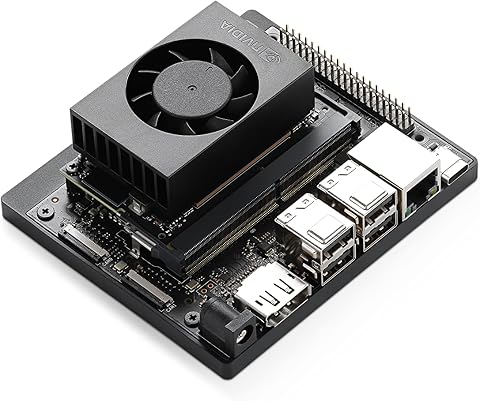
The NVIDIA Jetson Orin Nano Developer Kit is designed for creating entry-level AI-powered robots, drones, and cameras. It offers up to 40 TOPS of AI performance, a compact design, and extensive connectivity, making it ideal for prototyping next-generation edge AI products.
Pros:
- High AI performance suitable for advanced robotics and vision applications
- Compact design with extensive connectivity options
- Supports a wide range of AI frameworks and tools
Cons:
- Complex setup may require technical expertise
- Premium price point for entry-level developers
- Limited details on included accessories
Best for: A desk setup for supported embedded development projects.
Not ideal for: A buyer who has not checked required accessories or software support.
Bottom line: Verify the kit contents and project compatibility before adding the Jetson Orin Nano Developer Kit to your desk.
Thunderbolt docking station
A dock can reduce the effort of connecting desk peripherals to a laptop, but it needs to match both the computer and the devices you plan to attach. The listed pick is the QUUGE Core2 Thunderbolt 5 Docking Station, described as 14-in-1 for MacBook. Confirm the exact model and its compatibility with your particular MacBook and other computers before relying on it.
A common buying mistake is counting ports without checking what each one supports. Review the manufacturer’s port list, supported display setup, data capabilities, power delivery, and host requirements. Confirm that your laptop has the required Thunderbolt connection and that your displays and accessories can use the dock’s available outputs. A “14-in-1” description does not tell you whether every port suits your equipment.
Check the desk layout, too. Make sure the dock’s dimensions and cable reach work with your laptop position, monitor, and other accessories. Look for the manufacturer’s guidance on connected-device limits and power needs, and confirm whether any cables are included. If you use more than one computer, check cross-device compatibility rather than assuming a dock advertised for MacBook will behave the same way with every system.
What to look for:
- Confirm support for your exact laptop model and operating system.
- Review the full port list and supported functions.
- Check display outputs against your monitor setup.
- Verify power delivery and host connection requirements.
- Measure dock placement and confirm cable reach.
QUUGE Core2 Thunderbolt 5 Docking Station, 14-in-1 for MacBook

The QUUGE Core2 Thunderbolt 5 Docking Station expands your workstation with multiple ports including Thunderbolt 5, USB-C, USB-A, HDMI, SD/TF card readers, Ethernet, and audio. It supports dual 8K display output and fast data transfer, while providing up to 140W charging to power your laptop and peripherals.
Pros:
- Supports dual 8K display output for high-resolution productivity
- Fast data transfer with Thunderbolt 5 bandwidth up to 120Gbps
- Powerful 140W charging to keep your laptop powered
- Multiple ports for versatile connectivity
Cons:
- Dual display may be limited to mirror mode on some MacBooks with M1/M2/M3 chips
- Daisy-chaining with additional docks is not supported
- Requires Thunderbolt 5/4 ports for full functionality
Best for: A compatible MacBook setup that can use its documented ports.
Not ideal for: A mixed-device desk unless compatibility is confirmed for each computer.
Bottom line: Match the dock’s documented ports and host requirements to your laptop and peripherals before choosing it.
Portable NVMe SSD
A portable NVMe SSD can add storage you can carry between locations, but no specific product is named here. First estimate how much space your actual projects require and decide whether you need to move files between computers or simply expand one workstation. Capacity and workflow should guide the choice, rather than the storage label alone.
A common buying mistake is assuming every NVMe drive enclosure works with every drive and host. Check the drive format and dimensions supported by the enclosure, the connection type, and compatibility with the computers where you will use it. Compare the documented transfer interface with the ports available on your laptop or dock. Confirm whether the enclosure and drive are sold together, and check the manufacturer’s directions for setup and use.
Think about where the drive will travel and how it will be stored. Review the seller’s dimensions and the manufacturer’s handling guidance, and keep a separate backup of important project files. If you plan to connect it through a dock, verify the dock’s relevant port and your computer’s connection path. Choose a portable storage option that fits both your capacity needs and the devices you already own.
What to look for:
- Capacity matched to your projects and file workflow.
- Drive and enclosure format compatibility.
- Connection type supported by each computer and dock.
- Clear information about what the listing includes.
- A backup plan for important project files.
Use a budget-first buying order: begin with the computer you need for everyday work, then add a dock or storage only if your desk workflow calls for them. Treat the development board, USB accelerator, and local server as project-driven additions; check software and device compatibility before committing to any of them.
You can build this setup in stages. Start with the equipment you already have, note the limits you encounter, and use those observations to guide your next choice. A well-matched desk grows around your actual projects, one useful piece at a time.