Building a high-performance gaming PC starts with the foundation: the gaming motherboard. For most builders in 2027, the MSI MPG X870E Carbon WiFi stands out as the Best Overall choice, offering a perfect balance of PCIe 5.0 connectivity and robust power delivery for AMD Ryzen 9000 series chips. If you are constrained by a tighter budget, the ASUS TUF Gaming B850-PLUS WiFi delivers exceptional value without sacrificing essential modern features. The primary tradeoff you face is between future-proofing capabilities and immediate cost; newer chipsets support faster standards but carry a higher premium. I have curated this list to help you navigate these choices based on your specific build goals and CPU compatibility needs.

Get business pricing on tech for your team
- Business-only prices and quantity discounts
- Tax-exempt purchasing
- Multiple users, one account, clear invoices
Key Takeaways
- The MSI MPG X870E Carbon WiFi offers the best balance of connectivity and power delivery for high-end builds.
- AM5 platforms with DDR5 support are now the standard for new builds, while AM4 remains a viable budget option.
- Wi-Fi 7 support is becoming a key differentiator in mid-to-high-tier boards, though not essential for wired users.
- PCIe 5.0 lanes are increasingly common on X870E and B850 boards, future-proofing for next-gen GPUs and SSDs.
- Budget-focused B550 boards still offer great value for existing AM4 owners but lack upgrade paths to newer CPUs.


| gaming motherboard | Chipset | Socket | Networking | Form Factor |
|---|---|---|---|---|
| MSI MPG X870E Carbon WiFi Gami | AMD X870E | AM5 | Wi-Fi 7, Bluetooth 5.4, 5Gbps LAN | ATX |
| ASUS TUF Gaming B850-PLUS WiFi | AMD B850 | AM5 | Wi-Fi 7, 2.5Gb Ethernet | ATX |
| ASUS ROG Strix X870E-E Gaming | AMD X870E | AM5 | Wi-Fi 7, 5Gb Ethernet | ATX |
| ASUS ROG Strix X870-A Gaming W | AMD X870 | AM5 | Wi-Fi 7, 2.5Gb Ethernet | ATX |
| ASUS ROG Strix X870E-E Gaming | AMD X870E | AM5 | Wi-Fi 7, 5Gb Ethernet | — |
| ASUS TUF Gaming B550-PLUS WiFi | AMD B550 | AM4 | WiFi 6, 2.5Gb LAN | ATX |
| GIGABYTE B850 AORUS Elite WIFI | AMD B850 | AM5 | WiFi 7, 2.5GbE LAN | — |
| MSI B850 Gaming Plus WiFi Moth | AMD B850 | AM5 | WiFi 7, 5G LAN | — |
| ASUS ROG Strix B850-A Gaming W | AMD B850 | AM5 | — | — |
| Asus ROG Strix B550-F Gaming W | AMD B550 | AM4 | WiFi 6E, 2.5Gb LAN | — |
More Details on Our Top Picks
MSI MPG X870E Carbon WiFi Gaming Motherboard
This board strikes a balance between premium features and practical pricing. While the ASUS ROG Strix X870E-E offers more M.2 slots, the MSI MPG X870E Carbon delivers sufficient connectivity for most high-end builds without the excessive cost. Its heavy-plated MOSFET heatsinks ensure stable power delivery for Ryzen 9000 series chips, though it lacks the extreme overclocking headroom of the ROG Strix. The Wi-Fi 7 and 5Gbps LAN provide future-proof networking, making it a solid choice for gamers who want top-tier speed without paying for niche AI tools they may never use.Pros:- Robust thermal design with heavy-plated MOSFET heatsinks
- Future-proof connectivity with Wi-Fi 7 and 5Gbps LAN
- EZ PCIe Release simplifies GPU installation and removal
Cons:- Fewer M.2 slots compared to higher-tier ASUS models
- Lacks some advanced AI-specific tuning utilities found in ROG boards
Best for: Enthusiast gamers who want premium build quality and high-speed networking without paying for extreme overclocking features
Not ideal for: Hardcore overclockers who need the absolute maximum power delivery stages found in the ROG Strix X870E-E
- Chipset:AMD X870E
- Socket:AM5
- Memory Support:DDR5 up to 256GB
- Networking:Wi-Fi 7, Bluetooth 5.4, 5Gbps LAN
- PCIe:PCIe 5.0 x16
- Form Factor:ATX
Our verdict“The MSI MPG X870E Carbon is the smart choice for gamers who want premium performance and connectivity without the highest-tier price tag.”
ASUS TUF Gaming B850-PLUS WiFi ATX Motherboard
The ASUS TUF Gaming B850-PLUS targets builders who want modern connectivity without the X870E premium. It offers Wi-Fi 7 and DDR5 support, matching the newer X870 boards in key areas, but uses the B850 chipset. Compared to the MSI MPG X870E Carbon, this TUF model sacrifices some PCIe lane flexibility and premium audio for a more accessible price point. The 14+2+1 power stages are adequate for Ryzen 7 and Ryzen 5 chips, but may struggle with heavily overclocked Ryzen 9 CPUs. It is a pragmatic choice for those prioritizing value.Pros:- Includes Wi-Fi 7 and 2.5Gb Ethernet for fast networking
- Supports up to 192GB of DDR5 memory
- Three M.2 slots with dedicated heatsinks
Cons:- Only one 2.5Gb Ethernet port limits wired redundancy
- Power delivery is less robust than X870E competitors
Best for: Mainstream gamers building a high-performance PC who prioritize Wi-Fi 7 and DDR5 over extreme overclocking capabilities
Not ideal for: Users needing multiple PCIe 5.0 M.2 slots or maximum power delivery for Ryzen 9 9950X
- Chipset:AMD B850
- Socket:AM5
- Memory Support:DDR5 up to 192GB
- Networking:Wi-Fi 7, 2.5Gb Ethernet
- PCIe:1 x PCIe 5.0 x16
- Form Factor:ATX
Our verdict“This board is the sensible pick for mainstream gamers who want next-gen connectivity without paying for enthusiast-tier extras.”
ASUS ROG Strix X870E-E Gaming WIFI7 NEO
This model is explicitly marketed for AI workloads, featuring AI Cache Boost and AI Networking. While it shares the X870E chipset with the MSI MPG X870E Carbon, the ROG Strix NEO adds specialized software tools for AI optimization. The 18+2+2 power stages provide massive headroom for multi-core Ryzen 9 processors, surpassing the MSI’s capabilities. However, the focus on AI features may be unnecessary for pure gamers. If you are not running local LLMs or heavy AI rendering, the ASUS ROG Strix X870E-E Gaming WiFi (non-NEO) offers similar hardware at a lower complexity level.Pros:- Specialized AI tuning tools like AI Cache Boost
- Massive 18+2+2 power stages for high-end CPUs
- Five M.2 slots with comprehensive cooling
Cons:- Software complexity may overwhelm casual users
- Premium pricing driven by AI-focused features
Best for: Content creators and AI enthusiasts who need specialized software tools and maximum memory bandwidth
Not ideal for: Pure gamers who will not utilize the AI-specific BIOS features and software suite
- Chipset:AMD X870E
- Socket:AM5
- Power Stages:18+2+2 (110A per stage)
- Networking:Wi-Fi 7, 5Gb Ethernet
- M.2 Slots:5 (2x PCIe 5.0, 3x PCIe 4.0)
- Form Factor:ATX
Our verdict“Choose this board only if you actively use AI applications; otherwise, the standard ROG Strix or MSI options offer better value.”
ASUS ROG Strix X870-A Gaming WiFi Motherboard
The ROG Strix X870-A stands out for its sleek white PCB, catering to builders prioritizing visual harmony in white-themed cases. While it shares the X870 chipset with the ASUS ROG Strix X870E-E, it lacks the latter’s extensive M.2 slot count and dual USB4 ports. The 16+2+2 power stages are sufficient for most Ryzen 9 chips but offer less overclocking headroom than the X870E models. You pay a premium for the aesthetic and brand positioning rather than raw feature density. It competes closely with the MSI MPG X870E Carbon, but the MSI often provides better connectivity for the same visual tier.Pros:- Distinctive white PCB design for themed builds
- Supports Wi-Fi 7 and PCIe 5.0
- AI-driven utilities for simplified system tuning
Cons:- Only two SATA ports, limiting legacy drive options
- Fewer M.2 slots compared to X870E competitors
Best for: Builders creating white-themed gaming PCs who prioritize aesthetics over maximum I/O density
Not ideal for: Users with multiple legacy SATA drives or those needing dual USB4 ports for high-speed peripherals
- Chipset:AMD X870
- Socket:AM5
- Power Stages:16+2+2 (90A per stage)
- Networking:Wi-Fi 7, 2.5Gb Ethernet
- M.2 Slots:4
- Form Factor:ATX
Our verdict“This is the go-to choice for white-themed builds, provided you do not require the extensive storage and I/O of higher-tier boards.”
ASUS ROG Strix X870E-E Gaming WiFi
The ROG Strix X870E-E is the benchmark for enthusiast builds. It offers five M.2 slots (three PCIe 5.0) and dual USB4 ports, surpassing the connectivity of the MSI MPG X870E Carbon and the ASUS ROG Strix X870-A. The 18+2+2 power stages provide exceptional stability for Ryzen 9 9950X under heavy loads. While the ROG Strix X870E-E NEO focuses on AI, this standard model balances raw performance with gamer-centric features like Dynamic OC Switcher. It is expensive, but for those who want no compromises in storage speed, peripheral connectivity, or overclocking potential, this is the definitive choice.Pros:- Three PCIe 5.0 M.2 slots for maximum storage speed
- Dual USB4 ports for high-bandwidth peripherals
- Robust 18+2+2 power delivery for extreme overclocking
Cons:- Significant price premium over mid-range options
- Feature set may be excessive for standard gaming builds
Best for: Enthusiast gamers and power users who demand maximum PCIe 5.0 storage and USB4 connectivity
Not ideal for: Budget-conscious builders or those who do not need five M.2 slots and dual USB4 ports
- Chipset:AMD X870E
- Socket:AM5
- Power Stages:18+2+2 (110A per stage)
- Networking:Wi-Fi 7, 5Gb Ethernet
- M.2 Slots:5 (3x PCIe 5.0, 2x PCIe 4.0)
- USB Ports:Dual USB4 Type-C
Our verdict“The definitive choice for enthusiasts who want top-tier connectivity and power delivery without the niche AI software bloat.”
ASUS TUF Gaming B550-PLUS WiFi II ATX DDR4 Motherboard
This board stands out as the sensible choice for upgraders who aren’t ready to jump into the AM5 platform. Compared to the newer AM5 options like the GIGABYTE B850 AORUS Elite, this TUF model allows you to keep using your existing DDR4 RAM, significantly lowering the total build cost. The military-grade TUF components and 8+2 DrMOS power design provide stability that feels over-engineered for the price, making it reliable for mid-range Ryzen 5 and 7 chips. While it lacks the raw bandwidth of PCIe 5.0 found in newer boards, the PCIe 4.0 support is more than sufficient for current-gen GPUs and NVMe drives. The integrated WiFi 6 and 2.5Gb LAN cover modern networking needs without requiring extra adapters. However, the lack of USB Type-C front header support and limited rear ports might frustrate users with heavy peripheral loads. It is a durable, no-nonsense option that prioritizes value and longevity over cutting-edge specs.
Pros:- Cost-effective platform allowing reuse of DDR4 RAM
- Robust VRM cooling suitable for sustained gaming loads
- Integrated WiFi 6 and 2.5Gb Ethernet save on expansion cards
Cons:- Limited USB connectivity compared to newer ATX boards
- No native Thunderbolt support for high-speed external storage
- HDMI output is capped at 4K@60Hz, limiting high-refresh monitor use via iGPU
Best for: PC builders upgrading from older AM4 systems who want to reuse their DDR4 memory and mid-range Ryzen CPUs.
Not ideal for: Enthusiasts seeking PCIe 5.0 bandwidth or those building new systems that benefit from the long-term platform longevity of AM5.
- Socket:AM4
- Chipset:AMD B550
- Memory Type:DDR4 (Up to 128GB)
- PCIe Support:PCIe 4.0
- Networking:WiFi 6, 2.5Gb LAN
- Form Factor:ATX
Our verdict“This is the most cost-effective entry point into modern AMD gaming if you are sticking with DDR4.”
GIGABYTE B850 AORUS Elite WIFI7 AMD AM5 ATX Motherboard
The GIGABYTE B850 AORUS Elite WIFI7 strikes an impressive balance between high-end features and mainstream pricing. Unlike the MSI B850 Gaming Plus WiFi, which bundles RAM, this board focuses purely on motherboard excellence, offering a 14+2+2 power phase design that rivals more expensive X-series boards. This robust power delivery ensures stable performance for high-core-count Ryzen 9000 processors, making it a safer bet for future upgrades than many budget AM5 alternatives. The inclusion of WiFi 7 and PCIe 5.0 positions it at the forefront of connectivity, ensuring compatibility with next-gen GPUs and ultra-fast NVMe drives. While it requires the more expensive DDR5 memory, the platform’s longevity justifies the investment for new builders. The thermal guards for VRM and M.2 slots are a thoughtful touch, addressing heat management proactively. It is a polished, feature-rich board that doesn’t compromise on build quality for the sake of marketing gimmicks.
Pros:- Excellent 14+2+2 VRM design for high-end Ryzen CPUs
- Next-gen connectivity with WiFi 7 and PCIe 5.0
- Comprehensive thermal protection for VRMs and M.2 drives
Cons:- Requires DDR5 memory, increasing overall build cost
- ATX form factor may not fit compact cases
- Limited to AMD AM5 platform with no Intel compatibility
Best for: New PC builders who want a future-proof AM5 system with premium power delivery and WiFi 7 support.
Not ideal for: Users on a strict budget who cannot afford the premium of DDR5 memory or the B850 chipset.
- Socket:AM5
- Chipset:AMD B850
- Memory Type:DDR5 (Up to 256GB)
- Power Phases:14+2+2
- Networking:WiFi 7, 2.5GbE LAN
- Expansion:PCIe 5.0, 3x M.2 Slots
Our verdict“A top-tier choice for new builds, offering premium power delivery and connectivity without the X870 price tag.”
MSI B850 Gaming Plus WiFi Motherboard Bundle with 32GB DDR5 RAM
This bundle removes the guesswork from component compatibility, pairing the MSI B850 Gaming Plus WiFi with a matched 32GB DDR5 kit. For beginners, this is a massive advantage over buying the GIGABYTE B850 AORUS Elite separately and worrying about RAM timings. The included 6000MHz CL38 kit is the sweet spot for Ryzen 9000 series performance, offering a plug-and-play experience right out of the box. The board itself supports WiFi 7 and 5G LAN, ensuring fast networking for competitive gaming. However, the trade-off for this convenience is limited expandability; with only two memory slots, you cannot easily upgrade to 64GB later without replacing your current RAM. While the PCIe 5.0 support is present, the overall feature set is slightly less robust than the standalone premium boards. This is an excellent starting point for a first-time builder who wants a ready-to-assemble package.
Pros:- Includes pre-tested 32GB DDR5 RAM for immediate readiness
- Simplified build process with guaranteed compatibility
- Modern connectivity with WiFi 7 and 5G LAN
Cons:- Only two RAM slots limit future capacity upgrades
- BIOS XMP/EXPO profiles must be manually enabled for rated speeds
- Fewer expansion slots compared to higher-end standalone boards
Best for: First-time PC builders who want a pre-matched, compatible motherboard and RAM kit to simplify their build process.
Not ideal for: Enthusiasts who plan to upgrade to 64GB of RAM later, as the board only has two DIMM slots.
- Socket:AM5
- Chipset:AMD B850
- Memory Bundle:32GB DDR5 6000MHz
- Memory Slots:2 DIMMs
- Networking:WiFi 7, 5G LAN
- Storage:M.2 Gen5
Our verdict“The easiest path to a modern AMD build, ideal for those who value convenience over maximum expandability.”
ASUS ROG Strix B850-A Gaming WiFi Motherboard
The ASUS ROG Strix B850-A Gaming WiFi is a powerhouse for users who prioritize connectivity and storage flexibility. Compared to the GIGABYTE B850 AORUS Elite, this board offers four M.2 slots and USB 20Gbps Type-C, catering to creators and heavy data users who need multiple fast storage drives. The 14+2+2 power stages are rated for 80A, providing headroom for overclocking high-end Ryzen 9 chips. ASUS’s software suite, including AI Networking II and AEMP, simplifies complex tuning tasks, making it accessible even for less experienced enthusiasts. However, the board sacrifices some legacy flexibility with only two SATA ports, a significant reduction from the six found on the ASUS TUF Gaming B550-PLUS. The large heatsinks also demand careful case clearance planning. This is a premium board designed for those who want the most out of the B850 chipset’s capabilities.
Pros:- Four M.2 slots for extensive NVMe storage expansion
- High-speed USB 20Gbps Type-C connectivity
- AI-driven tuning features simplify performance optimization
Cons:- Only two SATA ports limit legacy drive support
- Large physical footprint requires ample case clearance
- Higher price point than value-focused B850 alternatives
Best for: Content creators and enthusiasts who need extensive high-speed storage options and premium USB connectivity.
Not ideal for: Builders with many legacy SATA drives or those with compact cases that cannot accommodate the large VRM heatsinks.
- Socket:AM5
- Chipset:AMD B850
- Memory Support:DDR5 (Up to 192GB)
- Storage:4x M.2 Slots, 2x SATA
- Connectivity:WiFi 7, USB 20Gbps
- Power Stages:14+2+2 (80A)
Our verdict“The best choice for power users who need maximum storage slots and premium connectivity within the B850 tier.”
Asus ROG Strix B550-F Gaming WiFi II AMD AM4 ATX DDR4 Gaming Motherboard
This board is the definitive choice for AM4 loyalists who refuse to upgrade their CPU socket just yet. It offers a more refined feature set than the ASUS TUF Gaming B550-PLUS WiFi II, including WiFi 6E and HDMI 2.1, which are critical for high-refresh-rate gaming on newer monitors. The 12+2 teamed power stages and ProCool connectors provide stable power delivery for high-end Ryzen 5000 series CPUs, such as the 5800X3D, making it a viable platform for competitive gaming. The inclusion of BIOS Flashback is a lifesaver for builders who might encounter CPU compatibility issues. While it is a dead-end platform compared to the AM5 options like the MSI B850 Gaming Plus, it offers superior connectivity and aesthetics for those staying on DDR4. It is a premium B550 board that maximizes the potential of the AM4 ecosystem before the inevitable transition to AM5.
Pros:- WiFi 6E and HDMI 2.1 support for modern displays
- BIOS Flashback allows easy updates without a CPU installed
- Premium build quality and aesthetic design with Aura Sync
Cons:- Limited to AM4 platform with no future CPU upgrade path
- Higher price than budget B550 boards for similar performance
- No PCIe 5.0 support for next-gen storage or GPUs
Best for: Gamers sticking with Ryzen 5000 series CPUs who want premium connectivity and aesthetics without moving to AM5.
Not ideal for: Builders looking for a future-proof platform with PCIe 5.0 and DDR5 support for long-term upgrades.
- Socket:AM4
- Chipset:AMD B550
- Memory Type:DDR4 (Up to 128GB)
- Networking:WiFi 6E, 2.5Gb LAN
- Video Output:HDMI 2.1, DisplayPort 1.2
- Power Design:12+2 Teamed Stages
Our verdict“The ultimate motherboard for staying on AM4, offering premium features for Ryzen 5000 users.”
How We Picked
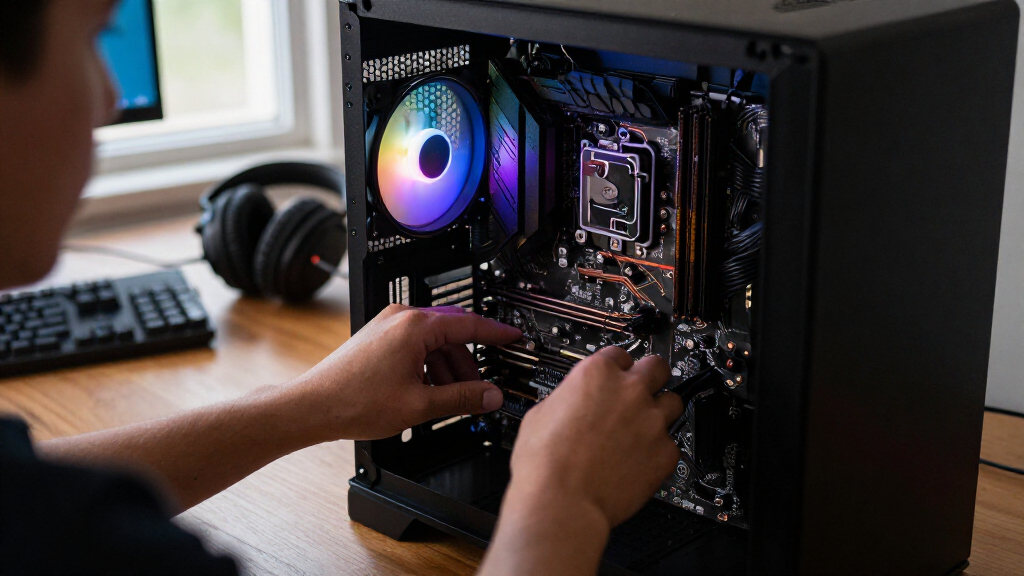
To select these ten gaming motherboards, I prioritized platform longevity and feature utility over raw marketing specs. I evaluated each board based on its VRM quality, ensuring it can handle high-end CPUs without thermal throttling, which is critical for sustained gaming performance. I also looked at connectivity standards, favoring boards that include PCIe 5.0 and USB4 or USB 3.2 Gen 2×2, as these interfaces reduce bottlenecks for high-speed storage and peripherals. Compatibility with the current AMD Ryzen ecosystem was a strict filter, separating legacy AM4 options from modern AM5 choices.
My ranking logic also weighed ease of use, such as BIOS Flashback capabilities and pre-mounted I/O shields, which significantly simplify the building process. I compared value by looking at what features are included versus what is missing; for instance, a cheaper board that lacks Wi-Fi or has fewer M.2 slots might end up costing more if you need to buy separate adapters. This approach ensures that the recommendations reflect real-world usability and long-term viability for gamers in 2027.
| gaming motherboard | Chipset | Socket |
|---|---|---|
| MSI MPG X870E Carbon WiFi Gami | AMD X870E | AM5 |
| ASUS TUF Gaming B850-PLUS WiFi | AMD B850 | AM5 |
| ASUS ROG Strix X870E-E Gaming | AMD X870E | AM5 |
| ASUS ROG Strix X870-A Gaming W | AMD X870 | AM5 |
| ASUS ROG Strix X870E-E Gaming | AMD X870E | AM5 |
| ASUS TUF Gaming B550-PLUS WiFi | AMD B550 | AM4 |
| GIGABYTE B850 AORUS Elite WIFI | AMD B850 | AM5 |
| MSI B850 Gaming Plus WiFi Moth | AMD B850 | AM5 |
| ASUS ROG Strix B850-A Gaming W | AMD B850 | AM5 |
| Asus ROG Strix B550-F Gaming W | AMD B550 | AM4 |
Factors to Consider When Choosing Gaming Motherboards
Choosing a motherboard is about balancing current needs with future upgrades. Here are the critical factors I analyzed to help you make a smarter decision.Socket Compatibility and CPU Generation
The most common mistake builders make is assuming all motherboards fit all CPUs. You must match the socket type to your processor generation; AM5 sockets support Ryzen 7000, 8000, and 9000 series chips, while AM4 sockets are locked to older generations. If you are building new, AM5 is the only path forward for upgradeability, as AM4 is at its end of life. However, if you already own a Ryzen 5000 series CPU, an AM4 board like the ASUS TUF Gaming B550-PLUS saves you money by avoiding a CPU swap. Always verify the BIOS version required for your specific CPU, as some older boards may need an update to run newer chips.
Power Delivery and VRM Quality
Not all motherboards handle power equally, which directly impacts your CPU’s sustained speed. The Voltage Regulator Module (VRM) converts power from the PSU to your CPU, and weak VRMs can cause thermal throttling during heavy loads. For high-core-count chips like the Ryzen 9 9900X, I recommend boards with 16+ power stages and substantial heatsinks, such as the ASUS ROG Strix X870E-E. Mid-range boards with fewer phases are fine for Ryzen 5 or 7 chips but may struggle with overclocking. Checking for power stage amperage rather than just the number of phases gives a clearer picture of stability under load.
Memory Support: DDR4 vs. DDR5
DDR5 has become the standard for new AM5 builds, offering higher bandwidth and better efficiency than DDR4. While DDR4 boards like the ASUS ROG Strix B550-F are cheaper, they lock you into older memory standards that cannot be reused in future systems. DDR5 supports higher clock speeds, which can improve minimum frame rates in CPU-bound games. However, DDR5 kits and compatible motherboards carry a price premium. If you plan to keep your PC for five years, investing in DDR5 now is more cost-effective than upgrading later, as the entire platform will eventually shift to DDR5 exclusively.
Connectivity: Wi-Fi 7 and USB Standards
Wireless standards have evolved rapidly, with Wi-Fi 7 appearing on premium boards like the MSI MPG X870E Carbon. This standard offers lower latency and higher speeds, which is beneficial for wireless gaming or heavy network usage. However, if you use a wired ethernet connection, Wi-Fi 7 is less critical than having 2.5Gb LAN or better. USB connectivity is another differentiator; look for USB4 or USB 3.2 Gen 2×2 ports if you use external NVMe drives. Older USB 2.0 headers are still present for peripherals like keyboards and mice, which do not need high bandwidth, so prioritize high-speed ports for storage and docking stations.
Expansion Slots and M.2 Storage
Modern GPUs are larger and heavier, requiring reinforced PCIe x16 slots to prevent sagging and ensure stable connections. PCIe 5.0 support is now common on high-end boards, providing double the bandwidth of PCIe 4.0, though current GPUs do not fully saturate PCIe 4.0. The more relevant spec for many users is M.2 slots; ensure the board has enough slots for your storage needs, with at least one supporting PCIe 5.0 for future SSDs. Check if the M.2 slots share lanes with SATA ports, as using an NVMe drive might disable certain SATA connections. This resource sharing is a hidden limitation on many mid-range boards that can complicate multi-drive setups.
Frequently Asked Questions
Is it worth buying a PCIe 5.0 motherboard today?
For most gamers, PCIe 5.0 is not yet a necessity, as current graphics cards do not saturate PCIe 4.0 bandwidth. However, buying a board with PCIe 5.0 support, like the ASUS ROG Strix X870E-E, is a smart future-proofing strategy. It ensures that when you upgrade to next-generation GPUs or ultra-fast NVMe SSDs, your motherboard will not be the bottleneck. The cost difference between PCIe 4.0 and 5.0 boards has narrowed significantly, making the upgrade path more accessible. If you plan to keep your system for 4-5 years, the slight premium is justified by the extended relevance of the platform.
Can I use DDR4 RAM with an AM5 motherboard?
No, AM5 motherboards exclusively support DDR5 memory. The physical keying on DDR4 sticks is different from DDR5, making them incompatible. If you have existing DDR4 RAM, you must stick with an AM4 motherboard like the ASUS TUF Gaming B550-PLUS or the ASUS ROG Strix B550-F. This is a major consideration for upgraders; moving to AM5 requires buying new RAM, which adds to the total build cost. While DDR4 is cheaper, it is a dead-end technology for new builds, so weigh the savings against the loss of future upgradeability.
Do I need Wi-Fi 7 on my gaming motherboard?
Wi-Fi 7 offers lower latency and higher speeds, but it is only beneficial if your router also supports Wi-Fi 7. If you are on a wired connection or use an older Wi-Fi 6 router, paying extra for a Wi-Fi 7 board like the MSI MPG X870E Carbon may not provide immediate benefits. However, Wi-Fi 7 is backward compatible, so it will work with current routers, just not at the new maximum speeds. For gamers who play in areas with congested networks, the improved efficiency of Wi-Fi 7 can reduce lag spikes. If you are building a new system and plan to upgrade your router soon, including this feature adds long-term value.
What is the difference between B850 and X870E chipsets?
The X870E chipsets are the premium tier, offering more USB ports, full PCIe 5.0 support for both graphics and storage, and robust power delivery for overclocking. B850 boards, like the GIGABYTE B850 AORUS Elite, are mid-range options that may limit PCIe 5.0 to storage only, keeping the GPU slot on PCIe 4.0. X870E boards also typically have more lanes for additional M.2 drives and USB4 connectivity. For most gamers, a B850 board provides sufficient features at a lower price. Choose X870E only if you need extensive connectivity, multiple NVMe drives, or plan to heavily overclock a high-end CPU.
Should I buy a motherboard with BIOS Flashback?
BIOS Flashback is a highly useful feature that allows you to update the motherboard’s firmware using a USB drive without needing a CPU, RAM, or GPU installed. This is particularly important when pairing an older motherboard with a newer CPU, as the out-of-the-box BIOS might not recognize the new processor. Boards like the ASUS ROG Strix B550-F include this feature, saving you from the frustration of a black screen on first boot. While not strictly necessary if the board is already updated, it is a valuable safety net for compatibility issues. I recommend prioritizing boards with this feature to simplify the building process and avoid potential headaches.
Conclusion
Selecting the right gaming motherboard depends on your current hardware and long-term goals. For those seeking the Best Overall experience with maximum future-proofing, the MSI MPG X870E Carbon WiFi is my top recommendation due to its balanced feature set and strong power delivery. Builders on a tighter budget will find the ASUS TUF Gaming B850-PLUS WiFi to be the Best Value, offering modern AM5 connectivity without the premium price tag. If you are sticking with an existing AM4 CPU, the ASUS ROG Strix B550-F Gaming WiFi II remains the Best for Beginners or budget-conscious upgraders, though it lacks a path to newer CPUs. For enthusiasts demanding the absolute highest performance and extensive connectivity, the ASUS ROG Strix X870E-E stands as the Best Premium choice, ideal for high-end builds with multiple storage drives and heavy overclocking ambitions.