

AI automation platforms can help teams connect AI models to apps, automate repeatable work, or build agents, but these ten picks are books and guides rather than software products. My best overall pick is The No-BS Guide to AI Agents & Automation for its accessible, practical workflow focus; Microsoft Copilot Studio User Guide for Beginners is a stronger fit for Microsoft-centered work, while The RPA Developer Roadmap offers a more technical path. The main tradeoff is between an approachable, no-code starting point and the deeper platform, integration, and engineering knowledge needed for production systems. I also weigh whether each guide suits a specific tool ecosystem or a broader learning goal. Read on for the full comparison and help choosing the right resource for your next automation project.

Get business pricing on tech for your team
- Business-only prices and quantity discounts
- Tax-exempt purchasing
- Multiple users, one account, clear invoices
Key Takeaways
- The No-BS Guide to AI Agents & Automation leads for readers who want approachable workflow-building guidance without making a single platform the whole story.
- Microsoft Copilot Studio User Guide for Beginners is the clearest match for Microsoft-oriented readers, while Power Platform and the AI Revolution widens the focus to apps, bots, and automation patterns.
- The RPA Developer Roadmap stands apart for readers who need technical grounding across RPA, APIs, and automation platforms rather than a quick no-code start.
- AI Automation Without Coding emphasizes ready-to-adapt workflows and prompts; its practical format may suit people seeking examples more than platform architecture.
- The roundup’s strongest options serve distinct learning needs: no-code practice, tool-specific instruction, technical career development, or broad AI-agent coverage. These guides are not substitutes for evaluating and purchasing automation software.



| AI automation platform | Format | Related topic | Product identifier |
|---|---|---|---|
| Agentic AI for Platform Engine | Book | Retrieval-augmented generation (RAG) | ASIN 1806386658 |
| AI Tools and Platforms: A Comp | Book | — | ASIN B0F7VVXLJF |
| The No-BS Guide to AI Agents & | Book | — | ASIN B0CYLQY6TP |
| Enterprise Digital Transformat | Book | Modern integration | ASIN B0HKXG3NBF |
| Microsoft Copilot Studio User | Book | AI copilots | ASIN B0H2JKNJ8G |
| The AI Automation Agency Start | Beginner’s guide | — | — |
| The RPA Developer Roadmap: A P | Practical technical roadmap | — | — |
| AI Automation Without Coding: | Practical guide | — | — |
| Power Platform and the AI Revo | Book | — | — |
| AI Agents Bible | Book (5 Books in 1) | — | — |
More Details on Our Top Picks
Agentic AI for Platform Engineering
Agentic AI for Platform Engineering is the most specialized choice here: it focuses on applying agentic AI to developer platforms, including RAG, MCP, and governed autonomous operations. That makes it a closer fit for platform engineers shaping internal systems than The No-BS Guide to AI Agents & Automation, which is aimed at no-code business workflows. Its emphasis on governance gives the subject a more operational angle: readers can explore how autonomy might be managed, not just where automation could be added. The tradeoff is its narrow scope. Buyers seeking a broad survey of AI tools, consulting applications, or step-by-step setup guidance may find AI Tools and Platforms a better match. The available details do not establish the book’s depth or practical exercises, so I would choose it for its subject focus rather than assume a particular level of implementation guidance.
Pros:- Directly addresses agentic AI in platform engineering.
- Includes RAG and MCP among its stated topics.
- Covers governance for autonomous operations.
- Offers a more specialized platform focus than broad AI tools guides.
Cons:- The stated subject is narrower than general AI automation and business workflow guides.
- Available product details do not confirm the level of technical instruction or hands-on examples.
Best for: Platform engineers and technical leaders exploring governed agentic AI for internal developer platforms, especially those interested in RAG and MCP.
Not ideal for: Readers seeking a broad beginner introduction, no-code business workflows, or detailed implementation guidance confirmed by the available product information.
- Format:Book
- Primary topic:Agentic AI for platform engineering
- Related topic:Retrieval-augmented generation (RAG)
- Related topic:Model Context Protocol (MCP)
- Operational focus:Governed autonomous operations
- Product identifier:ASIN 1806386658
Our verdict“Choose this book if your AI automation questions center on governed agents and developer platforms rather than no-code business workflows.”
AI Tools and Platforms: A Comprehensive Guide for Machine Learning, Automation, and Data Analysis
AI Tools and Platforms has the broadest stated scope among these five: it spans machine learning, automation, and data analysis, with a series context focused on building an AI consulting business. That combination makes it more relevant to aspiring consultants than Agentic AI for Platform Engineering, which concentrates on developer platforms and governed agents. Its range may help readers connect automation choices to a wider AI service offering, but the description does not identify specific platforms, exercises, or implementation methods. It is also Book 9 in a series, so readers may need earlier titles for background or a fuller business path. Compared with The No-BS Guide to AI Agents & Automation, this guide appears broader and more consulting-oriented, while offering less explicit emphasis on building no-code workflows.
Pros:- Covers AI tools and platforms across several related subject areas.
- Includes machine learning, automation, and data analysis in its stated scope.
- Connects the material to an AI consulting business series.
- Broader in subject coverage than the platform-engineering-focused option.
Cons:- Its position as Book 9 may leave new readers wanting context from earlier series titles.
- Available details do not name specific platforms, exercises, or methods.
- The wide topic range may offer less depth on any single automation workflow.
Best for: Aspiring AI consultants who want a broad introduction to tools, machine learning, automation, and data analysis within a business-building series.
Not ideal for: Readers who want a standalone, step-by-step guide to a specific automation platform or who prefer a focused no-code workflow manual.
- Format:Book
- Series:How to Start Your Own AI Consulting Business
- Book number:9
- Topic:AI tools and platforms
- Topic:Machine learning
- Topic:Automation
- Topic:Data analysis
- Product identifier:ASIN B0F7VVXLJF
Our verdict“Pick this guide for a broad AI-and-consulting perspective, but choose a focused workflow book if you need platform-specific instructions.”
The No-BS Guide to AI Agents & Automation: Build AI Workflows, Automate Your Business, and Increase Your Productivity Without Coding (The No-BS AI Playbooks, Book 2)
The No-BS Guide to AI Agents & Automation is the clearest fit for readers who want to connect AI agents with everyday business tasks without coding. Its stated focus on AI workflows and productivity gives it a more practical, task-oriented angle than AI Tools and Platforms, whose remit also includes machine learning and data analysis. It also contrasts with Agentic AI for Platform Engineering: that book targets technical platform design, while this one is framed for business automation without programming experience. The limitation is that the available description does not name tools, workflows, or project examples, so buyers cannot verify how specific the guidance gets. As Book 2 in The No-BS AI Playbooks, it may stand on its own, but the supplied details do not clarify how much context depends on the series.
Pros:- Explicitly targets AI workflow and business-task automation.
- Designed for readers without coding experience.
- Connects agent use to productivity goals.
- More directly focused on business workflows than the broader AI tools guide.
Cons:- Available details do not identify platforms, sample workflows, or technical methods.
- The description does not establish how much practical instruction or project detail is included.
- Its business focus may not suit readers seeking platform engineering or enterprise architecture.
Best for: Small-business owners, operations staff, and nontechnical professionals who want to learn about AI agents and business workflows without coding.
Not ideal for: Platform engineers or readers who need confirmed instructions for a named automation platform, technical integrations, or governed enterprise deployment.
- Format:Book
- Series:The No-BS AI Playbooks
- Book number:2
- Primary topic:AI agents and automation
- Workflow focus:Building AI workflows
- Audience approach:Without coding
- Product identifier:ASIN B0CYLQY6TP
Our verdict“Choose this book if you want a nontechnical starting point for AI-assisted business workflows and do not require confirmed platform-specific tutorials.”
Enterprise Digital Transformation Architecture
Enterprise Digital Transformation Architecture takes the broadest organizational view of this group, framing automation around connected business platforms, modern integration, and AI. That makes it a better thematic match for enterprise architects than The No-BS Guide to AI Agents & Automation, which is positioned around no-code business tasks. The emphasis on integration is useful for buyers thinking about how systems and processes fit together, rather than choosing an individual AI workflow tool. Still, the available description is sparse: it does not name frameworks, platforms, implementation steps, or examples. Compared with Agentic AI for Platform Engineering, this title appears less focused on agent governance and more centered on enterprise architecture. I would treat it as a potential strategy-oriented read, not a verified technical manual for deploying automation.
Pros:- Connects digital transformation with enterprise architecture.
- Addresses modern integration and connected business platforms.
- Includes intelligent automation and artificial intelligence in its stated scope.
- Offers a broader organizational lens than a no-code workflow guide.
Cons:- Available product information does not specify frameworks, tools, or implementation steps.
- The description gives little basis for judging technical depth or practical examples.
- Its architecture focus may be too high-level for readers seeking direct workflow-building guidance.
Best for: Enterprise architects and digital transformation leads evaluating how integration, intelligent automation, and AI fit into connected business platforms.
Not ideal for: Readers who need hands-on instructions, named platform tutorials, or detailed guidance for building individual AI agents and workflows.
- Format:Book
- Primary topic:Enterprise digital transformation architecture
- Platform focus:Connected business platforms
- Related topic:Modern integration
- Related topic:Intelligent automation
- Related topic:Artificial intelligence
- Product identifier:ASIN B0HKXG3NBF
Our verdict“Consider this title for an enterprise-level view of integration and automation, but seek a more detailed guide for hands-on platform setup.”
Microsoft Copilot Studio User Guide for Beginners (2026)
Microsoft Copilot Studio User Guide for Beginners narrows the subject to a named Microsoft toolset, covering copilots, workflows, automation, Power Platform, and integrations. That specificity gives it a clearer platform starting point than AI Tools and Platforms, which covers a wider range of AI topics without naming a particular product in the supplied details. It is also more Microsoft-centered than The No-BS Guide to AI Agents & Automation, whose no-code framing is broader and not tied to Copilot Studio. Images and illustrations may help new users follow a visual introduction, but the description does not say which features, procedures, or integrations the guide explains. The 2026 label may appeal to readers seeking a current-edition guide; still, the available information does not confirm coverage depth or update specifics.
Pros:- Focuses on Microsoft Copilot Studio rather than AI platforms in general.
- Connects copilots with workflows, automation, Power Platform, and integrations.
- A beginner-oriented framing suits readers new to the toolset.
- Includes images and illustrations according to the supplied description.
Cons:- Available details do not specify the guide’s procedures, examples, or technical depth.
- Its Microsoft focus offers less platform-neutral perspective than broader AI automation books.
- The supplied information does not clarify what the 2026 edition updates or covers.
Best for: New Microsoft Power Platform users who want an introductory guide centered on Copilot Studio, copilots, workflows, and integrations.
Not ideal for: Readers who need platform-neutral automation advice, confirmed advanced configuration steps, or a detailed comparison of multiple AI automation platforms.
- Format:Book
- Edition year:2026
- Primary platform:Microsoft Copilot Studio
- Audience:Beginners
- Related topic:AI copilots
- Related topic:Automation and workflows
- Related platform:Power Platform
- Presentation:Images and illustrations
- Product identifier:ASIN B0H2JKNJ8G
Our verdict“Choose this guide for a beginner introduction to Copilot Studio and Power Platform, not for a platform-neutral automation survey.”
The AI Automation Agency Starter: Build Business-Running AI Agents with n8n – A Beginner’s Guide to Automating Real Work and Selling It as a Service
Agency-focused and practical, this guide pairs learning n8n agent creation with the business step of packaging automations as services. That makes it a better fit for aspiring consultants than AI Automation Without Coding, which emphasizes ready-to-use workflows and prompts rather than selling automation work. Its beginner-friendly explanations may help readers turn routine business tasks into concrete client offerings, but the description still expects some familiarity with n8n or workflow tools. Readers starting from zero may find the platform concepts slower going than a general no-code introduction. I’d choose this when the goal is to build and sell n8n-based services; for a broader survey across tools and skill levels, AI Agents Bible covers more platforms, though with less emphasis on the agency model.
Pros:- Beginner-friendly explanations of creating AI agents with n8n
- Practical examples tied to business workflows
- Connects automation skills to selling services
- Focuses on applying agents to real work rather than theory alone
Cons:- Assumes basic familiarity with n8n or workflow tools
- Its agency and service-selling focus may not suit employees automating only their own tasks
- The supplied description does not specify coverage of platforms beyond n8n
Best for: Aspiring automation consultants who want to build n8n agents for real business tasks and package them as client services.
Not ideal for: Readers with no exposure to workflow tools, or people seeking a platform-neutral overview rather than an n8n-centered path.
- Format:Beginner’s guide
- Primary platform:n8n
- Main topic:AI agent creation
- Workflow focus:Automating real-world tasks
- Business focus:Packaging automation as a service
- Intended audience:Entrepreneurs
- Coding experience:Designed for minimal coding experience
Our verdict“Choose this guide if you want to build n8n automations with the aim of offering them as services to businesses.”
The RPA Developer Roadmap: A Practical Technical Path to Master RPA, Automation Platforms, APIs, AI, and Modern Automation
Broad technical orientation is the defining strength here: the roadmap connects robotic process automation with platforms, APIs, and AI rather than treating agent building as the only path. Compared with The AI Automation Agency Starter, which points beginners toward n8n projects and service sales, this book is better suited to readers mapping a wider automation skill set. That breadth may help someone decide what technologies to learn next, but the supplied description does not identify specific platforms, project exercises, or a defined progression beyond the roadmap framing. It is also less immediately task-focused than AI Automation Without Coding, whose named workflow and prompt counts set clearer expectations for hands-on material. I’d pick this for technical direction, not as a guaranteed step-by-step build manual.
Pros:- Connects RPA with modern automation technologies
- Includes automation platforms, APIs, and AI in one learning path
- Roadmap framing can help readers plan what technical areas to study
- Targets practical development rather than only general AI awareness
Cons:- The supplied description names no specific platforms or tools
- No concrete project examples or learning sequence details are provided
- May be too technical for readers seeking no-code workflows
Best for: Aspiring RPA developers and automation practitioners who want a roadmap spanning platforms, APIs, and AI.
Not ideal for: Nontechnical users seeking ready-made no-code workflows, or readers who need a clearly specified platform tutorial with projects.
- Format:Practical technical roadmap
- Primary topic:Robotic process automation
- Additional topics:Automation platforms, APIs, and AI
- Approach:Technical learning path
- Intended audience:RPA developers and automation learners
- Named platforms:Not specified in the supplied product data
Our verdict“Pick this for a broad technical learning roadmap across RPA, APIs, platforms, and AI, rather than a narrowly defined how-to guide.”
AI Automation Without Coding: 50 Practical Workflows and 100 Prompts
Clear, countable resources make this the most immediately approachable pick for readers who want workflow ideas without learning to code: it offers 50 workflows and 100 automation prompts. Compared with The RPA Developer Roadmap, it favors practical, no-code use over technical breadth across APIs and RPA. It also differs from The AI Automation Agency Starter, which centers on n8n agents and turning projects into client services; this book is framed around saving time and handling repetitive tasks. That makes it a sensible starting point for individual users, but the supplied details do not name platforms or explain how much setup each workflow requires. Readers seeking a guided platform-specific build path may get more direction from the n8n guide, while those wanting several named tools can look to AI Agents Bible.
Pros:- Provides 50 practical workflow examples
- Includes 100 automation prompts
- Explicitly targets readers without coding experience
- Focuses on time-saving and repetitive work
Cons:- The supplied description does not name supported platforms
- It is unclear how much step-by-step setup guidance each workflow includes
- Less suited to readers seeking advanced RPA or API development
Best for: Nontechnical professionals and small-team operators who want prompt and workflow ideas for repetitive tasks without coding.
Not ideal for: Readers who need detailed instructions for a specific automation platform, or developers seeking API and RPA depth.
- Format:Practical guide
- Workflows:50
- Automation prompts:100
- Coding requirement:Designed for use without coding
- Primary focus:AI workflows and repetitive-task automation
- Named platforms:Not specified in the supplied product data
Our verdict“Choose this for a no-code collection of workflow and prompt ideas, especially if you want practical starting points rather than a technical roadmap.”
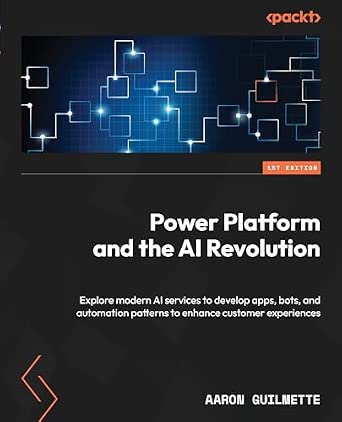
Power Platform and the AI Revolution: Explore modern AI services to develop apps, bots, and automation patterns to enhance customer experiences
Microsoft ecosystem focus gives this book a distinct place in an AI automation roundup: it centers on using AI services with Power Platform to create apps, bots, and automation patterns for customer experiences. Compared with AI Automation Without Coding, which offers a broader collection of workflows and prompts without naming a platform, this title is more relevant to teams already working in Microsoft’s environment. Its customer-experience emphasis also separates it from The AI Automation Agency Starter, which frames n8n automation around business tasks and service sales. The tradeoff is scope: readers outside the Power Platform ecosystem may find the guidance less applicable, and the supplied details do not identify specific services or the level of technical depth. I’d select it for a Microsoft-centered build path, not as a general survey of automation tools.
Pros:- Focuses on AI services within the Microsoft Power Platform ecosystem
- Covers developing apps and bots
- Addresses automation patterns for customer experiences
- Offers a platform-centered alternative to general workflow collections
Cons:- Its Microsoft-specific scope may limit usefulness for other tool stacks
- The supplied description does not name the AI services covered
- The supplied product data does not clarify the technical depth or required experience
Best for: Developers, solution builders, and customer-experience teams already using Microsoft Power Platform who want to add AI to apps, bots, and automations.
Not ideal for: Readers seeking platform-neutral automation advice, or teams building primarily with n8n, Make.com, or other ecosystems.
- Format:Book
- Ecosystem:Microsoft Power Platform
- AI focus:Modern AI services
- Build topics:Apps, bots, and automation patterns
- Use-case focus:Enhancing customer experiences
- ASIN:1835086365
Our verdict“Choose this if your automation work is already centered on Microsoft Power Platform and you want to build AI-enabled apps, bots, or customer-facing workflows.”
AI Agents Bible (5 Books in 1): Beginner-to-Pro System for Agentic AI
Multi-platform coverage is the main reason to choose this five-part guide: it names Custom ChatGPT, n8n, and Make.com while promising a progression from beginner to professional. Compared with The AI Automation Agency Starter, which concentrates on n8n and monetizing services, this book spans more tools and suits readers who want to compare no-code routes before committing to one. Its wider scope also contrasts with Power Platform and the AI Revolution, which is specifically oriented toward Microsoft’s ecosystem. The tradeoff is that coverage across several tools may not provide the depth of a single-platform manual, and the supplied description warns that interfaces can change, dating instructions. I’d favor it for a structured cross-tool introduction, but choose a focused guide when a specific platform or business outcome is the priority.
Pros:- Combines five books into a beginner-to-pro learning system
- Names Custom ChatGPT, n8n, and Make.com
- Focuses on no-code automation options
- Offers a broader tool mix than the n8n-centered agency guide
Cons:- Covering several tools may leave less room for deep platform-specific instruction
- Tool interfaces may change and make some guidance outdated
- n8n and Make.com can involve learning curves or subscription costs
Best for: Beginners and intermediate no-code builders who want a guided introduction to agentic AI across Custom ChatGPT, n8n, and Make.com.
Not ideal for: Readers who need deep, current documentation for one platform, or teams committed to Microsoft Power Platform rather than the tools named here.
- Format:Book (5 Books in 1)
- Series:The Generative AI Creator Series
- Skill level:Beginner-to-Pro
- Tools covered:Custom ChatGPT, n8n, and Make.com
- Primary subject:Agentic AI
- Automation approach:No-code automations
Our verdict“Choose this for a broad beginner-to-pro introduction to agentic AI across several no-code tools, rather than a deep manual for one platform.”

How We Picked
I ranked these ten resources by how directly they help a reader choose, learn, or build with AI automation platforms. The main criteria were clarity for the stated audience, practical usefulness for designing workflows, relevance to current platform concepts such as agents and integrations, and how well each title signals its scope. I also weighed platform specificity: a focused guide can be more actionable for someone already using Microsoft tools, while broader material may be more useful to a learner comparing approaches.
The order favors resources with a clear path from understanding automation to applying it, then places more specialized or broad-reference titles where their audience fit is strongest. Because the listed options are books and guides—not software platforms—I do not rank them on live integrations, uptime, security controls, or product performance. Buyers should use them as learning resources and check the current capabilities, licensing, and governance of any software they plan to deploy.
| AI automation platform | Format | Product identifier |
|---|---|---|
| Agentic AI for Platform Engine | Book | ASIN 1806386658 |
| AI Tools and Platforms: A Comp | Book | ASIN B0F7VVXLJF |
| The No-BS Guide to AI Agents & | Book | ASIN B0CYLQY6TP |
| Enterprise Digital Transformat | Book | ASIN B0HKXG3NBF |
| Microsoft Copilot Studio User | Book | ASIN B0H2JKNJ8G |
| The AI Automation Agency Start | Beginner’s guide | — |
| The RPA Developer Roadmap: A P | Practical technical roadmap | — |
| AI Automation Without Coding: | Practical guide | — |
| Power Platform and the AI Revo | Book | — |
| AI Agents Bible | Book (5 Books in 1) | — |
Factors to Consider When Choosing AI Automation Platforms
Choosing a guide about AI automation platforms starts with your intended outcome, not the broadest title or longest list of tools. These resources vary in audience and scope, so use the factors below to match a learning format to the work you actually need to do.
Start With the Work You Want to Automate
Write down one real task before choosing a learning resource: for example, routing support requests, summarizing documents, or syncing records between systems. Then identify which parts are repetitive, which require judgment, and where a person must approve the result. A guide built around practical workflows can help you prototype, while a technical roadmap may be better if the task depends on APIs or legacy systems. A common mistake is starting with an agent concept before confirming that the underlying process is stable and worth automating. Prefer material that helps you map inputs, decisions, outputs, and exceptions rather than simply listing exciting use cases. This keeps your first project small enough to evaluate and safer to revise.
Match the Guide to Your Existing Software
Platform-specific guidance can save time when your organization already works inside a particular ecosystem, since it can connect concepts to familiar tools and terminology. Broader material may be a better starting point if you are still comparing vendors or expect to work across several systems. Avoid treating a guide’s platform focus as proof that the software is the best fit for your organization. Check whether your target tools support the connectors, authentication methods, data sources, and deployment controls your workflow needs. If the guide focuses on one vendor, pair it with current official documentation before building anything that depends on recent features. That extra check matters because platform interfaces and available capabilities change over time.
Choose a Learning Curve You Can Sustain
No-code examples can help a beginner move from idea to a working prototype, but they may not explain what happens when a connector fails or an AI response is wrong. Technical material can clarify APIs, RPA, and system design, though it may slow readers who mainly want to automate a simple personal task. Choose a resource that asks for a level of coding and systems knowledge you can support, not one that promises to remove every learning hurdle. A useful compromise is to begin with a small visual workflow and learn the technical details as real limits appear. Avoid selecting solely by the word “beginner” in a title; check whether the content appears to cover setup, testing, and troubleshooting, not just introductory concepts.
Look for Testing, Exceptions, and Human Review
A workflow that works on a clean example may break when fields are missing, documents are ambiguous, or an external service is unavailable. Before adopting a pattern, ask how it handles errors, retries, duplicate actions, and cases that need a person’s judgment. AI output also needs a review plan when incorrect results could affect customers, money, or sensitive records. Guides centered on prompts and sample workflows can be useful for exploration, but examples should be adapted and tested against your own data and edge cases. Do not let a polished demo stand in for a validation process. For a real deployment, define who monitors the workflow and how they can stop or correct it.
Account for Data, Access, and Ongoing Ownership
Automation changes where information flows and which services can act on it, so check data handling and access needs before committing to a platform. Consider whether the workflow touches personal, regulated, or confidential information, and whether your organization permits that data to reach the chosen AI service. Broad guides may explain concepts, but they cannot confirm your company’s current policies or a vendor’s latest terms. Plan for credentials, permissions, audit records, and a named owner who can respond when a connected service changes. A frequent mistake is building a useful prototype under one person’s account and leaving no maintainable handoff. The cheaper learning path is not always the less demanding operating path.
Separate Learning Value From Software Fit
These roundup entries are educational books and guides, not automation services, so their value is the knowledge and structure they provide rather than access to working software. Before choosing a resource, decide whether you need an overview, step-by-step examples, platform-specific instruction, or a technical development path. Then evaluate actual software separately for integrations, governance, support, deployment options, and total operating effort. A guide can teach a method without reflecting the latest product interface or your organization’s setup. Check publication details and current documentation when a decision depends on a named platform feature. This distinction prevents a useful learning resource from being mistaken for a software recommendation.
Frequently Asked Questions
Are these AI automation platforms I can sign up for?
No. The ten entries are books and guides about AI automation, agents, RPA, and related tools; they are not software subscriptions or runnable platforms. Use the roundup to choose a learning resource, then compare software separately against your required integrations, security rules, governance, and deployment needs. A guide may describe a platform or workflow, but it does not provide access to the service. Check the publisher’s current edition information and the software vendor’s documentation before relying on a specific feature.
Which guide should I choose if I have never built an automation?
The No-BS Guide to AI Agents & Automation is the strongest starting point in this lineup for readers seeking an approachable, no-code orientation. AI Automation Without Coding may suit someone who prefers a collection of workflow and prompt examples to adapt. If you already know that you will work in Microsoft’s ecosystem, the Copilot Studio beginner guide may offer a more focused route. Before buying, check the book’s contents and publication details for the tools and level of hands-on instruction you need. Start with one low-risk task rather than expecting a guide to make every process suitable for automation.
Should I choose a general AI automation guide or a platform-specific one?
Choose a general guide if you are still learning the main approaches or comparing tools across vendors. A platform-specific guide is more useful when your team has already settled on an ecosystem and you need instruction tied to its apps, bots, or workflow features. The Microsoft Copilot Studio guide and Power Platform and the AI Revolution offer more targeted Microsoft-related learning than the broader agent titles. A specific guide can become less useful if your organization changes tools or requires integrations outside its scope. Confirm that its version and examples match the software you can access.
When does it make sense to learn RPA and APIs instead of starting with no-code AI workflows?
Start with no-code workflows when the process is straightforward, the applications already connect cleanly, and you need to validate the idea quickly. RPA and API knowledge matters more when systems lack dependable connectors, work spans older interfaces, or the automation needs tighter control and troubleshooting. The RPA Developer Roadmap is the most directly aligned choice in this list for that technical learning path. You do not need to master every engineering concept before prototyping, but you should recognize when a visual workflow is reaching its limits. Escalate the technical depth when reliability, scale, or maintainability demands it.
How can I tell whether a workflow example is safe to use with business data?
Do not assume a sample workflow is safe for your data just because it runs successfully. Check what information leaves your systems, which services receive it, what access permissions are granted, and how credentials are stored. Test with synthetic or low-sensitivity data first, then ask your security or compliance owner to review any workflow touching confidential or regulated information. Add a human approval step when an incorrect AI result could create a meaningful business or customer impact. Keep an owner responsible for monitoring failures and reviewing changes to connected services.
Conclusion
For the broadest practical starting point, I recommend The No-BS Guide to AI Agents & Automation as the best overall learning pick. My best value choice for example-led practice is AI Automation Without Coding, while AI Agents Bible is the best premium-style choice for readers who want a broad, multi-part study resource rather than a narrow platform tutorial. Beginners should start with the No-BS guide or Microsoft Copilot Studio User Guide for Beginners if their work is already Microsoft-centered. For specific needs, choose The RPA Developer Roadmap for technical career development, The AI Automation Agency Starter for n8n and service-building themes, or Power Platform and the AI Revolution for Microsoft-oriented apps and bots. These are guides, not software products; match the book to your learning goal, then assess the actual platform against your data, integration, and operating requirements.
Halloween Picks
halloween
As an affiliate, we earn on qualifying purchases.