By Thorsten Meyer, ThorstenMeyerAI.com | October 13, 2025
AI’s physical footprint is no longer invisible. Across the United States, small towns are fighting back against massive data-center projects that threaten to reshape their landscapes, strain utilities, and test the limits of local governance. What started as isolated zoning disputes has become a defining clash between AI infrastructure growth and community sovereignty.

Saline Township, Michigan: A Test Case for Local Power
In October 2025, Saline Township, Michigan, became a national microcosm of the conflict. Township leaders initially rejected a 250-acre data-center proposal, citing fears over water use and environmental impact. But after developers and landowners filed suit, claiming exclusionary zoning, the township reversed course—under a consent agreement.
The deal allowed construction to move forward but included firm limits on water consumption, noise, and diesel generator operations, plus funding for township services such as well repair and infrastructure maintenance.
The message was clear: outright denial invites litigation; negotiated oversight preserves local control. Expect this model—approval with guardrails—to proliferate nationwide.

Why Data Centers Use So Much Water: Understanding Cooling Systems, Water Consumption, Environmental Concerns, and Community Impact
As an affiliate, we earn on qualifying purchases.
As an affiliate, we earn on qualifying purchases.
A Nationwide Pushback: The Rise of Moratoriums
Across the U.S., municipalities are enacting temporary moratoriums or bans to slow down AI-driven data-center expansion and reassess their zoning codes.
- St. Charles, Missouri: Adopted a one-year moratorium in August 2025 to study noise, energy, and transparency standards.
- St. Louis, Missouri: City planners are reviewing similar restrictions while residents demand public disclosure of power-draw data.
- Kootenai County, Idaho: Implemented a temporary ban earlier this year to protect the Rathdrum Prairie Aquifer; leaders are now considering a permanent prohibition.
- Lordstown, Ohio: Moving toward a permanent ban—with exemptions for specific projects already in progress.
Some state governments, however, are pulling in the opposite direction. West Virginia’s Power Generation and Consumption Act stripped municipalities of veto power over AI data centers, replacing local oversight with state-level incentives and regulation.

VEVOR Sound Dampening Blankets, Soundproof Curtains with 80 x 48 in, Soundproof Blanket with Grommets, Studio Grommeted Blanket, for Window, Door, Light Blocker, Music Recording, Black
Sound Absorption & Noise Reduction: Made with a polyester woven surface and recycled cotton filling, this 3-layer physical…
As an affiliate, we earn on qualifying purchases.
As an affiliate, we earn on qualifying purchases.
Why Communities Are Resisting
Residents and local activists cite a now-familiar list of grievances:
- Water stress: AI data centers can consume millions of gallons daily for cooling.
- Power strain: Facilities demand gigawatts of new capacity, often supplied by fossil-fuel plants.
- Limited local benefit: Jobs are scarce once construction ends; tax incentives often undercut long-term revenue.
- Noise and emissions: Backup diesel generators and 24/7 operations alter rural soundscapes and air quality.
Developers counter that AI data centers stimulate local economies and modernize energy infrastructure, but such promises increasingly ring hollow to residents who see few tangible benefits.
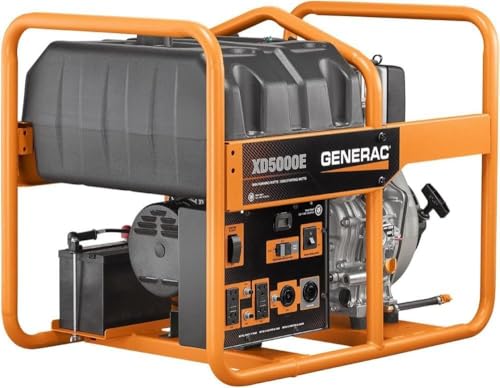
Generac 6864 XD5000E 5000-Watt Diesel-Powered Portable Generator – Ideal for Emergency Backup Power and Job Sites – Reliable Power for Demanding Applications – CARB Compliant
Robust and Portable: The generator features a sturdy steel frame with an integrated lifting eye, making it easy…
As an affiliate, we earn on qualifying purchases.
As an affiliate, we earn on qualifying purchases.
From Denial to Design: The Shift Toward Responsible Siting
Emerging from these disputes is a new regulatory playbook that emphasizes balance over prohibition. Key components include:
- Quantified Water Caps: Daily and seasonal limits tied to non-potable or reclaimed sources.
- Grid Impact Assessments: Mandatory analysis of peak load and local reliability effects.
- Noise & Emission Controls: Tier-4 diesel systems, acoustic barriers, and strict runtime limits.
- Transparency Requirements: Public dashboards tracking power, cooling, and water metrics.
- Community Benefit Agreements (CBAs): Local funding for emergency services, roads, and environmental remediation.
This “responsible siting” model signals an evolution from NIMBYism to conditional integration—a framework that allows development while preserving community autonomy.
![DeskFX Free Audio Effects & Audio Enhancer Software [PC Download]](https://m.media-amazon.com/images/I/41fXbDohyuS._SL500_.jpg)
DeskFX Free Audio Effects & Audio Enhancer Software [PC Download]
Transform audio playing via your speakers and headphones
As an affiliate, we earn on qualifying purchases.
As an affiliate, we earn on qualifying purchases.
The Legal Dimension: Where AI Meets Land Use Law
Legal experts note that exclusionary-zoning lawsuits are likely to multiply as municipalities attempt to block projects. Conversely, poorly crafted bans can violate state economic-development statutes, exposing towns to costly litigation.
The Saline consent decree may thus become the default middle ground: approve, but impose measurable constraints—a compliance-oriented truce between local democracy and national AI ambition.
Outlook: The Next 18 Months
Over the coming year, expect to see:
- A wave of six-to-twelve-month moratoriums as counties craft new ordinances.
- Hybrid approval models featuring negotiated CBAs and environmental ceilings.
- State preemption battles intensifying as legislatures seek to reclaim siting authority.
- Corporate adaptation, with hyperscalers prioritizing regions offering both water reuse and grid stability.
AI’s infrastructural sprawl will not stop—but its governance is decentralizing. The story of AI’s physical expansion is becoming as much about local politics and environmental ethics as it is about semiconductors and supercomputing.
Thorsten Meyer’s Take
Data centers are the new industrial frontier of AI. The next phase of the AI economy will be shaped not only by chip design or model architecture but by land, water, and community consent. Saline Township might just have written the first draft of how humanity negotiates the geography of intelligence.