Introduction: The Collapse of the Labor Paradigm
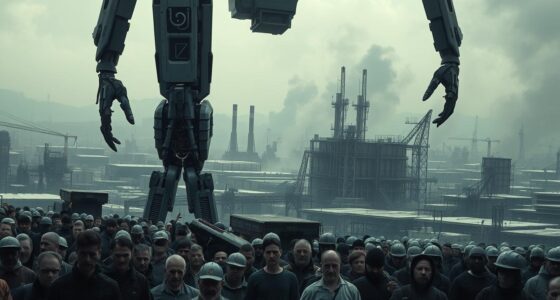
The industrial world was built on a simple equation—labor creates value. But in the age of automation, that formula collapses. Machines now perform the bulk of productive tasks. We are entering a post-labor economy, one where value no longer depends on human effort.
Automation and the End of Scarcity Economics
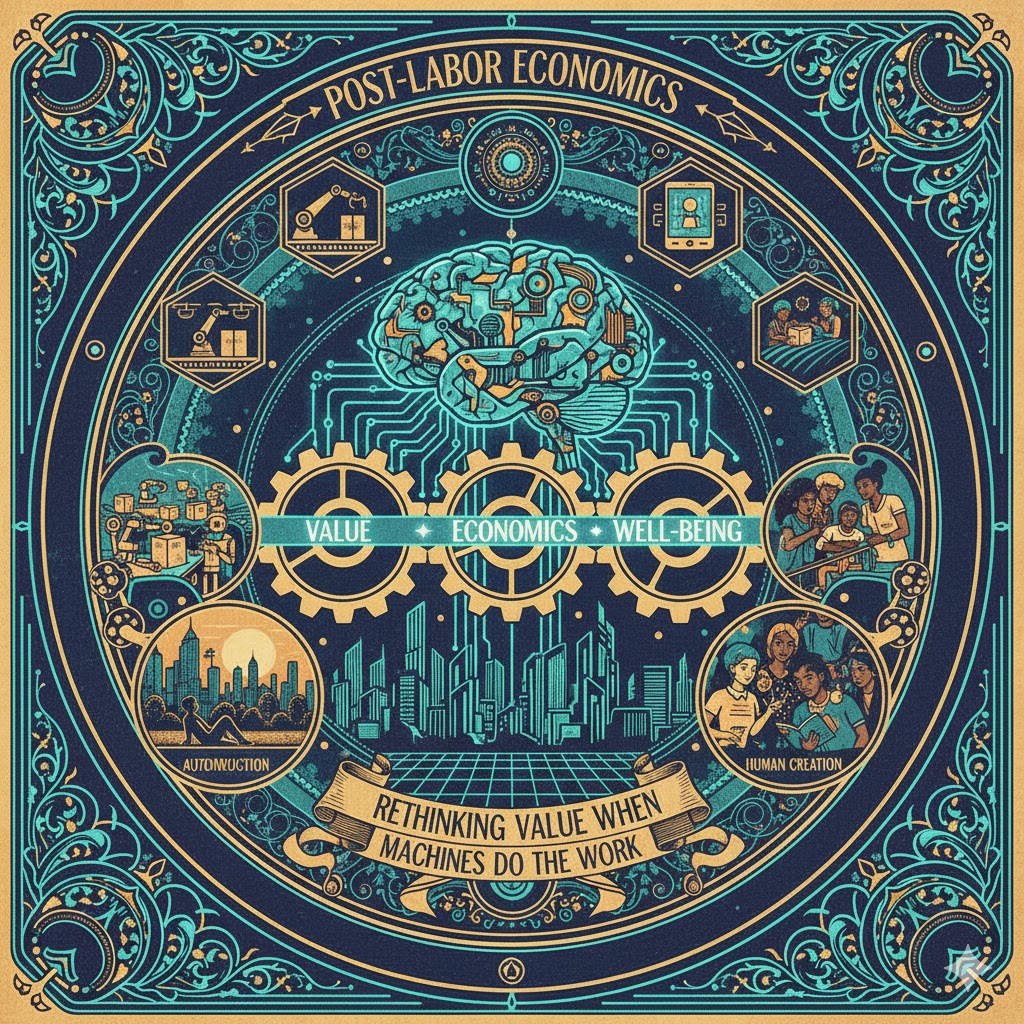
When AI and robotics scale, productivity becomes almost infinite. Goods and digital services can be produced at near-zero marginal cost. What remains scarce is not output but attention, authenticity, and experience. Economic power shifts from those who work the longest hours to those who design and maintain the systems that work endlessly.
“In the post-labor era, the most valuable resource is meaning, not manpower.”
The Rise of Systemic Income
As traditional wages decline, societies must evolve new economic scaffolding. Universal Basic Income is one version; I prefer to call it Universal Basic Infrastructure (UBI 2.0)—a framework where every citizen has access to the systems that generate wealth. Instead of redistributing money, we redistribute machine productivity.
This might take the form of data dividends, automation credits, or citizen access to AI platforms. The central idea is simple: if machines produce value, that value must circulate back to society.
Entrepreneurship in the Post-Labor Era
Paradoxically, automation expands the frontier for entrepreneurs. When AI handles execution, the constraint shifts from labor capacity to imagination. Small teams—or even individuals—can operate enterprises once requiring thousands of employees. This democratizes creation but also amplifies inequality between those who leverage AI and those who do not.
A New Social Contract
Governments will face a new mandate: to ensure that automation doesn’t hollow out civic purpose. Education will pivot from producing workers to cultivating thinkers, artists, and caretakers. The meaning of “employment” will fade; contribution will replace compensation as the new measure of worth.
Conclusion: Beyond Productivity, Toward Purpose
The post-labor economy is not a dystopia—it’s a reset. When work is no longer the axis of identity, humans are free to redefine what it means to live a meaningful life. Our task is not to resist automation, but to evolve with it.

Reprogramming Economics – How AI and Platforms Challenge Classical Economic Theory
As an affiliate, we earn on qualifying purchases.
As an affiliate, we earn on qualifying purchases.

AI Millionaire: How to Build, Automate, and Dominate with AI (Bosses Build Business Credit)
As an affiliate, we earn on qualifying purchases.
As an affiliate, we earn on qualifying purchases.

The Best Dividend Stocks for 2025: How to Create a Cashflow Machine Paying You Every Month
As an affiliate, we earn on qualifying purchases.
As an affiliate, we earn on qualifying purchases.

Your Personal AI System: Using AI for Productivity, Memory, and Daily Life — Built in an Afternoon
As an affiliate, we earn on qualifying purchases.
As an affiliate, we earn on qualifying purchases.