
TL;DR

SenseTime says its spinoff ACE ROBOTICS has entered the commercial market and can switch grips when an initial attempt fails. Product specifications, customers, performance data and the exact meaning of “commercial” have not been disclosed.

SenseTime spinoff ACE ROBOTICS has entered the commercial market, according to a SenseTime report that also says a robot can switch its grip during a failed attempt. The development links commercialization with a claimed recovery capability that could make robotic manipulation more reliable outside controlled demonstrations.

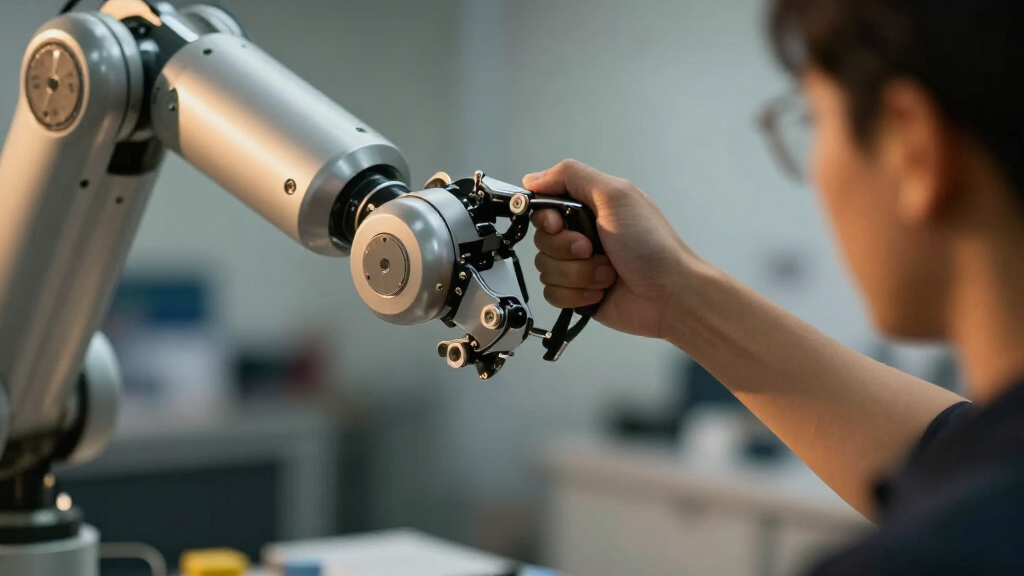
SenseTime characterized the robot as able to change its grip after a failure, indicating that it does not simply repeat the same unsuccessful movement. The report does not identify the robot model, the object being handled or the conditions under which the behavior was observed.

The wording suggests that the system can detect an unsuccessful grasp and select another action while the task is underway. SenseTime did not provide success rates, comparison tests or technical documentation showing how the recovery process works or how consistently it performs.

ACE ROBOTICS was identified as a SenseTime spinoff that has now “gone commercial.” The report did not say whether that means paid pilot projects, general sales availability or production deployments, and it named no customers, markets, prices or shipment volumes.

At a glance
announcementWhen: current report; the exact announcement…
The developmentSenseTime spinoff ACE ROBOTICS has gone commercial alongside a reported demonstration of a robot changing its grip during a failed attempt.
ACE ROBOTICS Goes Commercial — Tech Times Infographic
Robotics intelligence · July 23, 2026

Robot Switches Grip Mid-Fail

SenseTime says spinoff ACE ROBOTICS has entered the commercial market alongside a robot capable of changing its grip after an initial attempt fails. The striking claim points toward more resilient manipulation—but product details, customers and performance evidence remain undisclosed.

Reported capability Detect failure. Change grip. Continue the task.

SenseTime’s wording suggests an adaptive action rather than repetition of the same unsuccessful movement.

Commercial status “Goes commercial”

No clarification yet on whether this means paid pilots, orders, deliveries or general availability.

Company-attributed claim · limited public evidence
Named customers 0 Publicly disclosed
Success rates N/A No benchmark supplied
Robot model Unknown System not identified
Independent test None Verification not published
01 · What the announcement says

One significant claim, many open variables

The report connects adaptive recovery with commercialization. That pairing matters: a robot that responds to failed grasps could require less human intervention in varied workplaces, but only if the behavior is reliable and repeatable.

Capability

Grip switching

The robot reportedly changes its grip during a failed attempt instead of simply repeating the same motion.

Business milestone

Commercial entry

ACE ROBOTICS is described as having “gone commercial,” but the scale and form of market activity are undefined.

Corporate context

SenseTime spinoff

ACE is identified as a spinoff, not a SenseTime product line. Current ownership and operating ties were not detailed.

02 · Adaptive recovery loop

How “mid-fail” recovery could work

The report does not disclose the technical architecture. This conceptual chain shows the behavior implied by the announcement—not a confirmed implementation diagram.

01

Initial grasp

The robot selects a pose and attempts to secure the object.

02

Failure detected

Slippage, poor alignment or an incomplete grasp signals a problem.

03

Grip replanned

The system selects a different contact point, pose or approach.

04

Task resumes

A revised attempt seeks completion without human intervention.

?
Autonomy remains unconfirmed

The available report does not establish whether recovery was fully autonomous, remotely assisted or performed under controlled demonstration conditions.

03 · Claim versus evidence

What is known—and what is missing

A commercial robotics claim becomes meaningful when it can be connected to a defined product, a real deployment and measurable operating results.

Evidence category Current disclosure Status What buyers need
Adaptive grip recovery Described by SenseTime ~ Claimed Repeatable recovery-rate data across varied objects
Commercial activity “Gone commercial” ~ Ambiguous Orders, deliveries, deployment sites or recurring revenue
Product specification Not provided ✗ Missing Model, payload, reach, sensors, cycle time and integration
Customer validation No customers named ✗ Missing Named deployments and real operating use cases
Independent testing No results published ✗ Missing Third-party tests under documented conditions
Spinoff relationship ACE identified as a SenseTime spinoff ✓ Stated Ownership, funding and operating structure

Disclosure depth

Qualitative view based only on information included in the cited report.

Headline clarity High
Technical detail Low
Commercial detail Very low
Independent proof None shown
04 · Key questions

The commercial test starts now

The announcement shifts attention from whether adaptive recovery can be demonstrated to whether it can deliver safe, dependable and economical performance for customers.

Is the robot actually on sale?

Not confirmed. “Commercial” could mean a paid pilot, an order, a delivery or general market availability.

Was grip switching independently tested?

No independent results, testing methodology or published success figures were included.

Which system performed the recovery?

The robot model, handled object and operating conditions were not identified.

How does ACE compare with rivals?

No comparative benchmarks were supplied for adaptive manipulation, uptime or task completion.

Bottom
line

Promising capability. Unproven commercial scale.

Mid-task grip recovery could make robotic manipulation more robust in real workplaces. Until specifications, deployments and repeatable performance data appear, it remains a company-attributed capability with limited public evidence.

Adaptive Recovery Meets Commercial Deployment

Robots operating around varied objects can encounter slippage, poor alignment and incomplete grasps. A system that recognizes a failure and changes its approach could reduce the need for human intervention, but that benefit depends on repeatable performance across real working conditions.

The commercial claim also moves attention from a technical demonstration to customer use and operating reliability. Buyers will need evidence on uptime, safety, integration and recovery rates before the reported behavior can be judged against existing robotic manipulation systems.

Amazon

robot gripping and manipulation systems

As an affiliate, we earn on qualifying purchases.

As an affiliate, we earn on qualifying purchases.

SenseTime Spinoff Targets Real-World Use

SenseTime is the organization cited in connection with ACE ROBOTICS, while ACE is described as a spinoff rather than a SenseTime product line. The report gives no further information about ownership, funding or management.

The grip-switching description places the company’s announcement within the broader push toward robots that respond to task failures instead of relying only on fixed motion sequences. No evidence was provided to establish how ACE ROBOTICS compares with other adaptive manipulation systems.

“switches grip mid-fail”

— SenseTime, in the report headline

Amazon

adaptive robotic grippers

As an affiliate, we earn on qualifying purchases.

As an affiliate, we earn on qualifying purchases.

Customers, Product and Proof Missing

It is not yet clear which ACE ROBOTICS system performed the reported grip change, whether the behavior was autonomous or remotely assisted, or what qualified as a failed attempt. The report also lacks testing methodology and independent verification.

The scale of the commercial rollout remains unknown. SenseTime did not disclose customer contracts, deployment sites, pricing or manufacturing capacity. As of July 23, 2026, the available information also does not establish whether commercialization refers to pilots, orders, deliveries or recurring revenue.

Amazon

industrial robotic hand with grip recovery

As an affiliate, we earn on qualifying purchases.

As an affiliate, we earn on qualifying purchases.

Commercial Evidence Is the Next Test

The next verifiable milestone would be the release of product specifications and customer deployment details. Data showing how often the robot detects failures, selects a new grip and completes the task would help establish whether the behavior works reliably beyond a demonstration.

Customer announcements, delivery figures or independent evaluations could also clarify the meaning and scale of ACE ROBOTICS’ commercial launch. Until then, the reported grip recovery remains a company-attributed capability with limited public evidence.

Amazon

robotic arm with fail-safe grip switching

As an affiliate, we earn on qualifying purchases.

As an affiliate, we earn on qualifying purchases.

Key Questions

What did ACE ROBOTICS announce?

SenseTime reported that ACE ROBOTICS has gone commercial and highlighted a robot that can switch grips during a failed attempt. The report did not provide a full product announcement or launch schedule.

Does “gone commercial” mean the robot is on sale?

That is not yet confirmed. The phrase could refer to paid pilots, customer orders or broader availability, but sales channels, pricing and delivery status were not disclosed.

Has the grip-switching capability been independently tested?

No independent test results were included in the report. There were also no published figures for failure detection, recovery success or task completion.

Is ACE ROBOTICS part of SenseTime?

ACE ROBOTICS is described as a SenseTime spinoff. The available report does not explain its current ownership structure or operating relationship with SenseTime.

What evidence should readers watch for next?

The clearest evidence would include named customer deployments, technical specifications and repeatable performance measurements. Independent testing could show whether mid-task grip recovery works across objects and operating conditions.

Source: SenseTime

Source: SenseTime

You May Also Like

Artificial Intelligence for Electoral Actors

While artificial intelligence offers electoral actors transformative tools, understanding its benefits and risks is essential to harness its full potential responsibly.

Synthetic Data and the Next Frontier of AI Research

More data-driven insights await as synthetic data transforms AI research, unlocking new possibilities and challenges you’ll want to explore further.

SenseTime’s Galaxy Project Targets Domestic AI Chip Scale-up – AI News

SenseTime’s Galaxy Project is targeting larger-scale domestic AI chip capacity, but its technology, partners and timetable remain undisclosed.

A War Room for Your Next Idea: Inside IdeaClyst

Discover how IdeaClyst turns idea validation into a strategic, local-first war room, helping founders make confident decisions fast and stay in control.