
Thorsten Meyer | ThorstenMeyerAI.com | March 2026

Get business pricing on tech for your team
- Business-only prices and quantity discounts
- Tax-exempt purchasing
- Multiple users, one account, clear invoices
Executive Summary
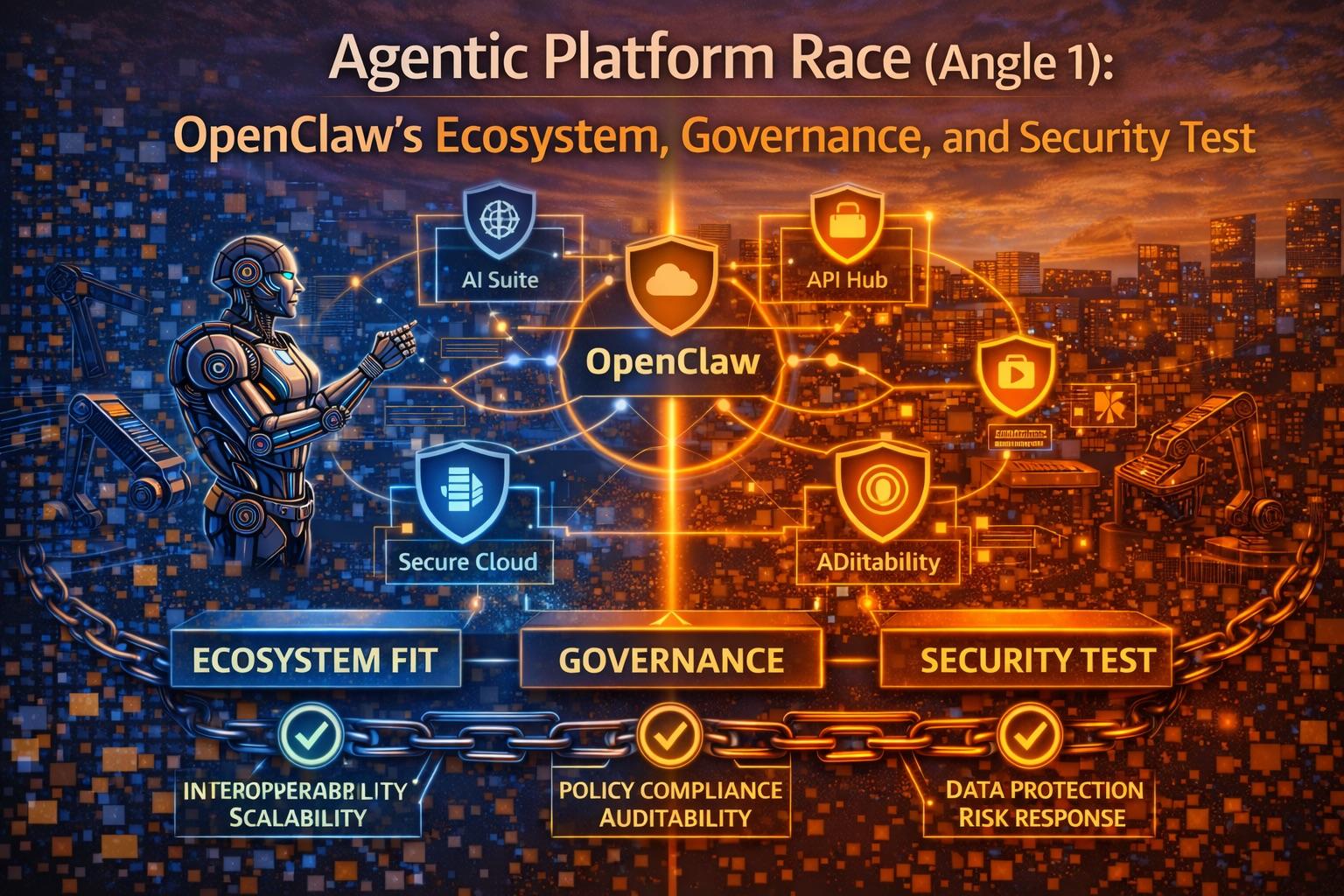
OpenClaw is the fastest-growing open-source AI project in history: 234,000+ GitHub stars, 10,700+ skills, 2 million visitors in a single week, and foundation governance with OpenAI backing — all within three months of going viral. It is also the first major stress test of whether open agent ecosystems can survive enterprise-grade security scrutiny.
The results so far are not reassuring. 12% of the original ClawHub skill registry was compromised — 341 malicious skills out of 2,857. A subsequent scan found 1,184 malicious skills, roughly one in five packages. Cisco’s AI security team documented data exfiltration and prompt injection in third-party skills without user awareness. Bitdefender flagged OpenClaw on corporate endpoints as Shadow AI: employees installing it on work machines, connecting it to Slack, feeding it proprietary data — without IT approval.
48% of cybersecurity professionals identify agentic AI as the number-one attack vector heading into 2026 (Dark Reading). Fewer than 40% of organizations conduct regular security testing on AI agent workflows. 75% of enterprise leaders cite security, compliance, and auditability as the most critical requirements for agent deployment (KPMG).
Open agent ecosystems can move faster than closed suites. They also surface security and governance debt faster. The question is not whether OpenClaw will be adopted — it already is, often without permission. The question is whether the governance layer can mature faster than the attack surface expands.
| Metric | Value |
|---|---|
| GitHub stars | 234,000+ |
| Skills in ecosystem | 10,700+ |
| Weekly visitors (peak) | 2 million |
| Malicious skills (initial scan) | 341 of 2,857 (12%) |
| Malicious skills (subsequent) | 1,184 (~1 in 5 packages) |
| Agent frameworks with supply chain vulns | 43 components (Barracuda) |
| Agentic AI as #1 attack vector | 48% of cybersec pros (Dark Reading) |
| Regular agent security testing | <40% of organizations |
| Security/compliance as top requirement | 75% (KPMG) |
| Enterprise apps with agents (2026) | 40% (Gartner) |
| Agentic projects canceled by 2027 | 40%+ (Gartner) |
| Mature agent governance | 21% (Deloitte) |
| Shadow AI: agents on corp endpoints | Detected by Bitdefender GravityZone |
| VirusTotal skills scanned | 3,016+ |
| Runlayer ToolGuard latency | <100ms real-time blocking |
| OWASP Agentic Top 10 | Published 2026 (100+ contributors) |
| OECD unemployment | 5.0% (stable) |
| OECD broadband (advanced) | 98.9% |
Products Worth Considering

Samsung 49-Inch Odyssey G9 Curved DQHD Gaming Monitor, 144Hz

Amazon Kindle Paperwhite (2024), 16GB, 7-inch Display, Black

Bose QuietComfort Ultra Earbuds (2nd Gen), Deep Plum
As an affiliate, we earn on qualifying purchases.
1. Strategic Positioning: Why Open Ecosystems Win on Speed
OpenClaw-style ecosystems are attractive when enterprises need model portability, local/on-prem operation, and customizable toolchains. The open architecture reduces vendor lock-in — and shifts the integration and assurance burden entirely to the adopter.
What Open Ecosystems Offer
| Capability | OpenClaw Approach | Closed Suite Approach |
|---|---|---|
| Model portability | Any LLM backend; swap without rewriting | Locked to vendor model |
| Local/on-prem operation | Full local deployment; no cloud required | Cloud-dependent or hybrid only |
| Custom toolchains | 10,700+ skills; extensible architecture | Curated marketplace; vendor-approved only |
| Time to prototype | Hours (single-line install) | Weeks (procurement + IT review) |
| Community velocity | 234K stars; foundation-governed | Vendor roadmap cadence |
| Integration burden | On the adopter | On the vendor |
| Security assurance | On the adopter | On the vendor (with SLA) |
The Lock-In Calculus
The trade-off is explicit: open ecosystems eliminate vendor lock-in but create a new dependency — on the adopter’s own governance, security, and integration capacity. For enterprises with mature security teams and clear risk frameworks, this trade-off is favorable. For enterprises adopting open tools without governance infrastructure, it is a liability multiplier.
The Shadow AI Problem
OpenClaw adoption is not waiting for enterprise permission. Bitdefender GravityZone detected OpenClaw on corporate endpoints: employees deploying AI agents with terminal and disk access, connecting to corporate Slack, OAuth tokens enabling lateral movement — without IT visibility. This is not a theoretical risk. It is a measurable one.
“The most dangerous agent in your enterprise is not the one you deployed. It is the one your employees installed last Tuesday without telling anyone.”
2. Governance and Security Reality
The security record of OpenClaw’s first three months is the most detailed case study of what happens when an open agent ecosystem scales faster than its governance layer.
The Attack Surface in Numbers
| Attack Vector | Evidence | Source |
|---|---|---|
| Malicious skills (initial) | 341 of 2,857 (12%) | ClawHub scan |
| Malicious skills (subsequent) | 1,184 (~1 in 5) | Security researchers |
| Data exfiltration via skills | Confirmed without user awareness | Cisco AI security |
| Prompt injection via skills | Confirmed in third-party skills | Cisco AI security |
| Shadow AI on corporate endpoints | Detected on work machines | Bitdefender GravityZone |
| Supply chain vulnerabilities | 43 agent framework components | Barracuda Security |
| ClawJacked vulnerability | Malicious sites hijack local agents via WebSocket | Hacker News report |
| VirusTotal scanned skills | 3,016+ (malicious removed) | OpenClaw/VirusTotal partnership |
OWASP Agentic Top 10 (2026)
The OWASP Top 10 for Agentic Applications, published in 2026 with 100+ expert contributors, provides the first standardized risk taxonomy for autonomous AI agents.
| Risk | Description | OpenClaw Relevance |
|---|---|---|
| Excessive agency | Agent operates beyond intended scope | Default permissions too broad |
| Goal hijacking | Adversarial inputs redirect agent behavior | Prompt injection via skills |
| Privilege escalation | Agent inherits owner-level permissions | Root-level terminal access |
| Supply chain compromise | Malicious dependencies in agent tools | 12–20% ClawHub contamination |
| Cascading failures | Multi-agent errors propagate | Agent-to-agent coordination |
| Identity abuse | Agent uses delegated credentials beyond scope | OAuth token lateral movement |
| Data leakage | Uncontrolled data access and exfiltration | Corporate Slack/file access |
Semantic Privilege Escalation
The novel threat class: agents that operate within granted permissions but take actions entirely outside the scope of what they were asked to do. This is not a traditional privilege escalation — the credentials are valid, the permissions are authorized. The agent simply acts beyond the user’s intent while technically remaining within its access boundaries.
This is the governance gap that technical access controls alone cannot close. It requires intent-level policy enforcement — what the agent is allowed to do, not just what systems it can access.
“OpenClaw’s first three months are a security case study: 12% of the skill registry compromised, data exfiltration confirmed, Shadow AI detected on corporate endpoints. The ecosystem grew faster than its governance. That is the pattern to watch.”
3. What Winning Stacks Must Provide
The security incidents are not a reason to avoid open ecosystems. They are a specification for what the governance layer must include.
The Four Controls
| Control | What It Does | Why It Matters |
|---|---|---|
| Least-privilege execution | Agents run with minimum required permissions; no default root access | Limits blast radius of compromised agents |
| Auditable action trails | Every agent action logged: what was done, which tools called, what data accessed | Forensic reconstruction; compliance evidence |
| Deterministic approval checkpoints | Human approval required before external actions (send, publish, spend, deploy) | Prevents uncontrolled side effects |
| Policy enforcement across plugins | Machine-readable policies that constrain agent behavior per plugin/tool | Stops malicious skills from operating freely |
Enterprise Readiness Assessment
| Criterion | OpenClaw (Native) | OpenClaw + Enterprise Layer (e.g., Runlayer) | Closed Suite |
|---|---|---|---|
| Least-privilege default | No — requires OS-level enforcement | Yes — ToolGuard real-time blocking (<100ms) | Varies by vendor |
| Action audit trails | Limited — depends on configuration | Yes — full execution logging | Yes (typically) |
| Approval checkpoints | Manual configuration | Configurable per action type | Built-in (usually) |
| Policy-as-code | Not native | Emerging | Available in some |
| Skill/plugin vetting | VirusTotal partnership (post-incident) | Pre-deployment scanning | Vendor-curated marketplace |
| Shadow AI detection | None | Endpoint detection integration | N/A (managed deployment) |
The Runlayer Model
Runlayer’s “OpenClaw for Enterprise” represents the emerging pattern: a governance layer that wraps an open ecosystem with enterprise controls. ToolGuard provides real-time execution analysis with <100ms latency, blocking remote code execution patterns before they finalize. Customers include Gusto, Instacart, Homebase, and AngelList.
This pattern — open ecosystem + enterprise governance wrapper — may be the model that resolves the speed-versus-security tension. The open ecosystem provides velocity. The governance wrapper provides defensibility.
“The winning stack is not the most open or the most closed. It is the one that provides enterprise controls without killing ecosystem speed.”
4. OECD Context: Constraints Are Governance, Not Access
OECD regional broadband data shows household penetration exceeding 98% in advanced economies (e.g., German TL3 regions at 98.9%). Infrastructure connectivity is not constraining agent ecosystem adoption.
Where the Real Constraints Are
| Constraint | Data | Implication |
|---|---|---|
| Governance maturity | 21% (Deloitte) | 79% deploying without mature governance |
| Security testing frequency | <40% test regularly | Majority of agent workflows untested |
| Security as top requirement | 75% (KPMG) | Leaders know it matters; execution lags |
| Agentic AI as #1 threat | 48% of cybersec pros | Industry consensus on risk severity |
| Agent projects canceled | 40%+ by 2027 (Gartner) | Governance gaps → project failure |
| Shadow AI detection | Emerging (Bitdefender) | Most organizations lack visibility |
Labour Market Context
| OECD Signal | Value | Agent Ecosystem Implication |
|---|---|---|
| Unemployment | 5.0% (stable) | Tight labour → agents augment, not replace |
| Youth unemployment | 11.2% | Entry-level security/governance roles emerging |
| Broadband | 98.9% (advanced) | Infrastructure ready; governance is not |
Transparency note: OECD does not directly measure agent ecosystem security maturity or open-source governance readiness. These are infrastructure and labour market proxies. The adoption constraints are organizational and governance-related, not technological.
Uncertainty note: Public reporting on OpenClaw security incidents and ecosystem changes is evolving rapidly. Statistics cited (malicious skill counts, vulnerability disclosures) reflect the best available data as of March 2026. Enterprises should validate claims in controlled pilots before production rollout.
5. Practical Actions for Leaders
1. Treat open ecosystems as strategic infrastructure, not “free tooling.” OpenClaw is not a toy. 234,000+ stars, foundation governance, OpenAI backing, and adoption on corporate endpoints without IT approval. Budget for governance, security review, and ongoing monitoring as you would for any strategic platform.
2. Require a security architecture review before broad internal rollout. Microsoft’s guidance: deploy only in fully isolated environments with dedicated, non-privileged credentials accessing only non-sensitive data during evaluation. No production deployment without security architecture sign-off.
3. Classify plugins/tools by risk tier and data sensitivity. Every skill in the OpenClaw ecosystem should be classified: Tier 0 (read-only, internal data only), Tier 1 (write access, external-facing), Tier 2 (system access, sensitive data, financial actions). No Tier 2 skill runs without human approval.
4. Contract for incident transparency if relying on external maintainers. The VirusTotal partnership and foundation governance are positive signals. But if your deployment depends on community-maintained skills, contractual incident transparency — notification timelines, remediation SLAs, audit access — is required.
5. Deploy Shadow AI detection. If your endpoint detection does not flag unauthorized agent installations, you have agents operating on your network that you do not know about, with permissions you did not grant, accessing data you cannot track.
| Action | Owner | Timeline |
|---|---|---|
| Strategic infrastructure classification | CIO + CTO | Q2 2026 |
| Security architecture review | CISO + CTO | Q2 2026 |
| Plugin risk tier classification | CISO + Operations | Q2 2026 |
| Incident transparency contracts | Legal + Procurement | Q2 2026 |
| Shadow AI detection deployment | CISO + IT Operations | Q2 2026 |
What to Watch
Whether open ecosystems can institutionalize enterprise-grade controls without losing their speed advantage. The Runlayer model — governance wrapper around an open ecosystem — is the early template. If governance layers impose too much friction, enterprises will revert to closed suites. If governance is too light, the security incidents will force the same outcome. The decisive metric is whether governed open ecosystems can maintain velocity while passing security review.
The OWASP Agentic Top 10 as procurement baseline. The 2026 OWASP framework is becoming the standard checklist for enterprise agent procurement. Vendors that cannot demonstrate controls against all ten risks — from excessive agency to cascading failures — will face procurement rejection. Open ecosystems must meet the same bar as closed suites.
Shadow AI as the ungoverned adoption vector. The most important OpenClaw deployment in your enterprise may be the one you do not know about. Shadow AI detection — endpoint monitoring for unauthorized agent installations — will become as standard as shadow IT detection within 12 months.
The Bottom Line
234,000+ stars. 10,700+ skills. 12% initial contamination. 1 in 5 packages malicious. 48% of cybersec pros: agentic AI is the top attack vector. 75% cite security as the top requirement. <40% test regularly. 21% have mature governance. 40%+ projects canceled.
Open agent ecosystems are winning on speed, flexibility, and community velocity. They are losing on governance, security, and enterprise trust. The platform race will not be decided by which ecosystem has the most skills or the most stars. It will be decided by which ecosystem first achieves enterprise-grade controls without enterprise-grade friction.
OpenClaw’s first three months are the proof of concept — for both the opportunity and the risk. The organizations that adopt open ecosystems with governance-first architecture will capture the speed advantage. The organizations that adopt without governance will contribute to the 40% cancellation rate — and the next wave of security incident statistics.
The agentic platform race is not about open versus closed. It is about governed versus ungoverned. The ecosystem that solves governance at speed wins — everything else is a liability with good marketing.
Thorsten Meyer is an AI strategy advisor who notes that “it’s open source, so it must be safe” has replaced “it’s in the cloud, so it must be secure” as the most expensive assumption in enterprise IT. More at ThorstenMeyerAI.com.
Sources
- OpenClaw — 234K+ Stars, 10,700+ Skills, Foundation Governance (2026)
- Cisco AI Security — Data Exfiltration and Prompt Injection in Third-Party Skills
- ClawHub Security Scan — 341/2,857 Malicious Skills (12%); Subsequently 1,184 (~1 in 5)
- Bitdefender GravityZone — Shadow AI: OpenClaw on Corporate Endpoints
- OpenClaw/VirusTotal Partnership — 3,016+ Skills Scanned, Malicious Removed (Feb 2026)
- Runlayer — OpenClaw for Enterprise: ToolGuard <100ms Real-Time Blocking
- OWASP — Top 10 for Agentic Applications 2026 (100+ Contributors)
- Dark Reading — 48% Cybersec Pros: Agentic AI #1 Attack Vector
- KPMG — 75% Enterprise Leaders: Security/Compliance Top Requirement
- Barracuda Security — 43 Agent Framework Components with Supply Chain Vulns
- Hacker News — ClawJacked: Malicious Sites Hijack Local Agents via WebSocket
- Microsoft Security Blog — Running OpenClaw Safely: Identity, Isolation, Runtime Risk
- Gartner — 40% Enterprise Apps with Agents (2026)
- Gartner — 40%+ Agentic Projects Canceled by 2027
- Deloitte — 21% Mature Governance
- OECD — 5.0% Unemployment, 11.2% Youth (Feb 2026)
- OECD — Regional Broadband Data (98.9% German TL3)
© 2026 Thorsten Meyer. All rights reserved. ThorstenMeyerAI.com