
In an automated world, you face both challenges and opportunities. Automation threatens job security, especially in vulnerable sectors, but your experience can help you adapt and find new roles. Resistance and skill gaps can hold you back, yet targeted training and support can boost your confidence. Younger workers see AI as a tool for growth, and your insights will be essential in shaping inclusive workplaces. Continue exploring how you can thrive amid workplace transformations.
Key Takeaways
- Older workers face displacement risks due to automation but can benefit from targeted retraining and supportive workplace strategies.
- Resistance to new technologies stems from unfamiliarity and confidence gaps, requiring accessible training and inclusive design.
- AI can enhance productivity for older workers by leveraging experience and enabling roles focused on judgment and strategic thinking.
- Building trust in AI involves demonstrating benefits, ensuring user-friendly tools, and addressing security and compliance concerns.
- Mentorship, flexible work arrangements, and inclusive implementation foster workforce resilience and promote ongoing engagement for older employees.
accessible digital skills training for older adults
As an affiliate, we earn on qualifying purchases.
As an affiliate, we earn on qualifying purchases.
The Impact of Automation on Older Workers’ Job Security

Automation and AI are transforming workplaces rapidly, and older workers face significant threats to their job security as a result. Many routine tasks you’ve relied on are now being automated, making your current roles more vulnerable. About 10% of older workers work in occupations at high risk of automation, similar to younger workers, which increases your displacement chances. As technology advances, the skill gap grows wider, leaving you at a disadvantage if you haven’t adapted. In the US, nearly half of all workers could see their roles threatened by AI in the next decade, including many older employees. Sectors like retail, where up to 65% of jobs may be automated by 2025, further heighten these risks. Staying aware of these changes is essential to understand your job security.
user-friendly AI tools for seniors
As an affiliate, we earn on qualifying purchases.
As an affiliate, we earn on qualifying purchases.
Bridging the Skill Gap: Training and Re-Skilling Challenges

You might find that limited access to training makes it harder for older workers to keep up with technological changes. Resistance to new tools and unfamiliarity with digital skills can create significant hurdles to re-skilling efforts. Without targeted support, the skill gap will likely persist, increasing displacement risks for older employees. Additionally, the lack of color accuracy and understanding of contrast ratios in digital tools can further hinder their ability to adapt effectively.
Limited Access to Training
Despite the critical need for upskilling older workers to adapt to new AI and digital tools, access to effective training remains limited across many organizations. You might find that most companies prioritize onboarding and training for younger employees or those already comfortable with technology. Budget constraints, outdated training programs, and a lack of tailored resources hinder older workers’ development. Additionally, workplaces often overlook the importance of ongoing education for seasoned employees, assuming they’re less adaptable. As a result, you’re left with fewer opportunities to learn new skills, which increases your risk of falling behind. Without accessible, relevant training options, you may struggle to keep pace with technological advancements, making it harder to remain productive, competitive, and secure in your role. Recognizing the importance of preppy dog names can serve as a metaphor for the need to invest in diverse and tailored training approaches for all employees.
Resistance to New Technologies
Many older workers remain hesitant to adopt new technologies because they often lack confidence or familiarity with digital tools. This resistance stems from fear of making mistakes, feeling overwhelmed, or believing that learning new skills is too difficult. Such attitudes can slow down adoption and limit their ability to benefit from automation and AI advancements. Employers may also overlook the importance of providing adequate support, which deepens frustration and reluctance. To bridge this gap, you need accessible, tailored training programs that build confidence and demonstrate clear value. Encouraging a culture of patience and ongoing learning helps older workers see technology as an ally rather than a threat. Overcoming resistance requires understanding their concerns and fostering trust through user-friendly tools and supportive environments. Additionally, addressing potential security vulnerabilities and ensuring compliance with evolving regulations can further reassure older workers about adopting new systems confidently.
Skill Gap Preservation
Bridging the skill gap for older workers is a critical challenge as automation reshapes the workplace. Many lack familiarity with digital tools, programming, or data analysis, making re-skilling essential. Unfortunately, only 8% of organizations provide formal training, leaving many behind. Resistance and skepticism remain high among older employees, reducing their engagement with new technology. To address this, you need targeted strategies that combine accessible training with trust-building. Below is a table highlighting key factors:
| Factor | Impact |
|---|---|
| Training Availability | Limited access worsens skill gaps |
| Attitudinal Barriers | Resistance hinders learning |
| Customized Support | Improves adoption and confidence |
Focusing on these areas helps preserve skills and boosts older workers’ adaptability. Incorporating skilled training programs tailored for older employees can significantly enhance their confidence and competence in adopting new technologies.
online retraining courses for older workers
As an affiliate, we earn on qualifying purchases.
As an affiliate, we earn on qualifying purchases.
Attitudes Toward AI Across Generations

Attitudes toward AI at work vary considerably across generations, shaping how different age groups adopt and interact with new technologies. You, as an older worker, might feel cautious or skeptical about AI’s role in your job, fearing displacement or losing control. In contrast, younger employees often see AI as a helpful tool that boosts productivity and innovation, with roughly 70-80% finding it beneficial. Many older workers find AI intimidating or confusing, which can lead to resistance. Building trust requires demonstrating AI’s advantages and designing user-friendly solutions tailored to your needs. Despite skepticism, most workers across generations recognize some value in AI. Addressing concerns and providing targeted support can foster more positive attitudes and smoother integration across all age groups. Additionally, understanding the different cookie categories involved in online interactions can help demystify technology and foster greater acceptance.
assistive technology for workplace automation
As an affiliate, we earn on qualifying purchases.
As an affiliate, we earn on qualifying purchases.
Employment Trends and Resilience of Older Workers
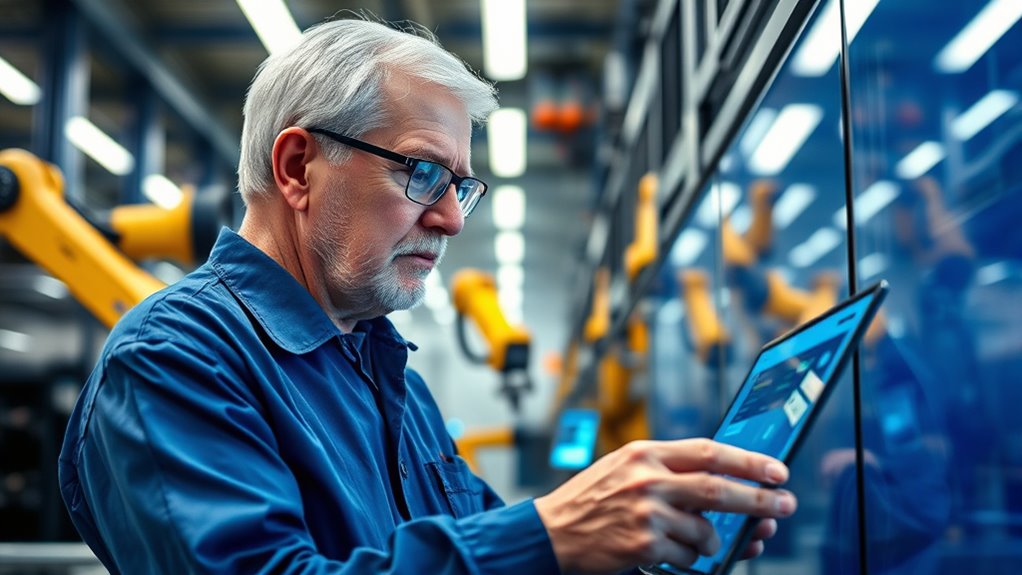
Despite widespread concerns about automation displacing jobs, employment trends for older workers (50+) show surprising resilience. Data indicates that this group continues to experience employment growth, especially in sectors where AI supports rather than replaces work. Unlike younger workers, who face declines in entry-level roles due to automation, older employees benefit from AI augmentation, which boosts productivity and sustains their jobs. Many older workers adapt by leveraging their experience, and organizations investing in retraining help maintain their workforce presence. While some sectors see shifts, older workers are often retained through roles that emphasize human judgment and strategic tasks. Additionally, juice cleansing practices highlight how incorporating nutrient-rich ingredients can support overall health and resilience, which may be beneficial for maintaining energy and well-being in demanding work environments. This robustness suggests that, with proper support and adaptation, older workers can remain vital contributors in an increasingly automated workplace.
Economic and Social Consequences of Automation for Older Adults

Automation profoundly impacts the economic stability and social well-being of older adults. As roles are replaced or transformed, many face financial insecurity, especially if they lack access to re-skilling opportunities. This can widen income inequality, with high earners better positioned to adapt than those in lower-paying jobs. Older workers may lose their competitive edge if companies prioritize cost-cutting through automation, threatening their livelihoods. Socially, displacement can lead to feelings of marginalization and reduced workplace engagement. Without targeted support, these challenges can erode confidence and social connections, intensifying age-related disparities. However, proactive policies focusing on lifelong learning, inclusive retraining, and social protections can help mitigate these negative effects, allowing older adults to navigate the evolving economic landscape more securely. Additionally, embracing lifelong learning initiatives can empower older workers to develop new skills and remain competitive in an automated world.
Opportunities for Growth and Enhancement Through AI

You have the chance to boost your productivity by working alongside AI tools that handle repetitive tasks, freeing you to focus on more strategic responsibilities. As AI becomes more accessible and user-friendly, you can develop new skills that open doors to fresh job opportunities and career growth. Organizations investing in inclusive automation strategies can harness your experience to drive innovation and create roles that value your expertise. Additionally, exploring best anime movies can provide a creative and cultural outlet that complements your professional development.
Enhancing Workforce Productivity
AI presents significant opportunities to boost workforce productivity by enabling you to focus on high-value, strategic tasks. When automation handles repetitive or routine activities, you can dedicate more time to problem-solving, decision-making, and innovation. As AI tools become more intuitive and user-friendly, you’ll find it easier to integrate them into your daily workflow, improving efficiency without overwhelming you with technical complexity. This shift not only accelerates your output but also enhances job satisfaction by emphasizing skills that require judgment and expertise. Organizations that invest in training and provide accessible AI solutions empower you to leverage technology effectively. Additionally, automation’s role in business intelligence enables real-time insights and predictive analytics, further amplifying your capacity to make informed decisions. Ultimately, AI can serve as a catalyst for your growth, helping you deliver higher-quality work while maintaining your relevance in an increasingly automated world.
Creating New Job Opportunities
As technology advances, new job opportunities are emerging that leverage the strengths of older workers’ experience and knowledge. You can harness AI to augment your skills and take on roles that demand strategic thinking, mentorship, and expertise. Imagine:
- Guiding AI implementation projects with your deep industry insights
- Training younger employees on complex, context-rich tasks
- Developing new services and solutions that combine human judgment with AI tools
- Utilizing multi-functional furniture to adapt to changing work environments and support flexible workflows
Organizations are investing in reskilling programs that help you adapt, enabling you to stay relevant in evolving markets. AI tools are becoming more user-friendly, allowing you to embrace automation confidently. By focusing on your unique strengths, you can find fresh opportunities for growth and make a meaningful impact in the automated workplace.
Strategies for Inclusive Automation in the Workplace

Implementing inclusive automation strategies requires organizations to proactively address the unique needs of older workers while leveraging technological advancements. You should involve older employees in selecting and testing new tools, ensuring they’re user-friendly and accessible. Providing targeted training and continuous learning opportunities helps bridge skill gaps and builds confidence in using AI. Emphasize clear communication about automation’s benefits, demonstrating how it can augment rather than replace their roles. Encourage mentorship programs where tech-savvy employees assist peers, fostering collaboration and trust. Tailoring implementation plans to accommodate diverse comfort levels with technology guarantees no one is left behind. Ultimately, creating a supportive environment that values experience and fosters adaptability helps your organization thrive in an automated world.
Building a Supportive Future for Older Employees

Creating a supportive future for older employees requires intentional strategies that recognize their unique needs and value their experience. You can foster inclusion by providing tailored training programs that bridge skill gaps, ensuring they stay current with new technologies. Encourage mentorship opportunities where older workers share their wisdom, building mutual respect. Promote flexible work arrangements that accommodate health and personal commitments, making it easier to remain engaged. Visualize a workplace where:
Foster inclusion through tailored training, mentorship, and flexible work to support older employees’ experience and engagement.
- Older employees confidently adapt to AI tools, feeling empowered rather than threatened
- Mentorships nurture knowledge transfer across generations
- Flexibility supports well-being and sustained productivity
Frequently Asked Questions
How Can Employers Foster Trust Among Older Workers Regarding AI Adoption?
You can foster trust among older workers by demonstrating clear benefits of AI tools, providing targeted training, and ensuring user-friendly applications. Engage them in the adoption process, listen to their concerns, and offer ongoing support. Highlight how AI complements their skills rather than replaces them, and share success stories to build confidence. Creating an inclusive environment where their experience is valued encourages openness and helps bridge any skepticism.
What Specific Skills Should Older Workers Focus on Developing for Future Job Security?
You should focus on developing digital literacy, data analysis, and familiarity with AI tools to stay relevant. Building technical skills like basic programming and understanding software interfaces will boost your adaptability. Strengthen soft skills such as problem-solving, communication, and emotional intelligence, which are less automatable. Continuously learning through courses or training programs will help you remain competitive and secure your future job prospects in an increasingly automated workplace.
How Do Automation Impacts Differ Across Various Industries for Older Employees?
Automation impacts different industries in varied ways for older employees. In sectors like retail, high automation rates threaten jobs, but in others like healthcare or consulting, automation often supplements work, offering new opportunities. You may find job displacement higher in routine-heavy industries, while fields emphasizing expertise and interpersonal skills provide resilience. Staying adaptable and reskilling relevant to your industry can help you navigate these shifts and maintain job security.
What Policies Can Governments Implement to Support Displaced Older Workers Effectively?
Governments should implement policies that prioritize accessible re-skilling programs tailored for older workers, offering subsidies or incentives to participate. You can benefit from lifelong learning initiatives that focus on digital skills and AI literacy. Strengthen social protections like unemployment benefits and pension adjustments to ease economic insecurity. Encourage public-private partnerships to create age-inclusive job opportunities and promote workplace adaptations, ensuring older employees remain active and valued in evolving industries.
How Can Technology Be Designed to Be More Accessible and User-Friendly for Older Users?
You can design technology to be more accessible and user-friendly for older users by incorporating clear, simple interfaces with larger text and icons. Use intuitive navigation, minimize complex features, and provide easy-to-understand tutorials. Prioritize responsive design for various devices and gather feedback from older users regularly. By making technology adaptable to their needs, you empower them to adopt digital tools confidently and comfortably, enhancing their work and daily lives.
Conclusion
So, as automation takes over, you might think older workers are doomed to become relics of the past. But hey, who needs job security or fresh skills when you can just embrace the chaos and hope for the best? With the right support and a dash of adaptability, maybe you’ll surprise everyone—like a vintage car that’s suddenly the hottest thing on the block. After all, who said aging isn’t an upgrade?