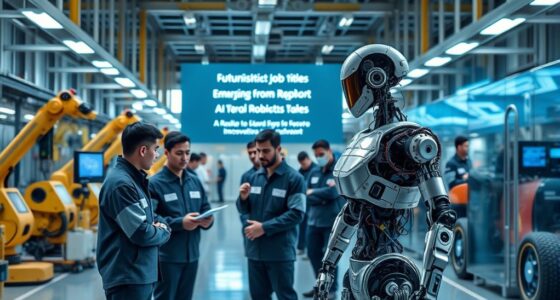
Automation is rapidly transforming rideshare and delivery jobs, streamlining operations and increasing efficiency. While robots and AI are taking over some tasks, human workers remain essential for many roles, especially those requiring customer interaction and specialized skills. If you adapt by developing new skills and staying informed, you can still find opportunities in this changing landscape. Continue exploring to discover how to stay competitive and protected in the evolving gig economy.
Key Takeaways
- Human drivers remain essential due to the complexity of urban navigation and customer service requirements.
- Automation streamlines operations but hasn’t fully replaced the need for human interaction and judgment.
- Gig workers can adapt by developing specialized and technical skills to stay competitive.
- AI improves platform efficiency and job matching, potentially increasing earnings but also heightening competition.
- Worker protections and fair policies are crucial to ensure gig jobs remain viable amid automation advances.

Food Delivery Bag,Large Insulated Backpack for Doordash/Uber Eeats, Expandable Cooler Bags for Bike/Motorcycle with Reflective Strip and Cup Holders,Reusable Pizza Food Delivery Bag with Hand Straps
【Smart Temperature Control Technology】Features dual-layer aluminum foil insulation + 5mm thickened EPE cotton, improving heat retention by 30%…
As an affiliate, we earn on qualifying purchases.
As an affiliate, we earn on qualifying purchases.
The Current State of Rideshare and Delivery Roles

Have you noticed how rideshare and delivery jobs remain essential parts of urban life? They offer quick, convenient solutions for busy city dwellers, making transportation and food delivery seamless. These roles provide flexible earning opportunities, allowing you to choose your hours and work at your own pace. Despite fluctuations in demand, the popularity of these services stays strong, especially in large cities. Technology plays a significant role, with apps connecting drivers and customers efficiently. However, these jobs face challenges from automation, with concepts like robotaxis and drones potentially changing the landscape. Still, the core need for human drivers and delivery personnel persists, as many customers value personal interaction and reliability. These roles continue to evolve but remain crucial in today’s urban environment. Additionally, efforts to maximize space and organization within delivery vehicles and workspaces can improve efficiency and safety for drivers.
digital invoicing and reporting software for gig workers
As an affiliate, we earn on qualifying purchases.
As an affiliate, we earn on qualifying purchases.
How Automation Is Shaping the Gig Economy

Automation is rapidly transforming the gig economy by streamlining processes like job matching, scheduling, and administrative tasks. You’ll notice platforms now use AI to connect workers with jobs faster and more accurately, reducing downtime. Scheduling tools automatically optimize shifts, saving time and increasing efficiency. Administrative tasks, such as invoicing and reporting, are handled seamlessly through automation, allowing you to focus on your work rather than paperwork. AI-driven communication tools improve coordination across different time zones and languages, broadening your global opportunities. Additionally, AI’s predictive analytics enable platforms to better anticipate demand and allocate resources more effectively, further enhancing operational efficiency. However, as automation advances, there’s increased competition, which may put downward pressure on wages. While automation boosts productivity, it also raises concerns about job security and fairness. Staying adaptable and learning new skills will help you thrive in an evolving gig landscape shaped by automation.
AI-powered scheduling app for rideshare drivers
As an affiliate, we earn on qualifying purchases.
As an affiliate, we earn on qualifying purchases.
The Rise of Highly Skilled Gig Opportunities

As the gig economy evolves, you’re seeing a shift toward specialized roles that require technical expertise. This growth reflects increased demand for industry-specific gigs in fields like IT, finance, and engineering. Embracing these opportunities can boost your skills and open doors to higher-paying, more secure work. Developing self-awareness can help you identify the most suitable niche within these fields and leverage your strengths effectively.
Shift Toward Specialized Roles
The gig economy is shifting toward highly skilled roles, reflecting a broader transformation in how freelance work is defined and valued. You’re now more likely to find gigs that require specialized expertise rather than simple tasks. This change opens new opportunities for those with technical, creative, or analytical skills. You might:
- Offer consulting or strategic advice to businesses
- Develop custom software or apps for clients
- Provide in-depth marketing or branding services
- Deliver expert training or coaching sessions
This evolution means gig work isn’t just about quick earnings anymore. Instead, it emphasizes building a reputation based on expertise. As automation takes over basic tasks, your specialized skills become more critical, enabling you to command higher rates and access more complex projects. Understanding the importance of projector technology can help you develop niche skills that set you apart in the evolving gig landscape.
Demand for Technical Expertise
With the rise of digital platforms and technological advancements, there’s increasing demand for professionals with specialized skills in the gig economy. You’ll find more opportunities for highly skilled work in fields like IT, software development, digital marketing, and data analysis. Companies seek gig workers who can manage complex projects, develop custom solutions, or provide expert consulting. As automation takes over routine tasks, the value shifts toward those who can operate, troubleshoot, and improve AI-driven systems. This trend pushes you to acquire technical expertise, making you more competitive and adaptable. The demand for such skills isn’t slowing down, and it offers gig workers a chance to command higher wages and access more stable, rewarding opportunities in a rapidly evolving landscape. Additionally, advancements like AI integration in mobile devices and media creation are creating new niches for skilled gig workers to innovate and lead.
Growth in Industry-Specific Gigs
Growing demand for technical expertise is fueling a surge in industry-specific gig opportunities. As companies seek specialized skills, you can find gigs in fields like IT, finance, healthcare, and engineering. These roles often require higher education or certifications but offer greater pay and stability. The shift toward highly skilled gigs means you might work as a freelance software developer, data analyst, or cybersecurity consultant. This trend enables you to leverage your expertise independently, often from anywhere. You’ll notice:
- Increased demand for niche skills across industries
- Higher earning potential for specialized roles
- Flexibility to choose projects aligned with your expertise
- Opportunities to build a portfolio and reputation in your field
This growth benefits workers ready to adapt and elevate their skill sets in the evolving gig economy.

7" GPS Navigator for Car Truck RV, Car GPS Navigation System with 2026 Maps, Lifetime Free Updates, Voice Guidance, Speed & Red-Light Camera Alerts, Custom Truck Routing (Blue)
【Latest 2026 North America Maps】 Comes with up-to-date 2026 maps of the U.S., Canada, and Mexico already installed….
As an affiliate, we earn on qualifying purchases.
As an affiliate, we earn on qualifying purchases.
Potential Impacts of Robotics and AI on Earnings

Robotics and AI are transforming how gig workers earn money by automating tasks and streamlining operations, which can both boost and threaten earnings. On one hand, automation increases efficiency, allowing you to complete more jobs faster and potentially earn more. AI-driven platforms can match you with gigs more accurately, reducing downtime and maximizing your income. However, automation also risks reducing demand for some roles, especially repetitive tasks like delivery and rideshare driving, leading to income compression and heightened competition. Wages may stagnate or decline as bots take over parts of the job. To thrive, you’ll need to adapt by developing new skills and embracing AI tools. Additionally, understanding the impact of automation on specific gig roles can help you strategize for the future. Balancing these shifts will determine whether automation ultimately enhances or diminishes your earning potential.
Regulatory Challenges and Ethical Concerns

As AI and automation increasingly influence the gig economy, regulatory challenges and ethical concerns become more pressing. You need rules that guarantee fair treatment and transparency, but current regulations often lag behind technological advances. Without oversight, gig platforms might exploit workers or hide algorithmic biases. Ethical issues also arise around data privacy, where your personal info could be misused or inadequately protected. To address these concerns, focus on:
- Creating clear standards for AI transparency and accountability
- Implementing privacy protections against data misuse
- Preventing algorithmic bias that could unfairly disadvantage workers
- Ensuring equitable access to AI tools for all gig workers
- Promoting predictive analytics to better understand and mitigate potential harms within the gig economy
Without proper regulation, there’s a risk of increased inequality, job insecurity, and loss of trust in gig platforms. Balancing innovation with responsibility is essential for sustainable growth.
Worker Protections and Rights in an Automated World

In an increasingly automated gig economy, protecting workers’ rights is more essential than ever. Automation can improve efficiency, but without proper safeguards, your income, job security, and working conditions might suffer. You need clear policies on fair pay, access to benefits, and protections against unfair dismissal, regardless of how algorithms assign tasks or evaluate performance. Transparency is critical—understanding how decisions are made helps you trust the system. Additionally, safeguards against algorithmic bias and privacy violations are fundamental. As automation reshapes your work, you deserve a voice in policy discussions and platform accountability. Implementing privacy and cookies measures is crucial to ensure your personal data is protected in this evolving landscape. Ensuring these protections promotes not only fairness but also the sustainability of your gig work in a rapidly changing landscape.
Opportunities for Gig Workers Amidst Technological Change

Technological change presents numerous opportunities for gig workers to enhance their earnings and expand their skill sets. As technology advances, you can leverage new tools to improve efficiency, access more gigs, and increase your income. For example, automation helps streamline scheduling, payments, and communication. You can also develop highly specialized skills in areas like digital marketing, coding, or data analysis, opening doors to higher-paying gigs. Additionally, platforms are offering new features that support remote work and skill-building. Here are some opportunities to explore:
- Upskilling with online courses and certifications
- Using AI tools to optimize your workflow
- Accessing global gig markets through multilingual platforms
- Participating in new gig categories driven by tech innovation
Being aware of changes in juice packaging and storage can help you better understand how to manage your own supplies and maintain quality, which is especially useful if you’re involved in food or beverage gigs.
Embracing these changes allows you to stay competitive and grow your freelance career.
Strategies for Adapting to a Tech-Driven Market

To stay competitive in a tech-driven market, you need to embrace new technological skills and continuously update your expertise. Developing diversified income streams can also help you adapt to changing job opportunities and mitigate risks. By actively expanding your skill set and income sources, you’ll position yourself for long-term success in the evolving gig economy. Understanding the personality traits of yourself and others can further improve your adaptability and communication in this shifting landscape.
Embrace Technological Skills
Adapting to a rapidly evolving gig economy means developing strong technological skills that keep you competitive. You need to stay ahead of automation by mastering new tools and platforms. This involves understanding how to use data analytics, communicate effectively through digital channels, and navigate AI-powered apps. Embracing these skills boosts your efficiency and helps you stand out. Consider focusing on:
- Learning platform-specific tools and apps
- Improving digital communication skills
- Analyzing data to optimize your work
- Staying updated on new gig economy technologies
Develop Diversified Income Streams
As automation and AI continue transforming the gig economy, relying on a single income source becomes increasingly risky. To stay resilient, you should develop diversified income streams. Explore different gig roles or freelance work that leverages your skills, like writing, graphic design, or consulting. Consider passive income options such as investing or creating digital products like courses or ebooks. Building multiple streams not only cushions you against market shifts but also enhances your earning potential. Stay adaptable by learning new skills and staying informed about emerging opportunities. Networking with other gig workers can also open doors to collaborations and new gigs. The more diverse your income sources, the better you can withstand automation disruptions and secure your financial stability in a rapidly evolving market.
The Future Outlook for Gig Workers and Automation

The future of gig work and automation is poised for significant transformation as technological advancements continue to reshape the landscape. You’ll see more AI-driven tools enhancing efficiency, but also increasing competition. While some roles may decline, new opportunities will emerge in highly skilled fields like IT and finance. Automation will streamline tasks such as matching jobs and managing admin work, but this could lead to wage pressures. Policy decisions will play a key role in ensuring fair treatment and job security. You should expect:
Technological advances will reshape gig work, creating new opportunities and challenges in automation, competition, and regulation.
- Growth in highly skilled gig roles
- Increased use of AI for communication and task management
- Potential wage compression and competition
- Greater emphasis on regulation for fairness and transparency
Adapting to these changes is essential to thrive in this evolving gig economy.
Frequently Asked Questions
How Will AI Influence Gig Worker Income Inequality Long-Term?
AI will likely increase income inequality among gig workers over time. You might find that those who adapt quickly to new technologies and develop specialized skills benefit the most, earning higher wages. Meanwhile, others could face wage compression or job insecurity as automation reduces demand for less-skilled roles. To stay competitive, you’ll need to continuously upgrade your skills and advocate for fair policies that protect all gig workers equally.
What Skills Are Essential for Gig Workers to Stay Competitive?
To stay competitive, you need to develop both technical and soft skills. Focus on digital literacy, adaptability, and familiarity with AI tools to enhance your efficiency. Cultivate strong communication, problem-solving, and customer service abilities to stand out. Continuously upgrade your skills through online courses or certifications. Staying informed about industry trends and embracing new technologies will help you remain relevant and resilient amidst automation and evolving gig economy demands.
Can Gig Workers Access Fair Wages With Increasing Automation?
Yes, gig workers can access fair wages amid automation if you advocate for transparent policies and fair platform practices. By staying savvy with new skills, leveraging industry insights, and speaking up for equitable earnings, you can navigate the shifting landscape. Embrace evolving tools, demand diligent regulation, and develop diverse skill sets to defend your worth. Together, proactive participation and persistent advocacy can help secure fair compensation despite automation advances.
What Policies Could Protect Gig Workers’ Rights in an Automated Economy?
You can protect your rights by advocating for policies that guarantee fair wages, transparency, and access to benefits. Support regulations that mandate clear algorithms and fair treatment, and push for portable benefits regardless of employment status. Encourage government and industry to create standards that prevent exploitation, promote worker representation, and enforce ethical AI use. Staying informed and involved helps ensure your rights are prioritized in an increasingly automated gig economy.
How Will Consumer Behavior Change With Automation in Gig Services?
You’ll probably start trusting robot drivers more than your own GPS, as automation makes gig services faster and more reliable. Expect consumers to embrace the convenience of AI-powered deliveries, maybe even tip less since robots don’t need breaks. With fewer human interactions, you might miss the chat, but you’ll love how your order arrives on time, perfectly tracked, and maybe even with a little robotic charm—if you’re into that.
Conclusion
As automation advances, your gig work could transform dramatically. Imagine a driver who adapts by becoming a data analyst for ride algorithms, turning tech into an ally rather than a threat. Embracing new skills and staying informed will help you thrive in this evolving landscape. The key is to see technology as an opportunity, not just a challenge—ensuring your gig work remains sustainable and rewarding in the face of automation.