By 2030, many jobs face high risks of automation, especially in transportation, warehousing, retail, and administrative roles. If you work in driving, delivery, data entry, or customer service, your position might be automated soon. Manufacturing, healthcare support, and low-wage service jobs are also vulnerable. Staying ahead means understanding which roles are most at risk and how to adapt—keep exploring to learn more about protecting your future.
Key Takeaways
- Transportation roles such as truck drivers, taxi drivers, and delivery personnel are highly vulnerable to automation by 2030.
- Clerical and administrative jobs like secretaries, data entry clerks, and receptionists face significant automation risk.
- Manufacturing, retail, and customer service positions, including cashiers and inventory handlers, are increasingly replaced by robots and AI systems.
- Routine healthcare tasks like scheduling, record management, and basic diagnostics are susceptible to automation.
- Entry-level service jobs such as food service, cashiering, and basic customer support are at high risk of automation.
Transportation and Warehousing Roles
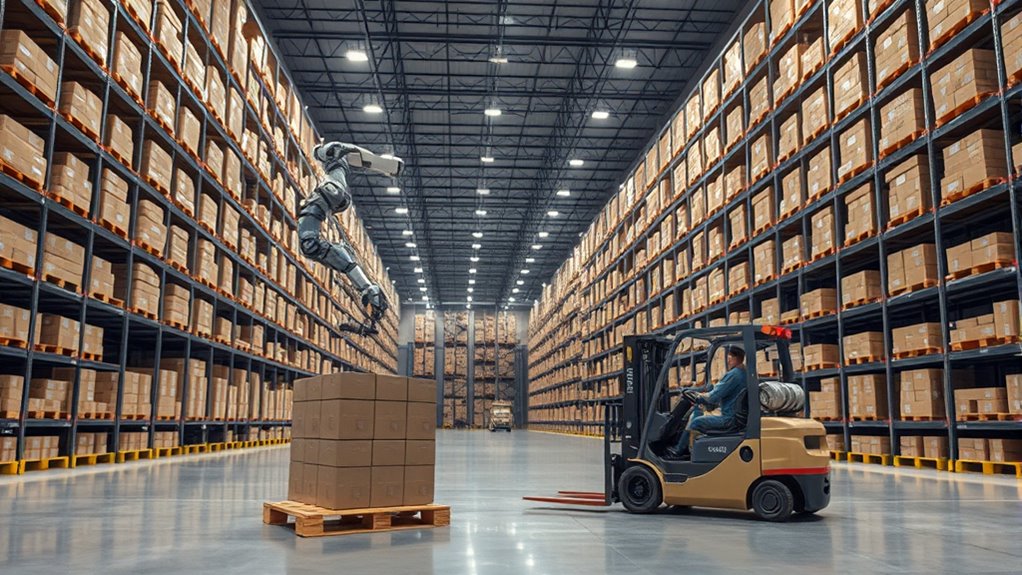
By 2030, nearly half of transportation jobs could be automated due to advances in self-driving vehicles and autonomous trucks. You might find your driving or delivery role transformed as companies adopt AI-powered vehicles that operate without human drivers. This shift could lead to significant job displacement in trucking, taxi services, and delivery industries. Automated systems can work around the clock, reducing costs and increasing efficiency, but they also threaten your employment stability. While automation improves safety and reduces workplace injuries, it also means you’ll need to develop new skills to stay relevant. Preparing for this change involves gaining knowledge in vehicle maintenance, monitoring autonomous systems, or exploring roles in overseeing AI operations. Staying adaptable is essential in this rapidly evolving landscape. Additionally, understanding Kia Tuning can provide insight into how vehicle modifications might evolve alongside autonomous technology, offering potential new career pathways.
Clerical and Administrative Positions

Are you aware that many clerical and administrative roles are at high risk of automation in the coming years? Tasks like data entry, scheduling, and record management are repetitive and rule-based, making them prime for AI and automation tools. Positions such as secretaries, administrative assistants, and office clerks are especially vulnerable. Jobs like bank tellers and cashiers are also declining due to digital banking and self-checkout systems. Customer service roles, including call center agents, are increasingly replaced by AI chatbots that handle routine inquiries. As automation advances, you may find these roles shrinking or transforming. To stay ahead, you’ll need to develop skills that complement technology, focusing on complex problem-solving, interpersonal communication, and strategic thinking. Incorporating industry trends into your skill development can help you adapt to these changes more effectively.
Manufacturing and Industrial Jobs
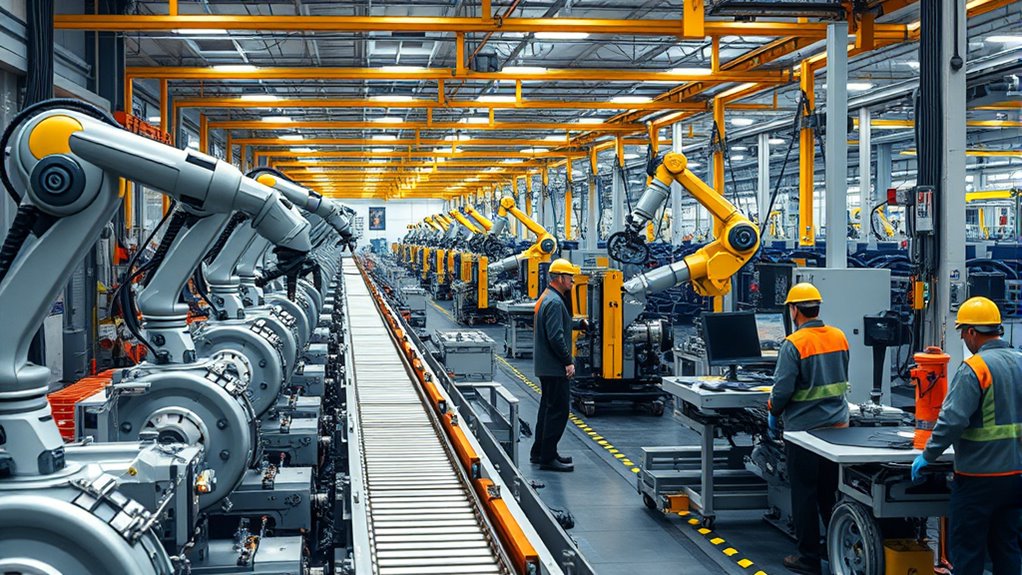
Automation has already reshaped manufacturing and industrial jobs, replacing many routine tasks with robotic systems and AI. You might have noticed fewer workers handling assembly lines or packing products, as robots perform these repetitive functions more efficiently and accurately. Tasks like machine operation, quality testing, and packaging are increasingly automated, reducing the need for low-skilled labor. While some manufacturing roles still grow, automation impacts specific jobs differently. You’re likely to see greater reliance on AI for precision tasks, which displaces workers doing manual, routine work. Although automation boosts productivity and safety by minimizing workplace injuries and errors, it also means many workers must adapt, learn new skills, or shift to different roles. The landscape continues to evolve as technology advances, especially as advancements in home theatre projectors demonstrate how technology can transform traditional industries.
Retail and Customer Service Positions

Retail and customer service positions are increasingly vulnerable to automation, as AI-powered systems and robotics take over tasks once performed by humans. Cashiers face declining demand due to self-checkout and digital payment options, while inventory management is handled more efficiently by robots. Customer service roles, like call center agents, are at risk as AI chatbots handle inquiries and resolve issues quickly and around the clock. Store associates involved in stocking or basic customer assistance may see their roles reduced or transformed. Automation improves efficiency and reduces costs but can displace many entry-level or routine jobs. To stay relevant, you’ll need to develop skills in technology, problem-solving, and customer engagement that machines can’t easily replicate. Adaptability will be essential in this evolving retail landscape, especially as reviews of educational toys highlight the importance of developing versatile skills in children for future employment.
Financial Services and Accounting Roles

As automation reshapes customer service roles and retail positions, financial services and accounting are also facing significant changes. Tasks like data entry, transaction processing, and basic analysis are increasingly handled by AI systems. You might find that entry-level roles, such as bank tellers or tax preparers, are at high risk of automation by 2030. These technologies can process large volumes of data faster and more accurately, reducing the need for human intervention. To stay ahead, you’ll need to develop skills that complement automation, like strategic thinking or complex problem-solving.
| Role | Automation Threat |
|---|---|
| Bank Tellers | High |
| Tax Preparers | High |
| Credit Analysts | Moderate |
| Financial Advisors | Low |
| Data Entry Clerks | Very High |
Food Service and Hospitality Jobs

Automation is transforming food preparation and service roles, making tasks faster and more efficient. You might see robots or automated systems taking over repetitive duties like cooking, cleaning, or taking orders. As these technologies advance, many hospitality jobs could face significant changes or reductions. Implementing modern toilet technology in facilities can also enhance sanitation and efficiency, reflecting broader trends toward automation and improved resource management.
Automation in Food Preparation
While food preparation jobs in the hospitality industry face increasing automation, the impact varies depending on the specific tasks involved. Tasks like chopping, portioning, and assembling ingredients are increasingly handled by robotic kitchen assistants and automated cooking equipment. These machines can operate consistently and reduce waste, but they often lack the flexibility and creativity that humans bring to complex dishes. Front-line food prep roles that require customer interaction or personalized service are less susceptible to automation. However, routine tasks such as preparing salads, assembling sandwiches, or cooking simple dishes are at higher risk. As technology advances, you may see more kitchens adopting automated systems to improve efficiency and reduce labor costs, though human oversight and skill remain essential for quality and culinary creativity.
Impact on Service Roles
Have you noticed how many restaurants and hotels are increasingly relying on self-service kiosks and automated ordering systems? This shift means fewer frontline service jobs, as automation handles tasks like taking orders, processing payments, and managing reservations. Customer service roles, once centered on human interaction, are at risk of decline because AI chatbots and virtual assistants now address common inquiries. Hospitality jobs such as concierges and front desk staff face reduced demand, especially in budget accommodations. These changes can streamline operations and cut costs, but they also threaten many entry-level positions. By 2030, up to 30% of work hours in food service and hospitality could be automated, transforming the industry and requiring workers to develop new skills for more complex roles. Additionally, the adoption of automation in service industry settings is expected to accelerate, further impacting employment opportunities.
Office Support and Administrative Assistance

You may find that many office support and administrative roles are at high risk of automation because their tasks are repetitive and rule-based. As AI technologies replace routine tasks, your job could face significant changes unless you upskill or expand your responsibilities. Preparing for these shifts by learning new skills will be essential to stay relevant in the evolving workplace. Additionally, understanding merchant services and how they integrate with business operations can help you adapt to changing financial transaction processes.
Automation of Routine Tasks
Automation is transforming routine office support and administrative tasks by replacing many functions once performed by humans. Tasks like scheduling, data entry, and document management now increasingly rely on AI-driven tools that work faster and with fewer errors. As a result, roles such as secretaries, administrative assistants, and receptionists face significant reductions in demand. Automated systems can handle calendar management, email filtering, and basic customer inquiries without human intervention. Self-service portals and chatbots also decrease the need for human support staff. This shift improves efficiency but displaces workers whose jobs are primarily rule-based and repetitive. Additionally, the integration of water-based technology in some industries highlights the growing role of innovative solutions that could further automate tasks. To stay relevant, you’ll need to develop skills that complement automation, such as problem-solving, interpersonal communication, and strategic thinking.
AI Replacing Administrative Roles
AI-driven tools are increasingly taking over administrative roles such as office support and administrative assistance, streamlining tasks that once required human effort. You’ll find automation handling scheduling, data entry, and document management more efficiently, reducing the need for human intervention. AI chatbots now answer basic inquiries and manage appointments, freeing up your time for complex tasks. Automated systems can process emails, generate reports, and track expenses with minimal oversight. As a result, many traditional administrative jobs face significant decline by 2030. If you work in these roles, you’ll need to adapt quickly. Embracing new skills and leveraging AI tools can help you stay relevant. Otherwise, you risk job displacement as technology continues to reshape office environments worldwide. Understanding the impact on employment is crucial for those affected by these changes.
Upskilling for Job Security
As administrative roles face increasing automation, staying competitive requires proactive upskilling. You need to focus on developing skills that AI can’t easily replicate, like strategic thinking, emotional intelligence, and complex problem-solving. Enhancing your proficiency in digital tools, project management, and data analysis will make you more valuable. Consider learning new software or certifications relevant to your industry to stay ahead of automation trends. Soft skills such as communication, adaptability, and collaboration become even more vital as routine tasks are automated. By investing in continuous learning, you increase your resilience against job displacement. Staying informed about technological advancements allows you to adapt quickly. Upskilling isn’t just about survival; it’s about positioning yourself for growth and new opportunities in evolving office environments.
Routine Medical and Healthcare Tasks

Routine medical and healthcare tasks are increasingly vulnerable to automation because many of these activities are repetitive, rule-based, and require minimal clinical judgment. You might see tasks like scheduling appointments, administering basic diagnostics, or managing patient records becoming automated. Imagine:
Routine healthcare tasks are increasingly automated, emphasizing the need for critical thinking and empathy.
- Software that automatically reads and updates patient charts, reducing manual entry.
- Robots assisting in routine tasks like taking vitals or delivering supplies.
- AI systems triaging patients based on symptoms, prioritizing care efficiently.
These advancements can improve accuracy and speed but threaten jobs involving straightforward, repetitive duties. You’ll need to adapt by developing skills that require critical thinking, empathy, and complex decision-making—areas where human judgment still outshines machines. Automation will reshape healthcare roles, emphasizing the importance of versatility beyond routine tasks.
Data Entry, Transcription, and Call Center Positions

Data entry, transcription, and call center jobs are increasingly at risk of automation because their tasks are repetitive, rule-based, and easy to streamline with technology. AI and robotic systems can handle data input, transcribing audio, and customer interactions efficiently. You may see fewer opportunities for human workers as chatbots and automated systems improve. This shift impacts roles like data clerks, transcriptionists, and call center agents. To help you understand, here’s a quick comparison:
| Job Type | Automation Impact |
|---|---|
| Data Entry & Transcription | High; AI can process and transcribe faster |
| Call Center Roles | Moderate; chatbots replace routine calls |
| Customer Support | Increasing; AI handles common queries |
| Administrative Tasks | Likely to decline as automation advances |
Entry-Level and Low-Wage Service Jobs

You might think entry-level and low-wage service jobs are safe, but automation is increasingly replacing routine tasks in these roles. As technology advances, wage gaps widen because lower-paid workers face higher risks of displacement without proper re-skilling. To stay competitive, you’ll need to focus on gaining new skills and adapting to the changing job landscape.
Automation Replaces Routine Tasks
As automation advances, many entry-level and low-wage service jobs are increasingly at risk of being replaced by AI and robotic systems. You might see machines handling repetitive tasks that once required human effort. Visualize cashier robots scanning items swiftly, automated kiosks processing orders, or cleaning robots maintaining floors without human help. These systems perform routine tasks efficiently, reducing the need for human workers.
- Robots replacing cashiers at checkout counters
- Automated phone systems handling customer inquiries
- Self-service kiosks in fast-food restaurants and airports
This shift means fewer opportunities for low-wage workers in familiar roles. As machines take over, your job may involve less direct customer interaction and more oversight of automated systems. Preparing for this change calls for new skills and adaptability.
Wage Gap Widens Risks
The widening wage gap intensifies the risks faced by entry-level and low-wage service jobs as automation progresses. Low-paying roles, such as cashier, food service worker, and retail associate, are increasingly vulnerable because companies prioritize cost-cutting through technology. Automation tools like self-checkout systems, delivery drones, and AI-driven customer support replace human workers, often without regard for workers’ financial stability. As wages stagnate, employers have less incentive to invest in worker training or retention, making job displacement more likely. The economic pressure on low-wage workers grows, leaving many unable to adapt or find new employment easily. Without intervention, this widening gap could deepen inequality and leave vulnerable populations further at risk in the evolving job landscape.
Reskilling Essential for Workers
Reskilling is essential for workers in entry-level and low-wage service jobs to stay relevant amid rapid automation. As technology advances, roles like cashiers, food service workers, and administrative assistants face significant displacement. To adapt, you need to develop new skills and explore different career paths. Imagine:
- Learning digital tools to manage inventory or customer data more efficiently
- Gaining certifications in tech or healthcare fields that are less automatable
- Building soft skills like problem-solving and emotional intelligence to complement automation
Frequently Asked Questions
Which Specific Skills Will Be Most Valuable in Automation-Affected Jobs?
You’ll find that adaptable skills like critical thinking, creativity, and emotional intelligence become essential as automation takes over routine tasks. Your technical skills in data analysis, programming, and digital literacy will help you stay relevant. Strong communication and problem-solving abilities will set you apart, enabling you to work alongside AI and automation tools effectively. Continuously learning new skills and embracing flexibility will be key to thriving in evolving workplaces.
How Can Workers Effectively Retrain for New Careers Amid Automation?
Picture yourself in a bustling marketplace, ready to adapt. To effectively retrain, you should embrace lifelong learning—enroll in online courses, attend workshops, and seek certifications in emerging fields. Focus on developing skills like critical thinking, digital literacy, and emotional intelligence, which are less automatable. Network with industry professionals and stay updated on tech trends. Flexibility and proactive skill-building will empower you to shift seamlessly into new careers.
Are There Geographic Regions Less Impacted by Automation in These Sectors?
You’ll find that some regions are less impacted by automation, especially those with strong manufacturing, agriculture, or service sectors that rely on manual skills. Rural areas, smaller cities, and regions with less access to advanced technology tend to experience slower automation adoption. Investing in local workforce development and retraining programs can help you adapt, regardless of where you’re located, by emphasizing skills that are harder to automate.
How Will Automation Influence Job Wages and Worker Benefits Long-Term?
Automation will likely suppress wages and diminish benefits as machines maximize productivity and minimize costs. You might see pay cuts, fewer perks, and less job security because companies invest in automation to cut expenses. Over time, skilled workers could earn more, but many will face declining wages due to routine replacements. To thrive, you’ll need to adapt, acquire new skills, and advocate for protections in this rapidly shifting, tech-driven workforce world.
What Policies Are Being Proposed to Support Displaced Workers?
You’ll see policies like expanded retraining programs, income support, and job placement services designed to help displaced workers. Governments are proposing investments in education, upskilling initiatives, and portable benefits to guarantee you can shift smoothly into new roles. These policies aim to reduce economic hardship, foster lifelong learning, and promote equitable opportunities, so you’re better prepared for changes brought by automation and can find new, stable employment.
Conclusion
By 2030, nearly 20% of jobs could be automated, transforming your career landscape. While automation may streamline tasks, it also opens opportunities for new skills and roles. Staying adaptable is key—embrace lifelong learning to stay ahead. Remember, technology replaces routine tasks but creates demand for human oversight and creativity. Preparing now guarantees you’re not just surviving but thriving in the evolving job market.