
What if I told you that the world’s superpowers are currently engaged in a race that makes the original Manhattan Project look like a science fair? Right now, as we speak, America and China are pouring unprecedented resources into AI infrastructure at a scale that’s literally reshaping global economics.
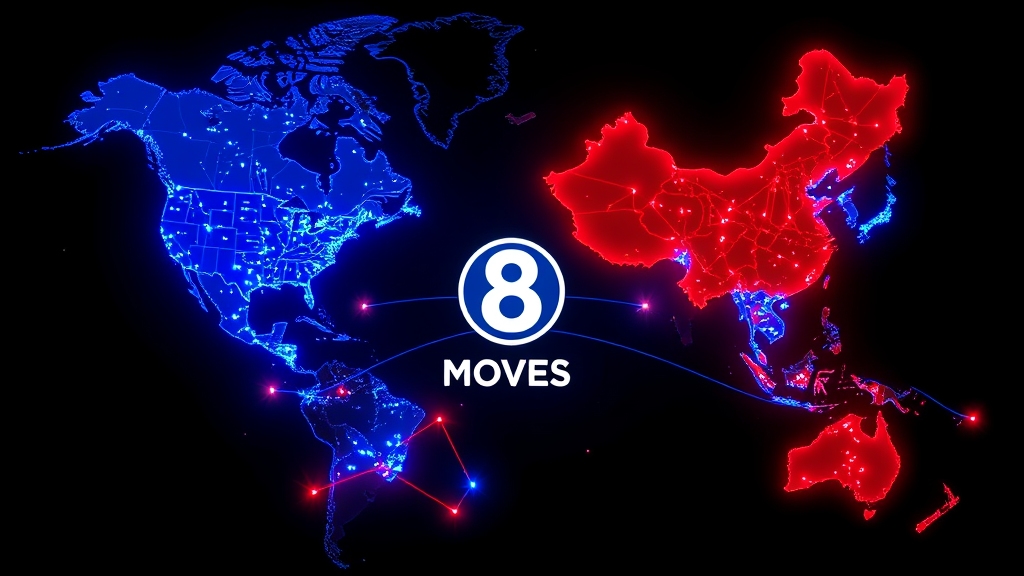
America already commands an 11x advantage in data center infrastructure compared to China – we’re talking about investments so massive they’re now outpacing consumer spending in GDP contribution. But here’s what most people don’t realize – there are eight specific dynamics unfolding that will determine who wins this new Cold War, and we’ll see how this shapes everything from global economics to national security. The foundation of this entire competition starts with something surprisingly physical.

America’s Infrastructure Fortress
Picture this: if you took every data center in America and laid them out side by side, they would cover an area larger than Manhattan itself. We’re talking about a digital fortress that spans millions of square feet of computing infrastructure. But here’s what makes this truly staggering – it represents the foundation of America’s technological dominance in ways most people never consider.
Let’s break down what this 11x advantage actually means in concrete terms. America has roughly 11 times the data center square footage of China. That’s not just a statistical lead – it’s a technological moat that becomes wider every month. These facilities house the specialized hardware needed to train the most advanced AI models on the planet. Without this infrastructure, you simply cannot compete in the frontier AI race.

Hyperscalers like Microsoft’s Stargate and Meta’s Hyperion are custom-built for AI training, letting U.S. firms iterate faster and widen the lead every month. They feature custom cooling systems, specialized chip architectures, and power distribution networks that can handle the massive computational demands of training models with hundreds of billions of parameters.
Here’s why this matters strategically. This infrastructure advantage creates a compounding effect where American companies can train larger, more capable models faster than anyone else. Each successful model training run generates insights that improve the next generation, creating an accelerating gap between American AI capabilities and the rest of the world.
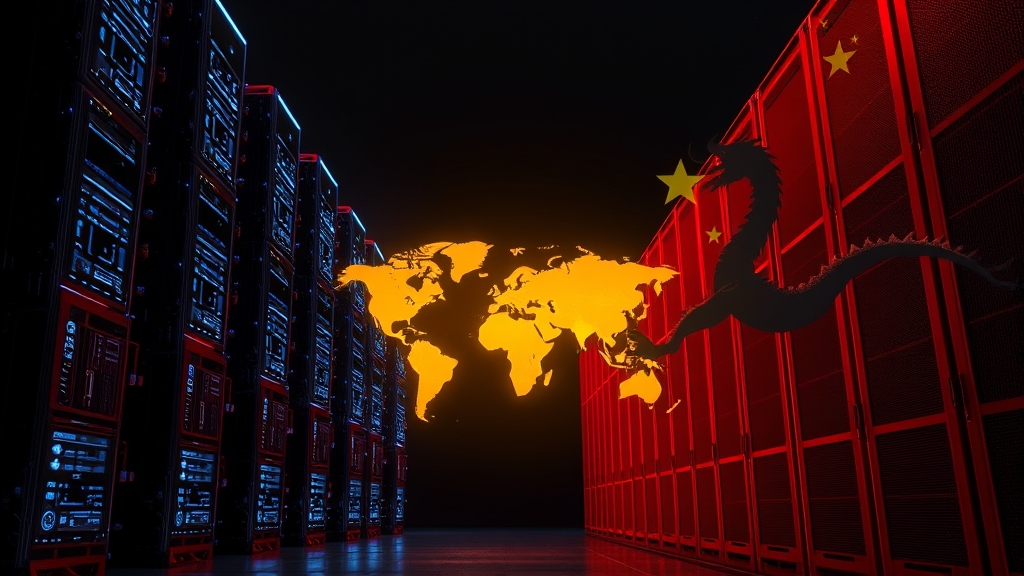
This physical infrastructure is the foundation that everything else in this technological race depends on. Without massive data centers running 24/7, you’re not even playing the game. The companies and countries that control where the most advanced AI models get built and deployed hold tremendous power over the future of artificial intelligence.
But can raw scale hold up when efficiency is China’s secret weapon?

DynMach SE-1000-24 24V 41.7A 1000W Server Power Supply – High Power, Forced Air Cooling, DC OK Signal, AC/DC Converter for Data Center, Industrial Automation, and Telecommunications Equipment
Economical 1000W for Automation Systems: The SE-1000-24 provides 1000W at 24V, an affordable and reliable power solution for…
As an affiliate, we earn on qualifying purchases.
As an affiliate, we earn on qualifying purchases.
The Efficiency Revolution
Here’s a mind-bending fact that should change how you think about this entire competition – Chinese teams replicate U.S. frontier lab breakthroughs within a few months and often do so with significant efficiency gains. How is this even possible? The answer reveals a completely different philosophy toward AI development that could reshape everything we think we know about technological advantage.
While America throws massive computational resources at AI problems, China has become the master of elegant solutions and efficient architectures. Their approach focuses on smarter architectures and training tricks that extract more performance per chip. This isn’t just about being resourceful – it’s about fundamentally reimagining how artificial intelligence systems should work.

Here’s the timeline reality that should concern every American tech executive. Every major AI breakthrough from labs like OpenAI, Anthropic, and Google gets replicated by Chinese teams within 2-4 months. But here’s the kicker – they often achieve these results with significant efficiency improvements that make the original versions look wasteful by comparison.
The strategic thinking behind this approach makes perfect sense when you understand China’s position. They know they can’t match America’s raw computational power, so they’re rewriting the rules of the game entirely. DeepSeek’s reasoning models demonstrate human-level performance on complex tasks while using fraction of the computational resources. Alibaba’s Qwen series achieves comparable results to leading American models but runs efficiently on standard hardware that costs thousands rather than millions.

What does this mean for the race? If China can achieve 90% of the performance with 10% of the resources, does America’s infrastructure advantage actually matter? This efficiency revolution has broader implications that extend far beyond current model capabilities. When AI deployment scales globally and computational resources become the limiting factor, the nation that masters efficiency gains an enormous advantage.
Next, let’s see what this means for global resource allocation and the economic stakes at play.
Fine Tuning LLM Practical Implementation and Adaptation: Domain Specific Model Training, Optimization Strategies, and Responsible Deployment (The Applied Agentic AI Engineering Series)
As an affiliate, we earn on qualifying purchases.
As an affiliate, we earn on qualifying purchases.
When AI Spending Eclipses Everything
Here’s a number that should make you pause – AI investment now contributes more to US GDP growth than consumer spending, upending decades of reliance on consumer spending as the GDP driver. Let that sink in for a moment. We’re witnessing an economic shift that most people haven’t fully grasped yet.
What does this actually mean in historical context? Consumer spending has been the backbone of American economic growth for decades. Families buying cars, homes, electronics, and services have driven GDP expansion since World War II. Now AI infrastructure investment is outpacing that fundamental driver of American prosperity. This represents a complete reordering of economic priorities.
We’re seeing an Apollo-scale mobilization in real time. Major tech companies are spending more on AI infrastructure than entire countries spend on their annual budgets. This isn’t gradual change – it’s economic transformation happening in real time.

The only comparable periods in American history were during major wartime mobilizations or the Apollo program, when entire economies pivoted toward a single technological goal. During World War II, consumer goods production stopped while factories manufactured tanks and planes. The Apollo program consumed 4% of GDP at its peak. Today’s AI investment is approaching similar levels of economic mobilization, but without a defined endpoint.
This isn’t just about current spending – it’s creating entirely new industries, supply chains, and economic relationships that will define the next decade. AI infrastructure requires specialized manufacturing, advanced materials, and skilled workforces that didn’t exist five years ago. These investments are building economic foundations for technologies we can barely imagine today.
China’s parallel investment patterns follow similar trajectories. While their numbers are less transparent, satellite imagery and industrial data suggest comparable resource allocation toward AI infrastructure development. All this spending fuels some of the biggest infrastructure builds ever – let’s look at those next.

AI NPU System Design with Python and Verilog: Building from Scratch: A Complete Guide to Modeling, Custom ISA, Compiler, and FPGA Implementation
As an affiliate, we earn on qualifying purchases.
As an affiliate, we earn on qualifying purchases.
The Mega-Projects Reshaping Reality
Imagine a single data center that’s one of the largest ever funded. That’s not science fiction – that’s Stargate, Microsoft and OpenAI’s project launching in 2028. We’re talking about infrastructure investment that makes traditional mega-projects look small by comparison.
What’s the scale of these mega-projects? These AI mega-projects rival small cities for power use and require brand-new approaches to cooling and construction. Meta’s Hyperion project spans multiple states across America. These aren’t just bigger data centers – they’re technological cities designed to house the most advanced computing systems ever built.

What makes these projects different from anything built before? They’re designed from the ground up for AI workloads that push the boundaries of what’s physically possible with current technology. Traditional data centers handle web traffic and database queries. These new facilities must support continuous AI model training that runs for months at maximum computational capacity without interruption.
Here’s the strategic thinking behind the timeline. These builds aren’t for today’s models—they’re a bet on AI in 2030 when current systems look primitive. The infrastructure being built today must support AI systems we can barely imagine right now.
What does this mean globally? Each of these mega-projects represents a bet that advanced AI will be centralized in American infrastructure, controlled by American companies. This creates enormous strategic advantages for whoever controls these systems.
But here’s the risk factor. These projects require technological breakthroughs that don’t exist yet, from power management to cooling systems to chip architectures. The engineering challenges are unprecedented, and failure could mean billions in wasted investment.
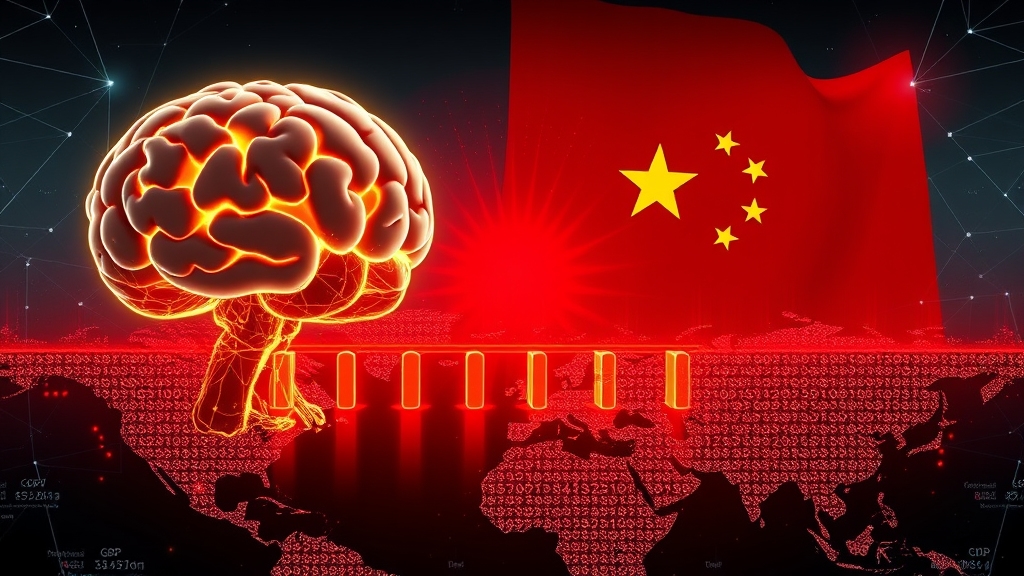
China’s approach to mega-infrastructure follows different principles but aims for the same goal – technological supremacy through scale. Their projects focus on efficiency and distributed systems rather than centralized mega-facilities. This creates fascinating competitive dynamics where both nations are pursuing breakthrough technologies, but placing very different bets on which breakthrough will matter most.

Sysracks Open Frame Server Rack 32U – Adjustable 19-inch Rackmount for Data Center, Network, and Home Server – 440lb Capacity, Vented – Ideal for IT Equipment, Servers, Networking Gear Relay
This 32U open frame server rack features a robust steel frame with an impressive 440 lb weight capacity,…
As an affiliate, we earn on qualifying purchases.
As an affiliate, we earn on qualifying purchases.
The Tale of Two Breakthroughs
While America dominates AI model development, China set a new record for the longest sustained plasma run, though still short of net-positive energy. This isn’t coincidence. We’re watching two superpowers make fundamentally different bets about which breakthrough technology will define the future of human civilization.
Here’s the strategic parallel that most people miss. Both nations are pursuing breakthrough technologies, but they’re placing different bets on which breakthrough will matter more for long-term dominance. America is pushing artificial intelligence to unprecedented levels of capability. China is chasing the holy grail of unlimited clean energy through nuclear fusion.

What did China actually achieve? Their EAST reactor sustained plasma for over 17 minutes at temperatures exceeding the sun’s core. That’s not net-positive energy yet, but it represents a crucial milestone toward unlimited clean power. The U.S. retains the only net-positive fusion results to date, which many scientists consider the more critical component in fusion technology development.
But here’s where this gets interesting. While China chases fusion breakthroughs, America’s labs are pushing the boundaries of artificial intelligence to levels that seemed impossible just years ago. OpenAI, Anthropic, and Google are creating AI systems that can reason, plan, and solve problems in ways that approach human-level intelligence.
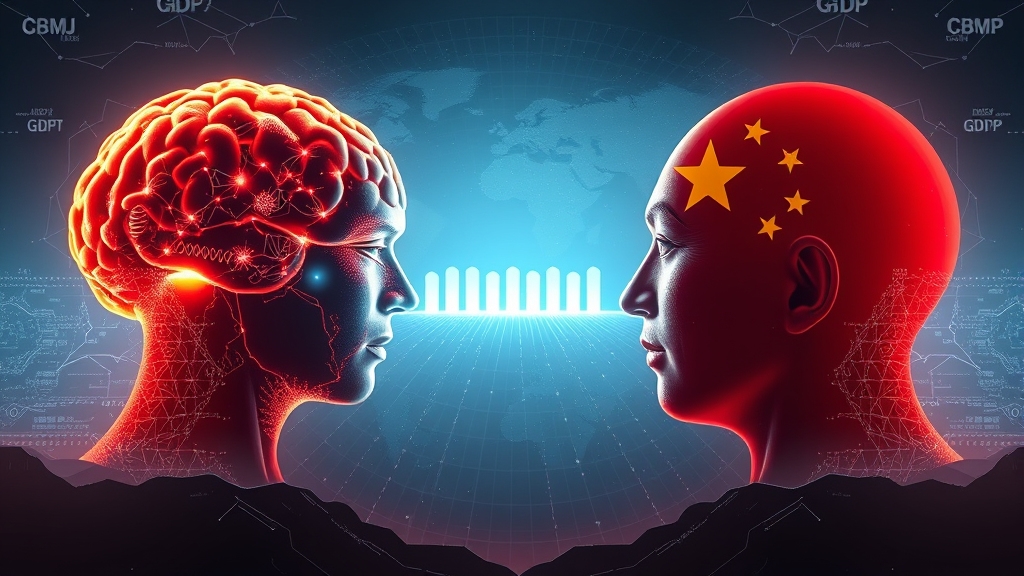
What’s the strategic calculation behind each approach? China sees unlimited clean energy as the ultimate advantage that could power any technological development. America sees artificial intelligence as the technology that will define everything else, from scientific research to economic systems.
Which bet will pay off first? That’s the tension driving this entire competition. Fusion could solve the energy constraints currently limiting AI development worldwide. And remember—advanced AI could be the key to solving fusion’s toughest physics puzzles.
The nation that achieves both breakthrough AI and breakthrough energy first gains an almost insurmountable advantage. But these technological races are playing out within a much larger strategic framework that extends far beyond domestic innovation.
Digital Silk Roads and Power Projection
China’s Belt and Road Initiative isn’t just about building roads and ports anymore. It’s becoming a digital infrastructure project that could reshape global AI adoption in ways most people don’t realize. What started as concrete highways and shipping facilities has transformed into something far more strategic – a global network where China’s open-source AI models travel from Brazil to Russia, building familiarity with Chinese AI standards.
Here’s the strategic evolution that’s happening right under our noses. Chinese technology companies are systematically deploying AI infrastructure across dozens of countries through open-source releases that operate according to Chinese technical specifications and protocols. This creates a global network of Chinese-standard systems that governments and businesses adopt because they’re freely available and technically capable.
Does this sound familiar? It should. Just as America and the Soviet Union competed for influence through military bases and economic partnerships during the Cold War, today’s competition is about technological ecosystems. The nation that controls the infrastructure controls how AI gets deployed and used across entire continents.
Here’s where it gets really interesting from a strategic perspective. Countries that adopt Chinese AI infrastructure become more likely to use Chinese AI models, creating network effects that compound over time. When a government builds its digital services on Chinese systems, it naturally gravitates toward Chinese AI solutions. This represents soft power projection through technology rather than military presence.
By contrast, American frontier models stay locked in U.S. data centers, limiting their soft-power reach. While China builds global digital infrastructure, America focuses on domestic development and allied partnerships through initiatives like the CHIPS Act. This creates a fascinating strategic tension between global expansion and allied consolidation.
The long-term implications are enormous. We’re watching the emergence of competing technological spheres of influence that mirror Cold War dynamics but operate through digital networks rather than military alliances. But this technological competition extends into domains where the stakes become even more dangerous.
The Ultimate Force Multiplier
Military applications reveal AI’s true strategic importance – it’s a force multiplier that could make traditional military advantages obsolete overnight. Think about it this way: when one nation can process battlefield information and make strategic decisions at superhuman speed, conventional military strengths become less relevant.
Both nations see AI as a force multiplier that will reshape command, control, and intelligence. We’re talking about systems that can analyze vast amounts of data, coordinate complex operations, and respond to threats faster than human commanders could ever manage. This represents a fundamental shift in how military power gets projected and defended.

America currently leads in advanced military AI research, but China’s rapid development means this advantage could evaporate quickly. Chinese teams are already open-sourcing military AI breakthroughs months after U.S. labs, narrowing any initial edge. This creates a dangerous dynamic where today’s technological superiority becomes tomorrow’s standard capability.
Just as radar, jet engines, and nuclear weapons redefined military power in the 20th century, AI could be the defining military technology of the 21st. History shows us that nations controlling breakthrough military technologies gain decisive advantages that can last for decades.
Here’s what makes this terrifying from a strategic perspective. The nation that achieves significant AI military advantages could potentially neutralize traditional military strengths like aircraft carriers or missile systems. When AI can coordinate responses faster than humans can react, conventional military doctrine becomes outdated.
This dynamic creates pressure to deploy untested systems, raising the stakes for potential miscalculations. As both nations pour unprecedented resources into military AI development, we’re entering territory where the scale of investment itself becomes a strategic factor that demands closer examination.
Apollo-Scale Ambition Meets Modern Reality
The numbers behind this competition reveal something unprecedented in economic history. Apollo consumed over 5% of U.S. GDP at its peak. Current AI spending is approaching Apollo levels of economic mobilization, but with one crucial difference – it’s happening in both superpowers simultaneously. We’re witnessing economic mobilization on a scale that most people haven’t fully grasped yet.
Here’s the investment comparison that should make you pause. Apollo cost $280 billion in today’s dollars over a decade. Unlike Apollo’s defined finish line on the moon, the AI race has no clear end—meaning the spending curve may only steepen. What does this mean for us? We’re looking at sustained spending that makes the moon landing look affordable by comparison.

What makes this different from Apollo? The space race had a clear finish line – getting to the moon first. The AI race has no obvious endpoint, just continuous advancement toward an uncertain future. There’s no single moment when we can declare victory and go home.
Here’s why this matters for economic transformation. Apollo gave us satellites, computers, and materials science that revolutionized multiple industries. AI investment is creating advances in robotics, biotechnology, energy, and fields we haven’t even named yet. The spillover effects are already emerging everywhere you look.
Picture the compound effects already happening. AI research is accelerating drug discovery, optimizing energy systems, and creating new forms of human-computer interaction that seemed impossible just years ago. These advances create their own momentum, leading to breakthrough applications nobody anticipated.

The global implications are unprecedented. Unlike Apollo, which was primarily an American project, the AI race involves multiple nations making comparable investments, creating technological competition we’ve never seen before. This competition is reshaping the fundamental nature of global power itself.
Conclusion
The decisions being made today will determine which nation controls the technological foundation of tomorrow. These eight dynamics aren’t just reshaping technology – they’re redefining what it means to be a global superpower in the 21st century. The nation that masters AI infrastructure, efficiency, and deployment will influence everything from economic systems to military capabilities for generations.
The stakes couldn’t be higher. We’re watching the emergence of a technological competition that makes the original Cold War look simple by comparison. This time, the race isn’t just about reaching the moon – it’s about who gets to define the future of human civilization.
What happens next depends on decisions being made right now in boardrooms and government offices around the world. The AI Manhattan Project isn’t coming – it’s already here. If you found this analysis eye-opening, subscribe for more deep dives into how technology shapes our world. Now ask yourself—who will control not just AI, but the future built on it?