
TL;DR

Get business pricing on tech for your team
- Business-only prices and quantity discounts
- Tax-exempt purchasing
- Multiple users, one account, clear invoices
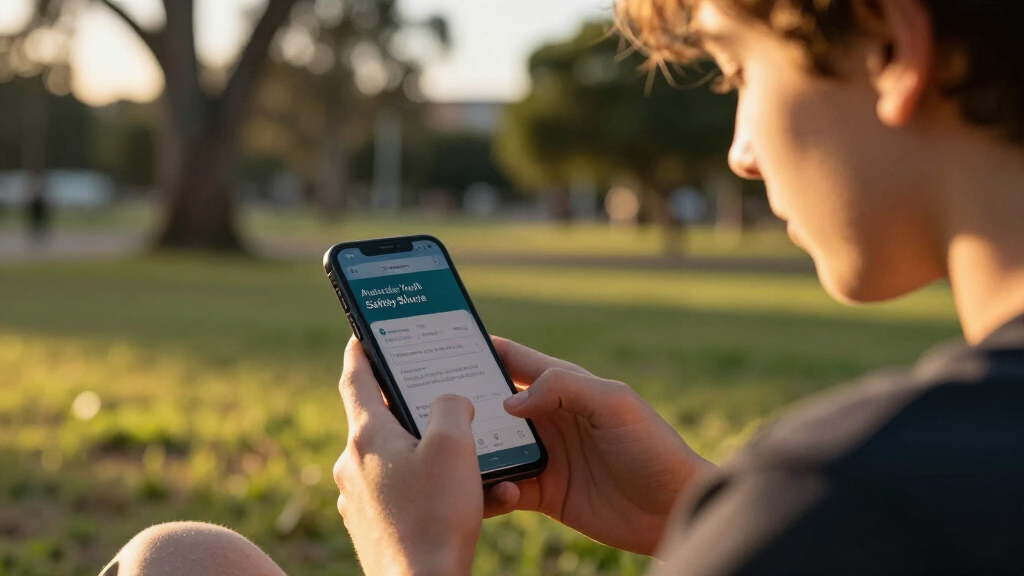
OpenAI has introduced an initiative titled the Australian Youth Safety Blueprint. The available announcement identifies the initiative but does not disclose its policies, enforcement mechanisms, partners or implementation timetable.
OpenAI has introduced an initiative called the Australian Youth Safety Blueprint, signaling a country-specific focus on young people’s safety around its technology. The announcement establishes the blueprint’s name and Australian focus, but the available material does not describe its measures, participants, legal status or timetable, leaving the initiative’s practical effect unresolved.
The development is an OpenAI announcement under the title “Introducing the Australian Youth Safety Blueprint.” That wording supports a limited factual conclusion: the company is presenting a youth-safety initiative directed at Australia. It does not establish whether the blueprint is a binding company policy, a set of recommendations, an industry proposal or a framework intended for discussion with public authorities.
No operational details were included in the material available for this report. OpenAI did not specify whether the blueprint changes age checks, parental controls, content safeguards or account access for younger users. It also did not identify participating agencies, schools, child-safety organizations or other technology companies. Any description of those elements would go beyond what OpenAI has publicly stated in the available announcement.
The announcement likewise provides no measurable commitments. There are no stated targets, evaluation periods, comparison baselines or published indicators by which readers could judge the blueprint’s performance. The development is best understood as the introduction of a named initiative, rather than evidence that particular protections have already been deployed or tested.
Introducing The Australian Youth Safety Blueprint
OpenAI has introduced a named, Australia-specific youth-safety initiative. The announcement signals direction, but the available material does not disclose policies, enforcement mechanisms, partners, measurable commitments or an implementation timetable.
What the announcement actually tells us
The strongest reading stays close to the published wording. It distinguishes the initiative’s confirmed identity from assumptions about how it may work.
A named initiative
OpenAI has introduced an initiative titled the Australian Youth Safety Blueprint.
Publicly establishedAn Australian frame
The title places youth safety in a specific national setting rather than describing only a global product issue.
Publicly establishedNo defined practical effect
The available material does not show whether the blueprint is binding policy, voluntary guidance, a proposal or a consultation framework.
Details requiredKnown, absent and still pending
A title can establish intent and scope at a high level. It cannot establish operational safeguards, institutional support or measurable outcomes.
| Area | Available announcement | Status | Needed for assessment |
|---|---|---|---|
| Initiative identity | Australian Youth Safety Blueprint | ✓ Confirmed | Full blueprint text |
| Age checks and access | No change described | ✗ Not disclosed | Covered ages, products and account rules |
| Parental controls | No measures described | ✗ Not disclosed | Consent, visibility and escalation procedures |
| Partners or endorsements | No agencies or organizations identified | ✗ Not disclosed | Named participants and defined responsibilities |
| Implementation | No launch schedule or milestones stated | ~ Unresolved | Dated rollout plan and covered services |
| Measurement | No targets, baselines or review periods stated | ~ Unresolved | Metrics, reporting intervals and comparison basis |
Status reflects only the information described in the available announcement.
A clear signal, with limited operational evidence
The announcement creates visibility around youth safety in Australia, but its significance depends on provisions that have not yet been made available.
Intent is not implementation
The development is best understood as the introduction of a named initiative, not evidence that particular protections are active.
Do not infer government endorsement, product changes, independent review or improved outcomes from the title alone.
The path from announcement to measurable protection
A credible assessment requires a connected evidence chain. At present, only the first stage is established.
Announcement
A country-specific youth-safety blueprint is introduced.
Provisions
Specific obligations, controls, covered ages and products are published.
Implementation
Dated product changes, responsibilities and reporting systems become visible.
Evaluation
Results are measured against defined targets, baselines and independent evidence.
Publication details will define the impact
The blueprint becomes assessable when readers can connect its principles to concrete responsibilities, product behavior and reported outcomes.
Scope and eligibility
Which age groups, Australian users and OpenAI services are covered?
Product safeguards
Will age checks, default restrictions, parental tools or reporting routes change?
Partners and authority
Are public agencies, schools, child-safety organizations or other companies involved?
Milestones and ownership
Who is responsible, when will measures launch and when will progress be reviewed?
Transparent metrics
Are targets, baselines, reporting intervals and success criteria clearly defined?
Independent evidence
Will external review test whether measures reduce identifiable risks without disproportionate barriers?
Potentially useful, not yet testable
A national youth-safety framework may matter, but its value cannot be judged from its title alone.
The initiative deserves weight when OpenAI publishes concrete measures, assigns responsibility and explains how outcomes will be measured.
A reasonable counterargument is that announcing a framework can be a legitimate opening step before consultation or deployment. Early disclosure may also invite useful scrutiny.
The assessment should change if dated commitments, documented product changes and independent evidence demonstrate meaningful protection for young users.
What readers can—and cannot—say now
Careful language prevents the announcement from being mistaken for proof of new safeguards or regulatory approval.
What did OpenAI announce?
OpenAI introduced an initiative titled the Australian Youth Safety Blueprint. Its substantive provisions were not included in the available material.
Does it immediately change ChatGPT access?
No immediate access change is described. New age limits, account rules or parental controls were not specified.
Is it Australian government policy?
The available announcement does not identify it as government policy or state that an Australian public authority endorsed it.
Who and what are covered?
The intended age range, geographic eligibility and covered services remain unspecified.
How will success be measured?
No targets, evaluation periods, comparison baselines or reporting indicators were provided.
What comes next?
The meaningful next step is publication of full provisions, rollout dates, responsible parties and evidence of implementation.
Australia-Specific Safeguards Take Focus
As an affiliate, we earn on qualifying purchases.
Australia-Specific Safeguards Take Focus
The announcement matters because it places youth safety within a specific national setting rather than presenting it solely as a global product issue. Rules, enforcement practices and expectations concerning children’s online experiences can differ across countries, so an Australian blueprint could shape how OpenAI describes or adapts its approach in that market.
Its importance will depend on what the blueprint actually requires. Concrete changes to product design, age-appropriate access, reporting systems or independent review could affect young users, families, educators and regulators. A document limited to general principles would carry less immediate practical weight. The title alone does not establish which of those paths OpenAI has chosen.
parental control software for kids
As an affiliate, we earn on qualifying purchases.
As an affiliate, we earn on qualifying purchases.
Youth Policy Meets National Rules
Artificial-intelligence services can be used by teenagers for schoolwork, entertainment, personal questions and creative tasks, bringing youth protections into decisions about access, content and product design. The Australian framing indicates that OpenAI is addressing that policy area at a national level, although the available announcement does not explain why Australia received a separate blueprint or how it relates to the company’s wider safety policies.
No earlier milestones, consultation process or drafting history were supplied. It is also unknown whether Australian institutions contributed to the initiative. Without that information, the blueprint cannot yet be placed within a verified sequence of negotiations, regulatory action or product changes.
As an affiliate, we earn on qualifying purchases.
Blueprint Measures Remain Unspecified
The main unanswered question is what the word “blueprint” means in practice. OpenAI has not stated in the available material whether it contains enforceable commitments, voluntary guidance, policy proposals or planned technical controls. The intended age range and the services covered are also unspecified.
It is not yet clear whether the initiative includes identity or age verification, parental consent, default restrictions, escalation procedures, transparency reporting or external audits. There is also no disclosed launch schedule, budget, review date or process for measuring results.
The available announcement does not say whether the blueprint has been endorsed by any Australian government body or child-safety organization. Readers should not infer such support from the initiative’s name. Nor does the announcement establish that safeguards described elsewhere in OpenAI’s policies have changed for Australian users.
content moderation tools for children
As an affiliate, we earn on qualifying purchases.
As an affiliate, we earn on qualifying purchases.
Publication Details Will Define Impact
The next meaningful step will be the release of the blueprint’s full provisions or a detailed explanation from OpenAI. Readers should watch for specific obligations, rollout dates, covered products and information about any Australian partners.
Evidence of implementation will matter as much as publication. Useful indicators would include documented product changes, public reporting, independent review and a clear method for young people or guardians to raise concerns. Until those details appear, the announcement marks intent and direction, not a measurable safety outcome.
Where I land
My assessment is provisional: a country-specific youth-safety framework could be useful, but a title is not enough to judge whether it offers meaningful protection. I would give the initiative weight only after OpenAI publishes concrete measures, assigns responsibility and explains how outcomes will be measured. That is interpretation, not a reported finding.
The strongest counterargument is that announcing a framework can be a legitimate opening step before consultation or deployment, and early disclosure may invite useful scrutiny. I would revise my assessment if OpenAI releases clear product commitments, dated milestones and independent evidence showing that the measures reduce identifiable risks without creating disproportionate barriers for young users. Until then, I see the blueprint as a statement of direction whose real value remains untested.
Source: OpenAI
Key Questions
What did OpenAI announce?
OpenAI introduced an initiative titled the Australian Youth Safety Blueprint. The available announcement names the initiative but does not provide its substantive provisions.
Does the blueprint immediately change ChatGPT access in Australia?
No immediate access change is described in the available material. OpenAI has not specified new age limits, account rules or parental controls tied to the announcement.
Is the blueprint an Australian government policy?
The available announcement does not identify it as a government policy or state that an Australian public authority endorsed it. It is presented by OpenAI.
Which young people and OpenAI products are covered?
The intended age range, geographic eligibility and covered services were not specified. Those details remain necessary for evaluating the initiative’s scope and reach.
How will the blueprint’s success be measured?
OpenAI did not provide targets, reporting intervals or evaluation criteria in the available material. A credible assessment would require defined metrics, a stated time window and a clear comparison basis.
Source: OpenAI
Fall Picks
fall essentials
As an affiliate, we earn on qualifying purchases.