
Introduction
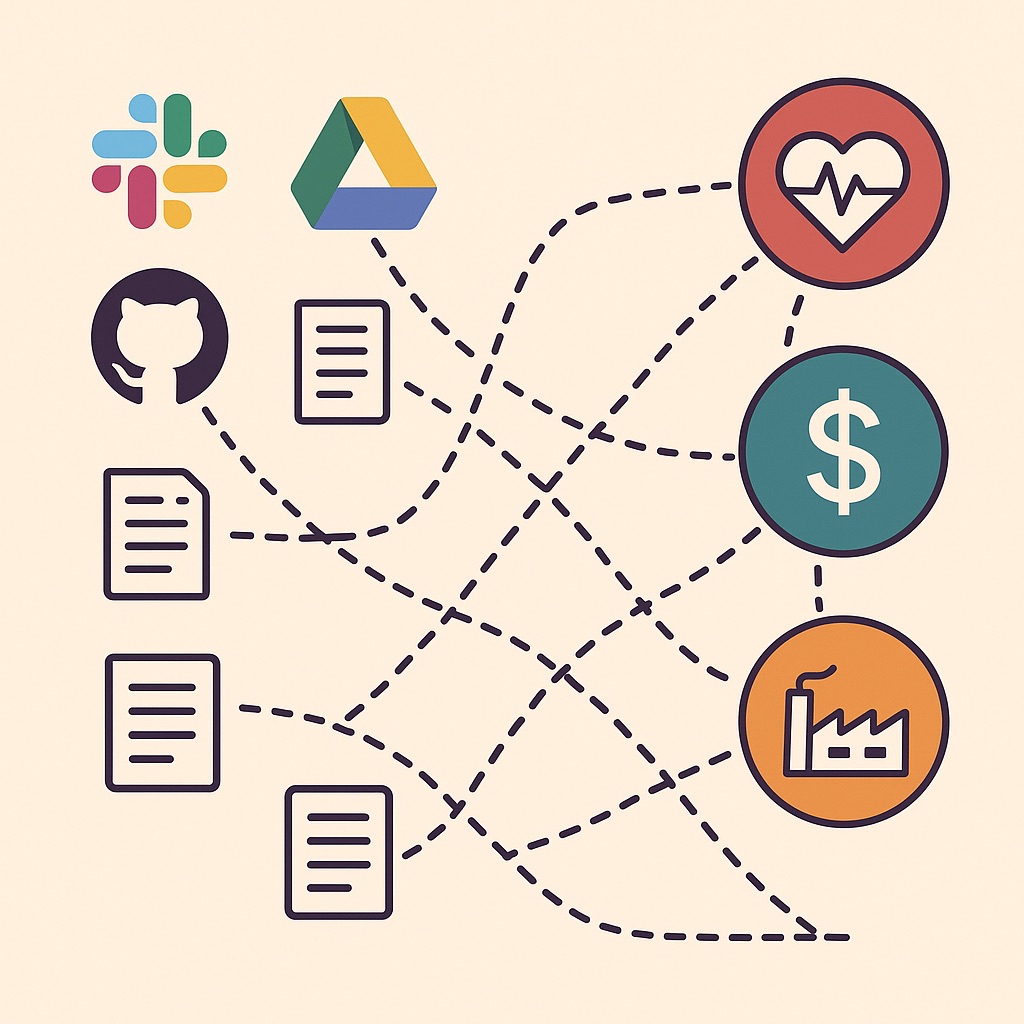
On 23 October 2025 OpenAI announced a new capability for ChatGPT Business, Enterprise and Education subscribers called company knowledgeopenai.com. The feature connects the chatbot to a company’s internal data sources—such as Slack channels, SharePoint libraries, Google Drive folders and GitHub repositories—so that ChatGPT can answer questions using a business’s own documents, messages, tickets and other recordsopenai.com. It uses a version of GPT‑5 trained to search multiple sources at once; each answer includes citations so users can trace the underlying documentsopenai.com. By letting employees ask questions like “Where did we land on next year’s goals?” or “Summarize the latest customer feedback from the mobile launch,” ChatGPT transforms from a generic assistant into a tailored internal analystopenai.comartificialintelligence-news.com.
This report examines the market impact of the company‑knowledge feature, highlighting which industry verticals stand to benefit, what new competitive dynamics it introduces and what risks organizations must consider. The analysis draws on official OpenAI documentation, independent journalism and market‑analysis articles published in October 2025.

Document Management for the Enterprise
As an affiliate, we earn on qualifying purchases.
As an affiliate, we earn on qualifying purchases.
Market context: Enterprise AI moves from horizontal to vertical
From generic assistants to context‑aware agents
Generative‑AI adoption has grown rapidly in enterprises, but horizontal tools often fall short because they lack access to company‑specific contextopenai.com. Business data remains scattered across different applications, and employees waste time switching between themartificialintelligence-news.com. The release of company knowledge responds to this pain point by federating internal data sources and harnessing GPT‑5’s ability to reason across themopenai.com.
At the same time, investors and analysts are championing vertical AI, which combines general large‑language models (LLMs) with proprietary domain knowledge to automate industry‑specific workflows. A 2024 White Star Capital report argues that vertical AI solutions outperform horizontal models because they are trained on industry‑specific data and integrate with sector‑specific systemswhitestarcapital.medium.com. Examples include Harvey, an AI assistant for law firms, and Causaly, a biomedical research search platformwhitestarcapital.medium.com. The report emphasizes that vertical AI can address both core workflows (e.g., drafting contracts) and supporting workflows (marketing or compliance) within an industrywhitestarcapital.medium.com.
Company knowledge brings a similar philosophy into a horizontal platform: instead of offering vertical models for each sector, OpenAI lets organizations connect ChatGPT to their proprietary data to deliver context‑aware answers. This blurs the line between horizontal and vertical AI and positions ChatGPT as a platform for verticalized applications.
Competitive landscape
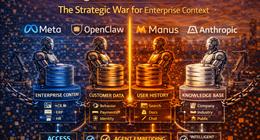
OpenAI’s announcement arrives amid intense competition in enterprise AI. Microsoft offers Copilot in Microsoft 365, Google has Gemini Enterprise, Slack launched AI Enterprise Search, Anthropic unveiled Skills for its Claude model and Dropbox offers Dash. Journalists note that company knowledge competes against these products because each aims to create a single, conversational search layer across enterprise toolsartificialintelligence-news.comtheverge.com. The Verge highlights that Anthropic’s Skills allow teams to package instructions and resources for specific tasks so Claude can operate in their unique contexttheverge.com, while Slack’s AI Enterprise Search uses retrieval‑augmented generation to answer questions across connected appseesel.ai. The AI News article emphasises that success will depend on connectors and data‑governance features; CIOs must evaluate which ecosystem—OpenAI, Microsoft, Google or Salesforce—offers the most secure and integrated pathartificialintelligence-news.com.

The Power is Within You
As an affiliate, we earn on qualifying purchases.
As an affiliate, we earn on qualifying purchases.
Key capabilities of company knowledge
The official OpenAI announcement details several capabilities:
| Capability | Evidence |
|---|---|
| Multi‑source retrieval | The feature searches across multiple apps—Slack, SharePoint, Google Drive, GitHub and others—to produce comprehensive answersopenai.com. |
| Citation and transparency | Every response includes citations to the specific files or messages used to generate the answeropenai.com. |
| Handling ambiguity | GPT‑5 can run multiple searches to resolve conflicting details and summarize differing viewpointsopenai.com. |
| Time‑based filtering | The model can use date filters to find information relevant to a specific period and rank sources by recency and qualityopenai.com. |
| Admin controls and compliance | Admins can manage app access, create custom roles and use enterprise‑grade security features like SSO, SCIM and IP allow‑listingopenai.com. ChatGPT only accesses data that a user is already authorized to viewopenai.com. |
These functions make ChatGPT more than a simple query tool; they enable synthesis, summarization and decision support. For example, OpenAI describes how the system can prepare a client briefing by pulling recent Slack conversations, relevant emails, meeting notes in Google Docs and support ticketsopenai.com. The feature can also build performance reports or release plans by gathering contact data from HubSpot, notes from Google Docs and tasks from project‑management toolsopenai.com.

Design Knowledge Management System
As an affiliate, we earn on qualifying purchases.
As an affiliate, we earn on qualifying purchases.
Impact and opportunities by vertical
Professional services (legal, consulting, accounting)
- Problem: Law firms and consulting firms manage large volumes of contracts, case notes and project documents. Knowledge often resides in siloed document management systems, email threads and chat logs. Research and summarization consume billable hours.
- Opportunity: Company knowledge can automatically gather and summarize case files, meeting notes, client communications and regulatory documents, generating briefs or due‑diligence reports. In legal workflows, this mirrors the vertical AI movement where tools like Harvey assist with contract analysiswhitestarcapital.medium.com. ChatGPT’s citation feature provides traceability, important for legal compliance. Accounting firms can compile audit evidence or cross‑check transactions by querying across ledgers and internal messages.
- Market impact: By integrating generative AI with document management systems, professional‑services firms can reduce research time, provide faster client responses and differentiate their services. Competitors such as Microsoft’s Copilot also target these sectors, so adoption decisions may depend on existing ecosystems (Microsoft 365 vs. Slack/Google) and trust in data privacycomputerworld.com.
Sales, marketing and customer support
- Problem: Go‑to‑market teams rely on CRM systems, email, project trackers and customer feedback. Data fragmentation slows reporting and strategy updates.
- Opportunity: ChatGPT can synthesize customer feedback from Slack channels, survey results from Google Slides and themes from support tickets to generate roadmap recommendationsopenai.com. After a campaign, it can pull contacts or deals from HubSpot and post‑mortem notes from Google Docs to produce performance summariesopenai.com. Marketing teams can ask the bot to prepare competitive analyses or draft press releases using internal notes and external market data (when web search is enabled). Customer‑support agents could ask ChatGPT to draft on‑brand responses by referencing previous tickets and knowledge‑base articles.
- Market impact: This use case overlaps with Slack AI Enterprise Search and eesel AI’s agentic tools, which also use retrieval‑augmented generation to answer support querieseesel.ai. However, company knowledge goes further by combining retrieval with reasoning and summarization. As enterprises adopt the feature, vendors that currently provide standalone search or support summarization may face pricing pressure or need to integrate more deeply with OpenAI’s ecosystem.
Product development and engineering
- Problem: Engineering and product teams juggle issues in GitHub, tickets in Linear or Jira, documentation in wikis and discussion threads in Slack. Co‑ordination across these tools is time‑consuming.
- Opportunity: Company knowledge can scan repositories for open TODOs, check Linear or Jira for related tickets and review Slack engineering channels for unresolved bug reportsopenai.com. It can summarize outstanding work, highlight dependencies and suggest next steps. For product managers, the feature could compile user feedback and analytics to prioritize features. This moves generative AI beyond code completion (e.g., GitHub Copilot) into project management and cross‑functional coordination.
- Market impact: Software‑development platforms like Atlassian and GitLab already offer AI helpers. The AI News analysis notes that company knowledge competes with similar strategies from IBM watsonx and SAP Jouleartificialintelligence-news.com. Developers may consolidate around whichever platform offers the most connectors and trust controls.
Healthcare and life sciences
- Problem: Healthcare organizations store sensitive patient information in electronic health records (EHRs), lab systems and secure messaging. Research teams manage unstructured data from clinical studies, trial reports and biomedical literature. Data privacy laws (e.g., HIPAA and GDPR) make integration difficult.
- Opportunity: Company knowledge could, in principle, help clinicians and researchers find relevant patient histories, treatment plans and clinical guidelines. For example, summarizing prior cases with similar conditions or extracting insights from multi‑disciplinary notes. In research, ChatGPT could compile literature references or trial data to formulate hypotheses. However, OpenAI’s system is not yet integrated with EHR systems, and healthcare organizations must carefully control permissions to avoid violating privacy laws. The Computerworld article warns of data‑leakage risks and notes that trust in OpenAI remains a major concerncomputerworld.com. Highly regulated industries may opt for on‑premise LLMs or sector‑specific AI providers.
- Market impact: Vendors like Causaly and IBM watsonx for Healthcare already provide vertical solutions; ChatGPT’s entry could accelerate innovation but will likely face stringent compliance requirements. Healthcare organizations might adopt the tool for non‑PHI data (e.g., research summaries) while continuing to rely on specialized tools for clinical use.
Financial services and insurance
- Problem: Banks and insurers handle large volumes of documents—risk assessments, policy forms, regulatory filings, customer communications—often stored in different systems. Compliance with financial regulations demands audit trails and secure data handling.
- Opportunity: With company knowledge, analysts can ask ChatGPT to compile quarterly performance updates by pulling data from spreadsheets, board presentations and Slack updatesopenai.com. Underwriters might request summaries of claim history and risk factors across emails, CRM notes and scanned documents. Risk and compliance teams can monitor transactions and generate suspicious‑activity reports by querying across logs. The citation mechanism could help auditors verify the provenance of each fact.
- Market impact: Financial institutions have been early adopters of generative AI but often build in‑house solutions. The OpenAI tool competes with platforms like Bloomberg GPT, Databricks’ MosaicML and Microsoft Copilot for Finance. Adoption will depend on whether the vendor can meet stringent security and data‑residency requirements. The AI News article suggests that organizations should compare connector lists and data‑governance capabilities before choosing a providerartificialintelligence-news.com.
Manufacturing and supply chain
- Problem: Manufacturers collect data from equipment sensors, maintenance logs, ERP systems, procurement records and supply‑chain communications. This information is often siloed, hindering predictive maintenance and logistics planning.
- Opportunity: Company knowledge could help plant managers ask, “Which machines had repeated downtime in Q3?” or “Summarize supplier delivery issues last month.” By pulling data from maintenance logs, procurement emails and issue trackers, ChatGPT can produce actionable summaries. Engineering teams can integrate the tool with IoT dashboards to generate root‑cause analyses. The White Star Capital report notes that vertical AI can automate high‑cost tasks in sectors like manufacturingwhitestarcapital.medium.com; company knowledge offers a horizontal approach by connecting to existing systems rather than building a bespoke model.
- Market impact: Adoption in manufacturing may lag due to integration complexity and legacy systems. Competitors like Siemens’ Industrial Copilot or SAP Joule provide domain‑specific analytics and may retain an advantage in handling real‑time machine data. However, ChatGPT could appeal to medium‑sized manufacturers looking for cost‑effective knowledge management.
Education and research institutions
- Problem: Universities and research labs manage course materials, student records, publications and grant proposals across multiple platforms (LMSs, cloud drives, email). Faculty and students often struggle to find resources and keep up with administrative tasks.
- Opportunity: Company knowledge allows educators to ask ChatGPT to compile lesson plans or summarize feedback from student surveys by scanning learning‑management systems and communication tools. Researchers can query across their own notes, datasets and literature to produce grant summaries. The feature can also serve as a personalized “teaching assistant” for administrative staff.
- Market impact: Many institutions are adopting AI to automate grading and tutoring. Google’s Gemini for Education and Anthropic’s AI partners (e.g., Box and Canva) will compete for this market. ChatGPT’s ability to integrate with common tools like Google Drive and Slack may give it an edge, but privacy and FERPA compliance remain critical.
AI Tools and Techniques for Corporate Facilitators & Leaders: Unlock Innovative Strategies with ChatGPT for Enhanced Collaboration, Creativity, and Efficiency
As an affiliate, we earn on qualifying purchases.
As an affiliate, we earn on qualifying purchases.
Risks and challenges
Data privacy and security
Analysts caution that the depth of access requested by company knowledge raises serious data‑governance questions. Computerworld observes that enterprise IT executives are wary of giving a relatively young company like OpenAI access to sensitive datacomputerworld.com. Forrester analyst Jeff Pollard notes that the competitive choice among Copilot, Gemini and Claude often comes down to vendor trustcomputerworld.com. The article highlights risks such as data privacy, security, regulatory compliance, vendor lock‑in and model accuracycomputerworld.com. Some industry officials fear accidental data leakage because generative models may recall confidential information without leaving a clear audit trailcomputerworld.com.
OpenAI counters that company knowledge respects existing permissions and that OpenAI does not train on customer data by defaultopenai.com. Admins can control which apps are connected and manage roles, and the feature uses encryption, SSO and IP allow‑listingopenai.com. However, the company has not publicly detailed how it might use aggregated or anonymized data for model improvement, a point of concern for some observerscomputerworld.com.
Reliability and hallucinations
Even with internal data, large language models can hallucinate or misinterpret content. The company‑knowledge feature includes citations, but users must still verify the accuracy of answers. The tool may struggle with outdated or conflicting data sources and cannot, at launch, search the web or generate charts when company knowledge is activatedtheverge.com. OpenAI plans to integrate these capabilities in future updatesopenai.com.
Implementation and change management
The AI News article advises CIOs to pilot the feature with specific workflows before rolling it out across an organizationartificialintelligence-news.com. Leaders should ensure that data permissions in SharePoint or Drive are set appropriately because the feature will expose any over‑permissive settingsartificialintelligence-news.com. They also recommend setting expectations: employees must manually enable company knowledge in each conversation and cannot use other ChatGPT features simultaneouslyartificialintelligence-news.com.
Competitive implications
OpenAI’s move accelerates the race to control enterprise knowledge retrieval. The feature positions ChatGPT as a conversational interface for everything inside a company, challenging stand‑alone search vendors, AI‑powered CRMs and vertical AI startups. SiliconANGLE notes that the update could create more competition for Dropbox’s Dash, which offers a similar cross‑application search toolsiliconangle.com. The article also points out that Microsoft introduced similar connectors for the consumer version of its Copilot chatbotsiliconangle.com. Anthropic’s Skills provide a way to package domain‑specific instructions and resources for Claudetheverge.com, while Slack’s Enterprise Search focuses on real‑time federated retrieval across key appseesel.ai. By offering generative reasoning on top of retrieval, company knowledge may force competitors to expand their capabilities or risk commoditization.
For vertical AI startups, ChatGPT’s platform may be both an opportunity and a threat. Startups can build specialized agents that leverage company knowledge as a backend, reducing the need to build connectors from scratch. However, OpenAI could incorporate more vertical functionality over time, squeezing out niche providers.
Recommendations for enterprises
- Assess data governance: Before enabling company knowledge, audit data permissions across Slack, Google Drive, SharePoint and other systems. Overly broad sharing will be surfaced by ChatGPTartificialintelligence-news.com.
- Start with high‑value workflows: Pilot the feature in scenarios where information fragmentation causes delays—such as preparing client briefs, compiling quarterly reports or planning product releasesartificialintelligence-news.com. Measure productivity improvements to justify wider adoption.
- Set clear policies: Establish guidelines for sensitive data (e.g., personal identifiable information, intellectual property) and define when employees should or should not use AI for internal summaries. Provide training on verifying AI‑generated answers.
- Compare ecosystems: Evaluate the connectors, compliance certifications and pricing of competing solutions (Microsoft Copilot, Google Gemini, Salesforce Agentforce, Slack AI, Anthropic Skills). Consider vendor trust, data residency and integration with existing tool stacksartificialintelligence-news.com.
- Invest in vertical expertise: For regulated industries, supplement general tools with vertical AI providers (e.g., Harvey for legal or Causaly for biomedical research). Use company knowledge for less‑sensitive tasks while maintaining dedicated solutions for core workflows.
Conclusion
The company knowledge feature marks a significant step toward context‑aware AI in the workplace. By connecting ChatGPT to internal data sources and enabling multi‑source reasoning, OpenAI offers enterprises a powerful knowledge engine that can reduce information silos, speed decision‑making and support complex tasks. Its impact will vary across verticals: professional‑services firms and go‑to‑market teams stand to see immediate productivity gains, while heavily regulated sectors like healthcare and finance must proceed cautiously. The feature intensifies competition among enterprise AI providers and blurs the line between horizontal and vertical AI. Adoption success will depend on robust data governance, careful piloting and a clear understanding of the evolving competitive landscape.