
Implications for AI compute economics, supply chains, and the data-center buildout (2026–2029)
Executive summary
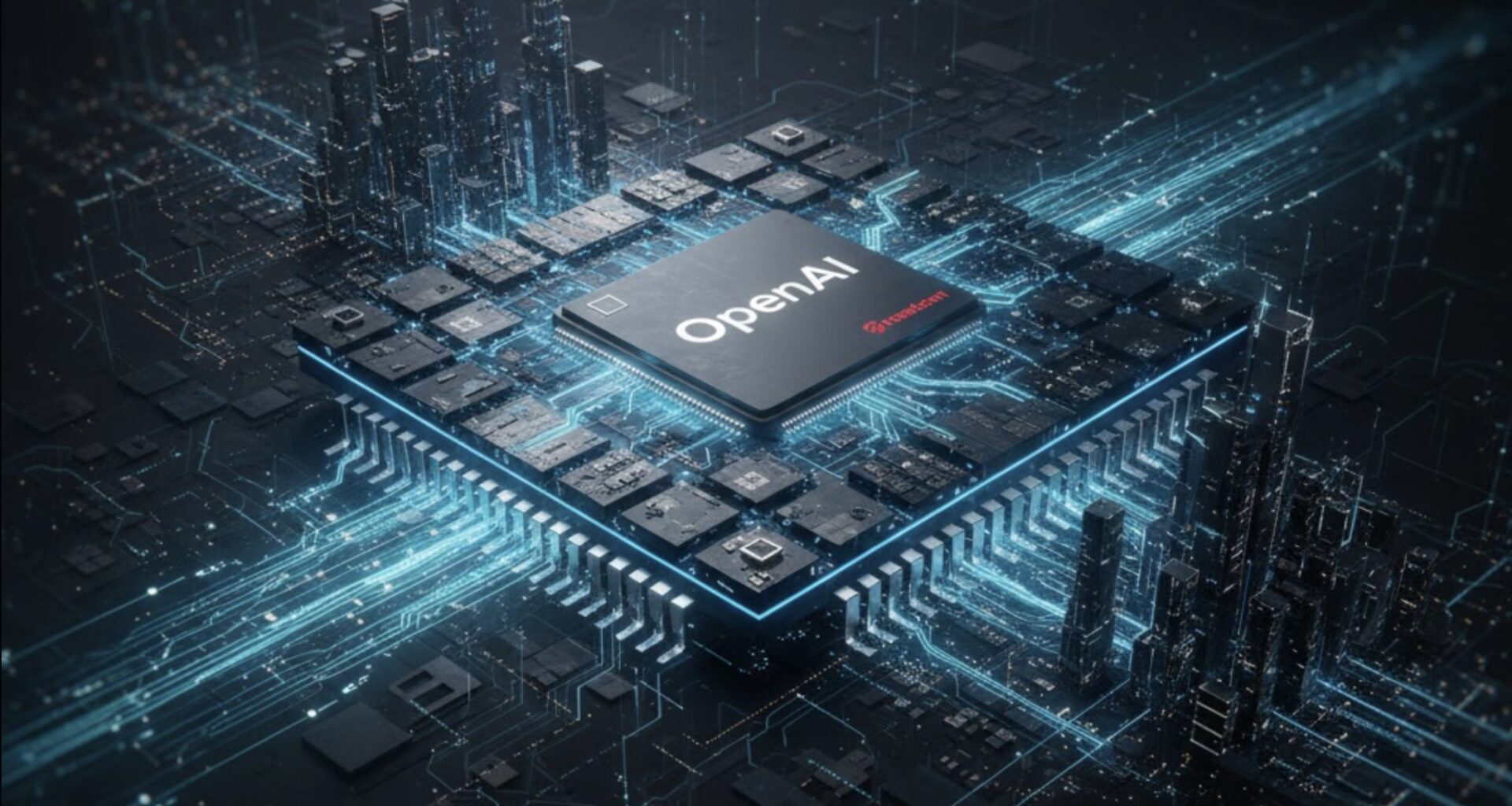
On Oct 13, 2025, OpenAI announced a multi-year collaboration with Broadcom to co-develop and deploy 10 gigawatts (GW) of OpenAI-designed AI accelerators and rack-scale systems. OpenAI will design the chips and system architecture; Broadcom will develop and manufacture them, including networking at rack and fabric levels. First deployments begin 2H 2026, with a ramp that runs through 2029. This adds to OpenAI’s 6 GW multi-generation GPU agreement with AMD (initial 1 GW MI450 in 2H 2026) and complements ongoing NVIDIA systems deployments and the Stargate mega-campus expansion with Oracle and SoftBank (now ~7 GW planned). Together, these moves signal a decisive shift toward multi-vendor and semi-vertical integration to secure supply, optimize TCO, and tune silicon for frontier-model workloads. OpenAI+4OpenAI+4Reuters+4
OpenAI custom AI accelerator chips
As an affiliate, we earn on qualifying purchases.
As an affiliate, we earn on qualifying purchases.
What is actually new here?
- OpenAI-designed silicon at production scale (10 GW): not just buying GPUs but encoding model-systems insight in the chip floorplan, memory hierarchy, and IO. Broadcom provides the implementation and Ethernet-centric networking stack. OpenAI
- Phased ramp 2026–2029: first capacity lands in 2H 2026; the multiyear cadence reduces exposure to a single node or supplier. Reuters
- Parallel tracks: AMD 6 GW with performance-/cost-aligned MI450+ roadmaps; NVIDIA for near-term throughput; OpenAI-designed accelerators for longer-horizon latency/efficiency wins. Advanced Micro Devices, Inc.+2Reuters+2
- Sites to host the power: Stargate adds five US sites; Abilene (TX) remains the flagship. Aggregate plan ~7 GW announced so far, before counting Broadcom-based expansions, with >$400B in related investment over three years. OpenAI

StarTech 42U 4-Post Server Rack, 19in Open Frame Rack with 40in (101cm) Mounting Depth and 1323lb (600kg) Weight Capacity, Mobile or Floor Mount IT Rack
ADJUSTABLE DEPTH: 4-Post 42U open frame server rack with 4 vertical rails and adjustable mounting depth 22" to…
As an affiliate, we earn on qualifying purchases.
As an affiliate, we earn on qualifying purchases.
Why 10 GW matters
- Scale economics: Even at conservative assumptions (e.g., 25–35% utilization for training fleets; higher for inference), 10 GW implies millions of accelerators or tightly integrated chiplets across multiple nodes. It’s the difference between renting compute and manufacturing your own unit economics. Reuters
- Latency + memory locality: Custom silicon lets OpenAI co-design model graphs ↔ compiler ↔ interconnect ↔ memory (HBM capacity/stacking, near-memory compute, collective-ops offload). This can lower time-to-first-token, improve context-window economics, and shrink serving jitter for agentic and realtime workloads. (OpenAI frames this as embedding “what it’s learned from frontier models directly into hardware.”) OpenAI
- Network strategy: Broadcom’s Ethernet (and roadmap features like RoCEv2 enhancements, congestion control, and in-network compute primitives) provides an alternative to NVIDIA’s InfiniBand. Expect pressure on collective throughput and job completion time parity at rack/row scale. Reuters
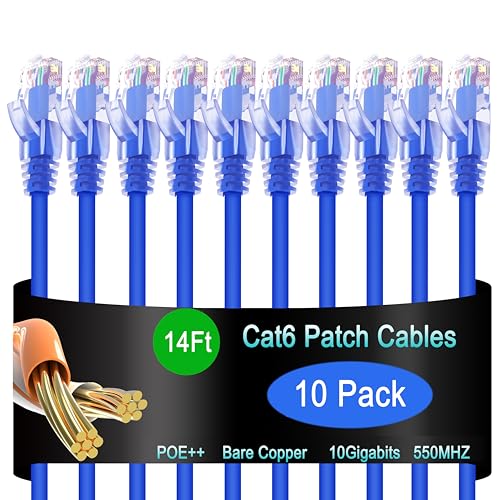
Lysymixs Cat6 Ethernet Patch Cable 14 ft (10 Pack), Cat6 for Data Centers & Home Networking – 10G Blue
10G Transmission: CAT6 cables are made of 26 AWG stranded bare copper with reliable performance and durability. Patch…
As an affiliate, we earn on qualifying purchases.
As an affiliate, we earn on qualifying purchases.
Timelines and dependencies (2025–2029)
- Design-to-ramp: With 2H 2026 first light, 2025–H1 2026 is dominated by RTL freeze, physical design, tap-outs, bring-up, and compiler/toolchain maturation. Any node slippage or HBM yield pressure could push schedules. Reuters
- Bridge capacity: AMD MI450 (1 GW from 2H 2026) and ongoing NVIDIA systems de-risk model training schedules while custom parts mature. Advanced Micro Devices, Inc.+1
- Sites & power: Stargate’s land/power/water lock-in reduces permitting risk, but grid interconnect and cooling remain critical path items. OpenAI
HBM memory modules for AI workloads
As an affiliate, we earn on qualifying purchases.
As an affiliate, we earn on qualifying purchases.
Capex, TCO, and supply chain
- Rough Capex scale: External analysts peg hyperscale AI builds at $50–$60B per GW at today’s prices (compute-heavy mix). At 10 GW, that hints at trillion-scale lifetime capex when including refresh cycles—hence OpenAI’s multi-rail procurement. Reuters
- Warrant economics: The AMD deal includes warrants for up to 160M shares (up to ~10% stake) vesting with delivery and price milestones—financial alignment to offset supply risk and per-unit pricing. Reuters
- HBM & packaging: Custom accelerators will compete for HBM4/advanced CoWoS-class packaging. Any HBM shortage or substrate constraint can dominate lead time more than raw wafer capacity. (Industry context via Reuters coverage of infra spend.) Reuters
Competitive landscape
- NVIDIA remains the near-term performance and ecosystem default; OpenAI’s custom path is a hedge and an optimizer rather than an immediate displacement. Reuters
- AMD gains credibility and volume through the 6 GW agreement; if software co-tuning (compiler/graph optimizations) closes gap on priority workloads, AMD’s share can meaningfully expand. Advanced Micro Devices, Inc.+1
- Cloud verticals (Google TPU, AWS Trainium/Inferentia, Meta MTIA) show that workload-shaped silicon can unlock cost/perf moats; OpenAI is adopting a similar stance tailored to its frontier LLM + multimodal + agentic roadmap. (Context from OpenAI/NVIDIA systems partnership and industry reporting.) OpenAI+1
Technology architecture: what to expect
- Memory first: Large context windows and tool-use agents push HBM capacity/bandwidth and KV-cache efficiency; expect architectural choices favoring cache compression, sparsity, and attention offloads. OpenAI
- Collectives & compiler co-design: Tighter mapping between model graphs and network/compute topology (e.g., pipeline + tensor parallelism across Ethernet fabrics) to reduce all-reduce bottlenecks. Reuters
- Rack-scale systems: Broadcom delivering rack-level integration + network stack implies standardized power/cooling envelopes and fabric-aware scheduling, crucial for 10 GW deployments across multiple campuses. OpenAI
Energy, siting, and sustainability
- GW-scale siting: Stargate additions (TX, NM, OH, and a Midwest site) concentrate near favorable interconnects, land, and water rights; long-lead power PPAs and on-site generation (incl. storage) will be essential to hit 2026–2029 ramps. OpenAI
- Power density: As chip TDPs climb and liquid cooling becomes standard, facility design must balance rack densities, hot-aisle containment, and waste-heat reuse opportunities to manage opex and community impact. (Industry backdrop from Reuters infra coverage.) Reuters
Risks and mitigations
- Manufacturing & packaging: Yield shocks in advanced nodes/HBM → Mitigation: multi-gen staging, vendor diversification (AMD/NVIDIA), flexible ramp windows. Advanced Micro Devices, Inc.+1
- Network performance parity vs. InfiniBand in large collectives → Mitigation: Ethernet roadmap features + software co-design; job schedulers tuned to fabric topology. Reuters
- Permitting & community pushback (water, noise, land use) → Mitigation: early engagement, water-reduction designs, heat reclaim, local workforce programs within Stargate plans. OpenAI
- Cost of capital at multi-hundred-billion scale → Mitigation: warrants/equity linkages (AMD), diversified financiers (Oracle/SoftBank), phased capex. Reuters+1
Strategic implications
For OpenAI
- Control the bottleneck: Owning critical pieces of the compute stack compresses time-to-model and reduces per-token costs, enabling bigger contexts, faster latency, and cheaper inference at scale. OpenAI
- Option value: With AMD, NVIDIA, and Broadcom in parallel, OpenAI can route workloads to the best cost/perf rail per generation. Advanced Micro Devices, Inc.+1
For vendors
- Broadcom: Validates Ethernet-first AI fabrics at hyperscale; potential multi-tens-of-billions revenue tail. Reuters
- AMD: The 6 GW deal + warrants create durable incentives to deliver MI450+ on time and competitive. Advanced Micro Devices, Inc.+1
- NVIDIA: Near-term demand intact; long-term pressure to differentiate at system-software and networking layers. OpenAI
For policymakers & utilities
- Grid planning: 10 GW over four years requires accelerated interconnect queues, clean-power PPAs, and permitting reforms to avoid regional bottlenecks. OpenAI
Scenarios (2026–2029)
- Base case: Custom accelerators reach parity-plus on targeted OpenAI workloads by 2028, Ethernet fabrics deliver near-IB collectives for most training graphs; AMD MI450 ramps on schedule in 2026; Stargate delivers phased power. Outcome: materially lower $ per token and $ per trained-parameter, enabling broader product SKUs and price cuts. Advanced Micro Devices, Inc.+1
- Upside: Packaging/HBM yields outperform; compiler-graph breakthroughs slash interconnect overhead; OpenAI shifts >40% of training to custom silicon by 2029. Outcome: strong moat via hardware–software codesign. OpenAI
- Downside: HBM constraints + grid delays push volumes right; MI450 slips; custom silicon misses efficiency targets vs. contemporary NVIDIA parts. Outcome: heavier reliance on third-party GPUs, higher TCO. Advanced Micro Devices, Inc.+1