
By Thorsten Meyer AI
For years, SEO has been treated as a mechanical discipline: keywords in the right places, backlinks from the right domains, and enough technical hygiene to please search crawlers.
That era is ending.
Not because search is disappearing—but because search itself is becoming intelligent.
AI is no longer just ranking pages. It is reading them, understanding them, synthesizing them, and deciding which ones deserve to shape answers.
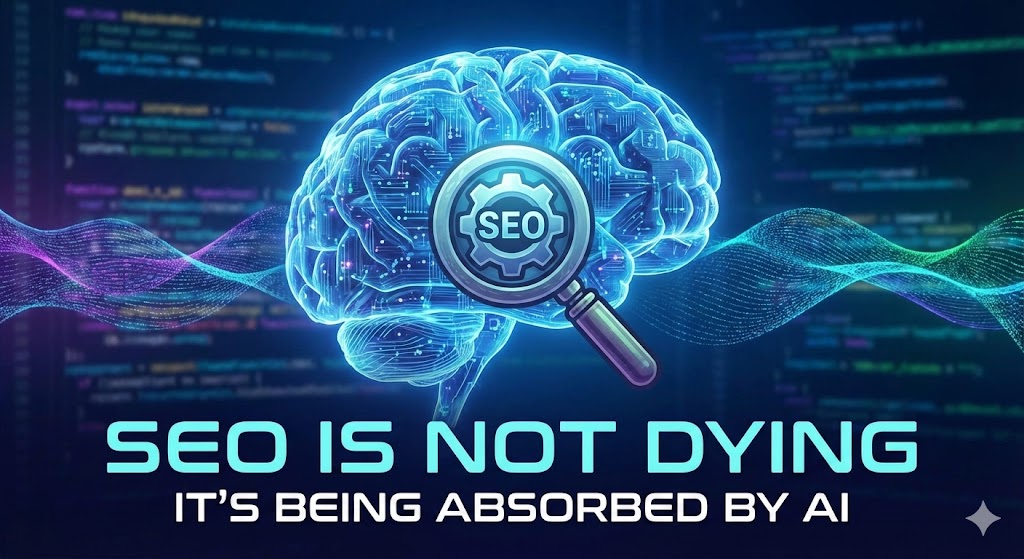
This is not the death of SEO.
It is the moment SEO becomes infrastructure.
From Ranking Pages to Powering Answers
Traditional SEO asked a simple question:
“How do I get my page to rank higher than others?”
AI-driven search asks a different one:
“Which sources can I trust to explain this topic correctly?”
Large language models don’t scan for keywords. They infer meaning, relationships, and credibility. They don’t just index content—they learn from it.
That changes the role of websites fundamentally.
In an AI-mediated search world, your site may never receive the click—yet still influence the decision. Your content may be summarized, paraphrased, or referenced—without being directly visited.
Visibility now means being used, not just being found.
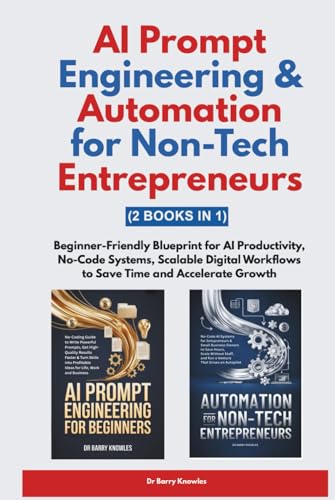
AI Prompt Engineering & Automation for Non-Tech Entrepreneurs: Beginner-Friendly Blueprint for AI Productivity, No-Code Systems, Scalable Digital Workflows to Save Time and Accelerate Growth
As an affiliate, we earn on qualifying purchases.
As an affiliate, we earn on qualifying purchases.
Keywords Are Being Replaced by Concepts
AI systems operate on entities, not strings.
This means:
- Exact-match keywords matter less
- Semantic depth matters more
- Topic completeness beats tactical optimization
A page that truly explains a subject—its tradeoffs, use cases, constraints, and context—has more value to AI than ten pages chasing adjacent keywords.
SEO is shifting from targeting queries to owning knowledge domains.

Flux Session Analyzer Lite – Audio Measurement & Analysis Software (Download Card)
This item is sold and shipped as a download card in a sealed software box with printed instructions…
As an affiliate, we earn on qualifying purchases.
As an affiliate, we earn on qualifying purchases.
Authority Is No Longer Claimed — It Is Inferred
In the AI era, authority isn’t declared with an “About Us” page.
It is inferred from:
- Topical consistency over time
- Depth across a subject, not breadth across many
- Internal linking logic that signals hierarchy
- Language that is neutral, precise, and grounded
Thin content doesn’t just rank lower.
It becomes invisible to AI systems altogether.
This is why trust-first, informational-heavy strategies outperform aggressive monetization in the long run. AI rewards educators, not manipulators.
semantic SEO tools for knowledge domains
As an affiliate, we earn on qualifying purchases.
As an affiliate, we earn on qualifying purchases.
Internal Linking Is Becoming a Comprehension Layer
To humans, internal links help navigation.
To AI, they explain how knowledge is structured.
A well-designed site tells AI:
- What the foundational concepts are
- Which pages support others
- Where expertise is concentrated
In effect, modern SEO architecture functions like a knowledge graph built in HTML.
This is no longer optional. It is how AI understands you.

Blondie24: Playing at the Edge of AI (The Morgan Kaufmann Series in Artificial Intelligence)
As an affiliate, we earn on qualifying purchases.
As an affiliate, we earn on qualifying purchases.
Writing for AI Makes Content Better for Humans
There is a misconception that writing for AI means robotic content.
The opposite is true.
AI favors:
- Clear definitions
- Logical structure
- Step-by-step explanations
- Explicit assumptions
- Direct answers to real questions
These are the same qualities humans value when they are trying to learn or decide.
Good AI-readable content is simply good thinking, clearly expressed.
Monetization Moves Downstream
As AI absorbs discovery, monetization shifts closer to decision points.
The winning sites will not scream “buy now.”
They will calmly explain:
- What matters
- What doesn’t
- What tradeoffs exist
- Who a product is for—and who it isn’t
Trust becomes the conversion mechanism.
AI doesn’t promote hype.
It promotes clarity.
The New SEO Question
The most important question is no longer:
“How do I rank for this keyword?”
It is:
“How do I become the source AI relies on for this topic?”
Websites that thrive in the AI era will:
- Teach before they sell
- Structure knowledge, not just content
- Build authority over time
- Think in systems, not tactics
SEO is no longer a growth hack.
It is how your expertise becomes legible to intelligence itself.
Thorsten Meyer AI
Exploring how artificial intelligence reshapes search, trust, and digital ecosystems.