
1. The Return of the Invisible Interface
After a decade of screens dominating every human gesture, the most powerful design move may now be removal.
OpenAI’s collaboration with Jony Ive—the architect of Apple’s minimalist revolution—suggests that the next generation of computing won’t ask for your attention; it will anticipate it.
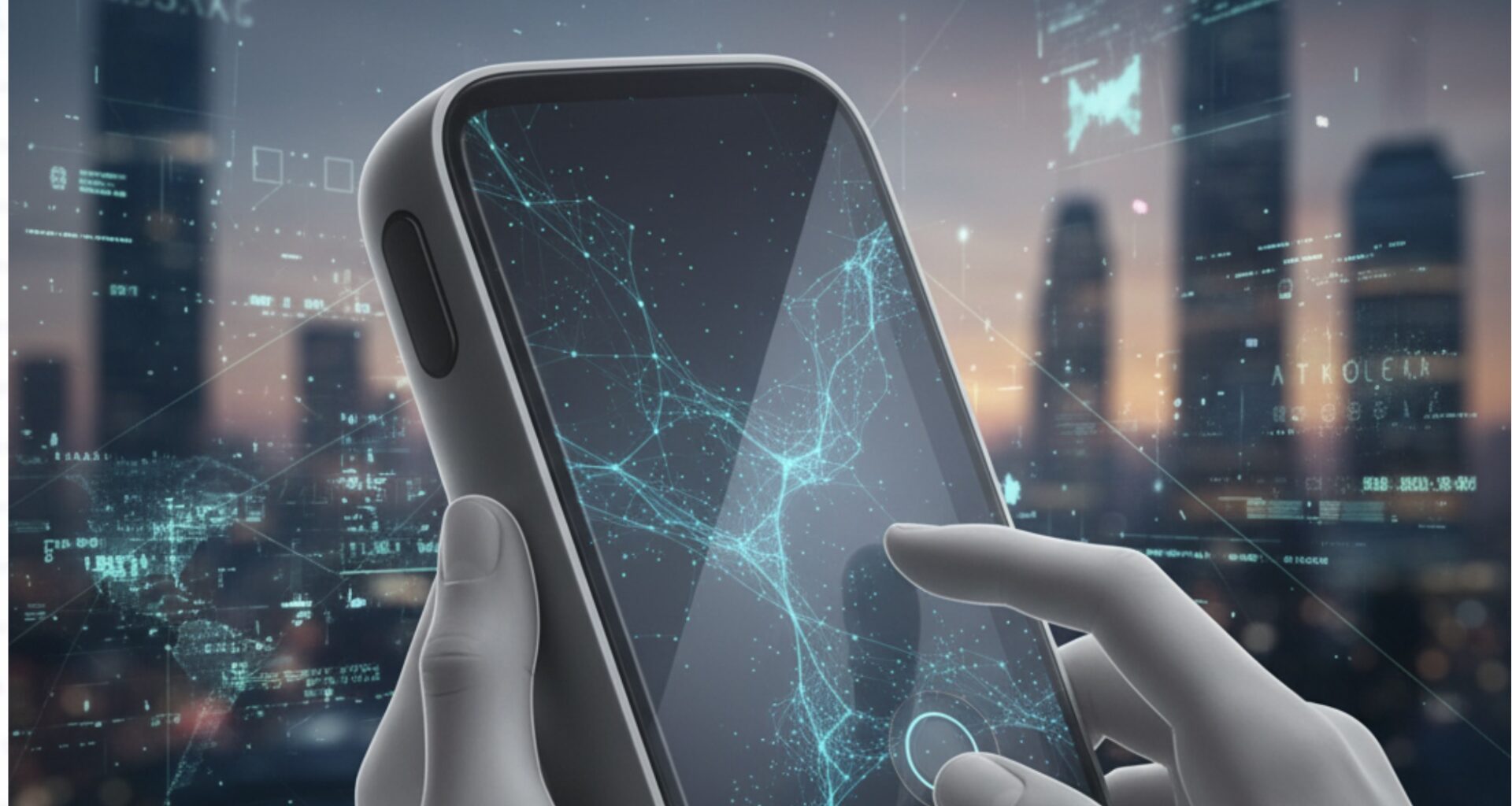
The rumored screen-less, palm-sized assistant is not about another gadget. It’s a bet on the end of visible computing.
Imagine a world where interaction fades into ambient cues: subtle tones, spatial audio, gestures, and context inference. No typing. No scrolling. No “apps.” The AI doesn’t live inside your device; it is the device.
2. The Human Factor: Emotion as Interface
Ive’s design philosophy has always been about empathy through objects.
But when empathy becomes software, the challenge shifts: how should a machine feel when it talks to you?
OpenAI’s biggest hurdle isn’t industrial design — it’s emotional alignment. The device must project warmth without manipulation, initiative without intrusion.
This balance defines the difference between a “trusted companion” and “digital surveillance in your pocket.”
Here’s the tension:
- Too proactive → creepy.
- Too reserved → useless.
- Too neutral → boring.
Getting that spectrum right requires a new discipline at the intersection of AI modeling, linguistics, and industrial design.
3. Compute Is the New Design Constraint
Beneath the polished aluminum lies a raw truth: ambient intelligence is compute-hungry.
A device that’s “always listening, always contextualizing” cannot run purely on local chips — it needs cloud tethering.
That’s where OpenAI’s 10 GW NVIDIA partnership becomes strategic.
Every whisper the device hears might ping a supercomputer in the background.
This means the form factor depends on infrastructure economics: power, latency, and cooling define what’s possible more than any physical design decision.
In essence, the device is a portal into the world’s most expensive compute network.
4. Privacy by Design—or by Default?
If the assistant understands your tone, calendar, and heartbeat, it also understands you.
The challenge isn’t whether data is used — it’s how much of you becomes data.
OpenAI must resolve three hard problems:
- On-device inference: what minimal context can be processed locally to avoid constant cloud uploads.
- Differential privacy: how to anonymize insights across millions of users while still personalizing outputs.
- AI trust UI: giving users visibility into what the assistant knows, not just what it says.
These aren’t engineering tasks alone—they’re moral design choices.
5. The Post-Smartphone Economy
If the project succeeds, the smartphone will no longer be the anchor of daily life.
We will enter a post-touchscreen economy where:
- Revenue shifts from app ecosystems to AI subscriptions.
- Brands compete on model alignment instead of hardware specs.
- Privacy becomes a premium tier, not a default setting.
The device, in that sense, isn’t just a gadget — it’s a Trojan horse for behavioral infrastructure.
6. Why This Matters
What’s unfolding here is not just a design experiment but the next paradigm of human–AI coexistence.
The Ive-OpenAI collaboration is a test of whether we can compress empathy, context, and ethics into something you can hold — or whisper to.
If they succeed, the AI revolution won’t come with a screen.
It will arrive as a voice you trust, a presence you feel, and a silence that understands you.
Top picks for "silent revolution palm"
Open Amazon search results for this keyword.
As an affiliate, we earn on qualifying purchases.