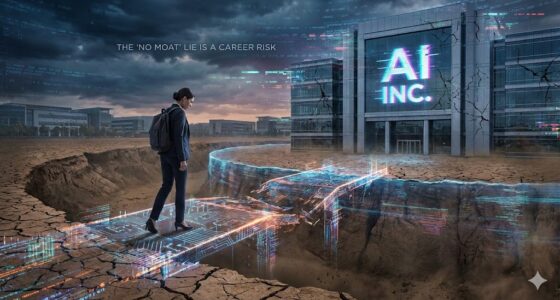
In today’s post-labor economy, you need an education that balances acquiring practical job skills with personal growth. Focus on developing soft skills like resilience, adaptability, and emotional intelligence alongside technical expertise. Embrace flexible pathways like microcredentials and online learning that support lifelong curiosity and self-improvement. If you explore further, you’ll discover how institutions are evolving to nurture both workforce readiness and holistic development, preparing you for a changing world.
Key Takeaways
- Education is shifting toward flexible, microcredential-based models emphasizing practical skills and personal development over traditional degree pathways.
- Soft skills like adaptability, emotional intelligence, and resilience are prioritized alongside technical skills to prepare learners for uncertain labor markets.
- Holistic education integrating personal growth, spiritual energy, and emotional resilience fosters well-rounded individuals capable of lifelong learning.
- Alternative learning modalities such as online and hybrid programs support continuous skill development, balancing job readiness with personal growth.
- Emphasizing curiosity and lifelong learning helps individuals adapt to automation and AI-driven economies beyond specific job skills.
As an affiliate, we earn on qualifying purchases.
The Evolving Role of Postsecondary Education in Today’s Economy

As the economy shifts toward a post-labor model, the role of postsecondary education is transforming from a traditional pathway to a more flexible, skills-focused system. You now need adaptable learning options that prepare you for rapid economic changes and evolving job markets. Institutions are emphasizing career-aligned curricula, microcredentials, and alternative credentials like certificates and apprenticeships. With a growing number of learners supporting dependents or balancing work, flexible pathways become essential. The focus is no longer solely on earning a degree but on gaining practical skills that lead directly to good jobs. This shift encourages you to pursue education models that are accessible, cost-effective, and tailored to meet today’s demands, ensuring you can navigate an uncertain economic landscape more confidently. Cookies are also used to improve user experience and ensure that the website functions smoothly.

Soft Skills Training: A Workbook to Develop Skills for Employment (Second Edition)
As an affiliate, we earn on qualifying purchases.
As an affiliate, we earn on qualifying purchases.
Balancing Skill Acquisition and Personal Development in Curriculum Design

Balancing skill acquisition and personal development in curriculum design is essential for preparing learners for both immediate work demands and long-term growth. To achieve this, you should consider: 1. Integrating hard skills like technology, programming, and quality control with soft skills such as resilience, creativity, and adaptability. 2. Designing flexible pathways that allow learners to pursue career-specific credentials alongside personal growth modules. 3. Promoting project-based and experiential learning that fosters both technical competence and self-awareness. 4. Regularly updating curricula to reflect evolving labor market needs, ensuring relevance while nurturing curiosity and lifelong learning. Additionally, emphasizing color accuracy in training can help learners understand the importance of visual fidelity in various professions.

Study Guide for The Freedom Fight Online Program: A Practical Guide to Finding Freedom to Be Used with the Freedom Fight Online Program
As an affiliate, we earn on qualifying purchases.
As an affiliate, we earn on qualifying purchases.
The Rise of Alternative Credentials and Non-Traditional Learning Pathways

You’re seeing a shift toward microcredentials and alternative learning pathways that offer flexible, targeted skill development. These options are gaining popularity as learners seek cost-effective, accessible ways to stay competitive in a changing job market. As traditional degrees lose some appeal, institutions are expanding non-traditional programs to meet diverse learner needs. Additionally, blending elements of personal growth and skill acquisition is becoming a key focus in designing these new educational pathways.
Growth of Microcredentials
Microcredentials are transforming the landscape of postsecondary education by offering targeted, flexible learning options that align closely with labor market demands. They enable you to acquire specific skills quickly, making you more adaptable in today’s dynamic job environment. Here are four key impacts:
- They provide industry-recognized validation of your skills, boosting employability.
- They allow for stacking—building multiple credentials toward a broader qualification or career change.
- They support lifelong learning by offering shorter, modular courses suited for working adults.
- They reduce costs and time compared to traditional degrees, making education more accessible.
This rise reflects a shift toward competency-based learning, emphasizing practical skills over lengthy academic programs, and responding directly to evolving workforce needs.
Expanding Non-Traditional Pathways
How are higher education institutions expanding non-traditional pathways to meet changing workforce needs? They’re increasingly offering flexible options like online, hybrid, and part-time programs that fit learners’ busy lives. Credentials such as certificates, apprenticeships, and dual enrollment are gaining popularity because they provide targeted skills quickly and affordably. Schools are also developing competency-based models that measure mastery rather than time spent in class, making education more personalized and relevant. These pathways attract non-traditional students—many over 25, working, or supporting families—who seek accessible routes into good jobs. Institutions focus on practical, career-aligned training to boost employability and upward mobility. By diversifying credentials and delivery methods, they respond directly to labor market shifts and learners’ evolving needs for both personal growth and job readiness. Incorporating specialized training methods like industry-specific certifications can further enhance the relevance and effectiveness of these non-traditional pathways.

Digital SAT Test Prep: The Complete & Step-by-Step Study System to Ace the SAT and Improve Your Score — Daily AI Coaching, Adaptive Learning Platform, and 50 Bonus Full-Length Tests
As an affiliate, we earn on qualifying purchases.
As an affiliate, we earn on qualifying purchases.
Economic Shifts and Their Impact on Education Value Perceptions

As economic shifts slow the growth of the college wage premium, you might question whether traditional degrees are still worth the investment. Labor market saturation means fewer job opportunities for recent graduates, further diminishing the perceived value of a college education. These changes are prompting you to reconsider alternative pathways that align more closely with current economic realities.
Wage Premium Decline
Have you noticed that the traditional wage premium for college graduates is shrinking? This shift affects how you view higher education’s value. Here’s what’s happening:
- The gap between college and non-college wages is narrowing, making degrees less financially critical.
- Employers increasingly prioritize skills and experience over formal credentials.
- The rise of alternative credentials, like certificates and micro-credentials, offers cheaper, faster paths to earning power.
- Economic pressures and automation reduce the payoff of traditional degrees, prompting a reassessment of education’s purpose.
As wages grow less tied to college completion, you might see education shifting from being solely a route to high-paying jobs toward personal development and adaptable skills.
Labor Market Saturation
The value of a college degree is increasingly questioned as the labor market becomes more saturated with educated workers. With more people earning degrees, job competition intensifies, making it harder to stand out. Employers now expect higher skills and experience for roles that once required less education, diminishing the perceived advantage of a degree. This saturation leads to wage stagnation and fewer entry-level opportunities for new graduates. You might find that even with higher education, job prospects don’t improve as much as before. As a result, many question whether traditional degrees truly guarantee upward mobility. This shift pushes you to contemplate alternative pathways like vocational training, microcredentials, or apprenticeships that offer quicker, more targeted routes to employment. The focus increasingly shifts from degree accumulation to skill development and adaptability.
Developing Soft Skills for a Future of Uncertainty and Change

Preparing for a future filled with uncertainty and rapid change requires more than just technical skills; it demands strong soft skills that enable you to adapt, communicate, and problem-solve effectively. Developing these skills helps you stay resilient amid economic shifts and job market volatility. Focus on:
- Building emotional intelligence to understand and manage your reactions.
- Improving communication to collaborate across diverse teams.
- Cultivating adaptability to embrace new roles and environments.
- Enhancing problem-solving to navigate unforeseen challenges efficiently.
These skills are essential for personal growth and workplace success. By investing in soft skills, you prepare yourself for unpredictable futures, ensuring you can pivot, innovate, and thrive regardless of how the labor landscape evolves.
Technology-Driven Learning Modalities and Their Dual Benefits

As technology transforms education, learning modalities like online, remote, and hybrid programs are becoming essential tools for today’s learners. These approaches offer flexibility, accessibility, and cost-effectiveness, enabling you to balance work, life, and education. They also foster personal growth and job skills simultaneously, catering to diverse needs. You can acquire technical expertise, soft skills, or pursue interests at your own pace. To illustrate, here’s a quick comparison:
| Modality | Benefits | Challenges |
|---|---|---|
| Online | Flexibility, global access | Limited social interaction |
| Remote | Work-from-anywhere | Need self-discipline |
| Hybrid | Combines in-person and online | Coordination complexity |
These modalities serve dual purposes: enriching personal growth while preparing you for evolving job markets. Recognizing the importance of emotional support in adapting to these new learning environments can enhance your overall success and well-being.
Rethinking Metrics: Moving Beyond Credit Hours and Traditional Degrees

You need to contemplate how competency-based assessments and microcredentials can better measure what learners truly know and can do. These alternative credentialing models focus on skills and mastery rather than time spent in class. As a result, they offer more flexible, relevant ways to demonstrate value beyond traditional degrees and credit hours. Incorporating innovative tools like Pimple Patchs as part of skill recognition can exemplify practical problem-solving abilities.
Competency-Based Assessments
Traditional metrics like credit hours and time-based degrees no longer fully capture a learner’s skills or readiness for the workforce. Competency-based assessments focus on measuring actual skills and knowledge rather than time spent in class. They allow you to:
- Demonstrate mastery through practical tests or projects.
- Progress at your own pace, earning recognition when competencies are achieved.
- Receive personalized feedback to target specific skill gaps.
- Align learning outcomes directly with industry needs, ensuring relevancy.
This approach shifts the focus from accumulating credits to verifying what you truly know and can do. It promotes flexibility, accelerates credentialing, and provides clearer signals of your capabilities for employers, making education more responsive and meaningful.
Value of Microcredentials
Microcredentials are reshaping how you measure educational success by offering targeted, flexible qualifications that go beyond the traditional credit hour system. They provide specific skills or knowledge in areas like data analysis, project management, or digital marketing, making them highly relevant to today’s fast-changing job market. These bite-sized credentials enable you to quickly upskill or reskill without committing to full degree programs. They also allow employers to verify competencies more precisely, bridging gaps between education and workplace needs. For learners, microcredentials support ongoing personal growth while enhancing employability. As a result, they challenge the reliance on degrees as the sole indicator of ability and open new pathways for lifelong learning. Their adaptability and focus on practical skills address the demands of a post-labor economy where agility matters most.
Alternative Credentialing Models
How can educational institutions better measure success in a post-labor economy? You should explore alternative credentialing models that focus on skills and competencies rather than just credit hours or degrees. Consider these approaches:
- Skill-based badges: Digital credentials that verify specific skills or achievements.
- Micro-credentials: Short, targeted programs that demonstrate mastery in niche areas.
- Competency-based assessments: Evaluations that measure real-world ability, regardless of time spent learning.
- Portfolio-based validation: Showcasing work samples and project outcomes to prove capabilities.
These models enable learners to accumulate credentials aligned with job demands, personal growth, or lifelong learning goals. They shift the focus from time spent in class to actual skills gained, making education more flexible, relevant, and measurable.
The Growing Importance of Lifelong Learning and Curiosity

As the labor market evolves rapidly, the importance of lifelong learning and curiosity has never been greater. You must continually adapt to new technologies and shifting job demands, making a growth mindset essential. Staying curious drives you to explore new skills, ideas, and industries, which keeps your mind sharp and competitive. Lifelong learning isn’t just about formal education; it’s about seeking knowledge in everyday situations, embracing challenges, and remaining flexible. As automation and AI transform work, curiosity helps you identify opportunities for innovation and personal development. Cultivating a habit of continuous learning ensures you stay resilient in uncertainty and position yourself for future success. Recognizing the importance of continuous education can help you proactively seek out new opportunities for growth. In this dynamic economy, curiosity becomes a crucial tool for personal growth and long-term employability.
Navigating the Tension Between Job Readiness and Personal Growth Objectives

While curiosity and lifelong learning foster adaptability in a changing economy, balancing these personal growth goals with the demands of job readiness creates a complex challenge. You need to find ways to develop soft skills like resilience and creativity without neglecting technical competencies that employers value. To navigate this tension: 1. Prioritize skill integration—combine technical training with soft skills in your learning path. 2. Seek flexible programs that offer both personal development and job-specific credentials. 3. Use real-world projects to apply knowledge practically while fostering curiosity. 4. Advocate for institutions that balance broad societal goals with workforce-focused outcomes. Recognizing the importance of home improvement strategies can also contribute to personal growth by creating organized, stress-reducing environments that support your learning journey.
Strategies for Institutions to Foster Both Workforce Skills and Broader Societal Values

Institutions can effectively cultivate both workforce skills and broader societal values by designing integrated curricula that blend technical training with soft skills like resilience, creativity, and ethical reasoning. This approach encourages learners to develop adaptable problem-solving abilities alongside core competencies. To guide your efforts, consider this framework:
| Technical Skills | Soft Skills | Societal Values |
|---|---|---|
| Digital literacy | Emotional intelligence | Civic responsibility |
| Industry-specific tools | Collaboration | Social justice |
| Data analysis | Critical thinking | Ethical decision-making |
Additionally, fostering an awareness of spiritual energy can enhance personal development and emotional resilience, contributing to a more holistic educational experience.
Frequently Asked Questions
How Can Institutions Effectively Integrate Personal Growth With Job-Specific Skills?
You can integrate personal growth with job-specific skills by designing curricula that blend technical training with soft skills like resilience, creativity, and adaptability. Offer flexible, competency-based pathways that promote lifelong learning and self-discovery. Use technology to create immersive, interactive experiences that foster curiosity and personal development alongside career readiness. Encourage collaboration, real-world projects, and mentorship to help learners develop holistic skills for both personal success and workforce effectiveness.
What Are the Best Methods to Measure Success Beyond Traditional Degrees?
You should focus on competency-based assessments and real-world outcomes instead of just grades and degrees. Track learners’ skills development through portfolios, project work, and workplace performance. Use feedback from employers and community involvement to gauge societal impact. Combining quantitative data with personal growth milestones creates a fuller picture of success, balancing technical mastery with resilience, adaptability, and lifelong learning. This approach aligns education with evolving workforce and societal needs.
How Do Alternative Credentials Impact Long-Term Career Prospects?
Alternative credentials can boost your long-term career prospects by demonstrating specific skills quickly and affordably, making you more adaptable in a changing job market. They often provide targeted training aligned with employer needs, helping you stay competitive. Plus, earned microcredentials, certificates, or apprenticeships can enhance your resume, open doors to new opportunities, and show your commitment to continuous learning, which employers increasingly value in today’s evolving economy.
In What Ways Can Technology Enhance Both Personal Development and Workforce Training?
Imagine a digital toolbox opening before you, each app and platform sharpening your skills and fueling your curiosity. Technology boosts personal growth by offering immersive experiences like virtual reality and interactive courses, making learning engaging and adaptable. At the same time, it enhances workforce training through microcredentials and online apprenticeships, providing real-time feedback. You can develop soft skills and technical expertise simultaneously, preparing you for a dynamic career while fostering lifelong personal development.
How Can Policymakers Support Balanced Education That Serves Individual and Societal Needs?
Policymakers can support balanced education by funding diverse, flexible programs that blend personal growth with job skills. Encourage partnerships between industry and institutions to develop relevant curricula and microcredentials. Remove barriers to access through affordability initiatives and expand online and alternative pathways. Promote lifelong learning and reskilling, ensuring education remains responsive to societal needs. By fostering inclusive, innovative systems, you help individuals thrive personally and professionally while strengthening society’s economic resilience.
Conclusion
In this post-labor economy, you’re at the epicenter of a revolution where education isn’t just about jobs but about transforming you into an unstoppable force of curiosity and resilience. Balance skill-building with personal growth, and you’ll *discover* the superpower to navigate any future. Embrace lifelong learning, challenge traditional metrics, and become a trailblazer in reshaping what education truly means—because the future isn’t waiting, and neither should you!