

Throughout history, thinkers imagined a world where work was either minimized or transformed to foster personal growth and societal harmony. Secular communities focused on education, arts, and reflection, blending manual labor with intellectual pursuits. Religious groups saw work as worship, strengthening spiritual bonds. Many envisioned shorter hours and early retirements to improve life quality. While cooperative models aimed for fairness and shared resources, various challenges tested these ideals. If you explore further, you’ll uncover how these visions evolved and faced real-world obstacles.
Key Takeaways
- Many utopian thinkers envisioned drastically reduced work hours, often around four to six hours daily, enabling leisure and personal development.
- Some communities aimed for early retirement, around age 50, to pursue arts, education, or community engagement.
- Cooperative labor and collective ownership were central, eliminating exploitation and promoting shared responsibility, reducing the need for traditional work.
- Certain visions integrated work as spiritual worship, emphasizing acts of devotion, humility, and moral growth instead of routine labor.
- Historical models faced challenges like human nature, internal conflicts, and financial sustainability, limiting their realization of a work-free society.

Techbee 1 s to 999 h Short/Long On-Off Interval Repeat Cycle Timer Plug Outlet with Countdown and Light Sensor, Waterproof for Outdoor (15A 1HP)
Customizable Continuous Intervals: the on and the off repetitive intervals can be as short as 1s, and as…
As an affiliate, we earn on qualifying purchases.
As an affiliate, we earn on qualifying purchases.
Secular Utopias and the Promises of Intellectual Fulfillment

Have you ever wondered what a society dedicated to intellectual growth and personal enlightenment might look like? In secular utopias like Brook Farm, this vision became reality. You’d find communities where education, arts, and philosophy take center stage, blending manual labor with mental pursuits. These communities attract thinkers like Emerson and Thoreau, who believe that meaningful work fuels personal development. Instead of rote routines, members engage in stimulating discussion, study, and creative projects. Work hours are shorter, allowing more time for leisure, reflection, and intellectual discovery. The concept of craftsmanship emphasized in such communities underscores the value of skilled, meaningful work as a form of personal expression. The goal isn’t just survival but cultivating a society where individuals thrive through continuous learning. Despite financial struggles, these experiments highlight a desire to redefine work as a path to enlightenment, emphasizing personal growth over profit or productivity.

Tax Planning To and Through Early Retirement
As an affiliate, we earn on qualifying purchases.
As an affiliate, we earn on qualifying purchases.
Religious Communities and the Integration of Work and Spirituality
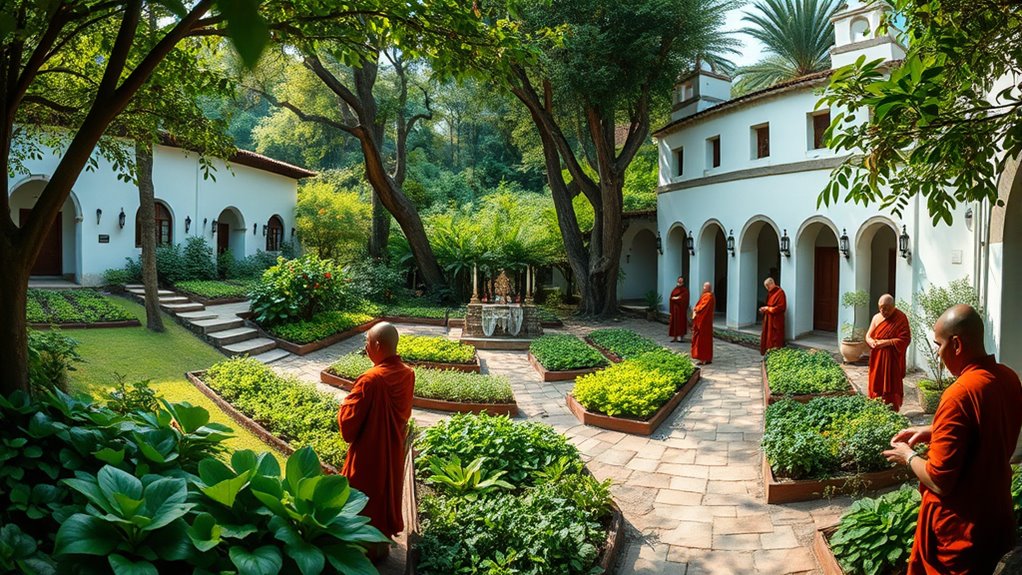
Religious utopian communities seamlessly weave work into their spiritual life, viewing labor not just as a means of survival but as a moral and spiritual duty. You might find that work is seen as an act of worship, a way to serve both divine principles and the community’s well-being. In these communities, labor often aligns with spiritual values like humility, cooperation, and purity. For example, the Shakers practiced communal work as a form of devotion, emphasizing gender equality and simplicity. Members see their labor as participating in a divine plan, fostering bonds of brotherhood and moral discipline. Work isn’t merely functional; it’s integral to spiritual growth and community harmony, reinforcing shared faith and moral purpose. Incorporating diversification strategies can also help maintain stability and resilience within such spiritually motivated work environments.

Cooperative Learning and Social Studies, Grades 6-12
Used Book in Good Condition
As an affiliate, we earn on qualifying purchases.
As an affiliate, we earn on qualifying purchases.
Visions of Reduced Hours and Early Retirement
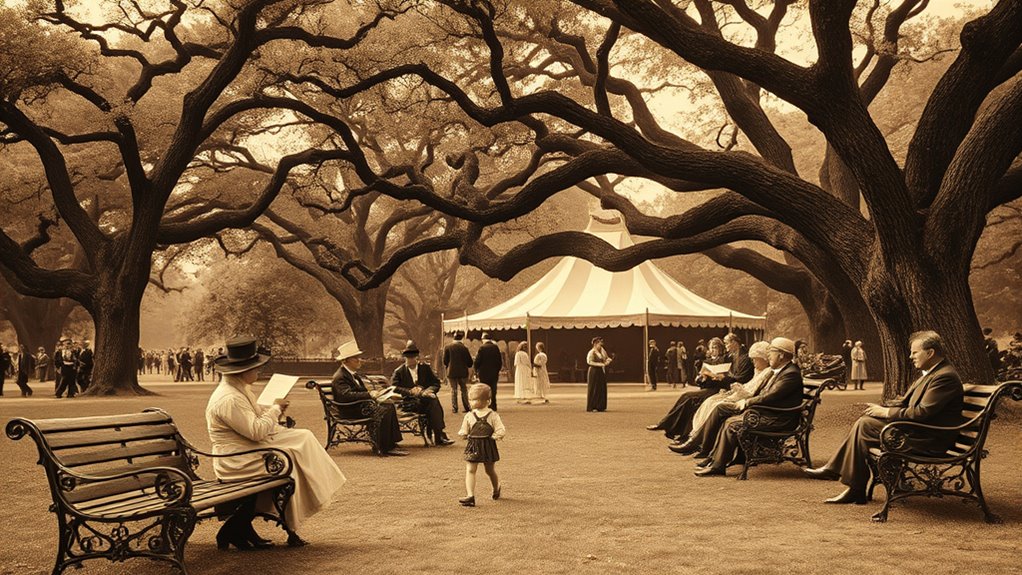
Utopian communities often envisioned a future where work was less burdensome and life included more leisure, with many advocating for considerably reduced daily hours and early retirement. They believed technological advancements, cooperative labor, and rational planning could lower the necessary workday to four or six hours. Early retirement around age 50 was common, allowing individuals more time for education, arts, or community involvement. These thinkers argued that shorter hours would lead to healthier, more fulfilled lives, reducing social problems like crime and poverty. They trusted that shared ownership and collective effort would eliminate exploitation, making work purposeful rather than oppressive. Innovations in whole-house water filtration systems exemplify how technological progress can improve daily life, reflecting a broader vision of societal betterment. This vision aimed to balance work with leisure, fostering a society where everyone could enjoy a richer, more meaningful existence beyond the grind.

Trusting God With Every Breath: 365 Daily Devotions for Women – Find Hope for the Ups and Downs of Life
As an affiliate, we earn on qualifying purchases.
As an affiliate, we earn on qualifying purchases.
Ideals of Cooperative Labor and Collective Ownership

What if work could be organized around cooperation rather than competition? You’d share resources, tools, and labor, emphasizing collective ownership rather than individual profit. In utopian visions, communities operate as equal entities, where everyone has a stake in the means of production. Instead of bosses or hierarchical structures, decisions are made democratically, ensuring that work benefits all, not just a few. This model aims to eliminate exploitation and reduce inequality, fostering a sense of shared purpose. Collective ownership ensures that resources and property remain within the community, preventing wealth accumulation by individuals. By organizing labor cooperatively, these societies hope to create a more just, engaged, and sustainable environment, where work serves communal needs and personal fulfillment instead of greed or competition. Implementing cooperative labor systems can further enhance these ideals by promoting shared responsibility and mutual support.
Challenges and Limitations of Utopian Workless Societies
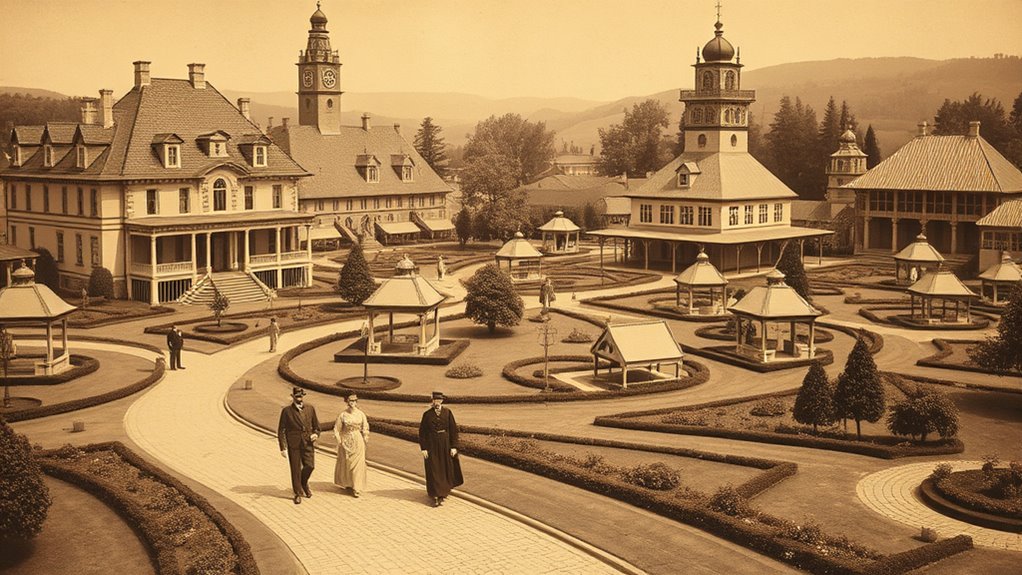
Despite the appealing vision of societies organized entirely around cooperation and shared ownership, implementing such models faces significant hurdles. You’d encounter human nature’s complexity, including the desire for individual recognition and material gain, which can undermine collective efforts. Many utopian communities struggled with sustainability, often collapsing after charismatic leaders left or internal conflicts arose. Financial difficulties also posed major setbacks, forcing communities to abandon ideals or integrate into mainstream economies. Additionally, strict rules like celibacy or communal labor limited growth and resilience. You might find it challenging to balance work and leisure, especially when members’ personal motivations clash with collective goals. These challenges reveal that human psychology, economic pressures, and social dynamics make maintaining radical workless societies difficult, despite their noble ambitions. Recognizing the importance of economic sustainability is crucial for understanding the potential and pitfalls of utopian visions.
Frequently Asked Questions
How Did Utopian Communities Sustain Themselves Financially Long-Term?
You find that utopian communities often relied on collective ownership, shared labor, and diversified income sources to sustain themselves long-term. They engaged in farming, crafts, teaching, or small-scale industries to generate revenue. Religious groups like the Shakers thrived through productive labor and celibacy, while secular communities diversified their activities to avoid dependence on a single income. These strategies helped them maintain stability despite economic challenges.
What Roles Did Women Play in These Workless or Cooperative Societies?
You might be surprised, but women played essential roles in these societies, often sharing equally in labor and decision-making. In communities like Brook Farm, women participated fully in agriculture and intellectual pursuits, challenging traditional gender roles. Religious groups like the Shakers promoted gender equality through shared work, reinforcing spiritual ideals. Their active involvement helped sustain these communities’ social fabric, demonstrating that cooperation and equality were central to their visions of a harmonious, workless society.
How Did Religious Beliefs Influence Community Labor Practices?
Your religious beliefs shaped community labor practices by emphasizing shared moral values, cooperation, and spiritual commitments. Many groups, like the Shakers, practiced communal labor as an expression of faith, valuing simplicity and celibacy to sustain the community. Work was seen as a spiritual duty, fostering equality and unity. These beliefs motivated members to contribute collectively, aligning their labor with divine principles and creating tightly knit, purpose-driven societies.
Were There Any Successful Examples of Fully Work-Free Societies?
There are no fully successful, work-free societies in history. Utopian experiments aimed to reduce work hours or make labor more meaningful, but they still relied on some form of effort. You won’t find a society where everyone is entirely free from work, as human needs and social organization inherently involve effort. These experiments inspired ideas about equitable work, but complete worklessness remains an ideal rather than reality.
How Did Utopian Visions Address Technological Advancements in Work Reduction?
Imagine a future where technology becomes the magic wand that reduces work to a mere whisper. Utopian visions embraced this idea, proposing that innovations like machinery and automation would free society from drudgery. They envisioned shorter work hours, early retirements, and more leisure, believing tech advancements would make daily labor obsolete. These communities saw technology as a tool to promote happiness, equality, and a balanced life, not just profit.
Conclusion
As you reflect on these visions, remember they’re like stars guiding us through a night sky of endless possibilities. While perfect utopias may remain distant, they inspire you to reimagine work’s role in life. By embracing ideas of balance, community, and purpose, you can help shape a future where work no longer weighs down your spirit but lifts it—transforming dreams into the dawn of reality.