You’ll discover that traditional GDP doesn’t fully measure wellbeing, especially in an automated economy where digital goods, social connections, and environmental health matter more. Alternative indices like the Human Development Index and new digital metrics help capture these broader aspects. Advances in technology enable real-time data collection and analysis, making policy choices more effective. If you keep exploring, you’ll learn how evolving measures can better reflect true societal progress.
Key Takeaways
- Traditional GDP metrics overlook social, environmental, and mental health factors crucial for assessing wellbeing in an automated economy.
- Alternative indices like the Human Development Index and OECD Better Life Index incorporate broader social and environmental dimensions.
- Advanced data technologies, including AI and real-time analytics, enable measurement of intangible wellbeing factors beyond monetary value.
- Digital goods and automation challenge GDP’s effectiveness, requiring new metrics to capture digital prosperity and societal impacts.
- International collaboration and standardized indicators are essential for accurately measuring wellbeing across diverse, automated societies.
Top picks for "wellbe metric automat"
Open Amazon search results for this keyword.
As an affiliate, we earn on qualifying purchases.
Recognizing the Limits of GDP as a Measure of Wellbeing

GDP has long served as the primary indicator of a nation’s economic performance, but it falls short when measuring overall wellbeing. It captures economic activity, yet ignores critical aspects like health, education, and social connections. A high GDP doesn’t guarantee a good quality of life or social equality. For example, wealth might increase while disparities grow or environmental health declines. Relying solely on GDP can mislead policymakers into prioritizing growth over genuine wellbeing. It also overlooks intangible factors like happiness, community, and mental health. Recognizing these limitations is essential for developing better measures. To truly understand a nation’s progress, you need metrics that account for social, environmental, and personal dimensions beyond just economic output. User-friendly interfaces in measurement tools can enhance accessibility and understanding of these broader indicators.
Embracing Alternative Indices for Broader Wellbeing Insights

As awareness grows of GDP’s limitations in capturing true wellbeing, policymakers and researchers are increasingly turning to alternative indices that provide a more extensive view of societal progress. These indices, like the Human Development Index and OECD Better Life Index, focus on health, education, and social connections, offering a broader perspective than economic output alone. They help identify areas needing improvement that GDP overlooks, such as inequality and environmental sustainability. By adopting these measures, you can better understand how policies impact overall quality of life. While no single index captures all facets of wellbeing, combining multiple metrics can guide more holistic decision-making. Embracing these alternatives helps shift focus from purely economic growth toward fostering healthier, more equitable, and sustainable societies. Incorporating Cultural Intelligence into policy analysis can also enhance the effectiveness of initiatives aimed at improving social cohesion and inclusivity.
The Impact of Automation and Digital Goods on Economic Metrics

Automation and the proliferation of digital goods are transforming the way we measure economic success, often challenging traditional metrics. With automation boosting productivity, GDP may rise, but this doesn’t always reflect improvements in wellbeing. Free digital products, like social media and streaming services, provide value without generating direct monetary transactions, making GDP less accurate as a wellbeing indicator. These digital goods create consumer surpluses that aren’t captured in traditional metrics, obscuring true economic progress. Additionally, automation can widen income inequality, affecting social cohesion and mental health—factors GDP ignores. As digital innovation continues, you’ll find that conventional measures struggle to capture the full picture of societal wellbeing. This shift underscores the need for new metrics that account for digital prosperity and social impacts beyond monetary value. Incorporating data-driven marketing strategies can enhance our understanding of economic contributions from digital platforms and services.
Developing New Metrics to Capture Non-Monetary Contributions

To truly understand societal progress, we need metrics that go beyond monetary transactions and capture the non-monetary contributions that shape wellbeing. You should consider factors like social cohesion, mental health, and environmental quality, which influence quality of life but aren’t reflected in GDP. Developing these metrics involves identifying indicators that capture these dimensions and integrating technologies like AI for real-time data analysis. Here’s a simple framework:
| Dimension | Example Metric |
|---|---|
| Social Capital | Trust levels, community engagement |
| Environmental Wellbeing | Air and water quality, biodiversity |
| Mental & Physical Health | Happiness surveys, health indices |
| Education & Skills | Access, literacy, lifelong learning |
This approach ensures a holistic view of wellbeing, emphasizing contributions often overlooked. Recognizing the importance of psychological factors in measuring societal progress can lead to more comprehensive and effective policy decisions.
Overcoming Challenges in Measuring Wellbeing Across Borders

Measuring wellbeing across borders presents significant challenges because different countries have diverse cultural norms, data collection methods, and priorities. You need standardized metrics that can be applied universally, but cultural differences influence how people perceive and report wellbeing. Data quality and availability vary, making comparisons difficult. Governments may prioritize economic growth over social or environmental factors, skewing results. Language barriers and differing interpretations of survey questions can distort data. Additionally, political agendas might influence reporting, undermining objectivity. To overcome these obstacles, you must develop internationally accepted standards and collaborate across nations. Investing in harmonized data collection processes and encouraging transparency are essential. Only then can you create reliable cross-border wellbeing assessments that inform global policy and promote equitable progress.
Leveraging Technology and Data for Better Policy Decisions
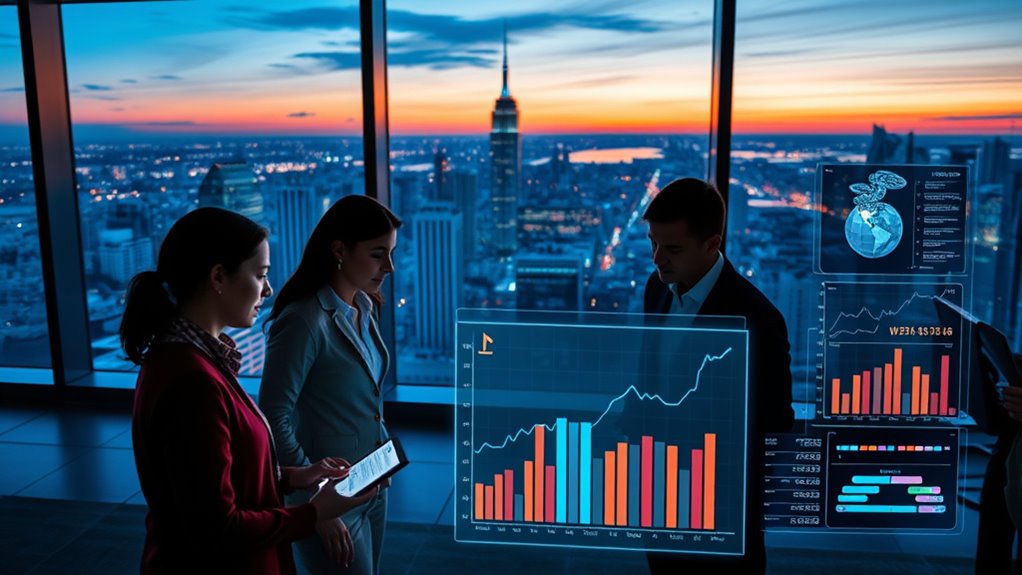
Technological advancements, especially in data collection and analysis, are transforming how policymakers understand and improve wellbeing. They enable real-time insights, more accurate assessments, and targeted interventions. By harnessing big data, AI, and machine learning, you can identify patterns and correlations that traditional metrics miss. This helps to better evaluate components like health, education, and inequality, leading to more informed decisions. For example:
| Data Type | Usage | Benefit |
|---|---|---|
| Social Media | Sentiment analysis | Gauge public mood |
| Health Records | Long-term health trends | Improve healthcare policies |
| Economic Data | Consumer behavior insights | Tailor economic strategies |
| Satellite Data | Environmental monitoring | Support sustainability efforts |
These tools give you a clearer picture, allowing for proactive, evidence-based policymaking that truly enhances societal wellbeing. Biodiversity data, for instance, can help identify areas where ecosystems are at risk, guiding conservation efforts.
Toward a Sustainable and Holistic Approach to Societal Progress

Achieving genuine societal progress requires integrating sustainability and holistic well-being into our development models. You need to look beyond traditional metrics like GDP and focus on multiple dimensions—health, education, social connections, and environmental health—that truly reflect societal health. Emphasizing sustainability ensures that growth doesn’t compromise future generations’ ability to thrive. A holistic approach recognizes that economic, social, and ecological factors are interconnected, requiring balanced policies. You should promote transparent, inclusive data collection and international standards for wellbeing metrics, making them accessible and understandable. Public engagement is essential for broad acceptance and change. Recognizing the importance of interconnected factors helps in designing policies that support resilient communities and a more equitable, thriving society that benefits everyone today and tomorrow.
Frequently Asked Questions
How Can Wellbeing Metrics Be Standardized Internationally for Effective Comparison?
You can standardize wellbeing metrics internationally by developing clear, universally accepted frameworks that include key indicators like health, education, and social connections. Collaborate with global organizations, policymakers, and experts to create consistent measurement methods. Use technology to gather comparable data across countries, ensuring transparency and adaptability. Promote public awareness and buy-in so these metrics become widely understood and trusted, ultimately making cross-national comparisons more accurate and meaningful.
What Role Do Cultural Differences Play in Measuring Wellbeing Across Countries?
Cultural differences greatly influence how you perceive and measure wellbeing across countries. You might find that values, social norms, and traditions shape what people consider important for a good life, often leading to varied interpretations of happiness and satisfaction. When designing wellbeing metrics, you should acknowledge these differences to guarantee they reflect local priorities and perspectives, fostering more accurate and respectful comparisons worldwide.
How Can Public Awareness Be Increased About the Limitations of GDP?
You can increase public awareness by sharing clear, accessible information about GDP’s limitations through social media, community events, and educational campaigns. Use relatable examples to show how wellbeing isn’t fully captured by GDP, emphasizing the importance of health, education, and social connections. Engaging stories and visuals can make these concepts more tangible, encouraging people to support broader measures of success and advocate for policies that prioritize overall wellbeing.
What Ethical Considerations Arise When Using AI to Assess Societal Wellbeing?
You might feel like a gentle navigator steering through complex waters when using AI to assess societal wellbeing. Ethical considerations include respecting privacy and avoiding biases that could skew results. You need to guarantee transparency, so people trust the process, and fairness is maintained for all communities. Balancing technological innovation with moral responsibility is essential to prevent unintended harm and promote equitable, meaningful insights into societal health.
How Can Policymakers Balance Economic Growth With Environmental Sustainability?
You can balance economic growth with environmental sustainability by adopting holistic wellbeing metrics that include ecological health and social equity. Prioritize policies that encourage green innovation, renewable energy, and resource efficiency. Make data-driven decisions with advanced AI tools to monitor impacts accurately. Engage stakeholders across sectors to align growth objectives with sustainability goals, ensuring economic progress doesn’t sacrifice environmental integrity or social well-being for future generations.
Conclusion
Remember, what gets measured gets managed. As you shift from GDP to wellbeing metrics, embrace new tools and perspectives to truly capture societal progress. Automation and digital innovations offer both challenges and opportunities—don’t let traditional metrics hold you back. By adopting holistic, technology-driven measures, you can better craft policies that foster a sustainable, thriving society. After all, it’s not just about what grows, but what truly makes life better.