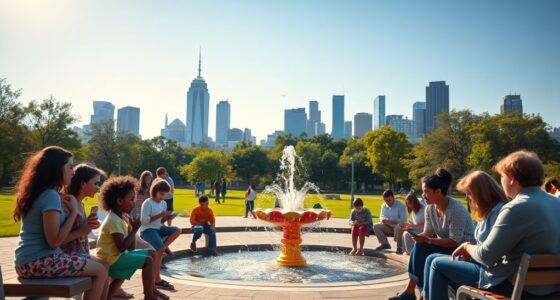
In a post-work age, your purpose shifts from traditional careers to meaningful activities like caregiving, volunteering, learning new skills, or pursuing passions. As populations age and automation takes over routine jobs, society values contribution at every stage of life. You can find fulfillment through community involvement, creative projects, or personal growth, redefining success beyond wealth or status. Explore ways to contribute and shape your purpose further as you continue to discover how fulfillment evolves beyond work.
Key Takeaways
- Redefine purpose through community involvement, personal passions, and creative pursuits outside traditional employment.
- Embrace lifelong learning and skill development to foster adaptability and personal growth.
- Engage in caregiving, volunteering, and mentoring to create meaningful societal contributions.
- Cultivate well-being activities like meditation or self-care routines to enhance purpose and fulfillment.
- Foster inclusivity and intergenerational collaboration to ensure diverse contributions and shared societal purpose.

Cheer Collection Meditation Cushion – Ergonomic Floor Pillow, Yoga Pillow with Buckwheat Filling, Zafu Meditation Cushion, Comfort & Meditation Posture Support
ERGONOMIC SUPPORT FOR MEDITATION: Elevate your meditation sessions with this ergonomic meditation cushion! It supports proper posture by…
As an affiliate, we earn on qualifying purchases.
As an affiliate, we earn on qualifying purchases.
Shifting Demographics and Their Impact on Society

As populations age and the working-age cohort shrinks, society faces profound shifts that will reshape economic, social, and cultural landscapes. You’ll notice a decline in the overall labor force, making it harder to sustain growth and support aging populations. Countries will see fewer people actively working, leading to lower employment rates and increased dependence on social support systems. This demographic change influences everything from pension sustainability to healthcare demands. Younger generations will need to adapt to a world where a larger share of society is retired or outside traditional employment. You might also observe shifts in community roles, with more people engaging in caregiving, volunteer work, or other meaningful activities outside of conventional careers. These demographic trends will fundamentally alter how societies organize work, social support, and purpose.

Hula Home Stained Glass Mandala Art Kit – DIY Window Clings with Markers, 10 Suncatchers – Perfect Hobby for Adults, Kids, Teens & Seniors – Ideal Gift for Beginners, Women & Elderly
【10 Unique Clings & 8 Colors】These specialty arts and crafts kits for adults and teens include 10 Blank…
As an affiliate, we earn on qualifying purchases.
As an affiliate, we earn on qualifying purchases.
Redefining Retirement and the End of Traditional Careers
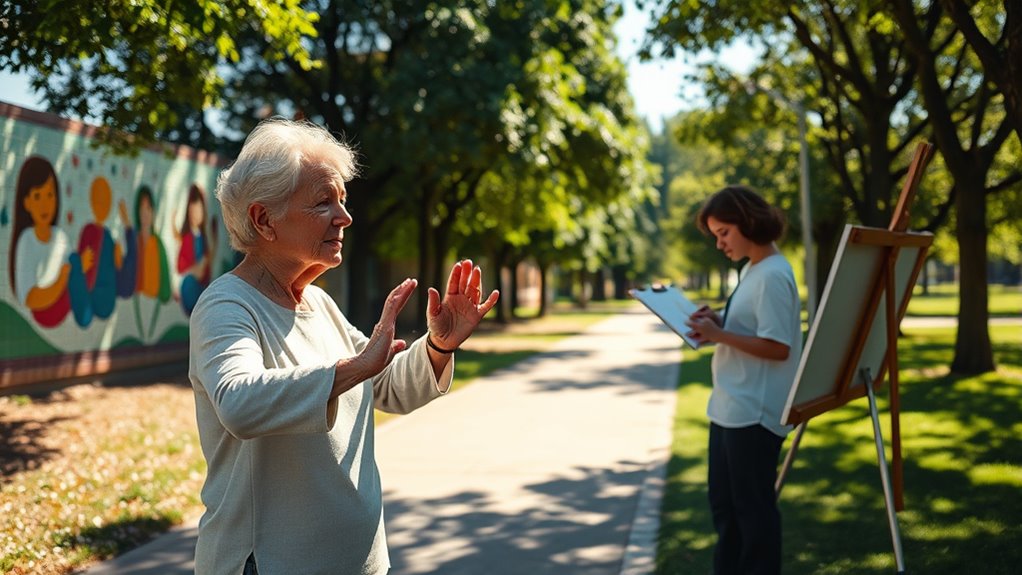
Have traditional notions of retirement and career closure become outdated in today’s aging societies? Absolutely. With people living longer and staying healthier, the idea of stepping away from work exactly at 65 no longer fits everyone’s reality. Many older adults remain active in various ways—whether through part-time work, volunteering, or personal projects—challenging the concept of a hard stop. Societies are shifting toward flexible, purpose-driven lifestyles beyond formal careers. Retirement is increasingly seen as a *phase* rather than an end, offering opportunities for new pursuits and community involvement. This redefinition emphasizes personal growth, social contribution, and meaningful engagement, rather than solely focusing on leaving paid employment behind. Additionally, advancements in sound design techniques and tools open up new avenues for creative expression and community engagement during later life stages. You’re encouraged to find purpose in diverse activities, regardless of age or traditional career milestones.

10 Sets Volunteer Lanyards with Badges PVC Plastic Card Pass Volunteer Name Tags for Music Party, Activity, Fundraising, Church, School, Events(Blue)
What You Receive: This set includes 10 volunteer lanyards and 10 pieces of volunteer badges with clips. The…
As an affiliate, we earn on qualifying purchases.
As an affiliate, we earn on qualifying purchases.
Emerging Opportunities in Care, Education, and Community Work
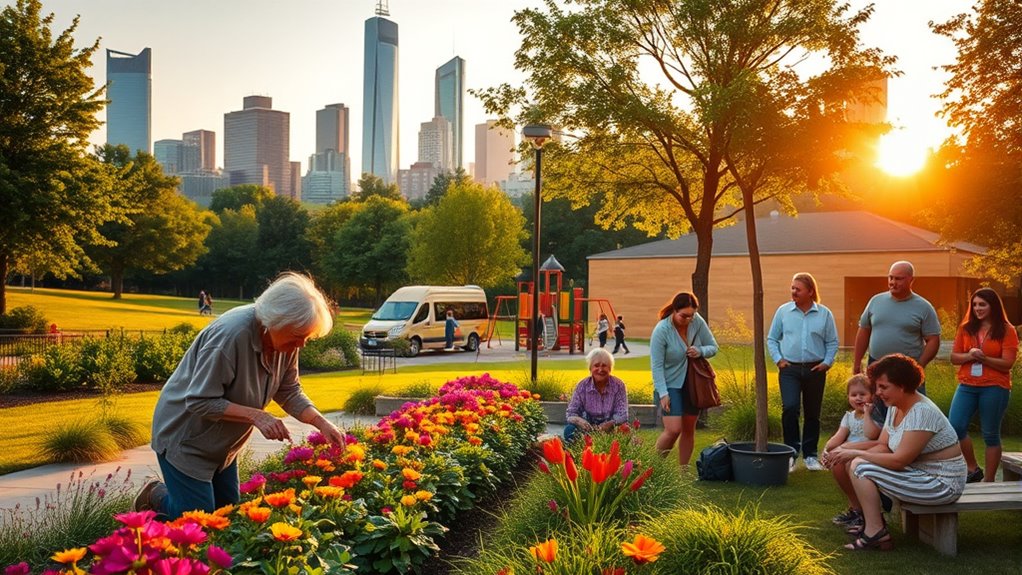
With traditional careers becoming less central to personal identity, many individuals are discovering meaningful ways to contribute through care, education, and community work. These roles offer opportunities to foster connection, support well-being, and build social cohesion. You can engage in caregiving, whether assisting elderly family members or volunteering at local centers, creating a direct positive impact. Education also remains crucial; sharing knowledge, mentoring youth, or leading community workshops help shape future generations. Community work enables you to address local needs, organize events, or support social causes that matter to you. These avenues allow you to find purpose beyond the confines of formal employment, emphasizing personal fulfillment through service, relationship-building, and contributing to a thriving, resilient society. Regular involvement in community engagement can strengthen social bonds and enhance overall well-being.

HowExpert Guide to Education: The Ultimate Handbook for Lifelong Learning, Effective Teaching, and Educational Success
As an affiliate, we earn on qualifying purchases.
As an affiliate, we earn on qualifying purchases.
The Role of Technology and Automation in Future Employment

Technology and automation are rapidly transforming the job landscape, replacing routine tasks and reshaping industries. You’ll need to develop new skills to stay relevant as some roles disappear while others emerge. As these shifts accelerate, understanding how to adapt becomes essential for finding purpose beyond traditional employment. Incorporating well-being practices, such as stress reduction techniques, can support mental resilience during these transitions.
Automation’s Workforce Impact
As automation advances, it is reshaping the employment landscape by replacing routine tasks and transforming traditional jobs. You’ll find that many manual and repetitive roles are automated, pushing workers toward more complex, creative tasks. This shift impacts sectors like manufacturing, retail, and transportation, where machines now handle routine functions. To stay relevant, you’ll need to adapt and develop skills in areas where human judgment and creativity matter most. The table below highlights key impacts:
| Automation Impact | Workforce Response |
|---|---|
| Job displacement | Reskilling and upskilling |
| New job creation | Focus on tech, care, and creative roles |
| Workforce shift | Emphasis on adaptability and lifelong learning |
New Skill Demands Emergence
The increasing integration of automation and digital tools is transforming the skills required in the workforce. You’ll need to adapt to new demands as routine tasks become automated. Here are four key skill areas emerging:
- Technical proficiency — understanding AI, data analysis, and digital platforms.
- Creative problem-solving — developing innovative solutions in complex situations.
- Emotional intelligence — connecting with others, managing teams, and understanding human needs.
- Lifelong learning — continuously updating skills to stay relevant in evolving job markets.
As automation takes over repetitive work, your ability to think critically, collaborate, and adapt becomes essential. Success in the future depends on developing these human-centric skills that machines can’t replicate. Additionally, mastering high-quality visual displays can enhance communication and presentation skills in many fields.
Technology-Driven Job Shifts
Automation and digital tools are reshaping how work is done, driving rapid changes across industries. You’ll notice routine tasks being replaced by AI, robotics, and smart systems, making some jobs obsolete while creating new opportunities. As machines handle repetitive work, demand shifts toward roles that require creativity, problem-solving, and emotional intelligence. You might find yourself working alongside automated systems or managing their functions, especially in sectors like manufacturing, logistics, and customer service. Technology accelerates productivity but also displaces traditional roles, prompting you to adapt your skills continuously. While some jobs fade, new ones emerge in tech, healthcare, and green energy. Embracing lifelong learning becomes essential as automation redefines what work looks like in the post-work age. AI-driven innovations continue to influence employment landscapes, urging individuals to stay adaptable and open to new skillsets.
Navigating Generational Transitions in the Workforce

Steering the evolving landscape of the workforce requires understanding the distinct values, expectations, and work styles of each generation. You’ll encounter diverse perspectives, from Baby Boomers valuing loyalty to Millennials seeking purpose and flexibility. To navigate this progression effectively, consider these key points: 1. Recognize generational differences in communication and motivation styles. 2. Foster intergenerational collaboration through shared goals and respect. 3. Adapt leadership approaches to meet varying expectations around recognition and work-life balance. 4. Support continuous learning opportunities that appeal across age groups, encouraging skills development and engagement. Incorporating mindful decluttering strategies can help create organized workspaces that enhance focus and productivity, fostering a more harmonious environment for all generations.
Cultivating Purpose Beyond Paid Labor

As traditional work declines, you have the opportunity to redefine what gives your life purpose and fulfillment. You can focus on passions, community involvement, or personal growth. Engaging in activities that matter to you fosters a sense of meaning beyond employment. Consider roles in caregiving, volunteering, or creative pursuits. These areas not only enrich your life but also benefit society. To illustrate, here’s a comparison:
| Paid Labor Activities | Purposeful Alternatives |
|---|---|
| Office work | Mentoring, volunteering |
| Manufacturing jobs | Community service, arts |
| Retail | Environmental activism |
| Data analysis | Personal projects, education |
Choosing to channel your energy into these areas helps build a fulfilling life, independent of traditional employment constraints. Incorporating self-care routines like meditation or skincare can further enhance your well-being and sense of purpose.
Addressing Inequality and Ensuring Inclusive Engagement
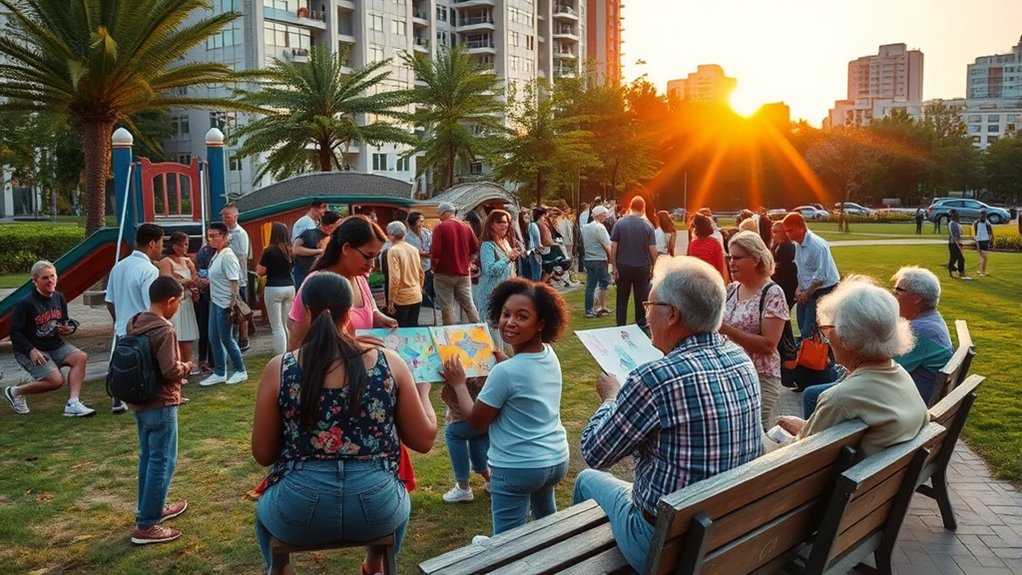
You have the opportunity to help bridge socioeconomic gaps as societies shift toward a post-work age. Ensuring equitable access to new roles and meaningful engagement can prevent widening inequalities and create inclusive communities. By actively promoting fairness, you can shape a future where everyone has a chance to contribute and find purpose beyond traditional employment. Incorporating sustainable practices for communities into development efforts can further support long-term inclusion and equity.
Bridging Socioeconomic Gaps
How can societies guarantee that the shift toward a post-work age doesn’t deepen existing inequalities? You need targeted strategies to make certain everyone benefits. Here are four steps:
- Invest in universal access to education, skills training, and lifelong learning to level the playing field.
- Expand social safety nets, including healthcare and income support, especially for vulnerable groups.
- Promote inclusive community programs that encourage participation from marginalized populations.
- Foster policies that support equitable resource distribution, reducing wealth gaps and enabling broader engagement.
Promoting Equitable Opportunities
Ensuring equitable opportunities in the post-work age requires proactive strategies to bridge existing inequalities and foster inclusive participation. You can promote access by redesigning social programs to support diverse needs, especially for aging populations and marginalized groups. Prioritize lifelong learning initiatives that enable people of all ages and backgrounds to develop new skills, reducing barriers to engagement. Create community spaces and digital platforms that encourage participation beyond traditional employment, emphasizing contribution through care, education, or civic activities. Address income disparities by implementing fair resource distribution and targeted support for vulnerable populations. Additionally, integrating portable and accessible technologies can significantly enhance inclusion and participation for all individuals. By actively dismantling systemic barriers, you guarantee everyone has a fair chance to find purpose and fulfillment beyond careers, strengthening social cohesion and resilience in an evolving society.
Cultural Shifts: Redefining Identity and Fulfillment

As societies shift toward a post-work age, the traditional link between identity and employment begins to weaken, prompting a reevaluation of what gives life meaning beyond paid labor. You start to see that fulfillment no longer depends solely on careers. Instead, cultural values are evolving:
- Emphasizing community involvement and social relationships over professional status
- Valuing personal passions and hobbies as sources of purpose
- Challenging norms that tie worth to job titles and income levels
- Recognizing lifelong learning and personal growth as meaningful pursuits
- Understanding the role of merchant services in supporting diverse payment options and facilitating community-based economic activities
This shift encourages you to redefine your sense of self beyond work roles. You begin to see fulfillment in contribution, connection, and self-development—elements that foster identity in the post-work age.
Building a Society That Values Contribution at All Life Stages
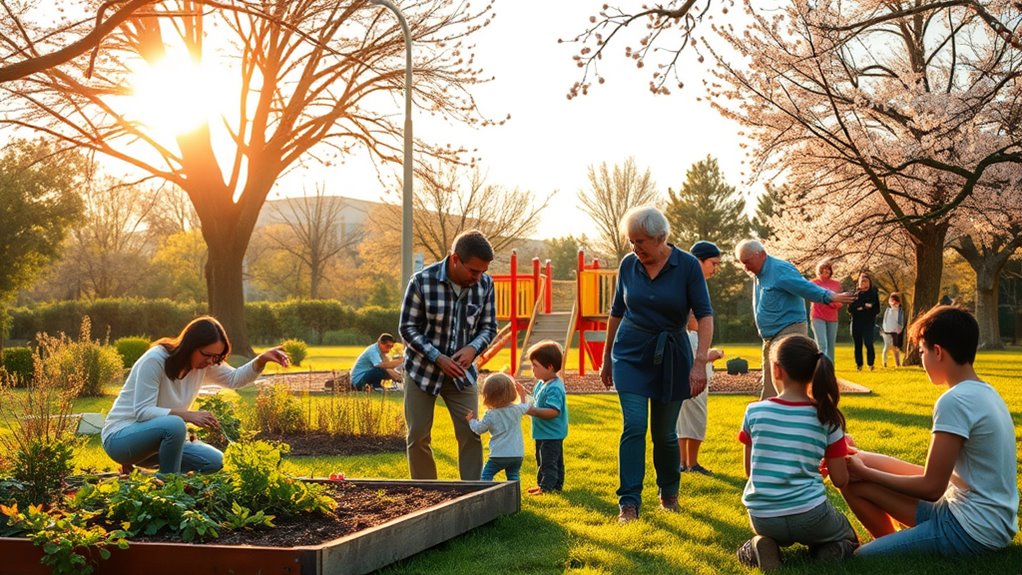
Building a society that values contribution at all life stages requires redefining success beyond traditional notions of employment and productivity. You need to recognize that meaningful engagement isn’t limited to paid work; it includes caregiving, volunteering, lifelong learning, and community participation. Policies should support flexible opportunities for contribution, regardless of age, allowing older adults to share their experience and skills. Education systems can foster intergenerational collaboration, emphasizing diverse forms of value. Society must challenge stereotypes that associate aging with decline, instead highlighting ongoing potential and purpose. By creating inclusive environments that respect varied contributions, you help build a culture where everyone, no matter their age, can find purpose, feel valued, and contribute to the common good.
Frequently Asked Questions
How Can Societies Support Meaningful Engagement Outside Traditional Employment?
You can support meaningful engagement outside traditional employment by creating diverse opportunities for community involvement, volunteering, and lifelong learning. Encourage policies that promote accessible care, education, and social roles, allowing people to contribute based on their passions and skills. Foster a culture that values purpose beyond work, emphasizing social bonds, creativity, and personal growth. This approach helps individuals find fulfillment and maintain societal cohesion as the workforce demographic shifts.
What Policies Will Promote Inclusion for Older and Non-Working Populations?
You can promote inclusion by creating policies that embrace lifelong learning and flexible work options, ensuring older and non-working populations stay connected and valued. Invest in community programs, health initiatives, and social services that foster purpose beyond employment. Recognize that everyone has a role to play, and by doing so, you’ll turn the tide and show that the more things change, the more they stay the same—people thrive through belonging and contribution.
How Will Automation Influence Opportunities for Human-Centered Roles?
Automation will create more opportunities for human-centered roles by automating routine tasks and freeing you to focus on skills like empathy, creativity, and complex problem-solving. You’ll find new roles emerging in care, education, and community work that require human interaction and emotional intelligence. Embrace continuous learning to stay relevant, and seek out positions where your unique qualities add value, making meaningful contributions beyond traditional jobs.
In What Ways Can Education Adapt for Lifelong Learning and Skill Development?
Imagine your skills as a garden that needs constant tending—education is the water that sustains it. To adapt, you can embrace lifelong learning through flexible courses, online platforms, and community programs. Data shows that between 2025 and 2030, 22% of jobs will change, so updating skills regularly keeps you resilient. Education must evolve into a continuous journey, empowering you to thrive beyond traditional careers.
How Might Cultural Perceptions of Purpose Evolve Beyond Work Identities?
Your cultural perceptions of purpose will shift from work-centered identities to personal growth, community involvement, and creative pursuits. You’ll find meaning through volunteering, lifelong learning, and relationships, rather than just careers. Society will value contributions outside paid employment, emphasizing well-being and social impact. You’ll redefine success as balance, fulfillment, and connection, recognizing that purpose can thrive in diverse activities beyond traditional work roles.
Conclusion
As you navigate this post-work world, remember that meaning isn’t tied solely to careers. Imagine volunteering in your community or mentoring youth, finding purpose in service. For example, a retiree starting a local literacy program exemplifies how fulfillment can flourish beyond traditional jobs. Embrace opportunities to contribute at every stage, shaping a society that values diverse forms of engagement. Your purpose can evolve, enriching your life and those around you in ways you never imagined.